
It was 3 PM on a Saturday afternoon when I heard those dreaded words for the fourth time: “Mom, I’m bored!” My kids had already burned through screen time, rejected my suggestions to play outside, and somehow made a mess of every room without actually doing anything productive. I was at my wits’ end until I realized I needed a better game plan.
That day marked the beginning of my mission to create the ultimate list of activities to do with kids—ones that actually work, don’t require a craft store budget, and keep children engaged for more than five minutes. After months of testing activities with my own kids and their friends, I’ve compiled this comprehensive guide that’s saved my sanity countless times.
Why These Activities Actually Work (When Others Don’t)
Not all kid activities are created equal. After trying dozens of Pinterest-worthy ideas that flopped spectacularly, I learned what separates activities that work from those that end in tears (both theirs and mine).
They Match Your Child’s Energy Level
The best activities work with your child’s current mood, not against it. High-energy kids need movement-based activities, while quiet kids might prefer detailed crafts or puzzles.
They Have Clear Objectives
Kids thrive when they understand what they’re supposed to do. Vague instructions like “be creative” often lead to frustration, while specific goals like “build a tower taller than your head” give them direction.
They Allow for Success at Different Levels
Great activities work for multiple ages and skill levels simultaneously. A nature scavenger hunt can challenge a 10-year-old with complex clues while letting a 4-year-old succeed by finding simple colors.
They Don’t Require Perfect Conditions
The most reliable activities work whether it’s raining, sunny, or you’re dealing with a cranky toddler. They’re flexible enough to adapt to real family life.
Research from the American Academy of Pediatrics shows that unstructured play and creative activities are essential for healthy child development, improving everything from problem-solving skills to emotional regulation.
Indoor Activities That Actually Keep Kids Busy
For Toddlers (Ages 2-4)
Sensory Bin Adventures
Fill a large plastic container with rice, pasta, or dried beans. Add scoops, cups, and small toys for endless exploration. I keep different themed bins ready—one with rainbow rice and farm animals, another with pasta and construction vehicles.
The magic of sensory bins lies in their versatility. You can create themed bins for holidays, seasons, or your child’s current interests. A Halloween bin might include orange rice, mini pumpkins, and plastic spiders, while a construction bin could feature yellow beans, toy trucks, and measuring tools.
Masking Tape Roads
Create roads, parking lots, and racetracks on your floor using masking tape. Kids can drive toy cars, practice walking the lines, or even use it as a hopscotch grid. The best part? It peels off easily without leaving residue.
This activity grows with your child. Toddlers love driving cars along the simple paths, while older kids can create elaborate city layouts with parking spaces, intersections, and traffic signs.
Kitchen Band
Gather pots, pans, wooden spoons, and containers with different contents (rice, beans, coins). Let kids create their own orchestra. It’s loud but incredibly engaging, and they’re learning about different sounds and rhythms.
To make it educational, talk about volume (loud vs. soft), rhythm patterns, and how different materials create different sounds. You can even compose simple songs together.
Water Transfer Play
Set up shallow bowls with water, sponges, measuring cups, and droppers. Kids love transferring water from container to container. Do this activity in the bathtub or outside for easier cleanup.
This seemingly simple activity teaches measurement, cause and effect, and fine motor skills. Add food coloring to make it more visually interesting or use different-sized containers to teach concepts of “more” and “less.”
For Preschoolers (Ages 4-6)
Build a Fort Empire
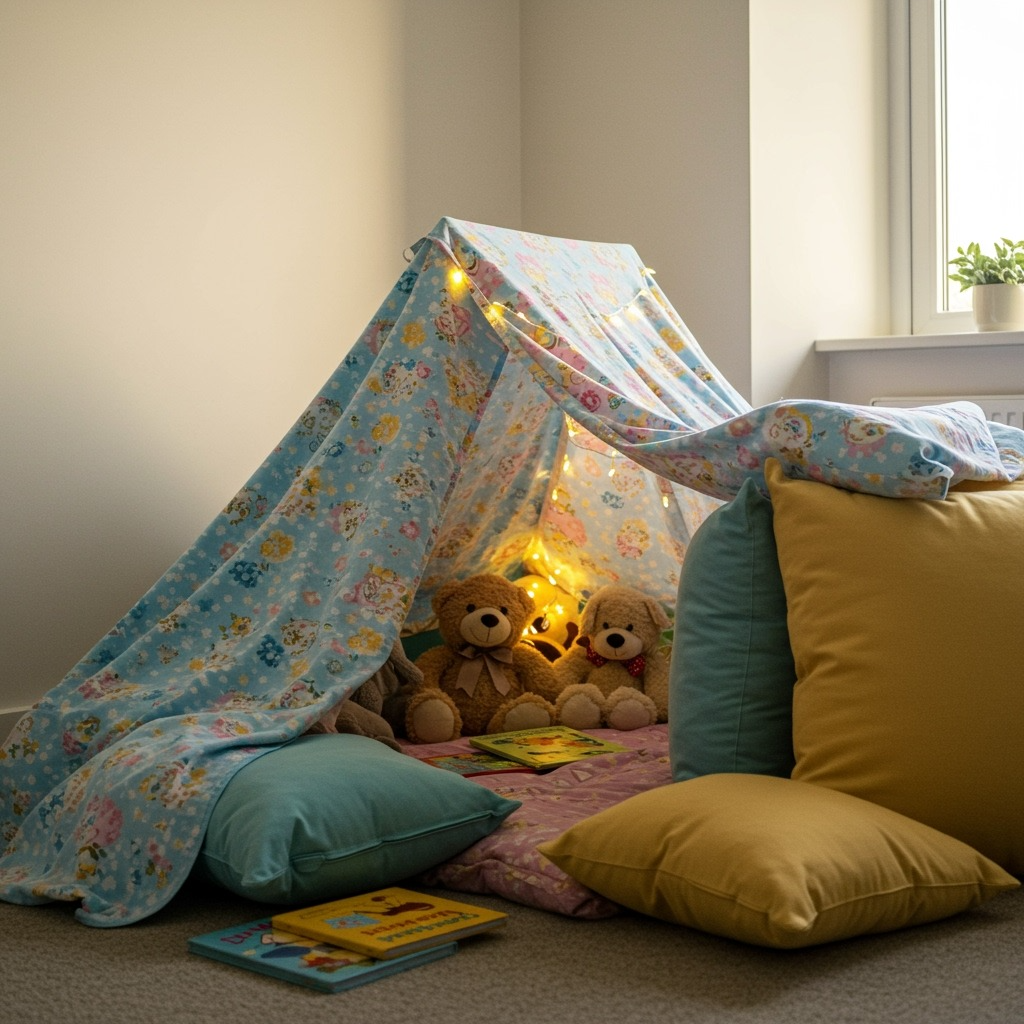
Use couch cushions, blankets, and chairs to create an elaborate fort system. Kids can spend hours designing, building, and playing in their creation. Add flashlights and snacks to make it extra special.
Fort building teaches engineering principles, problem-solving, and spatial reasoning. Kids learn about balance, structure, and how to modify their designs when something doesn’t work. The creativity involved in decorating and imagining what their fort represents adds another layer of engagement.
Paper Airplane Engineering
Teach kids different paper airplane designs and have competitions for distance, accuracy, or creativity. This combines craft skills with basic engineering concepts and can keep kids engaged for surprisingly long periods.
Start with simple designs and gradually introduce more complex folds. Create targets at different distances, measure flight distances, and discuss why certain designs fly better than others. You’re sneaking in lessons about aerodynamics, measurement, and the scientific method.
Puzzle Treasure Hunts
Hide puzzle pieces around the house and give kids clues to find them. Once they collect all the pieces, they can assemble the puzzle. This combines physical activity with problem-solving.
Make the clues age-appropriate—simple picture clues for younger kids, riddles for older ones. The anticipation of finding all pieces and completing the final puzzle creates multiple layers of satisfaction.
Sock Matching Race
Dump a basket of clean socks and challenge kids to match pairs as quickly as possible. Turn it into a game with timers or competitions between siblings.
This practical life skill disguised as a game teaches pattern recognition, sorting skills, and attention to detail. You can expand it by having kids sort by color, size, or type of sock.
For Elementary Kids (Ages 6-10)
Science Experiment Station
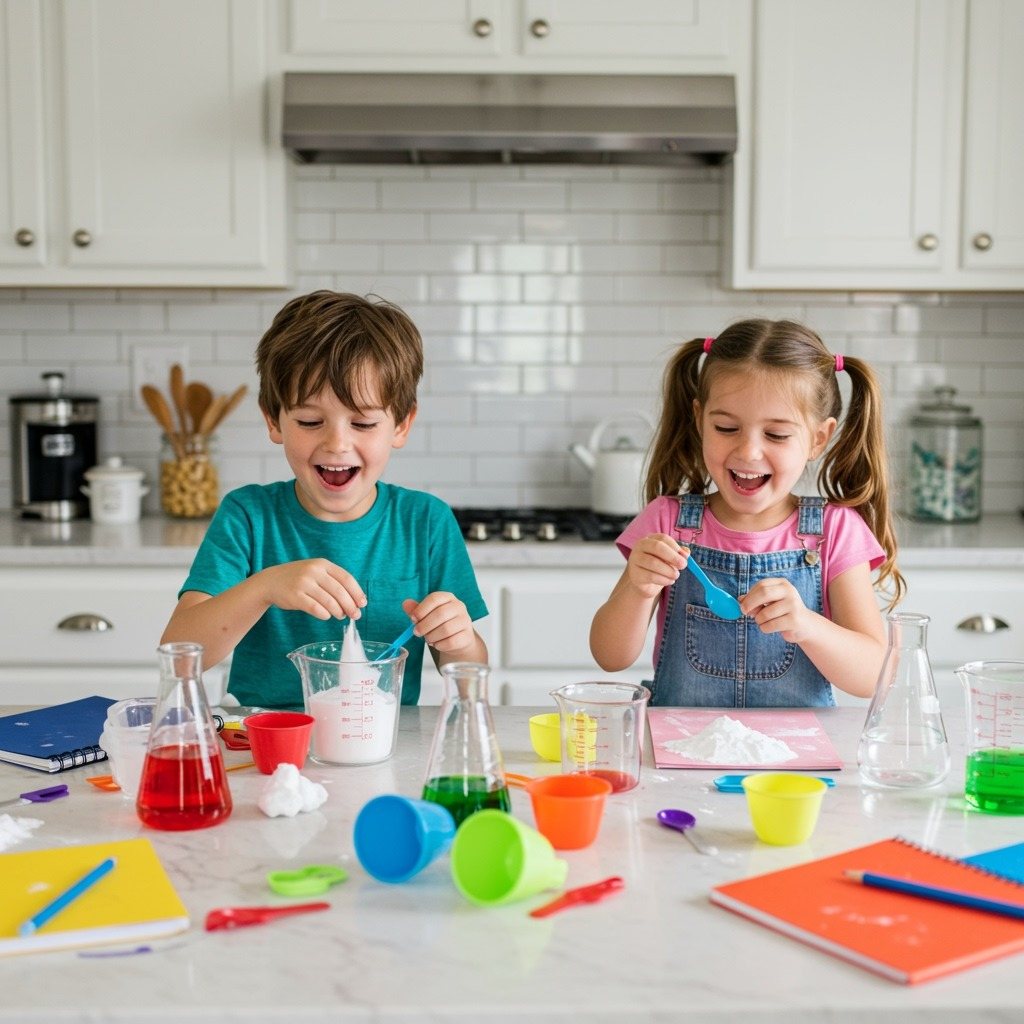
Set up simple experiments using household items. Volcano eruptions with baking soda and vinegar, rainbow milk with food coloring and dish soap, or growing crystals with salt water never get old.
Create a dedicated science corner with magnifying glasses, measuring tools, and a notebook for recording observations. Encourage kids to make predictions before each experiment and discuss what happened afterward. This builds scientific thinking and observation skills.
Indoor Obstacle Course
Create challenging courses using furniture, tape lines on the floor, and household items. Time them completing the course and let them redesign it for even more engagement.
Change the rules regularly to keep it fresh—sometimes they crawl under tables, other times they hop on one foot, or carry a spoon with a ball on it. Let kids design courses for each other, which builds planning and creative thinking skills.
Cooking Adventures
Age-appropriate cooking projects like no-bake cookies, fruit kabobs, or sandwich making give kids practical skills while keeping them busy. They love being involved in meal preparation.
Cooking naturally incorporates math (measuring), science (what happens when ingredients mix), reading (following recipes), and cultural learning (trying foods from different countries). Start simple and gradually increase complexity as kids gain confidence.
Art Museum at Home
Set up different art stations around your house—painting, drawing, sculpting with clay, and collaging. Let kids rotate between stations and create their own art exhibition.
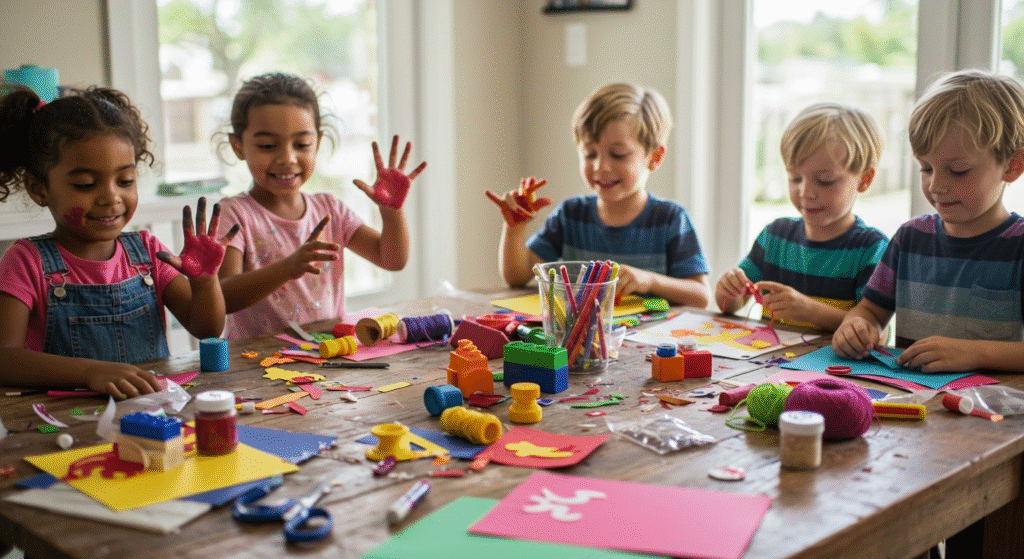
Provide different materials at each station and let kids experiment freely. Display their finished work gallery-style and have them give “tours” of their art museum to family members. This builds confidence and communication skills alongside creativity.
For more creative ideas that work well indoors, try some conversation starters for kids during quiet activities or explore tongue twisters for kids for language-building fun.
For Tweens (Ages 10+)
Photography Challenges
Give kids cameras or phones and challenge them to photograph specific themes—”things that start with B,” “patterns in nature,” or “family memories.” Create albums or displays of their work.
Photography teaches observation skills, composition, and storytelling. Create themed challenges weekly—shadows, reflections, textures, or emotions. Have kids caption their photos or write short stories inspired by their images.
Escape Room Design
Have kids design escape rooms for family members using puzzles, riddles, and hidden clues throughout the house. They love being the puzzle masters instead of just solving them.
This complex activity involves storytelling (creating a theme), logic (designing puzzles that make sense), math (creating codes), and project management (organizing the entire experience). The roles reverse when family members attempt their creation.
Stop-Motion Movies
Using phones or tablets, kids can create stop-motion animations with toys, clay figures, or drawings. It’s time-consuming in the best way possible.
This activity teaches patience, planning, and technology skills. Kids learn about storyboarding, character development, and the frame-by-frame process of animation. The final product gives them tremendous pride and a skill they can continue developing.
Business Planning Games
Challenge older kids to plan imaginary businesses—pet sitting services, lemonade stands, or craft shops. They can create business plans, pricing strategies, and marketing materials.
This introduces real-world concepts like budgeting, customer service, and problem-solving. Have them research actual costs for supplies, create advertisements, and present their business plans to the family “investors.”
Outdoor Adventures That Keep Kids Engaged
Backyard Exploration
Nature Scavenger Hunts
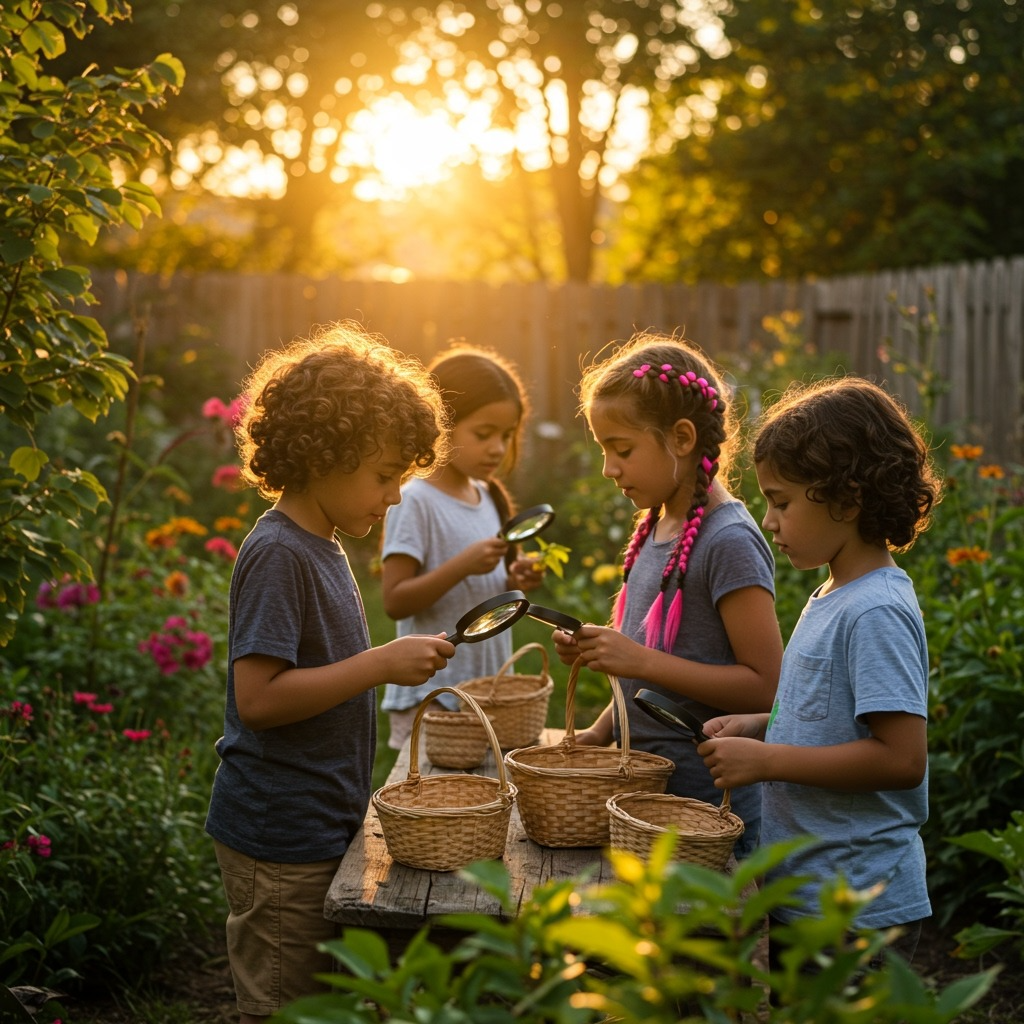
Create lists of items for kids to find: something rough, something smooth, a leaf bigger than their hand, or evidence of animal life. This works in any outdoor space, from tiny patios to large yards.
The beauty of nature scavenger hunts lies in their adaptability. Seasonal versions keep the same basic concept fresh—spring hunts might focus on new growth, while fall versions celebrate changing colors. Urban environments work just as well as rural ones, teaching kids to notice nature everywhere.
Garden Science Lab
Plant seeds, observe insect life, or create weather monitoring stations. Kids love watching plants grow and learning about the natural world around them.
Even without a garden, container planting works well. Herbs grow quickly and provide immediate satisfaction. Create observation journals where kids draw what they see daily, measuring growth and noting changes. This teaches patience, scientific observation, and responsibility.
Water Play Stations
Set up sprinklers, water tables, or simple bubble stations. On hot days, water activities can keep kids engaged for hours while helping them cool down.
Water play doesn’t require expensive equipment. Buckets, cups, funnels, and sponges create endless possibilities. Add dish soap for bubble exploration, food coloring for color mixing experiments, or floating objects for physics lessons about buoyancy and density.
Chalk Art Challenges
Beyond simple drawing, try chalk obstacle courses, murals, or games like hopscotch variations. Chalk art washes away with rain, making it perfect for temporary creativity.
Create themed chalk challenges—drawing your dreams, creating a chalk city, or making educational hopscotch with math problems in each square. The temporary nature removes pressure for perfection and encourages experimentation.
Neighborhood Adventures
Walking Photo Safari
Take cameras or phones on neighborhood walks and challenge kids to photograph interesting architecture, unusual plants, or friendly pets (with permission).
These walks help kids notice details they might otherwise miss. Create neighborhood journals where they record interesting discoveries, changes they notice over time, or questions they want to research further.
Geocaching Expeditions
Use geocaching apps to find hidden treasures in your community. It combines technology with outdoor exploration and teaches navigation skills.
Start with easy geocaches nearby and gradually attempt more challenging ones. This modern treasure hunting builds problem-solving skills, introduces GPS concepts, and often leads to discovering new places in your community.
Community Helper Hunts
Look for mail carriers, construction workers, or other community helpers during walks. Kids love spotting people who help their neighborhood function.
Turn these observations into discussions about different careers, community interdependence, and gratitude for others’ work. Create thank-you notes for community helpers you encounter regularly.
Seasonal Collections
Collect autumn leaves, spring flowers, or winter icicles (safely). Use collections for art projects, nature journals, or science observations.
Organize collections by color, size, or type. Press flowers, create leaf rubbings, or use natural materials for art projects. This teaches classification skills and creates lasting memories of seasons.
Educational Activities That Feel Like Play
STEM Learning Disguised as Fun
Kitchen Chemistry
Baking bread teaches measurement and chemical reactions. Making ice cream in bags demonstrates states of matter. Cooking is an applied science that kids can eat afterward.
Every cooking project offers multiple learning opportunities. Measuring ingredients teaches fractions and conversions. Observing how heat changes ingredients demonstrates physical and chemical changes. Following recipes builds reading comprehension and sequencing skills.
Building Engineering Challenges
Use blocks, LEGOs, or cardboard to build bridges, towers, or machines. Challenge kids to build structures that can hold weight or span distances.
Start with simple challenges and increase complexity. Can they build a bridge that holds 10 toy cars? A tower taller than they are? These activities teach engineering principles, problem-solving, and persistence through failure.
Math Games with Real Objects
Count toys, sort snacks by color, or measure ingredients for cooking. Real-world math feels more relevant than worksheet problems.
Make math tangible and meaningful. Use cooking for fractions, shopping for addition and subtraction, and building for geometry. When kids see how math applies to real life, it becomes more engaging and memorable.
Weather Station Creation
Track temperature, rainfall, or wind direction. Kids love being meteorologists and learn observation skills while studying weather patterns.
Create simple weather tracking charts and discuss patterns over time. Research why the weather changes and how it affects plants and animals. Connect weather observations to seasons, geography, and climate.
Language Arts Through Activities
Story Creation Games
Use picture books as inspiration for kids to create their own stories. They can illustrate, act out, or record their tales.
Encourage creativity by providing story prompts, interesting characters, or unusual settings. Let kids choose their medium—written stories, illustrated books, oral storytelling, or dramatic performances.
Letter Hunts
Search for letters in magazines, on signs during walks, or in alphabet books. Make it competitive by timing how quickly they can find each letter.
Expand letter hunts by finding words that start with specific letters, creating alphabetical lists of found items, or discussing letter sounds and patterns.
Rhyming Games
Start with simple word families and build up to complex poetry. Kids love the silly sounds and rhythm of rhyming words.
Play rhyming games during car rides, create silly poems about daily activities, or challenge kids to rhyme their way through routines like getting dressed or eating meals.
Journal Writing
Give kids special notebooks to record daily observations, feelings, or story ideas. Writing becomes meaningful when it’s about their own experiences.
Encourage different types of journal entries—drawings with captions, lists of favorites, descriptions of adventures, or letters to future selves. Personal writing feels more relevant than assigned topics.
For more language-building activities, check out these fun facts for kids that can spark interesting conversations and writing topics.
Creative Arts Integration
Music and Movement
Create playlists for dance parties, teach simple instruments, or have kids compose songs about their day.
Music activities support language development, mathematical thinking (rhythm and patterns), and emotional expression. Encourage kids to create soundtracks for their activities or compose songs about their experiences.
Drama and Theater
Act out favorite books, create puppet shows, or have kids write and perform their own plays.
Theater activities build confidence, communication skills, and empathy as kids explore different characters and perspectives. Simple puppet shows can evolve into elaborate productions with costumes, sets, and musical numbers.
Visual Arts Exploration
Try different mediums—watercolors, clay, collage, or chalk. Let kids experiment without worrying about perfect results.
The process matters more than the product in art activities. Encourage exploration, risk-taking, and personal expression. Display their work to show you value their creativity and effort.
Craft Skills Building
Teach practical skills like sewing, knitting, or woodworking (age-appropriately). Kids love creating useful items with their hands.
Start with simple projects that build confidence, then gradually introduce more complex skills. The satisfaction of creating something functional while developing fine motor skills and patience is incredibly rewarding.
Rainy Day Emergency Activities (When You’re Desperate)
15-Minute Sanity Savers
Balloon Keep-Up
Simply blow up a balloon and challenge kids to keep it in the air. Add rules like “only use elbows” or “pass it between two people” for variations.
This deceptively simple activity burns energy, improves hand-eye coordination, and can be modified endlessly. Try keeping multiple balloons up simultaneously, or creating obstacle courses that the balloon must navigate.
Indoor Treasure Hunts
Hide small treats or toys around the house with simple clues. Even a 5-minute hunt can reset cranky moods.
Quick treasure hunts work well with items kids use regularly—finding all their hair ties, locating every red object, or discovering hidden sticky notes with compliments written on them.
Dance Party Freeze
Play music and have kids dance, then freeze when the music stops. It’s active play that works in small spaces.
Vary the rules to keep it interesting—freeze in specific poses, dance like particular animals, or freeze at different levels (high, medium, low). The unpredictability keeps kids engaged and laughing.
Sock Basketball
Set up laundry baskets at different distances and have kids shoot balled-up socks. It’s active play that works in small spaces.
Create different point values for different baskets, practice various shooting styles, or have trick shot competitions. This builds hand-eye coordination and provides gentle competition.
Quiet Time Activities
Audio Story Time
Use library apps, podcasts, or audiobooks to give kids engaging content that doesn’t require your active participation.
Quality audio content can transport kids to different worlds while giving parents a break. Choose age-appropriate options that match their interests and attention spans.
Puzzle Challenges
Keep age-appropriate puzzles ready for quiet moments. Start with easier ones to build confidence, then progress to more challenging options.
Rotate puzzles regularly to maintain interest. Floor puzzles work well for younger kids, while complex jigsaw puzzles challenge older children. The satisfaction of completion builds persistence and patience.
Coloring Meditation
Adult coloring books work well for older kids, while simple coloring pages suit younger ones. Add calming music for extra relaxation.
Coloring provides therapeutic benefits while developing fine motor skills and color awareness. Encourage kids to choose colors that match their moods or create specific color patterns.
Building Block Free Play
Sometimes the best activity is just dumping out all the blocks and letting kids create without specific instructions.
Open-ended building supports creativity, spatial reasoning, and problem-solving. Observe what they create and ask open-ended questions about their constructions to encourage reflection and storytelling.
According to WebMD, structured activities and free play both contribute to children’s social, emotional, and cognitive development, with research showing improved self-esteem, better mental health, and enhanced social skills.
Making Activities Work for Your Family
Setting Yourself Up for Success
Prep Work Pays Off
Spend Sunday afternoons preparing activity supplies for the week. Pre-cut paper, organize craft supplies, and rotate toy selections to maintain novelty.
Create activity bins organized by type—art supplies in one, science experiments in another, outdoor activities in a third. Having everything ready eliminates the excuse that setup is too complicated.
Age Mixing Strategies
When activities need to work for multiple ages, assign older kids as helpers or give each age group slightly different objectives within the same basic activity.
Use buddy systems where older kids help younger ones, create team challenges that require different skill levels, or provide variations of the same activity that match different developmental stages.
Mess Management
Accept that activities will create a mess, but contain it strategically. Use tablecloths, work outside when possible, and have cleanup supplies ready.
Include cleanup as part of the activity rather than something that happens afterward. Kids can sort materials, organize supplies, or compete to see who can clean fastest.
Energy Management
Match activities to your own energy levels, too. Save high-maintenance activities for when you’re feeling energetic and have simpler backup options ready.
Create different activity categories based on your involvement level—activities you can supervise from a distance, ones that require active participation, and emergency options for when you’re completely depleted.
Budget-Friendly Approaches
Household Item Creativity
The best activities often use items you already have. Cardboard boxes, old magazines, kitchen supplies, and outdoor materials cost nothing extra.
Before buying supplies, challenge yourself to create activities using only what you have at home. Empty containers become instruments, old magazines provide collage materials, and cardboard boxes transform into rockets or cars.
Library Resources
Many libraries offer free craft kits, activity books, and program ideas. They’re excellent sources for new inspiration without spending money.
Librarians are fantastic resources for age-appropriate activity suggestions. Many libraries also offer maker spaces with tools and materials available for free use.
Seasonal Adaptations
Modify the same basic activities for different seasons. Scavenger hunts work year-round with different items, and art projects can reflect current holidays or weather.
Create master activity templates that can be adapted throughout the year. A basic scavenger hunt format works with spring flowers, summer bugs, autumn leaves, or winter icicles.
Community Connections
Connect with other families to share activity ideas, supplies, and even organize group activities. Other parents are excellent resources for tested ideas.
Create informal activity swaps where families share supplies, trade tested activity suggestions, or organize group activities that reduce individual preparation time.
For families looking for structured fun, consider exploring scavenger hunt ideas for kids or try some road trip games for kids that can be adapted for home use.
Troubleshooting Common Problems
“This Is Boring!”
Switch activities frequently rather than forcing kids to stick with something that isn’t working. Having multiple options ready prevents meltdowns.
Keep a mental list of backup activities that require minimal setup. Sometimes the solution is as simple as moving the same activity to a different location or adding a competitive element.
Sibling Fighting
Give each child their own supplies or create team-based activities where cooperation is required for success.
Clearly define roles and expectations before starting activities. Sometimes separating kids into different activities works better than forcing them to share everything.
Short Attention Spans
Break longer activities into smaller segments with clear milestones. Celebrate completion of each step rather than only the final result.
Build in natural stopping points where kids can choose to continue or move to something else. This reduces frustration and maintains positive associations with activities.
Weather Disruptions
Always have indoor and outdoor versions of activities ready. Weather can change quickly, and flexible planning prevents disappointment.
Create activity categories that work regardless of weather—some require sunshine, others work perfectly on rainy days, and many can be adapted for any conditions.
Advanced Activity Planning
Theme Weeks
Organize activities around weekly themes—dinosaur week, space exploration, community helpers, or favorite colors. This creates continuity and deeper learning.
Theme weeks allow you to plan related activities across different domains—art projects, science experiments, books to read, and field trips, all connected to the same topic.
Skill Building Progression
Design activities that build on previous learning, gradually increasing complexity and introducing new challenges as kids master basics.
Track what skills kids are developing and plan activities that support their growth. If they’re working on fine motor skills, provide activities that gradually increase precision requirements.
Documentation and Reflection
Take photos of activities, create portfolios of artwork, and encourage kids to reflect on what they learned and enjoyed.
Help kids see their own growth by comparing early attempts with later work. Reflection questions like “What would you do differently next time?” build metacognitive skills.
Frequently Asked Questions
Q: How do I keep activities engaging for different age groups simultaneously?
A: Focus on activities with multiple skill levels built in. For example, during a nature scavenger hunt, younger kids can find colors while older kids solve riddles about specific plants. Give each age group its own success criteria within the same basic activity. Assign older kids as helpers or mentors, which gives them responsibility while supporting younger siblings.
Q: What if my child refuses to try new activities?
A: Start with activities related to their existing interests, then gradually introduce variations. If they love cars, begin with car-themed crafts or games before branching out. Sometimes, having friends participate can also increase willingness to try new things. Don’t force participation—sometimes kids need to observe before they’re ready to join in.
Q: How can I make educational activities feel less like school?
A: Focus on the fun aspect first and let learning happen naturally. Cooking teaches math through measuring, gardening teaches science through observation, and building teaches engineering through trial and error. When kids are enjoying themselves, they don’t realize they’re learning. Avoid using school vocabulary or making activities feel like tests.
Q: What activities work best for high-energy kids who can’t sit still?
A: Choose activities that incorporate movement—dance parties, obstacle courses, active games, or outdoor exploration. Even traditionally quiet activities can be modified: have kids act out stories instead of just reading them, create standing art easels instead of sitting at tables, or alternate between active and calm activities throughout the day.
Q: How do I handle the mess that comes with kids’ activities?
A: Embrace mess as part of the learning process, but contain it strategically. Use outdoor spaces when possible, lay down protective coverings, and involve kids in cleanup as part of the activity. Teaching responsibility for their own messes is a valuable life skill. Set clear expectations about cleanup before starting activities.
Q: What’s the best way to store and organize activity supplies?
A: Create themed bins or drawers with all supplies for specific types of activities. Label containers with pictures and words so kids can help with setup and cleanup. Rotate supplies regularly to maintain novelty, and keep a basic emergency kit with paper, crayons, scissors, and tape readily accessible for spontaneous activities.
Q: How do I know if an activity is developmentally appropriate for my child?
A: Watch for signs of frustration versus appropriate challenge. Activities should be achievable with effort, but not so easy that they’re boring. If your child consistently gives up quickly, simplify the activity. If they complete it too easily, add complexity. Every child develops at their own pace, so adjust based on your individual child rather than age recommendations alone.