
I’ll never forget the day my son came home from third grade, threw his backpack on the floor, and announced he was never going back to school. Ever.
Apparently, he’d gotten a bad grade on a math test. Not just a bad grade—his first bad grade. And in his eight-year-old mind, this one test meant he was terrible at math, would never be good at anything, and basically, his entire future was ruined.
I wanted to swoop in and fix it. Call the teacher. Explain that he’d been sick that week. Maybe get him a tutor. Do something—anything—to make the disappointment go away.
But I didn’t. And that moment taught me one of the hardest lessons about parenting: our job isn’t to shield our kids from every struggle. It’s to teach them how to handle struggles on their own.
That’s what mental strength is. And honestly? It’s one of the most important gifts we can give our kids. Because life is hard. Rejection happens. Failure is real. And the kids who can bounce back, dust themselves off, and keep going? Those are the ones who thrive.
If you’re wondering how to raise a mentally strong child in a world that feels increasingly fragile, you’re not alone. Let me share what I’ve learned—sometimes the hard way.

What Does Mental Strength Actually Mean?
Mental strength isn’t about being tough all the time or never showing emotion. It’s not about raising kids who don’t cry or who pretend everything’s fine when it’s not.
According to Dr. Daniel Amen and Dr. Charles Fay, authors of the book Raising Mentally Strong Kids, mental strength means having the resilience, courage, and confidence to tackle problems, bounce back from failure, and cope with life’s challenges. It’s about emotional regulation, healthy coping skills, and the ability to face fears head-on.
Think of mental strength like a muscle. Just like you can build physical strength by lifting weights, you can build mental strength by practicing specific techniques and facing challenges in a supportive environment.
Mentally strong kids don’t avoid discomfort—they learn to work through it. They don’t crumble when things get hard—they problem-solve. They don’t need constant reassurance from adults—they develop inner confidence.
And here’s the beautiful part: mental strength isn’t something kids are born with. It’s something we teach them.
Why Mental Strength Matters More Than Ever
I don’t know about you, but it feels like kids today face pressures we never dealt with growing up. Social media. Academic pressure. A 24-hour news cycle that’s constantly doom and gloom. No wonder anxiety and depression rates in children are skyrocketing.
But here’s what I’ve noticed: the kids who thrive aren’t necessarily the ones with the easiest lives. They’re the ones who’ve been taught how to handle hard things.
My friend’s daughter didn’t make the soccer team last year. Devastating, right? But instead of letting her quit sports entirely, my friend helped her process the disappointment, identify what she could improve, and try out for a different team. Now she’s thriving in lacrosse and has learned that failure isn’t the end of the story.
That’s mental strength. And it’s a skill that will serve her for the rest of her life—in relationships, careers, parenting, and everything in between.
Let Them Struggle (Yes, Really)
This is the hardest one for me. Like, truly painful.
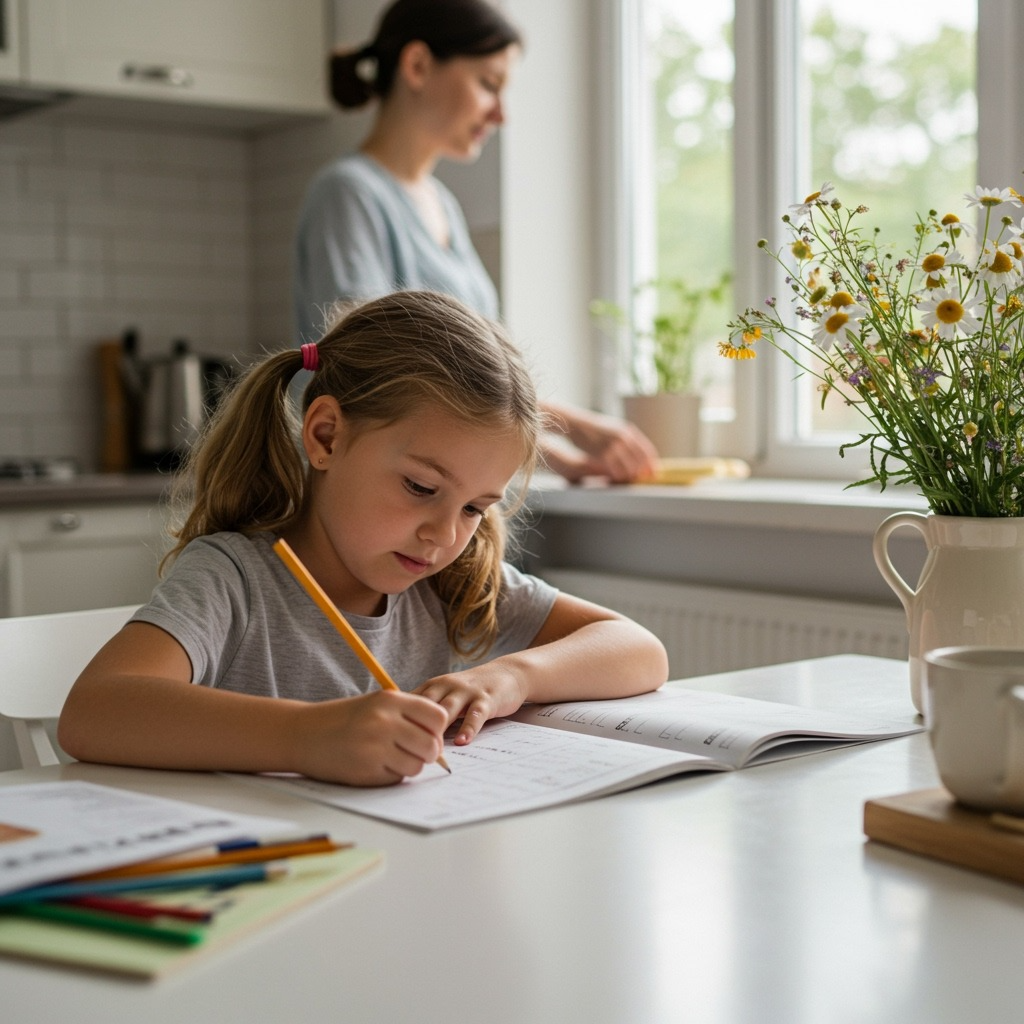
Every fiber of my being wants to protect my kids from discomfort. When my daughter forgot her lunch, I wanted to drive it to school. When my son struggled with a friend conflict, I wanted to call the other kid’s mom and sort it out. When homework felt too hard, I wanted to just do it for them so they could go to bed.
But according to research from Amen Clinics, allowing children to feel uncomfortable is actually one of the most important ways to build their mental strength. When we constantly rescue them, we accidentally teach them they’re incapable of handling hard things.
Here’s what I do now: I let the small struggles happen.
Forgot your lunch? You’ll figure it out—maybe the cafeteria has options, or a friend will share, or you’ll be extra hungry and remember next time. Friend drama? Let’s talk through it, role-play some responses, and see if you can work it out yourself before I step in. Homework hard? I’ll sit with you and guide you, but I won’t do it for you.
At first, it felt cruel. But you know what? My kids became more resourceful. More confident. More capable. Because they learned they could handle uncomfortable situations.
If you’re working on building independence in your child, it’s helpful to know developmental milestones like when kids start talking or when they learn to read, so your expectations are age-appropriate.
Teach Them Healthy Self-Talk
Remember my son’s math test meltdown? The real problem wasn’t the bad grade. It was what he told himself about the bad grade.
“I’m terrible at math.”
“I’ll never get better.”
“I’m not smart.”
That’s catastrophic thinking, and kids are pros at it. One setback becomes evidence of total failure. One mean comment becomes “everyone hates me.” One rejection becomes “I’ll never succeed.”
Our job is to teach them to reframe those thoughts. And honestly, this was a game-changer in our house.
Now, when negative self-talk starts, I help my son challenge it. Instead of “I’m terrible at math,” we reframe to “I struggled with this test, but I can study differently next time.” Instead of “I’ll never get better,” it’s “I’m still learning, and that’s okay.”
Here’s what the American Psychological Association recommends: teach kids to recognize negative thoughts, question whether those thoughts are true, and replace them with more realistic, balanced thoughts.
We even created little catchphrases my kids can repeat to themselves:
- “I can handle hard things.”
- “Mistakes help me learn.”
- “I’m still figuring it out, and that’s okay.”
It sounds cheesy, but it works. Now my son says them to himself without me prompting. And when he does, I see his whole body relax.
Make Gratitude a Daily Practice
When my middle daughter was going through a phase of complaining about everything, I started a new bedtime routine. Every night, each person had to share three good things from their day.
At first, she rolled her eyes hard. “Nothing good happened.”
But I kept at it. And slowly, something shifted. She started noticing small good things. A friend shared her snack. The art class was fun. The dog did something cute.
Gratitude is one of the most powerful tools for mental health—for kids and adults. According to research, practicing gratitude regularly actually rewires the brain to notice positive things more easily and increases overall happiness and resilience.
Here’s how we make it work:
- Three good things at dinner or bedtime
- A gratitude jar where we drop notes throughout the week
- Saying thank you to each other for small, everyday things
It’s not about toxic positivity or pretending hard things don’t exist. It’s about teaching kids that even on bad days, good things still happen. And that perspective? That’s mental strength.
Let Them Face Their Fears (In Small Steps)
My youngest was terrified of the dark. Like, panic-level terrified. For months, we used a nightlight and kept her door open. But I knew we couldn’t do that forever.
So we started small. Really small.
First, we made the nightlight a little dimmer. Then we closed the door halfway. Then we talked about what scared her and created a plan together. She picked out a special stuffed animal as her “protector.” We read books about brave kids. We practiced deep breathing.
It took weeks, but eventually, she asked if she could try sleeping with the door closed. And she did it. And she was so proud of herself.
According to experts, the key to helping kids face fears is gradual exposure in a safe environment. You don’t throw them into the deep end. You help them take one small step at a time, celebrating each bit of progress.
Now, when she faces something scary—a new activity, meeting new people, trying something unfamiliar—she remembers that she overcame her fear of the dark. And she knows she can do hard things.
Model Mental Strength Yourself
Here’s the uncomfortable truth: our kids are watching us. Always.
When I mess up and immediately beat myself up out loud (“Ugh, I’m so stupid, I can’t believe I did that”), my kids hear it. When I avoid difficult conversations or give up when something gets hard, they notice. When I catastrophize about small problems, they learn to do the same.
But when I model healthy coping? When I say things like, “That didn’t go how I wanted, but I’ll try again tomorrow,” or “I’m feeling really stressed, so I’m going to take a few deep breaths,”? They absorb that, too.
I’m not perfect at this. Not even close. But I’m more intentional now about how I handle my own setbacks in front of my kids. I talk about my feelings. I show them that I make mistakes and keep going. I let them see me work through problems instead of giving up.
Because the best way to teach mental strength? Live it.
Teach Problem-Solving Skills
A few months ago, my daughter was having ongoing conflicts with a friend at school. Every day, she’d come home upset. Every day, I’d want to march into that school and fix it.
Instead, I taught her to problem-solve.
We sat down together and broke it down:
- What’s the actual problem?
- What are some possible solutions?
- What are the pros and cons of each solution?
- Which solution do you want to try first?
- How will you know if it worked?
She decided to talk directly to her friend about how she felt. It was hard. It was uncomfortable. But it worked. And more importantly, she learned she could solve problems on her own.
Now, when challenges come up, I ask her: “What do you think you should do?” Instead of giving her the answer, I guide her through the thinking process. And slowly, she’s becoming a confident problem-solver.
If you’re looking for more ways to help your child develop critical thinking skills, activities like these fun trivia questions for kids can help build cognitive flexibility and resilience.
Build a Strong Moral Compass
Kids with clear values and a strong sense of right and wrong are more mentally resilient. Why? Because they have an internal guide for making decisions, even when things get tough or when peer pressure kicks in.
We talk about values a lot in our house. Honesty. Kindness. Respect. Responsibility. And we don’t just talk about them—we look for ways to practice them.
When my son lied about brushing his teeth, we didn’t just punish him. We talked about why honesty matters, how lying breaks trust, and how he can rebuild that trust over time. When my daughter excluded a classmate, we talked about kindness and how it feels to be left out.
Kids who understand why values matter—not just that they should follow rules—are better equipped to make good choices even when we’re not around. And that internal strength? That’s everything.
Encourage Healthy Risks
I used to be a helicopter parent. I hovered, I warned, I prevented every possible scrape and tumble.
But then I realized: kids need to take risks. Age-appropriate, supervised risks, sure—but risks nonetheless.
Climbing higher on the playground equipment. Trying out for a team. Performing in a talent show. Speaking up in class. Making new friends.
Every time they take a healthy risk and survive it (whether they succeed or fail), they build confidence. They learn that trying new things won’t kill them. They develop courage.
Now I bite my tongue more. I let my kids climb higher than they feel comfortable. I encourage them to try things that might not work out. And when they do fail? We talk about it, process it, and move on.
According to Psychology Today, children who are allowed to take reasonable risks develop better decision-making skills, greater self-confidence, and stronger resilience.

Validate Feelings While Encouraging Action
Here’s the balance I’m always trying to strike: I want my kids to know their feelings are valid, but I don’t want them to be controlled by those feelings.
When my son is nervous about a test, I don’t say, “You’ll be fine, don’t worry about it.” That dismisses what he’s feeling. Instead, I say, “I hear you. Tests can feel really stressful. And I believe you can handle it. Let’s make a plan so you feel more prepared.”
Validation + action. That’s the formula.
“I see that you’re really disappointed you didn’t get invited to that party. That hurts. What’s one thing that might make you feel a little better today?”
“I know you’re frustrated with that homework. It’s hard. Let’s take a five-minute break and then tackle it together.”
This approach teaches kids that their feelings matter, but they’re not powerless. They can feel upset AND take steps to cope. That’s emotional resilience.
Know When to Ask for Help
Let me be clear about something: building mental strength doesn’t mean you never seek professional support.
If your child is showing prolonged signs of anxiety, depression, excessive worry, behavioral changes, or emotional struggles that interfere with daily life, talk to your pediatrician or a child therapist.
Mental strength is about having tools to cope with challenges—but some challenges require more support than we can provide at home. And teaching our kids that asking for help is a sign of strength, not weakness? That’s one of the most important lessons of all.
I took my daughter to a therapist last year when her anxiety was interfering with sleep and school. It was one of the best parenting decisions I’ve made. She learned coping strategies I couldn’t teach her, and she came away stronger for it.
There’s no shame in getting support. In fact, seeking help when you need it is the ultimate demonstration of mental strength.
The Long Game
Building mental strength in kids isn’t a one-time conversation or a quick fix. It’s a long, consistent process of small actions, repeated over time.
It’s letting them struggle when every instinct says to rescue them. It’s modeling healthy coping even when you’re exhausted. It’s celebrating effort, not just outcomes. It’s teaching them to face fears, reframe thoughts, and solve problems.
Some days, I nail it. Other days, I fall back into old patterns—swooping in, fixing, protecting.
But overall? I see the difference. My kids are more resilient. More confident. More willing to try new things and bounce back from setbacks. They’re not perfect (neither am I), but they’re growing into strong, capable humans.
And honestly, that’s all we can really hope for.
So give yourself grace. Start with one small change. Maybe it’s letting them handle a problem on their own today. Maybe it’s practicing gratitude at dinner. Maybe it’s just modeling healthy self-talk when you make a mistake.
Small steps add up. And your kids are watching, learning, and growing stronger every single day.
Frequently Asked Questions
At what age should I start building mental strength in my child?
You can start as early as toddlerhood! Obviously, the strategies look different for a two-year-old versus a twelve-year-old, but the principles are the same. With young kids, it’s about letting them experience small frustrations (like struggling to put on their shoes) and teaching basic emotion words. As they get older, you introduce more complex concepts like problem-solving and reframing negative thoughts.
What if my child is naturally sensitive or anxious? Can they still become mentally strong?
Absolutely! Mental strength isn’t about changing your child’s temperament—it’s about giving them tools to work with their natural personality. Sensitive kids can be incredibly mentally strong because they’re often deeply empathetic and self-aware. The key is teaching them coping strategies that work for their specific needs, which might include more support around emotional regulation and facing fears gradually.
How do I know if I’m pushing my child too hard versus appropriately challenging them?
Great question. The difference is whether your child feels supported or alone in the challenge. Appropriate challenge means you’re there as a guide and cheerleader, letting them do the hard work but offering encouragement. Pushing too hard means expecting things beyond their developmental level, ignoring their feelings, or creating so much pressure that they shut down. Watch for signs of overwhelm, and always keep communication open.
My child gives up easily on everything. How do I build their persistence?
Start really small and celebrate tiny wins. If homework feels overwhelming, break it into five-minute chunks. If they quit soccer after one practice, maybe try a less intense activity first. Also, model persistence yourself—talk about times you wanted to quit but kept going. And most importantly, focus on praising effort over outcome. “I’m so proud of how you kept trying” matters more than “You did it perfectly.”
What’s the difference between mental strength and just being tough on my kids?
Mental strength is about building internal resilience and coping skills in a supportive environment. Being tough is about external pressure without emotional support. Mental strength says, “I believe in you, and I’m here to help you through this hard thing.” Being tough says, “Suck it up and deal with it.” One builds confidence; the other can create shame. The difference is empathy, connection, and teaching skills versus just demanding results.