
If there’s one phrase that tests every parent’s zen, it’s “I’m bored!”
I used to panic when I heard those words. My mind would race: Should I set up a craft? Turn on a show? Drive somewhere? But then I realized something important—boredom isn’t actually the enemy. It’s the starting line for creativity.
The truth is, kids need to feel bored sometimes. That uncomfortable space between activities? That’s where imagination kicks in. That’s where they learn to entertain themselves, solve problems, and discover what truly interests them.
But let’s be real: sometimes you need ideas. Fast. Whether it’s a rainy Saturday, summer break stretching endlessly ahead, or you just need fifteen minutes to answer work emails without hearing “Moooom!” seventeen times, having a mental list of go-to activities is parenting gold.
So here’s your ultimate boredom-busting arsenal—101 activities that range from quick five-minute wins to afternoon adventures. Some are quiet and creative, others are loud and energetic. Some sneak in learning, others are pure fun. All of them beat scrolling through a screen.
Quick Wins: No Planning, Maximum Fun
These are the activities you can suggest immediately when boredom strikes. No prep, no special supplies, no thinking required on your part.
- Build the tallest tower possible using whatever’s around—blocks, books, cups, even shoes. My kids once made a six-foot tower out of cereal boxes and were so proud when it finally crashed.
- Five-minute drawing challenge: Set a timer and draw the silliest animal you can imagine.
- Rearrange the bedroom: Let your child redesign their space. You’d be amazed at how seriously they take this.
- Shadow puppet theater: Hang a sheet, grab a flashlight, and perform a show.
- Tongue twister contest: See who can say “she sells seashells” fastest without messing up. Tongue twisters for kids
- Math joke battle: My son discovered these, and suddenly, math became hilarious. Math jokes for kids
- Living room dance party: One song, maximum energy, no judgment.
- Cup stacking Olympics: Time how fast everyone can stack and unstack plastic cups.
- Make up a magic trick: Even if it’s terrible, the process is fun.
- Would You Rather marathon: These questions get surprisingly deep and always spark conversation. Would you rather questions for kids
Picture this: two kids sprawled across the living room floor, surrounded by cushions, books, and random household items, laughing as they engineer the world’s wobbliest tower. That’s the kind of chaos-meets-creativity these activities create.
Creative Projects That Actually Hold Their Attention
I’ve learned that kids love making things—especially when they can personalize them or give them as gifts. These activities tap into that creative drive while keeping hands busy for more than five minutes.
- Friendship bracelets: Teach them simple braiding with yarn or cut-up old t-shirts.
- DIY animal masks: Paper plates, markers, and elastic string become instant costumes.
- Rock painting: We keep a bucket of painted rocks by the door for hiding around the neighborhood.
- Salt dough creations: This recipe is foolproof, and the sculptures last forever. Salt dough recipe for kids
- Cardboard construction projects: Boxes become spaceships, doll houses, or cities.
- Homemade bath bombs: These are easier than you think and make bath time magical. Bath bomb recipe for kids
- Design your own bookmarks: Great for readers who love decorating their current obsessions.
- Gratitude tree: Cut out paper leaves and write something you’re thankful for on each one.
- Q-tip or sponge painting: Different tools create surprisingly cool textures.
- Simple cardboard loom weaving: YouTube has great tutorials, and the results are impressive.
One rainy afternoon, my daughter spent three hours turning an Amazon box into an elaborate fairy castle, complete with a drawbridge made from popsicle sticks. The mess was worth it—she played with that castle for weeks.
Indoor Games for Solos and Siblings
When energy levels are high but outdoor play isn’t an option, these games save the day. They work whether your child is flying solo or has siblings to play with.
- Indoor scavenger hunt: Call out items and watch them race to find them. “Something blue! Something that starts with T!” Scavenger hunt for kids outside
- Dice tower building: Roll dice and build Lego towers with that many blocks—then see who can build the tallest structure.
- Minute-to-Win-It challenges: How many socks can you toss into the hamper in one minute?
- Charades: Act out book characters, animals, or movie scenes.
- Memory tray game: Display ten objects, remove one secretly, and guess what’s missing.
- Domino chain reactions: Line them up for as long as possible.
- Obstacle course: Use cushions, painter’s tape, and furniture to create a challenging path.
- Board game marathon: Dust off the classics or try new ones. Toddler board games
- Toy swap: Kids trade toys with each other for the week—suddenly, old toys feel new again.
Imagine a cozy fort built from every blanket in the house, with two kids inside giggling as they read by flashlight and plan their next adventure. That’s the kind of independent play these activities inspire.
Outdoor Adventures (Even in Your Backyard)
Fresh air changes everything. Even twenty minutes outside can reset moods and burn off energy that’s been building up indoors.
- Backyard nature safari: Bring a magnifying glass and notebook to document bugs, leaves, flowers, or rocks.
- Sidewalk chalk creations: Design mazes, hopscotch courses, or giant murals.
- DIY obstacle course: Set up stations with different challenges.
- Water balloon toss: Simple, fun, and everyone gets a little wet (which is kind of the point).
- Build a stick fort or fairy house: Natural materials, unlimited creativity.
- Seed planting in egg cartons: Watch them sprout over the next week.
- Nature walk with “I Spy”: Turn a regular walk into a game.
- Backyard relay races: Set up teams and compete in silly challenges. Relay races for kids
- Neighborhood art walk: Leave chalk drawings or painted rocks along your route for others to discover.
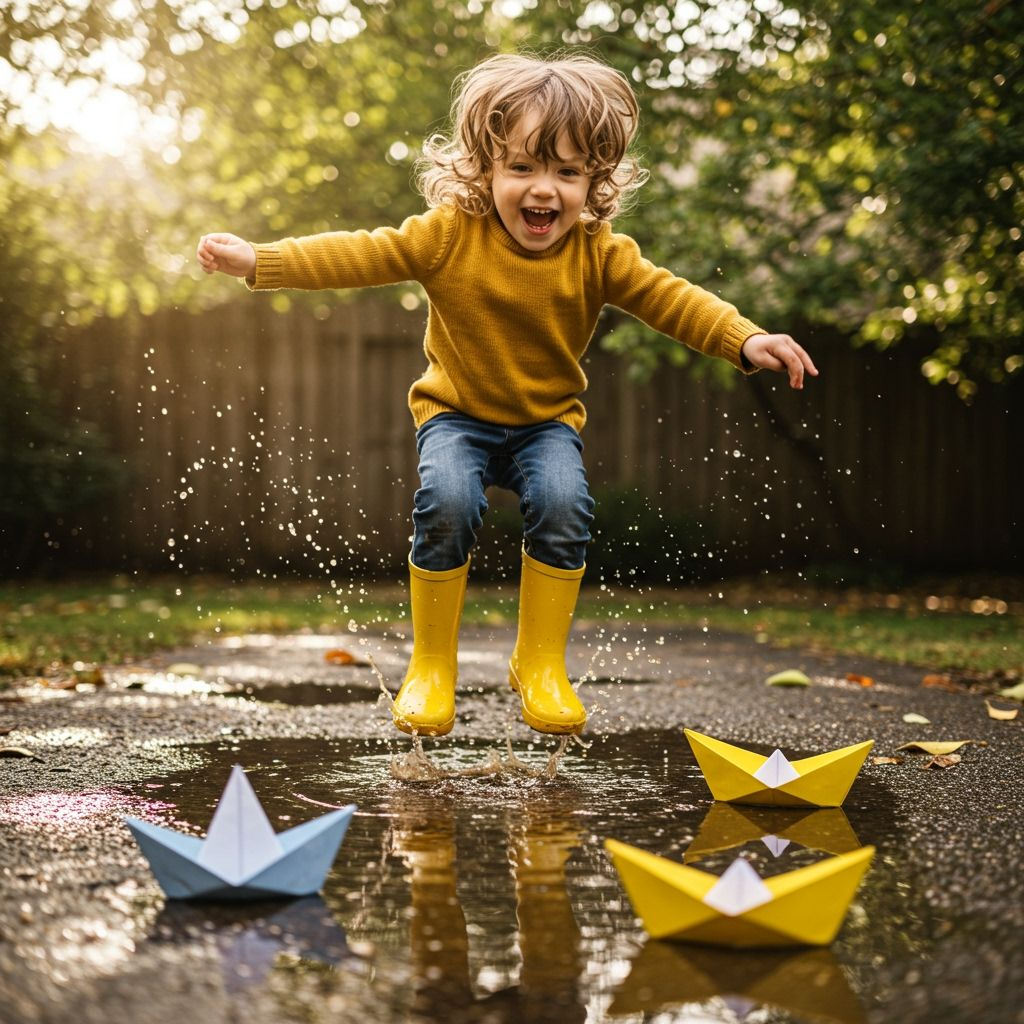
There’s something about watching a child in rainboots deliberately jumping into every puddle, launching homemade paper boats, and shrieking with joy as they float away. That’s pure childhood magic right there.
Sneaky Learning Activities (That Don’t Feel Like School)
These activities build skills without feeling like homework. They’re especially great for summer or school breaks when you want to keep your brain engaged.
- Write and illustrate a storybook: Let them dictate while you type, or have older kids do it themselves.
- Trivia challenges: Kids love testing their knowledge. Fun trivia questions for kids
- Spelling bee using magazine words: More fun than it sounds, especially with prizes.
- Science experiments: Baking soda volcanoes never get old, or try floating and sinking tests with household items.
- Marble run engineering: Use cardboard tubes, blocks, and tape to create elaborate paths.
- Timeline creation: Research and draw a timeline of dinosaurs, inventions, or their own life story.
- Daily fun facts tradition: Everyone shares something new they learned. Fun facts of the day for kids
- Sock juggling practice: Master the basics before moving to balls.
- Origami animals: Follow tutorials together and display the creations.
- Kitchen theater: Narrate cooking or snack-making like a TV cooking show (my kids find this hysterically funny).
According to child development experts at PBS Kids, play-based learning creates a deeper understanding than traditional instruction. When kids explore concepts through games and hands-on activities, they’re more likely to retain information and develop genuine curiosity.

Cooking and Baking Together
Food activities hit multiple goals at once: they teach practical skills, involve math and reading, keep kids occupied, and produce something delicious. Win-win-win-win.
- Pancake or muffin making: Measure, mix, pour, and enjoy. Easy pancake recipe for kids | Easy muffin recipe for kids
- Custom smoothie creation: Experiment with fruit combinations and let kids name their inventions. Kids smoothie recipe
- Build-your-own snack boards: Arrange fruits, crackers, and cheese into rainbow patterns.
- Fresh-squeezed lemonade: The arm workout is real, but so is the pride. Easy lemonade recipe for kids
- Cupcake decorating station: Set out toppings and let creativity run wild.
- Homemade mac and cheese from scratch: Way better than the box. Kids’ mac and cheese recipe
- “Chopped” challenge: Give each person a surprise ingredient to incorporate.
- Spice and herb guessing game: Blindfolded smell tests are surprisingly tricky.
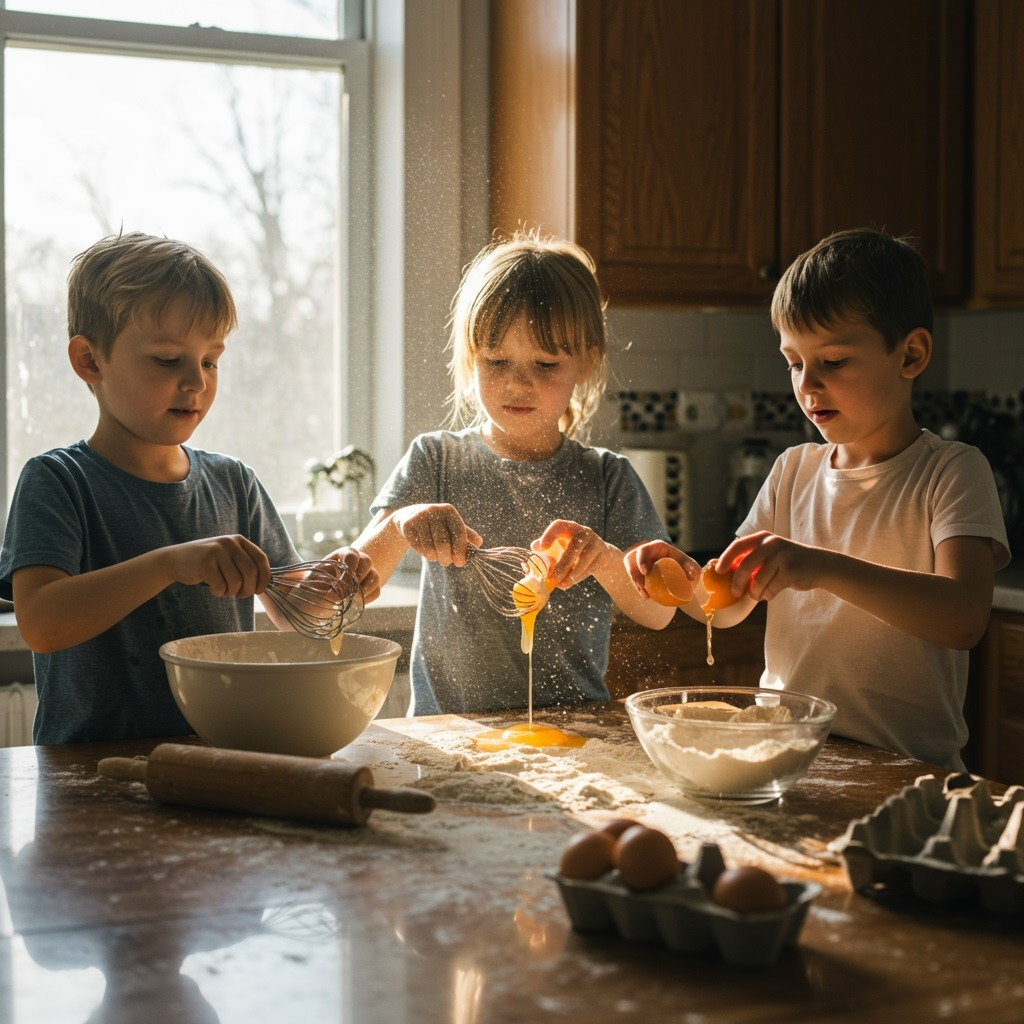
Picture three siblings crowded around the kitchen counter, flour dusting their noses, arguing good-naturedly about whose turn it is to crack the next egg while sunlight streams through the window. That’s the kind of memory-making mess cooking together creates.
Quiet Activities for Calming Energy
Not every moment needs to be high-energy. These activities help kids wind down, process emotions, or just enjoy some peaceful solo time.
- Write kind notes: My daughter leaves encouraging messages in library books for strangers to find.
- Listen to audiobooks while drawing: Double the creative input, double the calm.
- 15-minute sketch challenge: Set a timer and don’t stop your pencil.
- Origami crane marathon: See how many you can fold in one sitting.
- Puzzle building: Start one on a card table and work on it all week.
- Gratitude jar: Write positive moments on slips of paper throughout the day.
- Guided meditation: Even skeptical kids often enjoy this.
- Fort reading: Build a cozy space and get lost in a book.
- Journal writing: “The weirdest thing I saw today was…”
Imagine a child curled up in a blanket fort strung with fairy lights, headphones on, contentedly coloring while listening to a favorite story. That’s the power of quiet, independent activities.
Bigger Adventures and Group Activities
When you have more time or energy, these activities create the kind of memorable fun that kids talk about for weeks.
- Backyard carnival: Set up stations with bean bag toss, ring toss, and homemade prizes.
- Family mini-Olympics: Invent silly events like sock-skating races or longest hula hoop contests.
- Living room drive-in movie: Convert a big box into a car, make popcorn, and invite stuffed animals.
- Blindfolded taste test: Keep it safe and fun with familiar foods.
- Secret family handshake: Create something elaborate and ridiculous.
- Backwards dinner: Dessert first, then pizza for “breakfast.”
- Park photo quest: Who can spot the strangest thing?
Picture a family in the backyard hosting their own homemade Olympics, with construction paper medals and invented events like “furthest sock throw” and “fastest backwards crab walk,” everyone laughing so hard they can barely compete.
Social Connection (Even From Home)
Boredom sometimes means missing friends. These activities help kids feel connected even when they can’t be together in person.
- Video tour for grandparents: Give the faraway family a detailed house tour, pointing out new artwork or toys.
- Letter writing to pen pals: Old-school but still magical when a real letter arrives back.
- Virtual Pictionary: Use video chat and take turns guessing drawings.
- Joke battle with friends: Share favorites and crown a winner. Jokes for kids
- Book swap with neighbors: Leave recommendations on doorsteps and trade.
Next-Level Challenges for “We’ve Done Everything”
When your child insists they’ve exhausted all possibilities (they haven’t), offer these meta-challenges:
- Invent a new game: Create rules, test it, teach it to the family.
- Design a new helpful chore: Something useful but also fun (my son invented “toy rotation day”).
- Make neighborhood scavenger bingo: Create cards for a week-long treasure hunt.
- Start a family world records board: Document ridiculous achievements like the longest time balancing a spoon.
- Create a time capsule: Include photos, drawings, a letter to future-self, and favorite small items.
For seasonal inspiration, explore summer activities for kids or [beach activities for kids](https://peachytoes.com/beach activities for kids/).
The Magic of Letting Boredom Work
Here’s what I’ve learned after years of parenting through “I’m bored” phases: the best thing I can do sometimes is nothing. Not immediately jumping in with solutions teaches kids that boredom is temporary and they have the power to fix it themselves.
According to research from child development specialists, unstructured time is crucial for developing creativity, problem-solving, and self-direction. Kids who are allowed to be bored develop better coping skills and more resilience than those who are constantly entertained.
So the next time your child announces they’re bored, try this: acknowledge it (“Yeah, boredom is uncomfortable”), offer this list if they want ideas, but don’t feel pressured to immediately fix it. Sometimes the best activity is the one they invent themselves after sitting with boredom for a while.
For more ways to support your child’s independence and creativity, check out things for kids to do and watch how they surprise you with their ingenuity.
FAQ: Your Boredom Questions Answered
Is boredom actually good for kids?
Yes! Boredom creates space for creativity, self-reflection, and problem-solving. It’s uncomfortable, but that discomfort pushes kids to invent their own entertainment and discover what genuinely interests them. The key is not rescuing them immediately—give them time to work through it.
How can I motivate a child who says everything is boring?
Start by validating their feelings, then involve them in solution-finding. Print this list and let them highlight activities that sound interesting. Sometimes kids need ownership over the choice to feel motivated. Also consider whether they might be overstimulated—sometimes boredom is actually exhaustion disguised.
Should screen time ever be part of boredom-busting?
Moderate, intentional screen time (like following a cooking tutorial, taking a virtual museum tour, or video calling a friend) absolutely has value. The issue is passive scrolling or gaming that replaces hands-on creativity. Balance is key, and these activities offer alternatives when screens have dominated too much of the day.
How do I stop siblings from fighting when they’re bored together?
Give them a shared project or goal—building something together, preparing a surprise for a parent, or competing in a friendly challenge. If tensions are already high, separate them for solo activities first, then bring them back together once everyone’s regulated. Sometimes bored kids just need space from each other.
What if my child always wants me to play with them?
Connection is beautiful and important, but kids also need to develop independent play skills. Try the “start together, finish alone” approach: begin an activity together, then gradually step back. “I’m going to start dinner, but you keep building—I can’t wait to see what you make!” works better than abruptly leaving.
Boredom isn’t a problem to solve—it’s an opportunity to watch your child’s creativity bloom. The next time those two words fill your home, take a breath, consult this list if needed, and trust that your child has everything they need to turn “I’m bored” into “I’m building something amazing.”