
If there’s one thing I’ve learned as a mom, it’s that there’s pure magic in outdoor play. Whether it’s a spontaneous game of tag in the backyard, a full neighborhood kickball match, or a quiet afternoon spent chalking hopscotch on the driveway, outdoor games aren’t just about burning energy—they’re about building childhood memories that last a lifetime.
I’ll be honest: some days, getting my kids outside feels like an Olympic sport. The pull of screens is strong. But once we’re out there? The transformation is immediate. Suddenly, my nine-year-old is inventing new rules for tag, my six-year-old is belly-laughing as she misses the kickball for the third time, and I’m remembering what it felt like to just… play.
Today, let’s unlock the best outdoor games for kids, sprinkle in creative twists and must-know parent tips, and share routines that make it easy to keep the screens off, the giggles loud, and your family connected—all year long.
Why Outdoor Play is So Important (And Why We’re Failing at It)
Let’s face it: Modern life makes it far too easy to spend hours indoors. Between homework, extracurriculars, and the endless scroll of content designed to capture little eyes, kids desperately need a way to move, unwind, and connect with friends face-to-face. I’ve watched my own kids go from bouncing-off-the-walls energy to calm, happy tiredness after just thirty minutes outside. It’s almost like their nervous systems reset.
Outdoor games bring benefits we can’t replicate indoors:
- Physical health: Running, jumping, dodging—it’s cardio disguised as fun. Plus, all that activity means better sleep at night (finally!).
- Social development: Kids learn to take turns, handle losing gracefully, resolve squabbles, and celebrate others’ wins. These are life skills no app can teach.
- Creativity: A stick becomes a sword. A chalk line, a lava pit. Outside, imagination runs wild in ways a structured video game never allows.
- Mental well-being: Fresh air and movement reduce anxiety and boost mood for kids and grown-ups alike. Some of my best parenting moments happened while tossing a frisbee—not sitting across from each other at the dinner table.
For families searching for ways to stay active together, these ideas are endlessly adaptable—and perfect for bonding any season. And if you’re working on building connection through gentle parenting approaches, outdoor play is one of the easiest, most natural ways to do it.
Timeless Backyard Games Every Kid Should Know
Some outdoor games never go out of style. Here are all-time favorites guaranteed to get everyone moving, laughing, and begging for “just one more round!”
Tag and Its Endless Variations
I swear, tag is the universal language of childhood. No equipment needed. No instruction manual. Just “You’re it!” and suddenly everyone’s running.
But here’s where it gets fun—there are dozens of variations to keep it fresh:
- Freeze Tag: When tagged, kids must freeze in place like statues until unfrozen by another player. My kids love the drama of being “saved” at the last second.
- Sharks and Minnows: One child is the shark standing in the middle; the others (minnows) dash across the “sea” without being tagged. If caught, they become sharks too.
- Flashlight Tag: Play after sunset using flashlights. Whoever’s beam lands on you is “it.” This one is pure magic on summer nights.
- TV Tag: Kids call out TV show names to avoid being tagged. It’s silly and surprisingly challenging when you’re running out of breath.
Tag is perfect for mixed ages because you can adjust the rules on the fly. Younger kids get a head start. Faster kids have to hop on one foot. Make it work for your crew.

Hide and Seek (and Its Creative Cousins)
I have such vivid memories of hiding behind my grandma’s shed, heart pounding, trying not to giggle. That’s the power of hide and seek—it’s thrilling, simple, and adaptable to any space.
Here are my favorite versions:
- Classic Hide and Seek: One person counts (usually to twenty or thirty) while everyone else hides; the seeker tries to find them all.
- Sardines: This is reverse hide-and-seek, and honestly, my kids’ favorite. One person hides while everyone else searches. Each time someone finds the hider, they squeeze in and hide together. The last person searching becomes “it.” Watching four kids crammed behind a bush trying not to laugh is peak childhood.
- Camouflage: Perfect for wooded areas or playgrounds. The seeker closes their eyes and counts while players hide. Then the seeker stands in one spot and must spot hidden players without moving. If you’re spotted, you’re out.
Hide and Seek is endlessly replayable because the environment always changes. Try playing at dusk for an extra challenge—just set clear boundaries ahead of time so no one wanders too far.
Hopscotch
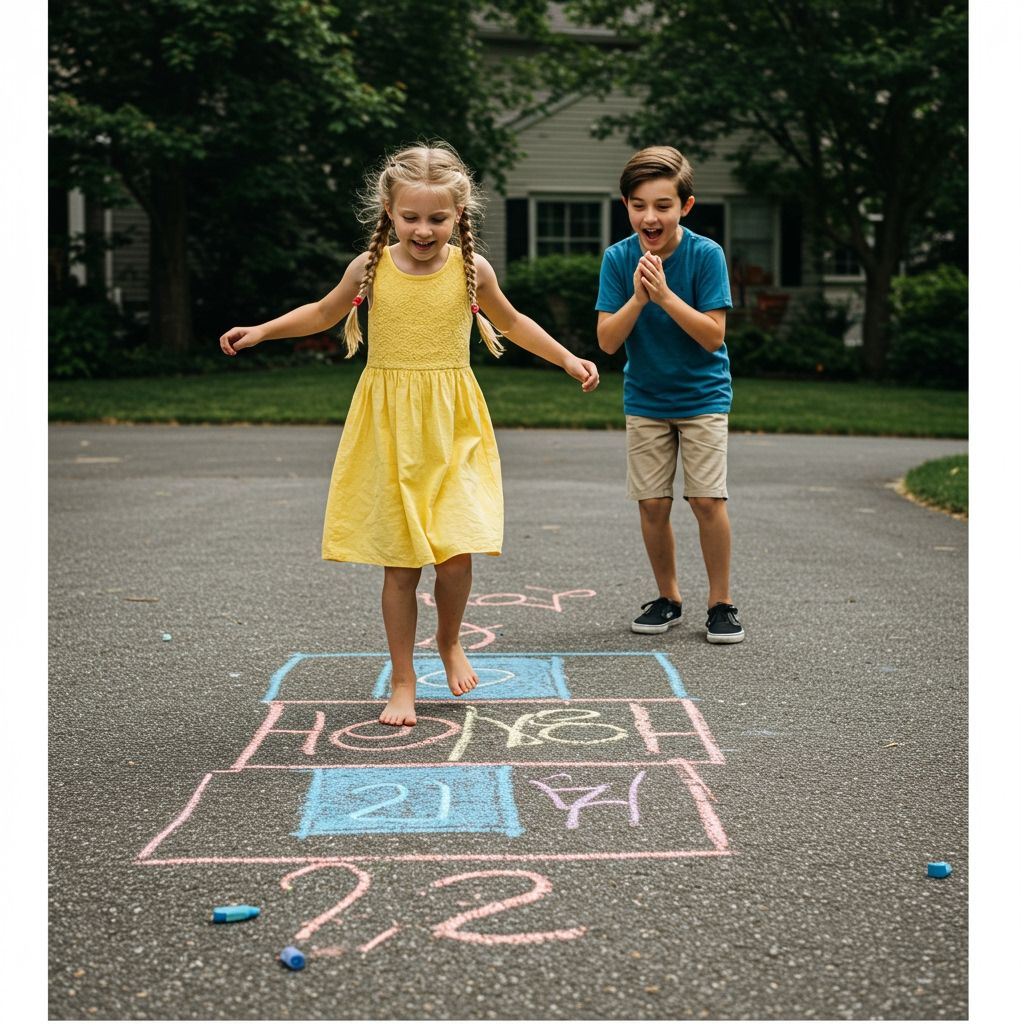
One of the oldest outdoor games in existence, hopscotch requires just sidewalk chalk and a rock. Draw a numbered grid, toss your marker, and hop through the course without touching lines or losing balance.
But don’t stop there. Get creative:
- Try “math hopscotch,” where kids solve problems at each square (find inspiration with our math jokes for kids to keep learning playfully).
- Add silly rules like hopping backwards, eyes closed, or on one foot the whole time.
- Let kids design their own hopscotch patterns—spirals, zigzags, whatever their hearts desire.
Relay Races and Obstacle Courses
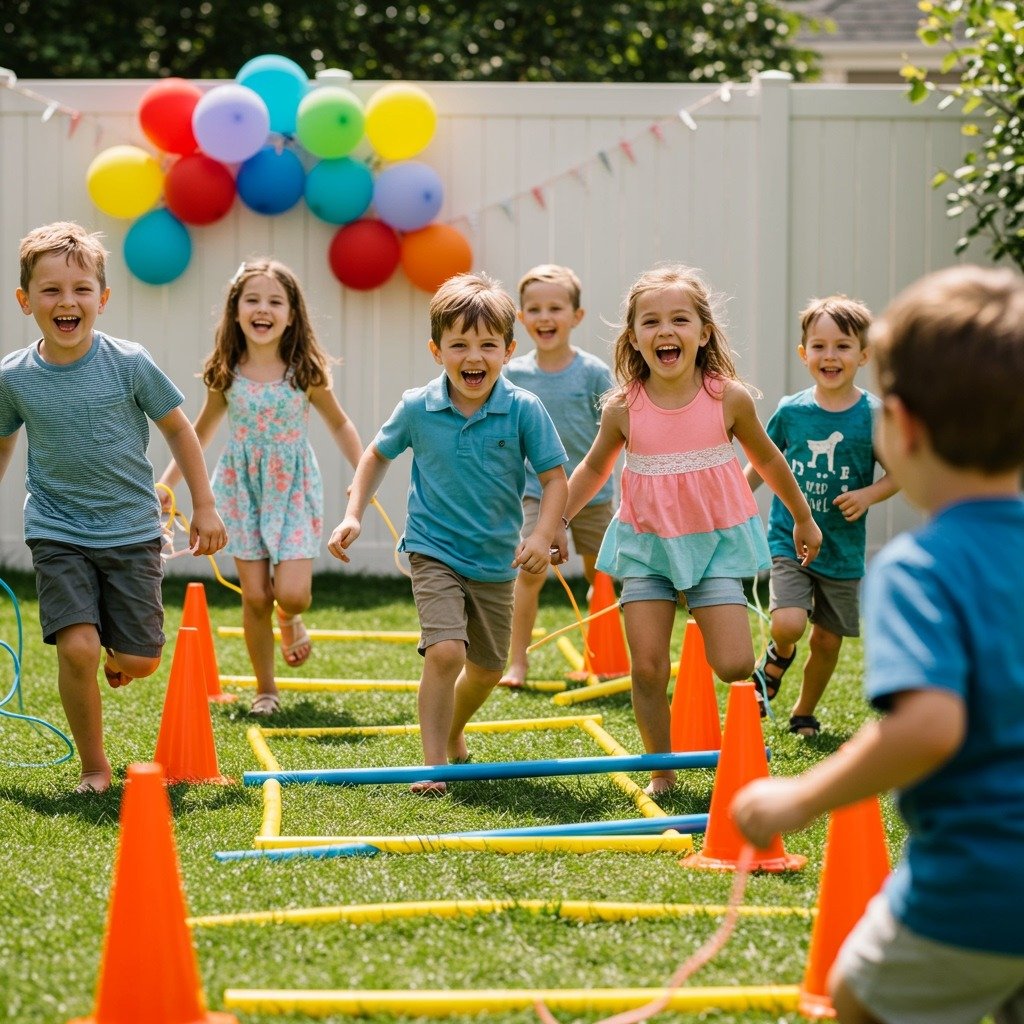
Want to burn off serious energy or add some friendly competition? Line up for relay races. These are lifesavers at birthday parties, family reunions, or just because it’s Saturday and everyone’s restless.
Try these:
- Egg on a Spoon Race: Balance an egg (use plastic ones for sanity’s sake!) and race to the finish without dropping it.
- Three-Legged Race: Pair up and tie one person’s right ankle to their partner’s left ankle. Chaos and laughter guaranteed.
- Sack Race: Hop your way to victory using old pillowcases or burlap sacks.
- Obstacle Course: Use cones, hula hoops, jump ropes, pool noodles—let kids help build the course! They love being in charge of design.
Relays secretly teach cooperation, balance, and good sportsmanship. For even more relay ideas, check out these relay races for kids that work for all ages.
Kickball and Classic Team Sports
Kickball is basically baseball’s chill cousin. All you need is an open space, a soft rubber ball, and a willingness to make up the rules as you go.
Here’s why kickball works so well:
- Use jackets, cones, or sticks as bases—no expensive equipment needed.
- Adjust field size and rules for different ages. Littles get extra kicks. Older kids pitch.
- Everyone gets a turn. No one sits on the bench feeling left out.
Kids love team games because they feel “official” but flexible enough that nobody’s keeping a real score (unless your crew is ultra-competitive—then by all means, keep score!).
Creative Outdoor Games for Every Setting
Don’t have a huge backyard? No problem. These outdoor games work in driveways, on sidewalks, at the park, or even in apartment courtyard spaces.
Four Square
Draw a big square divided into four smaller squares with chalk. Each player claims a square and bounces a rubber ball back and forth, trying to keep it within the lines. If you “miss” or the ball goes out of bounds on your turn, you rotate squares or exit, and someone new joins.
Four square teaches quick reflexes and staying alert. Plus, kids can play for hours without getting bored—they’ll create their own rule variations (like “cherry bomb” or “no hesitations”).
Scavenger Hunts for Nature Lovers
Create a list of objects (pinecones, smooth rocks, red leaves, dandelions) or sights (a blue car, a butterfly, something round). Let your kids race to find each item. You can even turn it into a photo scavenger hunt with your phone.
I love scavenger hunts because they work anywhere—neighborhood walks, hiking trails, beaches, even your own backyard. For ready-to-use clues and printable ideas, grab these scavenger hunt for kids outside tips.
Scavenger hunts are especially fun during seasonal changes when new treasures appear. Spring flowers, fall acorns, summer seashells—each season brings fresh discoveries.
Hula Hoop Contests
Challenge kids to see who can spin a hula hoop the longest, do it on one foot, or walk while hooping. Hula hoops also double as instant targets for bean bag tosses, bases for running games, or even jump ropes if you’re desperate.
We keep a few cheap hula hoops in the garage, and they get used constantly. Sometimes for hooping, sometimes as props in elaborate pretend games. They’re surprisingly versatile.
Water Balloon Toss
Perfect for hot days! Pair kids up and have them toss a water balloon back and forth, stepping farther apart after each successful catch. The last pair with an unbroken balloon wins (and everyone gets soaked eventually—which is half the fun).
Safety tip: Use soft-sided balloons and keep refill buckets away from the play area to avoid slips. Also? Buy way more balloons than you think you’ll need. Trust me.
If you want more ways to keep kids entertained outdoors, explore our giant list of fun activities for kids for all weather and ages.
Parachute Play
If you own (or can borrow) a large play parachute or even a big picnic blanket, gather a group and create waves, pop foam balls on top, hide underneath for “mushroom” fun, or all run in a circle holding the edge.
These activities are staples at preschools and camps for good reason—kids never tire of them. There’s something mesmerizing about the colors, the movement, the teamwork required.
Unique, Less-Known Outdoor Games
If your crew is tired of the “usual suspects,” here are some fresh ideas that fly under the radar but are absolute hits:
Shadow Tag
In this twist on classic tag, “it” must step on another player’s shadow to tag them—not their actual body. It works especially well early in the morning or late afternoon when shadows are long and dramatic.
My kids love this version because it adds a visual puzzle element. Plus, on cloudy days, the game changes entirely!
Statues (Freeze Dance—Outdoors!)
Play music from your phone or a portable speaker. Let kids move, dance, run, and be as silly as possible. When the music stops, everyone freezes like a statue until it resumes. Anyone caught moving is out (or does a silly challenge to get back in).
This is low-prep, high-energy, and works beautifully for mixed-aged groups at parties or playdates.
Balloon Tennis
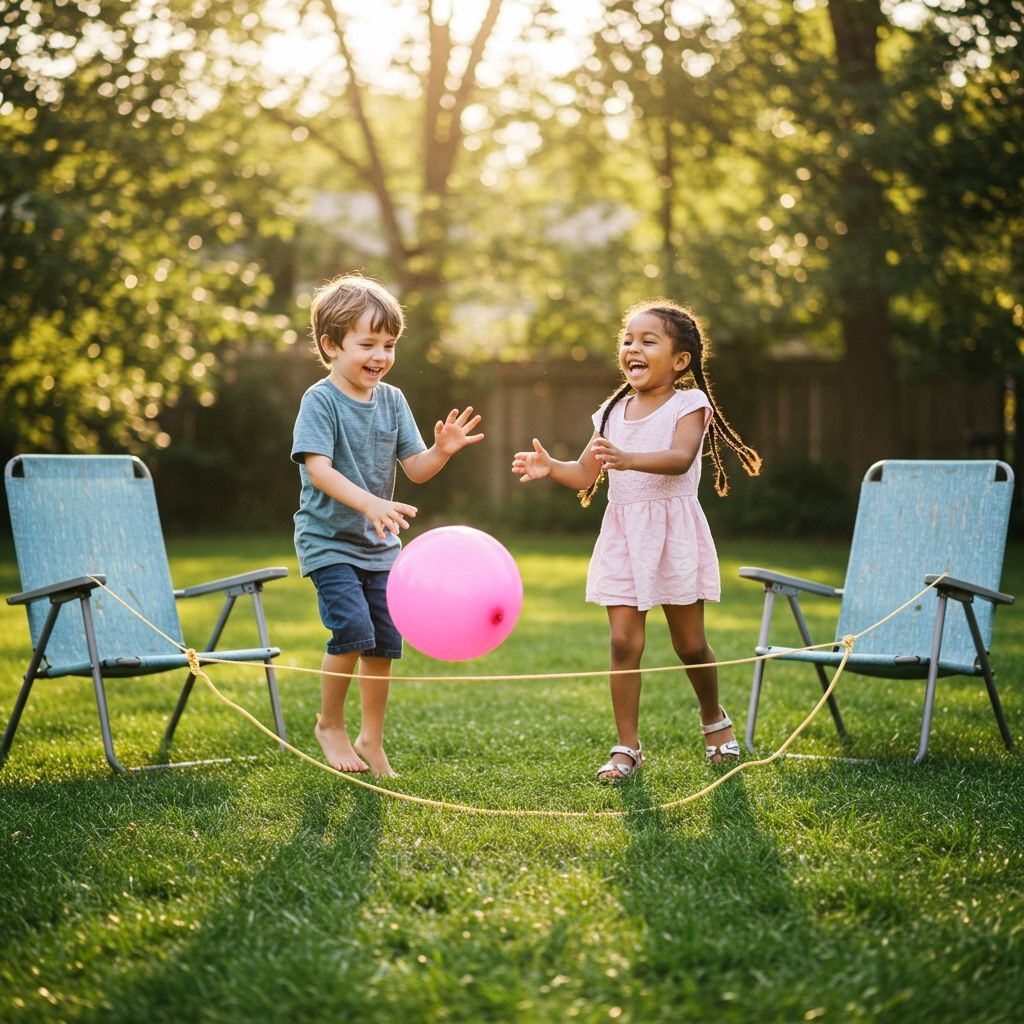
Make rackets from fly swatters, paper plates taped to paint stirrers, or even your hands. Toss a balloon over a rope or imaginary net and volley it back and forth.
Balloons move slowly through the air, making this safe and accessible even for toddlers. It’s a great way to include younger siblings without them getting hurt or overwhelmed.
Human Knot
Form a circle with at least six kids. Everyone reaches across and holds hands with two different people (not next to you). Now, without letting go, work together to untangle yourselves and form a circle again.
This is a fantastic icebreaker for new groups and teaches problem-solving, patience, and teamwork. Fair warning: it gets loud, giggly, and occasionally frustrating—but that’s part of the fun.
Bean Bag or Cornhole Toss
Use a board with a hole (you can DIY one easily) or just mark targets on the driveway with chalk. Each player tosses bean bags, earning points for accuracy.
This is a calm way to end a busy outdoor session or mix up backyard play before dinner. Bonus: even grandparents and little cousins can join in.
Themed Outdoor Games: Bringing Imagination to Life
Kids’ creativity knows no bounds—harness it by adding themes to familiar games:
- Pirate Treasure Hunt: Hide coins or plastic “gems,” draw a rough treasure map, and let kids search for buried loot.
- Dinosaur Explorer Dig: Hide “fossils” (painted rocks or toy bones) in a sandbox and let kids carefully excavate them with brushes and spoons.
- Superhero Training Course: Set up physical challenges—jumping over “buildings” (boxes), crawling under “laser beams” (string), balancing on “tightropes” (tape lines).
- Outdoor Science Adventures: Mix games with learning by sharing fun facts of the day for kids as you explore the garden, observe insects, or test physics with ramps and balls.
Themed play transforms ordinary afternoons into epic adventures. And the best part? Kids remember these experiences far longer than any toy they unwrapped.
How to Make Outdoor Games Work for Your Family
Here’s what I’ve learned after years of wrangling kids outside:
- Rotate the Rules: Keep things fresh by letting your child change up classic games. Maybe in freeze tag, frozen players have to do a silly pose. Maybe kickball bases are run backwards. Ownership makes kids more invested.
- Embrace All Weather: The best memories aren’t always made on “perfect” days. Rain boots and puddle jumping? Magical. Snow forts and epic snowball fights? Legendary. Dress for the weather and go outside anyway.
- Set Up Play Dates: Invite neighbors or school friends for a mini-Olympics with homemade medals or popsicle prizes. Kids play longer and harder when friends are involved.
- Empower the Quiet Kids: Not every child wants to lead or be the loudest. Help them shine by letting them design a new game, keep score, or choose which activity comes next.
- Share the Fun: Encourage kids to invite family members into the game. Nothing brings belly laughs like watching grandpa try the three-legged race or dad attempt a hula hoop.
Make every day feel special. Even weekday afternoons or quick after-school sessions outdoors can shift everyone’s mood and energy.
Safety Tips for Every Outdoor Game
I’m not trying to be a buzzkill, but a few simple precautions make outdoor play safer and more enjoyable:
- Check the play area for hazards like sharp sticks, holes, broken glass, or nearby traffic.
- Set clear boundaries before starting any game—use cones, chalk lines, or natural markers like trees or fences.
- Remind kids about fair play: Kind words, taking turns, and playing safely are non-negotiables. If you need talking points for handling disputes, explore soft parenting tips for gentle but effective approaches.
- Keep water on hand, especially during hot weather. Dehydration sneaks up fast when kids are having fun.
- Apply sunscreen before going out—even for “just a few minutes.” (Spoiler: it’s never just a few minutes.) Learn more about safe sun protection for the whole family.
- Supervise younger children, but give older kids the independence they crave. Finding that balance is tricky but crucial.
- For large groups or unfamiliar settings (parks, beaches, community events), consider color-coded shirts or wristbands for easy headcounts.
Quick Game Ideas for Small Groups or Siblings
Don’t need a whole neighborhood? These work perfectly for just two or three kids:
- Simon Says: One person leads commands; players only follow if the leader says “Simon says!” first. Classic, simple, and surprisingly challenging.
- Red Light, Green Light: Kids try to reach “it” as fast as possible, but must freeze instantly when “red light!” is called.
- Duck, Duck, Goose: Perfect for younger kids and quick backyard rounds when you just need fifteen minutes of entertainment.
- DIY Obstacle Course: Create paths with chairs, buckets, jump ropes, and whatever else you find. Let kids design it themselves or time each other for added competition.
Encouraging Teamwork and Inclusion
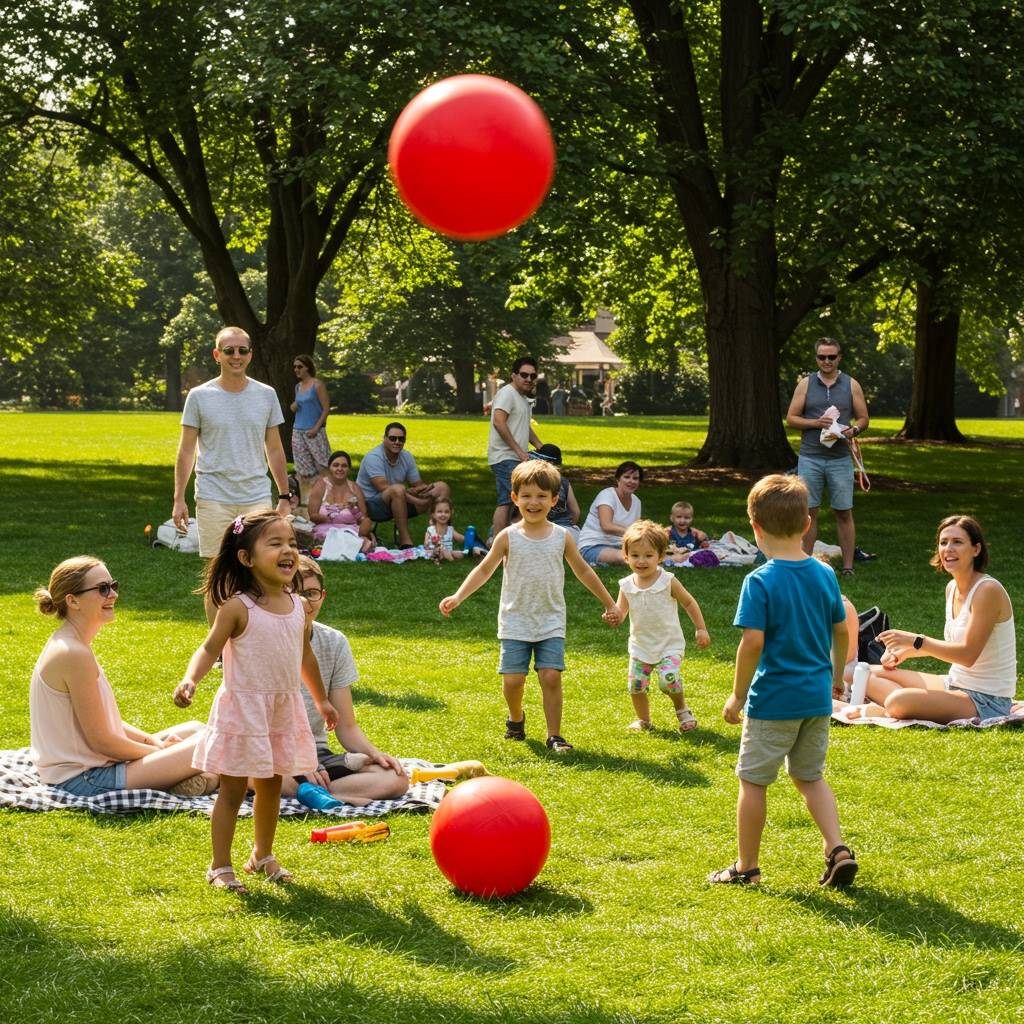
Great games build great kids. Here’s how to foster positive play:
- Rotate who gets to be “it” or pick teams so everyone feels included.
- Cheer for everyone, especially when someone is out, loses, or is struggling. Model good sportsmanship yourself.
- Create positive pre-game rituals like team chants or high-fives before starting.
- Help younger siblings understand the rules or practice new skills during off times.
- Celebrate effort, not just winning. Some of my proudest parenting moments have come from watching my kids encourage each other after a loss.
If you’re looking for more ways to spark connection and joy, check out our favorite conversation starters for kids to mix laughter with learning.
Building Outdoor Play into Your Daily Family Rhythm
Making outdoor games a habit rather than a special occasion changes everything:
- Designate “outdoor time” on weekdays—even just 20–30 minutes after school makes a huge difference in behavior, appetite, and sleep.
- Use weekends for adventure games or trying new activities together.
- Keep a basket by the door with balls, sidewalk chalk, jump ropes, bubbles, and sunscreen so kids can grab and go anytime.
- Try seasonal games: Snow forts in winter, leaf pile jumping in fall, glow stick tag after sundown in summer.
- Invite the neighborhood to set up a regular “game night” outside—rotate houses, share snacks, build community.
Encourage kids to invent their own games, make up new rules, and share ideas during family meetings. Creativity and ownership make outdoor play even more rewarding.
Fun Ways to Celebrate Outdoor Game Days
Turn ordinary play into something kids look forward to all week:
- Host a mini-Olympics or backyard carnival with stations for each game and silly prizes.
- Make medals or certificates for participation, sportsmanship, creativity, or speed.
- Decorate your space with homemade flags, banners, or balloons.
- Create a “play journal” with photos and notes about favorite games—kids love looking back at their adventures years later.
Bringing the Fun to Local Parks and Beaches
You don’t need a big backyard for epic outdoor play. Explore new parks, hiking trails, splash pads, or community gardens. Play tag in the sand, fly kites at the beach, or just wander and see what games naturally emerge.
Looking for more tips to make outings safe, fun, and low-stress? Don’t miss these beach activities for kids for sunny day inspiration that actually works.
Final Thoughts: Why Every Childhood Should Be Brimming with Outdoor Games
Outdoor games are simple, fun, and need almost nothing to get started. No fancy equipment. No instruction manuals. Just space, imagination, and a willingness to play.
They spark creativity, build lifelong friendships, strengthen bodies, and create memories that stick—not just for kids, but for us parents too. Some of my best childhood memories are of neighborhood kickball games that lasted until the streetlights came on. I want that for my kids. I want them to know what it feels like to be so tired from playing that they fall asleep before their head hits the pillow.
Whenever screens or busy schedules threaten to take over, remember: you have a toolbox of timeless games, laughter, and easy routines to bring play back to the heart of your family.
Need more inspiration for all ages and weather? Discover even more fun activities for kids, and embrace every day as a chance to play, learn, and grow—together.