
Last Thanksgiving, I made a critical mistake. I sat my three kids down with what I thought was the perfect Thanksgiving story—a beautifully illustrated book about the First Thanksgiving that I’d spent $25 on. Five minutes in, my 4-year-old was picking at the carpet, my 7-year-old asked if we could watch TV instead, and my 9-year-old flat-out said, “Mom, this is boring.”
That moment sent me on a mission to find Thanksgiving stories that actually work—ones that teach gratitude without feeling like a history lecture, hold attention spans that rival fruit flies, and create the kind of cozy family moment I’d been dreaming about.
After reading dozens of Thanksgiving stories with my kids, I finally found the ones that stick. Some teach history in ways that make sense to little brains, others make us laugh until we snort, and one particular story has become such a tradition that my kids ask for it every single November.
Why the Right Thanksgiving Story Actually Matters
Here’s what I didn’t realize until I became a mom: not all Thanksgiving stories are created equal. Some are too complex, some are too simplified, and some completely miss what Thanksgiving is really about for our families.
The best Thanksgiving stories do three important things. First, they teach gratitude in a way that doesn’t sound like we’re lecturing. Second, they make history or values accessible without dumbing them down. And third, they create a moment worth repeating year after year.
I used to think any turkey-themed book would work, but I was wrong. What our kids actually need are stories that help them understand why we gather, why we say thanks, and how positive parenting moments like these shape their understanding of gratitude.

The Classic: The First Thanksgiving Story (Simplified for Real Kids)
Every kid should know the basic story of the First Thanksgiving, but here’s the thing—most versions are way too complicated for young children. The version that finally worked for my kids focuses on the essentials without overwhelming them with dates and details they won’t remember anyway.
The simple story goes like this: A long time ago, people called Pilgrims traveled on a big ship called the Mayflower to find a new home. The journey was hard, and when they arrived, they didn’t know how to grow food in this new place. Luckily, the Native Americans who already lived there were kind and taught them how to plant corn and other crops. When harvest time came and there was plenty of food, everyone celebrated together with a big feast. This was the first Thanksgiving—a time to be thankful for food, new friends, and working together.
For toddlers and preschoolers, I keep it even simpler. I focus on three main ideas: people needed help, kind neighbors taught them, and they all celebrated together. That’s it. No need to explain religious persecution or complex historical context to a 3-year-old.
What I emphasize when telling this story: cooperation, sharing, gratitude, and community. What I skip: anything that might confuse or frighten them. The goal is to plant the seed of understanding, not deliver a comprehensive history lesson. Educators at Scholastic offer helpful guidance on presenting historical topics in age-appropriate ways that respect both accuracy and developmental readiness.
Modern Thanksgiving Stories Kids Actually Love
While the historical First Thanksgiving story has its place, some of the best Thanksgiving stories for kids are actually the funny, adventurous, modern ones that sneak in gratitude lessons without kids even realizing it.
Turkey rescue adventures are huge hits in our house. Stories like “The Turkey Rescue Mission” follow kids who try to save a turkey from becoming dinner—which sounds silly but actually opens up great conversations about compassion and tradition. My kids giggle through the whole thing and somehow still absorb the message about being kind.
Mystery stories with Thanksgiving themes work magic on slightly older kids. The “Thanksgiving Feast Mystery” had my 9-year-old completely engaged, trying to solve the puzzle while learning about family traditions. These stories prove that teaching values doesn’t have to feel like teaching at all.
Then there are the laugh-out-loud funny tales. Stories about talking cranberries or turkeys who want to dance might seem ridiculous, but they make Thanksgiving memorable. And honestly, after the chaos of actual Thanksgiving Day, we all need stories that make us laugh.
The common thread in all these modern stories? They teach thankfulness through characters kids can relate to, not through lectures about what they should be grateful for. That’s the secret sauce that actually works.
Age-by-Age Story Recommendations (Because What Works at 3 Fails at 8)
The Thanksgiving story that captivated my toddler completely bombed with my third-grader, which taught me that age-appropriateness really matters.
For ages 2-4, stick with simple stories that have rhythm, repetition, and lots of pictures. “The Thankful Book” by Todd Parr is perfect for this age because it shows gratitude in concrete ways little ones understand—thankful for hugs, for sunny days, for bedtime stories. These kids need to see and touch concepts, not think abstractly about them.
Ages 5-7 are ready for slightly more complex narratives with clear beginnings, middles, and ends. This is when stories like “Bear Says Thanks” work beautifully because there’s a problem (Bear has nothing to serve guests) and a solution (friends bring food to share). The gratitude message is wrapped in a story structure they can follow.
For ages 8-10, go for stories with depth, mystery, or humor that don’t feel babyish. “The Great Thanksgiving Escape,” about kids trying to escape the chaos of family Thanksgiving, resonates because they’re old enough to recognize the funny truth in it. They also appreciate stories that acknowledge Thanksgiving isn’t always picture-perfect.
My mistake in the past years? Trying to find one story that would work for all three kids. Now I know that sometimes we need different stories for different ages, or we rotate who picks the Thanksgiving story each night. This approach has saved our story time from complete disaster.
Understanding what age your child is ready for also connects to knowing what kids learn at different stages, which helps set realistic expectations for story comprehension.
Our Family’s Favorite: The Gratitude Story That Changed Everything
After trying dozens of Thanksgiving stories, the one that became our non-negotiable tradition is surprisingly simple. It’s the story of Emma, a little girl who didn’t understand what being thankful really meant.
In the story, Emma loves Thanksgiving for all the surface stuff—the food, the fun, the presents from relatives. But when her mom asks what she’s thankful for, Emma realizes she doesn’t actually know what “thankful” means. So she asks everyone in her family what they’re grateful for.
Her dad says he’s thankful for family time. Her grandma is grateful for her health and watching Emma grow. Even her little brother chimes in that he’s thankful for pie. Through these conversations, Emma realizes that gratitude isn’t about stuff—it’s about people, moments, and experiences that make her happy.
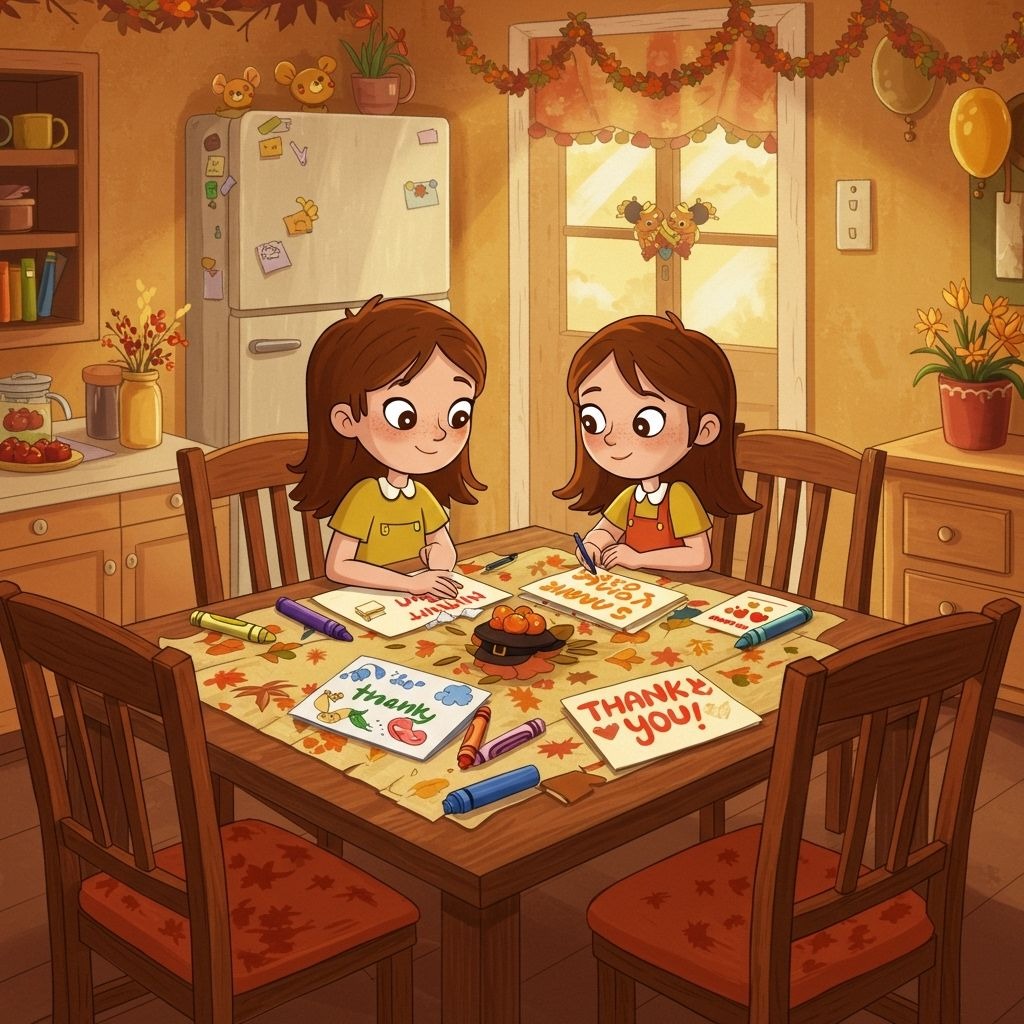
The next day, Emma makes thank-you cards for everyone at the Thanksgiving table, and it becomes this beautiful moment of genuine appreciation.
Why this story stuck with us: It’s not preachy, it shows a kid genuinely figuring something out, and it gave my own kids language for their feelings. After we first read it, my 7-year-old started pointing out things she was thankful for without me prompting her. That’s when I knew we’d found something special.
We read Emma’s story every Thanksgiving morning now, right before we start cooking. It sets the tone for the whole day in a way that “remember to be grateful!” lectures never did. Sometimes the simplest stories create the biggest impact, especially when they align with teaching kids emotional intelligence.
Free Thanksgiving Stories You Can Read Tonight
Here’s something I wish I’d known sooner: you don’t need to spend money on Thanksgiving stories. There are incredible free resources that have become staples in our home.
Classic short stories by famous authors are in the public domain, which means free downloads for families. “Why He Carried the Turkey” by James Baldwin is a beautiful, simple story about real humility that takes maybe 10 minutes to read. “Captain Christy’s Thanksgiving” by Carolyn Sherwin Bailey is about children showing gratitude to someone who helped them—and it’s completely free.
For slightly older kids, “Two Thanksgiving Day Gentlemen” by O. Henry has that classic twist ending that makes kids want to talk about what they just heard. These aren’t dusty old stories—they’re actually really engaging.
Online story sites offer even more free options. ReadTheTale.com has an entire collection of original Thanksgiving stories with audio versions, perfect for car rides or quiet time. PBS Parents also provides excellent free resources and story recommendations that align with educational values and age-appropriate content.
I keep a folder on my phone with downloaded PDF stories so we always have options, even when we’re at Grandma’s house without our usual books. It’s also handy for keeping kids occupied during Thanksgiving meal prep—just hand them a tablet with a story and buy yourself 15 minutes of peace.
The best part about free stories? You can try several without commitment and figure out which ones your kids actually like.
How to Make Story Time Special This Thanksgiving
Reading a Thanksgiving story isn’t just about the words on the page—it’s about creating that cozy moment that kids remember. After years of trial and error, I’ve learned a few tricks that make story time actually special instead of just another thing we rush through.
Setting the mood makes a bigger difference than I expected. We turn off overhead lights and use the soft glow from our fireplace or lamp. Sometimes I light a cinnamon-scented candle (safely out of reach!). These small touches signal to my kids that this is different from regular reading time.
Interactive storytelling keeps wiggly kids engaged. I pause to ask questions like “What do you think happens next?” or “How do you think that character feels?” For my youngest, I let her point to pictures and name the things she sees. My older kids love it when I use different voices for different characters, even though I sound ridiculous.
After the story ends, we don’t just close the book and move on. I ask questions that connect the story to our lives: “What are you thankful for?” or “Can you think of a time when someone helped you like in the story?” These conversations are where the real magic happens, similar to the meaningful questions we should ask our kids regularly.
Turning stories into activities extends the learning. After reading about the First Thanksgiving, we sometimes do a simple craft or nature scavenger hunt to collect things we’re grateful for. After reading Emma’s gratitude story, my kids wanted to make their own thank-you cards just like she did.
The key is making story time feel like a treat, not a chore. When kids associate Thanksgiving stories with warmth, attention, and fun, they’ll actually ask for them year after year. Reading Rockets offers wonderful tips on interactive reading strategies that boost both comprehension and enjoyment during family story time.
Creating Your Own Thanksgiving Story Tradition
The biggest shift in our family happened when we stopped just reading other people’s stories and started creating our own Thanksgiving tradition.
We started a simple gratitude journal three years ago. It’s just a spiral notebook where everyone writes or draws one thing they’re thankful for in the days leading up to Thanksgiving. My 4-year-old draws pictures (usually of our dog), my 7-year-old writes sentences, and my 9-year-old has gotten surprisingly deep with her entries. On Thanksgiving Day, we read through all the entries together.
Recording our own family Thanksgiving story each year has become something my kids look forward to. I use my phone to record audio of each child answering questions like “What was your favorite thing that happened this year?” and “What are you most grateful for?” When we play back recordings from previous years, they’re amazed at how much their voices have changed and what they used to think was important.
Making story time non-negotiable was the hardest but most important change. Even when we’re exhausted, even when we’re visiting relatives, even when Thanksgiving feels chaotic—we read at least one Thanksgiving story. This consistency is what transforms a nice idea into an actual tradition.
The beautiful thing about traditions? They don’t have to be elaborate or Pinterest-worthy. They just have to be consistent and meaningful to your family. Whether it’s reading the same story every year, creating gratitude cards, or starting your own family journal, the act of doing it together matters more than doing it perfectly. National Geographic Kids offers engaging ways to turn reading into interactive family experiences that build lasting memories.
These traditions also support the broader goal of raising grateful, thoughtful kids through positive discipline techniques that emphasize values over rules.
Frequently Asked Questions
What is the best Thanksgiving story for toddlers?
The best Thanksgiving stories for toddlers are simple, repetitive, and highly visual. “The Thankful Book” by Todd Parr works wonderfully because it shows concrete examples of gratitude that young children can understand and relate to—like being thankful for hugs, pets, or sunny days. Keep the message simple and focus on pictures and rhythm rather than complex narratives.
How do I explain the First Thanksgiving to preschoolers?
Explain the First Thanksgiving to preschoolers using very simple language: people traveled to a new place, needed help learning to grow food, kind neighbors taught them, and they celebrated together with a feast. Focus on cooperation, sharing, and being thankful rather than on historical details they’re not ready for. Use age-appropriate books with illustrations to help them visualize the story.
Where can I find free Thanksgiving stories for kids?
Free Thanksgiving stories are available on sites like ReadTheTale.com, which offers original stories with audio versions, and DIYHomeschooler.com, which provides classic public domain stories by authors like Louisa May Alcott and O. Henry. Cricket Media also offers free downloadable stories perfect for different age ranges. Many of these resources include PDFs you can print or save for offline reading.
What Thanksgiving stories teach gratitude without being preachy?
Stories that teach gratitude through character experiences rather than lectures work best. The story of Emma learning what thankfulness means by asking her family is effective because kids see her figuring it out herself. “Bear Says Thanks” teaches gratitude through a narrative about friendship and sharing. Look for stories where gratitude emerges naturally from the plot rather than being stated as a moral.
How long should Thanksgiving story time be?
Thanksgiving story time should match your child’s attention span, which typically ranges from 5-10 minutes for toddlers to 15-20 minutes for school-age children. It’s better to read one shorter story that keeps them engaged than to force a longer story that loses their interest halfway through. For multiple kids of different ages, consider reading more than one story of different lengths.
Are there Thanksgiving stories that teach accurate history?
Yes, there are several Thanksgiving books that present more accurate historical perspectives, including “Squanto’s Journey: The Story of the First Thanksgiving” and books that honor Native American viewpoints. Look for stories that acknowledge the Wampanoag people’s contributions and present a balanced view of history appropriate for your child’s age and understanding level.