
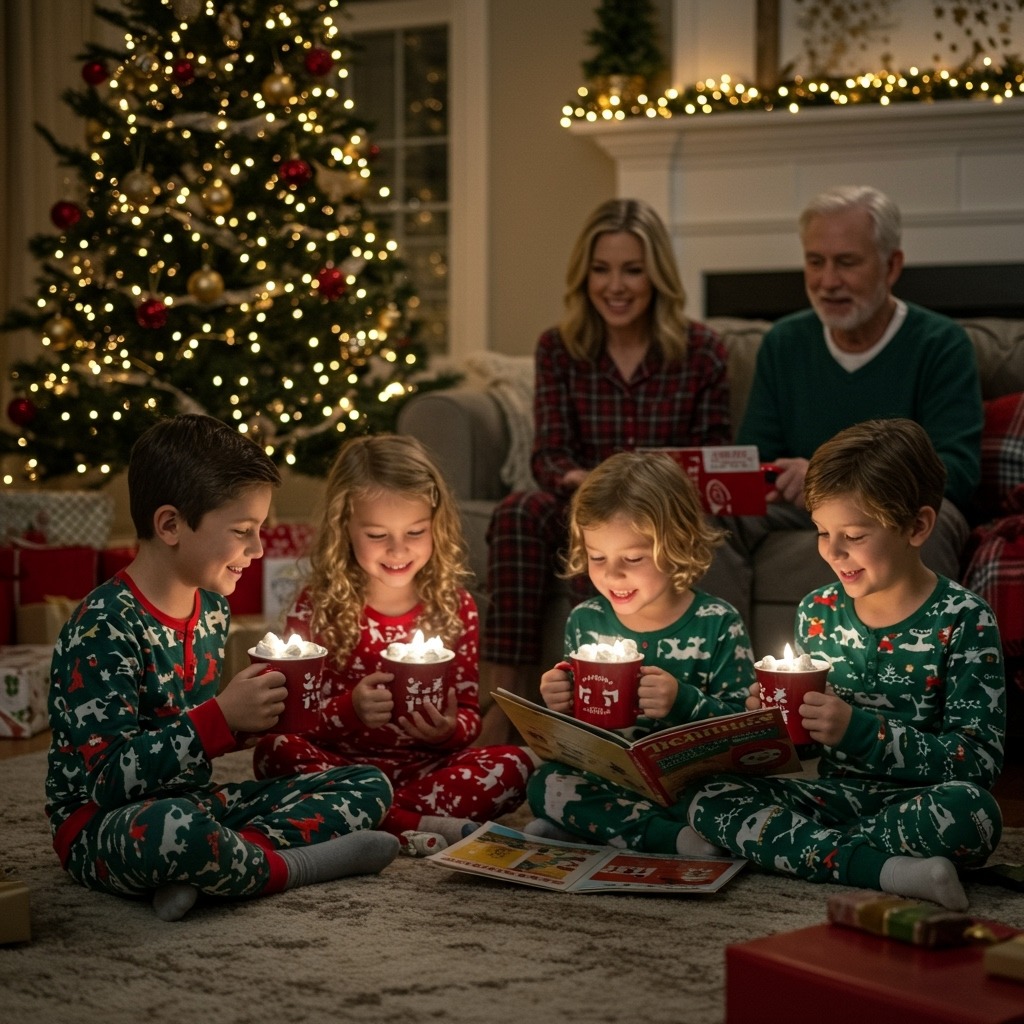
The year my oldest was three, I’ll never forget that Christmas Eve moment. She sat in her new pajamas, hot chocolate mustache and all, nestled between her dad and grandma while we read ‘Twas the Night Before Christmas. She wasn’t thinking about the presents. She wasn’t thinking about Santa (well, not completely). She was just… there. Present. Happy. Connected to us.
That’s when I realized something profound: Christmas Eve traditions aren’t really about the day itself. They’re about creating anchor moments that kids carry with them for life. Years later, my daughter won’t remember every gift she received, but I guarantee she’ll remember hot chocolate, matching pajamas, and the feeling of being safe and loved on that magical night.
After a decade of trial and error, I’ve learned which Christmas Eve traditions actually stick with kids, which ones create genuine magic (not just Instagram-worthy chaos), and which ones end up feeling like obligations rather than joy. I’m sharing everything that’s worked for our family and countless others, so you can build your own traditions that fit your family’s rhythm and values.
Why Christmas Eve Traditions Matter More Than You Think
Here’s what I didn’t expect: Christmas Eve traditions became the glue that holds our family identity together. They’re not about perfection or doing everything “right.” They’re about consistency, presence, and creating a predictable pocket of magic in a chaotic year.
Psychologists at Psychology Today emphasize that family rituals—especially seasonal ones—provide children with a sense of security, belonging, and identity. When kids know exactly what’s going to happen on Christmas Eve, when they can anticipate the traditions that make the day special, it actually calms their nervous systems. There’s something deeply soothing about predictability wrapped in love.
The other thing that surprised me: traditions create conversations. When you’re sitting together on Christmas Eve doing the same thing you’ve done for years, kids open up differently. They ask questions they might not ask on a regular Tuesday. They share feelings and memories. They feel like the ritual is sacred enough to pause and really connect. That’s gold as a parent.
Plus, traditions fill the actual hours of Christmas Eve in a meaningful way. Without them, Christmas Eve becomes this vague stretch of time when kids are either wired on anticipation or bored out of their minds. Traditions give you a roadmap, and understanding positive parenting principles helps you approach these moments with intention rather than stress.
How to Choose the Right Traditions for Your Family
Before I dive into 20+ tradition ideas, let’s talk about choosing the ones that actually fit your life instead of adding stress.
Consider your family’s energy level: Are your kids the type who get hyped up at night and need calming activities? Or do they drag by dinnertime and need something fun to keep them engaged? Our family discovered that active traditions (like a Christmas lights walk) actually helped burn off anticipatory energy better than passive ones. Know your kids.
Think about logistics: If you have babies or toddlers, a tradition that requires 45 minutes of patience probably won’t survive. If you work all day, maybe Christmas Eve cookie decorating needs to happen on December 23rd instead. Traditions should feel doable in your real life, not add another layer of pressure.
Factor in your values and beliefs: Some families prioritize the religious/spiritual aspect of Christmas Eve. Others focus on family fun, giving back, or secular celebrations. There’s no wrong answer—just be intentional about what matters to you and build traditions around that.
Make it simple: The best traditions aren’t the most elaborate. They’re the ones that happen naturally, that don’t require three stores, four hours of prep, and a Pinterest board. The simplest traditions—like wearing matching pajamas or reading a story together—often become the most cherished.
20+ Christmas Eve Traditions That Actually Create Magic
I’m organizing these by the time of day and what your family might enjoy. Mix and match to create your perfect Christmas Eve.
Morning & Afternoon Traditions
1. Christmas Eve Pajamas
Start the day by switching into new (or festive) Christmas pajamas. This simple act signals to kids that today is different, special, set apart. Make it even more meaningful by giving out pajamas as a small gift, then everyone gets cozy in them together for the rest of the day. Some families coordinate with matching family pajamas, which creates incredible photo opportunities.
2. Christmas Countdown Breakfast
Make Christmas Eve breakfast special with a dedicated menu that the kids help create. Maybe it’s pancakes shaped like snowflakes, hot chocolate with cinnamon, and candy cane whipped cream. The novelty of a “special” breakfast gets kids excited and gives them something concrete to anticipate.
3. Service Activity or Caroling
Take a morning or afternoon to give back. This could be delivering homemade treats to neighbors, visiting a nursing home to sing carols, shoveling snow for an elderly neighbor, or volunteering at a local shelter. Experts at Good Housekeeping note that when kids participate in giving during the holidays, they develop deeper empathy and gratitude. Plus, it refocuses their attention away from what they’re getting and toward what they can give. This kind of giving heart ties beautifully into how to be a good mother and teaching children values.
4. Baking Christmas Cookies or Treats
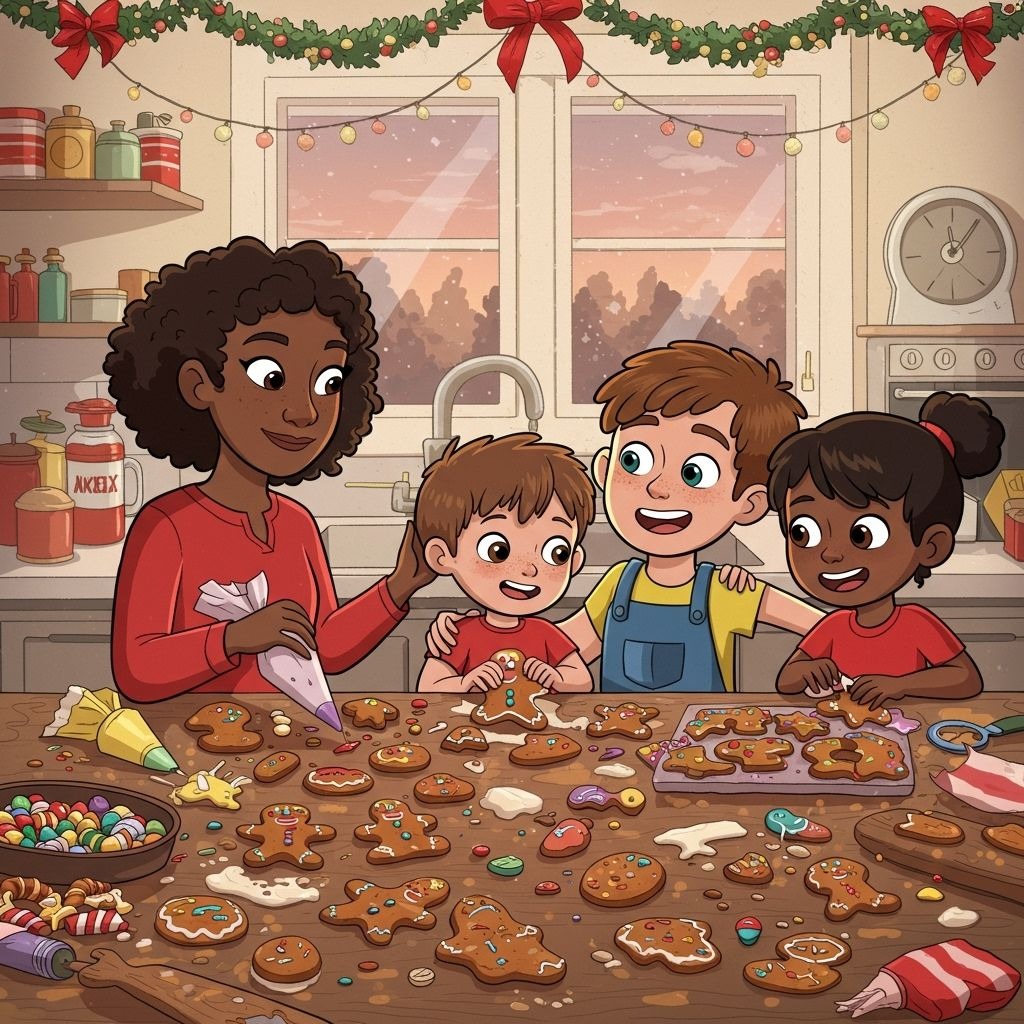
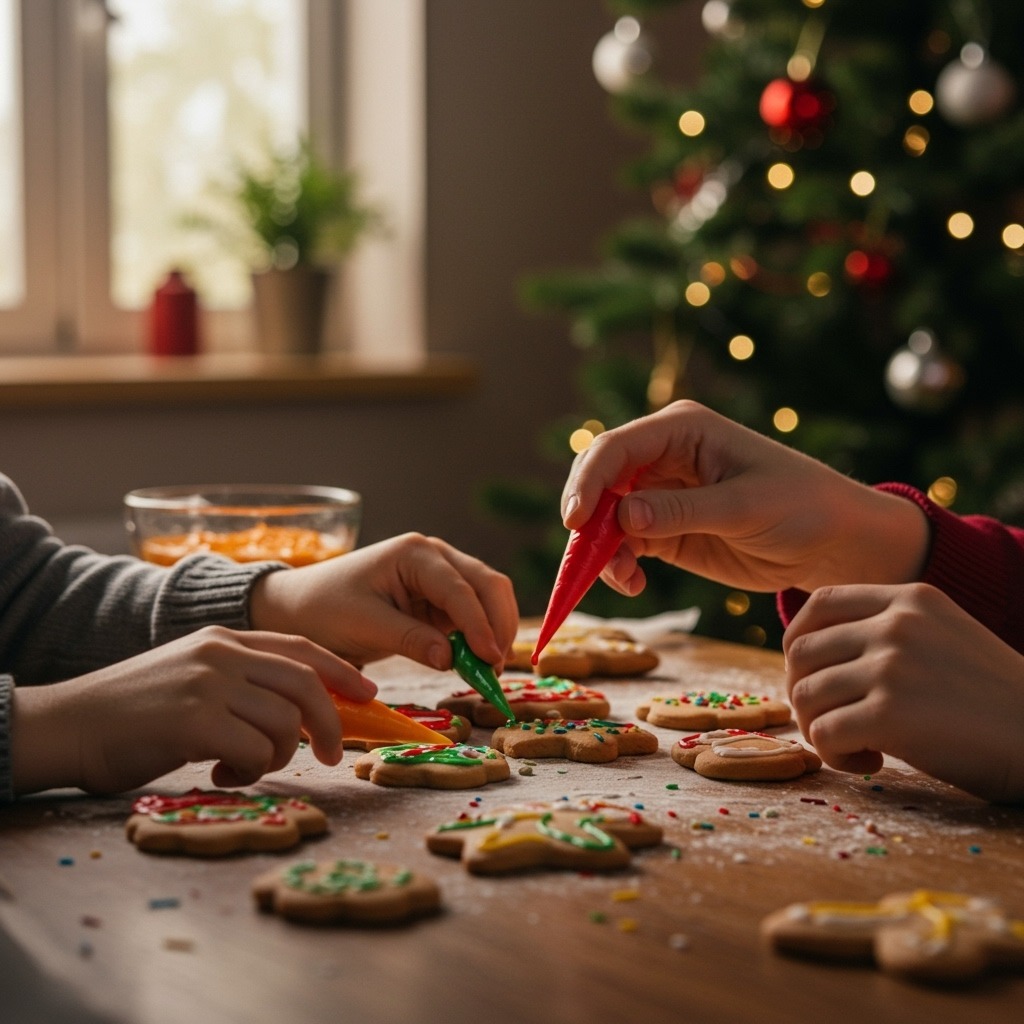
Whether it’s sugar cookies to decorate, gingerbread, or brownies for Santa, baking together is a tradition that engages all the senses. Kids love the mixing, the measuring, the smells that fill the house. Bonus: you have treats for Santa, neighbors, or just for snacking throughout the day. Try some simple, easy cookie recipes for kids that won’t stress you out.
5. Movie Marathon Prep
Let kids choose the Christmas movies for tonight’s marathon and set up the “movie headquarters”—blankets, pillows, candy bowls arranged just right. This gives them buy-in and control, and transforms movie-watching from a passive activity into an event they planned.
Evening Traditions
6. Christmas Eve Box Tradition
Give each family member a box containing: new Christmas pajamas (if you haven’t already), holiday socks, a hot chocolate packet, a Christmas book or movie, popcorn, and maybe a small toy or activity. Kids get to open one gift, use their items throughout the evening, and feel special. This tradition started as a millennial thing, but honestly? It’s genius for making Christmas Eve feel intentional.
7. Hot Chocolate Bar
Set up a simple station with different types of hot cocoa, whipped cream, marshmallows, candy canes, chocolate shavings, cinnamon, and peppermint sticks. Let everyone create their own custom drink. It’s interactive, cozy, and gives you a concrete tradition that’s both calming and fun. Pair it with cookies or candy for the full experience.
8. Reading ‘Twas the Night Before Christmas’ or Other Holiday Stories
Gather by the tree or fireplace and read a Christmas story together. ‘Twas the Night Before Christmas is the classic, but you could also read The Polar Express, Rudolph the Red-Nosed Reindeer, or your own family favorites. Some families rotate which family member reads each year, giving older kids a special role. If you have little ones, this creates a natural wind-down before bed.
9. Christmas Letter Writing
Give each family member paper and have them write a letter to Santa, to each other, or even to themselves about what they’re grateful for and what they hope for in the coming year. Some families keep these letters to read again next year—it’s a beautiful way to track how much kids have grown and changed. Teaching kids to express gratitude through writing aligns with developing affirmations for kids and building their emotional vocabulary.
10. Christmas Lights Neighborhood Walk
Bundle up and take a stroll to admire the decorated homes in your neighborhood. Bring along thermoses of hot chocolate or cider. This gentle activity works for all ages, burns off anxious energy, and gives you time together without the pressure of “doing” something.
11. Candlelit Christmas Service or Home Worship
If your family attends church, many congregations offer beautiful Christmas Eve candlelight services. If you don’t or can’t make it work with your kids’ schedules, create your own at home by dimming lights, lighting candles (or battery-operated candles for safety), and reading the Christmas story together while playing soft holiday music.
12. Sibling Slumber Party
Let kids sleep together in one room on Christmas Eve night. The anticipation of morning together, the whispering about whether they heard Santa, the general silliness of siblings packed into one room—it creates a shared memory that pairs perfectly with Christmas morning.
13. Set Up Santa’s Cookies and Milk (with a Letter)
Make this interactive by having kids help choose cookies, arrange them on a special plate, write a letter thanking Santa, and decorate place cards. Some families leave carrots for reindeer or trail mix representing the reindeer food. The act of “welcoming” Santa creates a beautiful moment of anticipation and care.
14. Matching Family Photo
Get dressed up or stay cozy in pajamas and take a family photo by the tree. This becomes your Christmas card photo or just a memory keeper. According to Parents.com, these intentional family photos create lasting visual memories that kids love looking back on years later.
15. Christmas Carol Sing-Along
Play instrumental Christmas carols or a cappella versions and sing together. If your family is musical, you could make it more elaborate. If not, just singing off-key together in the living room is perfect. The silliness and togetherness matter more than perfection.
Active/Outdoor Traditions
16. Christmas Light Scavenger Hunt
Create a scavenger hunt where kids hunt for specific things in holiday decorations around your home or neighborhood: something red, something that lights up, a reindeer, a snowman, etc. This keeps them engaged and makes the simple activity of looking at lights feel like an adventure.
17. Ornament Making or Decorating
Set up a craft station where kids make or decorate ornaments to hang on the tree. Use salt dough, clay, paint, markers, or personalization kits. These become family keepsakes that you’ll treasure for years. Every time you pull out that tree next year, you’ll remember this moment.
18. Gingerbread House Decorating
Whether you buy pre-made gingerbread houses or make them from scratch, decorating together is traditional gold. Give kids candy, frosting, and free rein to create. Let them get messy. The results don’t matter—the process and creativity do.
19. Christmas Movie Marathon Night
Set up your cozy movie headquarters with blankets, pillows, and snacks, then watch 2-3 Christmas movies back-to-back. Let kids pick some of the movies. Pause between films for snacks and bathroom breaks. This low-key tradition gives you guilt-free screen time in the context of family bonding.
20. Deliver Treats or Gifts to Neighbors
Bake or buy treats and have kids help deliver them to neighbors’ doorsteps or doors. Some families include a handmade card or Christmas song. It teaches generosity, gives kids a sense of contribution, and spreads holiday cheer. The Family Dinner Project emphasizes that giving traditions create a deeper family connection than receiving ones.
21. Christmas Eve Dinner (Special Menu)
Make Christmas Eve dinner feel special by creating a menu together. It doesn’t have to be elaborate—maybe it’s breakfast for dinner, pizza shaped like a tree, or a simple soup and bread situation. The novelty and togetherness matter more than complexity.
22. Hot Tub or Bubble Bath Under the Stars
If you have a hot tub or can fill a bathtub with bubbles, make bath time on Christmas Eve feel luxurious. Light candles nearby (safely), play soft music, and let kids soak and relax. This works great as a wind-down activity before bed.
The Tradition That Saves Christmas Eve Every Year
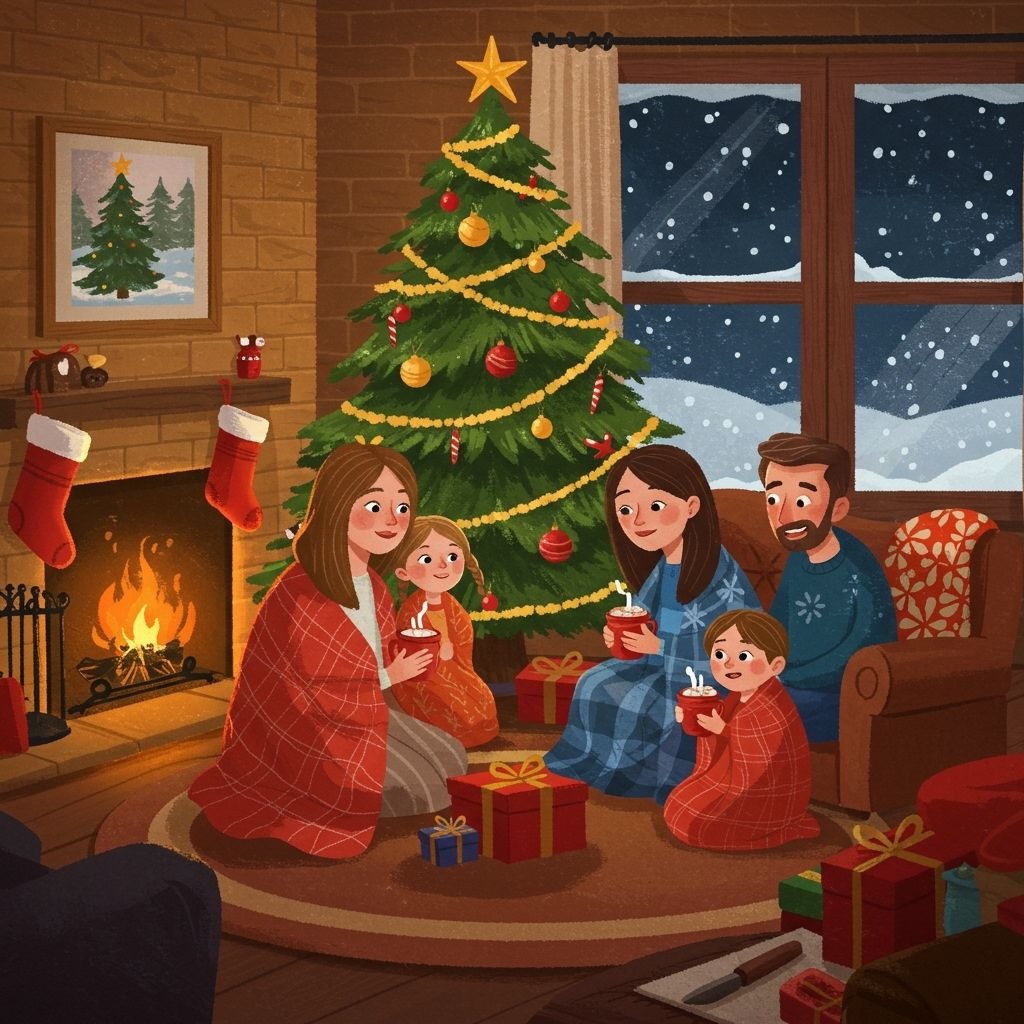
If you only implement one of these traditions, make it a combination of hot chocolate + cozy clothing + a story or movie. This works because it:
- Creates sensory calm (warm drinks, soft clothes, familiar voices)
- Works for all ages (toddlers through teens)
- Doesn’t require elaborate setup
- Naturally winds down the evening.
- Becomes automatic after the first year
- It is flexible enough to adjust as your family grows
We’ve found that this particular combo actually signals to kids’ brains that it’s time to settle. Combined with the anticipation of morning, it creates this perfect pocket of peace and connection before the big day.
Making These Traditions Stick (Without Burning Out)
Here’s what I learned after trying to do all the traditions in year one:
Start small and add gradually. Choose 2-3 traditions and do them really well instead of attempting 10 half-hearted ones. You can add traditions over the years.
Make them age-appropriate. What works with a four-year-old might bore your ten-year-old. Adjust as your kids grow. Some traditions naturally evolve, and that’s okay.
Build in flexibility. If Christmas Eve plans change because someone’s sick or a family member can’t make it, have a backup plan. The spirit of the tradition matters more than rigid execution.
Keep some traditions sacred. Even as life gets busier and schedules get crazy, protect at least one or two traditions that don’t get cancelled or rescheduled. These become the anchors.
Let go of perfection. Pinterest-perfect Christmas Eves don’t create memories—real, messy, sometimes chaotic togetherness does. Your kids will remember the time you accidentally bought the wrong cookies or someone got silly mid-tradition. That’s the good stuff.
Beyond Christmas Eve: Building a Lifetime of Holiday Connection
The deeper truth I’ve discovered is that Christmas Eve traditions aren’t really about December 24th. They’re about teaching kids what matters in your family. They’re about creating shared identity and inside jokes and stories you’ll tell for decades. They’re about proving to your kids, year after year, that they’re worth your time and presence.
My daughter is nine now, and she still asks in early December, “Are we doing Christmas Eve the same way?” Some years we adjust slightly, but the core—the pajamas, the hot chocolate, the story by the tree—remains. That consistency has become her security blanket.
Your traditions will be different from ours, and that’s beautiful. What matters is that you show up, you’re present, and you prioritize connection over perfection. That’s what kids remember. That’s what they carry into adulthood and eventually pass to their own kids.
So this Christmas Eve, give yourself permission to slow down. Pick a few traditions that resonate with you. Set them up ahead of time so the day itself isn’t stressful. And then just… be there. Really be there. That’s the real gift of any tradition.
Frequently Asked Questions
What are the best Christmas Eve traditions for toddlers and young kids?
The best traditions for young children (ages 2-5) are sensory-focused and calming: matching Christmas pajamas, a hot chocolate bar, reading a Christmas story, and wearing cozy clothes. These traditions work because they don’t require long attention spans and naturally wind down kids before bed. Avoid traditions that are too complicated or require sitting still for extended periods. Bath time with bubbles and soft music is also perfect for this age group since it’s soothing and fun simultaneously.
How do I start new Christmas Eve traditions with a blended family or a new family?
Start by having a conversation about what each family member values about the holidays. Ask: “What’s one tradition you’d like to bring to our Christmas Eve? What’s one new tradition should we create together?” This gives everyone buy-in and helps blend traditions respectfully. Choose 2-3 traditions that feel meaningful to everyone, do them consistently, and add new ones gradually. The key is intentionality and inclusion, not forcing traditions that don’t fit your new family dynamic.
Can teenagers still enjoy Christmas Eve traditions, or do they outgrow them?
Absolutely! Teenagers often secretly love traditions, even if they won’t admit it. The key is evolving them slightly—maybe letting teens help plan or lead the tradition, giving them a more “grown-up” version (like a fancy hot chocolate bar instead of kids’ hot chocolate), or involving them in giving traditions like neighborhood caroling. Many teens report that Christmas traditions are one of the few times they feel truly connected to family, so don’t assume they’re too old.
What’s the best way to handle Christmas Eve traditions when kids are with different parents (divorced/co-parenting)?
Consider having two Christmas Eve traditions—one at each parent’s house—or alternate years. Both traditions can be meaningful even if they’re different. Some co-parenting families create identical traditions at both homes so kids have continuity. Communicate with the other parent about what traditions matter most and whether there are ways to honor both households’ values. Kids actually appreciate having different traditions at different places; it helps them feel secure that holidays are sacred in multiple places.
How do I make Christmas Eve traditions feel special without spending a lot of money?
The most meaningful traditions cost very little: hot chocolate, reading stories, matching pajamas from budget stores, walks around the neighborhood, homemade cookies, and singing carols together. The expensive traditions are rarely the most remembered. Kids remember being together, having your full attention, and the consistency of doing the same special things year after year. Budget-friendly traditions like ornament making, letter writing, or baking together often create deeper memories than expensive outings.
What if my family doesn’t celebrate Christmas or celebrates differently?
The concept of intentional family traditions works regardless of religious belief. You can create meaningful December 24th traditions around your family’s values—whether that’s Hanukkah, Kwanzaa, the winter solstice, or a secular celebration. The structure remains the same: choose activities that bring your family together, create predictability and security for kids, and prioritize presence and connection. Every family deserves its own special traditions.
How do I balance Christmas Eve traditions with everything else happening during the holidays?
Choose traditions that fit into the flow of your day rather than adding extra tasks. If you’re already baking cookies, make that your tradition. If you’re already gathering for dinner, make that sacred and distraction-free. Pick traditions that leverage what you’re already doing rather than adding more. This reduces stress and makes traditions feel like a natural part of your day rather than another obligation.