
Three-thirty hits, and my front door flies open like a tornado warning just went off. Backpacks land in the hallway. Shoes scatter everywhere. My 8-year-old is already asking for snacks before she’s even said hello, and my 10-year-old has disappeared upstairs with his iPad before I can ask about his day. This used to be my reality every single afternoon—complete chaos from the moment they walked through the door until bedtime. I was constantly nagging about homework, fighting about screen time, and wondering why every evening felt like a battle I was losing.
Then I realized something that changed everything: my kids weren’t being difficult—they literally didn’t know what they were supposed to be doing. They needed structure, and I wasn’t giving it to them. That’s when I created our after-school rules, and I’m not exaggerating when I say it saved our afternoons. No more constant negotiating. No more forgotten homework discovered at 9 PM. No more feeling like a drill sergeant in my own home. These after-school rules for kids aren’t about being stricter—they’re about creating clarity that makes everyone’s life easier, including yours.

Why After-School Rules Matter More Than You Think
Before we dive into the actual rules, let me tell you why this matters so much. When kids come home from school, they’re not blank slates ready to jump into homework. They’re mentally exhausted, emotionally depleted, and physically drained from holding it together all day. According to research from Child Mind Institute, many kids experience “after-school restraint collapse”—they’ve been following rules, sitting still, and managing their emotions for seven hours, and when they get home, they fall apart.
Without clear after-school rules, kids don’t know what’s expected. Should they start homework immediately? Can they play first? How much screen time is allowed? When they don’t have answers, they either shut down or act out. And we respond by getting frustrated, which creates a negative cycle that repeats every single day.
But here’s what I discovered: when kids know exactly what the after-school routine looks like, they actually feel relieved. The structure gives them security. They’re not constantly testing boundaries because the boundaries are crystal clear. My kids now walk through the door knowing exactly what happens next, and the difference in our household stress level is night and day.
Rule 1: Backpacks and Shoes Have a Home
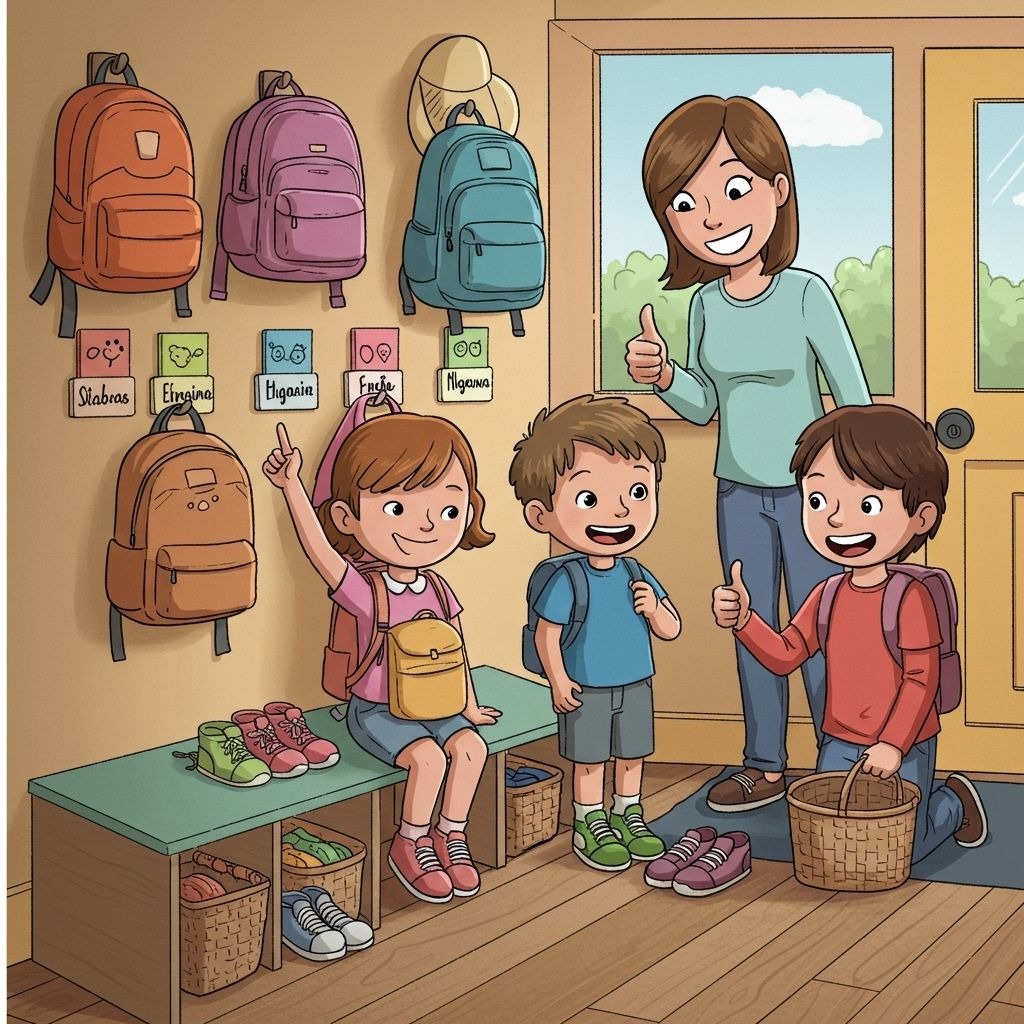
This seems stupidly simple, but it’s foundational. Before we had this rule, I spent every morning searching for missing shoes and digging through backpacks for permission slips that were due yesterday. Now, the first after-school rule is non-negotiable: backpacks get hung on their designated hooks, shoes go in the basket by the door, and we unpack everything before doing anything else.
Here’s how we enforce it: nothing else happens until this is done. No snack, no TV, no playing. My kids walk in the door, and before they even tell me about their day, they hang up their stuff. It took about two weeks of consistent reminding, but now it’s automatic. They don’t even think about it anymore.
The game-changer was adding a five-minute check-in where we go through their folders together. Any papers that need signing come directly to me. Any homework gets noted. Any upcoming tests or projects get added to the family calendar. This one simple after-school rule has eliminated probably 90% of the “I forgot” excuses that used to drive me crazy. If your kids struggle with remembering basic tasks, implementing house rules for kids throughout your home can reinforce these expectations.
Rule 2: Snack First, Then Talk About the Day
My kids come home hungry. Not just “I could eat something” hungry, but legitimately starving. I used to try to have deep conversations about their day while they were hangry, and it never went well. Now, our second after-school rule is simple: grab a healthy snack, sit down, and then we talk.
I prep snacks in advance—cut-up veggies with hummus, apple slices with peanut butter, cheese and crackers, or yogurt with granola. Nothing that requires cooking or significant prep when they’re melting down. According to the Academy of Nutrition and Dietetics, protein-rich snacks help stabilize blood sugar and mood, which is critical for kids transitioning from school to home.
During snack time, I ask specific questions instead of “How was your day?” which always gets answered with “fine.” I ask things like “What made you laugh today?” or “Did anything frustrate you?” or “What’s one thing you’re proud of?” This helps them process their day and gives me actual insight into what’s happening at school. This connects beautifully with conversation starters for kids that help you engage meaningfully.
The rule is clear: no devices during snack time. We’re present, we’re talking, and we’re connecting. This 15-20 minute window has become my favorite part of the day because I actually learn what’s going on in their lives.
Rule 3: Homework Happens at the Same Time, Same Place
This after-school rule is the one that made the biggest difference in our household. Homework used to happen whenever, wherever—sometimes at the kitchen table while I cooked dinner, sometimes in their rooms where I couldn’t see if they were actually working, sometimes not until right before bed when everyone was exhausted and cranky.
Now, homework happens at 4:00 PM at the kitchen table. Every single day. Same time, same place. My kids know this is non-negotiable. They finish their snack, play for 20 minutes to burn off energy, and at 4:00, they’re at the table with homework out.
I set a timer for focused work periods—25 minutes of work, then a 5-minute break. During the break, they can get up, move around, grab a drink, whatever they need. Then back to work. This prevents the endless dragging out of homework that used to take three hours when it should have taken 45 minutes.
The same place matters because their supplies are always there. Pencils, erasers, paper, a calculator, whatever they need, live in a basket on the table. No more “I can’t find a pencil” as an excuse to procrastinate. If you’re looking for more ways to structure learning time, check out what kids learn in kindergarten to ensure your homework expectations are age-appropriate.
Rule 4: Chores Before Free Time
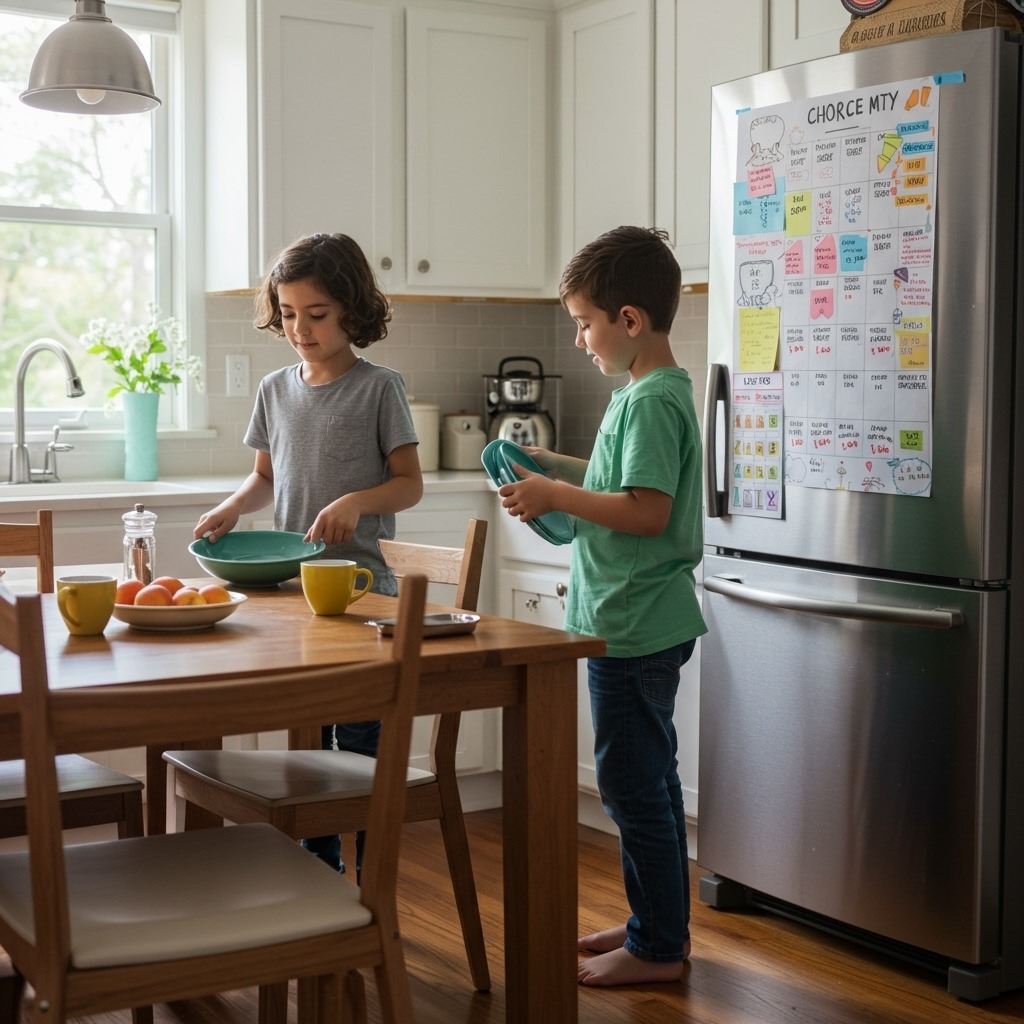
I used to beg, nag, and remind my kids about their chores. Now it’s an after-school rule: chores get done before free time begins. Their chores are simple and age-appropriate—my 8-year-old sets the table and feeds the dog, my 10-year-old empties the dishwasher and takes out the recycling.
Here’s why this works: free time becomes the motivation. They know that as soon as chores are done, they get to do whatever they want (within our screen time rules, which I’ll get to). So they’re motivated to do their chores quickly and well. No more arguing, no more reminders, because the consequence is built in—no chores means no free time.
I use a simple chore chart on the fridge with checkboxes. They check off their tasks when completed. On Fridays, if all their chores were done every day that week, they get to choose a special weekend activity or treat. This positive reinforcement has completely eliminated the chore battles we used to have.
Rule 5: Screen Time is Earned, Not Automatic
This is the after-school rule that gets the most pushback, but it’s also the most important. Screen time—whether that’s TV, iPad, video games, or phones—is earned by completing homework and chores first. It’s not automatic just because they’re home from school.
We have specific screen time limits based on age and day of the week. School nights are 30-45 minutes max after everything else is done. Weekends are more flexible. But the rule is clear: if homework isn’t finished or chores aren’t done, screens don’t happen. Period.
I use parental controls to enforce this. Our devices literally won’t work during homework time (4:00-5:00 PM), and I control when they get unlocked afterward. This removes me from being the bad guy—it’s not me saying no, it’s the rule we all agreed on. Research from Common Sense Media shows that kids who have clear screen time boundaries have better sleep, better grades, and better emotional regulation.
When kids do get their screen time, I’m intentional about what they’re consuming. Educational apps and shows are prioritized over mindless scrolling. And screens stay in common areas, never bedrooms, so I can monitor what’s happening.
Rule 6: Physical Activity is Required
After sitting at desks all day, kids need to move their bodies. Our after-school rule is 20-30 minutes of physical activity every single day, no exceptions. This doesn’t mean organized sports (though that counts)—it means getting outside and moving.
My kids bike around the block, shoot baskets in the driveway, jump on the trampoline, walk the dog, or just run around the backyard. On rainy days, we do indoor activities like dance parties, obstacle courses, or follow along with kids’ workout videos.
The physical activity happens between snack time and homework time because it helps them refocus. They come back inside calmer, more focused, and ready to tackle homework. I’ve noticed that on days we skip this (rare, but it happens), homework is a disaster. They’re fidgety, unfocused, and easily frustrated.
This after-school rule also naturally limits screen time because they’re busy doing something active instead of immediately plugging in. The side benefit? They sleep better at night. My kids are in bed by 8:30 and asleep within 15 minutes on days they get physical activity. On days they don’t? Bedtime is a battle. For more ideas on keeping kids active, explore outdoor games for kids that work perfectly for after-school time.

Rule 7: Family Dinner Together, No Devices
Our after-school rules extend into dinner time because this sets the tone for the evening. We eat together as a family at 6:00 PM every night, and devices are not allowed at the table. Not for kids, not for adults. We’re present with each other.
This is when we talk about the day as a family. We go around the table and everyone shares one high and one low from their day. My kids initially thought this was silly, but now they genuinely look forward to it. They want to share their stories, and they’re interested in hearing ours too.
Family dinners have been linked to better academic performance, lower rates of risky behavior, and stronger family bonds, according to Harvard Health. I can confirm—the nights we miss family dinner due to schedules, everyone feels off. The connection and grounding we get from this time together matter more than I realized.
The no-device rule is firm. If someone’s phone rings, it waits until after dinner. If a text comes in, it can be answered later. These 30-40 minutes of device-free family time are sacred, and my kids now protect it as much as I do.
Rule 8: Evening Wind-Down Time is Structured
After dinner, we have about an hour before bedtime routines start. Our after-school rule extends into this time with a clear structure: clean up from dinner (everyone helps), 30 minutes of free choice time, then bedtime prep begins.
Free choice time can be reading, playing with toys, drawing, building Legos, playing board games as a family, or limited screen time if they haven’t used it yet. What it’s not is a wild, chaotic, anything-goes time. The energy level needs to start coming down because we’re preparing for sleep.
At 7:30 PM, bedtime prep starts. This means pajamas, brushing teeth, packing backpacks for tomorrow, laying out clothes for the morning, and reading time. Everything is prepped for the next day, so mornings aren’t chaotic. This forward-thinking approach has eliminated so many morning meltdowns.
By 8:30 PM, my kids are in bed. This gives them the 10-11 hours of sleep they need to function well the next day. Good sleep is the foundation of everything else—mood, focus, behavior, learning. When my kids don’t get enough sleep, everything falls apart.
What I Learned About Enforcing After-School Rules
Implementing these after-school rules wasn’t smooth sailing from day one, and I want to be honest about what worked and what didn’t.
First, consistency is absolutely everything. The rules only work if you enforce them consistently. In the beginning, my kids tested every single boundary. “Just this once, can I watch TV before homework?” “Do I really have to do chores today?” “Can’t I stay up just 30 more minutes?” I had to say no every single time for about three weeks before they stopped testing.
Second, involve your kids in creating the rules. I didn’t dictate these from on high—we sat down as a family and talked about what afternoons should look like. My kids had input on things like what time homework should start, what chores made sense for their age, and how much screen time felt fair. This buy-in made them more willing to follow rules they’d helped create.
Third, post the rules visibly. We have our after-school routine written out on a poster in the kitchen. Everyone can see it. When my kids try to skip something or argue about what comes next, I just point to the poster. The routine is the boss, not me.
Fourth, be flexible when necessary. Life happens. Sometimes there’s a doctor’s appointment that throws off the schedule. Sometimes they’re sick or exhausted. Sometimes they have a school project that needs a different timing. The rules are guidelines that serve us—we don’t serve the rules. On those occasional exceptions, I’m flexible. But I’m clear that it’s an exception, and tomorrow we’re back to normal.
Fifth, model what you expect. If I want my kids off devices during family dinner, I need to be off my devices too. If I want them to be punctual about starting homework, I need to be punctual about maintaining the schedule. Kids learn way more from what we do than what we say. This principle is central to how to be a good mother—modeling the behavior you want to see.
Adjusting After-School Rules for Different Ages
What works for my 8-year-old doesn’t necessarily work for my 10-year-old, and what works now won’t work when they’re teenagers. Here’s how to adjust these after-school rules by age.
For elementary-age kids (5-10), they need very structured routines with little flexibility. They thrive on predictability. The schedule should be mostly the same every day, and they need you to be present and involved—checking homework, supervising chores, enforcing rules.
For middle school kids (11-13), start giving more autonomy while maintaining structure. They can manage their own homework time to some extent, but you’re still checking in. Screen time rules stay firm. They need more independence but still benefit from clear boundaries.
For high school kids (14-18), involve them heavily in creating their after-school structure. They have more homework, possibly jobs, and definitely more activities. The rules become more about communication and expectations than rigid schedules. But core principles—homework before free time, family dinner, reasonable screen limits—still apply.
Adjust based on your specific child’s needs, too. My 10-year-old needs a longer physical activity break before homework, or he can’t focus. My 8-year-old does better with homework immediately after snack time while she’s still in “school mode.” Observe your kids and adapt accordingly.
Making After-School Rules Work Long-Term
The key to making these after-school rules stick isn’t perfection—it’s consistency over time. Here’s what’s helped us maintain these rules for over two years now.
Review and adjust regularly. Every few months, we have a family meeting to talk about what’s working and what isn’t. Do the rules still make sense? Does anything need adjusting? Are there new challenges we need to address? This keeps the rules relevant and prevents them from becoming rigid and outdated.
Celebrate successes. When my kids have a great week of following the after-school rules without reminders, we celebrate. Sometimes it’s a special dessert, sometimes it’s a family movie night, sometimes it’s just verbal recognition. Positive reinforcement matters.
Be prepared for regression. After school breaks, summer vacation, or any disruption to routine, my kids need a few days to get back into the groove. That’s normal. Don’t give up on the rules just because there’s a rough patch.
Keep communication open. If something isn’t working for one of my kids, I want to know about it. Maybe the homework timing doesn’t work with their brain’s peak performance. Maybe they need different chores. I’d rather adjust than have them be miserable.
Frequently Asked Questions
How do I start implementing after-school rules if we don’t have any now?
Start with one or two rules rather than all of them at once. I’d recommend starting with the backpack routine and scheduled homework time, as these create the most immediate impact. Introduce them as experiments—”Let’s try this for two weeks and see if it helps.” Once those become habits, add another rule. Layer them in gradually rather than overwhelming everyone with a complete routine overhaul.
What if my child refuses to follow the after-school rules?
Stay calm and enforce natural consequences. If homework isn’t done at the scheduled time, it still needs to be completed—it just means less free time later. If chores aren’t done, screen time doesn’t happen. Don’t engage in power struggles or long explanations. State the rule, enforce the consequence, and move on. Consistency will eventually win. If you’re dealing with significant resistance, techniques from positive discipline techniques for toddlers scale up well for older kids, too.
How flexible should I be with after-school rules?
Flexibility should be the exception, not the norm. Occasional schedule disruptions happen—doctor appointments, special occasions, illness—and that’s fine. But if you’re constantly making exceptions, the rules lose their power. My guideline is that 90% of the time, we follow the routine. The remaining 10% allows for real life to happen without guilt.
What about kids with ADHD or other learning differences?
These kids often benefit even more from structured after-school rules because predictability reduces anxiety and helps with executive function challenges. You may need to modify—shorter homework sessions with more frequent breaks, visual schedules instead of written ones, more movement breaks, or different reinforcement strategies. Work with your child’s therapist or school support team to adapt the routine to their specific needs.
How do I handle after-school rules when kids have different schedules?
This is tricky but manageable. The core principles stay the same for all kids, but timing adjusts. If one child has soccer practice three days a week, their homework might happen later on those days. Use a family calendar visible to everyone, showing each person’s schedule. The rules remain consistent even if the timing varies by day or child.