
Last year, my 10-year-old asked me why she couldn’t make a sandwich. Not why she wasn’t allowed to make a sandwich—actually couldn’t. She had no idea where to start, how to use a knife safely, or how to put ingredients together. That moment hit me hard. I’d been so focused on getting her to soccer practice and making sure she got good grades that I’d completely missed teaching her the skills she actually needs to survive in the real world.
I realized something that day: my daughter had never had to figure anything out on her own. I’d been solving every problem, managing every frustration, and handling every task. Without meaning to, I’d raised a kid with perfect grades but zero practical skills.
That conversation sparked a complete shift in how I parent. I started teaching my kids life skills—real, practical, messy skills that don’t show up on report cards. And something incredible happened. They became more confident. They started solving their own problems. They felt capable.
This isn’t about raising miniature adults or creating perfectly functioning household robots. It’s about raising kids who know they can handle what comes their way. Kids who can calm themselves down when they’re upset, make decisions when they’re stuck, and take care of themselves when nobody’s around to help.
After a year of intentionally teaching life skills to my kids, I’ve learned which skills matter most, how to teach them without constant nagging, and why this might be the most important thing we do as parents—even more important than making sure they get straight A’s.
Why Life Skills Matter More Than You Think
Here’s what I’ve learned: colleges and employers don’t really care if your kid got a 95 or a 92 on a test. What they care about is whether your kid can manage their time, solve problems independently, communicate clearly, and handle stress without falling apart.
Life skills are the foundation for everything else. When kids know how to manage their emotions, they can focus better in school and get along better with friends. When they understand how to solve problems, they’re less likely to give up when something’s hard. When they can make good decisions, they’re more likely to make good choices as teenagers and adults.
Teaching life skills builds confidence in a way that nothing else does. My 8-year-old used to melt down whenever something didn’t go exactly right. Now that she’s learned to manage her emotions and problem-solve independently, she’s become remarkably resilient. She still gets frustrated, but she doesn’t fall apart. She tries a different approach. That shift happened because she practiced dealing with challenges instead of having me rescue her every time.
Life skills also teach responsibility and natural consequences in a way that lectures never could. When my kids forget to pack their lunch, they deal with hunger at school. When they forget their homework, they experience the consequence at school. These real-world consequences teach faster than any amount of my reminding them. It’s also about building the connection between actions and outcomes that forms the basis of positive discipline techniques that actually work long-term.
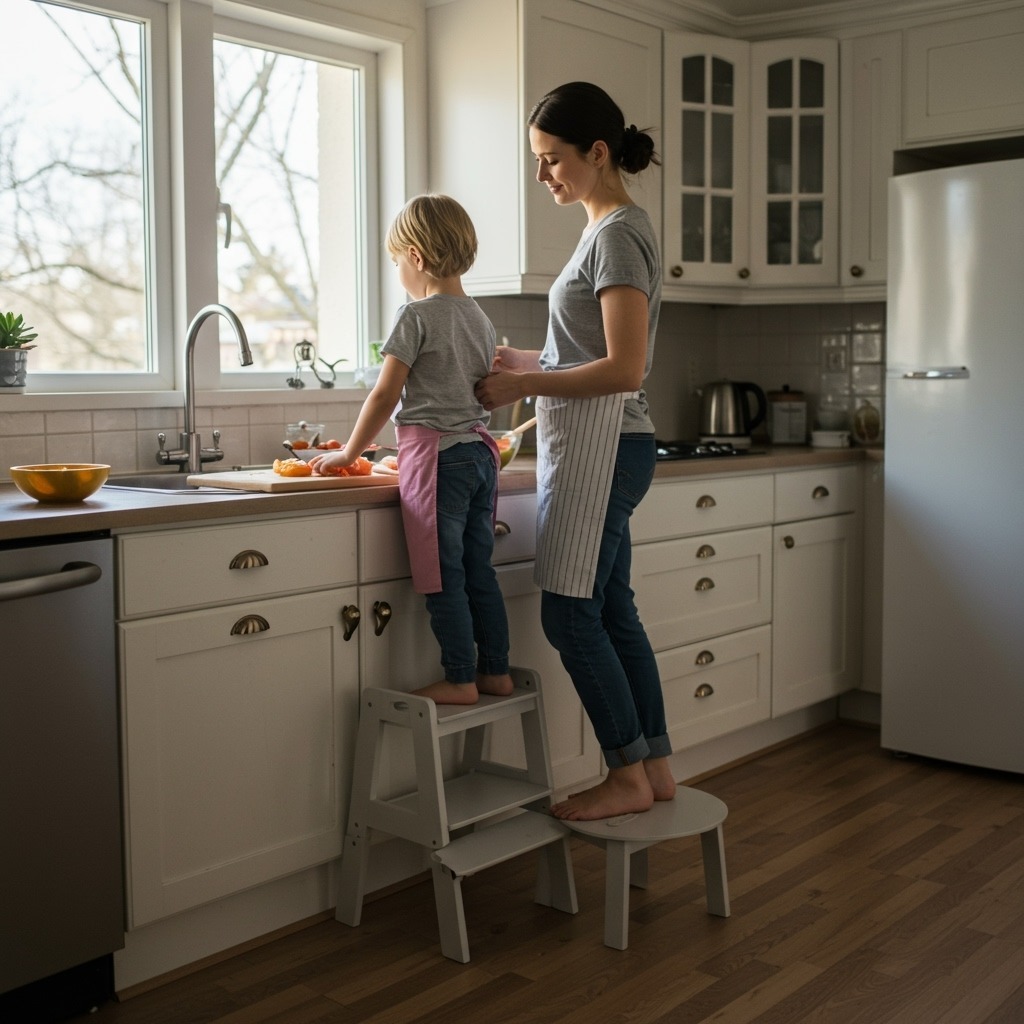
The biggest reason to prioritize life skills? Your kids will eventually leave home. And they need to be ready. Not just academically ready, but practically and emotionally ready. A kid who can cook, manage money, handle their emotions, and solve problems is going to do just fine in the world. A kid with perfect grades who falls apart when something doesn’t go according to plan? That’s a different story.
Communication Skills That Change Everything
Communication is the foundation for almost every other life skill. If your child can’t express what they need, ask for help, or tell you what’s bothering them, everything else becomes harder.
I used to assume my kids just knew how to communicate. Turns out, that’s not a thing. Communication is a skill that has to be explicitly taught and practiced.
Start by modeling clear communication yourself. When you speak to your kids, speak clearly and directly. Use specific language instead of vague instructions. Instead of “clean up your room,” say “put all the books on the shelf and the clothes in the basket.” This teaches them what good communication sounds like.
Teach your kids to use “I” statements instead of blaming others. Instead of “You’re being mean to me,” teach them to say “I feel sad when you take my toy without asking.” This simple shift prevents defensiveness and opens conversations instead of shutting them down.
Active listening is equally important. Teach your kids to look at people when they’re talking, nod to show they understand, and ask questions if they don’t get something. Model this for them constantly. When they’re telling you something, actually listen instead of half-listening while scrolling your phone.
Here’s what I do: we have “talk time” where each kid gets 10 minutes to tell me about anything they want, and I’m fully present. No interrupting, no fixing, no advice unless they ask for it. Just listening. It’s transformed how my kids communicate with me. They share more, they open up about things that are bothering them, and they feel genuinely heard. These conversation starters have been incredibly helpful for building this habit.
Understanding social cues is another huge piece of communication. Some kids naturally pick up on this; others need it explicitly taught. Teach your kids to notice when someone looks upset, to recognize when someone needs space, and to understand that not everything requires a response.
Emotional Intelligence and Self-Management
Your kids are going to feel big feelings. Anger, sadness, frustration, disappointment—these aren’t problems to eliminate. They’re normal human experiences that your kids need to learn how to navigate.
Emotional intelligence is the ability to recognize emotions, understand why you’re feeling them, and manage them appropriately. This is life-changing for kids—and honestly, most adults could use more of it too.
Start by naming emotions. Don’t just say “you’re upset.” Say “I notice you’re feeling frustrated.” Help your kids develop vocabulary for feelings beyond happy and sad. Frustrated, disappointed, anxious, proud, excited, overwhelmed—the more specific they can be about what they’re feeling, the better they can manage it.
Teach your kids that all feelings are valid, but not all behaviors are acceptable. You can feel angry without hitting someone. You can feel sad without being mean to others. Help them develop strategies for what to do with big feelings—take a walk, do some deep breathing, draw a picture, talk about it.
We created an “emotions toolbox” in our house with different strategies kids can use when they’re feeling overwhelmed. Some days, my 6-year-old needs to be alone in her room with a book. Other days, my 10-year-old needs to go for a run. Different kids, different tools. The point is having options and knowing what works for them. According to Parents Magazine’s guide on life skills to teach by age 10, emotional regulation is one of the most important skills kids can learn.
Another critical piece is helping kids develop resilience. When something goes wrong—they fail a test, don’t make the team, argue with a friend—help them process it. Don’t just fix it or dismiss it. Ask them what they learned. What would they do differently next time? How can they solve this problem? Using positive affirmations can help build their emotional resilience during challenging moments.

Critical Thinking and Problem-Solving
The kids who succeed aren’t necessarily the ones with the best memory or the highest test scores. They’re the ones who can think critically, solve problems, and figure things out when they don’t know the answer.
Critical thinking means being able to analyze a situation, consider different perspectives, and make informed decisions. Problem-solving means breaking a big problem into smaller pieces and working through it step by step.
Start by asking open-ended questions instead of giving immediate answers. Instead of telling your kid what to do, ask “What do you think we should do?” or “What would happen if we tried this way?” This teaches them that they can figure things out.
Let them struggle. I know this is hard—our instinct is to jump in and fix everything. But kids learn critical thinking by being stuck and having to work their way through it. If you always solve the problem, they never learn they’re capable of solving problems. According to Trinity Institute’s research on life skills for children, children who are taught to think critically are more engaged in their learning and ask better questions.
When they come to you with a problem, resist the urge to immediately tell them the answer. Instead, ask: “What have you already tried?” “What are all the possible solutions?” “Which one do you think would work best and why?” This simple process teaches them how to think through problems themselves.
Teach your kids to think about consequences. Before they do something, can they predict what might happen? If I throw this ball indoors, what might break? If I don’t pack my backpack tonight, what will happen tomorrow? This kind of thinking prevents a lot of problems before they happen.
Practical Life Skills by Age
Not every kid needs to know how to do everything at every age. Here’s a practical guide to what actually makes sense at different ages.
Ages 3-5: Building Foundations
At this age, focus on simple self-care and basic responsibility. Can they wash their hands? Use the bathroom? Put on their shoes (even if they’re on the wrong feet)? Brush their teeth? These seem simple, but mastering them builds a foundation of independence.
One simple chore that works well for this age: putting toys in a basket or dirty clothes in a hamper. Start with one toy basket in the main play area. Make it the “toy home” and talk about how toys need to go home, just like kids go home. It’s silly, but kids engage with it.
Ages 6-8: Responsibility and Routines
This is when you can introduce actual chores and expect follow-through. Kids this age can handle tasks with a checklist or reminder. Can they feed a pet? Set the table? Help with laundry? Load the dishwasher (even messily)? Sort socks?
Start having them be responsible for one area. Maybe their bathroom. Or maybe they’re responsible for sorting the recycling. One consistent task teaches them that they have a role in the family and their job matters.
This is also a great age to introduce simple decision-making. Let them choose between two breakfast options. Choose what to wear (within reason—if it’s winter, they can’t wear shorts). Choose which book you will read at bedtime. These small choices teach them that they have agency.
Ages 9-12: Building Real Competence
This is when kids can handle more complex tasks. They can cook simple meals with supervision. Manage a basic allowance. Do laundry (even if they shrink something). Make their bed consistently. Handle their own homework folder and keep track of assignments.
Money management becomes important at this age. Consider giving an allowance with clear expectations about what it covers. Some families do chores = allowance. Other families separate chores (family responsibility) from allowance (life skills practice). Whatever you choose, make the connection between money and choices explicit.
Teen Years: Preparation for Independence
By high school, kids should be able to cook basic meals, do their own laundry completely, manage their homework and schedule without reminders, understand basic finances and budgeting, and make informed decisions about their time and priorities. Understanding what kids learn at different stages helps you set expectations that match their development.
Time Management and Organization
Here’s something nobody tells you: kids don’t automatically know how to manage their time. They have no concept that if they waste an hour after school, there’s less time for homework later. They need to actually learn this.
Start by creating visual schedules. A picture-based schedule for morning routines (wake up, eat breakfast, get dressed, brush teeth, go to school) helps kids see what’s happening and in what order. It also helps them start managing themselves instead of constantly relying on you to tell them what to do next.
Use timers. Visual timers are amazing for kids. “You have 10 minutes until we leave” is abstract. A timer that shows 10 minutes visually and counts down is concrete. Kids can see time passing. Educational experts at 21K School’s guide on critical life skills emphasize that time management is one of the most under-taught but critical life skills.
Create routines that kids can follow automatically. When we first wake up, we do X. After school, we do Y. Before bed, we do Z. Routines eliminate the constant decision-making and nagging. Kids know what comes next.
For older kids, introduce a simple planner or calendar system. Let them track their own activities, homework due dates, and events. Make it visual, and somewhere they can see it daily. Setting up house rules around routines helps create structure that supports time management.

Money Management and Financial Literacy
Most kids have no idea how money works. They think it appears magically in ATMs. Teaching them to manage money is one of the most practical life skills you can offer.
Start simple. Introduce the concept that money is how we get things we need and want. If you want something that costs money, you need money first. Start by giving a small allowance. Maybe $1-2 per week for young kids, scaling up as they get older.
Make the connection between work and money. Some families tie allowance to chores. Others separate them (chores are a family responsibility; allowance teaches money management). Either way, kids learn that money doesn’t appear magically—there’s work behind it.
Teach saving. Let them see that if they want something that costs $10 and they get $2 per week, it takes 5 weeks. This teaches delayed gratification and planning. Use a clear jar so they can literally see their money growing.
Teaching giving is equally important. If they get $5 in allowance, maybe $1 goes to saving, $1 goes to giving/charity, and $3 is theirs to spend. This teaches kids to think about money as a tool for different purposes, not just personal spending.
Let them make mistakes with money. If they spend all their allowance on something they regret, that’s a powerful learning experience. Way better to learn this when the stakes are low (a few dollars) than when they’re 20 and making larger financial mistakes. Global Indian School’s frameworks for financial responsibility offer excellent guidance for teaching financial responsibility at different developmental stages.
Social Skills and Relationship Building
Some kids naturally pick up on social skills. Others need them explicitly taught. Most kids could use some guidance.
Teach your kids to read social cues. Notice when someone looks sad. Recognize when someone needs space. Understand that not every thought needs to be shared. Pay attention to how people react to what you say—that’s feedback about whether your approach is working. Building these social skills that kids need early sets them up for successful relationships.
Teach them how to make friends. This might sound silly, but some kids actually need guidance. Start a conversation. Find something you have in common. Be interested in what the other person thinks. Be kind. These sound obvious to adults, but kids don’t always know this.
Teach conflict resolution. When two kids disagree, instead of immediately solving it for them, ask them to work it out. “What do you both want? How could you solve this so that you both get something you want?” This teaches them that conflicts can be solved through conversation, not just by an adult making a decision. Learning how to set boundaries is a critical part of healthy relationships.
Teach them how to handle rejection and disappointment. Not every kid will like them. Not every friend invitation will be accepted. Not every team they try out for will take them. This hurts, and it’s important to acknowledge that. But it’s also survivable. Talk about what they can control (being a good friend, being kind, trying their best) versus what they can’t control (whether someone chooses to be their friend).
Teaching Kids to Cook, Clean, and Care for Themselves
These practical skills build real independence and competence.
Cooking
Start simple. Let them help mix ingredients in a bowl. Let them press buttons on the microwave. Gradually increase complexity. By age 8 or 9, they can make basic sandwiches. By 10 or 11, they can follow a simple recipe with supervision. By their teen years, they should be able to cook basic meals independently.
Cooking is amazing because it teaches measurement, following directions, sequencing, and creates something tangible at the end. Plus, they can eat what they made. Instant motivation. Try starting with easy recipes for kids that build confidence and skills simultaneously.
Cleaning and Laundry
Start with their room. Not Instagram-perfect room—just a basically functional room where you can see the floor. Teach them how to sort laundry, how to use a washing machine, and how to fold (even if it’s not perfect).
Make it part of their routine, not a punishment. “On Saturday mornings, we do laundry” is just what happens. Not a big deal. Not a punishment. Just part of life. Learning to keep a clean space naturally connects to basic manners for kids and caring for shared spaces.
Personal Care
Teach them to care for their belongings. Brush their own hair. Cut their own fingernails (with adult supervision if they’re young). Clean their own space. Pack their own backpack. Fix things that are broken or ask for help fixing them.
This teaches them ownership. Their stuff, their responsibility. And incredibly, when kids know it’s their job to care for something, they’re way more likely to actually do it.
How to Teach Life Skills Without Constant Nagging
Here’s the thing nobody tells you: you can’t teach life skills and make kids do them perfectly. You have to let them do it their way, at their pace, with grace.
Integrate skills into daily routines instead of treating them as separate tasks. Instead of “go clean your room,” make it part of the Saturday routine. Instead of “practice tying your shoes,” do it as part of getting ready for school. When skills are embedded in normal life, they happen naturally.
Use positive reinforcement, not punishment. “I noticed you got all your homework done without me asking—that’s being responsible” is way more effective than “why didn’t you do your homework?” Catch them doing it right and acknowledge it.
Step back and let them struggle. Your job isn’t to make sure they do it perfectly. Your job is to make sure they practice. If their sandwich has too much peanut butter, that’s not a disaster. They’ll learn. If their room isn’t perfectly clean, that’s okay. They’re learning.
Model what you want them to do. Kids learn more from watching you than from your instructions. If you want them to manage their time well, let them see you managing your time. If you want them to handle frustration well, let them see you handle frustration without falling apart. This connects to broader principles of positive parenting that emphasize modeling over lecturing.
Common Mistakes Parents Make When Teaching Life Skills
Jumping in too quickly. Your kid is struggling to tie their shoes, and every muscle is screaming at you to just do it. Don’t. Wait. Let them struggle. That’s how learning happens.
Expecting perfection. Their first pancake will be weird. Their first attempt at loading the dishwasher won’t be efficient. That’s completely fine. They’re learning.
Not letting them fail. If you always rescue them, they never learn that they can handle hard things. Let them experience the natural consequence of not packing their lunch (they’re hungry). Let them experience forgetting homework (they deal with the teacher’s consequence). Understanding things we should never say to a child also means knowing when not to rescue them from natural learning experiences.
Giving up too soon. Teaching life skills requires consistency. If you teach them to pack their own backpack, you have to let them do it even when it’s slower. Even when they forget things sometimes. Consistency is what creates habits.
Making it too complicated. One chore, not ten. One routine, not several. Build slowly.
Making Life Skills a Family Value
The best families I know aren’t the ones where kids do everything perfectly. They’re the ones where kids know they’re expected to contribute, where mistakes are learning opportunities, and where independence is celebrated. According to the Confident Parents Confident Kids research, families that prioritize teaching life skills report kids who are more confident, more resilient, and genuinely happier.
Make it clear that everyone in the family has a role. Everyone contributes. Everyone is capable. Everyone is learning. When your kids grow up with that framework, they don’t see responsibility as a punishment—they see it as part of being part of a family and eventually being part of the world.
The goal isn’t perfect execution. The goal is to raise kids who believe in themselves. Kids who know they can figure things out. Kids who, when faced with something new, think “I’ll try” instead of “I can’t.” That’s what life skills really teach.

Frequently Asked Questions
At what age should kids start learning life skills?
Kids can start learning life skills as early as age 2-3 with simple tasks like putting toys away or washing their hands. There’s no “too early” for basic life skills—they just need to be age-appropriate. A 2-year-old can put one toy in a basket. A 5-year-old can help set the table. The earlier you start, the more natural these skills become.
How do I teach my child life skills without them resisting?
Make skills part of normal routines rather than separate tasks. Instead of “go practice your life skills,” it’s just part of Saturday morning or what happens before school. Let kids have some choice in how or when they do it. Celebrate progress, not perfection. Use positive reinforcement instead of punishment.
What if my child refuses to do chores or responsibilities?
This is actually normal. Kids test boundaries. Stay calm and consistent. Natural consequences work better than punishment. If they don’t pack their lunch, they get hungry at school. If they don’t do laundry, they run out of clean clothes. These real-world consequences teach faster than anything you can say.
How do life skills connect to grades and academics?
Kids who can manage their time, handle frustration, and solve problems independently typically do better academically. Life skills create the foundation for academic success—better focus, less anxiety, more resilience. A kid with perfect executive functioning skills but lower natural ability will often do better than a naturally brilliant kid who falls apart when things are hard.
Can you teach life skills too early? Is there such a thing as too young?
Not really. Two-year-olds can start learning independence and responsibility. The key is matching the skill to their developmental level. A 2-year-old’s job might be putting one toy in a basket. A teenager’s job is managing their entire schedule and responsibilities. Start simple and grow from there.
What if my child has anxiety or executive functioning challenges?
Break skills into smaller steps. Create more visual supports and reminders. Give more time and patience. The goal is still independence, but the path might look different. Consider working with a therapist or occupational therapist if challenges are significant.
How much responsibility is too much?
One consistent responsibility is often better than ten scattered ones. Let them really master one thing. Then add another. You’re building confidence, not running a household. Their main job is still being a kid and growing. Try pairing responsibility-building with activities to do with kids to make it enjoyable.
Will teaching life skills make my kids independent and not need me?
Quite the opposite. Kids who have real responsibility and competence actually want to spend time with their parents more, not less. They’re less anxious. They trust that they can handle life. And they still need your guidance, support, and love—they just don’t need you to solve every problem.
What’s the difference between a chore and a life skill?
A chore is a task that needs to be done (folding laundry, loading the dishwasher). A life skill is learning how to do that task independently, so your child becomes capable and confident. Chores are about getting things done; life skills are about raising capable humans.
How do I know if I’m doing this right?
If your kids are gradually becoming more independent, can handle small problems without panicking, and feel proud of what they can do, you’re doing it right. Progress isn’t linear, and perfection isn’t the goal. Small steps forward, repeated consistently over time, create transformation.