

I’ll never forget the panic I felt at my daughter’s two-month checkup when the pediatrician asked, “Is she holding her head up during tummy time yet?” I froze. Was she? I mean, kind of? Sometimes? I suddenly felt like I’d failed some crucial parenting test I didn’t even know I was taking.
That night, I went down a Google rabbit hole researching when can babies hold their head up, comparing every video and milestone chart I could find. My husband found me at 11 PM, watching YouTube videos of other people’s babies doing tummy time, convinced our daughter was somehow behind.
Spoiler alert: she was completely fine. But that experience taught me something important—milestone anxiety is real, and understanding what’s actually normal (versus what Instagram makes you think is normal) can save you a lot of unnecessary stress. So let’s talk about when babies really develop head control, what you can do to help, and when you actually need to worry.
The Real Timeline: When Can Babies Hold Their Head Up?
Here’s the truth nobody tells you at first: head control doesn’t happen overnight. It’s a gradual process that unfolds over several months, and there’s actually a pretty wide range of “normal.”
Month 1: The Bobblehead Phase
During the first month, your baby’s head control is basically nonexistent. Those tiny neck muscles simply aren’t strong enough yet to support that relatively large head. You’ll notice brief moments where they might lift their head for a second or two during tummy time or when resting on your chest, but that’s about it. This is totally normal—just keep supporting that precious noggin whenever you’re holding them.
Months 2-3: Progress in Motion
Around 2 months, you’ll start seeing more intentional head lifts. When your baby’s on their tummy, they might be able to lift their head to about a 45-degree angle for a few seconds at a time. It’s wobbly and effortful, but it’s happening. By 3 months, many babies can hold their head up a bit more steadily when you’re holding them upright, though they still need your support.
Months 4-5: Getting Stronger
This is when things really start clicking. Most babies around 4 months old can hold their head and chest up while supporting themselves on their elbows during tummy time. When you’re carrying them upright, their head stays pretty steady—though sudden movements can still cause some wobbling. This is when I finally felt comfortable reducing how much I was cradling my daughter’s head.
Month 6 and Beyond: Full Control
By 6 months, most babies have solid head control. They can hold their head up easily in any position, turn it from side to side without effort, and their neck muscles are strong enough to support all that looking around they love to do. This milestone opens the door for so many other developments like sitting up independently and starting solid foods.
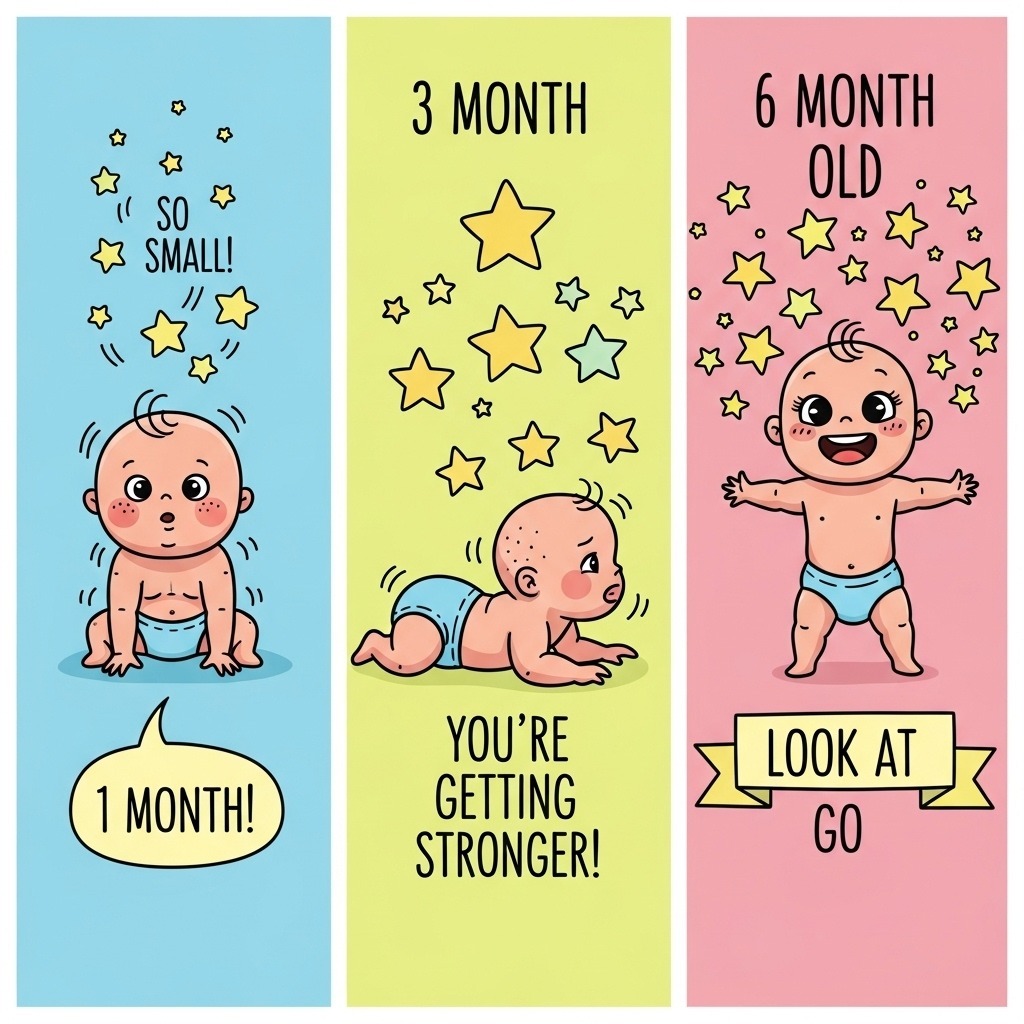
The Three Stages of Head Control (And What They Actually Look Like)
When I was in the thick of milestone-watching with my first baby, I wished someone had just shown me exactly what to look for. Here’s what each stage actually looks like in real life.
Stage 1: The Wobbly Lifts (0-2 Months)
Picture this: your baby’s on their tummy, and suddenly they lift their head for maybe two seconds before it flops back down. It’s kind of like they’re doing the world’s tiniest push-up. These brief lifts are your baby’s neck muscles getting their first workout. Don’t expect much duration here—even a few seconds count as progress. According to research from the American Academy of Pediatrics, these early attempts are crucial for building the foundation for later strength.
Stage 2: The Chest-Up Push (2-4 Months)
Now we’re talking! During this stage, your baby not only lifts their head but also starts getting their chest slightly off the ground. They’re using their arms to push up, which means their upper body strength is developing alongside that neck control. You might also notice they can turn their head from side to side more easily. This was the stage when I finally stopped having mini heart attacks every time someone else held my baby without immediately cradling her head.
Stage 3: Total Control (4-6 Months)
This is the victory lap. Your baby can hold their head steady in pretty much any position—sitting supported, being carried upright, during tummy time, you name it. They’re actively looking around, tracking objects with their eyes, and their head stays put even when they’re excited or moving. This is also when many pediatricians give the green light for starting solid foods, since good head control is essential for safe eating.
Why Head Control Takes Time (And Why That’s Actually Good)
When my son was born two years after my daughter, I remember thinking, “Why can’t babies just be born with head control? Wouldn’t that make everything easier?” Well, turns out there’s actually a good reason for the gradual development.
Babies’ heads are proportionally huge compared to their bodies—about 25% of their total body weight at birth. Their neck muscles, meanwhile, are tiny and undeveloped. It takes time for those muscles to catch up with the demands of holding up that big head. The gradual strengthening process also helps develop the core muscles, back muscles, and shoulder muscles that they’ll need for every other gross motor milestone down the line.
Think of it like building a house: you can’t put up the walls until you have a solid foundation. Head control is that foundation for sitting, crawling, walking, and basically every physical milestone that follows.
This is also why you absolutely must support your baby’s head during those early months. Without adequate neck strength, their head can flop suddenly, which isn’t just uncomfortable—it can potentially cause injury. I was religious about the “hand behind the head” rule until both my kids were well into their fourth month.

Making Tummy Time Work (Even When Your Baby Hates It)
Let me be honest: my daughter despised tummy time at first. Like, full-on screaming within 30 seconds. I felt like the worst mom ever, laying her down while she wailed. But tummy time is genuinely the single best way to help your baby build the neck and upper body strength they need for head control.
The American Academy of Pediatrics recommends starting tummy time as soon as you bring baby home from the hospital. Begin with just 2-3 minutes, two or three times a day. Yes, that’s all—you don’t need marathon sessions.
Here’s what actually worked for us:
Start Small: We did tummy time right after diaper changes when she was calm and fed. Just a minute or two at first.
Get Down There: I’d lie on the floor at eye level with her, making faces and talking. Turns out babies are way more willing to lift their heavy heads when there’s an interesting face to look at.
Use Props: Rolling up a small blanket or towel under her chest gave her just enough support to make it less frustrating. You can also try having them do tummy time on your chest while you’re reclined—my son loved this version.
Make It Fun: We’d place developmental milestone books with high-contrast images just out of reach to give her something to look at. The visual stimulation was way more engaging than staring at a blank floor.
Try Different Surfaces: Some babies hate the hard floor but love tummy time on a soft play mat or even on mom or dad’s lap. Experiment until you find what works.
The goal by 7 weeks old is 15-30 minutes total per day, but you can absolutely break that into tiny chunks. Five minutes here, three minutes there—it all adds up.
When You Can Finally Stop Supporting That Head
The question I asked my pediatrician approximately 47 times: “When can I stop being so paranoid about supporting her head?”
The answer: gradually, starting around 3-4 months.
At around 3 months, you can start testing the waters by reducing how much support you’re providing when holding your baby upright. You’ll notice their head stays steady most of the time, though sudden movements might still cause some wobbling. By 4 months, most babies can hold their head up independently during normal handling.
But here’s the thing—even after they develop good head control, you still want to be gentle and steady when carrying them. No jerky movements or tossing them around (not that you would, but you know what I mean). Their neck muscles are strong enough for normal activities, but they’re not ready for rough play yet.
I remember the first time I picked up my daughter at 4 months old and realized I wasn’t automatically cradling her head anymore. It was this weird bittersweet moment—relief mixed with “oh my gosh, she’s growing up too fast.”

What Happens After They Master Head Control
Once your baby nails head control, it’s like unlocking the next level in a video game. Suddenly all these other milestones become possible.
Rolling Over
Most babies start rolling over between 4-6 months, right after they develop good head control. The strong neck muscles help them initiate that rolling motion. My daughter started rolling from tummy to back at 4.5 months and immediately looked shocked, like “Did I just do that?”
Sitting Up
You can’t sit independently without being able to hold your head steady. Babies usually start sitting with support around 4-5 months and independently by 6-7 months. We loved using board games for kids as motivation once she could sit—even though she couldn’t actually play them, the colorful boards were fascinating to her.
Eating Solids
Pediatricians look for good head control as one of the key signs of readiness for solid foods. If your baby can’t hold their head up steadily, they’re not ready to start eating purees or baby-led weaning foods. This usually happens around 6 months. (And trust me, you’ll want those reusable snack containers for kids ready to go—feeding gets messy fast!)
Better Interaction
Once babies can control their heads, they can look around, track objects, and engage with their environment so much better. Everything becomes more interesting when you’re not limited to whatever’s directly in your line of sight. This is when playtime gets way more fun for everyone. Just like with older kids who enjoy activities to do with kids, even babies benefit from varied stimulation once they can look around independently.
When to Actually Worry (And When to Chill Out)
This is the section I wish I’d read during my late-night panic research sessions. Here’s the deal: babies develop at different rates, and there’s a range of normal. But there are some legitimate red flags to watch for.
Contact your pediatrician if:
- Your baby shows no attempt to lift their head at all by 2 months
- By 4 months, they still can’t hold their head up with any steadiness
- You notice your baby consistently tilts their head to one side (could indicate torticollis)
- Your baby seems to have very floppy or very stiff muscles
- You’re generally concerned about their muscle tone or development
Don’t panic if:
- Your baby reaches this milestone a few weeks later than the “average”
- They’re strong during tummy time but still wobbly when held upright (or vice versa)
- Some days seem better than others—babies have off days too
- Your baby is hitting other milestones on track, just not this particular one yet
My daughter didn’t really have solid head control until closer to 5 months, while my son had it locked down by 3.5 months. Both are perfectly healthy, active kids now. The ranges exist for a reason.
If you’re concerned, trust your gut and bring it up with your pediatrician. That’s literally what they’re there for. I called our doctor’s office so many times with milestone questions, and they never once made me feel silly for asking. Early intervention, when actually needed, makes a huge difference, so it’s always better to ask.
Experts at the Mayo Clinic emphasize that while milestone timelines are helpful guidelines, they’re not rigid rules. What matters most is that you see consistent progress, even if it’s slower than expected.

Real Talk: My Head Control Journey
Looking back, I laugh at how stressed I was about this milestone. With my first baby, I was watching her like a hawk, comparing her to every other baby at music class, second-guessing whether we were doing enough tummy time.
With my second, I was way more relaxed. I knew the timeline, understood the variations, and trusted that as long as I was providing opportunities for him to build strength (hello, tummy time), he’d get there when he was ready.
Both kids are school-aged now, and guess what? Nobody ever asks, “So, at exactly what age did your child develop full head control?” It matters in the moment because you’re watching development happen in real-time, but in the grand scheme of things, a few weeks either direction makes zero difference to their long-term development.
The best thing you can do is provide lots of tummy time, support their attempts at building strength, watch for general progress, and try not to drive yourself crazy with comparisons. Your baby is doing exactly what they’re supposed to be doing: growing and learning at their own pace.
Just like we learn about when do kids start talking or when do kids start walking, each developmental milestone has a range—and that range is broader than most of us realize.
Take a deep breath, mama. You’re doing great, and so is your baby.
Frequently Asked Questions
Can babies hold their head up at 1 month?
Most 1-month-olds can only lift their head very briefly—maybe a second or two during tummy time. Full head control doesn’t develop until much later, typically between 4-6 months. At one month, you should still be fully supporting your baby’s head and neck whenever you hold them. Those tiny lifting attempts are their muscles starting to work, but they’re nowhere near ready to support their head independently yet.
How can I tell if my baby’s head control is progressing normally?
Look for gradual improvements over time. Around 2 months, you should see brief head lifts during tummy time. By 3 months, their head should be steadier when you hold them upright, though still needing support. By 4 months, they should hold their head and chest up during tummy time and keep their head mostly steady when carried. If you’re not seeing any progress by 3-4 months, or if you notice your baby’s head always tilts to one side, mention it to your pediatrician.
My baby hates tummy time. Can they still develop head control?
Tummy time is really the best way to build those neck muscles, but I totally understand—some babies genuinely hate it at first. Start with very short sessions (even 30 seconds counts!), try it on your chest instead of the floor, get down at eye level to engage them, or do it right after a diaper change when they’re in a good mood. You can also give them developmental milestone books with high-contrast images to look at, which makes it more interesting. The goal is consistency, not perfection. Even resistant babies can build strength with short, frequent sessions.
Is it normal for my 4-month-old to still have some head wobble?
Yes, absolutely! While many 4-month-olds have pretty good head control, they might still have some wobbling, especially when tired or during sudden movements. Full, rock-solid head control typically doesn’t happen until closer to 5-6 months. As long as you’re seeing steady improvement and your baby can hold their head up during tummy time, you’re probably fine. If your baby shows zero head control at 4 months or you’re genuinely concerned, check in with your pediatrician—but a little wobble is still normal at this age.
Does head control affect when my baby can start solid foods?
Yes, it’s actually one of the key readiness signs! Babies need to be able to hold their head up steadily and sit with support before starting solids. This usually happens around 6 months. Good head control helps them safely move food around in their mouth and prevents choking risks. Other signs of readiness include showing interest in food, being able to sit supported, and losing the tongue-thrust reflex. Once your little one masters head control and shows these other signs, you can start the exciting (and messy!) journey into solid foods. Those kids leak-proof lunch boxes will come in handy sooner than you think!
How’s your baby doing with head control? Drop a comment below and share your experience—I’d love to hear your story! And if this article helped ease your milestone anxiety, pin it to your parenting board so other worried mamas can find it too.