
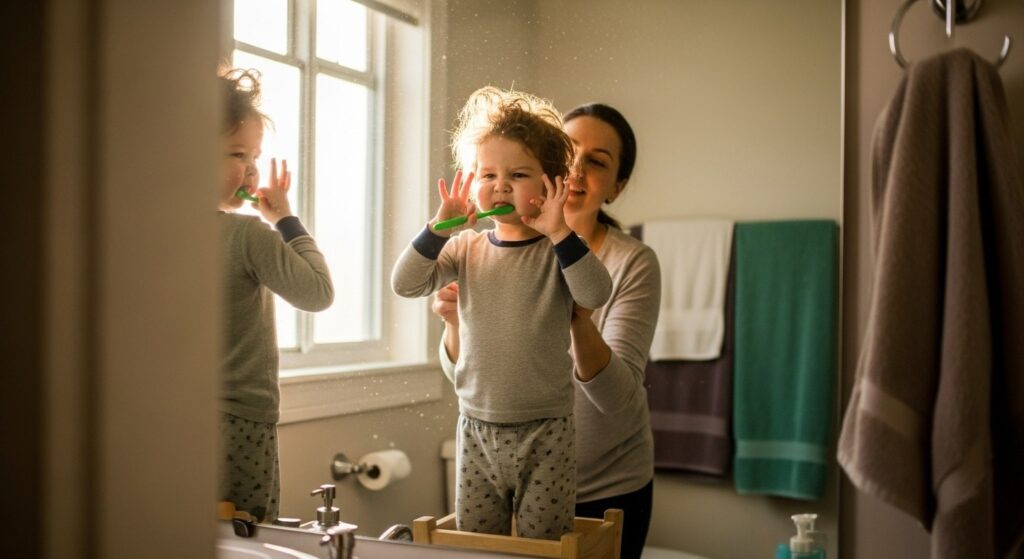
Last week, I heard my six-year-old daughter playing “mommy” with her dolls in the living room. I smiled—until I heard her say, in a perfect imitation of my stressed-out voice, “Mommy has SO much to do today. Why doesn’t anybody help me around here?”
I froze. That was my voice. My exact tone. My frustrated words that I thought I’d been saying quietly to myself—or maybe to my husband—but definitely not directly to my kids.
Turns out, my kids were absorbing everything anyway.
That moment made me realize something crucial about things children absorb and imitate from parents: they’re not just learning from what we intentionally teach them. They’re watching us like tiny detectives, soaking up every sigh, every eye roll, every muttered comment, and every behavior we think they’re not noticing.
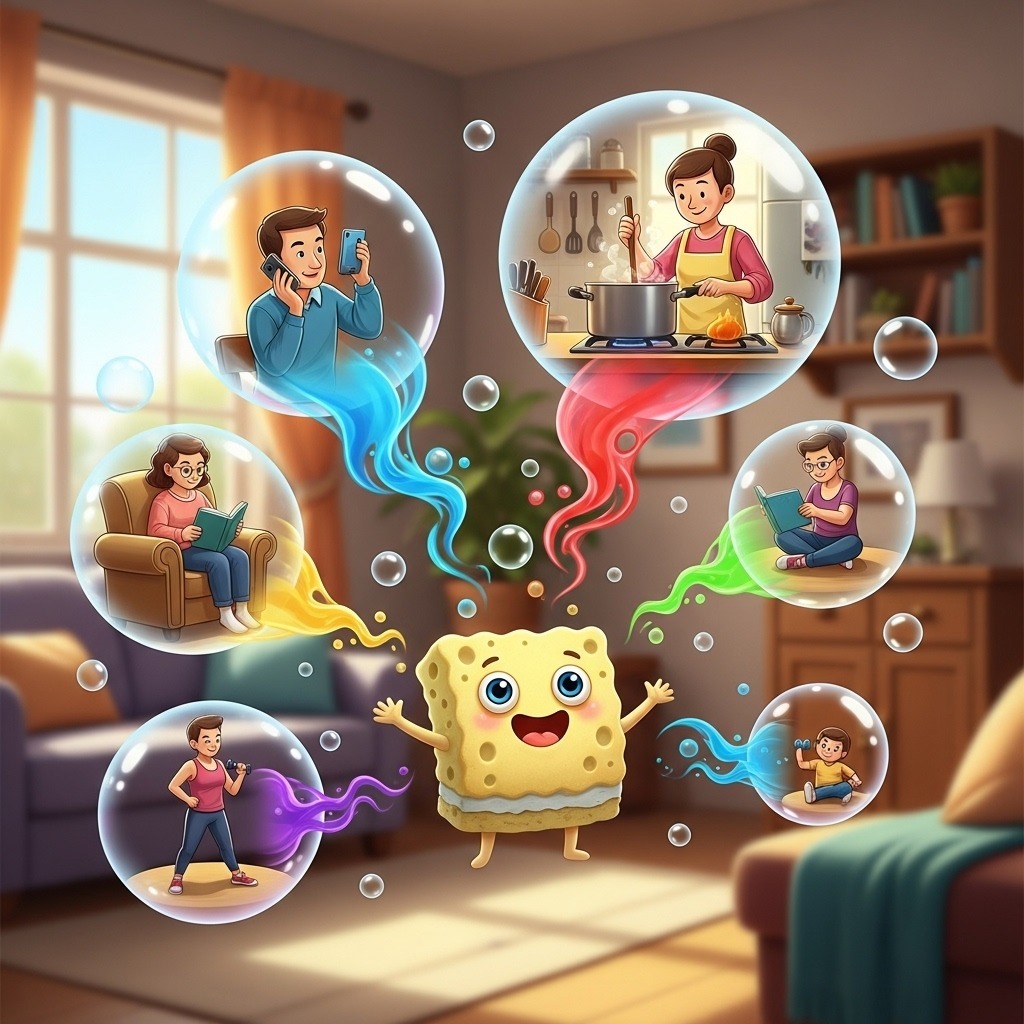
Kids are basically little ninjas—always watching, always absorbing—and tiny sponges soaking up behaviors we didn’t even realize we were modeling. And get this: even six-month-old babies can differentiate emotions just by observing their parents’ facial expressions.
So if you’ve ever cringed when your toddler yells at their toy the exact same way you yelled at the vacuum yesterday, or heard your teen use your exact sarcastic tone, you’re not alone. Let’s talk about what our kids are really learning from us—and how to be more intentional about it.
Why Kids Are Master Imitators (Even When We Wish They Weren’t)
Before we dive into the specific things children absorb and imitate from parents, let’s talk about why this happens so intensely.
Children learn behaviors primarily through observation and imitation. It’s not just about following rules or listening to lectures—kids learn by watching what we actually do, then copying it.
This makes total sense from an evolutionary perspective. For thousands of years, human children learned how to survive by watching their parents. How to find food, build shelter, interact with others, and handle danger—all of it was passed down through observation and imitation.
Today, our kids’ brains are still wired the same way. They’re watching us to learn how to be human. How to navigate emotions, handle stress, treat other people, and move through the world.
And here’s the kicker: they don’t differentiate between the behaviors we want them to learn and the ones we don’t. They’re absorbing it all—the good, the bad, and the ugly.
Observational learning is one of the most powerful forms of childhood development. What kids see repeated becomes their template for “normal” behavior.
So when we say “do as I say, not as I do,” we’re fighting against their most fundamental learning mechanism. It’s like telling them to learn French by only listening to Spanish. It doesn’t work.
10 Things Children Absorb and Imitate from Parents (That I Wish I’d Known Sooner)
Okay, let’s get specific. Here are the major things children absorb and imitate from parents—some obvious, some surprising, all important.
1. How You Treat Yourself
This one hit me hard. My kids aren’t just watching how I treat them—they’re watching how I treat myself.
When I stand in front of the mirror criticizing my body, my daughter is learning how she should feel about her own body. When I skip meals because I’m “too busy” or don’t prioritize sleep, my son is learning that self-care isn’t important.
On the flip side, when I set boundaries (“Mommy needs 10 minutes alone to recharge”), practice self-compassion (“I made a mistake, but that’s okay”), or prioritize my health, they’re learning healthy self-respect.
Children’s self-esteem and self-treatment patterns are directly linked to how they observe their parents treating themselves. If you want your kids to love and respect themselves, start by modeling it.
2. Your Stress and Anger Management
Remember that story about my friend’s kid who started grunting “Grrrr” when angry? He was imitating his mom’s stress response that she didn’t even realize she was doing.
Our kids are watching how we react when things go wrong. Do we yell? Slam doors? Take deep breaths? Count to ten? Problem-solve calmly?
My eight-year-old recently told me, “When I’m frustrated, I walk away like you do.” I hadn’t deliberately taught him that—he just absorbed it from watching me take breaks when I felt overwhelmed.
The coping mechanisms we model become their coping mechanisms for better or worse.
3. The Way You Talk About Others
This one makes me cringe because I’ve definitely caught myself doing it wrong.
When we gossip about neighbors, complain about teachers, or criticize family members in front of our kids, we’re teaching them that talking negatively about others is normal and acceptable.
My wake-up call came when my daughter repeated something mean I’d said about another mom at school. Hearing those words come out of her innocent mouth made me realize I needed to change.
Now I try to model empathy even when people frustrate me: “I think she might have been having a hard day” or “Maybe she didn’t mean it that way.” It’s not always easy, but my kids are learning to give people the benefit of the doubt. For more on teaching empathy and kindness, check out Positive Parenting for Moms.
4. Your Screen Time and Digital Habits
Here’s an uncomfortable truth: if you’re constantly on your phone, your kids will be too.
You can set all the screen time limits you want, but if they see you scrolling through social media at dinner, checking your phone during conversations, or choosing your device over spending time with them, that’s what they’ll consider normal.
My kids started calling me out when I’d tell them to put their tablets away while I was staring at my own phone. Fair point, kids.
Now I make a conscious effort to put my phone away during family time, and I’ve noticed my kids are less attached to their devices too. When we model healthy digital boundaries, they internalize them.
5. How You Handle Conflict and Disagreements
My husband and I disagree in front of our kids. Intentionally.
Not screaming matches—but respectful disagreements where we listen to each other, acknowledge different perspectives, and work toward solutions. Because if our kids never see us disagree, they won’t learn how to do it healthily.
What we model during conflict teaches them:
- Is it okay to have different opinions?
- How do you express disagreement respectfully?
- What does apology and forgiveness look like?
- How do you compromise?
Kids who grow up watching healthy conflict resolution develop better relationship skills. Kids who see screaming, stonewalling, or disrespect learn that those are normal ways to handle disagreements.

6. Your Self-Talk and Internal Dialogue
Kids don’t just hear what we say to them—they hear what we say to and about ourselves.
“I’m so stupid for forgetting that.” “I can’t believe I messed that up again.” “I look terrible today.”
All that negative self-talk? Your kids are absorbing it and applying it to themselves.
One of the most powerful changes I made was switching to positive self-talk in front of my kids: “I made a mistake, but I can fix it.” “I’m learning something new, and that’s okay if it’s hard.” “I’m proud of myself for trying.”
Now, when my kids mess up, they use similar language instead of catastrophizing or beating themselves up.
7. How You Express (or Don’t Express) Love
The way you show love to your partner, your kids, and other people becomes their template for love.
Are hugs common in your house? Do you say “I love you” regularly? Do you show affection physically and verbally? Or is love more implied and unspoken?
There’s no single “right” way, but whatever you model becomes what your kids will likely replicate in their own relationships.
My son is a hugger because he grew up in a house where hugs are currency. My friend’s daughter is more reserved because that’s what she observed growing up. Neither is wrong—but it’s worth being intentional about what you’re modeling.
8. Your Work Ethic and Attitude Toward Responsibilities
When my kids were toddlers, I didn’t think they noticed my work habits. But now my nine-year-old randomly says things like “I’m going to work hard on this project” or “Let me finish this so I can be proud of myself.”
He absorbed those phrases from watching me work.
Similarly, if kids hear you constantly complaining about work, procrastinating on tasks, or cutting corners, they learn that work is something to avoid or do half-heartedly.
The attitude we model toward responsibilities—whether that’s our job, household chores, or commitments—shapes their attitude toward school, chores, and eventually their own careers.
9. Your Relationship with Food and Body Image
This one is huge, especially for daughters (though sons absorb it too).
Comments about dieting, “good” and “bad” foods, or negative body talk in front of kids can shape their relationship with food and their bodies for life.
I’ve made a conscious effort never to talk about my weight or dieting in front of my daughter. Instead, I focus on health, energy, and what my body can do rather than what it looks like.
She recently told me she’s “strong like Mommy,” and I realized that’s because I talk about strength, not size. That’s the lens she’s developing for herself.
10. How You Prioritize Family Time
Do you put work before family dinners? Check your phone during conversations? Schedule back-to-back activities that leave no downtime?
Or do you protect family time, have regular rituals (like game nights or activities to do with kids), and make your kids feel like they’re the priority?
Our kids are watching what we actually prioritize, not what we say matters most. When you consistently choose work, cleaning, or other tasks over connecting with them, they internalize that message.
Setting up simple rituals—like weekly board game nights or making weekend pancakes together using kids’ baking and cooking sets—shows them that family time is sacred.
The Good, The Bad, and The Funny
Not all imitation is concerning. Sometimes it’s absolutely adorable or even impressive.
The Good:
- My daughter saw me donate old clothes and now regularly suggests giving away toys she’s outgrown.
- My son started saying “thank you” to service workers because he heard me do it.
- My kids check on each other when someone’s upset because they’ve seen us model empathy.
The Bad:
- My toddler learned to roll his eyes from me (oops)
- My daughter picked up my habit of saying “seriously?” in an exasperated tone.
- My son started stress-eating because he watched me snack when anxious.
The Funny:
- My four-year-old “drives” her toy car while pretending to drink coffee and sigh dramatically
- My son walks around “on important calls” pretending to talk seriously on his toy phone.
- My daughter plays “exhausted mom,” where she dramatically flops on the couch, saying she needs a break
These funny moments are actually revealing. They’re showing us exactly what our kids are observing and interpreting as normal adult behavior.
What to Do When You See Yourself (The Bad Parts)
Okay, so you’ve realized your kid is imitating something you wish they hadn’t learned. Now what?
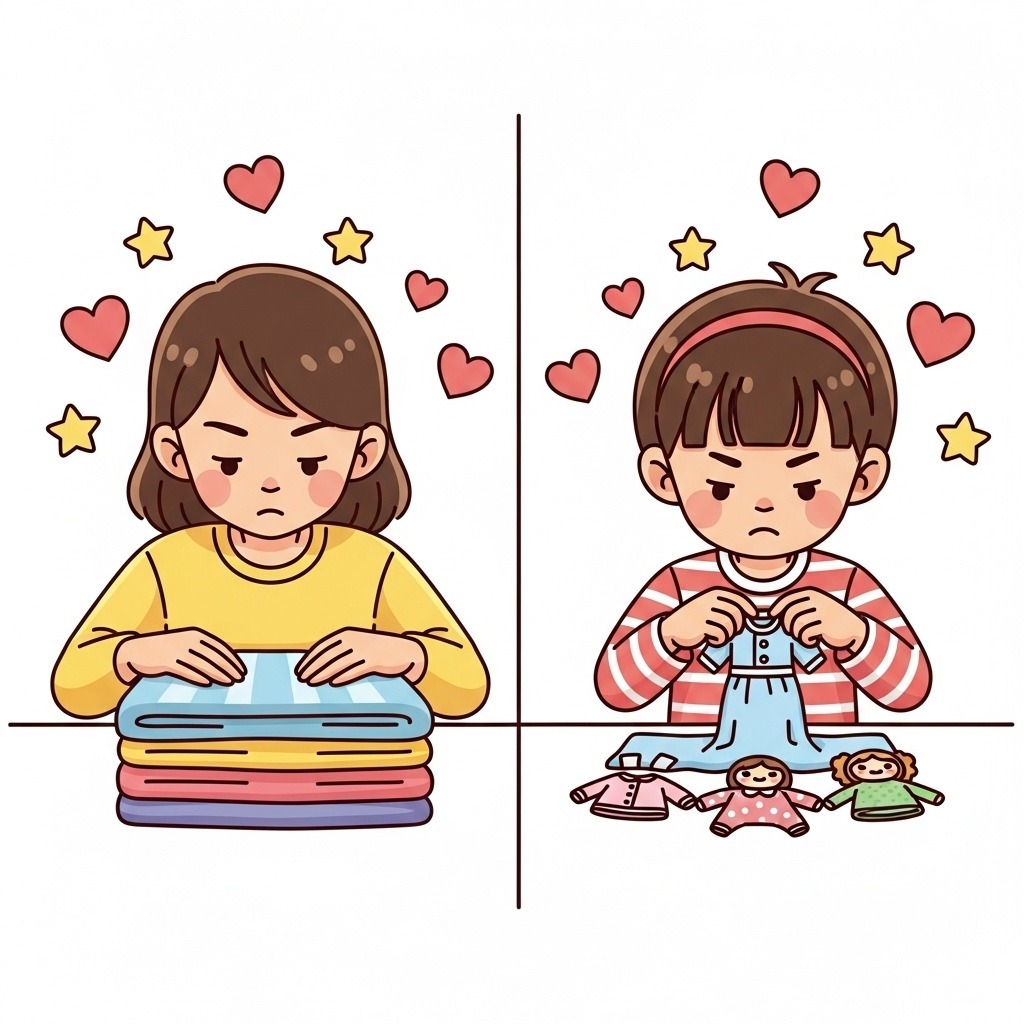
First, take a breath. You’re not a terrible parent. Every parent has moments where their kid holds up an uncomfortable mirror.
Here’s the truth: “Do as I say, not as I do” simply doesn’t work. Kids don’t have the cognitive ability to follow words while ignoring repeated actions. Children’s brains are wired to trust behaviors over words.
The solution? Change your own behavior.
I know, I know. That’s way harder than just telling kids what to do differently. But it’s the only thing that actually works long-term.
When I realized my kids were learning my stress responses, I couldn’t just tell them “don’t be stressed.” I had to model better stress management myself. I started practicing deep breathing, taking breaks, and talking through my feelings instead of just reacting.
And you know what? It worked. Not overnight, but gradually. As my habits changed, so did theirs.
Practical steps:
- Identify the behavior you want to change (in yourself and your child)
- Acknowledge it without shame (“I’ve noticed we both get frustrated easily”)
- Talk about it together (“I’m working on staying calmer when things go wrong”)
- Model the new behavior consistently (This is the hard part)
- Celebrate progress (“I noticed you took deep breaths instead of yelling—I’m proud of both of us”)
Reading parenting books can also give you research-backed strategies for behavior change that benefit both you and your kids.
Being Intentional About What They See
Here’s the empowering part: once you realize how much kids absorb, you can be intentional about what you’re modeling.
Content Consumption Matters
Remember that your kids don’t just absorb your direct behaviors—they also absorb the content you consume in front of them. The TV shows you watch, the music you listen to, the social media you scroll through, and even the conversations you have on the phone.
If you’re watching violent or negative content, using harsh language in what you consume, or engaging with toxic social media, your kids are taking it all in.
Create Positive Modeling Opportunities
- Volunteer together so they see service in action.
- Read books in front of them so they see reading as valuable.
- Work on kids’ craft supplies projects together to model creativity and persistence.
- Talk through your problem-solving process out loud.
- Verbalize your gratitude and appreciation regularly.
Consistency Is Key
Kids trust patterns more than one-time lessons. If you occasionally demonstrate kindness but regularly demonstrate impatience, guess which one they’ll internalize?
The behaviors they see repeatedly become their blueprint for normal.
This doesn’t mean you have to be perfect. But it does mean being mindful about the patterns you’re establishing. For more on creating consistency, explore resources on how to set boundaries for kids.

The Long Game
Understanding things children absorb and imitate from parents has completely changed how I move through my day.
I still mess up. I still lose my patience, model imperfect behaviors, and occasionally hear my worst moments repeated back to me in my kids’ play.
But now I’m more aware. And awareness is the first step toward intentionality.
Your kids are going to imitate you whether you want them to or not. That’s how their brains are wired to learn. So the question isn’t whether they’ll copy you—it’s what you want them to copy.
The beautiful part? You get to decide. Every interaction is an opportunity to model the person you want your kids to become.
When they grow up, they won’t remember your perfectly organized playroom or your Pinterest-worthy birthday parties. They’ll remember—and replicate—how you treated yourself, how you handled hard moments, how you showed love, and how you prioritized what mattered.
That’s the legacy we’re building, one observed behavior at a time.
Frequently Asked Questions
At what age do children start imitating their parents?
Children begin imitating behaviors incredibly early—even infants as young as 6 months can differentiate emotions based on parents’ facial expressions. By 12-18 months, toddlers actively mimic actions they observe. The peak imitation years are typically between ages 2 and 7, when children are like sponges absorbing everything. However, kids continue observing and modeling parent behavior throughout childhood and adolescence. Even teenagers who seem to reject everything you say are still subconsciously absorbing your patterns, values, and behaviors. The modeling never really stops—it just becomes less obvious as they develop their own identities.
How can I change my child’s behavior if they’re imitating my bad habits?
The uncomfortable truth is that you can’t effectively change your child’s imitated behavior without changing your own first. Children trust actions over words, so telling them not to do something you regularly do creates confusion and won’t work long-term. Start by identifying the specific behavior you want to change, acknowledge it without shame, and then commit to modeling the replacement behavior yourself. For example, if your child yells when frustrated because they’ve seen you do it, work on your own emotional regulation first. Use parenting books to learn effective strategies, then implement them visibly so your child can observe and learn the new pattern.
Are there any positive things kids learn from watching parents that we don’t realize?
Absolutely! While we often worry about negative behaviors, children absorb countless positive things too. They learn resilience by watching you try again after failure, empathy by observing how you comfort others, gratitude when they hear you express appreciation, work ethic when they see you complete tasks, creativity during activities like using kids’ wooden painting kits together, and kindness through your daily interactions. Kids also pick up subtle values like environmental consciousness, generosity, curiosity, and humor. Often, parents don’t realize they’re teaching these things because they happen naturally through modeling rather than direct instruction.
How do I explain to my child that they shouldn’t copy everything I do?
For younger children (under 7), this concept is too abstract—they don’t have the cognitive ability to selectively imitate. Instead, focus on being mindful about what you do in front of them. For older kids (7+), you can have age-appropriate conversations: “Sometimes grown-ups do things that aren’t good for kids to do yet, like drinking coffee or staying up late” or “I made a mistake when I yelled earlier—that’s not how I want either of us to handle frustration.” Focus on explaining why certain behaviors have different rules for adults vs. kids, and emphasize that even adults are still learning to make better choices. This model promotes accountability and a growth mindset.
Does screen time modeling really matter if I set limits on my kids’ devices?
Yes, it matters tremendously. Kids notice the double standard when you limit their screen time while you’re constantly on your phone. Parents’ digital habits are one of the strongest predictors of children’s future technology relationships. If they see you prioritizing devices over face-to-face interaction, choosing screens over outdoor activities, or turning to phones when bored or stressed, they’ll internalize those patterns regardless of the limits you set. The most effective approach is modeling the digital habits you want them to develop: putting phones away during meals, having screen-free time, choosing board games for kids over devices for entertainment, and demonstrating that technology is a tool, not a constant companion.
What’s one thing your child has copied from you that made you laugh or cringe? Share in the comments—we’re all in this together! And if this article gave you some things to think about, pin it so you can come back when you need a reminder that our kids are always watching.