

Three months ago, I had a complete meltdown in my kitchen. I was unloading the dishwasher for the third time that day, picking up toys for the millionth time, and watching my 8-year-old and 5-year-old play video games in the next room. Something inside me snapped. “Why am I doing EVERYTHING?” I yelled to no one in particular.
My 8-year-old wandered in and asked, “Mom, can I have a snack?” And that’s when it hit me. I’d created this situation. I’d convinced myself that it was easier to just do everything myself than to teach my kids to help. I’d robbed them of learning responsibility because I thought they were “too young” or that it would “take too long” to teach them.
That day, I started researching age-appropriate chores and consequences—and it completely changed our family dynamic. My kids are more capable than I ever gave them credit for. They just needed clear expectations, consistent routines, and yes, appropriate consequences when they chose not to follow through.
If you’re drowning in household tasks while your kids play, this is your permission slip to start asking for help. Not in a mean way, not in a punishment way—but in a “we’re a family and we all contribute” way.
Why Age-Appropriate Chores Matter More Than You Think
Here’s what I didn’t realize until I started implementing chores: I wasn’t just getting help around the house. I was teaching my kids essential life skills they’ll need for the rest of their lives.
When my 5-year-old sets the table now, she’s learning to contribute to family meals. When my 8-year-old puts away his laundry, he’s building independence. These aren’t just tasks—they’re building blocks for future success.
Research shows that kids who do regular chores develop higher self-esteem, better time management skills, and stronger problem-solving abilities. They learn that being part of a family means everyone pitches in. They understand cause and effect (if I don’t feed the dog, he stays hungry—that’s on me).
Plus, young kids are actually eager to help! My 3-year-old niece begs to “help” with everything. That natural enthusiasm fades if we don’t nurture it. By giving age-appropriate chores starting young, we’re building on that natural desire to be helpful before it disappears.
And can we talk about how teaching responsibility now means less work for you later? My friend’s 16-year-old doesn’t know how to do laundry or cook a meal because she never taught him. Now she’s scrambling to teach life skills before college. Starting with age-appropriate chores when they’re young means they’re actually prepared for independence.
For more ideas on building responsibility in kids, these parenting books offer research-backed strategies that actually work.
What “Age-Appropriate” Really Means
Before I started this journey, I had no idea what “age-appropriate” actually meant. I just assumed toddlers couldn’t do anything and teenagers should do everything.
Age-appropriate means matching tasks to your child’s developmental abilities. It’s not about arbitrary age cutoffs—it’s about what your individual child can physically, cognitively, and emotionally handle.
Motor skills matter. A 3-year-old has the fine motor skills to pick up toys and put them in a bin. They don’t have the coordination to fold fitted sheets or carry heavy laundry baskets. A 10-year-old can vacuum, but a 4-year-old might struggle with the weight and mechanics.
Cognitive ability is key. Can your child remember multi-step directions? A 5-year-old can “make your bed”—pull up blankets, straighten pillows. They can’t follow a 10-step deep cleaning process. An 11-year-old can follow a recipe with supervision. A 6-year-old needs simpler tasks.
Emotional readiness counts. Some 7-year-olds can handle the responsibility of feeding a pet daily without reminders. Others need more time to build that consistency. That’s okay. You know your kid better than any chart online.
The goal isn’t perfection. It’s progress. My daughter’s “made” bed looks nothing like mine. But she’s learning the routine, building the habit, and feeling proud of her contribution.
Age-Appropriate Chores By Stage
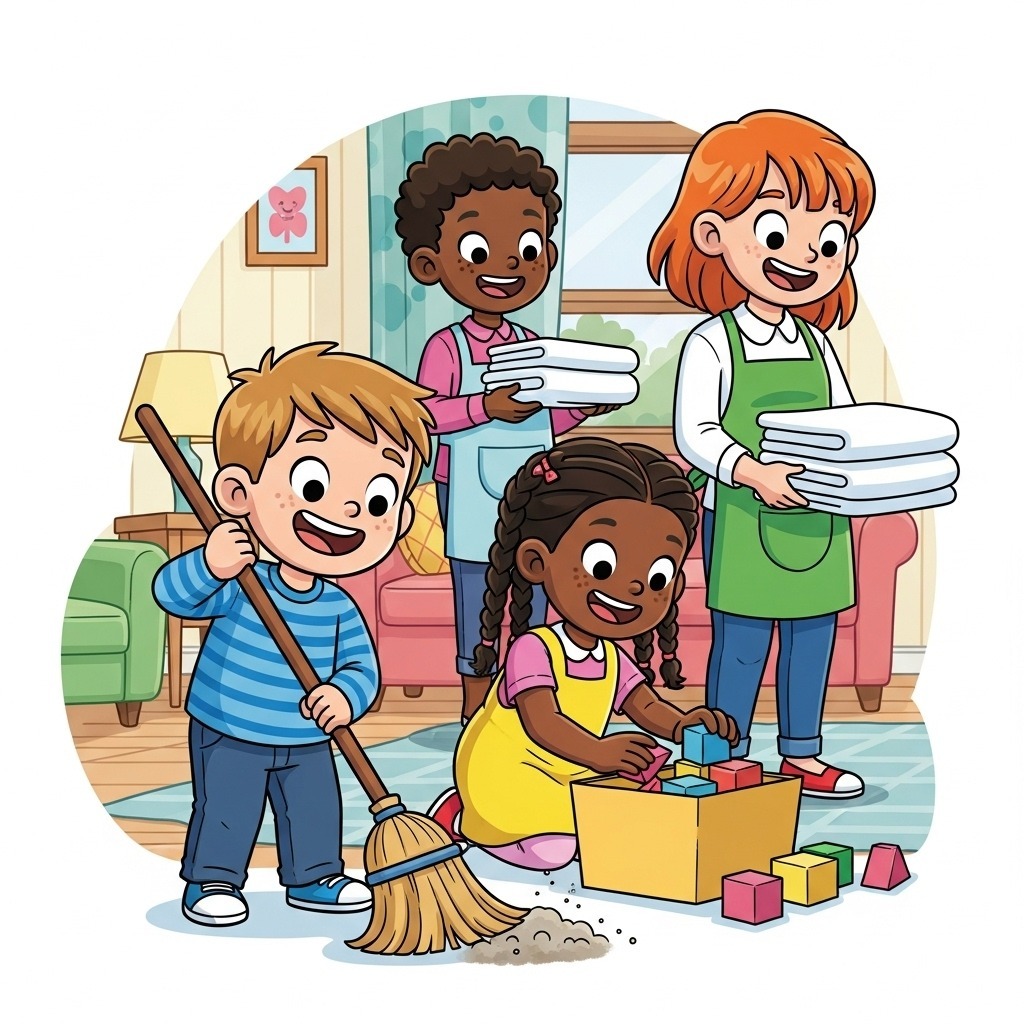
Here’s what’s worked in our house, organized by age. Remember, these are guidelines—not rules. Your 6-year-old might be ready for some 8-year-old tasks, and that’s fine.
Ages 2-3: Toddlers
These tiny humans are more capable than you think. Keep tasks simple and make them feel like games.
- Put toys in designated bins.
- Put dirty clothes in the hamper.
- Wipe down low surfaces with a damp cloth.
- Help feed pets (you pour, they deliver the bowl)
- Water plants with a small watering can
- Carry napkins to the table.
My daughter started “helping” at 2 by putting her books back on the shelf. It took three times longer than if I did it, but she was so proud. That pride matters more than efficiency.
Ages 4-5: Preschoolers
At this stage, they can handle slightly more complex tasks and start following simple routines.
- Make their bed (it won’t be perfect—let it go)
- Set the table with non-breakable items.
- Match socks from the laundry.
- Clear their own plate after meals.
- Dust the low furniture.
- Help sort recycling
- Get dressed independently
- Feed pets without help.
Ages 6-8: Early Elementary
This is when things really clicked for us. My 8-year-old can do so much more than I realized.
- Make breakfast (cereal, toast, simple things)
- Load dishwasher
- Take out bathroom trash.
- Sweep floors
- Water outdoor plants
- Put away groceries
- Make their bed properly.
- Pack their school lunch with guidance.
- Fold and put away their laundry.
- Help prepare simple meals.
These kids’ baking & cooking sets are perfect for this age, when kids want to help in the kitchen but need appropriately-sized tools.
Ages 9-12: Tweens
Tweens are capable of way more than we give them credit for. They can handle real responsibility.
- Wash dishes or run the dishwasher independently.
- Clean the entire bathroom.
- Vacuum the whole house.
- Mow the lawn with supervision.
- Do their own laundry, start to finish
- Prepare simple meals without help.
- Take trash to the curb.
- Babysit younger siblings (with parent home)
- Change bed sheets
- Help with grocery shopping.
Ages 13+: Teenagers
Teenagers should be practicing all the skills they’ll need when they move out.
- Cook family meals
- Deep clean rooms
- Do all personal laundry independently
- Wash car
- Basic yard maintenance
- Help with younger siblings.
- Manage their own schedule and responsibilities.
- Basic budgeting if they have an allowance
My friend’s 14-year-old makes dinner one night a week. It started rough, but now he’s actually good at it. Those are life skills that will serve him forever.
How to Actually Get Kids to Do Chores
Knowing what chores are age-appropriate is one thing. Getting kids to actually do them? That’s where I struggled at first.
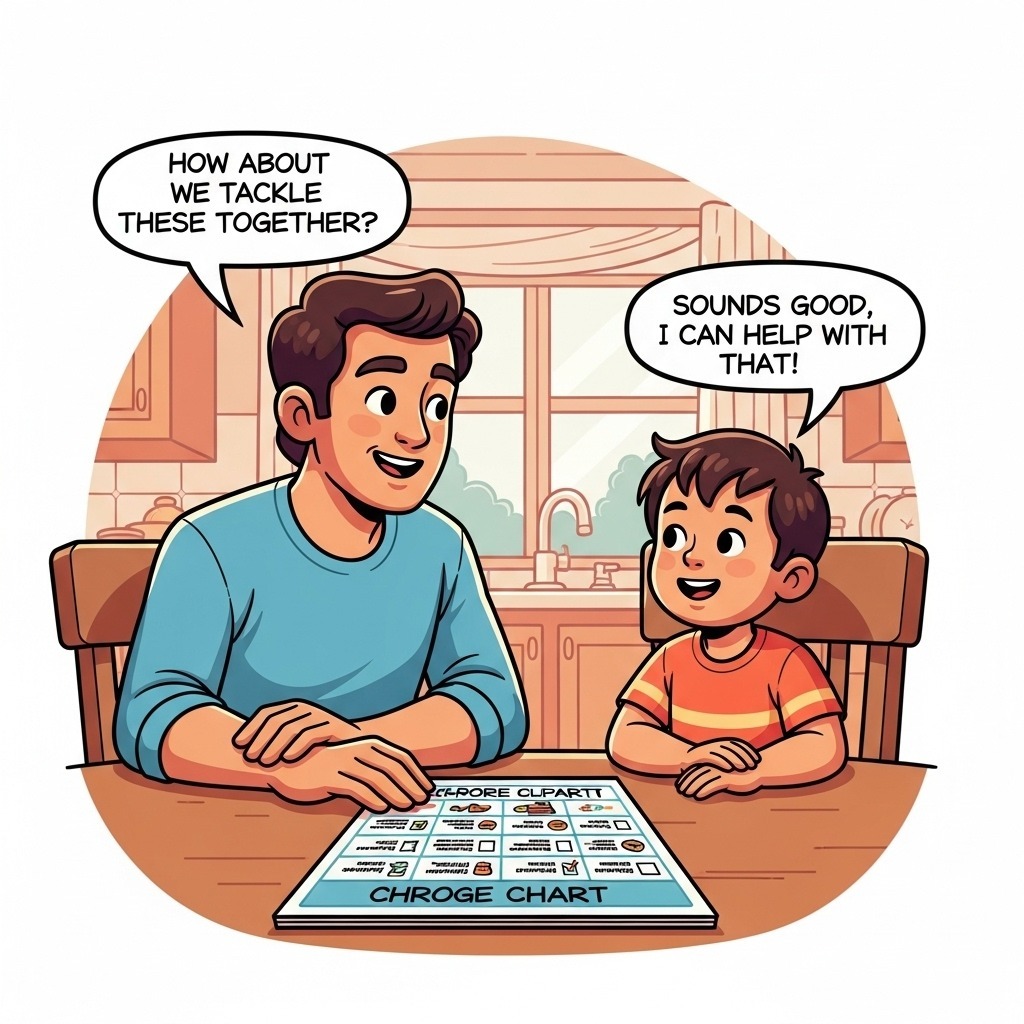
Create a visual chore chart. I tried verbal reminders, and they failed miserably. Then I made a simple chart with pictures for my younger daughter and words for my older son. It hangs on the fridge. They can see exactly what’s expected.
Build chores into daily routines. We do chores at the same time every day. After breakfast = make beds and put away pajamas. Before dinner = set the table and clear any mess. After dinner = clear the plates and wipe the table. Consistency is everything.
Make it part of family culture. We talk about how our family works as a team. Everyone contributes. Mom and Dad do chores. Kids do chores. We’re all responsible for keeping our home comfortable.
Start small and add gradually. Don’t hand your kid a list of 15 chores on day one. My son started with just making his bed and putting dishes in the sink. Once those were habits, we added more. Small wins build confidence.
Let them choose when possible. My kids get to pick which chores they do from their age-appropriate list. My daughter hates taking out trash but loves organizing. My son is the opposite. Giving them some control increases buy-in.
For more creative ways to keep kids engaged and motivated, these things for kids to do offer variety that prevents the “I’m bored” pushback.

Consequences That Work (Without Yelling)
This is where I struggled most. What do you do when kids just… don’t do their chores?
Here’s what I learned: consequences should be natural, logical, and consistent. They’re not punishments—they’re natural outcomes of choices.
Natural consequences are best when possible. If my son doesn’t put his dirty clothes in the hamper, they don’t get washed. He ran out of clean socks once and wore slightly dirty ones to school. He learned. I didn’t have to yell or punish—the consequence was built in.
Remove related privileges. This is where age-appropriate consequences come in. If my daughter doesn’t clear her plate after dinner, she loses the privilege of choosing what’s for snack tomorrow. If my son doesn’t do his Saturday chores, he doesn’t get Saturday screen time. The consequence relates directly to the choice.
Screen time is a privilege, not a right. This was hard for me to internalize, but it’s true. Chores come before screens in our house now. No negotiations. Want iPad time? Chores first.
Follow through every single time. This is crucial. If you say “no screen time until chores are done” and then give in because they’re whining, you’ve taught them that consequences aren’t real. I had to stay strong even when it was hard.
What doesn’t work: Yelling. Begging. Doing their chores for them. Bribing. Threatening without following through. Overreacting. Ask me how I know—I tried all of it before finding what actually works.
According to parenting experts at HealthyChildren.org, using logical consequences rather than punishment helps children develop internal motivation and understand cause-and-effect relationships.
Common Mistakes Parents Make
I made every single one of these mistakes. Learn from my failures.
Expecting perfection. My daughter’s “wiped down” table had streaks. My son’s “vacuumed” floor missed corners. I had to physically stop myself from redoing their work. The goal is learning, not perfection. Praise the effort, not the outcome.
Doing it yourself because it’s faster. Yes, I can unload the dishwasher in 3 minutes. It takes my 8-year-old 10 minutes. But those 7 extra minutes are teaching him skills he’ll use for life. The time investment now pays off later.
Overloading kids all at once. I got excited and assigned 10 new chores in one week. My kids revolted. Start with 2-3 age-appropriate tasks. Build from there once those become routine.
Being inconsistent. Some days I enforced chores. Other days, I was too tired to fight about it and did everything myself. Kids need consistency. If chores are required on Monday, they’re required every day. No exceptions.
Criticizing instead of praising. Early on, I’d point out what my son missed instead of praising what he did. “You forgot to wipe the counter,” instead of “Great job loading the dishwasher!” Positive reinforcement works way better than criticism.
Not involving kids in the process. When I created the chore system alone and announced it, my kids resisted. When I sat down with them, explained why everyone needs to contribute, and asked their input, they bought in. Involvement creates ownership.
For more tips on setting clear expectations without conflict, check out these strategies on how to set boundaries for kids that respect both your needs and theirs.
Rewards vs. Consequences
This is controversial in parenting circles, but here’s what works for us.
We use both—strategically. My kids don’t get paid for basic family contributions (clearing their plates, making beds, putting away toys). Those are just part of being in our family.
But they can earn allowance for “extra” jobs—washing the car, organizing the garage, deep cleaning. This teaches the difference between family obligations and earning money.
Praise is the most powerful reward. “I noticed you made your bed without being asked. That was really helpful!” Specific praise for effort reinforces the behavior way more than $5 ever could.
Sticker charts work for younger kids. My 5-year-old has a sticker chart. 5 stickers = a small reward, like choosing dessert or picking a movie night. She’s motivated by seeing her progress visually.
Natural rewards are best. When chores are done, we have more family time. When the house is picked up, we can have friends over. When responsibilities are handled, we can do fun activities. The reward is natural—not bribed.
Consequences for not doing chores should match rewards for doing them. If screen time is a reward for completed chores, loss of screen time is the consequence for skipped chores. Keep it logical and related.
These board games for kids make great rewards for consistently completing chores all week—quality family time that reinforces the teamwork you’ve built.
What to Do When Kids Refuse
Even with the best system, kids will sometimes refuse. Here’s how I handle it.
Get curious, not furious. When my son suddenly stopped doing his chores, I asked why. Turns out he felt overwhelmed by homework and sports. We adjusted his chore schedule. Problem solved. If I’d just gotten mad, we wouldn’t have found the real issue.
Problem-solve together. “I notice the chores aren’t getting done. What’s getting in the way? How can we solve this together?” Involve them in finding solutions. They’re more likely to follow through on plans they helped create.
Check if expectations are actually age-appropriate. Maybe you’ve asked too much too soon. Scale back and rebuild gradually. My 5-year-old couldn’t handle “clean your room” as one big task. Breaking it into “put books on the shelf, put toys in bins, put clothes in the hamper” worked better.
Make sure they know HOW to do the task. Sometimes kids aren’t refusing—they’re confused. Show them how. Do it together a few times. Then supervise. Then let them do it independently. Don’t assume they know.
Consider if something deeper is going on. If your previously cooperative child suddenly refuses all chores, there might be something else happening—stress, anxiety, struggles at school. Talk to them. Consider talking to their doctor if resistance is extreme and unusual.
Stay consistent with consequences. If they refuse, follow through with the predetermined consequence. Every time. No exceptions. Kids need to know you mean what you say.
For more strategies on maintaining calm during conflicts, these techniques on how to discipline without yelling have been game-changers in our house.
Making It Stick Long-Term
The first month of implementing age-appropriate chores was rough. I wanted to give up. But I’m so glad I stuck with it.
Now, three months in, chores are just part of our routine. My kids don’t fight about them (much). They just do them because that’s what we do in our house. The consistency paid off.
Our home is cleaner. Not perfect, but significantly better. I’m not doing everything alone anymore.
My kids are more confident. They’re proud of what they can do. My daughter loves telling Grandma she can make her own breakfast. My son volunteered to help his friend’s mom set the table at a playdate.
I’m less stressed. I’m not carrying the entire mental load of household management. My kids are actually helping in meaningful ways.
We’re teaching life skills that matter. My kids won’t be the college freshmen who call home asking how to do laundry or whether dishes need soap. They’re learning now.
Age-appropriate chores and consequences aren’t about turning kids into servants or being mean. They’re about raising capable, responsible humans who understand that families work together and contributions matter.
FAQ
At what age should kids start doing chores?
Kids can start with simple chores as early as 2-3 years old. Toddlers can put toys in bins, place clothes in hampers, and help with simple tasks. The key is matching the chore to their motor skills and cognitive ability. Starting young builds the expectation that everyone contributes to the household, making it easier to add responsibilities as they grow.
What are the good consequences of not doing chores?
The most effective consequences are natural and logical. Remove privileges related to free time—screen time, playdates, or choosing activities. If chores aren’t done by a certain time, those privileges are postponed until completion. Avoid punishments unrelated to the choice (like taking away sports practice). The consequence should teach cause and effect, not just punish.
Should kids get paid for doing chores?
This depends on your family values. Many experts recommend NOT paying for basic family contributions (making beds, clearing plates, tidying rooms) but offering allowance for “extra” jobs like washing the car or yard work. This teaches that being part of a family means contributing without payment, while also showing that extra effort can earn money—a valuable real-world lesson.
How do I get my child to do chores without constant reminders?
Consistency is key. Use visual chore charts, build chores into daily routines at the same time each day, and follow through with consequences every time chores are skipped. It takes 3-4 weeks to build a habit. During that time, reminders are normal. After that, consequences for forgetting help them take ownership. Also, ensure chores are truly age-appropriate so they’re set up for success.
What if siblings fight over who does which chore?
Give kids some choice when possible. Let them pick from age-appropriate options or rotate chores weekly so everyone does everything eventually. If fighting persists, assign specific chores to specific kids and remove the negotiation entirely. Make it clear that complaining about assigned chores results in getting an additional, less-desirable chore. Keep it simple and consistent.
Six months ago, I was drowning in household tasks while my capable kids played. I thought I was being a good mom by doing everything myself. I was actually doing them a disservice.
Age-appropriate chores and consequences have transformed our family. My kids are more responsible, more confident, and more capable. Our home runs smoothly. I’m less overwhelmed.
But the best part? My kids are learning that they matter. Their contributions are valuable. They’re capable of real responsibility. These lessons will serve them far beyond childhood.
So if you’re doing everything yourself while your kids watch, this is your sign to start asking for help. Create a simple chore chart tonight. Pick 2-3 age-appropriate tasks. Build the routine. Enforce the consequences.
Your kids are more capable than you think. They’re just waiting for you to believe in them enough to let them try.