
When I was 23, my college friend told me I was “too young” to think about having babies. When I hit 30, my mother started dropping hints about my “biological clock.” At 33, strangers at the grocery store felt entitled to comment on my pregnancy timing. The pressure around finding the best age to have kids is everywhere—but what does the science actually say?
As someone who’s navigated these waters with two kids born at very different stages of my life, I’ve learned that the “perfect” age isn’t as straightforward as everyone makes it seem. The timing of parenthood involves a complex interplay of biology, finances, career goals, and personal readiness that’s unique to every person.
What Americans Really Think About the Perfect Age
According to recent research, Americans believe the ideal age to become a parent is 27.3 years old. Interestingly, this lines up almost perfectly with reality—the typical U.S. woman actually gives birth for the first time at 27.4 years old. But here’s what caught my attention: parents who already have children think the best age is slightly younger (26.9) than those without kids (27.9).
That tells me something important: once you’re actually in the thick of parenting, you might wish you’d started a little earlier. Maybe it’s because you realize how much energy this whole thing takes, or maybe it’s because you want more time to have additional children. Either way, it’s fascinating that experience shifts perspective.
This timing consideration becomes even more important when you think about what kids learn in kindergarten and how your age might affect your energy levels for keeping up with active school-age children.

The Biology Behind the Timeline
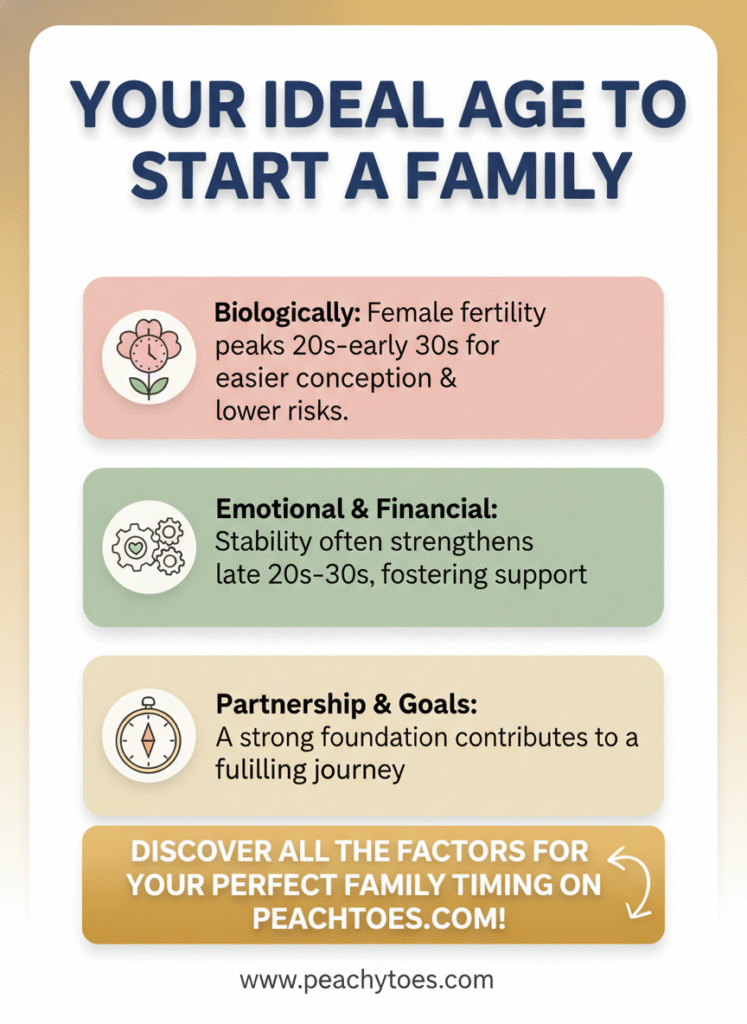
From a purely biological standpoint, medical experts consistently point to one age range: your late twenties to early thirties. This window, specifically between 25 and 29.9 years old, is when female fertility peaks and pregnancy complications are at their lowest.
Here’s what happens to your body during different decades:
Your Early Twenties: High Fertility, But…
Biologically speaking, your early twenties offer the highest fertility rates. However, research shows that very young mothers (under 20) face increased risks for complications like preeclampsia, preterm delivery, and postpartum hemorrhage. Teen mothers also have higher rates of poor fetal growth and fetal distress.
The American College of Obstetricians and Gynecologists provides comprehensive guidance on pregnancy at different ages, emphasizing that while fertility is highest in your twenties, emotional and financial readiness are equally important factors.
Your Late Twenties: The Sweet Spot
This is where science and real life seem to align. Women in their late twenties have:
- Peak fertility rates
- Lowest risk of pregnancy complications
- Optimal egg quality
- Lower risk of chromosomal abnormalities
- Better recovery from childbirth
One comprehensive study even pinpointed 30.5 as the ideal age to give birth to a first child. This age represents the perfect balance between biological optimality and life readiness.
Your Thirties: Still Good, But Changes Begin
After 30, fertility starts to decline gradually. By 35, this decline becomes more noticeable, and doctors officially classify pregnancies as “advanced maternal age.” The risks that increase after 35 include:
- Higher chance of miscarriage and stillbirth
- Increased risk of chromosomal conditions like Down syndrome
- Greater likelihood of pregnancy complications
- Higher probability of needing a C-section
However, it’s important to note that many women have healthy pregnancies well into their thirties. The key is maintaining good health, having regular prenatal care, and being aware of the slightly increased risks.
Your Forties and Beyond
While pregnancies in the forties are increasingly common, they do carry additional risks. However, there’s an interesting silver lining: research shows that women who have children at 40 are four times more likely to live to 100 than other women. The theories behind this include better overall health, stronger social connections, and the cognitive benefits of caring for young children later in life.
Why Age Isn’t Everything (What Really Matters)

While biology gives us a framework, real life is much more complicated. The “best” age to have kids depends on far more than just your ovaries. Here are the factors that might matter even more:
Financial Readiness
Let’s be honest—babies are expensive. The average cost of raising a child to 18 is now estimated at over $280,000, and that doesn’t include college expenses. Many couples in their twenties simply aren’t financially prepared for this reality. Waiting until your thirties often means:
- Higher earning potential
- More stable career trajectory
- Better insurance coverage
- Ability to take parental leave without financial stress
- Savings for childcare and education expenses
Financial stability affects everything from the quality of prenatal care you can afford to the neighborhoods where you can raise your children. It also impacts stress levels during pregnancy, which can affect both maternal and fetal health.
Emotional Maturity
I’ve seen 22-year-old mothers who were incredibly mature and 35-year-old mothers who weren’t ready for the responsibility. Emotional readiness includes:
- Understanding that your life will fundamentally change
- Being prepared for sleepless nights and constant demands
- Having realistic expectations about parenthood
- Possessing patience and adaptability
- Ability to put your child’s needs first
Emotional maturity often comes with age and life experience, but it’s not guaranteed. Some people are naturally nurturing and mature in their early twenties, while others need more time to develop these qualities.
Relationship Stability
Children thrive in stable environments. Whether you’re married, in a committed partnership, or planning to parent solo, having a solid support system matters more than hitting a specific age milestone. Stable relationships provide:
- Emotional support during pregnancy and parenting
- Shared financial responsibility
- Help with childcare duties.
- Better stress management
- Positive role modeling for children
This stability becomes especially important when you’re dealing with challenges like establishing house rules for kids and maintaining consistency in parenting approaches.
Career Considerations
There’s no perfect time, career-wise, to have children, but some timing considerations include:
- Establishing yourself in your field
- Building up parental leave benefits
- Creating flexibility in your work situation
- Considering the impact on career advancement
- Building a professional network that supports working parents
The reality is that parenthood will affect your career regardless of when it happens. The key is planning for how you’ll manage both responsibilities and having realistic expectations about the adjustments you’ll need to make.

The Cultural Shift Nobody Talks About
Here’s something fascinating: the timing of parenthood has shifted dramatically over generations. In 1980, 39% of 25-year-olds had a child. By 2021, that number dropped to just 17%. We’re waiting longer, and there are both benefits and drawbacks to this trend.
Why People Are Waiting Longer
The reasons for delayed parenthood reflect broader social and economic changes:
- Extended education periods (graduate school, professional training)
- Career establishment priorities in competitive job markets
- Financial considerations and student debt
- Desire for life experiences before settling down
- Better birth control options, allowing for family planning
- Changing social expectations and reduced stigma around later parenthood
- Housing costs and urban living challenges
The Potential Downsides of Waiting
While there are advantages to waiting, there are also considerations:
- Decreased fertility with age
- Higher pregnancy risks after 35
- Less time for multiple children if desired
- Grandparents may be older when grandchildren arrive.
- Potential energy differences between younger and older parents
- Increased pressure to conceive quickly due to time constraints
International Perspectives on Timing
It’s interesting to see how different cultures view the best age for children. A recent international survey of 23,000 adults across 18 countries found that the average ideal age for having a first child was around 26 years old globally. However, this ranged significantly:
- Bangladesh: 21.2 years old
- Argentina: 28.9 years old
- United States: 27.3 years old
- Nordic countries: Generally 28-30 years old
These differences reflect cultural values, economic realities, social support systems, and government policies that vary dramatically around the world. Countries with better parental leave policies, universal healthcare, and childcare support tend to have higher ideal ages for parenthood.

What Medical Professionals Actually Recommend
When I interviewed several OB-GYNs for this piece, their advice was surprisingly consistent: the best age to have kids is when you’re physically, emotionally, and financially prepared—ideally within that 25-35 window if possible.
Dr. Sarah Martinez, a maternal-fetal medicine specialist, told me, “I see healthy pregnancies and births across all age ranges. Yes, we have statistics about optimal ages, but I’m more concerned about whether my patients are taking care of themselves, have good support systems, and are prepared for parenthood.”
Key Health Factors at Any Age
Regardless of your age, certain health factors can significantly impact pregnancy outcomes:
- Maintaining a healthy weight before conception
- Taking prenatal vitamins (especially folic acid) for at least one month before trying to conceive
- Managing chronic conditions like diabetes or hypertension
- Avoiding alcohol, smoking, and recreational drugs
- Regular exercise appropriate for your fitness level
- Managing stress levels through healthy coping mechanisms
- Getting adequate sleep and maintaining good nutrition
The Mayo Clinic emphasizes that preconception health is just as important as prenatal care, regardless of maternal age, and provides detailed guidance on maintaining health throughout pregnancy at any age.
The Reality Check: There’s No Perfect Time
After researching this extensively and talking to hundreds of mothers, here’s my honest take: there’s no universally perfect age to have children. Every age comes with trade-offs:
Having Kids in Your Twenties
Pros: Higher fertility rates, more energy for sleepless nights, lower health risks, more time for multiple children, potentially more help from younger grandparents
Cons: Often less financial stability, may feel unprepared for responsibility, career may not be established, less life experience, and potentially less emotional maturity.
Having Kids in Your Thirties
Pros: More life experience and wisdom, better financial position, established career, emotional maturity, intentional parenting decisions, stable relationships
Cons: Slight fertility decline, higher pregnancy risks after 35, less energy for recovery, more established routines that are harder to change
Having Kids in Your Forties
Pros: Maximum life experience and financial stability, very intentional parenting, established support networks, wisdom about what really matters
Cons: Significant fertility challenges, higher pregnancy risks, less energy for active parenting, shorter window for multiple children, and older grandparents
Making the Decision That’s Right for You
Instead of fixating on the “best” age, consider these questions honestly:
- Are you physically healthy? This matters more than your exact age. A healthy 35-year-old may have better pregnancy outcomes than an unhealthy 25-year-old.
- Do you have adequate support? Whether from a partner, family, or friends, having people who can help during pregnancy and early parenthood is crucial.
- Are you emotionally ready for the complete life change that comes with children? This includes being prepared for the loss of spontaneity, increased responsibility, and focus on someone else’s needs.
- Can you financially handle the responsibility of raising a child? This includes not just immediate costs but long-term expenses like education and healthcare.
- Does having children align with your current life goals and timeline? Consider how parenthood fits with your other aspirations.
- If you want multiple children, does your age give you enough time for that? Factor in recovery time between pregnancies and potential fertility changes.
These considerations become even more important when you think about the long-term aspects of parenting, such as helping with lunch ideas for kids and maintaining energy for active family activities as your children grow.
Planning for Parenthood at Any Age
Regardless of when you decide to have children, preparation is key:
Health Preparation
- Schedule a preconception appointment with your doctor.
- Start taking folic acid supplements.
- Achieve a healthy weight.
- Update vaccinations
- Screen for genetic conditions if relevant
- Address any chronic health conditions.
Financial Preparation
- Build an emergency fund.
- Understand your insurance coverage.
- Plan for parental leave (paid or unpaid)
- Consider childcare costs in your budget.
- Start saving for education expenses.
Emotional Preparation
- Discuss expectations with your partner.
- Consider counseling if needed.
- Build a support network.
- Research parenting approaches
- Prepare for lifestyle changes.
The Support System Factor
One aspect that’s often overlooked in age discussions is the importance of your support system. Having kids in your twenties might mean your parents are younger and more able to help, but it might also mean your friend network isn’t ready for the parenting phase. Having kids in your thirties might mean more friends who are also parents, but potentially older grandparents.
The key is identifying what support you’ll have available and planning accordingly. This might include:
- Family members who can provide childcare
- Friends who understand the challenges of parenting
- Professional support, like postpartum doulas or babysitters
- Community resources like parenting groups or classes
This support network becomes invaluable when you’re navigating decisions about things like when kids can stay home alone and other parenting milestones.
Special Considerations for Modern Parents
Today’s parents face unique challenges that previous generations didn’t encounter. Technology has changed how we parent, work, and maintain relationships. Social media creates new pressures and comparisons that can affect our confidence in parenting decisions.
Modern considerations include:
- Balancing screen time and technology use
- Managing social media’s impact on family life
- Navigating remote work while parenting
- Dealing with information overload about parenting “best practices”
- Managing the pressure of “perfect parenting” portrayed online.
These factors can affect parents of any age, but they may impact younger and older parents differently based on their comfort level with technology and social media.
The Bottom Line
While science suggests that the late twenties to early thirties offer the optimal biological window for having children, the “best” age for you depends on your unique circumstances. Don’t let societal pressure or biological statistics rush you into a decision you’re not ready for, but also don’t ignore the realities of age-related fertility decline.
The most important factor isn’t the number on your driver’s license—it’s whether you’re prepared for the incredible, exhausting, life-changing journey of parenthood. Whether that happens at 25 or 35, what matters most is that you’re ready to give a child the love, stability, and care they deserve.
Remember that parenting doesn’t end when your child reaches adulthood. You’ll be making decisions about everything from early childhood activities to helping them navigate their own major life choices. The age at which you start this journey will influence your experience, but it won’t determine your success as a parent.
Ultimately, the best age to have kids is when you feel ready—physically, emotionally, and financially—to embrace one of life’s greatest adventures. Trust yourself, prepare well, and remember that there’s no such thing as a perfect parent at any age—just parents who love their children and do their best every day.
Frequently Asked Questions
Q: What is the scientifically proven best age to have children?
A: Medical experts consistently recommend the late twenties to early thirties (specifically ages 25-30) as the optimal biological window. This age range offers peak fertility, lowest pregnancy complications, and best outcomes for both mother and baby.
Q: Is 35 really too old to start having children?
A: Absolutely not! While pregnancies after 35 are classified as “advanced maternal age” and carry slightly higher risks, many women have healthy pregnancies and babies in their thirties and forties. The key is good prenatal care and overall health.
Q: Do men’s ages matter for pregnancy outcomes?
A: Yes, research shows that paternal age can also affect pregnancy outcomes and child health. While men don’t have the same biological clock as women, older fathers may have slightly increased risks for certain genetic conditions and autism spectrum disorders.
Q: How much does fertility really decline with age?
A: Fertility begins to decline gradually after age 30 and more significantly after 35. By age 40, a woman’s chance of getting pregnant in any given month is about half of what it was in her twenties. However, many women over 35 still conceive naturally.
Q: What if I want multiple children—how does that affect timing?
A: If you want several children, starting earlier gives you more options. Consider that most doctors recommend waiting at least 12-18 months between pregnancies for optimal health outcomes, and factor in potential fertility changes as you age.