
I remember the exact moment I realized I was failing my daughter.
She was four years old, and we were at a family gathering. A relative reached out to hug her, and she instinctively pulled back. Instead of respecting her boundary, the adult laughed and said, “Oh, come on! Give me a hug!” I watched, frozen, as my daughter reluctantly leaned in for an awkward embrace. Her face said everything—she didn’t want to do it.
And I didn’t stop it.
That night, lying awake, I felt sick to my stomach. I’d been so worried about being polite, about not offending family members, that I’d taught my daughter the exact opposite of what she needed to know: that her discomfort mattered less than someone else’s feelings. That adults’ demands for affection trumped her bodily autonomy.
I knew right then that we needed to have some serious conversations about body safety rules for kids. Not someday. Not when she was older. Right now.
Here’s the thing: teaching body safety rules for kids is one of those parenting topics that makes us squirm. It’s uncomfortable. It feels heavy. Sometimes it brings up our own painful memories. But it’s also one of the most important things we can do to protect our children. And the good news? You don’t need to be perfect at this. You just need to start.

Use Proper Names for Body Parts
This is where it all starts, and honestly, it felt weird at first.
I grew up in a house where we used cutesy names for everything. “Front bottom.” “Private areas.” “Down there.” But when I started researching body safety, every single expert said the same thing: use anatomical terms.
Why? Because if something ever happens and your child needs to tell someone—a teacher, a doctor, a police officer—they need to be able to communicate clearly what happened and where. “Someone touched my vulva” is specific and clear. “Someone touched my cookie” is confusing and can be misunderstood or dismissed.
I started teaching my kids the proper names for body parts the same way I taught them “elbow” and “knee.” Casual. Matter-of-fact. No shame, no embarrassment. Penis. Vulva. Vagina. Breasts. Buttocks.
You can start this as early as toddlerhood. When you’re giving baths or changing diapers, name the body parts just like you’d name their nose or toes. “Let’s wash your vulva.” “Time to put a clean diaper on your bottom.” The earlier you normalize this language, the easier it becomes.
During these teaching moments, I found that having kids’ activity books and workbooks about the human body helped make these conversations feel less awkward. There are some great age-appropriate books that show body parts in a simple, educational way that takes the weirdness out of it for both you and your kids.
Private Parts Are Off Limits
Once your child knows the proper names for their body parts, the next rule is simple but crucial: private parts are private.
We use what’s called the “Underpants Rule” in our house. If a bathing suit or underwear covers it, it’s a private part. And private parts have special rules.
The rule goes both ways: no one should touch your child’s private parts, and your child shouldn’t touch anyone else’s private parts. The only exceptions are parents or caregivers helping with hygiene (bathing, wiping after potty), and doctors during check-ups—and only when a parent or trusted adult is in the room.
I explained it to my kids like this: “Your body belongs to you. Your private parts are special, and nobody gets to touch them or look at them. If someone tries to touch your private parts or asks to see them, that’s breaking the rules, and you need to tell me right away.”
It’s also important to teach kids that they shouldn’t touch other people’s private parts. This helps them understand boundaries work both ways and creates mutual respect.
One thing that really helped us reinforce these concepts was setting up regular conversation starters for kids during dinner time. It made these big topics feel more natural and ongoing rather than one scary “talk.”
No One Should Take Pictures of Private Parts
This is the rule I didn’t even think about until recently, and it scared me.
We live in a digital world. Kids have access to tablets, phones, and cameras younger than ever before. And predators know this.
The rule is clear: no one should ever take pictures of your child’s private parts, and your child should never take or send pictures of their own private parts. Even if someone they know asks them to. Even if someone says, “it’s just for fun” or “everyone does it.”
I told my kids straight up: “If anyone ever asks you to take your clothes off for a picture, or asks you to send them a photo of your private parts, that person is doing something very wrong. You say no, and you come tell me immediately. You won’t be in trouble—I promise.”
This conversation also extends to what they see online. If someone shows them pictures of private parts or sends them inappropriate images, they need to tell a trusted adult right away.
According to the American Academy of Pediatrics, it’s crucial to have ongoing conversations with kids about internet safety as part of overall body safety education, especially as kids get older and have more unsupervised screen time.
Your Child Is the Boss of Their Body
Remember that family gathering I mentioned? That was my wake-up call on this rule.
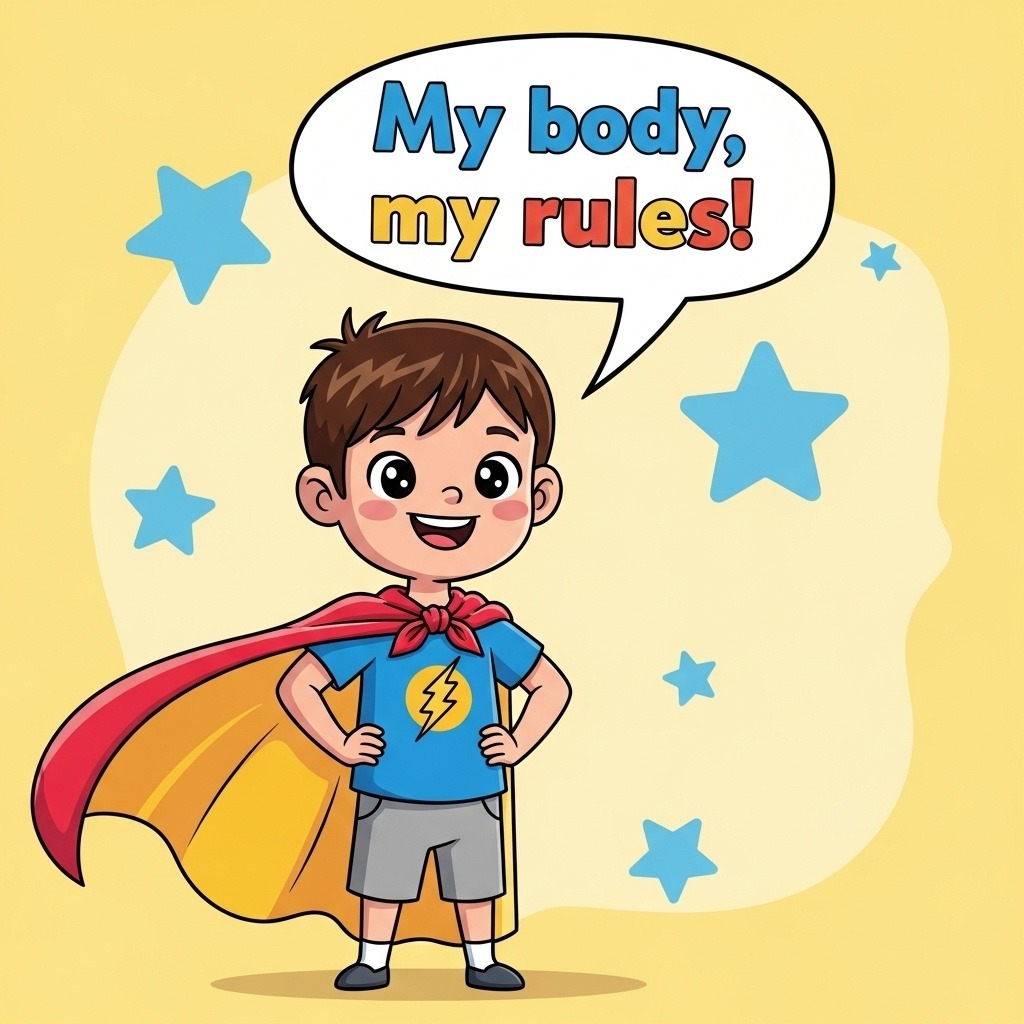
Our kids need to know—really, deeply know—that they are the boss of their own bodies. They get to decide who touches them and how. Even if it’s a hug from Grandma. Even if it’s a kiss from Aunt Susan. Even if it’s sitting on Uncle Joe’s lap.
If your child doesn’t want physical affection from someone, they should never be forced. Period.
I know this can feel uncomfortable. I know grandparents’ feelings might get hurt. I know it might seem rude. But here’s what’s more important than politeness: teaching your child that their bodily autonomy matters. That their comfort and their boundaries are valid and should be respected.
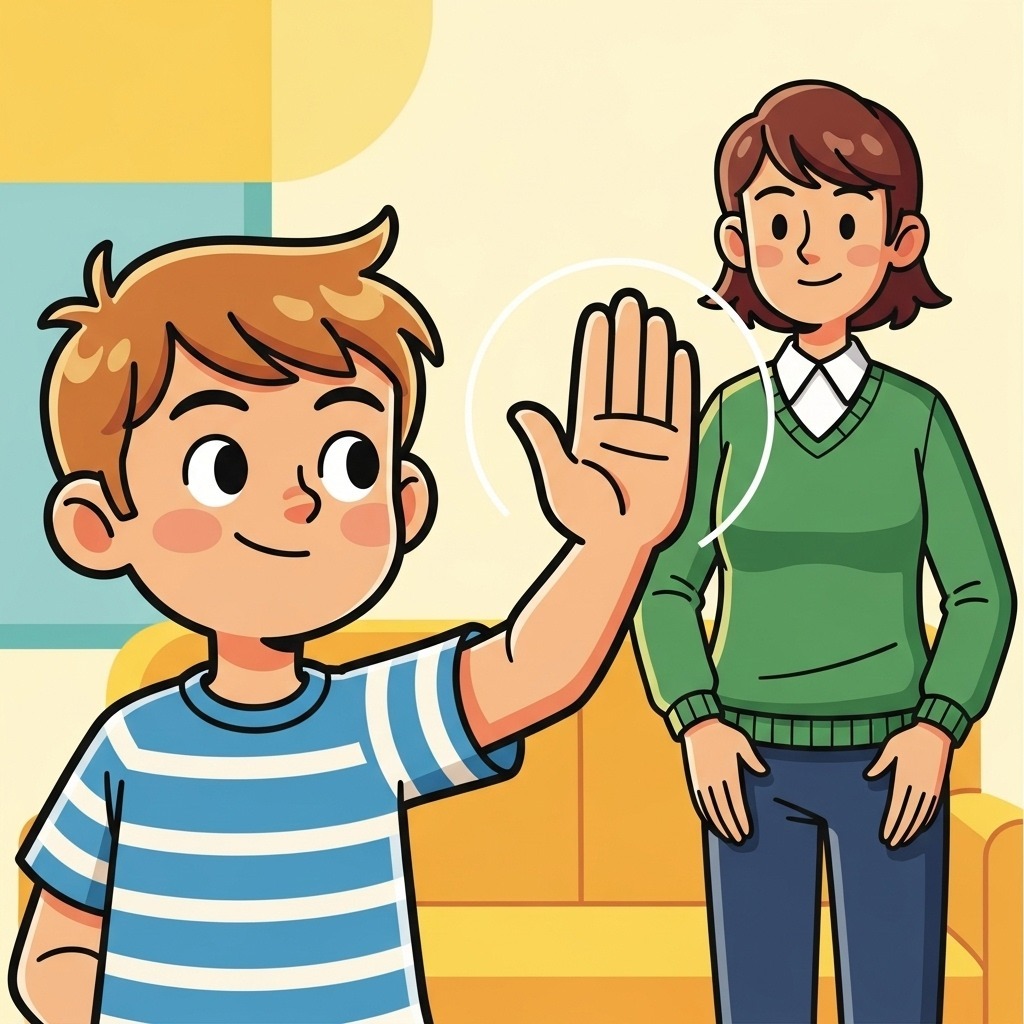
Now, we offer alternatives in our house. “You don’t want to hug Grandpa? That’s okay! You can give him a high-five or blow him a kiss instead.” This teaches social courtesy while still respecting boundaries.
We’ve also had conversations with family members explaining our approach. Most people understand once you explain that you’re teaching body autonomy and safety. And if they don’t understand? That’s a them problem, not a you problem.
For kids who struggle with expressing their feelings and boundaries, I’ve found that affirmations for kids can build the confidence they need to speak up. Phrases like “I can say no” and “My feelings matter” really sink in over time.
Teach the Difference Between Safe and Unsafe Touch
Not all touches are created equal, and kids need help understanding the difference.
Safe touches feel good and make you happy. Hugs from people you love. Holding hands with your parent. A high-five from a friend. Your doctor is listening to your heart with a stethoscope while your parent is there. Safe touches don’t hurt and don’t make you feel confused or uncomfortable.
Unsafe touches hurt your body or your feelings. Hitting. Pushing. Kicking. Pinching. These are obviously not okay, and kids usually understand this pretty quickly.
But then there are confusing touches—and this is where it gets tricky. Someone tickling you when you’ve asked them to stop. Touching that feels weird or uncomfortable, even though it doesn’t hurt. Someone touching your private parts. These touches might come from someone you know and trust, which makes them extra confusing.
I explained to my kids: “If any touch makes you feel uncomfortable, confused, or gives you a yucky feeling in your tummy, that’s your body’s alarm system telling you something isn’t right. Trust that feeling. You can always say ‘stop’ or ‘no,’ and you can always come tell me about it.”
We practice this during playtime. When my kids are wrestling or playing tickle games and one says “stop,” the game stops immediately. No “just one more” or “oh, you’re fine.” When someone says stop, we stop. This reinforces that their voice matters and that boundaries are respected in our home.
Trust Their Gut Feelings
This rule is all about teaching kids to listen to their instincts.
Sometimes our bodies know something is wrong before our brains figure it out. That “icky” feeling in your stomach. Your heart is beating fast. Sweaty palms. Feeling uncomfortable around someone, even if you can’t explain why.
I taught my kids that these feelings are their body’s warning system—like a smoke alarm for danger. And just like we never ignore a smoke alarm, we never ignore these feelings.
“If someone or something makes you feel weird, scared, or uncomfortable, you don’t have to be polite. You don’t have to keep playing with that person. You don’t have to go somewhere with them. You can leave, and you can tell me about it.”
I also made it clear that they would never, ever get in trouble for trusting their gut. Even if it turns out nothing was wrong, even if they “hurt someone’s feelings” by leaving or saying no, their safety is always more important.
One practical way we’ve reinforced this is through role-playing. We’ll act out scenarios: “What if Mr. Smith from down the street asked you to come inside his house to see his new puppy?” “What if someone at the playground said they had candy in their car?” These practice sessions help kids develop their instinctive response.
For creative kids who express themselves through art, having craft supplies available can help them process and communicate feelings they might not have words for yet. Sometimes kids will draw or create something that opens the door to important conversations.

No Secrets About Bodies
This is the rule that makes predators nervous—which is exactly why we need to teach it.
The difference between secrets and surprises is huge, and kids need to understand it.
Surprises are temporary and fun. Hiding a birthday present. Planning a surprise party. These things get revealed eventually and make people happy.
Secrets, especially secrets about bodies or touches, are different. Adults should never ask children to keep secrets. Ever. And if anyone—whether it’s another kid, a teenager, a family member, or an adult—asks your child to keep a secret about touch, bodies, or anything that makes them uncomfortable, that’s a massive red flag.
Predators use secrets to control and manipulate kids. They’ll say things like:
- “This is our special secret. Don’t tell your parents, or they won’t let us play together anymore.”
- “If you tell anyone, you’ll get in big trouble.”
- “No one will believe you if you tell.”
- “This is just between us.”
I told my kids, “We don’t keep secrets in our family. If anyone ever asks you to keep a secret, especially about your body or touch, you come tell me immediately. You will never, ever be in trouble for telling me. I will always believe you, and I will always protect you.”
This “no secrets” policy has actually made our family communication stronger overall. My kids know they can tell me anything without fear of punishment, which has opened doors to conversations about all sorts of things—not just safety issues.
Experts at Darkness to Light, an organization dedicated to ending child sexual abuse, emphasize that teaching kids about the difference between secrets and surprises is one of the most effective prevention strategies.
Practice Saying “No” Loudly
Empowerment is not just something we talk about—it’s something we practice.
I’ve worked with my kids on saying “NO!” loudly and firmly. We practice in the living room, and honestly, it’s kind of fun. At first, they giggle and feel silly. But then it becomes powerful. They realize their voice is strong. Their “no” matters.
We practice different scenarios:
- “What if someone tries to touch your private parts? What do you say?”
- “What if someone won’t stop tickling you? What do you do?”
- “What if someone tries to take your clothes off for a picture?”
The answer is always the same: Say “NO!” or “STOP!” loudly. Get away from that person. Tell a trusted adult immediately.
We also talk about assertive body language—standing tall, looking someone in the eye, speaking clearly and firmly. These are life skills that go beyond body safety and help kids navigate all kinds of boundary situations as they grow.
One thing that’s helped us practice these skills in a fun way is using board games for kids that involve turn-taking and rule-following. Games naturally create opportunities to practice saying “That’s not fair” or “Stop, it’s my turn,” which builds assertiveness muscles in a low-stakes environment.
It’s Never Okay—Even If You Know Them
This is the scariest truth I’ve had to share with my kids, but it’s essential.
We all grew up with “stranger danger,” right? Don’t talk to strangers. Don’t take candy from strangers. Don’t get in a car with strangers.
But here’s the reality: most child abuse doesn’t happen with strangers. According to research, about 90% of children who are sexually abused know their abuser. It’s often someone the family trusts—a family member, family friend, coach, teacher, babysitter, or neighbor.
I had to tell my kids: “The body safety rules apply to everyone. It doesn’t matter if it’s someone we know. It doesn’t matter if it’s family. It doesn’t matter if it’s someone I trust. If anyone breaks these rules, you tell me right away.”
This was hard for me to say. It’s hard to admit that the people we let into our lives might pose a danger. But protecting our kids means being honest about reality, not sheltering them from it.
I also explained that predators don’t look like monsters. They look like regular people. They’re often friendly, kind, and charming. That’s why we follow the rules with everyone—no exceptions.
Teaching these house rules for kids as non-negotiable family standards helps reinforce that safety rules aren’t optional or situational—they apply across the board.

They Will Never Get in Trouble for Telling
This might be the most important rule of all.
I’ve told my kids over and over: “No matter what happens, no matter who does what, if you tell me about something that made you uncomfortable or broke our body safety rules, you will never get in trouble. I will always believe you. I will always protect you. And I will always be glad you told me.”
Predators often manipulate kids by making them think they’ll get in trouble if they tell. They might say things like “You’ll get grounded,” or “Your parents will be mad at you,” or “You did something wrong too.”
None of that is true. If my child tells me something inappropriate happened, they are the victim, not the troublemaker. Period.
I’ve also worked on my own reaction. Kids watch us carefully. If they sense shame, embarrassment, or anger when they bring up body topics, they might shut down. So I practice staying calm, listening without interrupting, and thanking them for telling me—even when my heart is racing and I want to scream.
Creating this open environment means my kids have told me about “weird” things that turned out to be nothing, and that’s perfectly okay. I’d rather they over-report than keep something dangerous to themselves.
For parents who struggle with knowing how to respond to difficult topics, I highly recommend checking out some parenting books that address communication strategies. Having expert guidance can help you feel more prepared and confident when these conversations come up.
How to Teach These Rules Age-Appropriately
The great news is you can start teaching body safety at any age—you just adjust the language and depth.
Toddlers (Ages 2-4):
Start with simple concepts. Use proper names for body parts. Teach the “Underpants Rule.” Practice saying “no” and “stop.” Keep it positive and light. Use bath time and diaper changes as natural teaching moments.
Young Kids (Ages 5-7):
Build on the basics. Explain safe vs. unsafe touch. Talk about trusting their gut feelings. Introduce the “no secrets” rule. Practice scenarios through role-play. Read age-appropriate books together about body safety.
Older Kids (Ages 8-12):
Go deeper. Discuss real-world scenarios, including online safety. Talk about peer pressure and inappropriate requests from other kids. Address puberty changes and continued body autonomy. Keep communication open and ongoing.
No matter the age, the key is repetition. These aren’t one-time talks. They’re ongoing conversations that happen naturally as opportunities arise.
For hands-on learners, using developmental milestone books can help you understand what’s age-appropriate and how to frame these conversations at different stages of childhood.
Books and Resources to Help
You don’t have to figure this out alone. There are amazing resources designed specifically to help parents teach body safety.
Some books I’ve found helpful:
- “My Body Belongs to Me” by Jill Starishevsky
- “I Said No! A Kid-to-Kid Guide to Keeping Private Parts Private” by Kimberly King
- “Some Secrets Should Never Be Kept” by Jayneen Sanders
- “Off Limits: A Parent’s Guide to Keeping Kids Safe from Sexual Abuse” by Sandy K. Wurtele and Feather Berkower
These books take the pressure off you to find the perfect words and give kids age-appropriate, empowering messages about their bodies and safety.
We’ve also used songs, games, and activities to reinforce these concepts. The more channels you use to teach body safety, the better it sinks in.
And remember: if you’re feeling overwhelmed or if your own history makes these conversations especially difficult, reaching out for support from a therapist or counselor is a sign of strength, not weakness.
The Bottom Line
Teaching body safety rules for kids is one of those parenting responsibilities that feels heavy and uncomfortable.
But here’s what I’ve learned: the discomfort is worth it. The awkward conversations are worth it. The repetition is worth it.
Because every time we teach our kids that their bodies belong to them, that their “no” matters, that they can trust their instincts, and that we’ll always believe them—we’re building a shield of protection around them.
We can’t protect our kids from everything. We can’t be with them every moment. But we can give them the knowledge, language, and confidence to protect themselves. We can create an environment where they know they can tell us anything without fear.
Start today. Start with one rule. Use proper names for body parts at bath time tonight. Practice saying “no” loudly before bed. Read a book about body safety together this weekend.
You’ve got this. And your kids are so lucky to have a parent who cares enough to have these hard conversations.
Frequently Asked Questions
At what age should I start teaching body safety rules to my child?
You can start as early as age 2 with simple concepts. Begin by using proper anatomical terms for body parts and teaching the “Underpants Rule”—that parts covered by underwear are private. Toddlers can grasp basic boundaries like “your body belongs to you.” As kids get older, you’ll add more detailed rules about safe vs. unsafe touch, secrets, and how to respond to uncomfortable situations. The key is making it an ongoing conversation that evolves as your child grows, not a one-time talk.
How do I teach body safety without scaring my child?
Keep the tone matter-of-fact and empowering, not scary. Frame body safety rules the same way you teach other safety rules, like looking both ways before crossing the street—it’s just part of learning to stay safe. Use age-appropriate language, avoid graphic details, and focus on what they CAN do (say no, tell a trusted adult, trust their feelings) rather than dwelling on scary “what-ifs.” Make it conversational and casual rather than sitting them down for one big, serious talk. Kids pick up on our anxiety, so staying calm and confident helps them feel secure rather than frightened.
What do I do if my child has already been touched inappropriately?
First, stay as calm as possible. Thank your child for telling you and reassure them that they did nothing wrong and are not in trouble. Believe what they’re telling you without interrogating them or asking leading questions. Let them know you will keep them safe. Contact your pediatrician and local child protective services, or call the Childhelp National Child Abuse Hotline at 1-800-422-4453 for guidance. Document what your child told you in their own words. Consider professional counseling to help your child process the experience. Your response in this moment is crucial—your child needs to know they did the right thing by telling you.
Should I force my child to hug or kiss relatives?
No. Forcing physical affection teaches kids that adult demands for affection are more important than their bodily autonomy, which directly contradicts body safety education. Instead, offer alternatives like high-fives, fist bumps, waves, or verbal greetings. Have a conversation with family members explaining that you’re teaching body autonomy and consent, and while your child loves them, they get to choose how to show affection. Most relatives understand when you explain you’re building important safety skills. If relatives push back, hold firm—your child’s boundaries matter more than anyone’s hurt feelings.
How do I talk to my child about the difference between secrets and surprises?
Explain that surprises are temporary and make people happy when they’re revealed—like hiding a birthday present or planning a surprise party. Surprises eventually get told and are fun. Secrets, especially about bodies or touches, are meant to be kept forever and often make people feel bad or uncomfortable. Tell your child that adults should never ask them to keep secrets, especially about their body, touch, or anything that makes them uncomfortable. If anyone asks them to keep that kind of secret, they should tell you right away. Make it clear they won’t get in trouble for breaking a “secret”—especially one about safety.
Have you started teaching body safety rules in your home? What questions or challenges have come up for you? Share in the comments—we’re all learning together.