
Last Tuesday, I asked my 7-year-old to get ready for soccer practice. Simple enough, right? “Honey, please put on your cleats, grab your water bottle from the fridge, and get your shin guards from your room.” Ten minutes later, I found him in the kitchen with his cleats on… eating a snack. The water bottle? Still in the fridge. Shin guards? Forgotten entirely.
If this sounds familiar, you’re not alone. Your child isn’t being difficult or deliberately ignoring you. They might be struggling with something called working memory — and the good news is, you can absolutely help strengthen it.
Working memory is like your brain’s sticky note. It’s what helps us hold onto information long enough to actually use it. When your child tries to follow your three-step instruction, solve a math problem in their head, or remember the rules of a game while playing it, they’re using working memory. And just like building muscle at the gym, working memory can get stronger with the right kind of practice.
I’ve spent the last year researching and testing strategies with my own kids, and I’m sharing the six methods that actually made a difference in our house. No complicated systems or expensive programs — just practical, everyday techniques that fit into real mom life.
Turn Your Child Into a Teacher
Here’s something that completely changed how I help my kids learn: I stopped being the only teacher in our house.
The “teach-back” method is exactly what it sounds like. When your child learns something new — whether it’s a math concept, how to tie their shoes, or the steps to brush their teeth properly — ask them to teach it to you. And I mean really teach it, like you know nothing.
Last month, my daughter was learning double-digit addition. Instead of drilling her with practice problems, I handed her a whiteboard and said, “Pretend I’m in second grade and I have no idea how to add 47 + 38. Can you teach me?” She lit up. She drew out the problem, explained carrying the one, and walked me through each step.
Here’s why this works: When kids explain something, their brain has to organize the information, pull it from memory, and present it in a logical order. This process strengthens those neural pathways way more than passive studying ever could. Plus, it builds their confidence like crazy.
Try this with physical skills too. If your child is learning to dribble a basketball, ask them to teach you. “Show me exactly how you’re supposed to hold your hand. What should I do with my eyes?” They’ll have to remember the steps, hold them in their mind, and communicate them — all working memory exercises disguised as fun.
If you’re looking for more ways to support your child’s learning and development, check out these activities to do with kids that naturally incorporate teaching opportunities.
Make Visualization a Daily Habit
I’ll be honest — when I first read about “visualization skills,” I thought it sounded like some woo-woo mind trick. Then I tried it with my kids and watched it click.
Visualization means creating a mental picture of information. It’s turning words and instructions into images in your mind. And for kids with working memory challenges, this is like giving their brain a photograph instead of a paragraph to remember.
Start simple. When you ask your child to set the table for dinner, pause and say, “Close your eyes. Picture what the table should look like. How many plates do you see? Where do the forks go?” Have them describe it to you, or for younger kids, let them draw it first. As they get better at this, they can skip the drawing and just use the mental image.
We started using this for homework, too. When my son has a writing assignment, I ask him to visualize the finished essay before he writes a single word. “What does your introduction look like? Can you see your three main points? Picture your conclusion.” It sounds simple, but it helps him hold onto the structure while he writes instead of losing track halfway through.
You can practice visualization anywhere. In the car, describe a scene and have them picture it. “Imagine a beach with three palm trees, a red beach ball, and a sandcastle with two flags.” Then ask them to describe what they see. Make it a game. The more they practice creating mental pictures, the stronger their working memory becomes.
I also love combining visualization with our fun activities for kids — it makes learning feel like play, not work.

Play Memory-Boosting Games
Want to know the best part about strengthening working memory? Your kids can do it while having so much fun they don’t even realize they’re “working” on anything.
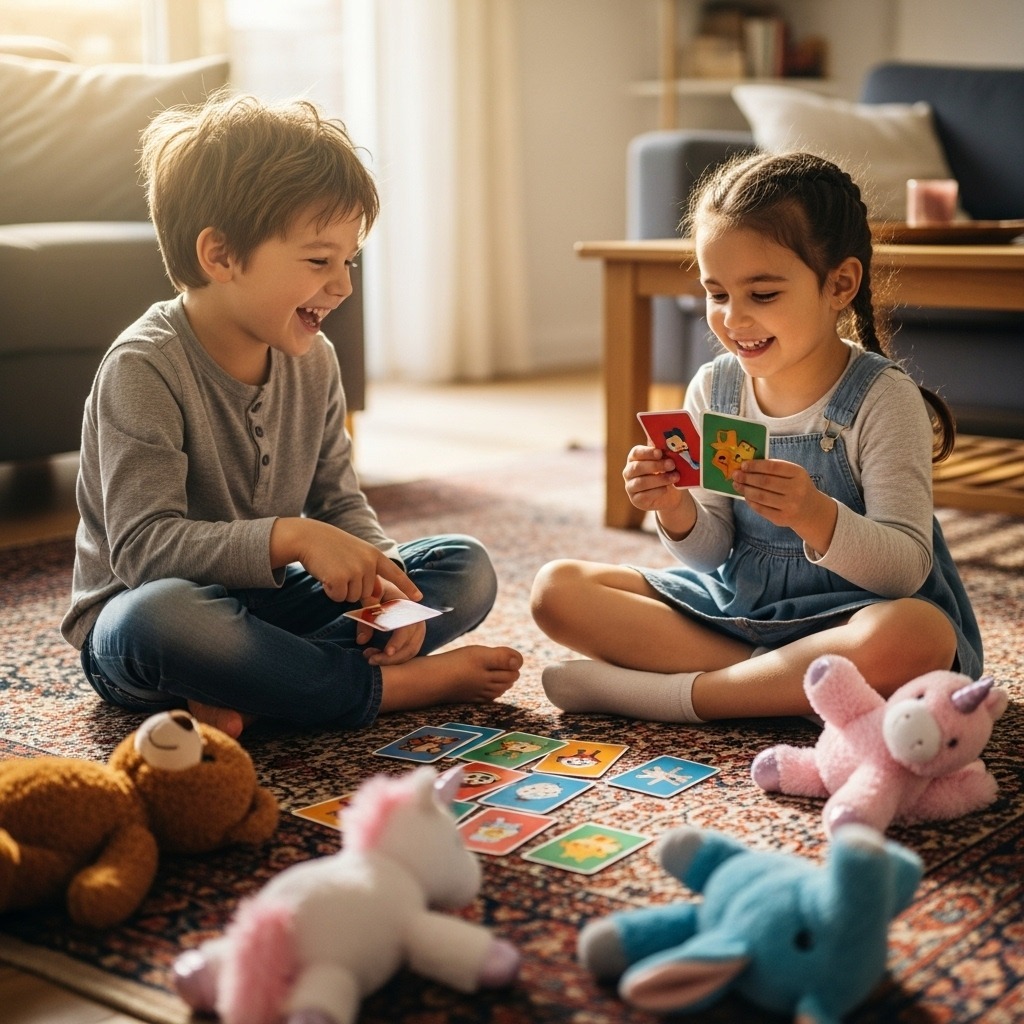
Card games are absolute gold for working memory. Games like Uno, Go Fish, Crazy Eights, and even War require kids to remember the rules AND keep track of what cards they have and what other players have played. We keep a deck of cards in the car for waiting rooms and restaurant waits.
If your family loves game night (or wants to start one), try these board games for kids that naturally build memory skills. We especially love the Monopoly Junior Bluey Edition in our house — it holds my 5-year-old’s attention while sneaking in all that working memory practice.
The classic Concentration game (also called Memory) is another winner. Flip cards face down, take turns flipping two at a time, and try to find matches. Start with fewer pairs for younger kids and add more as they improve. You can buy a set or make your own with index cards.
Here’s a game we invented on a long road trip: the license plate game. One person reads off the letters and numbers from a license plate, and the other person has to repeat them back — forwards first, then backwards. My kids turned this into a competition, and now they beg to play it. “Mom, find me a hard license plate!” Pure working memory exercise, zero complaining.
Story building is magic for working memory, too. One person starts with a sentence: “Once upon a time, there was a turtle who loved to paint.” The next person repeats that sentence and adds to it: “Once upon a time, there was a turtle who loved to paint, and her favorite color was purple.” Keep going until someone can’t remember the whole story. It gets hilarious, and my kids don’t even realize how hard their brains are working.
For more structured activities, these kids’ activity books and workbooks have been fantastic in our house for quiet time that still builds these skills.
Break Everything Into Bite-Sized Chunks
Ever notice how phone numbers have dashes in them? It’s not random. It’s because 555-123-4567 is way easier to remember than 5551234567. Our brains process smaller chunks of information so much better than long strings of stuff.
This changed everything for us with homework and daily tasks. Instead of saying “Get ready for bed” (which involves like twelve steps when you think about it), I break it down: “First, put on your pajamas. Come tell me when that’s done.” Once they’re back: “Now brush your teeth and wash your face.” It sounds more tedious for me, but it actually saves time because I’m not repeating myself or finding my kid staring at the wall in their underwear.
For homework, chunking is a lifesaver. If your child has an essay to write, help them break it into steps:
- Brainstorm ideas (just list them out)
- Pick your three main points.
- Write an outline
- Write the introduction only.
- Write one body paragraph at a time.
- Write the conclusion
- Edit and revise
Suddenly, “write an essay” doesn’t feel like climbing a mountain. It’s just one small step at a time.
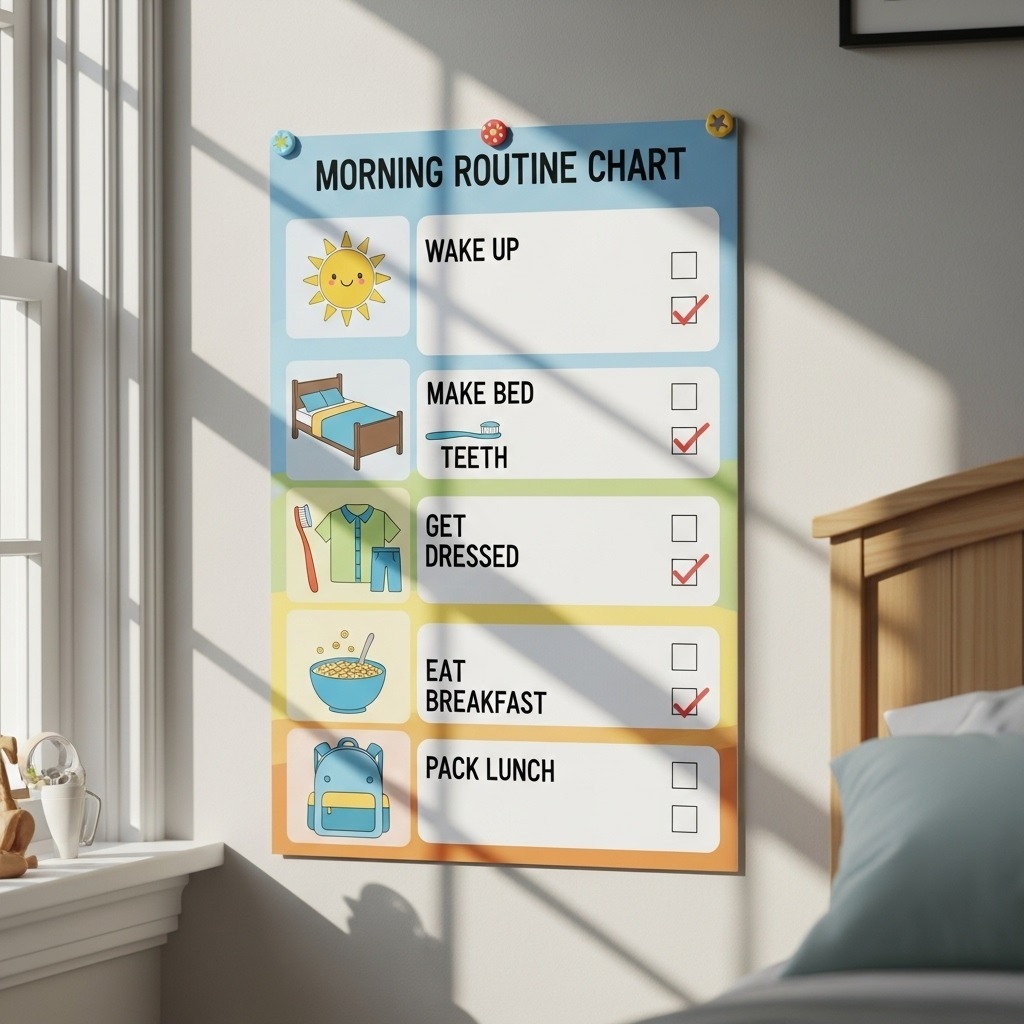
I also use this for morning routines. We have a visual checklist with just two tasks showing at once. Once those are done, we flip to the next two. This prevents my kids from getting overwhelmed and forgetting what they’re supposed to be doing.
According to the American Academy of Pediatrics, breaking tasks down this way reduces cognitive load and helps children build independence while managing their working memory limitations.
Get Their Body Moving While Learning
This one surprised me. I always thought of learning as a sit-down, focus-quietly kind of thing. Turns out, our brains actually work better when our bodies are moving.
There’s real science behind this. Physical activity increases blood flow to the brain, which enhances concentration, attention, and memory function. So instead of fighting my kids to sit still while practicing spelling words, I let them jump on our inflatable dome rocker bouncer while they spell. Every word they get right, they get to bounce. Game changer.
We play hopscotch while practicing math facts. Each square gets a number, and they have to answer a problem before they can jump to it. They can play bean bag toss games in the backyard while I quiz them on vocabulary words — every correct answer = one toss.
Dance routines work too. We made up a silly dance for the order of the planets. Another one for the days of the week in Spanish. My kids remember those dances (and the information that goes with them) way better than any worksheet we’ve ever done.
Even simple movement helps. When my daughter is studying for a test, I let her walk around the house while she reads her notes out loud. She paces the living room, reciting facts. It looks chaotic, but her test scores improved when we started doing this.
You don’t need fancy equipment. Just get them moving. Put on music. Do jumping jacks between practice problems. Set up an obstacle course that they have to complete while remembering a list of items. The combination of physical activity and mental work strengthens both.
If you need inspiration for active play that builds skills, I love these outdoor games for kids that sneak in learning opportunities.
Create Predictable Routines and Visual Cues
I used to think routines were boring. Now I realize they’re actually working memory magic.
Here’s the thing: every single time your child has to remember what comes next, they’re using working memory. Morning routine? Working memory. Getting ready for bed? Working memory. Packing their backpack? You guessed it — working memory.
But when something becomes a routine — like an actual habit they do in the same order every single day — it moves from working memory into automatic behavior. Suddenly, they’re not using up their mental energy trying to remember if brushing teeth comes before or after getting dressed. They just… know. It’s automatic.
We created a morning routine chart with pictures for my younger one and a checklist for my older one. Same order every day:
- Get dressed
- Brush teeth and hair.
- Make bed
- Eat breakfast
- Pack backpack
- Put on shoes
After about three weeks of following this exact same order, I noticed my kids started doing it without the chart. It became a habit.
Visual cues are huge, too. We put a Post-it note on the bathroom mirror: “Did you flush and wash your hands?” There’s a checklist on the inside of the front door: “Do you have your lunch? Homework? Water bottle?” These little reminders take the pressure off their working memory.
I also started color-coding things. My son’s homework folder is blue, and there’s a blue bin where it goes when he’s done. His library books have a green dot sticker, and there’s a green basket for library returns. These visual systems mean he doesn’t have to remember where things go — he can just look and know.
For the parent who’s drowning in papers and schedules (hi, it’s me), these reusable snack containers and leak-proof lunch boxes have been lifesavers for creating predictable lunch-packing routines. Everything has its spot, and my kids can pack their own lunches following the system.
If you’re working on building structure and consistency in your parenting approach overall, you might find this article on soft parenting helpful for balancing routines with emotional connection.
You’re Already Doing Better Than You Think
Here’s what I want you to know: working memory isn’t fixed. It’s not something your child either has or doesn’t have. It’s a skill that can absolutely be developed and strengthened.
You don’t have to implement all six of these strategies tomorrow. Start with one. Maybe it’s adding a card game to your weekly routine. Maybe it’s breaking down homework into smaller chunks. Maybe it’s just asking your child to teach you something they learned today.
The beautiful thing about these strategies is that they’re not adding more to your already-full plate. They’re just small shifts in how you’re already interacting with your kids. You’re already playing games, already helping with homework, already doing bedtime routines. Now you’re just doing them in a way that builds working memory at the same time.
I’ve watched my kids go from forgetting three-step instructions to confidently handling complex tasks. My daughter can now manage her homework independently. My son remembers his morning routine without me nagging. These changes didn’t happen overnight, but they did happen.
Your child’s brain is incredible and adaptable. With consistency and patience, you’ll start seeing those working memory muscles get stronger. And on the days when your kid still forgets their shin guards? That’s okay too. We’re all learning here.
For more practical parenting strategies that actually work in real life, explore these best parenting books that have helped me navigate this journey with more confidence and less guilt.
Frequently Asked Questions
What is working memory, and why does it matter for kids?
Working memory is your child’s ability to hold information in their mind while using it to complete a task. It’s what helps them follow multi-step directions, solve math problems mentally, and remember what they’re doing while doing it. Strong working memory is crucial for academic success, following routines, and developing independence. Kids with working memory challenges may forget instructions midway through, lose track of what they’re doing, or struggle to organize their thoughts.
At what age can I start working on my child’s working memory?
You can start building working memory skills as early as toddlerhood. Simple games like “Hokey Pokey,” “Simon Says,” and basic matching games are perfect for young children. The strategies just need to be age-appropriate. For toddlers, start with one-step instructions and very simple memory games. As children get older, gradually increase the complexity. Working memory continues developing well into adolescence, so it’s never too late to start strengthening these skills.
How long does it take to see improvement in working memory?
Most children show noticeable improvements within 4-8 weeks of consistent practice. However, this varies based on the child’s age, starting point, and how regularly you practice. The key is consistency — doing a little bit every day is far more effective than intensive practice once a week. Some changes, like following routines more easily, might appear within a couple of weeks. Other improvements, like academic performance, may take a few months to become evident. According to research, non-computerized working memory training combined with physical activity and play shows the most significant benefits.
Can screen time or apps help build working memory?
While some apps claim to build working memory, research suggests that non-computerized activities and games are actually more effective for children. Real-world games, physical activities, and face-to-face interactions provide richer sensory experiences and better transfer skills to everyday situations. Instead of relying on apps, focus on card games, physical memory games, active reading, and hands-on learning activities. These provide the same working memory practice without the screen time downsides.
What if my child has ADHD or learning differences?
Children with ADHD or learning differences often have working memory challenges, but these strategies can still be highly effective — they may just need more patience and consistency. Start with smaller steps, provide more frequent breaks, use more visual supports, and celebrate small wins. Breaking tasks into even smaller chunks, creating very predictable routines, and using multisensory approaches tend to work especially well. If you’re concerned about your child’s working memory significantly impacting daily functioning, consult with your pediatrician or a learning specialist who can provide individualized strategies and determine if additional support is needed.