

The first time my ex told our seven-year-old that I “ruined the family,” I sat in my car outside the grocery store and ugly-cried for twenty minutes. It wasn’t the first manipulative thing he’d said, and it definitely wouldn’t be the last. But that was the moment I realized I wasn’t just dealing with an angry ex-husband—I was dealing with something much more calculated and exhausting.
If you’re reading this, you probably know exactly what I’m talking about. Co-parenting with a narcissist feels like playing a game where only one person knows the rules, and those rules change every single day depending on their mood.
Here’s what I wish someone had told me three years ago: You’re not crazy. You’re not overreacting. And yes, there are strategies that actually work—but they look nothing like the co-parenting advice you’ll find in those cheerful parenting magazines.
Signs You’re Really Dealing With a Narcissistic Co-Parent
Before we dive into solutions, let’s talk about what co-parenting with a narcissist actually looks like. Because if you’re questioning whether your ex really fits this pattern, these signs will feel painfully familiar.
Everything Becomes a Power Struggle
Normal disagreements about pickup times or school activities turn into multi-day text battles. They’ll argue that the sky is green if you say it’s blue. Every single interaction feels like a fight, even when you’re trying to cooperate. According to mental health experts at the American Psychological Association, this constant conflict is one of the clearest signs of narcissistic behavior patterns in co-parenting relationships.
They Have Zero Empathy for Anyone’s Needs
When your child gets sick and you need to adjust the schedule, a typical co-parent might be inconvenienced but understanding. A narcissistic co-parent? They’ll use it as ammunition. They can’t—or won’t—see things from anyone else’s perspective. Not yours, and heartbreakingly, not even your child’s.
It’s Always Someone Else’s Fault
Ask them about missing a pickup time, and suddenly you’ll hear about something you did three years ago. They never admit fault. Ever. Everything bad that happens is because of you, your new partner, the school, the therapist, or literally anyone but them.
Your Kids Are Messengers and Pawns
They pump your kids for information about your life. They make promises they can’t keep to look like the “fun parent.” They might even tell your children things that are age-inappropriate or designed to turn them against you. The manipulation is constant and exhausting.

They’re Charming to Everyone Except You
Here’s the really crazy-making part: everyone else thinks your ex is wonderful. Teachers, neighbors, and even your own family might not believe you when you describe what you’re dealing with. Narcissists are often incredibly charming in public, which makes your reality feel even more isolating.
Why the Label Doesn’t Matter (But the Behaviors Do)
I spent months googling “is my ex a narcissist” before I realized something important: it doesn’t actually matter.
Unless you’re a licensed psychologist, you can’t diagnose Narcissistic Personality Disorder—and honestly, even if you could, it wouldn’t change your day-to-day reality. What matters is how their behaviors affect you and your kids.
Here’s why focusing on behaviors instead of labels is so important: if you go into court calling your ex a narcissist, professionals will likely dismiss you. The term gets thrown around so much that judges, mediators, and lawyers have heard it a thousand times. Instead, you need to describe specific, documented behaviors and their impact.
For example, instead of saying “my ex is a narcissist,” say “my ex has violated the custody agreement 12 times in the past six months by showing up late to exchanges, and here’s my documentation of each instance.”
That’s concrete. That’s actionable. That actually gets taken seriously.
The Hard Truth About Co-Parenting vs. Parallel Parenting
Let me be blunt: traditional co-parenting probably won’t work when you’re dealing with a narcissistic ex. And that’s okay.
Co-parenting requires mutual respect, healthy communication, and the ability to put your kids’ needs first. If your ex can’t or won’t do those things, you need a different approach called parallel parenting.
What Is Parallel Parenting?
Think of it as living in separate parenting universes that only intersect at scheduled exchanges. You parent your way during your time. They parent their way during their time. You communicate only about essential, child-related information. There’s no coordinating, no team meetings, no trying to get on the same page about discipline or bedtimes.
It’s not ideal. It’s not what anyone hopes for when they have kids. But when you’re co-parenting with a narcissist, parallel parenting often becomes the only way to reduce chaos and protect your own mental health.
Some courts will even formalize this arrangement, granting one parent final decision-making authority on major issues like healthcare and education. This removes the need for agreement on everything and cuts down on constant conflict.
Communication Strategies That Actually Work
If I could go back and change one thing about my first year of co-parenting with a narcissist, it would be how I communicated. I made every rookie mistake: long emotional texts, trying to explain myself, responding to every accusation, attempting to reason with someone who had zero interest in reason.
Here’s what actually works:
The BIFF Method
Keep every message Brief, Informative, Friendly, and Firm.
Brief: Two to three sentences max. The more you write, the more ammunition you give them.
Informative: Stick to facts. “Soccer practice moved to Thursdays at 5 pm.” That’s it.
Friendly: Stay neutral or slightly positive. “Have a good weekend” might feel fake, but it keeps the tone from escalating.
Firm: State what you need without opening it up for debate. “I’ll pick up Emma at 6 pm on Friday” instead of “Would 6 pm work for pickup on Friday?”
The Grey Rock Method
Become the most boring person in their life. Don’t share personal information. Don’t react emotionally. Don’t give them the drama they’re seeking. When they send a ten-paragraph rant, respond with “Noted” or “I’ll pick up the kids at the agreed time.”
It feels weird at first. But narcissists feed on emotional reactions. When you stop providing those reactions, you stop being an interesting target.

Document Everything
I cannot stress this enough: save every text, every email, every voicemail. Keep a dated log of exchanges, missed pickups, and concerning statements. Use a co-parenting app if possible, because everything is timestamped and saved automatically.
This documentation serves two purposes. First, it protects you legally if you ever need to go back to court. Second, it helps you stay sane. When your ex gaslights you about what was said or agreed upon, you have proof.
For keeping track of all these communications and schedules, having organized systems in place helps tremendously. These parenting books offer practical strategies for managing high-conflict co-parenting situations and maintaining your own emotional equilibrium.
Setting Boundaries and Actually Keeping Them
Boundaries with a narcissistic co-parent are different than normal boundaries. They’ll test them. They’ll push them. They’ll act like your boundaries are unreasonable attacks on them personally.
Set them anyway.
Here’s what good boundaries look like when co-parenting with a narcissist:
“I will only respond to messages about the children, sent between 8 am and 8 pm, unless it’s an emergency.”
“Communication will happen through the co-parenting app only.”
“Our exchanges will happen at [specific public location] and last no more than 5 minutes.”
“I will not discuss my personal life, including my dating life, finances, or living situation.”
The hard part isn’t setting boundaries—it’s enforcing them. When your ex texts you at 11 pm about something that isn’t an emergency, don’t respond. When they try to chat at pickup, politely say “I need to go” and leave. When they ask invasive questions, say “That’s not something I’ll discuss” and change the subject.
Will they get angry? Probably. Will they accuse you of being difficult or unreasonable? Almost definitely. Stick to your boundaries anyway.
If you’re working on setting better boundaries in your parenting approach overall, check out this guide on how to set boundaries for kids, which can help you model healthy boundary-setting for your children, too.
Creating an Airtight Parenting Plan
Your parenting plan needs to be so detailed that there’s no room for interpretation or manipulation. I’m talking painfully specific.
Instead of: “Parents will split holiday time fairly.”
Write: “Mother will have Thanksgiving in even-numbered years from Wednesday at 5 pm through Sunday at 6 pm. Father will have Thanksgiving in odd-numbered years during those same times. Christmas Eve and Christmas Day will alternate on the opposite schedule.”
Instead of: “Parents will communicate about the children regularly.”
Write: “Parents will use the Our Family Wizard app for all non-emergency communication. Emergency communication will happen by phone call only.”
Instead of: “Parents will share medical decisions.”
Write: “Mother will have final decision-making authority on medical and dental care. Father will be notified of all appointments within 24 hours of scheduling and receive copies of all medical records within 48 hours of visits.”
The more specific your parenting plan, the fewer opportunities for conflict. When your ex tries to deviate from the plan, you can point to the document and say, “The parenting plan says X.” End of discussion.
Make sure everything is legally documented, too. Informal agreements mean nothing when co-parenting with a narcissist. Get it in writing. Get it signed by a judge. Then follow it to the letter.
Protecting Your Kids Without Badmouthing
This is the hardest part. You watch your kids come home confused, hurt, or parroting things their other parent said. Every instinct screams at you to defend yourself or explain what’s really happening.
Resist that urge.
Bad-mouthing your ex, even when everything you’d say is true, hurts your kids more than it helps them. Kids identify with both parents. When you insult their other parent, they hear it as an insult to themselves, too.
Instead, focus on being the stable, consistent, emotionally safe parent. Here’s how:
Create Predictable Routines
Kids crave stability, especially when one household feels chaotic. Keep bedtimes, meal times, and house rules consistent in your home. This gives them something reliable to anchor to.
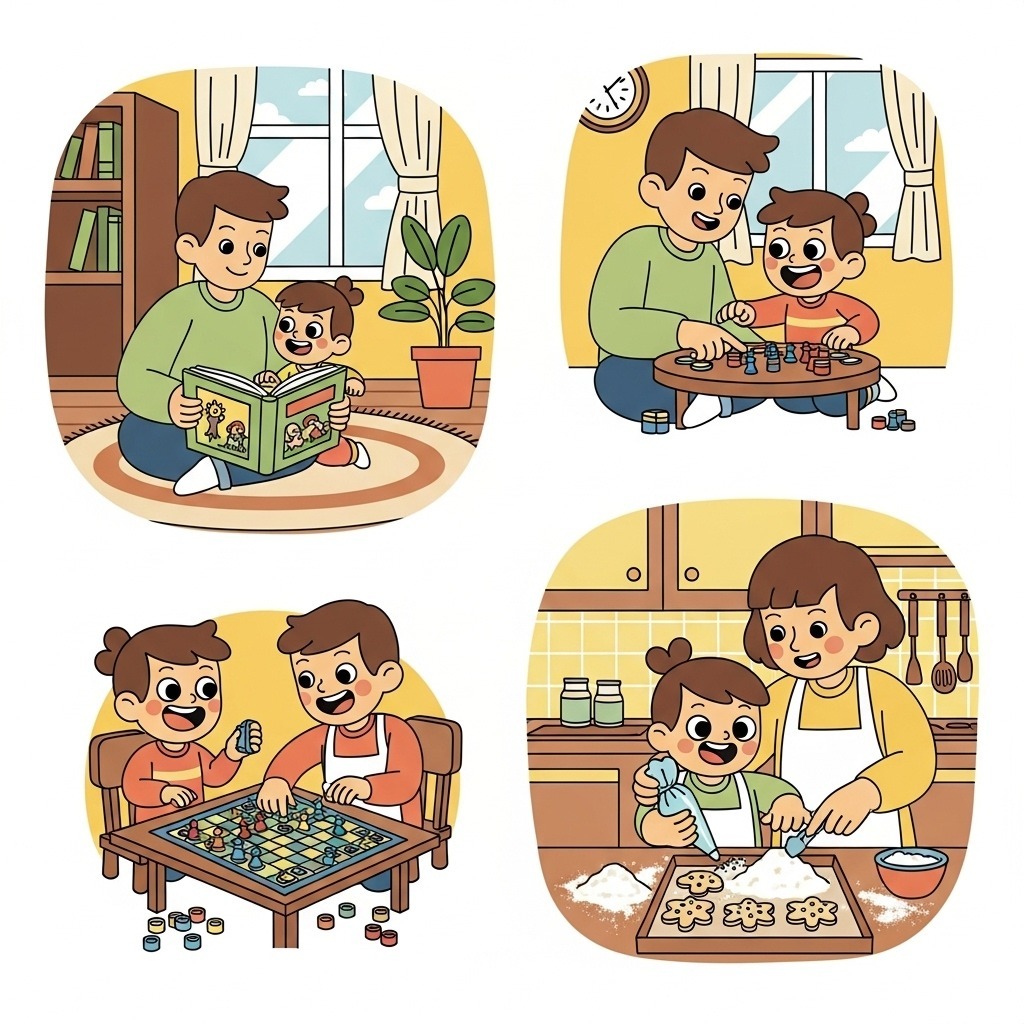
During your parenting time, keeping kids engaged with structured activities helps provide that stability. These kids’ activity books & workbooks are perfect for quiet, focused time that helps kids decompress after transitions between households.
Validate Their Feelings Without Trashing Their Other Parent
When your child says, “Dad told me you don’t love me,” don’t say, “Your dad is lying.” Instead, try: “That must have felt really confusing and scary to hear. I love you so much, and I’m always here for you.”
Notice how you’re validating their emotion without calling out the manipulation directly? That’s the sweet spot.
Watch for Warning Signs
Keep an eye out for behavioral changes, regression, anxiety, or concerning statements. Document these observations. If patterns emerge that suggest emotional abuse, consult with a therapist and your lawyer about next steps.
Model Healthy Behavior
Show your kids what healthy communication, emotional regulation, and conflict resolution look like. Don’t engage in drama at exchanges. Don’t send angry messages. Don’t play games. Be the example of what maturity and emotional health look like.
For more strategies on maintaining emotional health for your children, these positive affirmations for kids can help build their resilience and self-esteem.
Taking Care of Yourself Is Non-Negotiable
Co-parenting with a narcissist is emotionally exhausting in ways that people who haven’t experienced it can’t fully understand. The constant vigilance, the documentation, the need to stay calm in the face of manipulation—it takes a toll.
Therapy isn’t optional. It’s necessary. Find a therapist who specializes in high-conflict divorce or narcissistic abuse. They can help you process your emotions, develop coping strategies, and maintain perspective.
Build your support system. Find other parents who understand. Join online communities. Lean on friends who get it. You can’t do this alone.
Practice serious self-care. Not just bubble baths and wine (though those help). I mean real, structural self-care: going to therapy, setting boundaries, getting enough sleep, moving your body, eating well. You’re running a marathon, not a sprint. You need to maintain your energy.

And remember: you can’t control your ex’s behavior. You can only control your response to it. Focus your energy there.
When stress levels are particularly high, having calming activities can help both you and your kids. These board games for kids provide quality time together and serve as healthy distractions during difficult periods.
What About When It Gets Really Bad?
Sometimes, parallel parenting and grey rock aren’t enough. If your ex is engaging in parental alienation, if they’re violating court orders consistently, or if you believe your children are in danger, you may need to pursue legal action.
This might mean requesting a custody evaluation, seeking full custody, or asking the court for sole decision-making authority. These are big steps that require evidence, documentation, and a good lawyer who understands high-conflict situations.
The National Domestic Violence Hotline can provide resources and guidance if you’re dealing with ongoing abuse, even after separation. They understand that abuse doesn’t always end when the relationship does.
Don’t hesitate to protect your kids when protection is truly needed. But also recognize that you can’t “fix” the situation entirely. Your goal is damage control and providing your children with one stable, loving home.
FAQ: Your Questions About Co-Parenting with a Narcissist
Can co-parenting with a narcissist ever improve over time?
Sometimes, but don’t count on it. Narcissistic behaviors are deeply ingrained personality traits that rarely change without intensive therapy (which narcissists rarely pursue). What can improve is your ability to manage the situation through firm boundaries, documentation, and parallel parenting strategies. Some parents report that as time passes and their ex finds new sources of attention, the intensity of conflict decreases—but the underlying patterns typically remain. Focus on what you can control: your responses, your boundaries, and your children’s experience in your home.
How do I explain my ex’s behavior to my kids without bad-mouthing them?
Use age-appropriate language that focuses on feelings rather than blame. For younger kids, you might say, “Sometimes adults have big feelings that make it hard for them to act kindly. That’s not your fault.” For older children, you can be slightly more direct: “Sometimes people struggle to see things from other people’s perspectives. That doesn’t mean they don’t love you, but it might mean their actions don’t always make sense.” Always validate your child’s emotions and avoid putting them in the middle. If concerning behaviors persist, consider family therapy with a counselor experienced in high-conflict co-parenting situations.
Should I try co-parenting therapy with my narcissistic ex?
Traditional co-parenting therapy typically doesn’t work with a narcissistic ex and can sometimes make things worse. Narcissists often use therapy as another platform to manipulate, blame, and control. However, individual therapy for yourself is essential. You might also consider family therapy with just you and your children, or seeking guidance from a parenting coordinator appointed by the court. If your attorney or the court mandates co-parenting therapy, document everything that happens in those sessions and work closely with your individual therapist to process the experience.
What’s the difference between grey rock and completely ignoring my ex?
Grey rock means responding to necessary communications in the most boring, emotionless way possible—you’re not ignoring them entirely, you’re just refusing to engage emotionally. You still respond to information about pickups, schedule changes, or genuine child-related needs, but you do so with minimal emotion and detail. Complete ignoring (no contact) usually isn’t possible when you share children. Grey rock is the co-parenting version: you respond when necessary, but you’re so dull and uninteresting that your ex loses interest in provoking you.
When should I go back to court regarding my narcissistic co-parent?
Consider legal action when your ex consistently violates court orders, when your children’s safety or well-being is at risk, when parental alienation is occurring, or when the current arrangement isn’t sustainable. Document everything first—you need evidence. Consult with a lawyer experienced in high-conflict cases before filing. Going to court should be a strategic decision, not an emotional reaction. Sometimes the cost (financial and emotional) outweighs the benefit. Other times, it’s the only way to protect your children or establish necessary boundaries through court-ordered structures like parallel parenting plans or sole decision-making authority.
You Can Do This
Look, I’m not going to sugarcoat it: co-parenting with a narcissist is one of the hardest things you’ll ever do. There will be days when you want to scream. Days when you question everything. Days when you feel like you’re losing your mind.
But here’s what I know after three years of this: you’re stronger than you think. Your kids are more resilient than you fear. And with the right strategies, support, and boundaries, you can create a stable, loving home for your children despite the chaos their other parent creates.
You didn’t choose this situation. Your kids didn’t choose it either. But you’re choosing every day to show up, stay calm, document everything, and be the healthy parent they need. That matters more than you know.
Focus on what you can control. Let go of what you can’t. Trust that your children will eventually see the truth. And remember: you’re not just surviving this—you’re teaching your kids what strength, boundaries, and unconditional love look like.
That’s everything.