
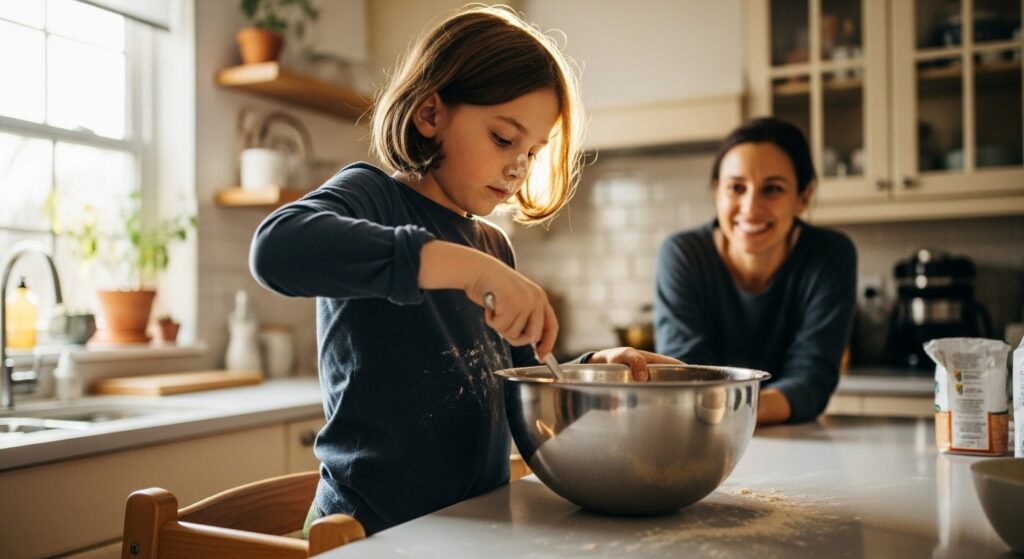
The first time I let my six-year-old “cook” by himself, he cracked an egg directly onto the kitchen floor, spilled an entire cup of milk across the counter, and somehow got flour in his hair. I stood there thinking, “Why did I think this was a good idea?”
Fast forward two years, and that same kid now makes scrambled eggs, quesadillas, and simple pasta dishes without me hovering. He’s proud of himself, I get a break from constant meal prep, and—bonus—he’s way more willing to eat food he made himself.
The secret wasn’t some magic parenting moment. It was finding easy cooking recipes for kids that matched their actual skill level and didn’t require 47 ingredients or complicated techniques. Once I stopped trying to teach them gourmet cooking and started with truly simple recipes, everything clicked.
If you’re ready to get your kids cooking (and maybe get them off your back about being bored or hungry every five minutes), these recipes are exactly where to start.
Why I Finally Made Teaching My Kids to Cook a Priority
I’ll be honest—for years, I avoided letting my kids help in the kitchen because it felt like more work for me. They’d make a mess, I’d have to supervise every step, and the whole process took three times longer than if I just did it myself.
But then I realized something: I was going to be making meals for these kids for years. And if I didn’t teach them how to feed themselves, I’d be stuck making every single meal until they left for college. That thought alone motivated me to push through the messy phase.
According to research from the American Academy of Pediatrics, kids who learn to cook develop important life skills, better eating habits, and increased confidence. They’re also more likely to try new foods when they’ve been involved in preparing them.
Plus, teaching kids to cook isn’t just about the food. It’s about math (measuring ingredients), reading (following recipes), science (what happens when you mix baking soda and vinegar?), and responsibility. It’s basically sneaky homeschooling disguised as making lunch.
And selfishly? Once your kids can make their own snacks and simple meals, your workload actually decreases. My Saturday mornings are so much more relaxed now that my kids can handle their own breakfast while I drink coffee in peace.
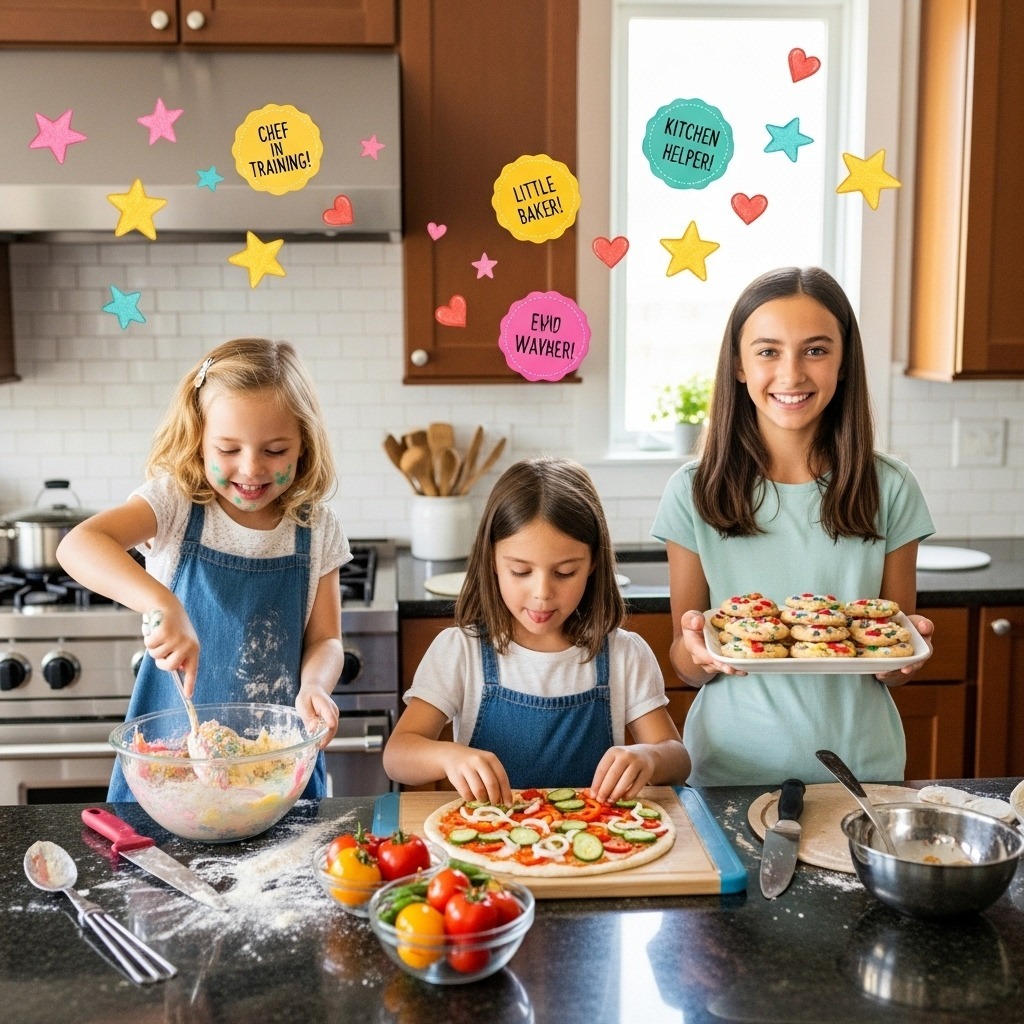
Kitchen Safety Rules We Never Skip
Before we get to the actual easy cooking recipes for kids, let’s talk safety. I’m not going to sugarcoat this—kitchens have sharp things and hot things, and kids need to learn to respect both.
Here are our non-negotiable safety rules:
Always wash your hands first. This seems obvious, but kids need constant reminders. We sing the “Happy Birthday” song twice while washing with soap.
Ask before using the stove or oven. My kids know they can make cold snacks anytime, but anything involving heat requires asking first. This way, I can be in the room to supervise.
Knife safety depends on age. My five-year-old uses a plastic safety knife. My eight-year-old has graduated to a real butter knife for soft foods. My eleven-year-old uses a proper paring knife but only for specific tasks I’ve trained him on.
Hot things stay on the back burners. When using the stove, we only use the back burners so little kids can’t accidentally grab a hot pan handle.
One person is in the “danger zone.” We have a taped-off area in front of the stove and oven. When something hot is happening, only the person cooking is allowed in that space.
No running in the kitchen. Ever. This is the rule that leads to spills, burns, and trips. Kids can speed-walk if they’re excited, but not actually running.
Getting your kids proper kid-friendly cooking tools makes a huge difference, too. We use kids’ baking and cooking sets that include smaller, easier-to-handle utensils designed for smaller hands. It helps them feel more capable and reduces frustration.
No-Cook Recipes (Where Every Kid Should Start)
These are the recipes I started with because there’s literally zero risk of burns or cuts. They’re perfect for kids as young as 4-5, and they build confidence before moving to more complex cooking.
PB&J Roll-Ups
This is PB&J’s cooler cousin. Flatten a piece of bread with a rolling pin, spread peanut butter and jelly, roll it up, and slice into pinwheels. My kids think these are fancy, and I love that they can make them independently. It’s a great option for lunch ideas for kids that they can actually prepare themselves.
Build-Your-Own Smoothie Bowl
Put out bowls of frozen berries, banana slices, yogurt, granola, and honey. Let kids blend the fruit and yogurt (with supervision for the blender), pour it into a bowl, and top with whatever they want. My daughter goes wild with creative toppings, and I don’t care because at least she’s eating fruit.
Trail Mix Stations
Set out bowls of nuts (if no allergies), dried fruit, chocolate chips, pretzels, and cereal. Kids create their own custom trail mix and package it in reusable snack containers for the week. This keeps them busy for 30 minutes and gives me pre-portioned snacks.
Fruit Kabobs with Yogurt Dip
Kids love anything on a stick. They can thread strawberries, grapes, melon chunks, and pineapple onto wooden skewers, then mix honey and vanilla into Greek yogurt for dipping. It feels special but requires zero cooking skills.
DIY Snack Boxes
This is basically adult charcuterie for kids. They fill sections of a divided container with crackers, cheese cubes, lunch meat, grapes, and baby carrots. My kids call these “fancy lunches” and request them constantly.

Stovetop Recipes (With Supervision Until They’re Ready)
Once your kids master no-cook recipes, stovetop cooking is the next step. I stay in the kitchen for these, but I’m gradually backing off as they get more comfortable.
Perfect Scrambled Eggs
This was the first hot food my son learned to make. Crack two eggs into a bowl, whisk with a splash of milk and salt, pour into a non-stick pan on medium-low heat, and gently stir until fluffy. It took him about five tries to stop overcooking them, but now he’s the official weekend breakfast maker. If you’re looking for more breakfast ideas for kids, they can make themselves, eggs are definitely the foundation.
Cheese Quesadillas
Butter one side of a tortilla, place it butter-side down in a pan, sprinkle cheese on half, fold it over, and cook until golden. Flip and cook the other side. My kids add cooked chicken, black beans, or leftover veggies if they’re feeling fancy.
Upgraded Grilled Cheese
Same concept as quesadillas, but with bread. My kids have experimented with different cheese combinations, adding tomato slices, or using kids’ mac and cheese recipe leftovers as a filling (weird, but they love it).
Butter Garlic Pasta
Boil pasta according to package directions (I supervise the draining part), then toss with butter, minced garlic (from a jar), salt, and parmesan cheese. Sometimes they add frozen peas or cherry tomatoes. This is one of our go-to easy recipes for kids that feels like a real meal.
Simple Fried Rice
This uses up leftovers beautifully. Heat oil in a pan, add day-old rice, frozen mixed veggies, soy sauce, and a scrambled egg, stirred in at the end. My oldest son has perfected this and makes it weekly.
Oven Recipes (Ages 8+ With Supervision)
Oven recipes require a bit more maturity because of the high heat, but they open up so many possibilities.
Sheet Pan Nachos
Spread tortilla chips on a baking sheet, top with shredded cheese and anything else (beans, olives, jalapeños), and bake at 350°F for 5-7 minutes until cheese melts. I handle putting it in and taking it out of the oven, but they do everything else.
English Muffin Pizzas
Split English muffins, spread with pizza sauce, add mozzarella and toppings, bake at 400°F for 8-10 minutes. These are infinitely customizable, and kids love making “their” pizza.
Baked Chicken Nuggets
Cut chicken breasts into chunks, dip in beaten egg, coat in breadcrumbs mixed with parmesan, place on a greased baking sheet, and bake at 400°F for 15-18 minutes. Way better than frozen nuggets, and kids feel accomplished making them.
Simple Sugar Cookies
Use a basic 3-ingredient recipe (1 cup butter, 1 cup sugar, 2 cups flour, plus vanilla). Kids mix, roll, cut shapes, and bake. Having kids baking and cooking sets with kid-sized rolling pins and cookie cutters makes this so much more fun. For more baking inspiration, check out easy baking recipes for kids.
Roasted Veggie Mix
Toss cut vegetables (bell peppers, zucchini, carrots, broccoli) with olive oil and salt, spread on a sheet pan, and roast at 425°F for 20 minutes. Kids who won’t touch raw veggies will sometimes eat roasted ones they made themselves.

Special Equipment Makes It Even Easier
Sometimes the right tool completely changes the game.
Instant Pot Mac and Cheese
If you have an Instant Pot, this is ridiculously easy. Kids can add pasta, water, and butter, set it for 4 minutes, quick release, stir in milk and cheese. My preschooler can almost do this completely independently (with me pressing the buttons).
Microwave Mug Cakes
Mix 4 tablespoons of flour, 4 tablespoons of sugar, 2 tablespoons of cocoa, 1 egg, 3 tablespoons of milk, and 3 tablespoons of oil in a microwave-safe mug. Microwave for 90 seconds. Boom—instant single-serving cake. My kids make these for dessert when I tell them we don’t have any treats in the house.
Waffle Iron Pizzas
Brush a waffle iron with oil, place a tortilla down, add pizza toppings, top with another tortilla, and close the lid for 3-4 minutes. It makes pressed pizza pockets that kids think are the coolest thing ever.
Tips That Actually Made This Work
Let me share what finally made cooking with kids successful for us, because the first six months were… rough.
Keep ingredients simple and pre-prepped. I buy pre-shredded cheese, pre-cooked bacon, jarred garlic, and other shortcuts. This isn’t the time to teach them to shred carrots from scratch.
Let them make mistakes and messes. My son once made scrambled eggs so rubbery they bounced. He never overcooked them again. Learning happens through failure.
Age-appropriate expectations are everything. My five-year-old can assemble, and my eleven-year-old can cook. Don’t expect equal skill levels.
Make it fun, not stressful. Put on music. Let them taste the ingredients. Tell jokes for kids while you cook together. If it becomes a chore, they’ll stop wanting to help.
Have a “kids’ cooking drawer.” We designated one drawer with their kid-safe utensils, measuring cups, aprons, and recipe cards. They can access it anytime, and it makes them feel like they have their own cooking space.
Start a recipe journal. My daughter keeps a notebook where she writes down (or draws pictures of) recipes she’s made successfully. She adds notes like “more cheese next time” or “Dad loved this one.” It builds pride in what they’re learning.
The Unexpected Benefits I Didn’t See Coming
Beyond the obvious benefit of kids who can feed themselves, teaching them to cook has created some surprising wins.
My picky eater became way more adventurous once he started cooking. Turns out, when you make something yourself, you’re more willing to at least taste it.
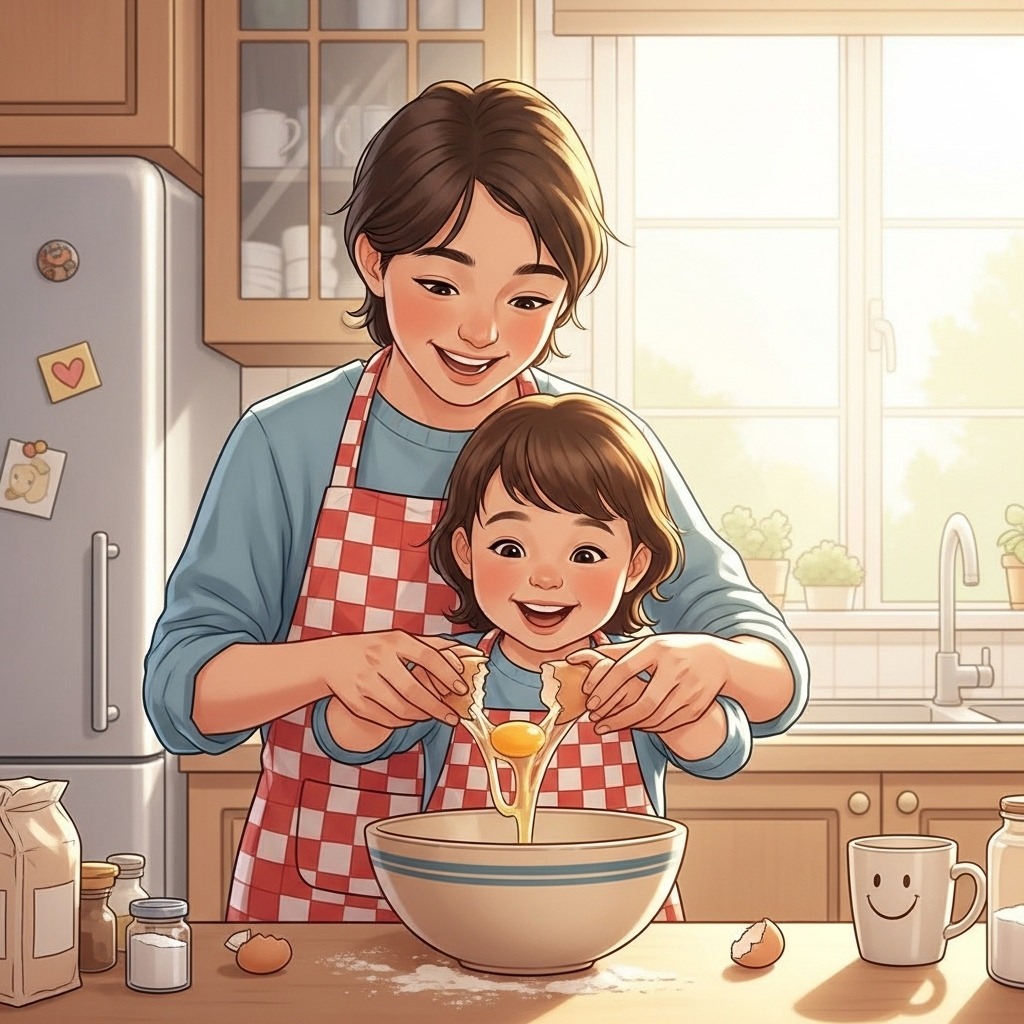
Cooking has become our special one-on-one time. My daughter and I have our best conversations while making easy cookie recipes for kids together on Saturday mornings.
My kids now understand the work that goes into meals. They complain way less about what I’ve made for dinner when they realize how much effort goes into feeding a family.
They’ve developed real confidence. There’s something powerful about a kid being able to say, “I can make that myself.” It extends beyond the kitchen into other areas of their lives.
And honestly? Watching my kids teach their younger sibling to make toast or scrambled eggs might be one of the most rewarding parenting moments I’ve experienced. They’re so patient and encouraging with each other in a way that doesn’t always happen during normal sibling interactions.
Start This Weekend
You don’t need to wait for the perfect moment or the ideal recipe. Pick one thing from this list—maybe smoothie bowls or quesadillas—and let your kid make it this weekend.
Yes, it’ll probably take longer than if you did it yourself. Yes, there will likely be some mess. And yes, the first attempt might not be Instagram-worthy.
But every chef started somewhere, and your kid’s “somewhere” might as well be now.
The investment of time and patience upfront pays off so much down the line. Trust me—future you will be thanking present you when your teenager can make their own dinner and you can just… not.
And who knows? You might just be raising the next great home cook in your family. Or at the very least, a functioning adult who won’t live on takeout when they leave home.
Frequently Asked Questions
At what age can kids start cooking?
Kids can start helping in the kitchen as young as 2-3 years old with very simple tasks like washing vegetables or stirring ingredients in a bowl. By age 4-5, they can handle no-cook recipes like smoothies and sandwiches. Around 6-8, they’re ready for supervised stovetop cooking like scrambled eggs and quesadillas. By age 9-10, many kids can handle basic oven recipes with supervision. Every child develops differently, so trust your gut about what your specific kid is ready for. The key is starting with age-appropriate tasks and gradually increasing complexity as they gain confidence and skill.
How do I teach knife safety to kids?
Start with plastic safety knives or butter knives around age 4-5 for soft foods like bananas or cooked vegetables. Around age 7-8, introduce a small paring knife with the “claw grip”—curl fingers in like a claw to hold food steady while the knife moves away from fingers, never toward them. Practice with soft foods first (mushrooms, strawberries, cheese) before moving to harder items. Always supervise closely, keep knives sharp (dull knives require more force and are actually more dangerous), and teach kids to carry knives with the blade pointed down. Make a rule that knives never leave the cutting board. It takes repetition, but most kids can learn safe knife skills by age 8-10.
What if my child has no interest in cooking?
Don’t force it, but try different approaches. Some kids respond better to baking (because it feels like a science experiment with a sweet reward). Others like cooking when they can choose the recipe themselves. Try making it social—invite a friend over for a “cooking playdate” or cook alongside them rather than teaching. Let them watch cooking shows or YouTube videos designed for kids. Sometimes kids resist because they feel they’ll fail, so start with impossibly easy no-fail recipes. And honestly, some kids just aren’t into it until they’re older. My nephew refused to cook until age 14, and now, at 16, he’s suddenly super into it.
Should I let kids use the stove and oven alone?
This depends entirely on age, maturity, and skill level. Generally, kids under 10 should not use the stove or oven without direct adult supervision in the room. Between 10-12, you can consider allowing supervised-but-independent use (you’re in the next room, aware of what they’re doing, available for questions). By age 12-14, many kids are ready for truly independent cooking if they’ve had proper training. However, you know your child best—a responsible, careful 11-year-old might be ready while an impulsive 14-year-old might not be. Always start with supervision and gradually increase independence as they prove themselves capable and safety-conscious.
What are the easiest recipes for kids who’ve never cooked before?
Start with no-heat recipes that have very few ingredients: peanut butter and jelly sandwiches, fruit smoothies, trail mix, yogurt parfaits, and simple salads. These build confidence without risk of burns. Next, move to basic assembly recipes that need minimal cooking: quesadillas, grilled cheese, scrambled eggs, and buttered pasta. These have short ingredient lists and clear results. Avoid recipes with long cook times, complicated techniques, or lots of steps. The key is immediate success—if kids feel accomplished on their first try, they’ll want to keep cooking. Keep those kids’ activity books and workbooks nearby, too, for when they need a break from cooking!
What’s the first recipe your kid ever made successfully? Drop it in the comments—I’m always looking for more ideas to add to our rotation! And if this article convinced you to finally let your kid loose in the kitchen, pin it so you can reference these recipes when you inevitably forget what to make.