
Any mom knows feeding kids isn’t just about the food—it’s about connection, growth, and the little moments. Most days, I’m balancing nutrition goals with real-life living: picky eaters, wild schedules, and kids with big personalities. That’s why my approach to healthy recipes is layered—not just simple steps but a way to build body, mind, and heart around the table.
Let’s break down exactly what works, the science behind it, and creative routines to make healthy eating stick, from breakfast to bedtime.
Why “Healthy” Means More Than Nutrition
Before diving into recipes, let’s get real: health for kids isn’t “clean eating” perfection or hiding spinach everywhere. It’s about variety, colors, textures, and helping little ones gain confidence in choosing and preparing foods. My own three kids taught me these truths—one will eat salad with every meal, the other thinks ketchup counts as a vegetable, and the youngest wants breakfast for dinner nightly.
Food is also emotional—the comfort of oatmeal on a rainy day, the pride of flipping a pancake solo, the joy of baking together. So, every recipe here builds connection and skill as much as nutrition.
Breakfast Magic: How Mornings Set the Tone
Rainbow Oatmeal Bowls
Ingredients:
- 1 cup quick-cooking oats
- 2 cups milk (dairy or plant-based)
- ½ cup strawberries, chopped
- ½ cup blueberries
- ½ banana, sliced
- 1 tablespoon chia seeds
- Drizzle honey or maple syrup.
Instructions:
- Cook oats with milk, stirring until creamy.
- Stir in chia seeds for added fiber and texture.
- Let kids design their fruit rainbow—try making a smiley face or their favorite animal.

Savory Veggie Egg Muffins
Ingredients:
- 5 large eggs
- ½ cup diced bell pepper
- ½ cup spinach, chopped
- ⅓ cup shredded cheese
- Pinch salt and pepper
Instructions:
- Whisk everything together. Pour into a greased muffin tin.
- Bake at 350°F (175°C) for 15–18 minutes.
- Cool and pop out for breakfast on the go.
Why it matters:
Mini muffins allow practice with fine motor skills, counting, and colors. They’re also ideal for busy mornings or to pack on the road.
Lunches: Make Midday Meals Fun, Hands-On, and Balanced
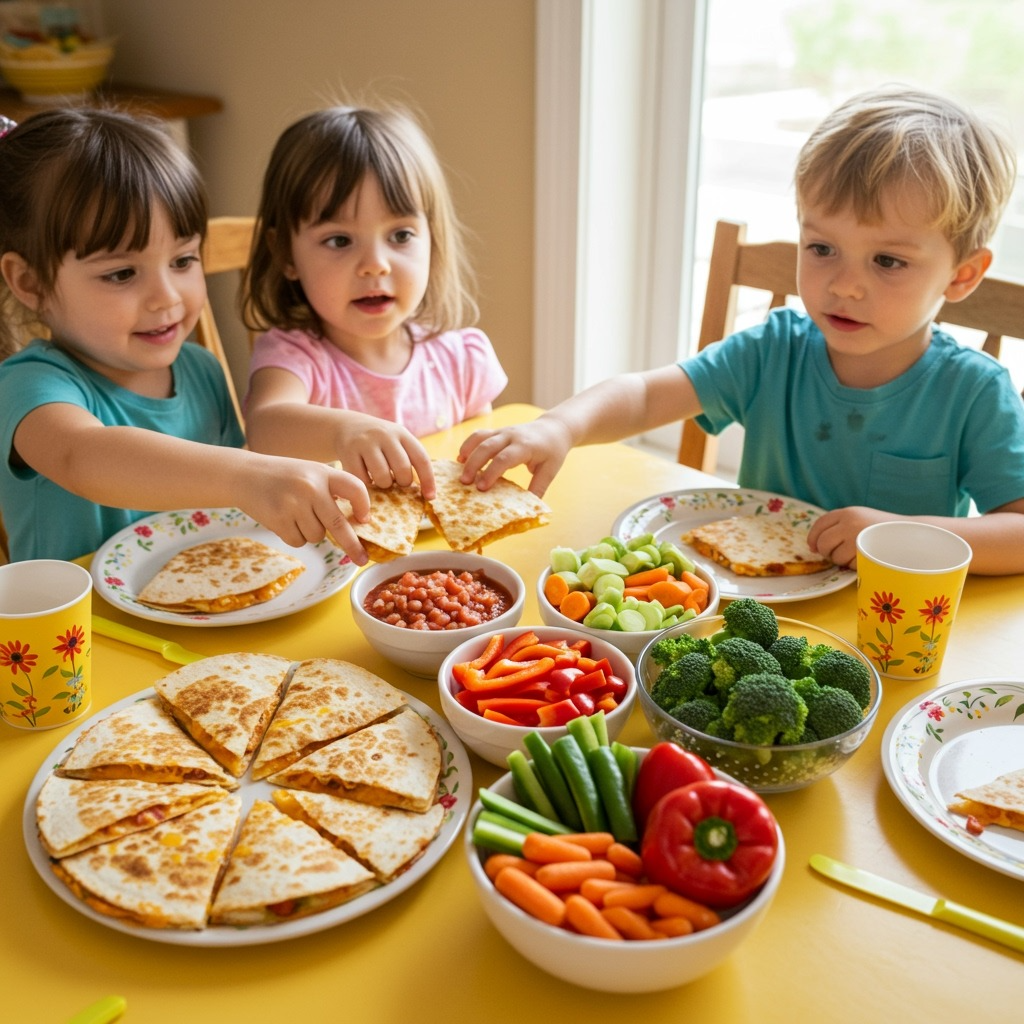
Veggie-Packed Quesadillas
Ingredients:
- 2 whole wheat tortillas
- ½ cup shredded cheese
- ½ bell pepper, diced
- ½ cup spinach
- ¼ cup black beans (rinsed)
Instructions:
- Lay one tortilla in a skillet, layer cheese, veggies, beans, and add the top tortilla.
- Grill until melty and golden.
- Slice into triangles.
Analytical insight:
Offering quesadillas family-style lets kids self-serve, test new combinations, and compare tastes; this scaffolds risk-taking with food in a safe way.
Chicken Snack Wraps Bento Box
Ingredients:
- 2 whole wheat tortillas
- 1 cup cooked chicken breast, shredded
- 1 tablespoon Greek yogurt
- 1 tablespoon mustard
- Lettuce and carrot sticks
Instructions:
- Mix the yogurt and mustard for a tangy, healthy spread.
- Spread, add chicken, roll tight.
- Serve with lettuce and carrot sticks.
Let kids decorate wraps with bell pepper “faces” for joyful eating and participation.
Snacktime Solutions: Realistic, Mess-Minimizing Choices
Apple Sandwiches
Ingredients:
- 1 large apple
- 2 tablespoons nut or seed butter
- Raisins or mini dark chocolate chips
Instructions:
Core and slice the apple into rings, spread with nut butter, sprinkle on raisins or chips, and sandwich another ring on top.
Analytic layering:
Quick prep makes this snack realistic for rushed days. Crunch, sweetness, and healthy fat offer brain fuel and longer satisfaction than crackers alone.
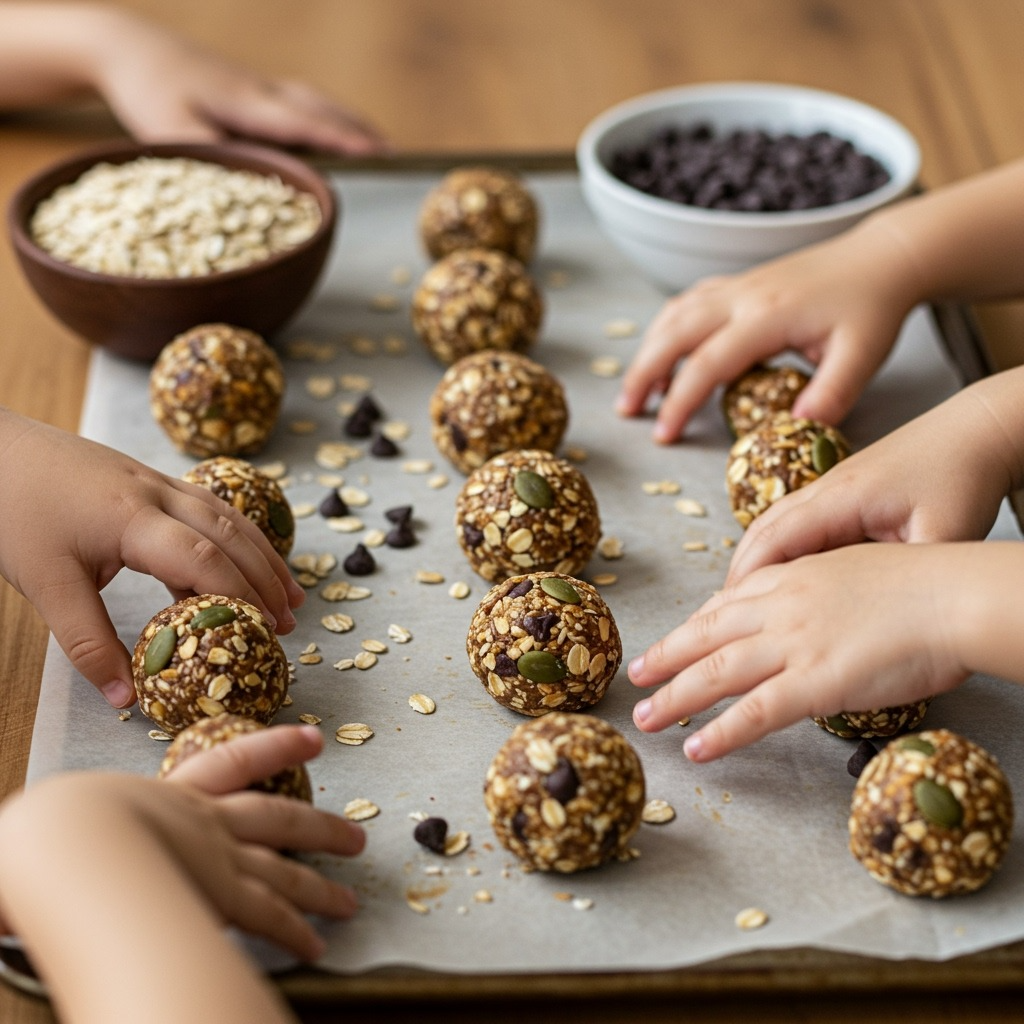
Energy Balls
Ingredients:
- 1 cup rolled oats
- ½ cup peanut or sunflower seed butter
- ¼ cup honey
- 2 tablespoons chia or flaxseed
- ¼ cup mini chocolate chips
Instructions:
Mix, roll into balls, chill. Let kids “customize” with cranberries or coconut.
Hands-on bonus:
Rolling energy balls teaches measurements, sensory exploration, and builds tactile confidence.
Dinner: Structure and “Deconstructed” Plates That Invite Exploration
Mini Turkey & Veggie Meatballs
Ingredients:
- 1 lb ground turkey
- 1 cup grated carrot or zucchini
- ½ cup breadcrumbs
- 1 egg
- 1 tsp garlic powder
- ½ tsp salt, ½ tsp pepper
Instructions:
Combine, shape, and bake at 400°F for 15-18 minutes.
Layered approach:
Serve with whole wheat spaghetti and marinara, or offer meatballs “solo” for finger food. Flexible plating lets picky eaters sample separately.
Rainbow Stir-Fry
Ingredients:
- Whole wheat noodles
- Broccoli, carrots, bell pepper, snow peas
- Soy sauce, sesame oil
Instructions:
Cook noodles and veggies, toss with sauce.
Why it works:
Colorful stir-fry boosts visual interest and nutrient diversity. Let kids “build a plate” with a rainbow of choices for empowerment.
Sweet Treats: Rethink Dessert as Nourishing and Special
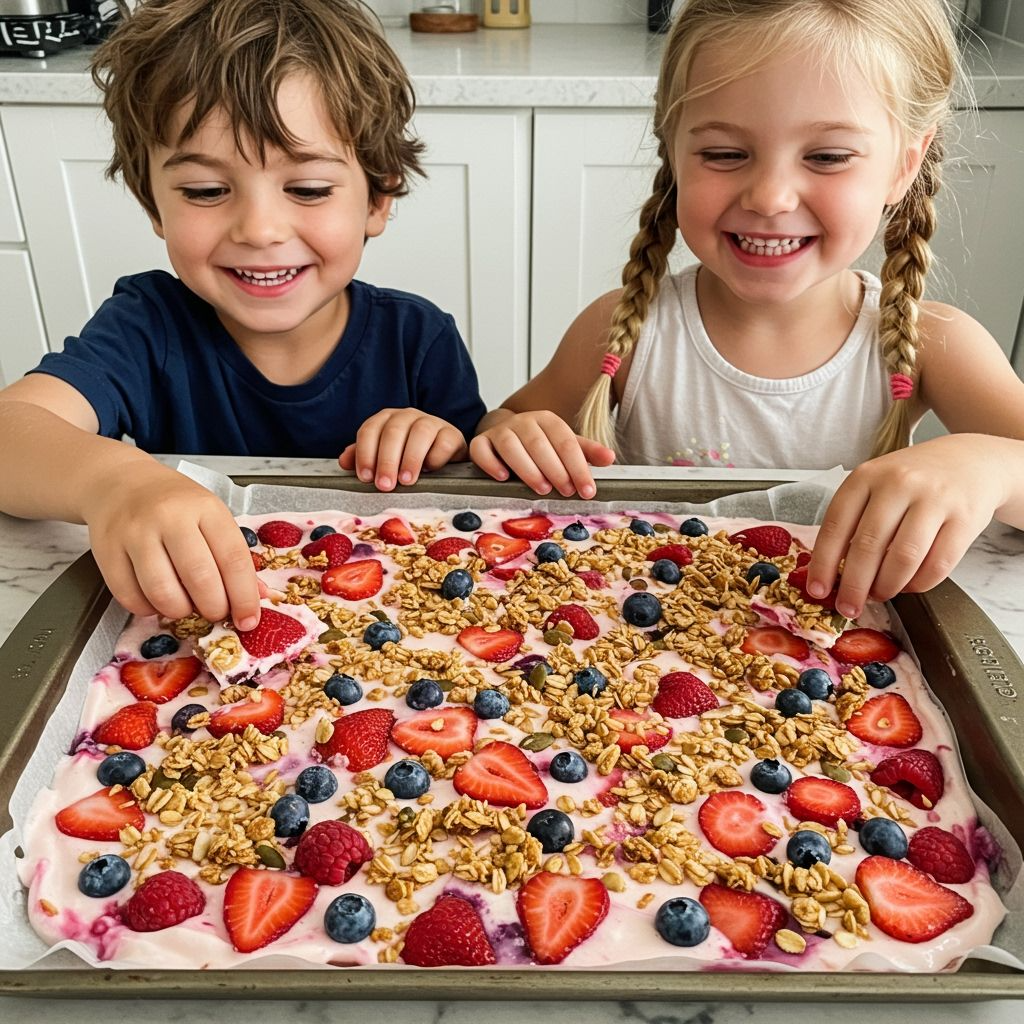
Frozen Yogurt Bark
Ingredients:
- Greek yogurt, honey, mixed berries, granola
Spread, top, freeze, snap into pieces. Let kids design bark with fruit “faces” or patterns.
Mindful framing:
Dessert as a celebration of creativity and nutrition rather than a bribe or afterthought.
Chocolate Avocado Pudding
Ingredients:
- Avocados, cocoa powder, honey/maple syrup, milk, vanilla
Blend until creamy, chill, and serve.
Kids are shocked by how good it tastes and love guessing the mystery ingredient.
Tips for Happy, Curious Eating
- Offer two choices whenever possible.
- Encourage bites but don’t pressure; a “taste test” culture lowers anxiety.
- Keep meals colorful and serve family style
- Use dips freely—yogurt, hummus, salsa make everything fun
- Let kids help whenever time allows: groceries, prep, stirring, plating
Turn dinner into a science lesson: explain why certain colors mean more vitamins, or how different grains help muscles and brains.
Integrate family time with fun activities for kids, easy recipes for kids, and kids mac and cheese recipe to build skills and confidence.
Overcoming Mealtime Challenges: Sensory Aversion & Picky Phases
Picky eating peaks between ages two and six as kids explore autonomy. Instead of battles, use mindfulness:
- Let every child serve themselves
- Pair new foods with favorites.
- Offer praise for curiosity, not compliance.
- Make plates beautiful—visual appeal increases willingness.
- Build routines: “Monday smoothie,” “Friday homemade pizza,” “Weekend pancake party.”
- Normalize “try then pass”—not every food will be a hit, and that’s okay.
For deeper support, visit Mayo Clinic’s Healthy Eating for Kids and CDC’s Nutrition for Kids.
Special Projects: Get Kids Excited About Food
Muffin Tin Snack Sampler
Fill each section with berries, veggie sticks, cheese, seeds, and pretzels; kids rate each for taste, crunch, and sweetness.
DIY Pizza Faces
Offer whole wheat crust, low-sugar sauce, veggies; let kids design faces and eat art.
Salad Bar Night
Bowls of lettuce, beans, cheese, tomatoes, nuts; kids build their own creation.
Turn these projects into quality time—for more, see reindeer food recipe for kids and bath bomb recipe for kids.
FAQ: Healthy Recipes for Real Families
What if my child refuses veggies in recipes?
Always offer without pressure, pair with favorite foods, and celebrate every taste. Kids’ palates change over time—exposure beats coercion. Try spiralized veggies, fun shapes, or blending into sauces if needed.
Are treats okay in a healthy meal plan?
Absolutely! Balance sweet treats like homemade frozen yogurt bark or chocolate avocado pudding with nourishing meals.
How can I get kids involved if we’re short on time?
Ten minutes is enough: washing produce, arranging plates, choosing toppings. Let little ones handle small tasks and older kids help with bigger jobs.
What about allergies and dietary restrictions?
Almost every recipe can be adapted—swap nut butters for seed butter, dairy for alternatives, and gluten for suitable grains. Use labels and conversation to build awareness.
How can I encourage adventurous eating?
Model curiosity, make small changes each week (new grain, new dip, new veggie), and let kids be part of meal planning. Turn taste tests into games!
Final Thoughts: Building Healthy Habits One Bite at a Time
Healthy eating for kids is as much about tiny choices and happy routines as nutrient charts. Cooking together, sharing meals, and offering options build bodies and relationships. Instead of aiming for “perfect eaters,” celebrate progress, smiles, and the dishes they help create.