
Monday nights used to be my nightmare. That’s when my kids would refuse dinner, complain that “vegetables taste yucky,” and I’d end up stress-eating an entire sleeve of crackers while standing over the stove. I was making separate meals, battling power struggles at the dinner table, and honestly, I was exhausted.
Then everything changed when I stopped trying to make “healthy kid food” and started making actually good food that happened to be healthy. I learned that kids don’t reject healthy recipes because they’re kids—they reject them because they’re boring, or mushy, or taste like punishment. When I started focusing on recipes that were genuinely delicious first and happened to sneak in vegetables, hide whole grains, and deliver real nutrition? Everything shifted.
After a decade of experimenting, failing spectacularly (looking at you, kale chips incident), and finally nailing down recipes my family actually requests, I’m sharing the healthy recipes for kids that have become our weeknight heroes. These aren’t rabbit food in disguise. These are real meals that taste good, take 30 minutes or less, and parents have actually enjoyed eating alongside their kids.
Why “Healthy Kid Food” Doesn’t Have to Mean “Boring Kid Food”
Here’s what I wish someone had told me sooner: the problem with most “healthy recipes for kids” isn’t that they’re healthy. It’s that they’re often bland, weird, or require your kid to choke down something that looks like it belongs in a science experiment.
Kids have developing palates, yes, but they’re not afraid of flavor. In fact, when you introduce them to genuinely tasty, well-seasoned food early, they become adventurous eaters. According to research from Healthline, the key to raising kids who eat well is exposure to a variety of flavors and letting them see parents enjoying healthy food. When kids watch you actually like vegetables, when they see you enthusiastically eating salmon or trying a new grain, something clicks for them.
The other game-changer I discovered: involvement. Kids are way more likely to eat something they helped make. The act of participation makes even questionable vegetables seem appealing. Plus, you’re teaching life skills while prepping dinner—it’s a two-for-one.
The truth is, feeding kids well doesn’t require complicated recipes or ingredients you have to order from specialty shops. It requires intention, realistic expectations, and recipes that are genuinely good enough that you’d want to eat them too.
The Non-Negotiables for Healthy Kids’ Recipes
Before I dive into specific recipes, let me share the principles that separate recipes kids will actually eat from the ones gathering dust in your “good intentions” folder.
Keep prep time under 30 minutes. If a recipe requires more than 30 minutes, let’s be honest—it’s not happening on a Tuesday. You need recipes that fit into the chaos of real life. Many of these recipes can be prepped earlier in the day and finished at dinnertime for even less stress.
Make them look appealing. I know, I know—presentation matters. Kids eat with their eyes first. A colorful plate is more appealing than beige mush. This is why roasted vegetables with visible char are more likely to get eaten than steamed vegetables. Rainbow pasta is more interesting than plain pasta. Food doesn’t have to look Instagram-worthy, but it shouldn’t look sad.
Include protein and healthy fat. Protein keeps kids full. Healthy fat supports brain development and makes food taste better. Recipes that hit both create satisfaction, which means fewer snack requests an hour after dinner. According to Parents.com, kids need adequate protein for growth and healthy fat for brain development—these aren’t optional luxuries.
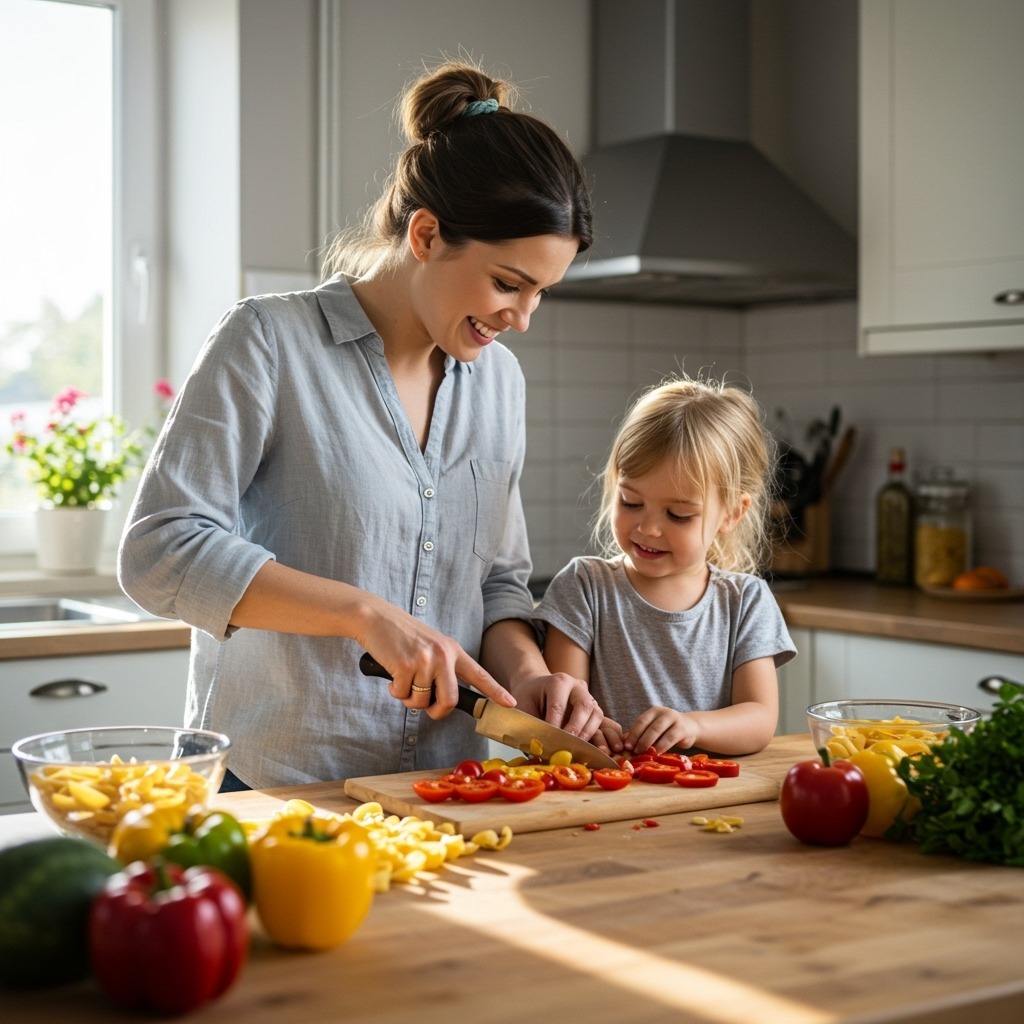
Let your kids help (even if it’s messy). Whether it’s stirring, pouring, or just standing on a stool and supervising, involve them. The mess is worth it because they’ll actually eat what they made. Plus, you’re building confidence and teaching kitchen skills that last a lifetime. This kind of involvement aligns with positive discipline techniques for toddlers, where kids feel empowered rather than controlled.
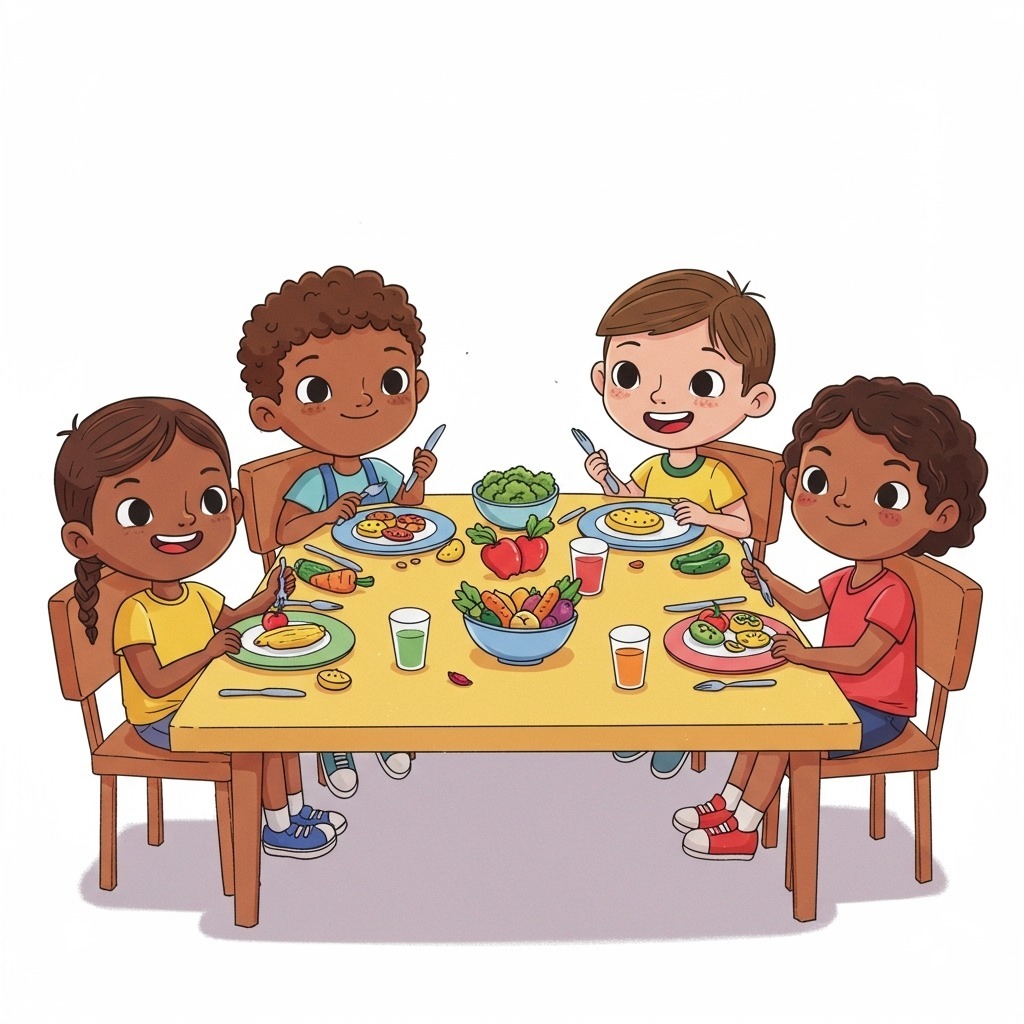
Make it customizable. Let kids build their own bowls or tacos, choose their toppings, or decide how much of each ingredient goes on their plate. This gives them autonomy and often solves the “I don’t like it” problem before it starts.
25 Healthy Recipes for Kids That Actually Work
I’ve organized these by meal type and complexity level so you can find what you need. I’ve marked my kids’ absolute favorites with ⭐. If you’re looking for even more meal inspiration, check out these easy recipes for kids that my family rotates through.
Breakfast Recipes
1. Protein Pancakes
Mix together one mashed banana, two eggs, and a splash of vanilla. That’s it. Cook on a griddle like regular pancakes. Top with fresh berries, nut butter, or a drizzle of honey. These have way more protein than regular pancakes, keep kids fuller longer, and taste like a treat. My four-year-old thinks I’m a genius when I make these. ⭐
2. Overnight Oats
Mix rolled oats, milk (or yogurt), berries, and a touch of honey in a mason jar the night before. Grab it in the morning. No cooking required. Endless flavor combinations are possible. Make five jars on Sunday for grab-and-go breakfasts all week. For more morning meal ideas, explore these breakfast ideas for kids that take the stress out of busy mornings. ⭐
3. Veggie-Packed Scrambled Eggs
Sauté finely chopped bell peppers, spinach, and mushrooms, then add beaten eggs. Kids don’t even notice the vegetables when they’re mixed into the eggs. Serve with whole-grain toast and fresh fruit. Done in 10 minutes.
4. Smoothie Bowls
Blend frozen berries, yogurt, and milk into a thick smoothie. Pour into a bowl and let kids arrange toppings: granola, coconut flakes, berries, and nut butter drizzle. It’s like a deconstructed smoothie that kids can customize. Makes breakfast feel like dessert. ⭐
5. Whole Grain Waffles
Use whole wheat flour or oat flour instead of regular flour in your favorite waffle recipe. They taste nearly identical but deliver way more fiber and nutrients. Freeze extras and pop them in the toaster for rushed mornings.
Lunch & Easy Dinner Recipes
6. One-Pan Sheet Pan Chicken with Roasted Vegetables
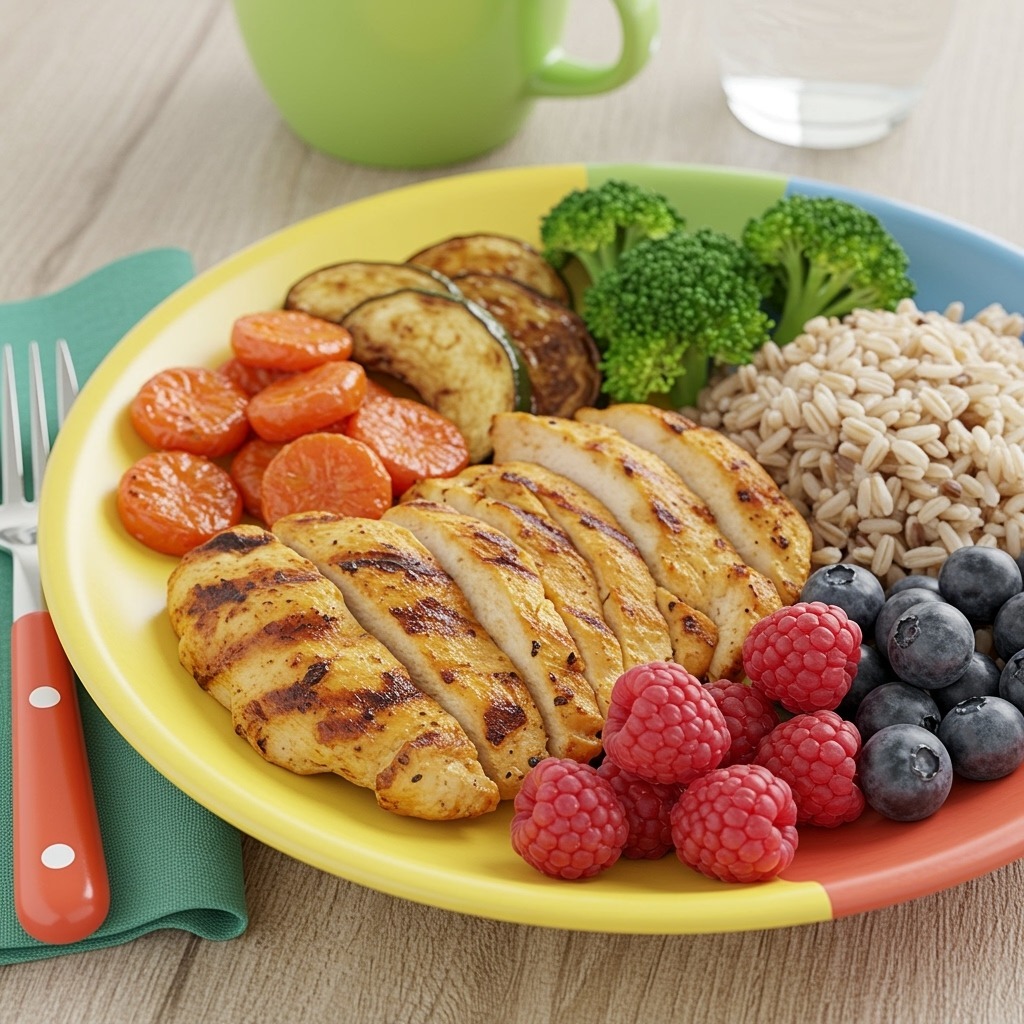
Put seasoned chicken breasts, broccoli, bell peppers, and carrots on a sheet pan with olive oil. Roast at 400°F for 20 minutes. Everything cooks together, cleanup is minimal, and you’ve got protein, veggies, and something brown and crispy that kids love. ⭐
7. Hidden Veggie Pasta Sauce
Sauté diced zucchini, carrots, and spinach until very soft, then blend into your regular tomato sauce. Add ground turkey or beef. The sauce is thick, flavorful, and packed with vegetables that disappear into the sauce. Serve over whole wheat pasta. ⭐
8. Fish Tacos with Mango Salsa
Use mild white fish (cod or tilapia), season lightly, and pan-fry until flaky. Let kids build their own tacos with whole wheat tortillas, shredded lettuce, and fresh mango salsa. Fish is mild, tacos are fun to assemble, and mango salsa is actually delicious (not rabbit food). ⭐
9. Slow Cooker Chili
Brown ground beef, and add it to a slow cooker with black beans, kidney beans, diced tomatoes, and mild spices. Let it cook on low for 6-8 hours. Serve with cornbread and let kids load up their bowls with toppings (cheese, sour cream, avocado). This makes great leftovers, too.
10. Baked Sweet Potato Bar
Bake sweet potatoes and set up a bar with toppings: shredded cheese, Greek yogurt, black beans, avocado, salsa, and corn. Let kids build their own. Sweet potatoes are naturally sweet (kids love this), packed with vitamin A, and they stay full for hours.
11. Chicken Nuggets (Homemade)
Mix panko with parmesan, dip chicken pieces in egg, then coat in the panko mixture. Bake at 400°F for 15 minutes. You control the ingredients, there’s no mystery meat, and they taste better than store-bought. Kids who won’t touch chicken tenders will often eat homemade nuggets.
12. Veggie Fried Rice
Use day-old rice, diced vegetables (carrots, peas, corn, broccoli), scrambled eggs, and low-sodium soy sauce. Stir-fry everything together. This is a brilliant way to use leftover rice and vegetables; it cooks in 10 minutes, and kids actually ask for seconds. Need more midday inspiration? These lunch ideas for kids solve the “what should I pack?” dilemma. ⭐
13. Mini Meatballs with Marinara
Mix ground beef, panko, egg, and parmesan. Form into balls and bake at 400°F for 15 minutes. Serve with marinara for dipping. Kids love the interaction of dipping, and you’ve got an easy protein that works for tacos, pasta, or meatball subs.
14. Quesadillas with Black Beans and Cheese
Mash black beans with mild spices, add cheese, and put between whole wheat tortillas. Pan-fry until crispy. Serve with avocado or Greek yogurt for dipping. This is vegetarian, high in protein from the beans, and feels like a “fun” meal. ⭐
15. Salmon with Honey Mustard Glaze
Mix Dijon mustard and honey, brush on salmon, and bake at 400°F for 12 minutes. Serve with roasted vegetables and brown rice. Salmon tastes fancy but takes 15 minutes, and omega-3 fatty acids support brain development. BBC Good Food highlights salmon as one of the most nutritious proteins for growing kids.
Snack Recipes Kids Actually Request
16. Homemade Granola Bars
Mix oats, almond butter, honey, and chocolate chips. Press into a pan and refrigerate. Cut into bars. They’re sweet, chewy, portable, and taste like a treat but deliver whole grains and protein. Make a batch on Sunday for grab-and-go snacks all week. For more portable options, check out these fun snacks for kids that work for lunchboxes and after-school hunger. ⭐
17. Energy Balls (No-Bake)
Mix oats, almond butter, honey, and vanilla. Roll into balls and refrigerate. These taste like candy but deliver whole grains, protein, and healthy fat. No baking required. Kids love making these, too.
18. Fruit and Cheese Skewers
Thread grapes, cheese cubes, and strawberries on wooden skewers. It’s basically fruit and cheese, but the skewer format makes it feel special and more appealing. Kids will eat vegetables prepped this way that they’d refuse on a plate.
19. Yogurt Parfaits
Layer Greek yogurt, granola, and fresh berries. Greek yogurt has way more protein than regular yogurt. The layers look pretty, taste great, and feel fancy enough to feel special. ⭐
20. Homemade Trail Mix
Mix unsalted almonds, dried cranberries, dark chocolate chips, and whole grain cereal. Kids can help assemble (and eat) this. It’s protein-rich, portable, and way cheaper than store-bought trail mix.
Sides That Don’t Taste Like Punishment
21. Roasted Broccoli “Trees”
Toss broccoli florets with olive oil, salt, and a little parmesan. Roast at 400°F for 15 minutes until they get crispy and slightly charred. Kids love the “trees” language, and the char makes them taste way better than steamed broccoli. ⭐
22. Sweet Potato Fries
Cut sweet potatoes into fries, toss with olive oil and a touch of cinnamon, and bake at 400°F for 20 minutes. They’re naturally sweet, crispy, and feel indulgent even though they’re super healthy. Serve with yogurt for dipping.
23. Cauliflower Rice Bowls
Pulse cauliflower into rice-sized pieces and sauté with garlic and oil. It’s a lower-carb rice substitute, tastes surprisingly good, and you can mix it with regular rice for a transition that kids don’t even notice.
24. Roasted Chickpea Snack
Toss canned (and dried) chickpeas with olive oil and spices (cinnamon and paprika work great). Roast at 400°F for 20 minutes until crispy. They’re crunchy, protein-packed, and feel like a snack even though they’re vegetables. ⭐
25. Baked Apple Chips
Thinly slice apples, toss with cinnamon, and bake at 300°F for 30 minutes until crispy. They taste like an apple-flavored snack chip, and kids will munch through them. No added sugar needed—the apples are sweet enough. If your kids enjoy baking, involve them in making these easy baking recipes for kids together.
The Secret to Making Healthy Recipes Stick
Here’s what separates families that eat well from families that are constantly battling over food:
Consistency, not perfection. Make these recipes regularly. When kids see the same healthy meals week after week, they stop treating them as experiments and start accepting them as normal food. Nutritionists at EatingWell note that repeated exposure is the key to developing healthy eating habits in children.
Lead by example. Eat the same healthy meals your kids eat and actually enjoy them. When kids see you choosing vegetables, eating whole grains, and enjoying fish, they’re way more likely to do the same. Food preference is largely learned from watching parents. This modeling is part of understanding how to be a good mother—demonstrating healthy habits rather than just enforcing them.
Stop calling it “healthy food.” Just call it food. Don’t announce that the brownies are made with beans. Don’t make a big deal about the vegetables. Treat it as a normal dinner, and kids are more likely to accept it as normal, too.
Involve them in shopping and cooking. Kids are more invested in meals they helped choose and prepare. Hit the farmers’ market together, let them pick one “new vegetable” to try, and give them real jobs in the kitchen. According to The Family Dinner Project, kids who participate in meal preparation are more likely to eat a wider variety of foods.
Make it pressure-free. Require them to try a bite of everything, but never force them to eat. Kids respond to pressure by shutting down. When you remove the pressure and just keep offering healthy foods without expectation, they’re more likely to try them when they’re ready. It took my daughter five years to eat broccoli, and then one day she started asking for it. Kids’ timelines aren’t always our timelines.
Building Lifelong Healthy Eating Habits
The deeper truth I’ve discovered is that these recipes aren’t really about nutrition (though that matters). They’re about teaching your kids that healthy food is normal, accessible, and actually delicious. They’re about creating a foundation where kids grow up thinking vegetables are just part of dinner, not punishment.
My oldest is 11 now, and she voluntarily eats salmon, requests roasted vegetables, and asks me for healthy recipe ideas to try. That didn’t happen by accident. It happened because we ate these foods together, repeatedly, without fanfare or drama. Because I modeled enjoying healthy food. Because I involved her in cooking them. Because I never made her feel bad about what she ate.
Your kids might not love all of these recipes. But if you pick a few that resonate, make them regularly, and stay patient, something will shift. The goal isn’t to raise kids who love vegetables (though that’s nice). The goal is to raise kids who see eating well as a normal, non-negotiable part of taking care of themselves. That’s a skill that serves them for life.
So this week, pick one recipe from this list. Shop for the ingredients. Cook it with your kids if possible. Eat it without commentary. And then do it again next week. Trust the process. It works.
Frequently Asked Questions
What are the easiest healthy recipes for picky eaters?
Start with mild flavors and familiar foods: one-pan sheet pan chicken with roasted vegetables, mild fish tacos, homemade chicken nuggets, or quesadillas with black beans. The key is keeping flavors simple while sneaking in nutrition. Recipes where kids can build their own (like taco bars or sweet potato bars) work especially well for picky eaters because they maintain control over what goes on their plate. Let them customize with toppings, and they’re more likely to eat it.
How do I get my kids to eat vegetables?
Roast vegetables with olive oil and salt until they get crispy and slightly charred—this makes them taste completely different from steamed vegetables. Let kids help choose vegetables at the store and prepare them. Involve them in cooking. Eat vegetables yourself enthusiastically. Mix vegetables into dishes where they’re less obvious (like hidden veggie pasta sauce or fried rice). Most importantly, keep offering vegetables without pressure, understanding that repeated exposure is what builds acceptance over time.
What are quick, healthy recipes for busy weeknights?
One-pan sheet pan meals, 10-minute stir-fry, slow cooker recipes you start in the morning, and make-ahead recipes like hidden veggie pasta sauce are all lifesavers for busy nights. Look for recipes with 30 minutes or less cooking time. Meal prep on weekends helps too—cook proteins and chop vegetables ahead so weeknight cooking is faster. Freezer-friendly recipes like chili and meatballs can be made in advance and reheated.
Can healthy recipes for kids be affordable?
Absolutely. The healthiest, most affordable recipes rely on basics: eggs, beans, canned tomatoes, frozen vegetables, whole grains, and affordable proteins like chicken and ground turkey. Avoid specialty health foods and ingredient-heavy recipes. Shop sales, buy store brands, and use frozen vegetables (just as nutritious as fresh). One-pan meals and slow cooker recipes tend to be cheaper because they’re smaller portions of protein stretched with vegetables and grains.
How do I introduce new foods without having them rejected immediately?
Serve new foods alongside familiar favorites so the meal doesn’t feel like a dare. Keep portions small. Don’t make a big deal about the new food. Serve it multiple times before concluding they don’t like it—kids need repeated exposure (sometimes 10-15 times) before accepting new foods. Model eating and enjoying the new food enthusiastically. Make it optional to try, never forced. The pressure to eat something new often backfires.
What are healthy recipes for kids with food allergies?
Most basic recipes (one-pan chicken with vegetables, stir-fry, roasted salmon, homemade nuggets) can be modified by eliminating the allergen. Focus on naturally allergy-free foods like fruits, vegetables, rice, potatoes, eggs, and unprocessed proteins. Read labels carefully and cook from scratch as much as possible. Many healthy recipes are naturally free of common allergens if you skip processed ingredients. Connect with allergy-specific parenting communities for tested recipes.
How many servings should I make to avoid wasting food?
Make enough for tonight’s dinner plus one extra serving or two (for lunches or leftovers). Most of these recipes freeze beautifully—chili, meatballs, hidden veggie sauce, granola bars, and energy balls all freeze for up to three months. Frozen home-cooked food is healthier and cheaper than takeout on nights when cooking feels impossible. Label with the date and gradually build a freezer of ready-to-heat healthy meals.