
I’ll never forget the moment my pediatrician gently corrected me during my daughter’s four-month checkup. I’d been calling her my “newborn” when describing her sleep struggles, and the doctor smiled kindly and said, “Actually, she’s past the newborn stage now.” Wait, what? In my sleep-deprived haze, I’d somehow missed that my tiny baby had graduated out of newborn status. It got me wondering: how long are newborns, anyway?
Turns out, I wasn’t alone in my confusion. The answer isn’t as straightforward as you’d think, and honestly, it changes depending on who you ask. Let me break down everything I learned about the newborn stage—including why understanding this timeline actually matters more than I realized.
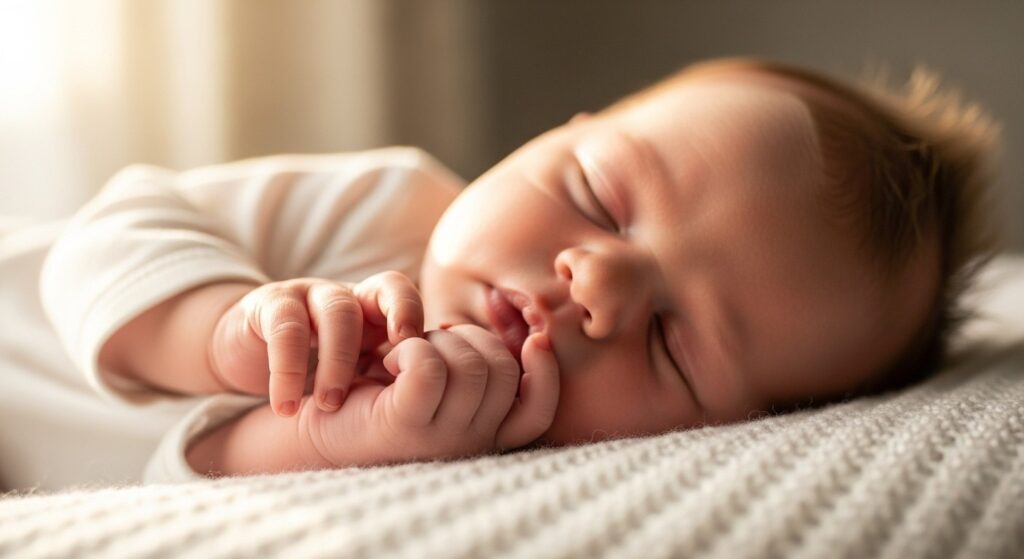
So, How Long Are Babies Actually Newborns?
Here’s the thing that confused me most: there’s no single, universally agreed-upon answer. But there are some general guidelines that can help.
The Medical Definition: According to the World Health Organization, a newborn (also called a neonate in medical terms) is technically a baby in their first 28 days of life. That’s it. Just four weeks. When I first learned this, I thought, “That’s way shorter than I expected!”
The Common Usage: Most parents, pediatricians, and parenting resources use “newborn” to describe babies from birth until they’re about 2 to 3 months old. This makes more sense when you think about all the rapid changes happening in those first weeks.
The Extended View: Some experts and parents stretch the newborn phase to include the entire “fourth trimester”—the first 12 weeks of life. This recognizes that babies are still adjusting to life outside the womb during this time.
So which one is right? Honestly, they all are. The 28-day medical definition is what you’ll see on official forms and in medical literature. But in real life, when you’re deep in the trenches of round-the-clock feedings and diaper changes, that 2-3 month timeframe feels much more accurate.
I remember being shocked when my son was six weeks old and someone referred to him as an “infant” instead of a newborn. But looking back, he really had changed so much from those first few weeks. His eyes were more focused, he was awake more often, and he’d started making those adorable cooing sounds.
Breaking Down Baby Terminology (Because It’s Confusing)
Let me clear up the terminology once and for all, because this tripped me up with both my kids:
Newborn: Birth to 28 days (medically) or 2-3 months (commonly used)
Infant: Birth to 12 months (yes, this overlaps with “newborn”—told you it was confusing!)
Baby: This is the catch-all term that can describe any child from birth to about 4 years old, though most people use it for kids under age 2
Toddler: 1 year to 3 years old (when they start “toddling” around)
The overlap between these terms is totally normal. Your 2-month-old can be called a newborn, an infant, AND a baby—all at the same time. It’s not like they graduate from one category to the next with a ceremony and a diploma (though wouldn’t that be cute?).
What really matters is understanding the developmental stage your baby is in. Those first few weeks look completely different from month three, even though both might fall under the “newborn” umbrella.
If you’re feeling overwhelmed navigating these early stages, you’re not alone. Learning about soft parenting techniques can help you feel more confident in your approach during these crucial first months.
What Makes the Newborn Stage So Special (And Brutally Hard)
Can we be real for a second? The newborn stage is both magical and absolutely exhausting. Here’s what nobody tells you until you’re living it:
Those Tiny Physical Features: Newborns have this distinct look that changes fast. Their heads are huge compared to their bodies (like, seriously—about one-quarter of their total length). They have those soft spots on their skulls, their skin might be peeling, and they’re just… so impossibly small. My daughter’s entire hand could wrap around just my pinkie finger.
The Constant Feeding: Whether you’re breastfeeding or formula feeding, newborns eat ALL THE TIME. We’re talking 8-12 times in a 24-hour period. Their tiny stomachs can only hold about 1-2 ounces at first, so they need to eat frequently. I lived in nursing tanks and kept snacks everywhere because I was constantly feeding someone (my baby or myself).
Sleep? What Sleep? Newborns sleep 16-20 hours a day, which sounds amazing until you realize it’s in 2-3 hour chunks, around the clock. They don’t know the difference between day and night yet. I remember watching the sunrise more times in those first weeks than I had in my entire adult life.
The Emotional Rollercoaster: Your hormones are all over the place. You’re sleep-deprived. You’re trying to keep a tiny human alive. It’s intense in a way that’s hard to describe to someone who hasn’t been there. Some days I felt like I was crushing it. Other days, I cried because I couldn’t figure out why my baby was crying.
Looking for ways to manage this intensity? I found that having kids’ activity books ready for when my toddler needed something to do while I fed the baby was a lifesaver. And honestly, reading parenting books during those middle-of-the-night feeds helped me feel less alone.

Key Newborn Milestones (0-3 Months)
Understanding what to expect during those first weeks and months can help you feel less overwhelmed. Here’s what I noticed with both my babies:
First 28 Days (The “Official” Newborn Period):
Your baby is basically adjusting to being… alive. Outside the womb, that is. They’re learning to eat, sleep, and function in this bright, loud, overwhelming world. Don’t expect much beyond eating, sleeping, and lots of crying (from both of you).
In the first week, your baby will probably lose some weight before starting to gain it back. This freaked me out with my first, but it’s totally normal. They should be back to their birth weight by about two weeks.
Feeding is pretty much constant. Their stomach is the size of a cherry on day one and grows to about the size of an egg by day ten. No wonder they need to eat every 2-3 hours!
You’ll be changing what feels like a million diapers. I’m talking 10-12 per day. Keep that diaper cream handy and prepare to become an expert at one-handed diaper changes.
Months 2-3 (The Extended Newborn Phase):
This is when things start to shift—slowly, but noticeably. Your baby’s personality starts peeking through.
Around 6-8 weeks, many babies give you that first real smile. Not gas, not a random muscle twitch—an actual “I see you and I’m happy about it” smile. I ugly-cried the first time my son smiled at me. No shame.
Their vision gets clearer. They start tracking objects with their eyes and can see farther than the 8-12 inch range they were limited to before. My daughter became obsessed with a black and white mobile around week 8.
Tummy time becomes more tolerable (for them) and more interesting (for you). They start lifting their heads and may even prop themselves up on their forearms by month 3.
Sleep patterns begin to consolidate. Maybe. Sometimes. Don’t quote me on this because every baby is different. But many babies start having one longer stretch of sleep at night around 6-8 weeks. We’re talking maybe 4-5 hours instead of 2-3. It feels like winning the lottery.
They start “cooing” and making those adorable baby sounds that aren’t crying. This is when those conversation starters for kids come in handy—even though they can’t talk back yet, talking TO them helps their language development.
For more on what comes after this stage, check out When Do Kids Start Talking to see the amazing journey ahead.
Practical Tips for Surviving (And Actually Enjoying) the Newborn Stage
Okay, here’s the stuff I wish someone had told me before I brought my first baby home. These are the tricks that actually worked:
Set Up Multiple “Stations”
Don’t make yourself walk to the nursery every single time you need something. I learned this the hard way. Set up changing stations in multiple rooms—the living room, your bedroom, wherever you spend time. Stock them with diapers, wipes, a change of clothes, burp cloths, and pacifiers.
I had a basket in the living room, supplies on my nightstand, and another set downstairs. It saved my sanity at 2 AM when I was too tired to walk down the hall.
Master the Feed-Sleep-Diaper Routine
Your life will revolve around this cycle: feed, sleep, change diaper, repeat. Sometimes the order shifts, but these are your three main activities. Track them if you need to (there are apps for this), or just go with the flow. Both approaches work.
I used a simple notebook for the first few weeks because my pregnancy brain turned into mom brain, and I couldn’t remember if I’d fed her 30 minutes ago or 3 hours ago. No judgment either way.
The Power of Skin-to-Skin
This isn’t just for right after birth. Skin-to-skin contact helps regulate your baby’s temperature, heart rate, and breathing. Plus, it’s amazing for bonding and can help with breastfeeding if you’re going that route.
My husband did skin-to-skin too, which gave me a break and helped him feel more connected to our babies. Win-win.
Accept Help (Seriously, Please Accept Help)
This is the time to let people bring you meals, hold the baby while you shower, or run errands for you. I was terrible at this with my first baby—I wanted to prove I could do it all myself. With my second, I learned to say “yes” when people offered help, and it made such a difference.
Even having board games for kids ready for entertaining older siblings while you handle newborn duties can be a game-changer if you have more than one child.
Create a Newborn Survival Kit
Mine included: nipple cream (even if you’re not breastfeeding, you’ll want this), massive water bottle, easy snacks, phone charger with extra-long cord, nursing pillow, white noise machine, and my favorite cozy blanket. Keep it all within arm’s reach of where you spend most of your time.
Also, invest in comfortable clothing. I’m talking soft, stretchy, easy-access-for-feeding clothes. Nobody cares what you look like right now. Comfort is queen.
Don’t Skip Tummy Time
Start as early as day two. Just a few minutes, a few times a day. Your baby will probably hate it at first (mine did), but it’s crucial for building neck and shoulder strength. Make it part of your routine—after a diaper change, or during a wake window.
I made it more fun by lying on the floor face-to-face with my babies, making silly faces, and talking to them. Sometimes I’d put a small mirror in front of them so they could see a “friend” (their own reflection).
Batch Your Tasks
When the baby sleeps, resist the urge to immediately start cleaning or catching up on tasks. Rest first. Then, if you have energy, pick ONE thing to accomplish. That’s it. Just one.
I’d tell myself, “Today I’m going to fold the laundry. That’s my goal.” Do not fold the laundry AND clean the kitchen AND return emails. Just laundry. Lower your expectations and celebrate the small wins.
If you’re looking for quick activities to do with older kids while caring for your newborn, check out these things for kids to do that require minimal supervision.
When Does the Newborn Stage Really End?
Here’s what I’ve learned: the newborn stage ends when YOU say it does. But there are some signs that your baby is transitioning out of that newborn phase:
Around 3-4 Months, You’ll Notice:
- More alert periods during the day with longer wake windows
- Better head control and more purposeful movements
- Social smiles and possibly even giggles
- More predictable sleep patterns (hopefully!)
- Less reflexive, more intentional actions
- Ability to self-soothe (sometimes)
- Growing out of those tiny newborn clothes (sob)
The “fourth trimester” concept suggests that babies are still technically in a newborn-like state until about 12 weeks. Their nervous systems are developing, they’re adjusting to life outside the womb, and they need that extra close contact and support.
By month four, most babies have hit some major milestones. They can usually hold their heads up steadily, they’re more interactive, and they’ve developed more of a personality. This is when people stop asking “How old is your newborn?” and start asking “How old is your baby?”
For me, the transition hit around 10 weeks with both kids. Suddenly, they were awake more, interested in the world, and felt sturdier in my arms. They were still tiny and needed constant care, but something had shifted.
What I Wish I’d Known About the Newborn Timeline
Looking back with both my kids now past the baby stage, here’s what I wish I’d understood about how long babies are newborns:
It’s Both Forever and No Time At All: When you’re in it, those first weeks feel endless. Every night is a marathon. But then you blink and they’re 6 months old and you can barely remember what those newborn days were like. People tell you, “It goes so fast,” and you want to scream because it feels like time is standing still, but they’re right. It does go fast.
The Timeline Doesn’t Matter As Much As Being Present: I spent so much energy trying to figure out which phase we were in, what was “normal,” and when things would change. What should I have done more of? Just being there with my babies. Staring at their faces. Breathing in that newborn smell. Letting myself feel all the feelings without worrying about what stage we were technically in.
Every Baby Has Their Own Timeline: My son started smiling at 5 weeks. My daughter took almost 8 weeks. Neither was right nor wrong. They hit milestones when they were ready. The medical definitions and general timelines are guidelines, not rules.
The “Newborn” Label Helps You Give Yourself Grace: Knowing that the first 2-3 months are considered the newborn stage gave me permission to lower my expectations. You’re not supposed to have it all figured out during this time. You’re surviving. You’re learning. You’re both adjusting.
Document It (Even Just a Little): I took way more photos with my first than my second, but I’m grateful for all of them now. Even the blurry 3 AM ones. Take the pictures. Write down the little moments. You think you’ll remember, but the details fade faster than you expect.
If you’re curious about what developmental stages come next, reading about when kids start walking can give you a glimpse of the exciting milestones ahead.
The Bottom Line on How Long Babies Are Newborns
So, how long are newborn babies? The short answer: medically, 28 days. Practically speaking, 2-3 months. But honestly? They’re newborns for as long as they feel like newborns to you.
Don’t get too caught up in the technicalities or worry that you’re using the “wrong” term. Focus on what matters: taking care of your baby and yourself during these intense, beautiful, exhausting first weeks and months.
The newborn stage is hard. Like, really hard. But it’s also precious and fleeting. One day, you’ll wake up and realize your “newborn” is rolling over, eating solid foods, or taking their first steps. You’ll miss those tiny fingers, that newborn cry, and even those 2 AM feeding sessions (okay, maybe not that last one).
Give yourself grace. Ask for help. Lower your expectations. And try to soak in at least a few moments of this wild ride, because before you know it, you’ll be looking back wondering where the time went.
Having the right supplies can make these early days easier—I loved having kids’ craft supplies ready for my toddler during newborn feeding sessions, and reusable snack containers for kids were perfect for keeping my own snacks handy during those long nursing marathons.
You’ve got this, mama. And remember: every single parent who has survived the newborn stage started out just as confused, tired, and overwhelmed as you are right now. We all made it through, and you will too.
Frequently Asked Questions
Q: Is a 2-month-old still considered a newborn?
Yes, most parents and pediatricians consider babies up to 2-3 months old to still be in the newborn stage. While the medical definition of “newborn” or “neonate” technically covers only the first 28 days, in practical everyday use, you can absolutely call your 2-month-old a newborn. The terminology overlap is normal—your baby can be both a newborn and an infant at the same time during these early months.
Q: At what age do babies stop being called newborns?
Most babies transition out of being called newborns somewhere between 2 and 3 months of age. By 3-4 months, they’re typically referred to as infants rather than newborns. You’ll notice this shift often coincides with developmental changes: better head control, more alert periods, social smiling, and more predictable patterns. But there’s no exact moment when your baby officially stops being a newborn—it’s a gradual transition.
Q: What’s the difference between a newborn and an infant?
A newborn is a baby in their first 28 days to 3 months of life, depending on who you ask. An infant is any baby from birth until they turn 1 year old. So technically, all newborns are infants, but not all infants are newborns. The newborn stage is a specific period within infancy that covers those very early weeks when babies are adjusting to life outside the womb and have specific care needs.
Q: Why is the newborn stage only 28 days?
The 28-day (4-week) definition comes from medical and scientific standards, particularly from the World Health Organization. This timeframe represents the neonatal period when babies are at their highest risk for certain health concerns and are experiencing their initial adjustment to life outside the womb. However, in everyday parenting conversation, most people extend the “newborn” label to 2-3 months because babies still have many newborn characteristics during this time.
Q: When do newborn clothes no longer fit?
Most babies outgrow newborn-sized clothes somewhere between 4-8 weeks, though this varies widely depending on your baby’s size at birth and their growth rate. Babies born smaller might fit into newborn sizes longer, while bigger babies might skip newborn sizes entirely and go straight to 0-3 month clothing. My advice? Don’t stock up on too many newborn outfits—babies grow faster than you’d believe, and you’ll be surprised how quickly those tiny clothes stop fitting.