
I’ll never forget the look on my daughter’s face when I “fixed” her drawing. She’d spent 20 minutes coloring a picture of our family, and when she proudly showed me, I noticed she’d made everyone’s skin bright purple. Without thinking, I said, “This is great, honey! But people don’t have purple skin. Want me to show you how to mix colors to make it look more real?”
Her smile disappeared. She set down the crayons and walked away. That drawing stayed unfinished on the table for three days before I finally threw it away. It took me months to understand what I’d done wrong that afternoon, and even longer to learn how to nurture your child’s creativity without accidentally crushing it.
Here’s what I wish someone had told me back then: nurturing creativity isn’t about teaching kids to create the “right” way. It’s about giving them space, time, and permission to explore their own ideas—even when those ideas involve purple skin, three-headed dragons, or buildings that defy physics.
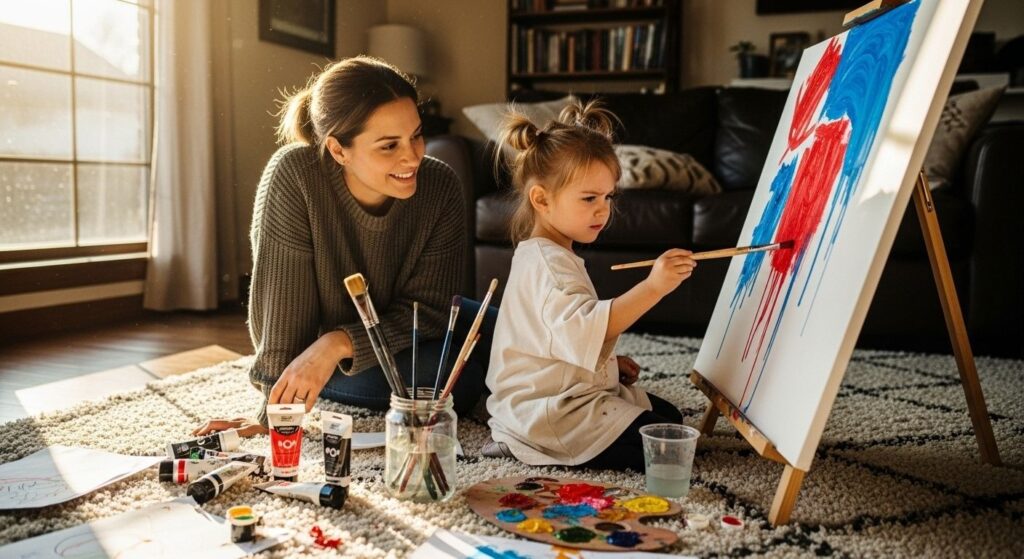
The Mistake I Made That Almost Crushed My Daughter’s Creativity
That purple-skin incident wasn’t an isolated mistake. I was making similar errors constantly, and I didn’t even realize it. When my son built a “car” out of blocks that looked nothing like a car, I’d suggest he look at pictures of real cars. When my daughter wrote a story about a flying cat, I’d point out that cats can’t fly.
I thought I was helping. I thought I was teaching. What I was actually doing was sending a clear message: your imagination is wrong, and there’s a right way to be creative.
Researcher Brené Brown calls these moments “art scars”—negative reactions to creative efforts that are so wounding they change how kids see themselves. In her studies, 85% of people remembered a specific moment when someone dismissed or criticized their creativity, and half the time, it happened in childhood with a well-meaning parent or teacher.
The good news? About 90% also remembered adults who helped them see their unique value. We can be those adults for our kids, but first we have to stop “helping” in ways that actually hurt.
What Nurturing Creativity Actually Means
Learning how to nurture your child’s creativity starts with understanding what creativity really is. For the longest time, I thought creativity meant being good at art, music, or writing. But according to creativity experts, that’s way too narrow.
Creativity is problem-solving. It’s coming up with new ideas. It’s the way your toddler lines up their toys in an unusual pattern, or how your kid figures out a way to reach the cookies on the high shelf. Creativity shows up in how they play pretend, how they build with blocks, and how they approach challenges.
Growth Mindset vs. Fixed Mindset
Kids with a growth mindset believe they can improve their creative abilities through effort. Kids with a fixed mindset think they’re either creative or they’re not, and nothing can change that.
Guess which mindset I was accidentally teaching with my “helpful” corrections? Every time I showed my kids the “right” way to draw, build, or create, I reinforced the idea that creativity was about getting to a correct answer—and if they couldn’t get there on their own, they must not be creative.
Now I focus on effort and process instead of outcome. Instead of “That’s beautiful!” I say things like “I noticed you spent a long time choosing just the right colors” or “Tell me about this part—what were you thinking when you made that?”
Process Over Product
This shift changed everything for us. I stopped caring whether the end result looked “right” and started paying attention to their creative process. Sometimes that means their artwork gets thrown away the same day. Sometimes it means their creations fall apart immediately. And that’s completely okay.
According to experts at the National Association for the Education of Young Children, open-ended creative experiences support problem-solving and flexible thinking far more than adult-directed projects where everyone’s creation looks the same. Your child gains more from freely exploring paint than from following step-by-step instructions to create an identical craft.
Create Space for Creativity (Literally)
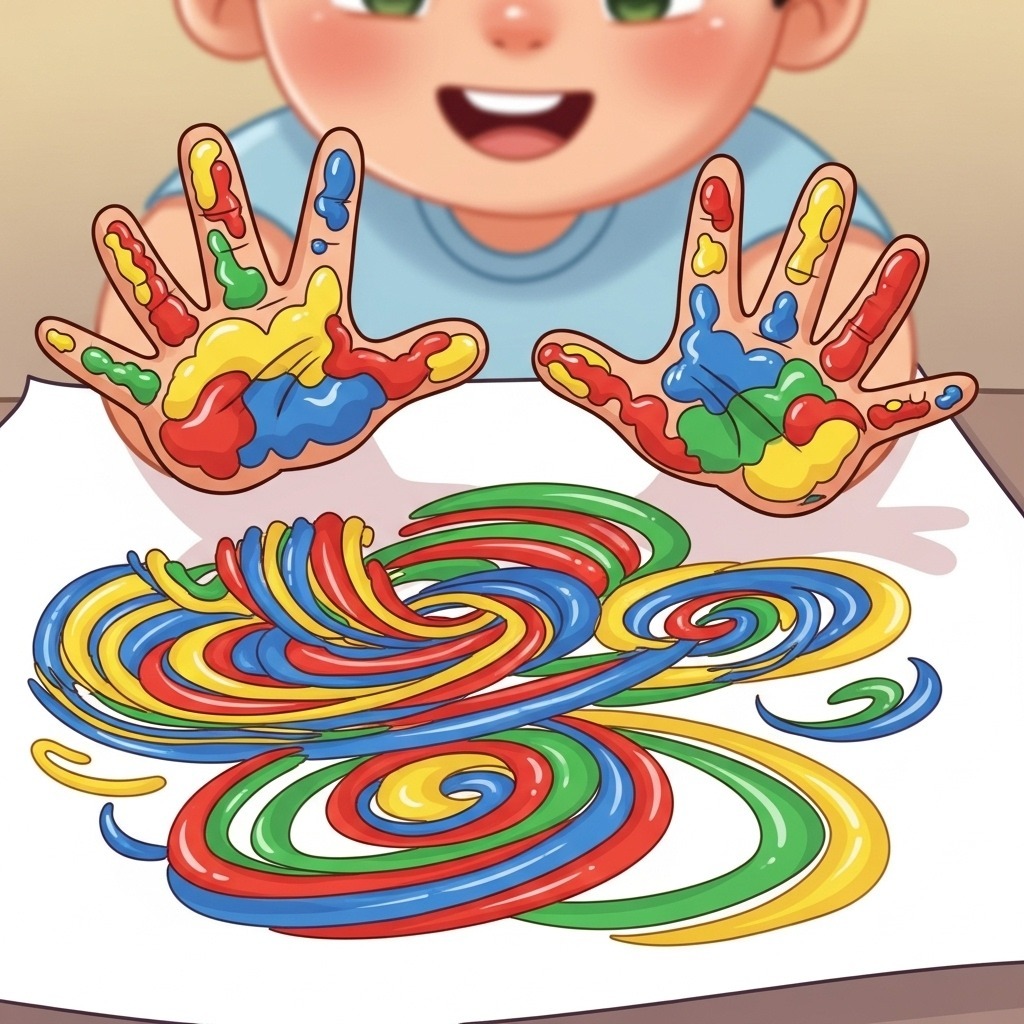
One of the simplest ways to nurture your child’s creativity is to give them a designated space where making messes is not only allowed—it’s encouraged.
This doesn’t mean you need a full art studio. A corner of the kitchen table with a vinyl tablecloth works perfectly. A cardboard box filled with supplies that live in the closet is great. Even a specific drawer that they can access freely makes a difference.
What Supplies Actually Matter
You don’t need expensive art kits. Some of our best creative sessions have involved:
- Plain paper (grab the backs of used printer paper)
- Crayons, markers, and colored pencils
- Glue sticks and tape
- Scissors (age-appropriate)
- Recycled materials like cardboard, egg cartons, and toilet paper rolls
- Natural items like sticks, leaves, and rocks
That said, having quality supplies that are well-organized makes creativity more accessible. I keep our essentials in a 3-layer arts and crafts supplies warehouse that the kids can explore independently. When everything has a place and they know they’re allowed to use it freely, they create way more often.
Make Mess Acceptable
This was hard for me. I hate mess. But I learned that my anxiety about cleanup was literally blocking creativity. Now we have “mess rules” instead of “no mess” rules:
- Art happens in designated areas with protection underneath
- Everyone helps clean up when we’re done.
- Some mess is expected and okay.
- We use washable materials whenever possible.
Once I relaxed about the mess, my kids’ creativity exploded. They weren’t constantly worried about getting in trouble, so they could actually focus on creating.
The Power of Unstructured Free Time
This is where I see the biggest difference in nurturing creativity: giving kids truly unstructured time where they’re not scheduled, supervised, or entertained.
Why Boredom Is Good
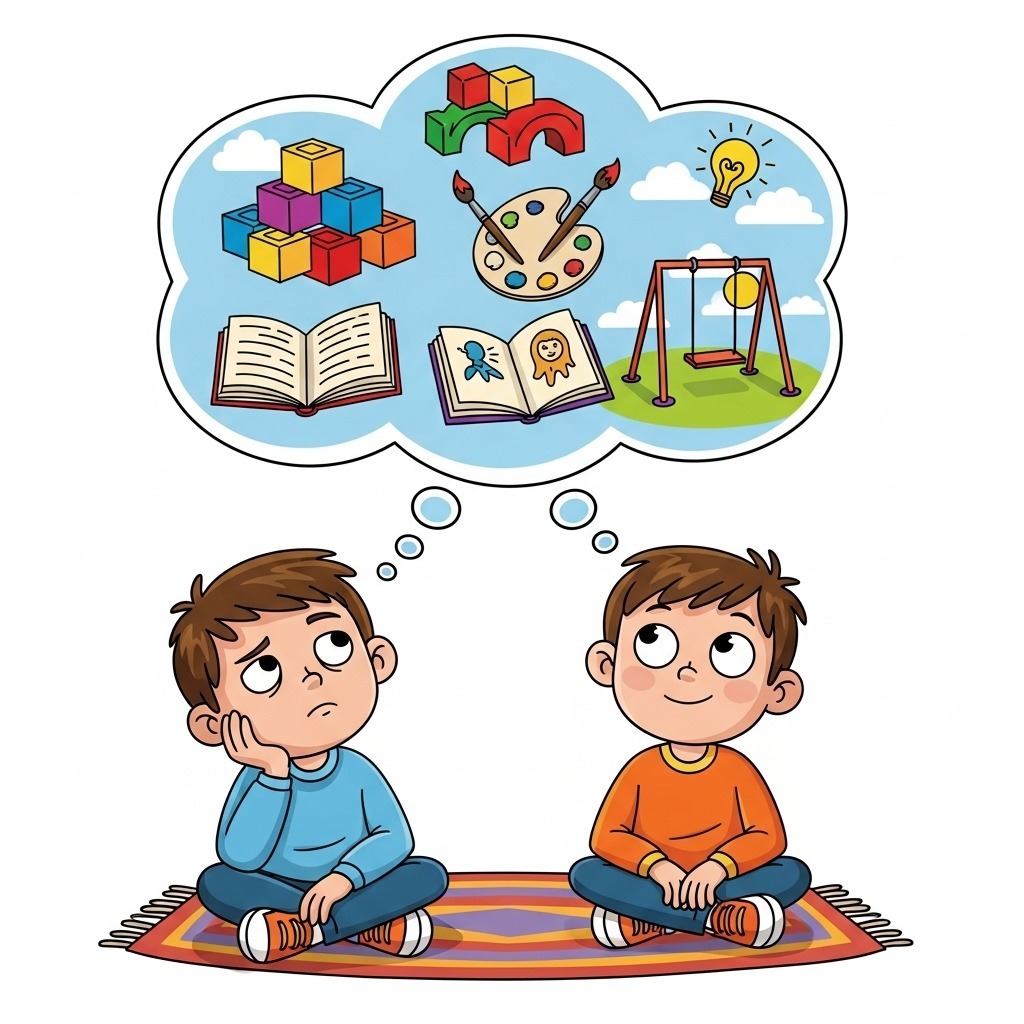
I used to panic when my kids said they were bored. I’d immediately suggest activities, pull out toys, or—let’s be honest—hand them a screen. Now I understand that boredom is actually the starting point for creativity.
When kids have to sit with boredom for a few minutes, their brains start searching for solutions. That’s when they decide to build a fort, create an imaginary game, or start an art project. If I jump in immediately to “save” them from boredom, I steal that opportunity.
Now, when my kids say they’re bored, I might suggest broad categories like “You could build something, make art, play outside, or read,” but I don’t direct the activity. The initial whining usually lasts about five minutes before they come up with something on their own.
Limiting Screen Time Effectively
This deserves its own conversation, but here’s the short version: excessive screen time directly competes with creativity. When my kids’ default entertainment is YouTube or games, they stop engaging their imaginations.
We limit screens to specific times (after homework, before dinner) and specific amounts (30-60 minutes depending on age). The rest of the time, they have to entertain themselves with physical toys, books, outdoor play, or creative activities.
The first week was rough. The second week was better. By the third week, they’d rediscovered how to play creatively, and screen time became less appealing. If you’re looking for more creative alternatives, check out these activities for kids that work in any season.
What Free Play Actually Looks Like
True free play means kids direct the activity completely. They’re not following instructions, competing for points, or working toward a specific goal. They’re just… playing.
This might look like:
- Building elaborate block towers that immediately get knocked down
- Creating imaginary worlds with stuffed animals
- Drawing random pictures with no predetermined subject
- Making “potions” from water and safe kitchen ingredients
- Building forts from couch cushions
It looks chaotic. It looks pointless. But it’s actually the foundation of creative thinking.
Ask Better Questions (Stop Saying “That’s Beautiful!”)
Remember how I used to give generic praise like “That’s beautiful!” or “Good job!”? Turns out that’s not actually helpful for nurturing creativity.
Generic praise focuses on the product and doesn’t give kids any information about what they did well. It also creates pressure to make everything “beautiful” instead of encouraging experimentation.
Open-Ended Questions That Spark Thinking
Now I ask questions like:
- “Tell me about what you made—walk me through your process.”
- “What was the most challenging part?”
- “What would you do differently next time?”
- “What inspired you to use these colors together?”
- “How did you figure out how to make this part work?”
These questions show I’m genuinely interested in their thinking, not just evaluating the final product. They also help kids reflect on their own creative process, which builds metacognitive skills.
Acknowledging Effort, Not Outcome
Instead of “This painting is perfect!” I might say:
- “I noticed you mixed three different colors to get that exact shade—that took patience.”
- “You worked on this for almost an hour. You were really focused.”
- “I saw you try that technique twice before you got it to work the way you wanted.”
This acknowledges their effort, perseverance, and problem-solving—all the things that actually matter more than whether the end result is aesthetically pleasing to adults.
Let Them Fail (And Watch What Happens)
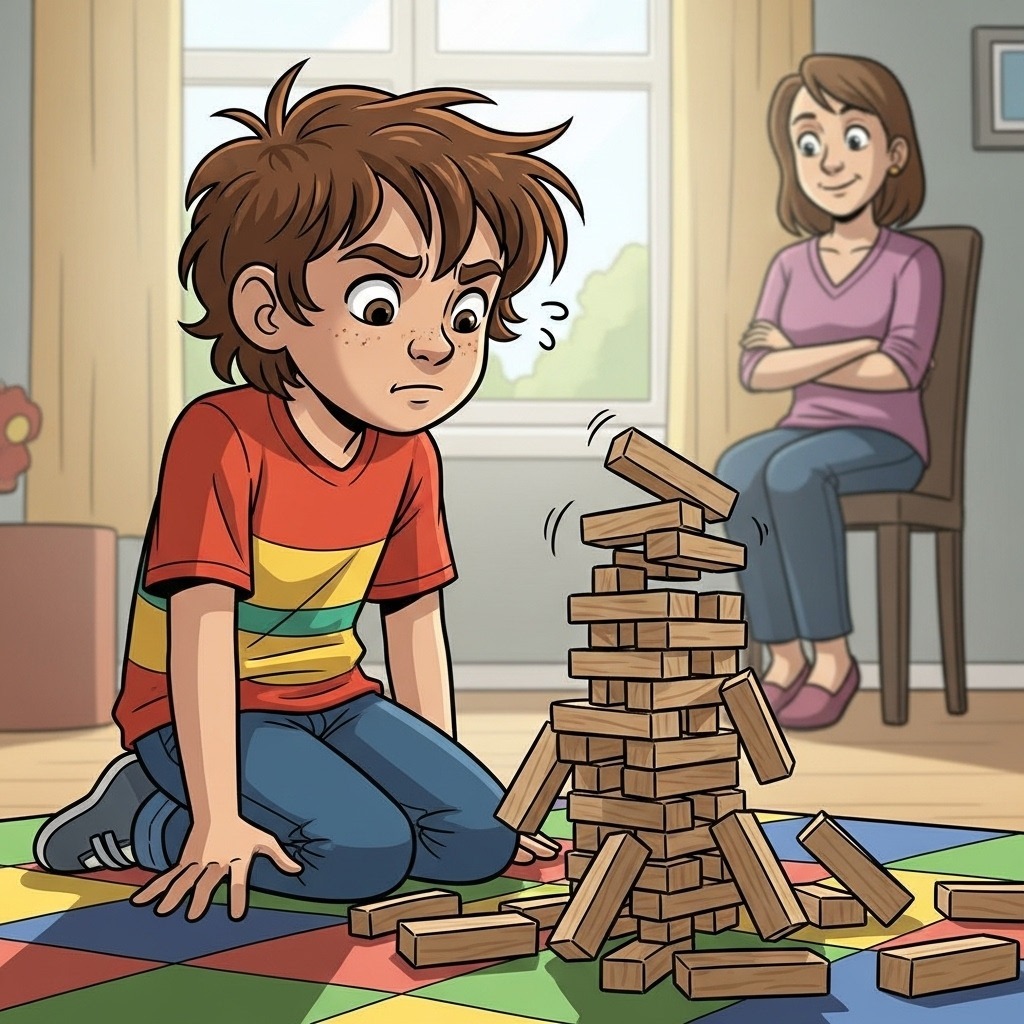
This might be the hardest part of learning how to nurture your child’s creativity: stepping back and letting them struggle, fail, and feel frustrated without immediately jumping in to fix things.
Reframing Setbacks
When my son spent an hour building a marble run that didn’t work, my instinct was to show him how to fix it. Instead, I asked, “What do you think went wrong?” He studied it, figured out the problem himself, and rebuilt it successfully.
That lesson—that failure is information, not the end—is crucial for creativity. Kids need to understand that their first attempt rarely works perfectly, and that’s completely normal.
I try to model the motto: “This might not work, but we’re going to learn from it.” That reframes failure as a natural part of the creative process rather than something to avoid.
The Growth That Comes from Mistakes
Some of our best creative moments have come from “failures.” The cookies that spread too thin became “cookie chips” and inspired intentional thin-and-crispy cookie experiments. The painting that got too muddy from mixing all the colors became a lesson in color theory.
When kids feel safe to fail, they’re willing to take creative risks. They’ll try techniques they’re not sure will work. They’ll experiment with unusual combinations. They’ll push boundaries. All of that requires the freedom to potentially fail.
How to Support Without Rescuing
There’s a balance between abandoning kids to frustration and rescuing them from every challenge. I try to:
- Acknowledge the frustration: “I can see you’re feeling stuck.”
- Ask if they want help or want to keep trying: “Would you like some ideas, or do you want to keep working on it yourself?”
- Offer suggestions without taking over: “What if you tried… ?” rather than “Here, let me show you.”
- Celebrate the attempt even if it didn’t work: “You tried something really creative, even though it didn’t work out exactly how you wanted.”
Expose Them to New Experiences
Creativity doesn’t happen in a vacuum. The more experiences, cultures, ideas, and art forms your kids encounter, the more raw material their imaginations have to work with.
Museums, Nature, Music, and Performances
We try to visit new places regularly—not necessarily expensive outings, just new environments. Local libraries often offer free museum passes. Community centers host performances. Parks provide endless natural exploration.
Even simple variations on routine help. We might take a different route to school, try a new playground, visit a different grocery store, or cook food from a culture we’re learning about. Each new experience gives kids more ideas to draw from when they create.
Cultural Diversity
Exposing kids to different cultures, traditions, and perspectives expands their creative thinking. We read books featuring characters from different backgrounds, listen to music in different languages, and learn about celebrations we don’t personally observe.
This isn’t just good for creativity—it builds empathy and cultural awareness. But it definitely feeds imagination. My daughter’s recent art project featuring Day of the Dead-inspired decorations came directly from a book we’d read about Mexican traditions.
Trying New Things Together
Learning something new alongside your kids models that creativity and learning are lifelong pursuits. We’ve tried:
- A new craft neither of us had done before
- A cooking technique we’d never attempted
- A sport none of us knew how to play
- Building something from a kit with confusing instructions
These shared experiences, where I’m also a beginner, show kids that adults don’t have all the answers, and that’s okay. We figure things out together, we make mistakes together, and we celebrate when we finally get it right.
Model Your Own Creativity
Kids learn more from what we do than what we say. If I want creative kids, I need to be creative myself—and let them see that process, including the messy parts.
Show Your Creative Process
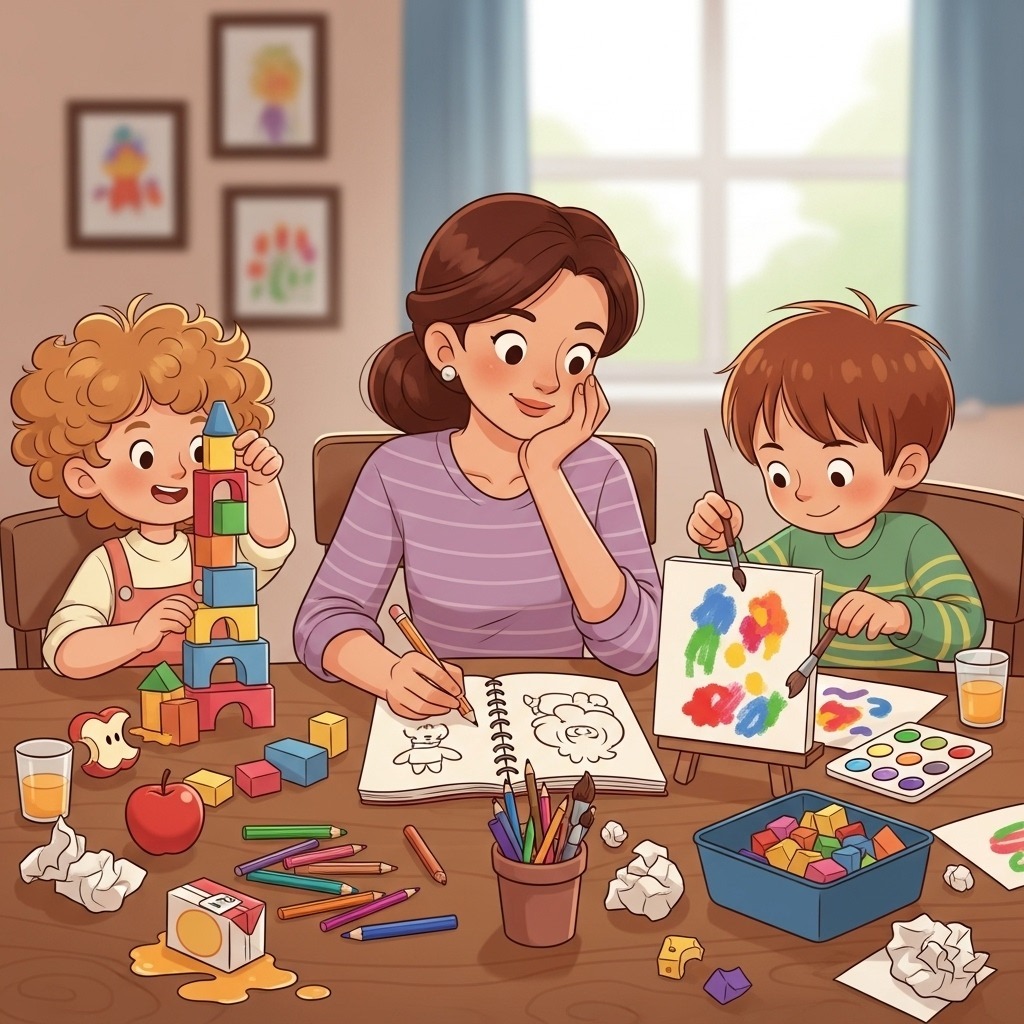
I’ve started doing my own creative projects while my kids do theirs. Sometimes I’m working on a writing project. Sometimes I’m trying a new recipe. Sometimes I’m rearranging furniture or planning a garden.
Whatever it is, I talk through my process: “I’m trying to figure out the best layout for this… I’m not sure if this color combination will work… I’m going to experiment with this technique and see what happens.”
This demonstrates that creativity isn’t just for kids, and it isn’t always about art. Having good parenting books visible and discussing parenting challenges also shows kids that adults are constantly learning and problem-solving.
Fail in Front of Your Kids
This is vulnerable, but it’s powerful. I used to hide my failures and only show my kids finished, successful projects. Now I let them see when things don’t work.
When my bread doesn’t rise, we troubleshoot together. When my painting turns out muddy, I talk about what went wrong. When my DIY project fails, we laugh about it and decide whether to try again or move on.
This normalizes failure as part of the creative process. It shows them that creative adults mess up all the time, and that’s not a reason to stop trying.
Make Creativity Normal
In our house, creativity isn’t a special event. It’s just… Tuesday. We don’t make a big production out of art time or treat it as something separate from daily life.
There are markers on the table during lunch. There’s playdough out during free time. There’s a basket of kids’ craft supplies that anyone can grab anytime. Creative materials are as accessible as toys, books, or snacks.
This accessibility sends the message that creativity is normal, expected, and always available—not something special we only do when we’re feeling inspired or have scheduled “art time.”
Frequently Asked Questions
How do I nurture creativity in a child who says they’re “not creative”?
Start by expanding their definition of creativity beyond art. Creativity shows up in problem-solving, building, storytelling, pretend play, and even in how they approach everyday challenges. Point out when they’re being creative in unexpected ways: “That was a creative solution to reach the toy!” or “I love how creatively you decorated your room.” Offer open-ended materials like blocks, playdough, or dress-up clothes that encourage imaginative play without requiring drawing or painting skills. Most importantly, avoid labeling them as creative or not creative—focus instead on their effort, ideas, and willingness to try new approaches.
At what age should I start nurturing creativity?
Start from birth! Babies explore creatively through sensory experiences—touching different textures, hearing varied sounds, and seeing contrasting colors. Toddlers experiment creatively during pretend play and messy exploration. Preschoolers benefit from open-ended art materials and imaginative games. School-age kids can handle more complex creative projects and benefit from exposure to diverse experiences. It’s never too early (or too late) to nurture creativity, but the approaches will vary by developmental stage. The key is offering age-appropriate opportunities for exploration, experimentation, and self-expression.
How much screen time is too much if I want to encourage creativity?
The American Academy of Pediatrics recommends no screen time for children under 18 months (except video chatting), one hour of high-quality programming for ages 2-5, and consistent limits for older children. From a creativity standpoint, excessive passive screen time (watching videos, scrolling content) directly competes with active creative play. However, some screen use can support creativity—apps that let kids create music, animation, or digital art can be valuable tools. Focus on balance: ensure kids have substantially more time for hands-on play, outdoor exploration, reading, and creative projects than they spend on screens. If you’re looking for alternatives, explore these things for kids to do when boredom strikes.
What if I’m not creative myself—can I still nurture creativity in my child?
Absolutely! You don’t need to be artistic or particularly creative to nurture creativity in your kids. Your role isn’t to teach them to be creative—it’s to create conditions where creativity can flourish. That means providing materials, protecting free time, asking open-ended questions, and stepping back to let them explore. In fact, your own creative experiments (even if they fail) model that creativity is for everyone, not just “talented” people. Try new things alongside your kids, acknowledge when you’re problem-solving creatively in everyday situations, and show genuine interest in their creative process. Your support and encouragement matter far more than your personal artistic abilities.
Should I enroll my child in art classes or let them explore on their own?
Both have value, and the best answer depends on your child. Free, unstructured creative play at home is essential and should be the foundation. This is where kids develop their own ideas without adult direction. However, classes can also be beneficial—they expose kids to techniques, materials, and ideas they might not discover independently. The key is choosing classes that emphasize exploration and skill-building over creating identical products. Avoid classes where the teacher heavily directs every step and everyone’s artwork looks the same. Look for instructors who encourage individual expression while teaching foundational skills. Ideally, offer both: plenty of free creative time at home plus occasional classes to expand their toolbox.
Looking back at that purple-skin drawing, I wish I’d responded differently. I wish I’d asked my daughter why she chose purple. I wish I’d been curious about her creative vision instead of correcting it.
But here’s what I’ve learned: it’s never too late to start nurturing your child’s creativity in healthier ways. The moment I stopped “helping” and started trusting their creative process, everything changed.
Your child doesn’t need you to teach them the “right” way to create. They need you to protect their creative time, provide materials and space, ask curious questions, and celebrate their unique ideas—even when those ideas involve purple skin, impossible architecture, or stories that make absolutely no logical sense.
Start this week. Set up a small creative space. Say yes to one messy project you’d normally avoid. Ask “tell me about this” instead of “that’s beautiful.” Let them be bored for 20 minutes without jumping in to entertain them.
The creativity is already there. Your job isn’t to create it—it’s to nurture it by simply getting out of the way and providing the conditions where it can grow.
And who knows? You might rediscover your own creativity in the process. I’ve certainly started creating more since I stopped worrying about whether I’m doing it “right.” Turns out, watching my kids embrace creative freedom gave me permission to do the same.