
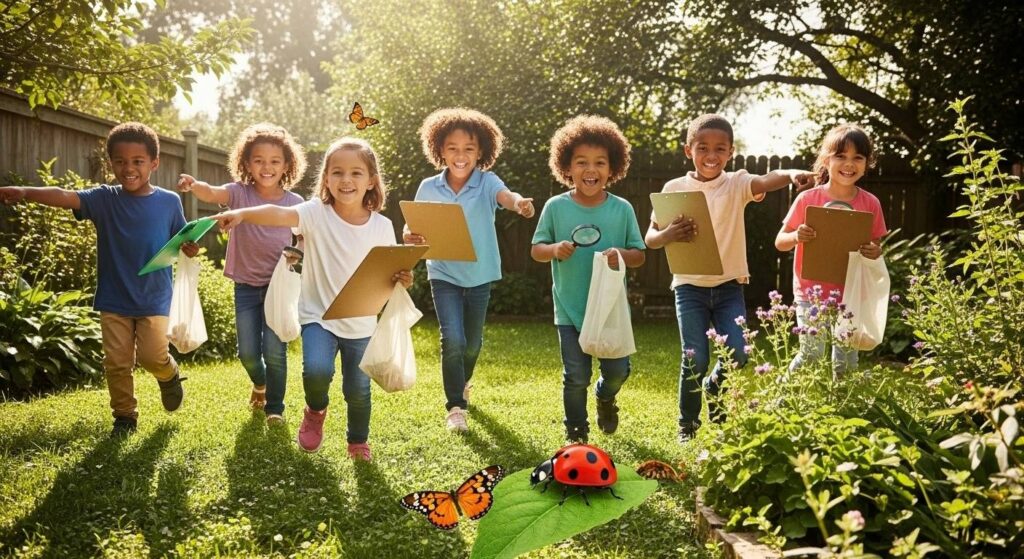
Last Saturday, I watched my 6-year-old spend three hours glued to her iPad while my 4-year-old threw a tantrum because I suggested going outside. The backyard—our beautiful, sunny backyard—sat completely empty while both kids spiraled into screen-zombie mode. I knew something had to change, but I also knew that just saying “go play outside” wasn’t going to cut it anymore.
That’s when I remembered outdoor scavenger hunts. Not the complicated, Pinterest-perfect kind that requires laminating and color-coding, but the simple, throw-it-together-in-10-minutes kind that actually gets kids moving. And honestly? It completely changed our weekend. Both kids ran around for over an hour, came back with dirt under their fingernails (the good kind of mess), and asked if we could do it again tomorrow.
If you’re struggling to pry your kids away from screens or just need a fresh outdoor activity that doesn’t feel like pulling teeth, an outdoor scavenger hunt might be exactly what your family needs right now.
What Is an Outdoor Scavenger Hunt?
An outdoor scavenger hunt is basically a list of items your kids need to find in nature or around your yard. It’s different from a treasure hunt where there’s one hidden prize—instead, the “treasures” are things that already exist outside, like leaves, rocks, flowers, or bugs.
The beauty of it is the simplicity. You don’t need special equipment, complicated clues, or hours of prep time. Just a list, some outdoor space, and kids who are ready to explore. Think of it as giving your child a mission that turns an ordinary backyard or park visit into an adventure.
Some parents use printed lists, others scribble items on scrap paper, and some even let their kids create their own lists. There’s no wrong way to do it, which is exactly why it works so well for busy families.
Why Your Kids Need This Right Now
Here’s what I didn’t expect: my kids actually learned things during the scavenger hunt. My 4-year-old practiced her colors by looking for “something green” and “something yellow.” My 6-year-old worked on reading by sounding out “butterfly” and “pinecone.” They counted how many leaves they collected and compared which stick was longer.
Beyond the academic stuff, outdoor scavenger hunts get kids moving without them realizing it’s exercise. They’re running, bending, reaching, and climbing—all while having so much fun they forget they’re being active. In a world where kids spend an average of 7+ hours daily on screens, that’s huge.
Plus, there’s something about searching for treasures in nature that slows kids down and helps them actually notice their surroundings. Instead of running past a tree, they stop to look for ants crawling on the bark or a spiderweb between branches. It’s like hitting a pause button on the chaos of regular life.
And can we talk about how this is basically free entertainment? No admission fees, no special memberships, no expensive gear. Just you, your kids, and whatever’s already outside. If you’re looking for more budget-friendly ways to keep kids entertained, check out these fun outdoor activities for kids that won’t break the bank.
Where to Do Your Outdoor Scavenger Hunt
The best part? You don’t need some fancy location to make this work.
Your backyard is honestly the perfect starting point, especially for younger kids or your first attempt. It’s familiar, safe, and you can run inside for bathroom breaks or snacks without disrupting the whole adventure. Even if your yard is small, kids will surprise you with how much they can find in a limited space.
Local parks are my go-to when we need a change of scenery. Most parks have a good variety of natural items—different types of trees, flowers, rocks, and wildlife. Plus, there’s usually playground equipment nearby for when the hunt winds down.
For families who love hiking, bringing a scavenger hunt list along nature trails turns a regular walk into something kids are actually excited about. Just make sure the list matches what’s actually available on the trail—asking for “a sandbox” in the middle of the woods won’t work well.
We’ve also done scavenger hunts during neighborhood walks. Kids look for things like red doors, mailboxes with flowers, dogs, or certain types of cars. It’s a sneaky way to get them to walk farther without complaints.
And if you’re heading to the beach, you can adapt your list to include shells, driftwood, seaweed, and different colored stones. We did this last summer, and my kids stayed entertained for the entire afternoon, which never happens. If you’re planning a beach day, definitely check out these beach activities for kids for more ideas to fill your day.
The Ultimate Outdoor Scavenger Hunt List
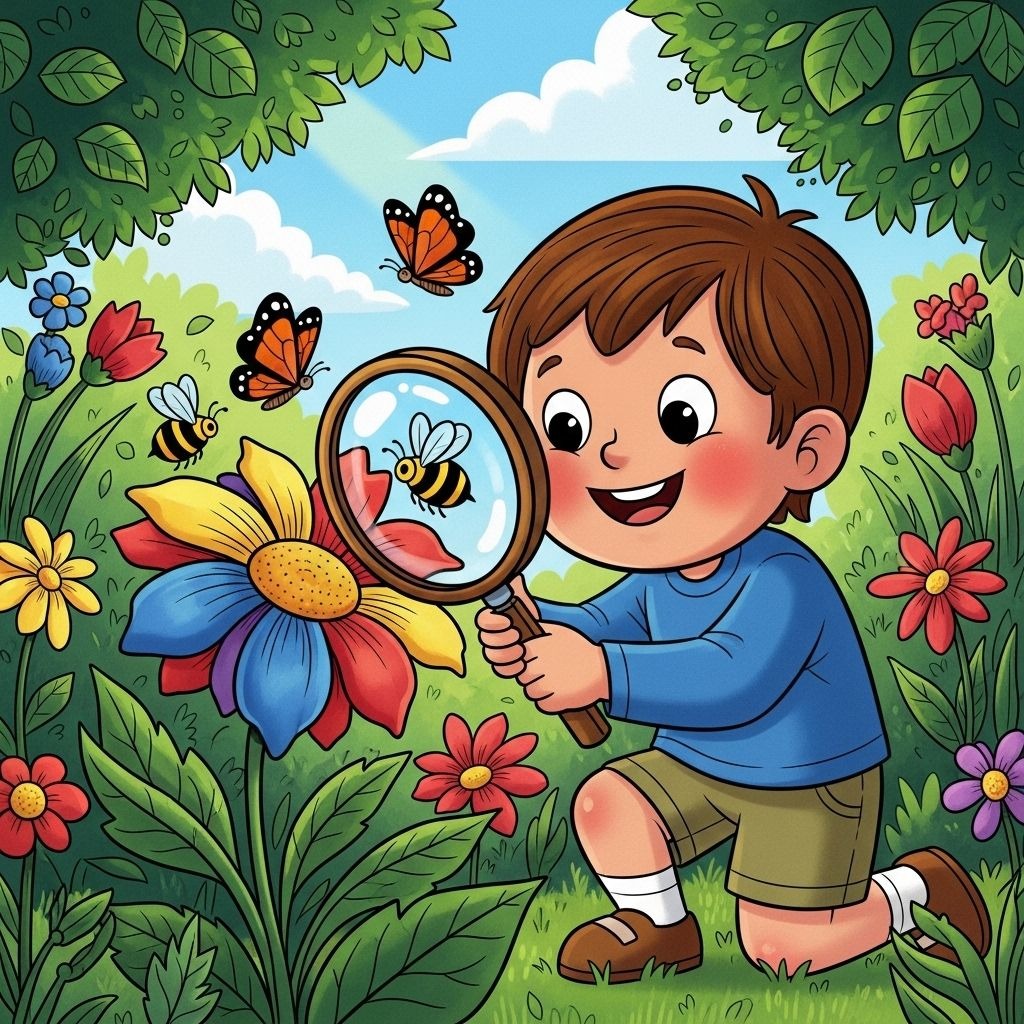
Here’s the master list I’ve built after doing this dozens of times with my own kids. Pick 10-15 items that make sense for your location and season:
Classic Nature Items:
- A yellow leaf
- A smooth rock
- A pinecone
- A feather
- A flower (make sure it’s okay to pick)
- Tree bark texture (let them do rubbings)
- A twig shaped like the letter Y
- Three different types of leaves
- An acorn
- A dandelion
- A worm or bug
- A spiderweb (just observe, don’t disturb)
- Moss
- A seed pod
- Something that fell from a tree
- Grass that’s taller than your hand
- A pebble small enough to fit in your pocket
- Animal tracks (look in mud or sand)
- Berries (look only, don’t eat)
- A cloud shaped like something
Sensory-Based Challenges:
These are genius because they work anywhere and get kids thinking differently:
- Something soft
- Something rough or spiky
- Something smooth
- Something that makes noise when you shake it
- Something that smells good
- Something shiny
- Something round
- Something sticky
- Something light enough to float
- Something heavy to carry
Seasonal Variations:
Spring: baby birds, blooming flowers, budding trees, puddles, robins
Summer: butterflies, bees, full green leaves, dandelion fluff, sun shadows
Fall: colorful leaves, acorns, pumpkins, cool-weather bugs, fallen branches
Winter: icicles, evergreen branches, animal tracks in snow, dried seedpods, winter birds
This is also perfect timing if you’re looking for summer activities for kids that don’t require constant supervision.
How to Set Up an Outdoor Scavenger Hunt in 10 Minutes
Let me walk you through exactly how I do this on busy mornings when I need to get the kids outside ASAP.
Grab your materials:
- Paper and pen (or print a list if you’re feeling fancy)
- Small bag or basket for collecting items
- Optional: clipboard, crayons, camera for photo hunts
If your kids like having supplies, I keep these kids’ activity books on hand for rainy days, but honestly, plain paper works perfectly fine.
Create your list in 3 minutes:
Look outside your window and write down 10-12 things you can actually see or know are out there. Don’t overthink it. If you see clouds, add “a cloud.” If there are flowers, write “a flower.” Match your list to your actual environment.
Set basic rules:
I learned this the hard way—establish boundaries before kids scatter. Tell them how far they can go, whether they can pick living things (we usually say no to flowers unless they’re dandelions), and to come back when they’ve found everything or after 30 minutes.
Add a twist for older kids:
If your kids are 7+, give them a time limit, turn it into a competition, or have them take photos instead of collecting items. My 6-year-old loves it when we race to see who can find 5 items first.
That’s it. Seriously. The whole setup takes less time than making breakfast, and the payoff is at least an hour of outdoor play.
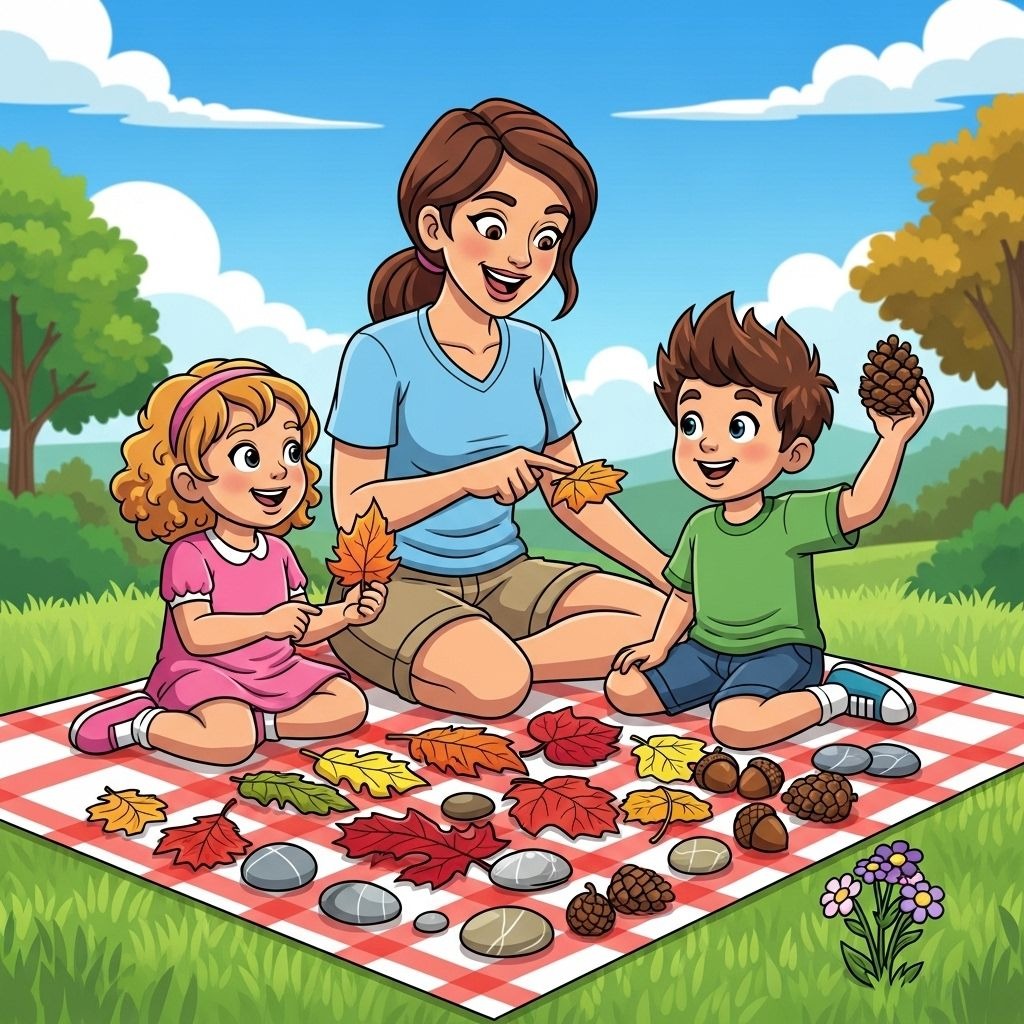
Creative Twists That Make It Even Better
After doing basic scavenger hunts a dozen times, I started adding variations to keep things interesting.
The Egg Carton Collection Box:
This is brilliant for younger kids. Grab an empty egg carton and write one item in each section—or draw pictures if they can’t read yet. Kids collect items and place them in the corresponding slots. It’s like a natural sorting activity and gives them something tangible to bring home and show off.
Photo Scavenger Hunts:
Give older kids a phone or camera (yes, I let my 8-year-old niece use my old phone) and have them photograph items instead of collecting them. This works great for things you can’t or shouldn’t pick, like birds, clouds, or someone else’s garden.
Texture Rubbings:
Bring paper and crayons outside and have kids do bark rubbings, leaf rubbings, or texture rubbings on different surfaces. It adds an art element that some kids really love.
Timed Challenges:
“How many different leaves can you find in 5 minutes?” Competition gets my kids moving faster than anything else.
Team Hunts:
If you have multiple kids or are doing this with friends, split them into teams. We did this at my daughter’s birthday party, and it was the most successful activity of the day. Speaking of parties, if you’re looking for more group activities, these scavenger hunt ideas for kids have tons of indoor and outdoor options.
Sound and Smell Hunts:
List things kids need to hear (a bird chirping, wind in the trees, a dog barking) or smell (fresh cut grass, flowers, dirt after rain). This works amazingly for kids who aren’t as interested in collecting physical objects.
For kids who love hands-on activities, pairing the hunt with these kids’ craft supplies afterward lets them turn their findings into art projects.
Age-Specific Modifications
Toddlers (Ages 2-4):
Keep it super simple with 5-7 items max. Use pictures instead of words. Stay close and turn it into a together activity rather than sending them off alone. Point and say, “Can you find a rock? Let’s look together!” Focus on big, easy-to-spot items like clouds, grass, and flowers.
Preschool/Kindergarten (Ages 4-6):
This is the sweet spot age. They can handle 10-12 items and love the independence of finding things on their own (while you watch from the porch with coffee). Include some items that require a tiny bit of searching—not just things in plain sight. Add one or two “bonus challenge” items to keep them engaged longer.
Elementary Age (Ages 6-10):
These kids can handle complex lists, reading clues, and timed challenges. Add educational elements like “find three types of leaves and tell me how they’re different.” Include photo challenges or items that require problem-solving. Let them create their own lists for siblings or friends.
Tweens (Ages 10+):
At this age, the key is making it feel less “babyish.” Frame it as a photography challenge, a nature journal expedition, or a competitive race. Let them design the hunt for younger siblings. Add items that require real observation skills, like identifying specific tree species or finding evidence of animal activity.
I also love combining scavenger hunts with other activities. After a successful hunt, we sometimes do easy baking recipes for kids using things we found, like making dandelion tea or decorating cookies with nature stamps.
The Mistakes I Made (So You Don’t Have To)
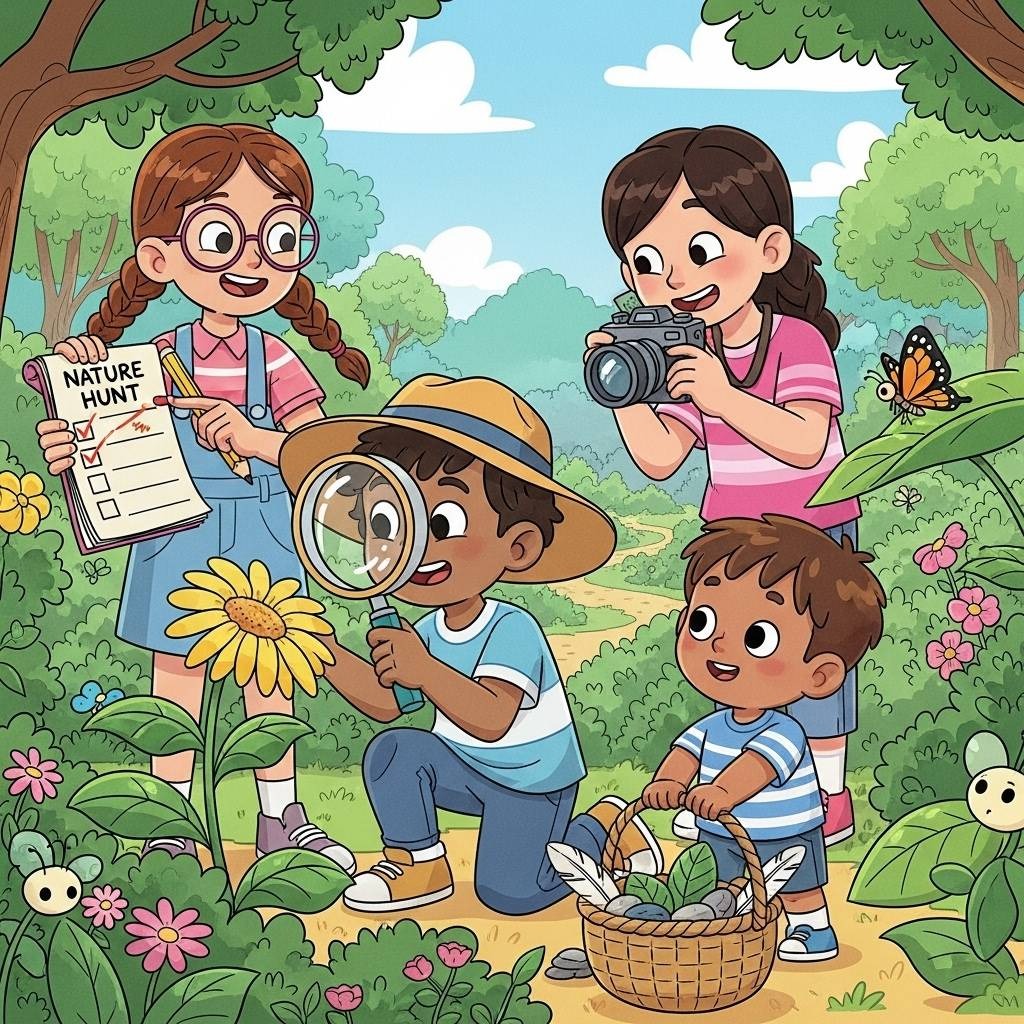
Let me save you some frustration by sharing what didn’t work for me.
Making it too complicated: My first attempt involved elaborate clues, a map, and color-coded sections. My kids were confused and frustrated within 5 minutes. Keep it simple, especially the first few times.
Not considering the season, I once created a hunt in March that included “butterflies” and “flowers.” We found exactly zero of either, and my kids felt like failures. Match your list to what’s actually available right now.
Forgetting snacks and water: An hour into a hunt, my kids got hungry and cranky. Now I always bring water bottles and a snack in my pocket. These reusable snack containers for kids are perfect for carrying treats on outdoor adventures.
Setting unrealistic expectations: I expected my kids to find every single item perfectly. Some days they find 8 out of 12 items, and that’s totally okay. The point is exploring, not completing a perfect checklist.
Sending them out alone too soon: My 4-year-old wasn’t ready to hunt independently. She needed me nearby for encouragement and help identifying items. Don’t push independence before they’re ready.
Not having a plan for after: The hunt ended, kids were energized, and I had nothing planned next. Now I always have a follow-up activity ready, even if it’s just “help me make lunch.”
What to Do After the Hunt
The hunt is over, but the learning doesn’t have to stop. Here’s what we do with our collection:
Count and sort: “How many leaves did you find? Let’s group them by color. Which pile has more?” This sneaks in math practice without it feeling like work.
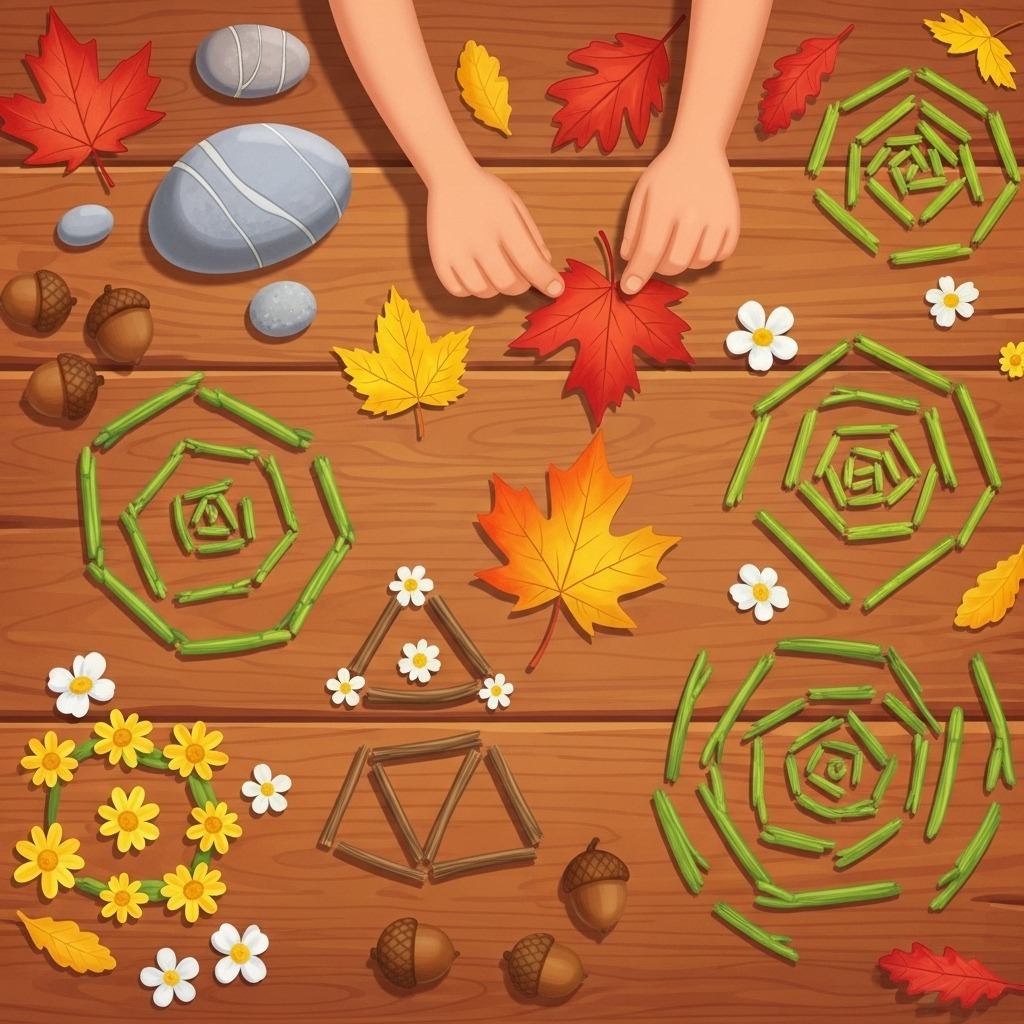
Create a nature display: We arrange items on a plate or in an egg carton and leave them on the table for a few days. Kids love showing visitors what they found.
Nature journaling: Older kids can draw or press their findings in a notebook, write where they found each item, and date it. Over time, it becomes a cool record of your outdoor adventures.
Return items to nature: For living things like bugs or worms, we observe them briefly and return them to where we found them. It’s a good lesson in respecting nature.
Extend the activity: “Can you count how many different colors we found? Let’s organize them from smallest to largest.” For more ideas on keeping kids engaged, check out these activities to do with kids that build on outdoor exploration.
Some families even turn their findings into craft projects using kids’ craft supplies to make nature collages or mobiles.
Making This a Regular Thing
The first time we did an outdoor scavenger hunt, it was a one-time desperation move. But then my kids asked to do it again the next day. And the day after that.
Now it’s part of our weekend routine. Sometimes we do a quick 15-minute version before dinner on weeknights. Sometimes we make it an all-morning event with snacks and extended exploration. The flexibility is what makes it work for real life.
I keep a running list on my phone of scavenger hunt items so I’m never scrambling for ideas. When we’re heading to a new park or visiting family in a different state, I quickly customize the list for that environment.
For families who enjoy structured outdoor time, combining scavenger hunts with outdoor games for kids creates a full afternoon of screen-free fun. And if the weather doesn’t cooperate, we have scavenger hunt clues for kids ready for indoor versions.
If your kids love this type of activity, these board games for kids offer similar problem-solving fun for rainy days when you can’t get outside.
Why This Works When Other Things Don’t
I’ve tried so many ways to get my kids outside—suggesting they “go play,” buying expensive outdoor toys that got used once, planning elaborate nature walks that ended in whining. None of it stuck.
The reason outdoor scavenger hunts work is that they give kids a clear purpose. Instead of wandering aimlessly, they have a mission. Instead of hearing “go outside because I said so,” they’re going outside because there’s something specific and exciting to accomplish.
It also works because it meets kids where they are developmentally. The same basic activity adapts for a 3-year-old and a 10-year-old. You’re not buying something they’ll outgrow in six months.
And honestly? It works because it’s low-pressure for parents. You don’t need to be out there entertaining them every second. You can sit on the porch, supervise from a distance, and let them do the work of exploring and discovering.
According to child development experts at Raising Children Network, unstructured outdoor play is crucial for developing observation skills, problem-solving, and independence. An outdoor scavenger hunt provides just enough structure to engage kids while still allowing for open-ended exploration and discovery.
FAQ
How long does an outdoor scavenger hunt typically take?
Most hunts last between 30 minutes to an hour, depending on your list length and your child’s age. Toddlers might be done in 15-20 minutes, while older kids can stay engaged for 90 minutes or more if they’re really into it. I usually aim for 45 minutes as a sweet spot.
What if my child can’t find all the items on the list?
That’s completely normal and okay! The goal is exploration and fun, not perfection. Sometimes items aren’t available due to season or location. We celebrate whatever they do find and talk about why certain things might not be visible that day. You can also bring the list back another day and try again.
Can you do outdoor scavenger hunts in winter?
Absolutely! Just adapt your list to winter items: icicles, evergreen branches, pinecones, animal tracks in snow, dried seed pods, winter birds, bare tree branches, frost patterns, or different types of ice. Bundle kids up and keep the hunt shorter if it’s very cold. Winter hunts can be just as engaging as summer ones.
What’s the best age to start outdoor scavenger hunts?
Kids as young as 2 can participate with heavy parental involvement and very simple lists (3-5 items with pictures). Ages 4-8 are the sweet spot where kids can do hunts more independently but still find them exciting. Even tweens and teens enjoy them if you frame it right—think photography challenges or timed competitions.
How do I keep kids from fighting during a scavenger hunt?
Give each child their own list and collection bag so they’re not competing for the same items. For families with multiple kids, you can create team hunts where siblings work together, or separate hunts with different lists and routes. Setting clear rules before starting helps: “Everyone finds their own items, we don’t take things from others’ bags.”
An outdoor scavenger hunt isn’t going to solve every parenting challenge or magically make your kids nature-lovers overnight. But it might just give you an hour of peace while they’re happily occupied, learning without knowing it, and building memories of childhood adventures.
The next time you’re facing a long Saturday afternoon, screen-time guilt, or just need to get everyone outside for a bit, try it. Write down 10 things on a piece of paper, hand it to your kids, and see what happens. You might be surprised at how something so simple creates so much joy.
And who knows? You might even enjoy joining the hunt yourself.