
I’ll never forget the Sunday night my ex dropped the kids off at 9:47 p.m. instead of 6:00 p.m.—for the third week in a row. My daughter had school the next morning, her lunch wasn’t packed, and she still needed a bath. I was furious, exhausted, and completely done with the “we’ll just figure it out as we go” approach we’d been trying since the separation.
That night, I realized something: winging co-parenting wasn’t just stressful for me—it was confusing and unfair to my kids. They deserved consistency. I deserved boundaries. And honestly? We both needed a parenting plan that examples could guide us through.
If you’re navigating custody, co-parenting, or just trying to create some structure after a breakup, you’re in the right place. I’m sharing real parenting plan examples that work for real families—including the one that finally brought peace to our household.

What Is a Parenting Plan? (And Why You Need One ASAP)
A parenting plan is basically a written agreement that spells out how you and your co-parent will raise your kids after separation or divorce. Think of it as your roadmap for who has the kids when, how you’ll make decisions together, and how you’ll handle everything from holidays to doctor’s appointments.
Some people call it a custody schedule or a time-sharing agreement, but the idea is the same: it’s a plan that keeps everyone on the same page. And trust me, having it in writing saves so many arguments.
You need a parenting plan if you’re separated, divorced, or never married to your child’s other parent and you’re sharing custody in any way. Even if you’re on great terms right now, life changes—people move, remarry, or have different ideas about parenting as kids grow. A solid plan protects everyone. If you’re exploring different approaches to raising kids together, you might also find insights in our guide to soft parenting, which can complement how you communicate in your plan.
Most family courts require a parenting plan before finalizing any custody arrangement, but honestly, you don’t need to wait for a judge to tell you to make one. The sooner you have a clear schedule, the sooner your kids feel secure.
The 7 Most Popular Parenting Plan Examples
Let me walk you through the most common custody schedules I’ve seen work for families. Some of these I tried myself, and others came highly recommended by friends, mediators, and even my family law attorney. The key is finding one that fits your work schedule, your kids’ needs, and your co-parenting relationship.
1. Alternating Weeks Schedule
This is the simplest parenting plan example out there. Your child spends one full week with you, then one full week with the other parent. The exchange usually happens on Sunday evening or Monday morning before school.
Pros: Super easy to remember, gives both parents equal time, and reduces the number of transitions.
Cons: Younger kids might struggle with going a full week without seeing the other parent.
I tried this when my daughter was 8, and it worked beautifully. She got into a routine at each house and didn’t feel like she was constantly packing a bag. But when we tried it with my son at age 4, he missed his dad too much by day five. Age really matters with this one.

2. The 2-2-3 Rotation
This schedule has your child spending two days with one parent, two days with the other, then three days with the first parent—and it flips each week. For example: Monday-Tuesday with Parent A, Wednesday-Thursday with Parent B, Friday-Sunday with Parent A. The next week, Parent B gets Monday-Tuesday, and so on.
Pros: Your kids see both parents multiple times a week, which is great for younger children.
Cons: Lots of transitions can be exhausting for everyone, especially if you don’t live close to each other.
This worked for my friend Sarah, who lives ten minutes from her ex. Her kids (ages 3 and 5) never went more than two days without seeing both parents, which kept the anxiety low. But if you’re doing long drives between houses, this might feel like too much back-and-forth.
3. The 3-4-4-3 Schedule
With this parenting plan example, one parent has the kids for three days, then the other has them for four days, followed by four with the first parent, then three with the second. It rotates every two weeks.
Pros: Still provides frequent contact with both parents while giving slightly longer stretches in each home.
Cons: The schedule can feel complicated to track at first.
This one takes a little getting used to, but once you map it out on a calendar, it clicks. It’s a good middle ground if the 2-2-3 feels too chaotic, but alternating weeks feel too long.
4. The 2-2-5-5 Plan
Here’s how this one works: Your child spends two days with one parent (usually Monday-Tuesday), two days with the other (Wednesday-Thursday), then five days with the first parent (Friday-Tuesday), followed by five days with the second parent. It creates a rhythm where each parent gets a long weekend every other week.
Pros: Predictable and balanced, with built-in longer stretches for special activities or travel.
Cons: Still requires frequent exchanges, which can be hard if communication is tense.
I personally love this schedule because it gives you that every-other-weekend vibe while still keeping both parents involved during the week. Plus, you can plan weekend activities without constantly checking the calendar. If you’re looking for fun things to do on your weekends with the kids, check out our list of activities to do with kids for inspiration.
5. Alternating Weekends with Midweek Visits
This is one of the most traditional parenting plan examples. One parent has the kids most of the time (usually Sunday evening through Friday), and the other parent gets alternating weekends (Friday after school through Sunday evening) plus one midweek visit (like Wednesday evening for dinner).
Pros: Provides stability with one primary home while maintaining a relationship with the other parent.
Cons: The non-custodial parent might feel like they’re missing out on day-to-day life.
This schedule works well if one parent travels a lot for work or if the parents live farther apart. It’s also common when there’s a significant conflict level, and fewer transitions mean fewer chances for disagreement. For more on managing different parenting approaches, our parenting styles chart breaks down how different methods can coexist.
6. 70/30 Split Schedule
A 70/30 custody schedule means one parent has the kids 70% of the time, and the other parent has them 30% of the time. This often looks like every other weekend plus one or two weeknights for the non-custodial parent.
Pros: Clear primary residence, great for school consistency, and works when one parent has a demanding job.
Cons: The parent with less time might feel disconnected.
This was my reality for the first year after my separation. I had my kids 70% of the time because my ex traveled for work. It wasn’t perfect, but it kept the kids’ school routine stable. We made it work by using FaceTime calls on off nights and being flexible when his schedule allowed extra time.
7. Every Extended Weekend
With this parenting plan example, one parent has the kids during the week, and the other parent has them every weekend—or every other weekend, but extended from Thursday after school through Monday morning drop-off.
Pros: Maximizes weekend quality time for the non-custodial parent.
Cons: Can interfere with kids’ weekend activities and friend time.
I’ve seen this work best for parents who live in different school districts or when one parent works weekends. It keeps weekday routines simple while giving the other parent meaningful time.
Age-Specific Parenting Plans
Not every schedule works for every age. What made sense for my 9-year-old was a disaster for my toddler. Here’s what I learned about matching parenting plan examples to your child’s developmental stage.
Babies and Toddlers (Birth to 3 Years)
At this age, kids need frequent contact with both parents to maintain attachment, but they can’t handle long separations. Most experts recommend short, frequent visits rather than overnight stays for very young babies.
Example: Parent A has the baby most of the time, Parent B gets two or three daytime visits per week (2-4 hours each) plus one overnight once the baby is sleeping through the night.
As your child gets closer to age 2 or 3, you can gradually increase overnights. My son started with just daytime visits, then moved to one overnight a week, then two. By age 3, we were doing a 2-2-3 schedule, and it worked great.
Preschoolers (3 to 5 Years)
Preschoolers can handle more time away from their primary caregiver, but they still need consistency and routine. They thrive on knowing what to expect.
Example: A 2-2-3 or 3-4-4-3 schedule works well because they see both parents multiple times a week, but also get a few days to settle into each home.
If your preschooler is in daycare or preschool, make sure both parents are involved in drop-offs and pick-ups when possible. It helps them feel connected to both of you. And don’t forget to keep bedtime and mealtime routines similar between houses—it reduces anxiety. Having a set of toddler board games at each house helped my kids feel at home in both places and gave us something fun to do together during transitions.
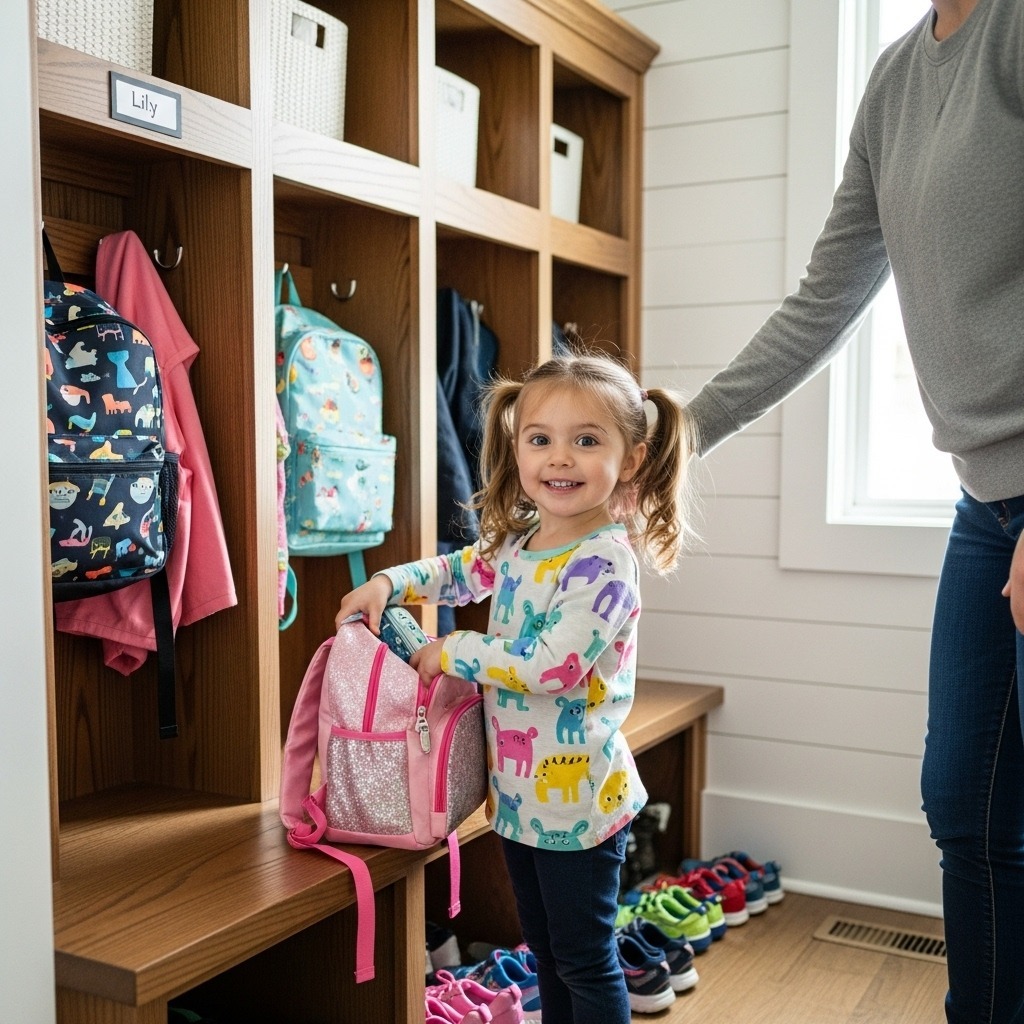
School-Age Kids (6 to 12 Years)
Once your kids are in elementary or middle school, their schedules get busier with activities, sports, and friends. Your parenting plan needs to accommodate their social lives, not just your convenience.
Example: Alternating weeks or a 2-2-5-5 schedule tends to work well because it provides stability during the school week while maintaining equal time with both parents.
This is the age where you’ll need to coordinate who’s taking them to soccer practice, who’s packing snacks for the scavenger hunt for kids outside, and who’s handling homework nights. Clear communication is everything. I started using a shared Google Calendar, and it saved my sanity.
I also learned to pack matching lunch boxes and snack containers for both houses. It sounds small, but having the same leak-proof containers at Dad’s house and Mom’s house eliminated the constant “I left my lunchbox at your place” texts. My kids knew exactly where their stuff was, no matter which house they woke up in.
Teens (13+)
Teenagers want a say in the schedule. They have jobs, sports, dating, friend groups, and a strong desire for independence. Your parenting plan needs to be flexible enough to respect their growing autonomy while maintaining structure.
Example: Alternating weeks or even a more flexible arrangement where the teen has input on the schedule (within reason).
I’ve learned to check in with my daughter before finalizing plans. If she has a big game or a friend’s birthday party, we adjust. That doesn’t mean she gets to skip her dad’s time entirely, but it does mean we’re realistic about her life. Teens will resist a rigid schedule if it feels like it’s controlling them.

What to Include in Your Parenting Plan
A parenting plan is more than just a custody schedule. Here’s what you need to cover to avoid future arguments (trust me on this).
Regular Schedule
Spell out exactly when your child is with each parent. Don’t just say “every other weekend”—say “Friday at 5:00 p.m. through Sunday at 6:00 p.m.” The more specific, the better. Include who does pick-up and drop-off, and where the exchange happens.
Holidays and Special Occasions
This was the part I forgot the first time, and it bit me hard. You need to decide how you’ll handle Thanksgiving, Christmas, spring break, birthdays, Mother’s Day, Father’s Day, and any other holidays that matter to your family. Will you alternate? Split the day? Trade years? Write it down.
During our first holiday season after separation, we made the mistake of not planning ahead. Both my kids were disappointed because we spent more time arguing about logistics than actually enjoying the day. Now we plan months in advance, and we even picked up some holiday activity sets that the kids can do at whichever house they’re at during the holidays. It gives them something festive to look forward to, regardless of the custody schedule.
Vacation Time
Each parent should get uninterrupted vacation time with the kids. We do two weeks each in the summer, plus one week during winter break. Make sure you include how much notice you need to give, and whether the other parent gets makeup time.
Decision-Making Authority
Who decides about school, medical care, extracurricular activities, and religious upbringing? In most joint custody situations, you’ll make major decisions together. But you should also clarify who handles day-to-day stuff like haircuts, playdates, and what they eat for dinner (hint: the parent who has them that day).
Communication Methods
How will you stay in touch with the kids? Daily texts? Weekly phone calls? A co-parenting app? We use a shared online calendar plus a weekly check-in call on Sundays. It keeps us aligned without constant back-and-forth.
Transportation and Exchanges
Who picks up and drops off? Where does the exchange happen? (School, home, a neutral location?) What if someone’s running late? We agreed that school is the default exchange point during the week, and we meet at a local park on weekends. It’s neutral ground, and the kids can burn off energy before the car ride.
My Biggest Mistakes (So You Don’t Make Them)
Let me save you some headaches by sharing what went wrong for me in the early days.
Not Being Specific Enough
Our first parenting plan said “weekends with Dad.” That’s it. No times, no clarification on what counts as a weekend. Is Friday night part of the weekend? Does Sunday end at 5:00 p.m. or 7:00 p.m.? We fought about it constantly until I finally hired a mediator to help us rewrite it.
Forgetting About Holidays
We didn’t plan for holidays, and our first Thanksgiving was a nightmare. Both of us assumed we’d have the kids. Now we alternate major holidays, and it’s in writing.
Ignoring the Kids’ Activities
I didn’t think about my son’s soccer schedule when we made the plan. Then his games kept falling on his dad’s weekends, and my ex never took him. My son was heartbroken. Now we include a provision that says the parent with custody during activities must take the child unless they give 48 hours’ notice. Keeping kids engaged in healthy activities is crucial—our post on fun outdoor activities for kids has great ideas that both parents can incorporate into their time.
Not Planning for Flexibility
Life happens. Kids get sick, parents have work emergencies, and family events pop up. Our plan now includes language about being flexible and communicating changes at least 24 hours in advance when possible. It’s saved us so much stress.
How to Choose the Right Schedule for Your Family
Here’s the truth: there’s no one-size-fits-all parenting plan. What worked for my neighbor’s family might be a disaster for yours. Here’s how to choose.
Consider Work Schedules
If one parent works nights or travels frequently, an alternating-weeks schedule might not make sense. Be realistic about your availability.
Factor in the Distance Between Homes
If you live an hour apart, frequent transitions (like a 2-2-3 schedule) will be exhausting. Choose a schedule that minimizes driving.
Think About Your Kids’ Temperament
Some kids adapt easily to change, and others need a serious routine. My daughter is flexible and handled transitions well. My son needed more consistency and struggled with constant back-and-forth. You know your kids best.
During the adjustment period, I found that having quiet activities ready helped both my kids decompress after transitions. We kept activity books and workbooks at both houses so they had something familiar and calming to do when they first arrived. It became part of our “settling in” routine.
Account for Conflict Level
If you and your co-parent communicate well, a schedule with frequent exchanges can work. If every conversation turns into a fight, minimize contact points and use email or a co-parenting app instead.
And remember: your parenting plan can evolve. Start with something that feels manageable, and adjust as your kids grow or circumstances change. The American Academy of Pediatrics has excellent guidance on how to support children after separation or divorce, emphasizing that children do best when both parents remain positively involved and maintain consistent rules across homes.
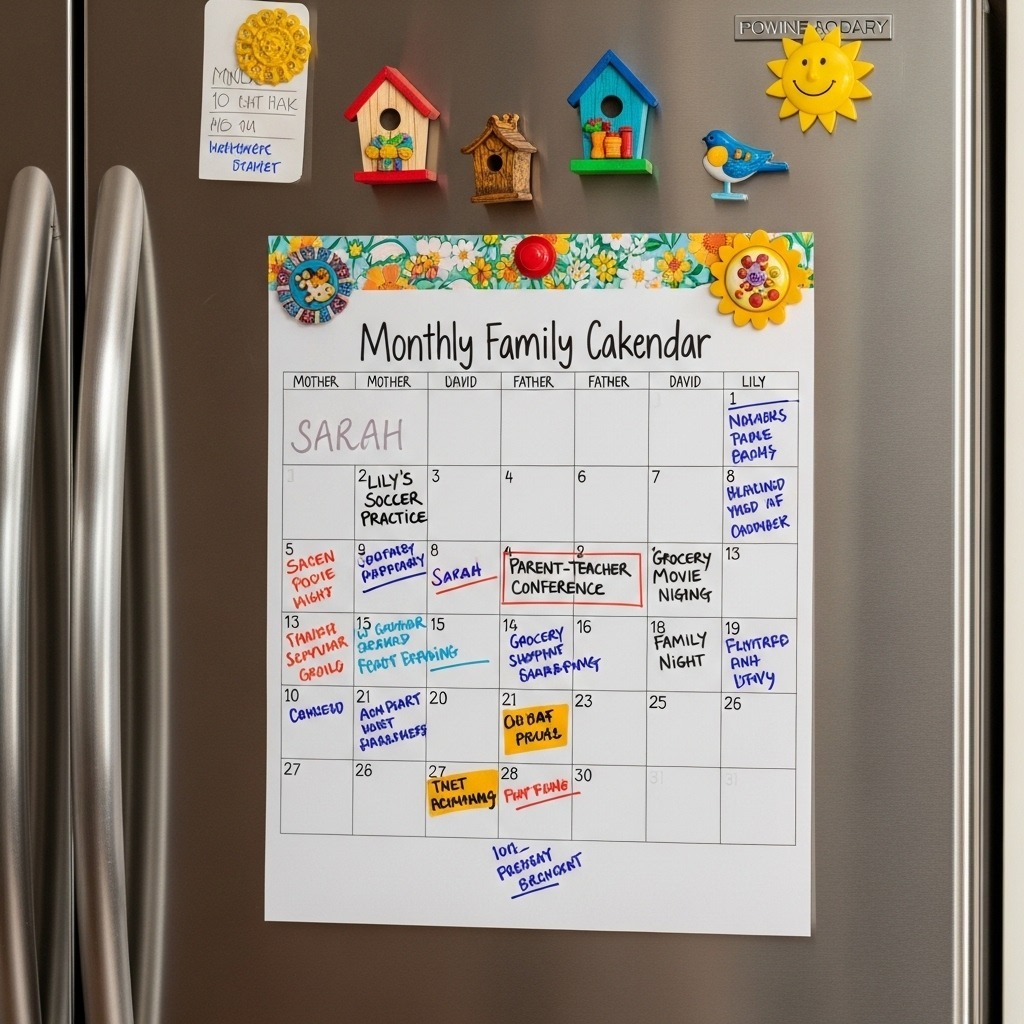
Making It Official
Once you’ve chosen a parenting plan example that works for your family, you need to make it official—especially if you’re going through a legal separation or divorce.
Working with Lawyers vs. Mediators
You don’t necessarily need a lawyer to create a parenting plan, but it helps to have someone review it. I used a mediator, and it cost a fraction of what two separate attorneys would have charged. A mediator helps you negotiate and draft the plan together, which worked for us because we could still communicate.
If your situation is high-conflict or involves safety concerns, a lawyer is a better choice. They’ll advocate for your interests and make sure the plan protects your kids. During this stressful time, I found it helpful to read some parenting books that addressed co-parenting after divorce. They gave me language to use during mediation and helped me stay focused on what mattered most—my kids’ wellbeing.
Court Approval Process
In most states, your parenting plan needs to be submitted to the court and approved by a judge. The judge will review it to make sure it’s in the best interest of your children. If both parents agree on the plan, approval is usually straightforward.
When to Revise Your Plan
Life changes. Kids grow. Jobs change. Relationships evolve. Your parenting plan should be revisited whenever there’s a significant change in circumstances. We’ve revised ours twice—once when I went back to work full-time, and again when my ex moved closer.
Most plans include a clause about how to handle modifications. Ours says we’ll try to agree on changes ourselves first, and if we can’t, we’ll go back to mediation before heading to court.
And here’s something I didn’t expect: as my kids got older, they started having opinions about the schedule. We didn’t let them make the final call, but we did listen. Considering children’s preferences as they mature made our plan feel more collaborative and less forced.
You’ve Got This, Mama
Creating a parenting plan can feel overwhelming—believe me, I cried more than once during the process. But having a clear, written agreement has saved my sanity, protected my kids’ routines, and honestly made co-parenting so much easier.
Start with one of these parenting plan examples, adjust it to fit your family’s unique needs, and remember: you can always revise it as life changes. Your kids will benefit from the structure, and you’ll sleep better knowing everyone’s on the same page.
If you’re still figuring out what co-parenting style works for you, I recommend checking out the best parenting books for more guidance on navigating this journey with grace. You’re doing an amazing job, even on the hard days.
Frequently Asked Questions
What is a 50/50 parenting plan example?
A 50/50 parenting plan gives each parent equal time with the children. Common examples include alternating weeks, the 2-2-3 schedule, or the 2-2-5-5 rotation. The goal is to split custody evenly while considering your kids’ ages, school schedules, and both parents’ work commitments. It works best when parents live close to each other and can communicate well about logistics.
Can I create a parenting plan without going to court?
Yes! Many parents create parenting plans through mediation or even on their own if they can agree on terms. However, to make it legally enforceable, you’ll need to submit it to the court for approval, especially if you’re going through a divorce or a formal custody case. Having it court-approved means you have legal recourse if the other parent doesn’t follow the plan.
At what age can a child decide which parent to live with?
This varies by state, but generally, courts start considering a child’s preference around age 12 to 14. However, the child doesn’t get to make the final decision—the judge does, based on what’s in the child’s best interest. Younger children’s preferences may be considered, but they carry less weight. The older and more mature the child, the more their opinion matters.
How do I handle holidays in a parenting plan?
The best approach is to alternate major holidays each year. For example, Mom gets Thanksgiving in even years, Dad gets it in odd years, and vice versa for Christmas. You can also split the holiday if you live close to each other—one parent gets Christmas Eve, the other gets Christmas Day. Always specify exact times and include who handles transportation.
What if my co-parent won’t follow the parenting plan?
If your co-parent consistently violates the court-approved parenting plan, document every instance with dates and details. Try to address it through direct communication or mediation first. If that doesn’t work, you can file a motion for contempt with the family court. The judge can enforce the plan and, in serious cases, modify custody or impose penalties.