

I’ll never forget the day I realized I was having the same boring conversation with my six-year-old every single afternoon. I’d pick him up from school, eagerly asking, “How was your day?” and he’d mumble “fine” while staring out the window. That was it. No stories, no details, nothing. I’d try to dig deeper with “What did you do?” and get a shoulder shrug in return. It was like pulling teeth, and honestly, it made me feel like the most disconnected mom on the planet.
The truth hit me one afternoon when my son came home bursting with a story about how his friend brought a pet lizard for show-and-tell—but he hadn’t told me about it until three days later when I happened to ask the right question. That’s when I knew I needed better questions to replace “how was your day?” to get more from your child. Turns out, the problem wasn’t my kid—it was my question.
Why “How Was Your Day?” Falls Flat Every Time
Here’s the thing about asking “how was your day?” that I didn’t realize until my second kid started preschool: it’s actually an overwhelming question for a child’s developing brain. Think about it—we’re asking them to mentally review their entire day, sort through dozens of moments, decide what’s important, and then find the words to express it all. That’s a lot for a tired kindergartner who just spent seven hours being “on” at school.
Child development experts explain that young children’s brains are still learning how to recall specific details and organize memories in a linear way. When we ask such a broad, open-ended question, their brain basically short-circuits and defaults to the easiest possible answer: “good” or “fine”. It’s not that they’re being difficult—they genuinely don’t know where to start.
Plus, many kids need time to decompress after school before they can muster the energy to have a real conversation. They’ve been following rules, focusing on tasks, and managing social dynamics all day. The last thing they want is to feel interrogated the second they see you.

The Secret Sauce: What Actually Gets Kids Talking
After months of trial and error (and reading every parenting article I could find), I discovered a few game-changing strategies that transformed our after-school conversations. First, timing is everything. Instead of ambushing my kids the second they hop in the car, I wait until we’re home, they’ve had a snack, and they’re in a relaxed mood. Sometimes our best conversations happen at bedtime or while we’re preparing dinner together using our kids’ baking and cooking sets—when their guard is down and they’re not feeling pressured.
The second secret? Get specific. Instead of asking about their entire day, I zoom in on particular moments. “What game did you play at recess?” is so much easier for a child to answer than “How was school?” They can picture that one specific moment and tell you about it.
I also learned to share my day first. When I started telling my kids funny or interesting things that happened to me at work or while running errands, they naturally became more interested in sharing their own stories. It’s that whole “model the behavior you want to see” thing that we hear about all the time, and it actually works.
One more trick: know their schedule. When you’re familiar with what generally happens during their day—like choice time, art class on Wednesdays, or PE on Fridays—you have a natural starting point for questions. “What station did you pick during choice time today?” is way more effective than a vague “What did you learn?”
40+ Questions That Actually Get Real Answers
Okay, here’s the good stuff—the actual questions to replace “how was your day?” to get more from your child. I’ve organized them by category so you can pick the ones that fit your kid’s personality and mood. Some of these are silly, some are serious, but they all work way better than “how was your day?”
Questions About Fun, Friends & Social Stuff
These are my go-to questions because kids usually light up when talking about their friends and fun moments.
- What made you laugh the hardest today?
- Who did you sit with at lunch?
- What games did you play at recess?
- Who made you smile today?
- Did anyone do anything silly that cracked everyone up?
- Who brought the best lunch today, and what was it?
- What’s the most popular game at recess right now?
- Who do you want to be friends with but haven’t really talked to yet?
- Did you play with anyone new today?
- If you could pick anyone to sit next to tomorrow, who would it be?
My eight-year-old especially loves the “who brought the best lunch” question—it always leads to hilarious descriptions of someone’s elaborate bento box or the kid who traded his sandwich for three cookies.
Questions About Learning, Challenges & Proud Moments
These questions help kids reflect on their academic day without feeling like you’re quizzing them.
- What’s something you know today that you didn’t know yesterday?
- What was the hardest thing you had to do today?
- When did you feel most proud of yourself?
- What challenged you today?
- What new fact did you learn that surprised you?
- Can you teach me something you learned today?
- What questions did you ask at school today?
- What rule was the hardest to follow today?
- Tell me about a time you felt confused. Did you ask for help?
- What’s something you want to learn before the school year ends?
These questions double as a way to check in on their learning without making it feel like homework. If you want even more ways to engage with your child’s learning journey, check out conversation starters for kids for additional ideas.

Questions About Feelings & Emotional Moments
Getting kids to open up about feelings can be tricky, but these questions make it easier.
- Did anything make you feel frustrated today?
- What made you feel happy today?
- Did anything surprise you today?
- Was there a moment when you felt sad or left out?
- Did anyone push your buttons today?
- What would you rate your day on a scale of 1 to 10? Why?
- If you could change one thing about your day, what would it be?
- Did you ever feel unsafe or worried?
- What’s something that made you think today?
- How did your day make you feel overall?
These emotional check-in questions have honestly helped me catch small problems before they became big ones. Last month, my daughter mentioned feeling “a little worried” about a kid who kept cutting in line, and we were able to address it with her teacher before it escalated.
Creative & Silly Questions (Kids Love These!)
Sometimes you just need to get weird with it. These questions always make my kids giggle and actually produce the most detailed answers.
- Which one of your teachers would survive a zombie apocalypse? Why?
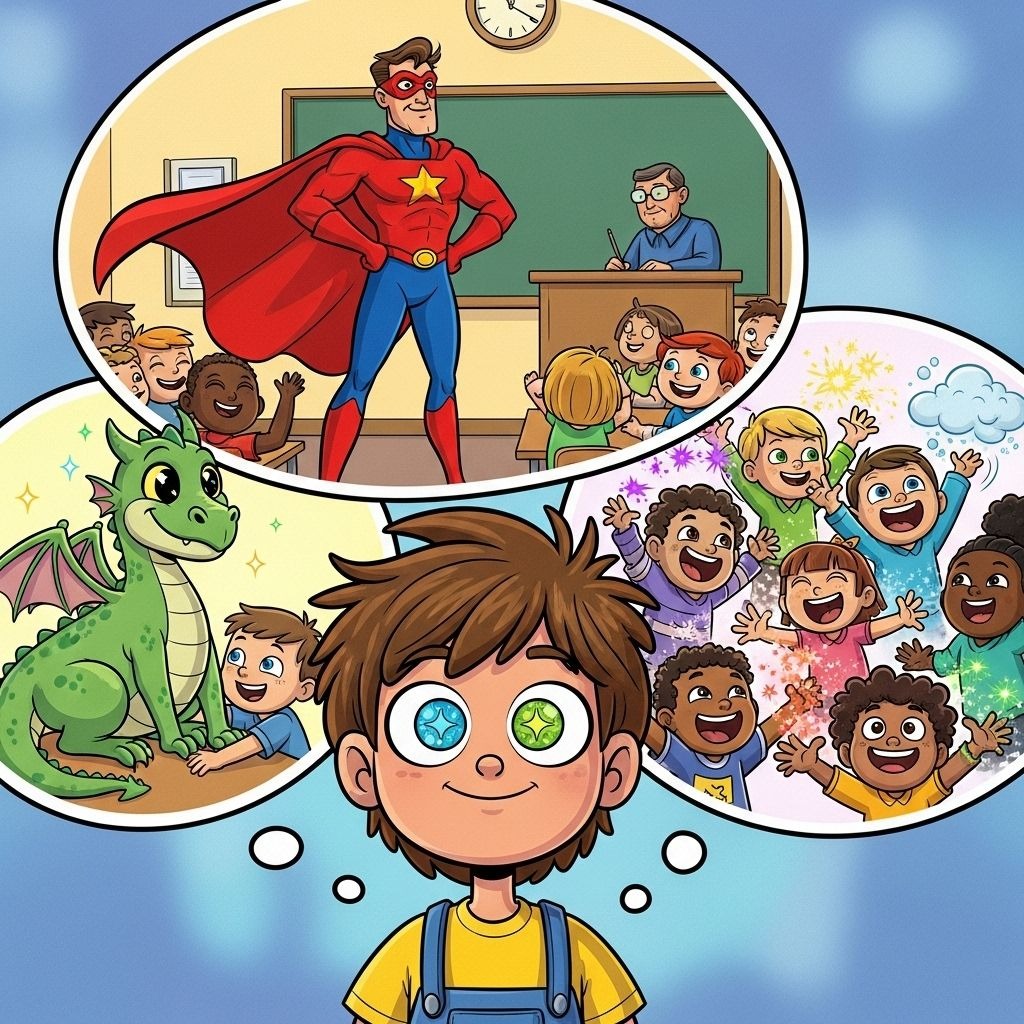
- What superpower would have come in handy today?
- If school were a ride at the fair, which ride would it be?
- If you could magically transform your school for a day, what would it look like?
- If your lunch could talk, what would it say?
- If aliens came to school and beamed up three kids, who do you wish they’d take?
- If you were the teacher for a day, what would you teach?
- If you could have any animal as a classroom pet, what would it be?
- Which person in your class is your exact opposite?
- Does your teacher remind you of anyone else you know?
My personal favorite is the zombie apocalypse teacher question—it led to a 20-minute debate between my kids about whether speed or strategy matters more in survival situations. Educational and entertaining!
Questions About Kindness, Helping & Character
These questions reinforce positive values while getting kids to share meaningful moments.
- What’s the nicest thing you did for someone else today?
- Did you help anyone today, or did someone help you?
- Can you tell me about a time you shared today?
- Who filled your bucket today, and how?
- Did you tell anyone thank you today?
- What’s one thing you did today that was helpful?
- Can you tell me about the kindness you saw or showed?
- Was there an example of unkindness that bothered you?
- Who inspired you today?
- What’s something nice someone did for you?
These questions tie in beautifully with positive parenting principles and help kids develop emotional intelligence. When my son talks about helping a classmate who dropped their lunch tray, I can tell it makes him feel proud of himself—and that positive reinforcement encourages more of that behavior.
Having tools like kids’ activity books and workbooks on hand can also give you structured conversation starters when you need them, especially for younger kids who benefit from visual prompts.
Age-Specific Tips: What Works for Different Stages
Preschool & Kindergarten (Ages 3-6)
Little ones need even more specific questions because their recall abilities are still developing. Instead of asking about their whole day, focus on one specific activity or moment.
Try: “What color paint did you use in art today?” or “What snack did you have?” Keep questions simple and concrete. Also, be patient—sometimes they need to decompress with quiet play before they’re ready to chat.
Visual aids help too. When my daughter was in preschool, looking through board games for kids or playing with toys while talking made it easier for her to open up. The physical activity seemed to unlock her memory.
Elementary Years (Ages 6-11)
This is the sweet spot for most of the questions on this list. Elementary kids have better recall and verbal skills, but they can still be selective about what they share. Mix serious questions with silly ones to keep them engaged.
I’ve found that the best conversations happen during activities—while shooting hoops with our kids, soccer goals for the backyard, or playing bean bag toss games. Something about moving their bodies helps them open up.
Also, this age group loves rating scales and comparison questions. “Was today better than yesterday?” or “What would you rate your day 1-10?” gives them a framework that feels manageable.
Middle School & Beyond (Ages 12+)
Tweens and teens can be tougher nuts to crack, but don’t give up. They need even more space and less pressure. Car rides are golden for this age—they don’t have to make eye contact, and there’s a natural time limit to the conversation.
Questions that put them in the expert position work well: “What do you think about…?” or “I need your opinion on…” Also, sharing something vulnerable from your own day can encourage them to open up about theirs.
According to research from the American Academy of Pediatrics, maintaining open communication during the tween and teen years is crucial for mental health and making sure kids feel comfortable coming to you with bigger issues. It’s worth the effort to find what works, even if it takes some trial and error.
When They Still Won’t Talk: What to Do Next
Listen, even with the best questions in the world, some kids are just not talkers—and that’s okay. My nephew is the strong, silent type, and his mom has learned to read his non-verbal cues and wait for the right moments.
Here’s what to do when your child isn’t biting on any of your questions:
Don’t force it. Pushing too hard can make kids clam up even more. If they’re not ready to talk, back off and try again later.
Try different settings. Some kids talk at dinner, others at bedtime, and some open up during activities. My daughter is most chatty during our weekend baking sessions with our kids’ baking and cooking sets—something about measuring ingredients makes her chatty.
Use side-by-side activities. Playing board games like the Monopoly Junior Bluey Edition or Hasbro Gaming Candy Land Bluey Edition takes the pressure off direct eye contact and makes conversation flow more naturally. We’ve had some of our best talks while building with blocks or using kids’ craft supplies.
Model vulnerability. When you share your own challenges, fears, or funny moments, kids see that it’s safe to do the same. I started telling my kids about small work frustrations or social awkwardness I experienced, and they began reciprocating.
Give it time. Sometimes kids need to process their day before they’re ready to talk about it. My son often doesn’t share school stories until right before bed, hours after I initially asked.
And remember, just because your child isn’t giving you a play-by-play of their day doesn’t mean you’re failing as a parent. Some kids are naturally more private, and that’s part of who they are. As long as you’re creating space for connection and letting them know you’re available, you’re doing great.
The Bottom Line: Connection Over Information
Here’s what I’ve learned after years of experimenting with these questions: it’s not really about getting a detailed report of every minute of their day. It’s about connection. When we ask better questions, we’re showing our kids that we’re genuinely interested in their world, that their experiences matter, and that we’re safe people to talk to.
Some days, you’ll hit gold and get a 20-minute story about the class hamster’s escape attempt. Other days, you’ll still get “fine” or “I don’t remember.” Both are okay. The important thing is that you’re consistently showing up and creating opportunities for conversation.
The truth is, using thoughtful questions to replace “how was your day?” to get more from your child isn’t just about today’s kindergarten drama or tomorrow’s spelling test. It’s about building a foundation of communication that will serve you both through the tougher conversations of adolescence and beyond. According to child development experts at the Mayo Clinic, strong parent-child communication in early years predicts better emotional regulation and problem-solving skills later in life.
So tonight, when you pick up your kid from school or greet them at the door, skip the “how was your day?” Try asking “What made you laugh today?” or “Who would survive a zombie apocalypse—your math teacher or your gym teacher?” and see what happens.
You might be surprised at what you learn. I know I was.
And if you’re looking for even more ways to connect with your kids beyond after-school chats, check out our post on fun activities for kids for ideas that naturally spark great conversations while making memories together.
Frequently Asked Questions
What if my child says “I don’t remember” to every question I ask?
This is super common, especially with younger kids. Their brains are still developing the ability to recall specific details, and being “on” all day at school is exhausting. Try asking questions later in the evening (like at dinner or bedtime) when they’ve had time to decompress. You can also try asking about just one small part of their day: “What did you have for snack time?” Sometimes one specific memory unlocks others.
How many questions should I ask at once?
Don’t bombard your child with 20 questions the second they get home—that feels like an interrogation. Pick 2-3 questions and space them out throughout the afternoon and evening. Some of our best conversations happen hours after school when my kids are relaxed and bring something up on their own. The goal is natural conversation, not a formal interview.
My teenager rolls their eyes at these questions. What should I do?
Tweens and teens need a different approach. They can smell “parenting techniques” a mile away. Try asking their opinion on things or sharing something from your day first. Car rides work great because there’s no pressure of eye contact. Also, accept that some days they genuinely won’t want to talk, and that’s developmentally normal. The key is staying consistent so they know you’re available when they do want to open up.
Should I ask these questions every single day?
Consistency is good, but you don’t need to make it a rigid routine. Mix things up—some days ask questions, other days just enjoy quiet time together. Pay attention to your child’s cues about when they want to talk versus when they need space. The most important thing is creating an environment where conversation feels natural and pressure-free, not forced.
What if my child starts telling me about something concerning, like bullying or anxiety?
First, stay calm and listen without immediately jumping into problem-solving mode. These better questions sometimes reveal things kids wouldn’t have shared otherwise, which is exactly why they’re so valuable. Thank your child for trusting you with the information, validate their feelings, and then decide together on the next steps. If it’s a serious safety concern, contact their teacher or school counselor. For more guidance on navigating challenging situations, explore resources on soft parenting approaches that help children feel heard and supported.
What question are you going to try first? Drop a comment below and let me know what works for your family! And if you found this helpful, pin it to your parenting board so you can reference it during your next after-school pickup—trust me, you’ll want these questions handy when you’re drawing a blank in the carpool line.