
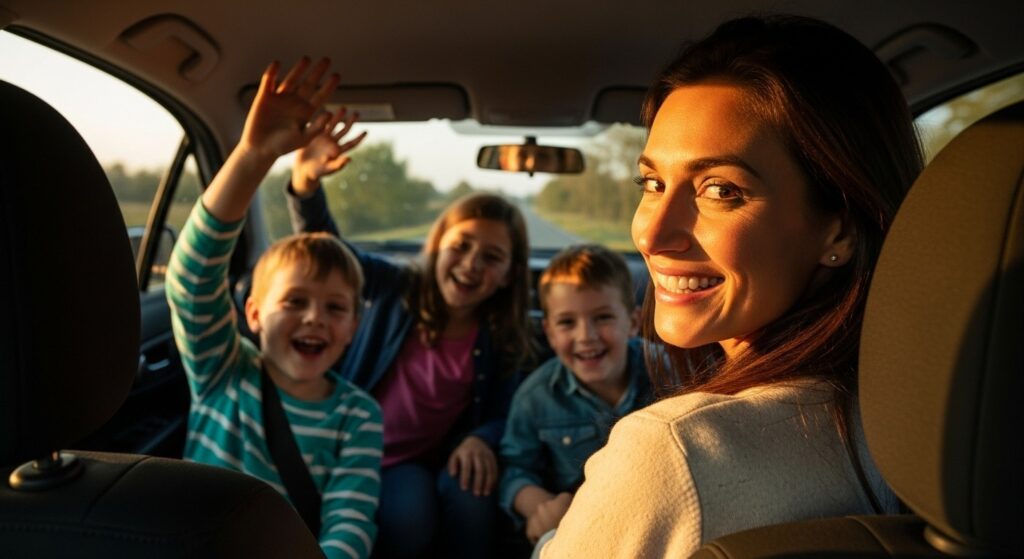
Last Tuesday, I was stuck in carpool line traffic with three restless kids in the backseat. My daughter kept kicking the seat, my son was whining about being hungry, and I could feel my patience slipping. Then I remembered something my mom used to do when I was little—riddles. I threw out a simple one: “What has hands but can’t clap?” Suddenly, the car went quiet. Three little faces scrunched up in concentration. And for the next twenty minutes, my kids were completely engaged, laughing, and begging for more.
That’s when I realized riddles aren’t just cute little brain teasers—they’re an actual parenting lifeline. Whether you’re trying to survive a long road trip, fill time during dinner prep, or give your kids something fun to do that doesn’t involve screens, riddles work. And the best part? They make your kids feel smart, creative, and genuinely proud of themselves when they figure out the answer.
Why Riddles Are Actually Brilliant for Kids
I’m not going to pretend riddles are some groundbreaking educational tool, but honestly? They do a lot more than I thought. After weeks of using them daily, I noticed my kids were thinking differently. They started looking at everyday objects in new ways, asking “what if” questions, and even creating their own silly riddles at bedtime.
Riddles help kids develop critical thinking, language skills, and problem-solving abilities in a way that feels like play. They learn to listen carefully, think creatively, and make connections between words and meanings. Plus, they’re building memory and concentration without even realizing it. According to research from PBS Parents, wordplay and puzzles like riddles support cognitive development and language acquisition during early childhood.
If you’re looking for more ways to keep kids engaged without screens, these fun activities for kids work for all ages and don’t require any special equipment.
Super Easy Riddles for Kids (Ages 3-5)
These are perfect for your youngest kiddos who are just starting to understand jokes and wordplay. My 4-year-old loves these because she can actually figure them out on her own, which makes her feel like a genius. Start here if your child is new to riddles—nothing builds confidence like getting the answer right.
What has to be broken before you can use it?
Answer: An egg
I’m tall when I’m young and short when I’m old. What am I?
Answer: A candle
What has hands and a face but can’t hold anything or smile?
Answer: A clock
What has a neck but no head?
Answer: A bottle
What gets wetter as it dries?
Answer: A towel
What has one eye but can’t see?
Answer: A needle
What has four legs but doesn’t walk?
Answer: A table
What comes down but never goes up?
Answer: Rain
What has a thumb and four fingers but is not alive?
Answer: A glove
What goes up when the rain comes down?
Answer: An umbrella
What has a head and a tail but no body?
Answer: A coin
What is full of holes but still holds water?
Answer: A sponge
What can you catch but not throw?
Answer: A cold
What has keys but can’t open locks?
Answer: A piano
What begins with T, ends with T, and has T in it?
Answer: A teapot
These simple riddles pair well with jokes for kids when you need quick entertainment during waiting rooms or grocery shopping.
Classic Riddles for Kids (Ages 6-8)
This is where things get really fun. My 7-year-old memorized half of these and now asks them to every single person who visits our house—the mailman, my mom, even the pizza delivery guy. These riddles have been around forever for a reason: they’re clever, they’re memorable, and kids love the “aha!” moment when they finally get it.
What month of the year has 28 days?
Answer: All of them
What can run but never walks, has a mouth but never talks, has a head but never weeps, and has a bed but never sleeps?
Answer: A river
What question can you never answer yes to?
Answer: Are you asleep?
What is always in front of you but can’t be seen?
Answer: The future
What can you break without touching it?
Answer: A promise
What goes all around a backyard but never moves?
Answer: A fence
What has cities but no houses, forests but no trees, and rivers but no water?
Answer: A map
What gets bigger the more you take away?
Answer: A hole
What word begins with E and ends with E but only has one letter?
Answer: An envelope
What belongs to you, but other people use it more than you?
Answer: Your name
What has a spine but no bones?
Answer: A book
What has a heart that doesn’t beat?
Answer: An artichoke
What can fill a room but takes up no space?
Answer: Light
What has a ring but no finger?
Answer: A telephone
What comes once in a minute, twice in a moment, but never in a thousand years?
Answer: The letter M
What goes up but never comes down?
Answer: Your age
What can go up a chimney down but can’t go down a chimney up?
Answer: An umbrella
What has a bed but doesn’t sleep and a mouth but doesn’t eat?
Answer: A river
What starts with P, ends with E, and has thousands of letters?
Answer: Post office
What has lots of teeth but can’t bite?
Answer: A comb
What can travel around the world while staying in one corner?
Answer: A stamp
What has a bottom at the top?
Answer: Your legs
What type of cheese is made backward?
Answer: Edam (made is maed, edam is made backward)
What kind of band never plays music?
Answer: A rubber band
What building has the most stories?
Answer: A library
What invention lets you look right through a wall?
Answer: A window
What gets shorter the more you use it?
Answer: A pencil
What has many keys but can’t open a single door?
Answer: A piano
What is black when it’s clean and white when it’s dirty?
Answer: A chalkboard
What has four wheels and flies?
Answer: A garbage truck
My kids also love mixing riddles with other brain teasers during quiet time. We keep a kids’ activity book with puzzles and riddles in the car for long drives, and it’s honestly saved us from so many meltdowns.
Funny Riddles That Make Kids Giggle
Okay, this section is my personal favorite because these riddles always get belly laughs from my kids. There’s something about silly wordplay that just hits differently when you’re six years old. We use these during dinner when the conversation starts to drag or during bath time when I need to keep them still for just two more minutes.
What do you call a bear with no teeth?
Answer: A gummy bear
Why did the teddy bear say no to dessert?
Answer: Because she was stuffed
What has ears but cannot hear?
Answer: A cornfield
What kind of tree can you carry in your hand?
Answer: A palm tree
Why can’t you give Elsa a balloon?
Answer: Because she’ll let it go
What do you call a pig that does karate?
Answer: A pork chop
What’s black, white, and blue?
Answer: A sad zebra
What animal is always at a baseball game?
Answer: A bat
What do you get when you cross a snowman and a vampire?
Answer: Frostbite
Why don’t oysters share their pearls?
Answer: Because they’re shellfish
What kind of room has no doors or windows?
Answer: A mushroom
What do you call cheese that isn’t yours?
Answer: Nacho cheese
Why did the banana go to the doctor?
Answer: Because it wasn’t peeling well
What did one wall say to the other wall?
Answer: I’ll meet you at the corner
What do you call a sleeping bull?
Answer: A bulldozer
What’s orange and sounds like a parrot?
Answer: A carrot
Why did the cookie go to the doctor?
Answer: Because it felt crumbly
What time is it when the clock strikes 13?
Answer: Time to get a new clock
Why did the kid bring a ladder to school?
Answer: Because she wanted to go to high school
What’s a tornado’s favorite game?
Answer: Twister
These silly riddles pair perfectly with math jokes for kids if your child loves puns and wordplay as much as mine do.
Tricky Riddles for Older Kids (Ages 9-12)
My oldest is nine, and she recently told me the easy riddles are “for babies.” (Insert eye roll here.) So I had to level up. These riddles actually make her think, and I’ve noticed she’ll sit quietly for several minutes working through the logic. That’s a rare gift in our house, so I’m taking it.
I speak without a mouth and hear without ears. I have no body, but I come alive with the wind. What am I?
Answer: An echo
The more you take, the more you leave behind. What am I?
Answer: Footsteps
What can be cracked, made, told, and played?
Answer: A joke
You see a boat filled with people. It has not sunk, but when you look again, you don’t see a single person. Why?
Answer: They were all married (not single)
A man was driving a black truck. His lights were not on. The moon was not out. A lady was crossing the street. How did the man see her?
Answer: It was daytime
I have branches but no fruit, trunk, or leaves. What am I?
Answer: A bank
What can you hold in your right hand but never in your left hand?
Answer: Your left hand
Two fathers and two sons are in a car, yet there are only three people in the car. How?
Answer: They are grandfather, father, and son
What disappears as soon as you say its name?
Answer: Silence
A girl has as many brothers as sisters, but each brother has only half as many brothers as sisters. How many brothers and sisters are in the family?
Answer: Four sisters and three brothers
What is seen in the middle of March and April that can’t be seen at the beginning or end of either month?
Answer: The letter R
What five-letter word becomes shorter when you add two letters to it?
Answer: Short (add “er” to make “shorter”)
What is always coming but never arrives?
Answer: Tomorrow
In a one-story house at the corner of the road, the bedrooms were yellow, the kitchen was orange, and the living room was red. What color were the stairs?
Answer: There were no stairs—it’s a one-story house
If you drop me, I’m sure to crack, but smile at me and I’ll smile back. What am I?
Answer: A mirror
If your older kids love challenges, they might also enjoy fun trivia questions for kids during family game nights.
Animal Riddles Kids Love
My kids are obsessed with animals, so these riddles are always a hit. We use them during car rides to the zoo or while flipping through their favorite animal books. If you have an animal-loving kid, bookmark this section—you’ll need it.
What animal can jump higher than a building?
Answer: Any animal—buildings can’t jump
What do you call a sleeping dinosaur?
Answer: A dino-snore
What kind of fish chases mice?
Answer: A catfish
What’s a cat’s favorite color?
Answer: Purr-ple
What do you call an alligator in a vest?
Answer: An investigator
Where do cows go on vacation?
Answer: Moo York
What do you call a fly without wings?
Answer: A walk
Why don’t elephants use computers?
Answer: They’re afraid of the mouse
What do you get when you cross a snake and a pie?
Answer: A python
What do you call a deer with no eyes?
Answer: No eye-deer (no idea)
My skin is green and slippery. I have four legs and webbed feet. I hop on land and swim underwater. What am I?
Answer: A frog
I’m the king of the jungle, but I don’t live there. What am I?
Answer: A lion
What bird can lift the most weight?
Answer: A crane
What do you call a dog magician?
Answer: A labracadabrador
What kind of key opens a banana?
Answer: A monkey
“What Am I?” Riddles
This format is hands-down the most popular in our house. There’s something about the “What am I?” structure that kids find irresistible. These work especially well for younger kids who are still learning how riddles work.
I have a face but no eyes, hands but no arms. What am I?
Answer: A clock
I can be cracked, I can be made, I can be told, I can be played. What am I?
Answer: A joke
I’m light as a feather, but even the strongest person can’t hold me for long. What am I?
Answer: Your breath
I fly without wings, I cry without eyes. What am I?
Answer: A cloud
I have teeth, but can’t eat. What am I?
Answer: A comb
I get smaller every time I take a bath. What am I?
Answer: A bar of soap
I have a tail and a head, but no body. What am I?
Answer: A coin
I’m found in socks, scarves, and mittens. I’m found in the paws of playful kittens. What am I?
Answer: Yarn
I run but never walk. I have a bed but never sleep. What am I?
Answer: A river
I have a neck but no head, and I wear a cap. What am I?
Answer: A bottle
I go up and down the stairs without moving. What am I?
Answer: A carpet
I have a single eye but cannot see. What am I?
Answer: A needle
I can be long, I can be short, I can be grown, I can be bought, I can be painted, or left bare. What am I?
Answer: Fingernails
I am full of holes, but I can still hold water. What am I?
Answer: A sponge
I am taken from a mine and shut in a wooden case, from which I am never released. What am I?
Answer: Pencil lead
Want to keep the brain-boosting fun going? Try these easy trivia questions for kids next.

How to Use Riddles in Your Daily Routine
Here’s what I’ve learned after weeks of riddle-obsessing with my kids: timing matters. You can’t just throw a riddle at a hungry, overtired kid and expect magic. But when you use them strategically? They’re gold.
Morning car rides: We do one easy riddle on the way to school. It wakes up their brains without making them grumpy.
Dinner table: I keep a list of riddles on my phone for those nights when dinner conversation dies. It’s way better than everyone staring at their plates in silence.
Waiting rooms: Doctor’s offices, grocery store lines, anywhere we’re stuck waiting—riddles make time fly.
Bedtime wind-down: After stories, we do two or three easy riddles. It calms my kids down while still keeping them engaged.
Road trips: Riddles have single-handedly saved our family’s road trips. We take turns, everyone gets a chance to stump each other, and suddenly we’re an hour down the highway without anyone asking, “Are we there yet?”
I also love using riddles as a screen-free activity. My kids are so used to tablets and TV that giving them something fun that doesn’t require a device feels like a parenting win. If you’re trying to cut down on screen time too, check out these outdoor games for kids that work just as well.
Another unexpected benefit? Riddles are perfect for shy kids. My middle child is quiet in social settings, but when she knows a good riddle, she lights up. It gives her a way to connect with other kids without feeling pressured to make small talk.
Making Riddle Time Special
We’ve turned riddle time into a little tradition in our house. During family game nights, we rotate between riddles, would you rather questions for kids, and board games. My kids especially love when we play Candy Land Bluey Edition and throw in riddles between turns—it keeps everyone engaged without anyone getting bored.
For rainy days, we combine riddles with drawing time. My 5-year-old loves using her kids’ craft supplies to illustrate the answers to her favorite riddles. We’ve made a whole riddle book together, and she’s so proud of it.
If you’re planning activities for kids during school breaks or weekends, riddles fit perfectly into any schedule. They’re free, portable, and don’t require special equipment. I keep a mental list ready for those moments when I need to fill time without scrambling for ideas.
Why This Actually Matters
Look, I’m not going to pretend riddles are going to make your kid a genius or solve all your parenting struggles. But here’s what I’ve noticed: my kids are talking more, thinking more creatively, and genuinely enjoying time together without needing a screen in front of them. That’s worth a lot in my book.
Riddles also give kids a safe way to “fail” and try again. When my son doesn’t get a riddle right away, he doesn’t melt down the way he does with homework. He just thinks harder, asks for hints, and feels proud when he figures it out. That resilience? That’s the stuff that’ll serve him well beyond riddle time.
Plus, riddles are completely free and require zero prep. I don’t need to buy anything, print anything, or plan ahead. I just need to remember a few good ones, and we’re set. If you’re looking for more low-prep activities, I also recommend conversation starters for kids and fun facts of the day for kids—both are lifesavers during family dinners.
Frequently Asked Questions
What age is appropriate for riddles?
You can start as early as age 3 or 4 with super simple riddles like “What has hands but can’t clap?” As kids get older (ages 6-8), they can handle more complex wordplay and logic. By ages 9-12, they’ll love tricky riddles that really make them think.
How do I make riddles easier for my child?
Give hints! If your child is struggling, ask leading questions like “What do you use to tell time?” or “What do you find in the kitchen?” Breaking down the riddle into smaller clues helps them learn how to think through the problem without giving away the answer.
Are riddles actually educational?
Yes! Riddles build critical thinking, language skills, memory, and problem-solving abilities. They teach kids to listen carefully, think creatively, and make connections between words and meanings. Plus, they’re fun, which makes learning feel effortless.
How many riddles should I do with my child at once?
Start with 3-5 riddles per session, especially with younger kids. Too many and they’ll lose interest. As they get older and more engaged, you can do more. Pay attention to their energy level—if they’re still excited, keep going. If they’re getting frustrated, wrap it up on a high note.
Can riddles help shy kids socially?
Absolutely. Riddles give shy kids a “script” for interacting with others. Knowing a fun riddle gives them confidence to start conversations without the pressure of small talk. My quiet daughter has made friends by sharing riddles at recess, and it’s been a game-changer for her.
Riddles have genuinely made our everyday moments better. Whether we’re stuck in traffic, waiting for food, or just need a break from the chaos, pulling out a good riddle always shifts the mood. My kids laugh more, think more, and connect more—and honestly, that’s all I really want as a mom.
So next time you’re desperate for five minutes of peace or trying to survive a long car ride, try a riddle. You might be surprised at how much joy a simple question can bring.