
Last summer, I had a complete meltdown in my pediatrician’s office. She asked how much screen time my kids were getting, and I burst into tears because I honestly didn’t know. Between tablets for road trips, educational apps for learning, TV after school, and my own phone usage while cooking dinner, screens had quietly taken over our lives. My seven-year-old was having tantrums when I asked him to turn off the iPad. My four-year-old couldn’t sit through a meal without asking for “just one show.” And I felt like the world’s worst mom.
That conversation changed everything. My pediatrician didn’t shame me (thank God). Instead, she helped me understand that screen time rules aren’t about being perfect—they’re about being intentional. She explained that the goal isn’t zero screens (that’s not realistic for most families), but rather healthy boundaries that protect sleep, physical activity, and real human connection.
After two years of trial and error, complete failures, and eventually finding a rhythm that works, I’m sharing the screen time rules that saved our sanity and actually improved my kids’ behavior, sleep, and attention spans. These aren’t rigid, judgment-heavy rules that only work for stay-at-home parents with unlimited time. These are real-world strategies that fit into chaotic lives where screens are part of the landscape.
Why Screen Time Rules Actually Matter (More Than I Realized)
Here’s what I didn’t understand before doing research: excessive screen time isn’t just about kids being “lazy” or “addicted.” According to Mayo Clinic, too much screen exposure in early childhood actually affects brain development, sleep patterns, attention spans, and social-emotional skills. The blue light from screens disrupts melatonin production, making it harder for kids to fall asleep. The passive consumption of content reduces opportunities for creative play, problem-solving, and face-to-face interaction.
But here’s the thing that really got me: the American Academy of Pediatrics recommends zero screen time for kids under 18 months (except video chatting), one hour per day for ages 2-5, and two hours per day for school-aged kids. When my pediatrician told me this, I laughed. One hour? My kids were easily hitting four or five hours on weekends.
The research shows that excessive screen time correlates with higher rates of obesity, sleep problems, behavioral issues, and delayed language development in young children. Kids who spend more time on screens spend less time moving their bodies, playing imaginatively, reading, and connecting with family members. It’s not that screens are inherently evil—it’s that they crowd out the activities kids need for healthy development.
The other wake-up call for me: my own screen habits were modeling behavior I didn’t want my kids to learn. When I was constantly checking my phone during meals, scrolling while they played, or responding to emails instead of making eye contact, I was teaching them that screens are more important than people. That hit hard.

The Screen Time Rules That Changed Everything
After consulting with our pediatrician, reading research, and experimenting with what actually worked for our family, here are the rules that stuck. These aren’t Pinterest-perfect strategies—they’re battle-tested by a mom who was drowning in screen chaos.
Rule 1: No Screens Before School or Before Bed
This was the hardest rule to implement, but it had the biggest impact. Screens in the morning made my kids sluggish, distracted, and resistant to getting ready. Screens before bed made falling asleep a nightmare—literally. According to the World Health Organization, screen exposure within two hours of bedtime significantly disrupts sleep quality in children.
We established a “bookend rule”: no screens for the first hour after waking up and the last hour before bed. Mornings became calmer because kids weren’t fighting to finish a show before leaving. Bedtime became easier because their brains had time to wind down naturally. We replaced morning screen time with breakfast routines and getting dressed. We replaced bedtime screens with reading together, which became our favorite part of the day.
Rule 2: Screen-Free Zones in the House
We designated three areas completely screen-free: the dinner table, bedrooms, and the car (except for long road trips over two hours). This single rule transformed our family connection. Meals became actual conversations instead of everyone staring at devices. Bedrooms stayed sleep sanctuaries instead of entertainment centers. Car rides became opportunities for talking, singing, playing road trip games, or just being bored together.
Research from Parents.com confirms that families who maintain screen-free meal times report better communication, healthier eating habits, and stronger family bonds. The dinner table became a sacred space where we actually talked about our days, told jokes, and connected. This aligns with teaching kids about boundaries and respect, similar to what we discuss in how to set boundaries for kids.
Rule 3: Earn Screen Time Through “Green Time”
For every hour of screen time my kids wanted, they had to earn it with an hour of “green time”—outdoor play, physical activity, or creative play. This rule solved two problems: it limited overall screen time naturally, and it ensured kids were getting the physical activity they needed.
My kids started asking to go outside more often because they wanted to bank screen time for later. They rediscovered bikes, jump ropes, and neighborhood kids. Kids need at least 60 minutes of physical activity daily for healthy development. This rule made that happen without me nagging. Check out these fun outdoor activities for kids that work perfectly for earning screen time.
Rule 4: Quality Over Quantity (Content Matters)
Not all screen time is created equal. Educational content that teaches skills, requires interaction, or sparks creativity is fundamentally different from passive consumption of mindless cartoons or YouTube rabbit holes. We started being intentional about what our kids watched and played.
Educational apps that teach math or reading? Fine. Interactive cooking shows where kids follow along in the kitchen? Great. Random toy unboxing videos or overstimulating content designed to hold attention through manipulation? Nope. We started co-viewing content with younger kids and having conversations about what they were watching. This helped us understand what they were absorbing and gave us opportunities to teach media literacy. These conversations tie into developing critical thinking, much like the skills we discuss in questions to ask your child before it’s too late.
Rule 5: Parents Follow the Same Rules
This was the hardest rule for me personally. I couldn’t tell my kids “no phones at dinner” while checking my email under the table. I couldn’t limit their screen time while I scrolled Instagram for two hours after they went to bed. Kids don’t do what we say—they do what we do.
We implemented family-wide rules: phones get plugged in the kitchen at 7 PM, no one (including parents) uses devices during meals, and we practice “device-free hours” on weekends where everyone reads, plays, or spends time outside. Did this require me to confront my own phone addiction? Absolutely. Was it uncomfortable? Very. Did it make a massive difference in our family culture? Yes.
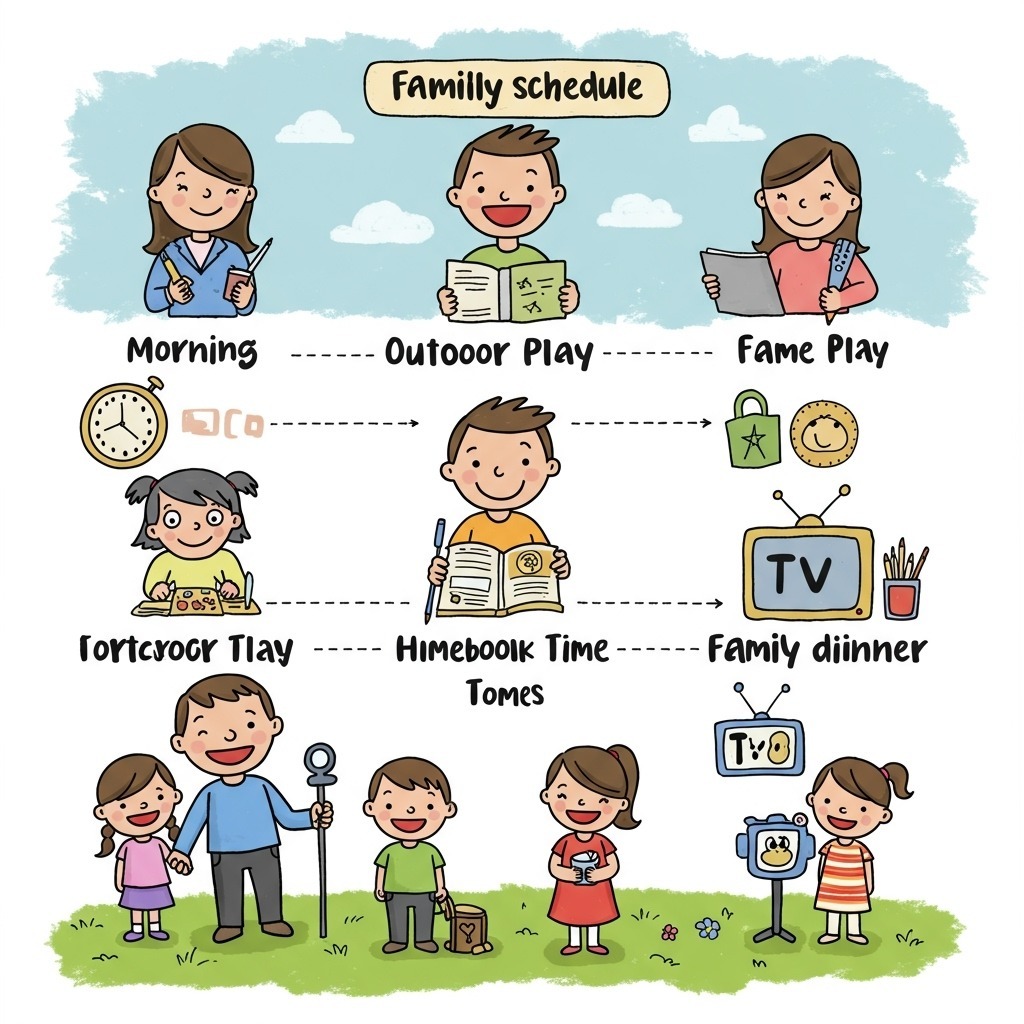
Rule 6: Create a Visual Screen Time Schedule
For younger kids, especially, abstract time limits don’t mean much. We created a visual schedule with pictures showing when screens were allowed and when they weren’t. Morning routine, school, homework, outdoor play, dinner—all represented with simple icons. Screen time had its own icon and designated slot.
This eliminated constant negotiating. When kids asked for screens, I could point to the schedule: “Look, screen time happens after outdoor play. Have you done your green time yet?” The visual reference gave kids ownership and reduced arguments. It also helped them develop time management skills and an understanding of daily routines, similar to building independence through activities to do with kids.
Rule 7: Weekend Flexibility With Boundaries
Weekends had slightly different rules because life is different on weekends. We allowed up to three hours total screen time on Saturdays and Sundays—but it still had to be balanced with outdoor time, family activities, and chores. Movie nights became special family traditions rather than daily occurrences.
This flexibility prevented us from becoming rigid, joyless screen police. It also taught kids that rules can be context-dependent while still having boundaries. We could enjoy a family movie marathon during a rainstorm without guilt because we knew our weekday boundaries were solid.

Age-Specific Screen Time Guidelines (From Research and Real Life)
Based on recommendations from the American Academy of Pediatrics and our own experience, here’s what actually works:
Under 18 Months: Zero screen time except video chatting with grandparents or distant family. Babies need face-to-face interaction, physical exploration, and human voices—not screens. I know this is hard when you need a shower or to cook dinner, but baby-wearing, safe play spaces, and brief educational TV (like nature documentaries with you present) work better than handing over a tablet.
18-24 Months: If you introduce screens, choose high-quality educational content and watch together. Absolutely no solo screen time. Thirty minutes maximum. Co-viewing is essential because toddlers learn through interaction and conversation, not passive watching. Use screens as tools for connection (singing along to music videos together) rather than babysitters.
Ages 2-5: One hour per day, maximum of high-quality educational content. Co-view when possible. Prioritize interactive apps over passive watching. Make sure this hour doesn’t interfere with sleep, meals, or outdoor play. Many parents find that spreading this hour across the day (30 minutes in the morning, 30 minutes before dinner) works better than one long session.
Ages 6-12: One to two hours per day of recreational screen time, not including homework or educational use. Continue to monitor content quality and avoid screens before bed. At this age, kids can start understanding the “why” behind rules, so have conversations about brain development, sleep, and balance. Involve them in creating house rules so they feel ownership. Understanding positive parenting principles helps frame these conversations as collaboration rather than control.
Teens (13+): Two to three hours per day of recreational screen time, balanced with sleep (9 hours), physical activity, homework, and social connection. Focus shifts from limiting time to teaching self-regulation, digital citizenship, and media literacy. Have ongoing conversations about social media, online safety, and healthy tech habits.
The key across all ages: screen time should never replace sleep, physical activity, face-to-face interaction, or creative play. When screens start crowding out these essentials, it’s time to adjust.
What Happens When You Actually Implement These Rules
I’m not going to lie—the first two weeks were brutal. My kids pushed back hard. There were tantrums, tears, and accusations that I was “the meanest mom ever.” My seven-year-old told me he “needed” his tablet like he needed food. My four-year-old cried every single afternoon when I said no to TV before outdoor play.
But here’s what happened after we pushed through that rough transition:
Sleep improved dramatically. Both kids started falling asleep faster and sleeping more soundly. Morning wake-ups became easier. Reducing evening screen exposure improves both sleep duration and quality in children.
Behavior got better. The constant whining for “one more show” disappeared. Tantrums decreased. Attention spans improved. My kids could sit through a meal without melting down. They could play independently for longer periods. The overstimulation from constant screen exposure had been affecting their regulation—I just hadn’t realized it.
Creativity exploded. Without screens as the default entertainment option, my kids rediscovered toys that had been ignored for months. They started building elaborate forts, creating art projects, and making up imaginary games. Boredom became productive instead of something to immediately solve with a screen. Check out these things for your child to do when they are bored for activity ideas that replace screen time.
Family connection deepened. Without devices at the dinner table, we actually talked. We played board games, went on evening walks, and did activities together, from outdoor games for kids. I learned more about my kids’ thoughts, fears, and interests in those first few screen-free weeks than I had in months.
I became more present. When I wasn’t constantly checking my phone, I noticed more. I engaged more. I was less distracted and irritable. My kids responded to my increased presence by seeking me out more, sharing more, and connecting more deeply.
Were there still challenges? Absolutely. Rainy days were harder. Long car rides required more planning. Sick days when kids needed extra rest meant adjusting rules temporarily. But the overall improvement in our family’s well-being was undeniable.

Troubleshooting Common Screen Time Challenges
“But what about educational screen time for homework?”
Educational screen time for legitimate learning doesn’t count toward recreational limits. However, monitor whether “homework” actually involves learning or has turned into YouTube browsing. Create clear boundaries: educational content happens in common areas where you can see the screen, not behind closed doors.
“What about long car rides or flights?”
Travel is an exception. Load up tablets with downloaded content, bring headphones, and let kids use screens for portions of long trips. Just try to balance with other activities—audiobooks, car games, conversation, or looking out the window. The goal is balance, not perfection. Try some road trip games for kids that work without screens.
“My co-parent doesn’t follow the same rules.”
This is tough. Have a calm conversation about why boundaries matter and share research about screen time’s impact on development. If you can’t get on the same page, focus on maintaining consistent rules in your own home. Kids can adapt to different rules in different households, though consistency is ideal.
“What if my child’s friends all have unlimited screen access?”
This is probably the hardest challenge. Explain your family’s values without criticizing other families. Emphasize that different families make different choices, and in your family, screen time is balanced with other activities. As kids get older, involve them in discussions about why these boundaries exist. When kids understand the “why,” they’re more likely to internalize healthy habits even when you’re not watching.
“How do I handle screens at restaurants or waiting rooms?”
Keep a “boredom bag” in your car with books, small toys, coloring supplies, and card games. Use waiting time as an opportunity to practice patience, conversation, and observation. If you need screens occasionally in these situations, that’s okay—just make them the exception rather than the automatic solution.
Building Lifelong Healthy Tech Habits
The deeper truth I’ve learned is that screen time rules aren’t really about screens. They’re about teaching kids to have a healthy relationship with technology in a world where screens are unavoidable. They’re about developing self-regulation, understanding balance, and learning that real life is more interesting than digital life.
My kids are 9 and 6 now, and something beautiful has happened: they self-regulate pretty well. They’ll often choose to play outside or read instead of asking for screens. They understand that screens are one option among many, not the default or the most valuable option. They’re developing a healthy relationship with technology that will serve them as they grow up in an increasingly digital world.
These rules have also made me a more intentional parent. I’m more present, more engaged, and more aware of how I’m spending time with my kids. I’ve rediscovered the joy of being bored together, of creating entertainment from nothing, of just being together without devices mediating our connection. Much like teaching basic manners for kids, screen time boundaries are ultimately about respect—respect for our time, our relationships, and our wellbeing.
So this week, pick one rule from this list. Just one. Implement it consistently for two weeks. Yes, there will be pushback. Yes, it will be uncomfortable. But I promise you, on the other side of that discomfort is a calmer, more connected family life where screens serve you instead of ruling you.
Frequently Asked Questions
What are the recommended screen time limits for kids by age?
According to the American Academy of Pediatrics, children under 18 months should have zero screen time except video chatting; ages 18-24 months can have minimal high-quality content with parental co-viewing; ages 2-5 should have no more than one hour per day; and school-aged children 6+ should have no more than two hours of recreational screen time daily. These limits don’t include educational screen time for homework. The key is ensuring screen time doesn’t replace sleep, physical activity, or face-to-face interaction.
How do I reduce screen time without constant battles?
Start gradually rather than going cold turkey. Create a visual schedule showing when screens are allowed and when they’re not. Offer appealing alternatives like special outdoor activities, one-on-one time, or new games. Make it a family-wide change so kids don’t feel singled out. Stay consistent during the difficult transition period (usually 2-3 weeks) when kids push back. Explain the “why” behind rules in age-appropriate ways. Most importantly, model healthy screen habits yourself.
What counts as “screen time” for kids?
Screen time includes watching TV, playing video games, using tablets or smartphones, watching videos on any device, and recreational computer use. It does NOT include homework on computers, video chatting with family members, or brief functional uses like checking a calendar or looking up information. The distinction is between passive consumption or recreational use versus active learning or necessary communication. Educational content that requires interaction or teaches skills is qualitatively different from mindless scrolling or watching.
Is educational screen time better than entertainment screen time?
Yes, but with caveats. Educational apps that teach math, reading, or problem-solving skills are better than passive entertainment. However, even educational content should be limited, especially for young children who learn best through hands-on play and human interaction. The best educational screen time is interactive (requires responses), age-appropriate, and ideally done with a parent who can extend learning through conversation. A child watching an educational show learns more when an adult watches with them and discusses what’s happening.
How do I handle screen time when both parents work from home?
This is one of the hardest scenarios. Create a realistic schedule that acknowledges you need focused work time. Consider alternating which parent supervises non-screen activities during key work hours. Use screen time strategically during your most critical work periods (like important calls), but balance it with designated screen-free times when you can give kids full attention. Hire help if possible, even for a few hours. Set up engaging non-screen activities kids can do independently. Remember that survival during demanding work periods sometimes means being flexible—that’s okay.
What are the signs my child has too much screen time?
Warning signs include: difficulty falling asleep or staying asleep, tantrums when screens are turned off, lack of interest in non-screen activities, declining physical activity, weight gain, difficulty focusing or paying attention, behavioral problems at school, preferring screens over playing with friends, secretive behavior about screen use, and physical complaints like headaches or eye strain. If you notice multiple warning signs, it’s time to reassess and implement stricter boundaries.
How do I manage screen time with multiple kids of different ages?
Create age-appropriate rules that make sense for each child’s developmental stage. Older kids naturally get more screen time than younger ones—this isn’t unfair, it’s appropriate. Have older siblings do screen activities during younger siblings’ nap time or after bedtime. Use different colored timers or charts for each child so everyone knows their limits. Involve older kids in understanding why younger siblings have different rules. Some family screen time (like movie night) can include everyone, while individual screen time is tailored to age.