
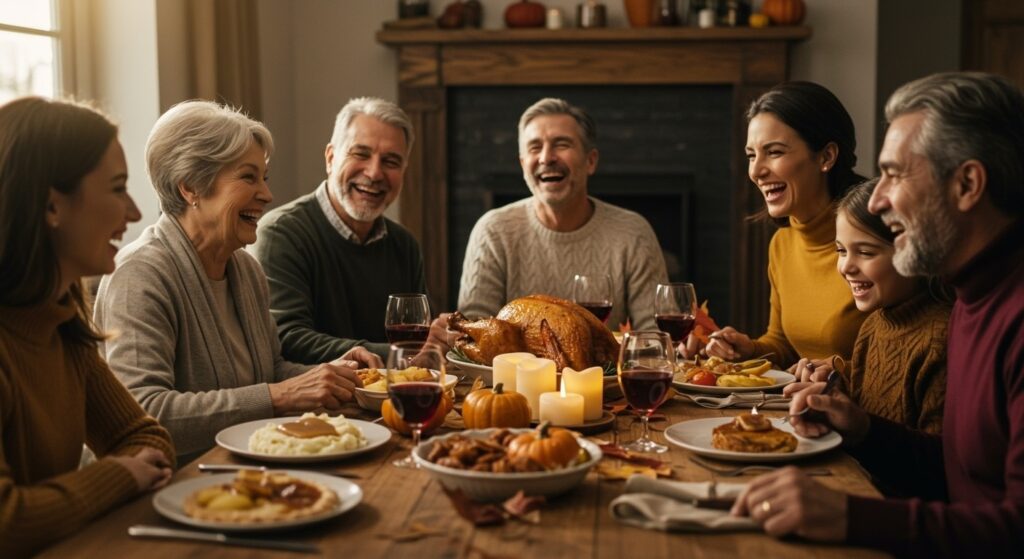
Last Thanksgiving, I panicked. My sister’s kids, my own two, and my nephew were all sitting at the table staring at their phones while the adults talked politics. I could feel the disconnect happening right before my eyes—the magic of family time slipping away into TikTok videos and group chats.
Then I remembered a random fact I’d read about turkeys not actually being on the menu at the first Thanksgiving. I blurted it out. My eight-year-old looked up. “Wait, WHAT? Then what did they eat?” And just like that, we were off. For the next twenty minutes, those kids peppered me with questions, laughed at weird facts, and actually talked to each other.
That’s when I realized: Thanksgiving facts for kids aren’t just educational—they’re conversation gold. They turn a potentially boring family dinner into something interactive, fun, and memorable. And honestly? They make you look like the coolest parent in the room.
So this year, I went deep. I collected the most fascinating, giggle-worthy, and genuinely surprising Thanksgiving facts I could find. These aren’t your dry textbook facts—these are the stories that make kids lean in, ask follow-up questions, and actually care about the holiday beyond the mashed potatoes.
The First Thanksgiving: What Really Happened
Here’s what I didn’t know until I started digging: the first Thanksgiving looked nothing like what we celebrate today. And when I shared these facts with my kids, their minds were blown.
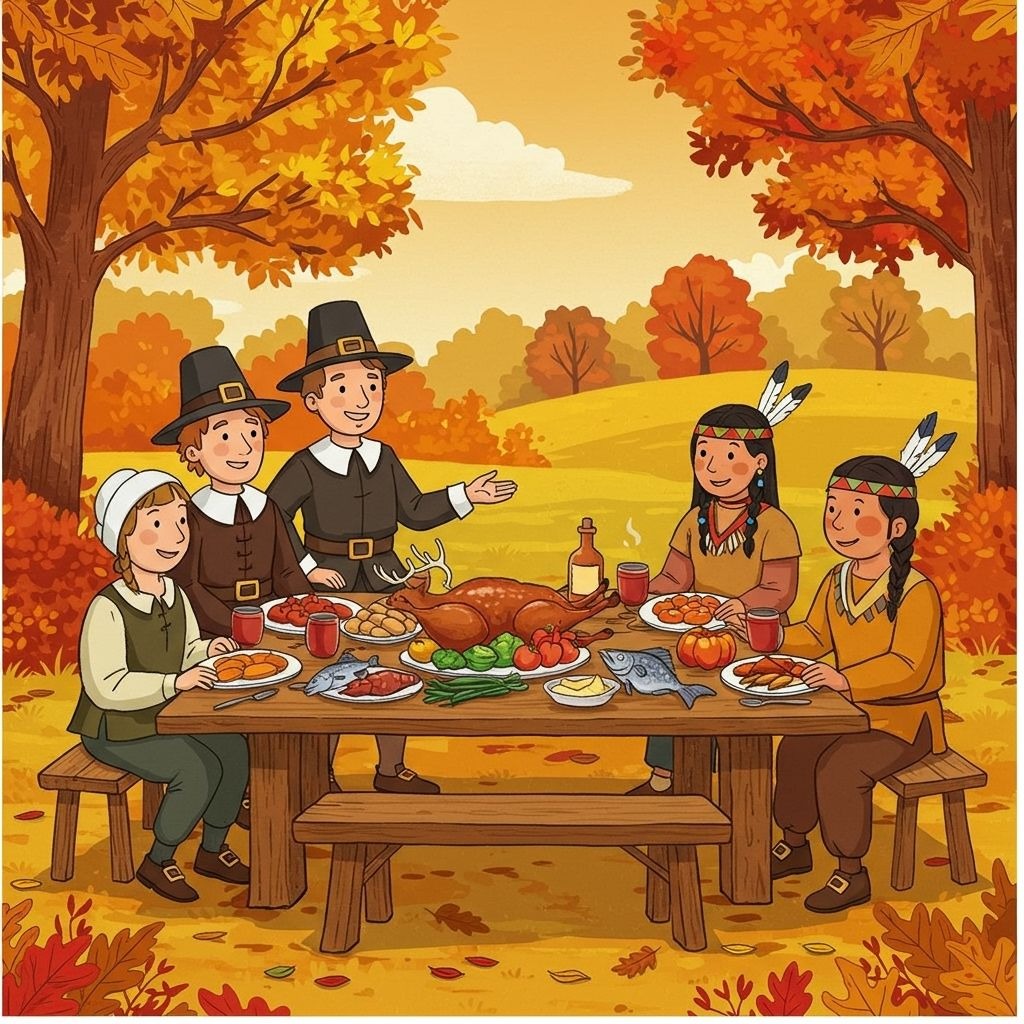
The first Thanksgiving celebration lasted three whole days. Can you imagine? We can barely make it through one meal without someone needing a nap. This harvest festival took place in Plymouth, Massachusetts, in 1621, and it included about 50 Pilgrims (including roughly 25 children) and approximately 90 Wampanoag Native Americans. That’s around 150 people celebrating together—talk about a crowd.
But here’s the part that really surprised me: only four women were present at that first celebration. Seventy-eight percent of the women who had traveled on the Mayflower didn’t survive that brutal first winter. So children, servants, and unmarried men likely helped prepare that massive feast. When I told my daughter this, she suddenly had a whole new appreciation for how different life was back then.
And the menu? Forget everything you think you know. Turkey might have made a small appearance, but it definitely wasn’t the star of the show. Instead, seafood was the main course—think mussels, which were abundant in New England. The Wampanoag people brought five deer as their contribution to the feast. They probably also ate ducks, geese, swans, oysters, lobster, and eel.
What WASN’T on That First Menu
This is where it gets really interesting. All those dishes we consider Thanksgiving essentials? Nowhere to be found in 1621.
No mashed potatoes. Potatoes had been introduced to Europeans by the Spanish in the 1500s, but they weren’t popular enough yet to make the journey to North America. No pumpkin pie, either—even though they definitely ate pumpkins and squash. The problem? The colony didn’t have butter or wheat flour to make pie crust.
And cranberry sauce? Nope. The Pilgrims were completely out of sugar that year, so while cranberries might have appeared on the table as garnishes, there was no sweet sauce. Instead, Native Americans used fresh cranberries for food, healing wounds, and dyeing fabrics. My son thought the wound-healing part was “pretty cool,” by the way.
The corn was probably served as cornmeal porridge, sometimes sweetened with molasses. They likely had local vegetables like onions, beans, lettuce, spinach, cabbage, carrots, and maybe peas. But no bread stuffing as we know it—they probably used herbs, onions, or nuts for flavor instead.
How Thanksgiving Became a National Holiday
This story is one of my favorites because it involves serious persistence—something I’m always trying to teach my kids about. If you’re looking for more ways to build resilience and determination in your children, check out our guide on how to make your kids mentally strong.
Sarah Josepha Hale deserves way more credit than she gets. You might know her as the woman who wrote “Mary Had a Little Lamb,” but she’s also called the “Mother of Thanksgiving.” For 17 years—yes, SEVENTEEN—she wrote letters to presidents lobbying to make Thanksgiving a national holiday.
Finally, President Abraham Lincoln proclaimed Thanksgiving a national holiday on October 3, 1863. Some historians believe he did it partly to help heal the nation during the Civil War. The Library of Congress has preserved Lincoln’s original Thanksgiving proclamation, which called for a day of “Thanksgiving and Praise to our beneficent Father who dwelleth in the Heavens.”
But the date kept changing over the years as different presidents adjusted it. In 1939, President Franklin D. Roosevelt tried moving Thanksgiving one week earlier to extend the Christmas shopping season. His political opponents mockingly called it “Franksgiving,” and only 23 states adopted the change. Finally, in 1941, Congress officially set Thanksgiving as the fourth Thursday in November, where it’s stayed ever since.
Fun fact I love sharing: Thomas Jefferson actually refused to celebrate Thanksgiving at all during his presidency. He believed it was too much like a religious day of prayer and violated the separation of church and state. My politically-minded teen found this fact particularly interesting.
Presidential Turkey Traditions
The whole turkey pardoning thing is way more recent—and complicated—than you’d think.
Harry Truman was the first president to receive a ceremonial turkey from the Poultry and Egg National Board in 1947. But here’s the funny part: it might have been a peace offering. Shortly before this, egg farmers had protested Truman’s “poultry-less Thursdays” campaign by sending crates of live chickens to the White House labeled “Hens for Harry.”
John F. Kennedy was technically the first president to publicly spare a Thanksgiving turkey in November 1963—just three days before his assassination. The turkey wore a sign that said “Good Eatin’ Mr. President.” Richard Nixon continued the informal tradition by sending his turkey to a petting zoo.
But George H.W. Bush is the president who officially formalized the turkey pardoning ceremony in 1989. Every year since then, the president “pardons” a specially selected turkey. In 2024, President Joe Biden pardoned two turkeys named Peach and Blossom. Apparently, their favorite snacks included cheese curds and tater tots, which my kids thought was hilarious.
Sadly, pardoned turkeys don’t live very long afterward—typically only about two years past their pardon. They’re bred to be so large that they face health problems.
The Macy’s Thanksgiving Day Parade
My kids watch this every year, but I had no idea about its quirky history until recently.
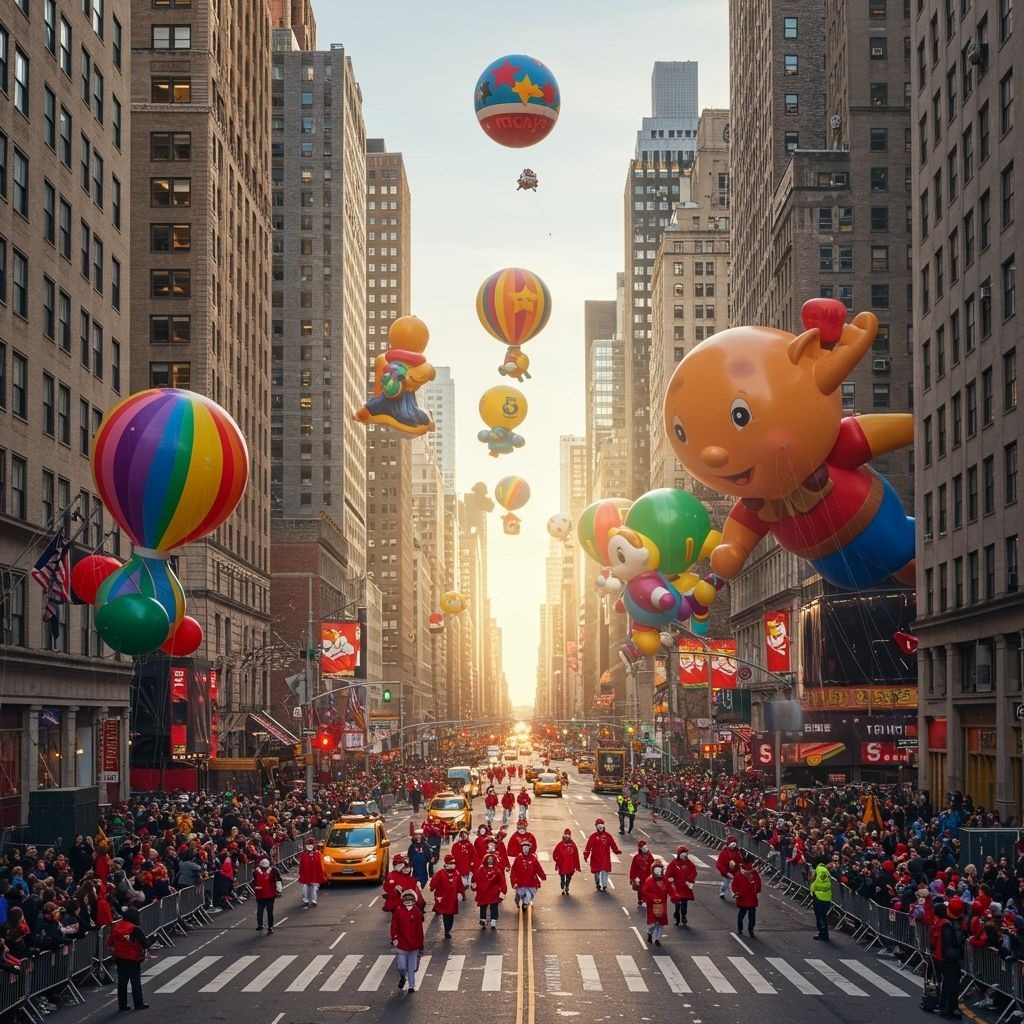
The very first Macy’s parade happened in 1924, but it wasn’t called a Thanksgiving parade—it was advertised as a “Big Christmas Parade” announced just two weeks before Thanksgiving. And get this: there were no balloons at all. Instead, the parade featured live animals borrowed from the Central Park Zoo, including monkeys, bears, camels, and elephants.
The iconic giant balloons didn’t debut until 1927. They were the creation of Anthony Frederick Sarg, a German-born puppeteer and theatrical designer. Those early balloons were filled with oxygen, not helium.
In 1997, strong winds nearly destroyed the parade. The Barney balloon ripped along its abdomen, police had to stab the Pink Panther balloon to control it, and the Cat in the Hat struck a lamppost and deflated. After that disaster, organizers required all balloons to be no larger than 70 feet high, 78 feet long, and 40 feet wide.
Today, about 50 million people watch the parade on TV each year. Another 3.5 million attend in person, and roughly 10,000 people participate. If you want to see it live, you need to start lining up around 6:30 a.m.!
Here’s a fun one for video game fans: Sonic the Hedgehog was the first video game character featured in the parade when he appeared in 1993. And Goku from Dragon Ball Z was the first Manga character to appear, debuting in 2018.
All About Turkeys
Let’s talk turkey—literally. These birds are way more interesting than I ever gave them credit for.
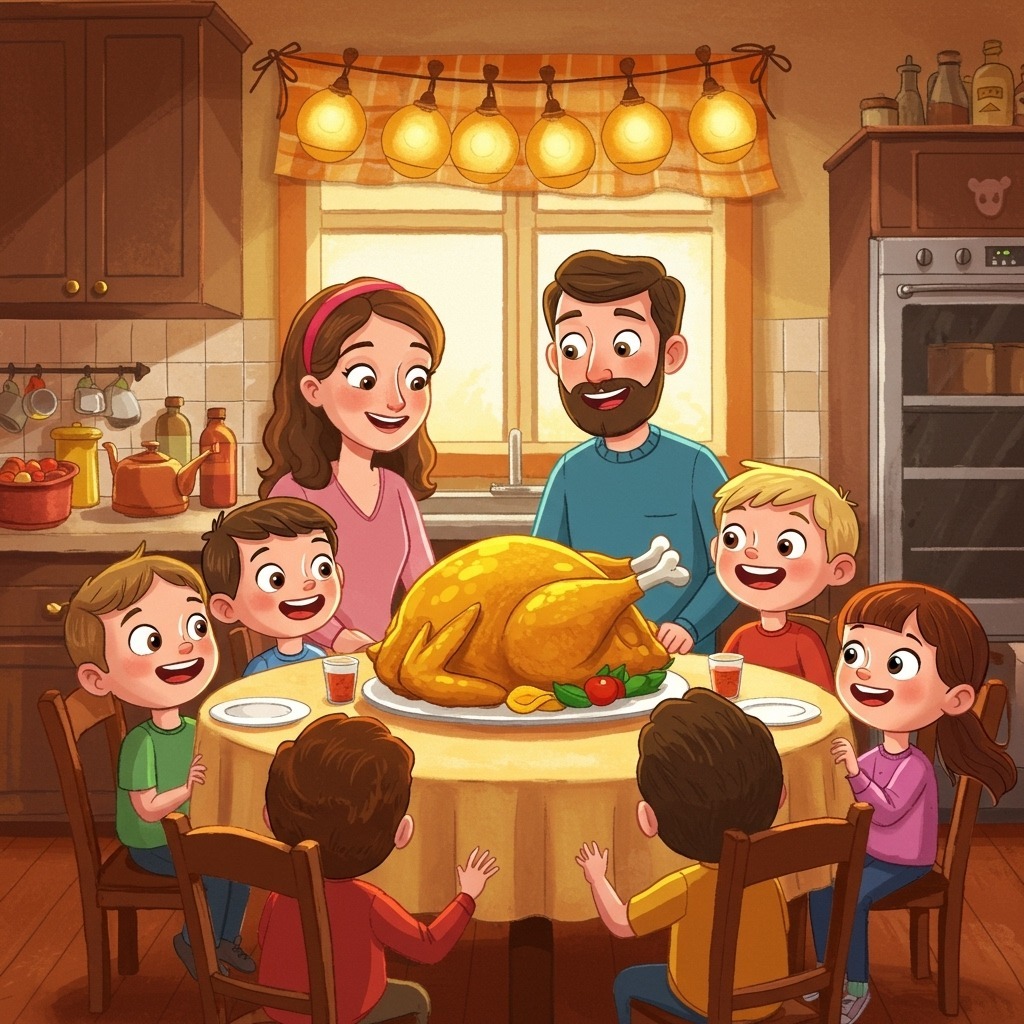
Americans eat approximately 704 million pounds of turkey every Thanksgiving. That’s more than 46 million turkeys served each year. Minnesota produces the most turkeys of any U.S. state, with around 40 million turkeys raised annually. The state’s 450 turkey farms are responsible for about 18 percent of all turkeys in the United States.
Here’s something that made my kids laugh: only male turkeys actually gobble. They’re even called “gobblers” because of this. Female turkeys make a cackling sound instead. We spent a good ten minutes after learning this trying to imitate both sounds.
Benjamin Franklin famously wanted the turkey to be America’s national bird instead of the bald eagle. He wrote a letter to his daughter saying the eagle was “a bird of bad moral character” and that the turkey was “much more respectable.” The Smithsonian has explored this fascinating piece of American history in detail, noting that while Franklin admired the turkey, he never actually formally proposed it as the national symbol. My kids debated this one pretty intensely at dinner.
And fun geographic trivia: there are three towns in the United States actually named “Turkey.” You can find them in Texas, Louisiana, and North Carolina.
The turkeys are even named after the country Turkey, in a case of mistaken identity. During the Ottoman Empire, Europeans received guinea fowl from Turkish traders and called them “turkey-hens.” When American settlers sent similar-looking birds back to Europe, Europeans gave them the same name.
Food Facts That Surprised Me
Some of these food facts are downright shocking—and perfect for starting conversations around the dinner table.
The average American consumes 4,500 calories on Thanksgiving Day. That’s more than double what most people should eat in an entire day. No wonder we all need a nap afterward. Teaching kids about balance and healthy habits year-round is so important—you might find our healthy recipes for kids helpful for the other 364 days of the year.
The Butterball Turkey Hotline answers more than 100,000 turkey-cooking questions every November and December. Can you imagine being one of those operators? “Yes, ma’am, your turkey should NOT be on fire.” Real talk: knowing I could call that hotline has saved me more than once.
Here’s one that blew my mind: “Jingle Bells” was originally written as a Thanksgiving song. James Lord Pierpont composed it in 1857 for children celebrating Thanksgiving, and it was originally titled “One Horse Open Sleigh.” The song became associated with Christmas so quickly that the title was officially changed in 1859.
And remember that story about the town of Colchester, Connecticut, postponing their Thanksgiving celebration for a week in 1705 because of a molasses shortage? They needed it for their pumpkin pie. As someone who’s had Thanksgiving dessert crises, I deeply relate to this.
In 1953, C.A. Swanson & Sons massively overestimated Thanksgiving turkey demand and ended up with 260 tons of leftover frozen turkey. Their solution? Create the first TV dinner by ordering 5,000 aluminum trays and assembling complete turkey meals. The next year, they sold 10 million turkey dinners. Talk about turning a mistake into a business opportunity.
Thanksgiving Traditions Beyond the Table
Some of the best Thanksgiving traditions have nothing to do with food.
The tradition of watching football on Thanksgiving started way back in 1876 with a college game between Yale and Princeton. The first NFL games on Thanksgiving were played in 1920. The Detroit Lions have played on Thanksgiving every single year since 1934—except during World War II when the team was called away to serve.
Turkey Trot races have become huge in recent years, but they started tiny. The very first turkey trot took place in 1896 at a YMCA in Buffalo, New York, as an 8K race. Only six runners participated, and just four finished. One dropped out when his “late breakfast refused to keep in its proper place” (nice way to say he threw up), and another quit after two miles. Today, over one million people complete a turkey trot each year, with around 1,000 races happening nationwide on Thanksgiving morning.
The day after Thanksgiving—Black Friday—is famous for shopping deals, but it’s also the busiest day of the year for plumbers. According to Roto-Rooter, they get more calls the day after Thanksgiving than on any other day. Remember: never pour cooking oil down your drain!
Thanksgiving is actually the number one day for cooking fires. Fire safety experts remind families to keep a close eye on the stove, and if you’re deep-frying a turkey, do it safely outdoors. Creating a safe environment at home is something we talk about often—if you’re interested in setting clear expectations with your kids, our post on house rules for kids has some great practical tips.
Weird and Wacky Thanksgiving Facts
These are my absolute favorites because kids LOVE weird facts.
In 1926, President Calvin Coolidge was sent a live raccoon from a citizen in Mississippi named Vinnie Joyce, intended to be eaten for Thanksgiving dinner. Instead of eating it, Coolidge and his wife, Grace, adopted the raccoon, named it Rebecca, and kept it as a White House pet. My kids thought this was simultaneously adorable and hilarious.
The wishbone-breaking tradition we all know actually traces back to the ancient Etruscans. They would dry wishbones in the sun and keep them as good luck charms. The practice of snapping them and wishing on the bigger piece came later.
There are 34 cities named Plymouth in the United States—all presumably hoping to claim some connection to that famous first Thanksgiving.
According to a 2015 Harris Poll, 81% of Americans prefer Thanksgiving leftovers to the actual meal itself. I am absolutely in this camp. That leftover turkey sandwich the next day? Chef’s kiss.
And here’s one to debunk: turkey does NOT make you sleepy because of tryptophan. It’s actually just that giant meal you ate that’s making you want a nap. The National Sleep Foundation explains that it’s the combination of large portions, carbohydrates, and sometimes alcohol that causes post-meal drowsiness, not the turkey itself. The tryptophan myth is so widespread that I felt a little silly when I learned the truth.
Disney’s Frozen holds the record for the biggest Thanksgiving opening weekend of any movie, earning $93 million domestically when it was released in 2013.
Thanksgiving Celebrations Around the World
America isn’t the only country with a Thanksgiving tradition.
Canada celebrates Thanksgiving too, but on the second Monday of October instead of November. Their date is closely linked to the harvest season, which comes earlier in their colder climate. The first nationally declared Canadian Thanksgiving was held in 1872 to celebrate the medical recovery of the Prince of Wales.
Recently, British people have increasingly embraced the American Thanksgiving tradition to celebrate gratitude and community. They’ve even given it a fun name: “Britsgiving.” If you want to teach your kids about gratitude and appreciation year-round, our collection of affirmations for kids can help build that mindset beyond just the holiday season.
Other countries with Thanksgiving or harvest festival traditions include Liberia and some Caribbean islands, many of which were inspired by American customs. National Geographic has explored how different cultures celebrate harvest festivals around the world, showing that giving thanks for a bountiful harvest is truly universal.
Why These Facts Actually Matter
Here’s what I’ve learned from becoming the “fact mom” at Thanksgiving: these aren’t just random bits of trivia. They’re conversation starters that help kids engage with history, think critically, and connect with family.
When my nephew learned that most of the women didn’t survive that first winter, it opened up a conversation about how hard life used to be and how grateful we should be for modern medicine. When my daughter heard about Sarah Josepha Hale writing letters for 17 years, we talked about persistence and not giving up on things that matter to you.
These facts give kids something interesting to share, which builds their confidence. They also provide natural breaks in conversation when things get awkward or tense between adults. And honestly? They just make the holiday more fun.
This year, I’m printing out my favorite facts and putting them in a little basket at the kids’ table. Each child can draw one and share it with the group. I’m also planning to use some of these as conversation starters for kids throughout our Thanksgiving weekend.
Making Thanksgiving More Memorable
Thanksgiving is already ranked as the second-favorite holiday among American adults, right behind Christmas and ahead of Halloween. But I think with a little intentionality, we can make it even more meaningful for our kids.
These facts have helped me transform what could be a stressful day of cooking and hosting into something genuinely fun and educational. Instead of kids zoning out or getting bored, they’re actively participating in the celebration. They’re learning without realizing they’re learning.
And the best part? They’re creating memories. Years from now, my kids might not remember exactly what I served for Thanksgiving dinner in 2025, but they’ll remember the year Mom told them about Calvin Coolidge’s pet raccoon, or when they learned that female turkeys don’t actually gobble.
FAQs About Thanksgiving Facts for Kids
At what age is it appropriate to teach kids Thanksgiving facts?
You can start sharing simple Thanksgiving facts with kids as young as 4 or 5 years old. Preschoolers love learning about the feast, the turkeys, and the parade. As kids get older (around 7-10), you can introduce more complex historical facts and discuss the nuances of the holiday’s history. The key is matching the facts to your child’s developmental level and interests. Keep it fun and interactive—ask them questions and let them explore what interests them most.
What really happened at the first Thanksgiving?
The first Thanksgiving in 1621 was a three-day harvest celebration in Plymouth, Massachusetts. It included about 50 Pilgrims and 90 Wampanoag Native Americans. The menu featured seafood, venison, duck, and goose—but no turkey as the main dish, and no pumpkin pie, mashed potatoes, or cranberry sauce. It likely took place in late September or early October, not November. The celebration was about giving thanks for a successful harvest and building relationships between the two communities.
Why do Americans eat turkey on Thanksgiving?
Turkeys were native to North America and plentiful for early settlers, making them a practical choice for large celebrations. By the mid-1800s, turkey had become the traditional centerpiece of the Thanksgiving feast. Today, Americans consume about 46 million turkeys each Thanksgiving. They’re also large enough to feed a big family gathering, which makes them an economical and practical choice for holiday meals.
How did Thanksgiving become a national holiday?
Sarah Josepha Hale, the woman who wrote “Mary Had a Little Lamb,” lobbied presidents for 17 years to make Thanksgiving a national holiday. President Abraham Lincoln finally proclaimed it a national holiday on October 3, 1863, partly to help unite the country during the Civil War. In 1941, Congress set the official date as the fourth Thursday of November, where it remains today.
What are some fun Thanksgiving activities to do with kids besides sharing facts?
Beyond sharing facts, you can have kids help with age-appropriate cooking tasks, create Thanksgiving crafts, play turkey-themed games, or start a gratitude jar where everyone writes what they’re thankful for. Many families also participate in Turkey Trot races together or watch the Macy’s Thanksgiving Day Parade. You might also enjoy some activities to do with kids that work well during the Thanksgiving holiday weekend. Scavenger hunts with Thanksgiving themes are also super popular with younger kids.