
Three years ago, I realized my kids couldn’t tell me what Thanksgiving was actually about. Sure, they knew there’d be turkey and pie, but when I asked what made the day special, my then-five-year-old said, “Um… eating?”
That moment hit me hard. We’d gotten so caught up in the cooking and hosting that we’d forgotten to create any real meaning around the holiday. No traditions. No rituals. Just a stressed-out mom making too much food while the kids watched TV.
That’s when everything changed. I started small—just one simple tradition that first year. Then another. And another. Now? Thanksgiving is hands-down our kids’ favorite holiday, not because of the food, but because of all the special things we do together that we don’t do any other time of year.
If you’re looking to create a meaningful Thanksgiving tradition for kids that’ll actually stick (and that your kids will beg to do every year), I’ve got you covered with everything that’s worked for us and dozens of other families.
Why Thanksgiving Tradition for Kids Actually Matters
Here’s something I didn’t understand before I had kids: traditions aren’t just “nice to have.” They’re how children understand time, create memories, and build their sense of belonging in a family.
Family traditions give kids a sense of identity and security. When they know “this is what our family does,” it creates stability in a world that can feel pretty chaotic to little people. Experts at Harvard Medical School note that family routines and traditions contribute significantly to children’s emotional well-being and help them develop stronger social connections. Plus, traditions around gratitude specifically help kids develop empathy and emotional intelligence.
The beautiful thing about the Thanksgiving tradition for kids is that they don’t have to be elaborate or expensive. Some of our most cherished traditions cost nothing and take less than five minutes. It’s not about perfection—it’s about consistency and connection.

The Mistake I Made When Starting Thanksgiving Traditions
That first year, I went overboard. I found about twenty different traditions on Pinterest and tried to do them all. Gratitude jar, thankful tree, hand-traced turkeys, volunteering, special breakfast, special dinner rituals, after-dinner games—you name it, I attempted it.
By noon on Thanksgiving, I was exhausted and cranky. The kids were overwhelmed. My husband kept asking if we could just relax. It was a disaster.
Here’s what I learned: pick two or three traditions max, especially when you’re starting out. Once those become automatic and feel natural, you can add more. But trying to do everything at once just creates stress, which is literally the opposite of what traditions should do.
Start small. Stay consistent. Let them grow naturally over the years.
50+ Thanksgiving Traditions for Kids (By Category)
After talking to countless moms and testing what actually works in real life, here’s my ultimate list organized by type. Pick what resonates with your family and ignore the rest—that’s the beauty of creating your own traditions.
Gratitude-Focused Traditions
These are the traditions that actually teach kids what Thanksgiving is about, and they’re my personal favorites.
Thanksgiving Gratitude Journal – Keep one journal that comes out every November. Each family member writes or draws what they’re thankful for each day leading up to Thanksgiving. On Thanksgiving Day, read through everything together. We’ve been doing this for three years now, and going back through old entries makes everyone cry happy tears.
Thankful Turkey – Create a turkey (paper, felt, poster board—whatever works) and add a feather each day with something you’re grateful for. By Thanksgiving, your turkey is full and colorful. My kids love seeing how full our turkey gets, and it’s become a visual reminder of abundance.
Gratitude Tree – Tape a brown paper tree trunk to your wall and have everyone write things they’re thankful for on leaf-shaped paper throughout November. Visual gratitude activities like this help children understand the concept of thankfulness more concretely than just talking about it.
Thankful Tablecloth – Buy a plain white or light-colored tablecloth and fabric markers. Each year, everyone at your Thanksgiving table writes what they’re thankful for directly on the cloth. Over the years, it has become a treasured family heirloom covered in memories and handwriting from loved ones who may not always be with you.
Blessing Jar – Keep a jar in your kitchen all November long. Everyone writes blessings on slips of paper and adds them to the jar. On Thanksgiving, pull them out one by one and read them aloud before the meal. Even toddlers can participate by drawing pictures of things that make them happy.
Gratitude Scavenger Hunt – Create a scavenger hunt where kids find things around the house or neighborhood that they’re grateful for. “Find something soft,” “Find something that makes you laugh,” “Find something beautiful.” Take photos of each item and make a gratitude collage. This is perfect if you have active kids who need to move—check out more scavenger hunt ideas for kids to adapt for Thanksgiving.
Table Traditions
These happen right at the Thanksgiving table and make the meal itself more meaningful.
Going Around the Table – The classic. Each person shares one thing they’re thankful for before eating. To make it less awkward (especially with shy kids), try categories: “Name a person you’re thankful for,” “Share a place you’re grateful for,” or “What made you smile this week?”
Bread of Blessings – Bake bread together before Thanksgiving (or use store-bought rolls). As you knead or prepare the dough, talk about your blessings. Some families write blessings on small pieces of paper and bake them inside the rolls, like fortune cookies.
Thanksgiving Question Cards – Create conversation starter cards specific to Thanksgiving and gratitude. Draw one between courses. Questions like “What’s a challenge from this year that you’re grateful for now?” or “Who’s someone who helped you this year?” These work so much better than awkward silence, and if you need more inspiration, our conversation starters for kids can be adapted for the holiday.
Kids’ Table Traditions – Give the kids’ table its own special traditions. Maybe they get sparkling cider in fancy cups, or they get to light a special (LED) candle, or they lead a toast before the meal. Making them feel special and included works wonders.
Wishbone Tradition – After dinner, let two people pull the wishbone and make wishes. This tradition dates back centuries, and kids absolutely love the suspense of who’ll get the bigger piece.
Gratitude Stones – Place a bowl of smooth stones at the table. Each person takes one and shares what they’re grateful for while holding it. After dinner, everyone keeps their stone as a reminder. Some families paint them later with the year and a word representing their gratitude.
Before-Dinner Traditions
These activities happen earlier in the day and build anticipation for the meal.
Thanksgiving Day Breakfast – Make the same special breakfast every Thanksgiving. It doesn’t have to be fancy. For some families, it’s cinnamon rolls. For others, it’s pumpkin pancakes. The consistency is what makes it special. If you want something easy, try our easy pancake recipe for kids with a pumpkin spice twist.
Morning Walk or Hike – Before the cooking gets crazy, take a family walk. Collect fall leaves, breathe fresh air, and burn off energy before sitting at the table. Some families make it a tradition to walk to a specific place—a favorite park, a pond, a trail—every single year.
Macy’s Parade Watching – The Macy’s Thanksgiving Day Parade has been a tradition since 1924. Make it cozy with hot chocolate, blankets on the couch, and maybe even a prediction game where kids guess which balloon will appear next.
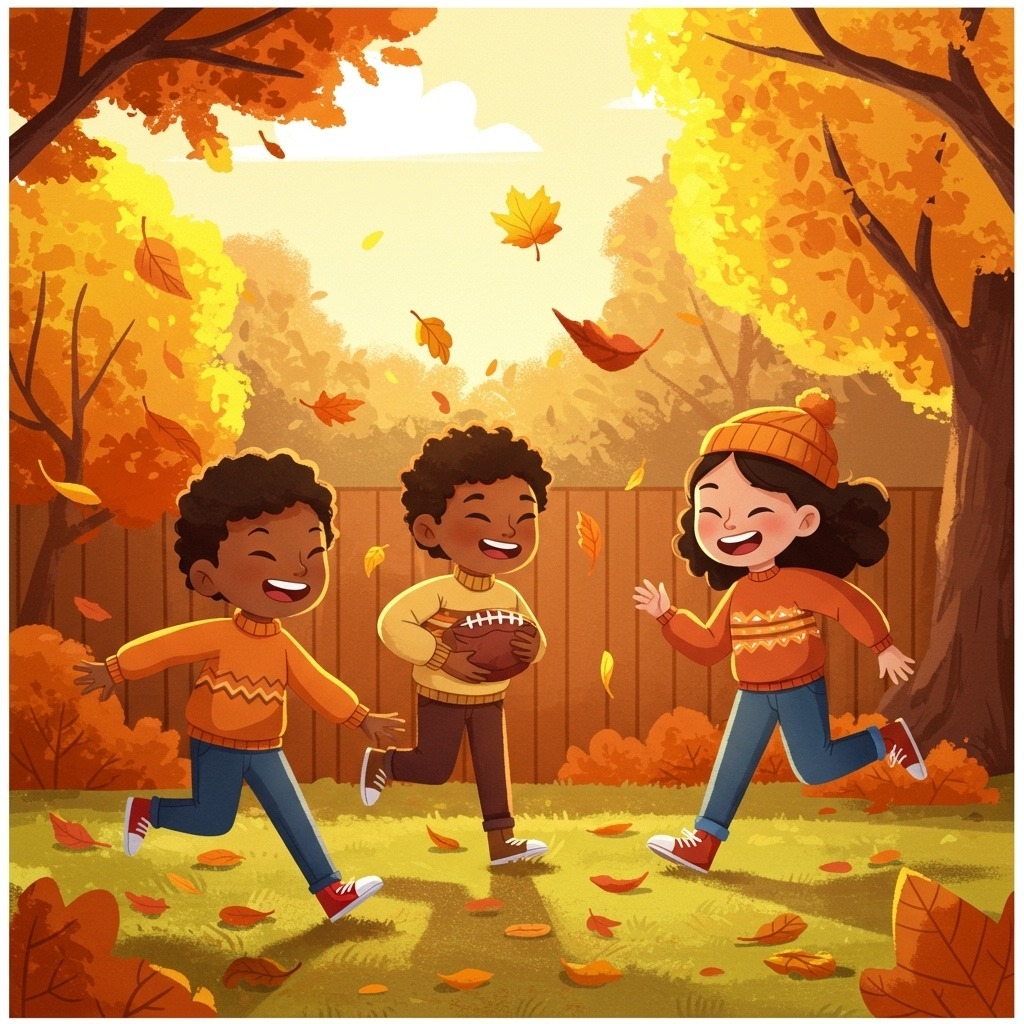
Family Football Game – Many families play touch football before dinner. It doesn’t have to be serious—even just tossing the ball around in the backyard creates memories. Dress warmly, take photos, and let the kids make the rules.
Volunteer Together – Serve at a soup kitchen, deliver meals to elderly neighbors, or donate food to a food bank. Teaching kids to give back is one of the most valuable Thanksgiving traditions. Children who regularly participate in acts of service develop stronger empathy and social awareness.
Thanksgiving Crafts – Set up a craft station with fall-themed projects. Turkey handprints, paper plate pilgrims, gratitude wreaths—anything goes. The act of creating together builds connection, and you’ll have decorations made with love. PBS Parents offers wonderful ideas for gratitude crafts that combine creativity with meaningful conversation.
After-Dinner Traditions
When bellies are full and the dishes are (mostly) done, these traditions keep the celebration going.
Turkey Trot or Family Walk – Walk off the meal together. Bundle up and enjoy the late afternoon. Some communities have organized Turkey Trots (5K runs) that families participate in together.
Board Games Tournament – Pull out the board games and play together. Make it official with a trophy (even if it’s just a wooden spoon with “Thanksgiving Champion” written on it). The competition and laughter create memories that last way longer than the food. If your kids love games, our collection of toddler board games has great options for younger players.
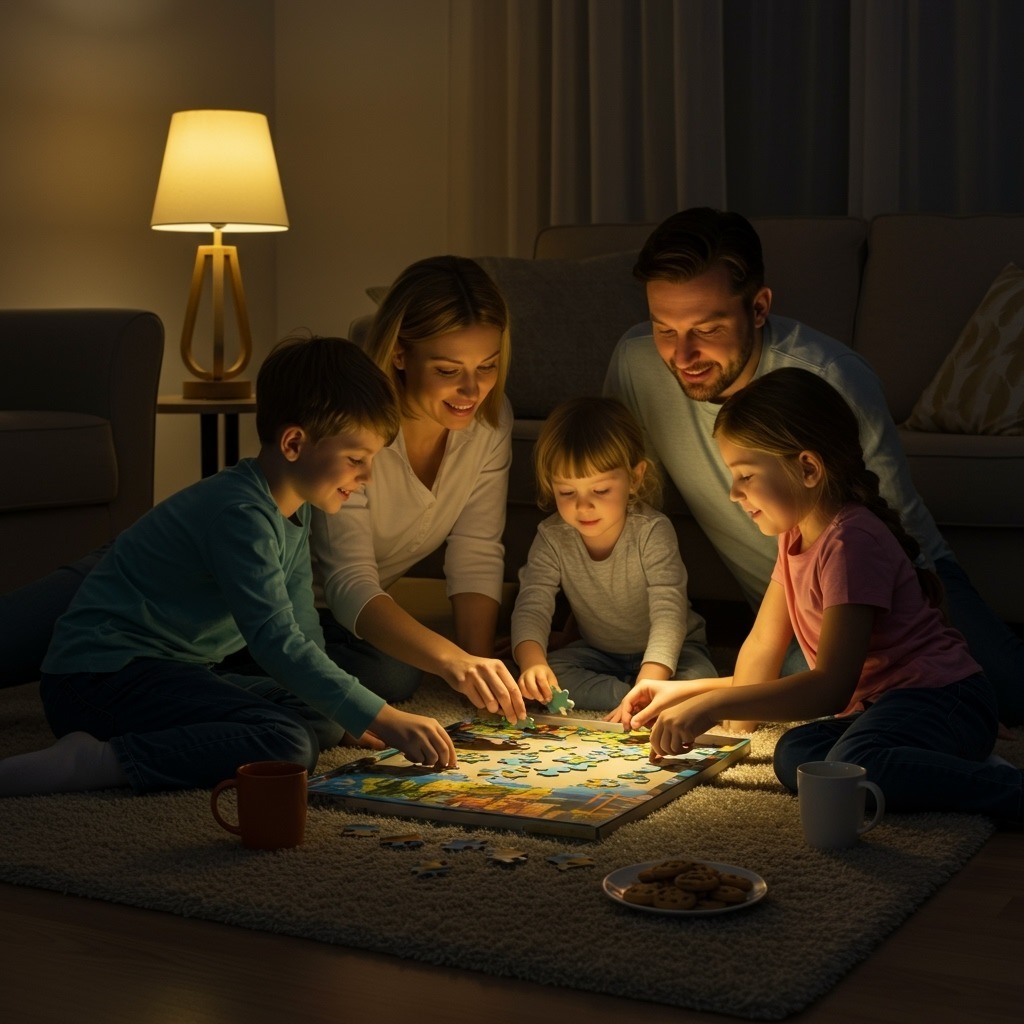
Puzzle Tradition – Start a puzzle on Thanksgiving and work on it together over the long weekend. There’s something peaceful about sitting around a puzzle, chatting, and working toward a common goal.
Movie Marathon – Watch the same movie(s) every Thanksgiving. Some families do a Charlie Brown Thanksgiving, others watch football, and some go for a family-friendly classic. The predictability is comforting for kids.
Talent Show – Each family member prepares a “talent” to perform after dinner. It can be a song, a joke, a magic trick, or even just showing off a recent accomplishment. Kids love having a stage, and it’s hilarious.
Story Time – Read Thanksgiving stories together as a family. Some favorites include “Thanks for Thanksgiving” by Julie Markes and “Bear Says Thanks” by Karma Wilson. Reading together creates calm after an exciting day.
All-Month-Long Traditions
These aren’t just for Thanksgiving Day—they build anticipation throughout November.
Daily Gratitude Share – At dinner each November night, everyone shares one thing from their day they’re grateful for. By Thanksgiving, gratitude has become a natural habit. According to Mayo Clinic, families who practice regular gratitude together develop stronger emotional bonds, and children show improved mental health outcomes.
Countdown Chain – Make a paper chain with one link for each day until Thanksgiving. On each link, write an activity, gratitude prompt, or simple task. Remove one link each day. Kids love countdowns.
Thanksgiving Book Basket – Collect Thanksgiving and gratitude-themed books and keep them in a special basket that only comes out in November. Read one each night before bed.
Kindness Challenge – Each family member tries to do one act of kindness each day in November. Keep track on a chart and share what you did at dinner. This builds the connection between gratitude and generosity.
Recipe Testing – Let kids help test recipes in the weeks before Thanksgiving. They’ll feel invested in the meal, and you’ll know what actually tastes good.
Letter Writing – Write thank you letters or draw pictures for people who’ve helped your family this year. Mail them before Thanksgiving. Teachers, coaches, neighbors, family members—everyone loves getting mail.
Unique and Creative Traditions
These are less common but absolutely loved by the families who do them.
Thanksgiving Games – Host “Turkey Games” with fun competitions. Wind-up turkey races, pin the feathers on the turkey, or trivia about your family. Divide into teams with silly names like “The Cranberries” or “The Sweet Potatoes.”
Nature Mandalas – Walk in nature and collect fallen leaves, acorns, pine cones, and sticks. Create mandalas or designs on the ground or a table. It’s meditative, beautiful, and connects kids to the season.
Turkey Talks – Each family member researches something they’re interested in and gives a short presentation at dinner. It can be anything—dinosaurs, a historical figure, their favorite animal. Learning together is bonding.
Photo Booth – Set up a simple photo booth area with fall props and a nice backdrop. Take family photos every Thanksgiving in the same spot. Watching your family grow through the years is priceless.
Handprint Tradition – Each year, trace everyone’s hands on paper and write the date. Keep them all together. Seeing how much hands grow over the years brings everyone to tears (in a good way).
Time Capsule – Create a family time capsule each Thanksgiving with photos, drawings, newspaper clippings, and notes about the year. Open it in 5 or 10 years.
Thanksgiving Bingo – Create bingo cards with typical Thanksgiving occurrences: “Someone falls asleep during football,” “Turkey is dry,” “Someone says ‘I’m so full,'” “Kids argue over wishbone.” Play throughout the day.
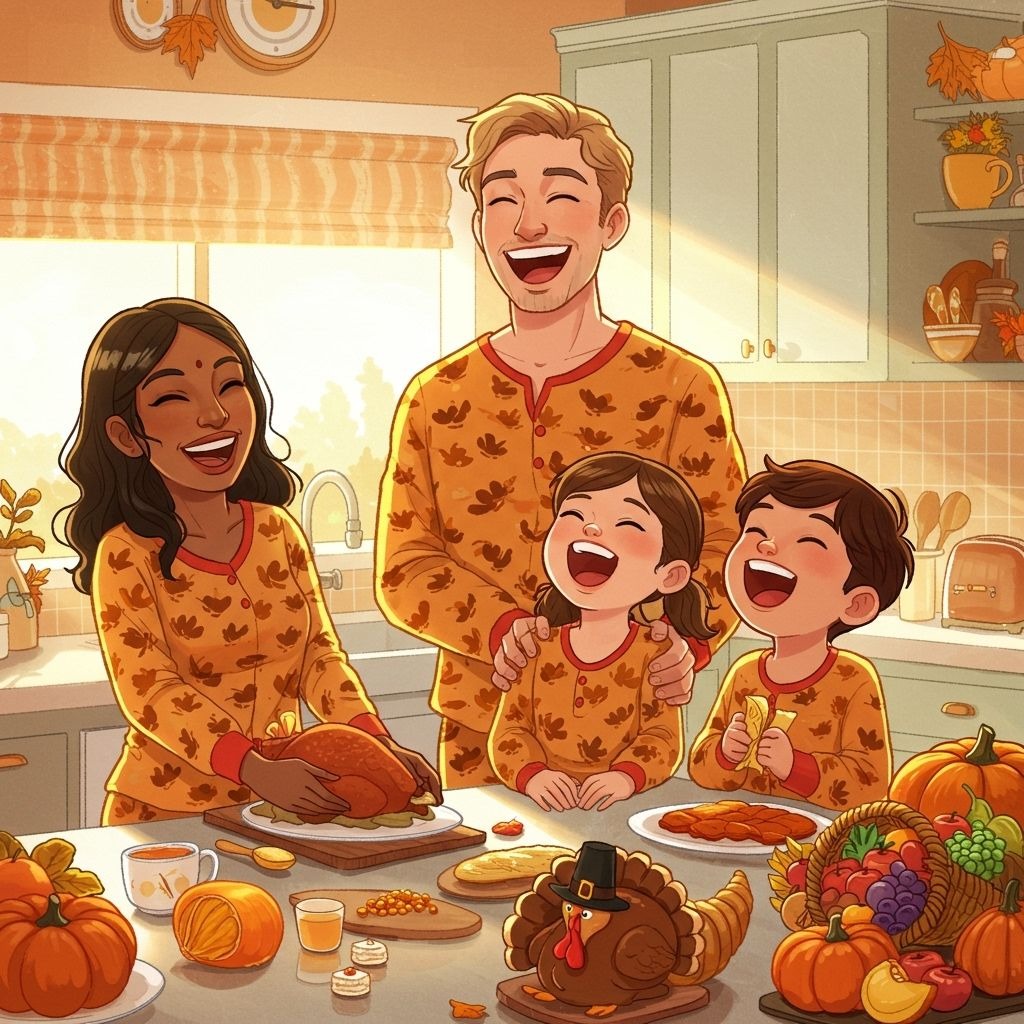
Matching Pajamas – Wear matching Thanksgiving or fall-themed pajamas on Thanksgiving morning. Take a photo. It’s silly and fun and makes kids feel like they’re part of a team.
How to Actually Start a Thanksgiving Tradition That Sticks
Starting a tradition sounds easy, but making it stick is harder. Here’s what I’ve learned:
Start the Conversation Early – In October, talk to your kids about what traditions they’d like to start. When they have buy-in from the beginning, they’re more invested.
Keep It Simple – The traditions that last are the ones that don’t require tons of prep or stress. If it feels like a chore, it won’t survive.
Do It at Least Three Years – It takes about three years for something to feel like a “tradition” rather than just “something we did once.” Commit to consistency.
Document It – Take photos of your traditions each year. Create an album or digital folder. Looking back at past years reinforces the importance of the tradition.
Be Flexible – If something isn’t working, change it. Traditions should bring joy, not obligation. We dropped two traditions that felt forced and replaced them with ones we actually enjoy.
Let It Evolve – As kids grow, traditions can grow with them. What works for a toddler might not work for a teenager, and that’s okay.
Age-Appropriate Thanksgiving Traditions
For Toddlers (Ages 1-3):
- Simple gratitude phrases: “I’m thankful for Mommy”
- Handprint turkeys
- Looking at Thanksgiving picture books
- Helping stir ingredients (with supervision)
- Collecting pretty leaves on a walk
For Preschoolers (Ages 3-5):
- Dictating what they’re thankful for while you write
- Creating simple crafts
- Singing Thanksgiving songs
- Playing pretend “Thanksgiving dinner” with toys
- Helping set the table
For Early Elementary (Ages 5-8):
- Writing their own gratitude lists
- More complex crafts and activities
- Helping cook simple dishes
- Performing in a family talent show
- Understanding the history of Thanksgiving at an age-appropriate level
For Older Kids (Ages 9+):
- Deeper conversations about gratitude and privilege
- Taking on significant cooking responsibilities
- Leading younger kids in traditions
- Writing thoughtful thank-you notes.
- Volunteering in the community
The key is matching the tradition to the child’s developmental stage. Don’t expect a three-year-old to sit still for a long gratitude conversation, and don’t bore a ten-year-old with baby crafts.
Making Thanksgiving Traditions Meaningful (Not Just Instagram-Worthy)
Can I be honest? It’s so easy to get caught up in making things look perfect for social media that we forget the actual point. I’ve been guilty of this.
One year, I spent an hour getting the “perfect” photo of our gratitude tree while my kids waited impatiently to go play. Later, my daughter said, “That wasn’t fun, Mommy. You were grumpy.” She was right.
Real traditions don’t have to be photographable. Some of our most meaningful moments happen when we’re too busy laughing or talking to think about grabbing a camera.
Yes, take photos—memories are important. But don’t let the documentation become more important than the actual experience. Your kids will remember how they felt, not whether the lighting was good.
When Thanksgiving Traditions Don’t Go As Planned
Last year, our gratitude jar tradition was a complete flop. We forgot to add papers most days, the jar fell and broke, and by Thanksgiving, we had exactly four slips of paper to read.
I was frustrated, but my husband reminded me: “This is the first year we tried it. We’ll do better next year.” And you know what? He was right. This year, we moved the jar to the dinner table where we’d see it every meal, and it’s been so much better.
Not every tradition will work perfectly the first time (or ever). Some years will be chaotic. Some years, people will be missing. Some years, someone will be sick or the turkey will burn, or family drama will overshadow everything.
That’s life. The tradition isn’t about perfect execution—it’s about showing up and trying, year after year, to create moments of connection and gratitude.
Balancing Old and New Thanksgiving Traditions
If you grew up with certain Thanksgiving traditions and now have your own family, you might feel torn between honoring what you knew and creating something new.
My advice? Take what you loved from your childhood and bring it into your family. Leave behind what didn’t work or what doesn’t fit your values. And create space for new traditions that reflect who your family is now.
When I got married, I brought my family’s tradition of watching the Macy’s parade. My husband brought his family’s tradition of playing board games after dinner. Together, we created a new tradition of volunteering. All three coexist beautifully.
Talk to your partner (if you have one) about what traditions mattered to each of you growing up. Find ways to honor both families while also creating your own identity as a unit.
The Real Magic of Thanksgiving Tradition for Kids
Here’s what surprised me most about establishing Thanksgiving traditions: my kids started noticing the passage of time in a meaningful way.
“Remember last Thanksgiving when I couldn’t reach the counter to help cook? Now I can!”
“Look at my handprint from two years ago—it was so tiny!”
“We’re doing the gratitude jar again! I love this!”
Traditions give children anchors in time. They create a sense of continuity and belonging that’s hard to replicate any other way. In a world that feels increasingly chaotic and fast-paced, these rituals provide stability and comfort.
They also teach kids that some things are worth protecting—that not everything has to change just because it’s a new year or a new phase of life. Some things stay the same because they matter.
Teaching Kids the True Meaning of Thanksgiving
Beyond the fun traditions, it’s important to teach kids the real history and meaning of Thanksgiving in an age-appropriate way. The traditional “Pilgrims and Indians” story is overly simplified and doesn’t honor Indigenous perspectives.
Talk to kids about gratitude, harvest celebrations, and coming together as a community. For older kids, introduce conversations about Native American history and what Thanksgiving means to Indigenous communities today. National Geographic Kids offers excellent, age-appropriate resources about Thanksgiving history that balance celebration with accurate historical context.
Focus on universal themes: thankfulness, generosity, community, and abundance. These are values worth celebrating regardless of the complicated history.
Frequently Asked Questions
What’s the best Thanksgiving tradition to start with young kids?
Start with a simple gratitude practice, like going around the table and each person sharing one thing they’re thankful for before eating. It’s easy, requires no prep, and directly teaches the meaning of Thanksgiving. For very young kids (toddlers), try a visual tradition like a thankful tree where they can see their gratitude grow throughout the month. Keep it simple and fun—complicated traditions won’t stick with little ones who have short attention spans.
How do I get my kids excited about Thanksgiving traditions?
Give them ownership. Let them help choose which traditions to start or continue. When kids feel like they have a say, they’re much more invested. Also, focus on traditions that are actually fun for kids, not just meaningful for adults. Games, crafts, and activities where they’re the center of attention work better than sitting still for long conversations. Make it clear that these are special things “our family does” to build that sense of belonging and pride.
What if the extended family doesn’t want to participate in our traditions?
You can’t control what the extended family does, but you can control your immediate family’s practices. If you’re hosting, kindly explain your traditions and invite participation without forcing it. If you’re visiting someone else’s home, do your traditions earlier in the day before you leave, or save them for when you return home. Some traditions are just for your nuclear family, and that’s perfectly okay. You might also find that over time, extended family members start to enjoy and look forward to your traditions.
Are we starting too late if our kids are already school-age?
Absolutely not! It’s never too late to start traditions. In fact, school-age kids can be more engaged in creating traditions because they understand the concept better. Frame it positively: “We’re starting a new family tradition this year!” Kids love feeling like they’re part of something special that’s just beginning. Some of the best traditions start when families realize they want more intentional connection, regardless of their kids’ ages.
How many Thanksgiving traditions should we have?
Quality over quantity. Start with 2-3 solid traditions that you can consistently maintain year after year. Once those feel natural and automatic, you can add more if you want. Too many traditions, especially when you’re starting out, lead to stress and burnout. Remember, the goal is connection and gratitude, not checking boxes. A few meaningful, consistent traditions are far more valuable than a dozen half-hearted ones.