
I’ll never forget the afternoon my daughter melted down in the grocery store checkout line.
She was four, and I’d said no to the candy bar she was clutching. The tears came fast and loud. People stared. My face burned. And before I could stop myself, the words flew out: “Stop crying! You’re fine!”
But she wasn’t fine. And neither was I.
The crying got louder. She felt dismissed. I felt like a failure. And in that moment, I realized something important: telling a child to stop crying is like telling them their feelings don’t matter. It shuts down communication instead of opening it. It prioritizes our discomfort over their emotional needs.
That day changed how I respond to tears. I started asking myself: What does my child actually need right now? Not silence. Not compliance. But connection, understanding, and a safe space to feel big things.
If you’ve ever caught yourself saying “stop crying” and immediately regretted it, you’re not alone. Here’s what to say instead—and why it makes all the difference.
Why “Stop Crying!” Backfires Every Single Time
When we tell kids to stop crying, we think we’re helping them calm down. But here’s what they actually hear:
- “Your feelings are too much for me.”
- “You’re being dramatic.”
- “I don’t want to deal with this.”
Even if that’s not what we mean, it’s what lands. And over time, kids learn to hide their emotions instead of processing them. They bottle things up, act out in other ways, or lose trust that we’re a safe place to share hard feelings.
Crying isn’t misbehavior. It’s communication. And our job isn’t to stop it—it’s to meet it with empathy and guidance.

What to Say Instead: 20 Phrases That Actually Work
These aren’t just phrases—they’re invitations. Invitations for your child to feel seen, heard, and supported through whatever storm they’re weathering.
1. “I’m here with you.”
This simple sentence is a lifeline. It tells your child they’re not alone in their big feelings. You don’t have to fix it. You don’t have to explain it away. Just be present.
2. “It’s okay to feel sad/frustrated/angry.”
Give your child permission to experience the full range of human emotion. When we validate feelings, we teach kids that emotions aren’t dangerous—they’re just information.
3. “Do you want a hug, or do you need some space?”
Some kids want to be held when they cry. Others need to process alone first. Asking this question respects their autonomy and teaches them to tune into their own needs.
4. “I can see this is really hard for you.”
Empathy doesn’t require understanding why something is hard. It just requires believing your child that it is. This phrase bridges the gap between your world and theirs.
5. “Take all the time you need. I’m not going anywhere.”
Patience is a gift. When you’re not rushing your child to “get over it,” you’re teaching them that feelings have a beginning, middle, and end—and that’s okay.
6. “Can you tell me what happened, or should we just sit together for a bit?”
Sometimes kids need to talk. Sometimes they just need to be held. Let them choose.
7. “Let’s take some deep breaths together.”
This isn’t about stopping the tears—it’s about co-regulation. When you breathe slowly and calmly, your child’s nervous system starts to mirror yours. Model the calm you want to see.
For more on gentle, regulation-focused parenting, explore soft parenting strategies that prioritize connection over control.
8. “I get upset sometimes, too. Everyone does.”
Normalize big feelings by sharing your own. “I felt really frustrated this morning when I couldn’t find my keys. It’s hard when things don’t go the way we want.”
9. “Your feelings make sense to me.”
Even if the trigger seems small, the feeling is real. When you say this, you’re validating your child’s internal experience—and that builds trust.
10. “What do you need right now?”
Asking this empowers kids to start identifying and advocating for their own needs. It’s a skill that will serve them for life.
11. “Let’s figure this out together.”
Shift from “stop crying” to “let’s solve this.” It turns a hard moment into a team effort and teaches problem-solving alongside emotional regulation.
12. “You’re safe. I’ve got you.”
For younger kids, especially, tears can feel scary and overwhelming. Reassurance that they’re physically and emotionally safe helps them settle.
13. “I love you no matter what.”
Unconditional love isn’t just a feeling—it’s a message kids need to hear out loud, especially when emotions run high.
14. “Tell me more about what’s making you upset.”
Curiosity opens doors. When you genuinely want to understand, kids feel valued—and they’re more likely to open up.
15. “I’m listening.”
Sometimes the most powerful thing you can do is just listen. No advice. No fixing. Just presence.
16. “Crying helps us let out big feelings. It’s actually really healthy.”
Reframe crying as a coping tool, not a problem. When kids understand that tears serve a purpose, they’re less ashamed of them.
17. “Would it help to draw/write/play about how you’re feeling?”
For kids who struggle with words, creative outlets can be incredibly healing. Keep crayons, playdough, or a feelings journal handy.
18. “I see you’re overwhelmed. Let’s take a break.”
Acknowledge the feeling and offer a gentle redirect. Sometimes stepping away from the trigger (even briefly) helps kids reset.
19. “You’re doing a good job telling me how you feel.”
Praise the communication, even if it’s messy and tearful. This reinforces that expressing emotions is a skill worth practicing.
20. “I’m proud of you for letting your feelings out instead of holding them in.”
This flips the script entirely. Instead of shame around crying, you’re celebrating emotional honesty.
When My Words Still Feel Hard to Find
Even with a list of phrases, there are days when responding calmly feels impossible. Maybe you’re exhausted. Maybe you’re triggered by the crying. Maybe you’re in public and just want it to stop.
Here’s what I do when I’m at my limit:
- Pause and breathe. Literally count to five before responding.
- Name my own feelings silently. “I’m feeling frustrated right now. That’s okay.”
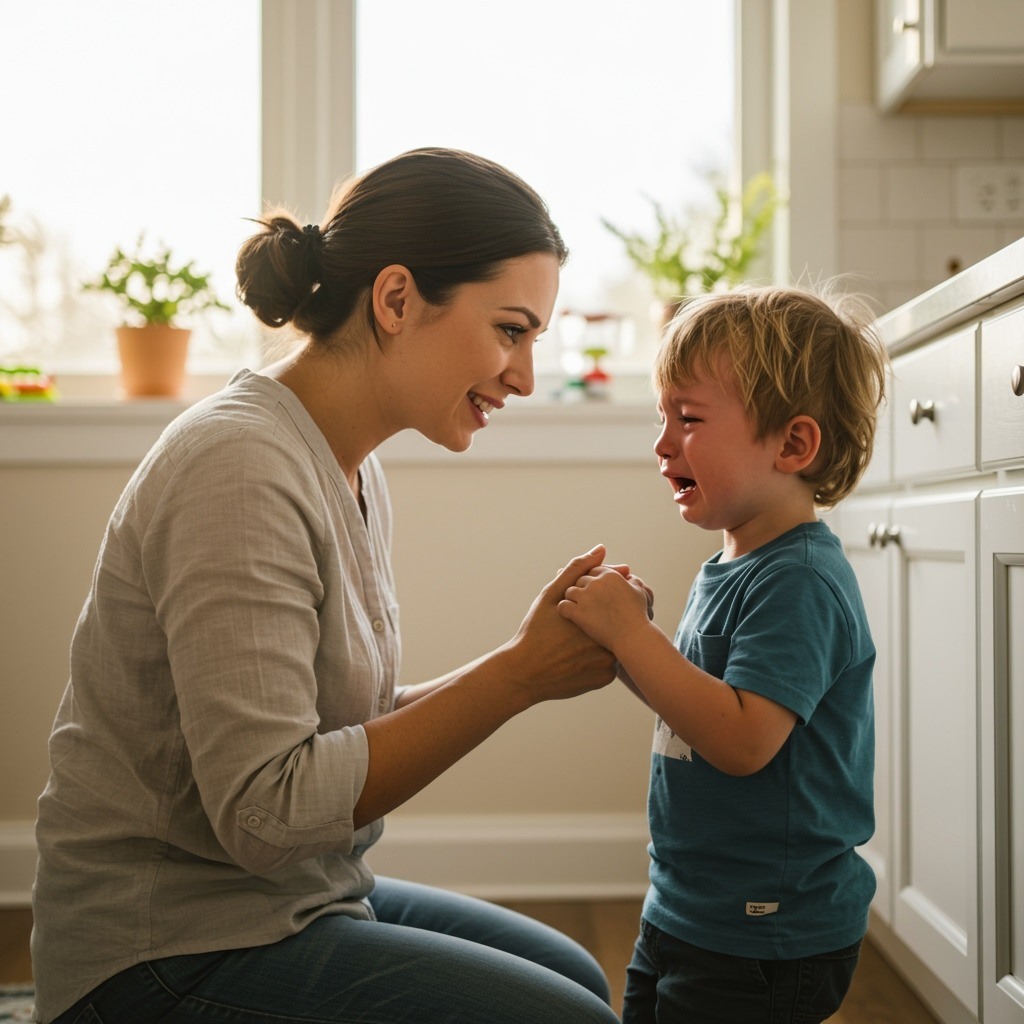
- Lower my voice and body. Kneel down. Speak quietly. My calm becomes their calm.
- Give myself grace. If I snap, I apologize. “I’m sorry I said that. Let’s try again.”
Parenting isn’t about perfection. It’s about repair. And kids are incredibly forgiving when we show up honestly.
For more on managing your own big feelings while parenting, the CDC’s Positive Parenting Tips offers helpful guidance for emotional regulation at every stage.

Real-Life Scenarios: What to Say When
Your Toddler Is Sobbing Over a Broken Cracker
Instead of: “It’s just a cracker! Stop crying!”
Try: “Oh no, your cracker broke. That’s so frustrating. Do you want me to help you find another one?”
Why it works: You’re acknowledging the feeling without dismissing it, then offering a solution.
Your Preschooler Is Crying Because They Have to Leave the Park
Instead of: “We’ve been here for an hour! Stop crying and get in the car!”
Try: “I know you don’t want to go. Leaving fun places is really hard. Let’s take one more look at the swings, then we’ll head home.”
Why it works: You’re validating the disappointment and giving a gentle transition instead of a hard stop.
Your School-Age Child Is Upset About a Friendship Issue
Instead of: “Stop crying. You’ll make new friends.”
Try: “Friend problems hurt so much. Tell me what happened. I’m here to listen.”
Why it works: You’re offering empathy and space to process, not rushing to fix or minimize.
Your Kid Is Crying Because They’re Exhausted or Hungry
Instead of: “Stop crying and eat your dinner!”
Try: “I think you’re really tired. Let’s get some food in you and see if that helps.”
Why it works: You’re meeting the physical need while staying emotionally present.
For more on daily routines that prevent emotional overwhelm, explore activities for kids that help balance energy and downtime.
Teaching Kids to Use Words (Without Dismissing Tears)
One of the goals of responding empathetically to crying is helping kids eventually use words instead. But that takes time and practice.
Here’s how to bridge the gap:
- Name feelings for them. “It looks like you’re feeling really angry right now.”
- Model emotional language. “I’m feeling frustrated because I can’t find my phone.”
- Use books and stories. Talk about how characters feel and why.
- Practice when calm. Role-play scenarios and practice using “I feel…” statements.
- Celebrate progress. “I love how you told me you were upset instead of just crying!”
And remember: crying isn’t always a problem to solve. Sometimes it’s just the way emotions come out, and that’s okay.

When to Be Concerned About Crying
Most childhood crying is developmentally normal. But if your child:
- Cries constantly and intensely without being able to calm down,
- Seems inconsolable even with your comfort and connection,
- Refuses to engage in daily activities or play because of frequent tears,
- Shows signs of anxiety, aggression, or withdrawal alongside the crying,
It might be time to talk to a pediatrician, therapist, or school counselor. Early support can make a world of difference, and seeking help is a sign of strength—not failure.
What I’m Still Learning
Even now, years after that grocery store meltdown, I’m still learning. There are days I get impatient. Days I say the wrong thing. Days I wish my kids would just calm down already.
But here’s what I know for sure: every time I choose empathy over control, connection over dismissal, I’m teaching my kids that their feelings are safe with me. That they don’t have to hide or shrink to earn my love. That crying isn’t weakness—it’s courage.
And honestly? That’s the kind of parent I want to be. Not perfect. Just present.
Frequently Asked Questions
What if my child cries to manipulate me?
Manipulation implies intentional, calculated behavior—something young children aren’t capable of. What looks like manipulation is usually a child who hasn’t yet learned other ways to meet their needs. Respond with empathy and set clear, kind boundaries.
How do I stay calm when my child’s crying triggers me?
First, acknowledge your own feelings. It’s okay to feel overwhelmed. Take deep breaths, step away briefly if safe to do so, and remind yourself: this is hard for them too. If crying consistently triggers you, consider talking to a therapist about your own emotional history.
Can I ever set limits while my child is crying?
Absolutely. Empathy and boundaries can coexist. “I see you’re upset, and we still need to leave the store.” Validate the feeling, hold the limit, and offer comfort.
What if I’ve already said “stop crying” a hundred times?
Start fresh today. Apologize if needed: “I’m sorry I told you to stop crying yesterday. Your feelings are important to me.” Kids are incredibly forgiving and resilient.
How long should I let my child cry?
There’s no set time limit. Follow your child’s lead. Some kids need five minutes; others need longer. Stay present, offer comfort, and trust the process.
The Gift You’re Giving
When you choose empathy over “stop crying,” you’re not just managing a moment. You’re shaping a life.
You’re teaching emotional intelligence. You’re building trust. You’re showing your child that they’re worthy of patience, love, and understanding—even at their messiest.
And that? That’s the kind of gift that lasts forever.
So the next time tears start flowing, take a breath. Kneel down. And remember: you don’t need to stop the crying. You just need to show up.
For more ways to build connection and emotional strength in your home, explore the parenting styles chart and discover what resonates with your family.