
I still remember the afternoon my seven-year-old son sat at the kitchen table for two hours trying to complete a single page of math homework. Every 30 seconds, he’d look up at the clock, ask for water, suddenly need the bathroom, or tell me about something that happened three weeks ago. By the time we finished, we were both exhausted and frustrated, and I found myself thinking, There has to be a better way.
That was the day I realized his lack of focus wasn’t about being difficult or lazy—it was about not having the right tools and environment to concentrate. So I started researching how to improve concentration in kids, testing different strategies with my own children, and talking to other moms who’d figured out what actually works. What I discovered changed everything about how we approach homework, reading time, and pretty much any activity that requires focus.
Here are the 9 tips to improve concentration in kids that made the biggest difference in our house, along with what didn’t work and what I wish I’d known sooner.
Why Some Kids Struggle With Concentration (And It’s Not What You Think)
Before I share what worked, let’s talk about why concentration is so hard for kids in the first place. Their brains are still developing the prefrontal cortex—the part responsible for focus, planning, and self-control. A child’s attention span roughly equals their age in minutes, which means expecting your six-year-old to focus for 30 minutes straight is setting everyone up for failure.
But here’s what surprised me: Most concentration problems aren’t actually about ability—they’re about environment, energy levels, and whether we’re asking kids to focus in ways that work against how their brains naturally function. Once I understood this, everything changed. Instead of fighting my son’s natural tendencies, I started working with them, and suddenly, homework became manageable instead of a battle.
Factors like inconsistent sleep schedules, too much screen time, lack of physical activity, and overstimulating environments all contribute to focus problems. The good news? These are all things we can actually control and change.
Set Up a Distraction-Free Zone (Even in a Chaotic House)
The first tip to improve concentration in kids is creating a space where focus is actually possible. I used to let my kids do homework at the kitchen table while I cooked dinner, their siblings played nearby, and the TV was on in the background. Then I wondered why they couldn’t concentrate.
Now we have a dedicated homework spot in a quiet corner of their bedroom. It’s not fancy—just a small desk facing a blank wall, away from windows, toys, and anything interesting. During focus time, phones are in another room (yes, even mine), tablets are off, and siblings know this is quiet time. The transformation was immediate.
You don’t need a separate room or expensive furniture. A card table in a corner works just fine. What matters is eliminating visual and auditory distractions. Clear off everything except what’s needed for the current task. Keep supplies within reach so kids don’t have an excuse to get up and wander off. For us, having everything organized in kids’ activity workbooks meant fewer interruptions searching for pencils or paper.
One trick that helped: I let my kids choose one “focus item” for their desk—a small fidget toy, a smooth rock, or a stress ball. Having something to quietly manipulate with their hands while thinking actually improved their concentration rather than distracting them. Just make sure it’s silent and doesn’t become more interesting than the task at hand.
Establish a Consistent Daily Routine (This Changed Everything)
This one felt too simple to actually work, but establishing a consistent routine was probably the single most effective tip to improve concentration in kids that I implemented. When kids know what to expect and when to expect it, their brains don’t waste energy wondering what comes next or trying to negotiate different rules.
We now have set times for homework (4:00-4:45 PM, right after a snack and outdoor play), reading (7:00 PM, after dinner and before bath), and even creative activities on weekends. My kids’ bodies and brains have adapted to this schedule, and focus comes more naturally during these designated times.
The routine also includes consistent sleep and wake times, which were harder to implement than I expected. But getting my kids to bed by 8:30 PM so they wake up naturally around 7:00 AM made a massive difference in their daytime focus. School-aged children need 9-12 hours of sleep, and we were falling short before making this change.
Meals happen at the same times too, which keeps blood sugar stable and prevents the energy crashes that make concentration impossible. If you’re looking for ideas that work within a consistent routine, check out these activities to do with kids that naturally support focus and development.

Use the Timer Trick (Why Short Bursts Beat Long Sessions)
Here’s something I didn’t expect: Shorter work periods with breaks actually result in better focus and more completed work than long, grueling sessions. One of the best tips to improve concentration in kids is to use timers to create manageable focus periods.
We started with 10-minute work sessions followed by 2-minute breaks. My son could handle focusing for just 10 minutes, knowing a break was coming. As his focus improved, we gradually increased to 15 minutes, then 20. Now he can work for 25 minutes straight before needing a break, which is age-appropriate for an eight-year-old.
During breaks, he gets up and moves—jumping jacks, running outside, playing with the dog—anything that burns energy and gives his brain a rest. What he doesn’t do during breaks is look at screens, which I’ll talk about more in a minute.
The Pomodoro Technique is the official name for this method, and it works because it aligns with how our brains naturally work in cycles of focus and rest. A kitchen timer works great, or you can download a timer app designed for kids that makes the process more visual and engaging.
I also use timers for activities that tend to drag on forever, like getting dressed in the morning or cleaning up toys. Knowing they have 5 minutes to complete a task helps kids focus instead of dawdling. Plus, many kids find it motivating to “beat the timer.”
Get Their Bodies Moving Before Expecting Their Minds to Focus
This tip to improve concentration in kids feels counterintuitive—how does physical activity lead to better focus? But research consistently shows that exercise directly improves attention, and I’ve seen it work in my own home.
Before homework or any activity requiring concentration, we do 10-15 minutes of physical activity. Sometimes it’s a quick bike ride around the block, a game of tag in the backyard, or even just dancing to two or three songs in the living room. It burns off excess energy and gets oxygen flowing to the brain.
The difference is remarkable. On days when we skip this step because we’re running late or the weather is terrible, focus is noticeably worse. On days when we make time for movement first, homework gets done faster and with less frustration.
For younger kids, activities like outdoor games provide the perfect combination of physical activity and fun that sets them up for better focus later. Even something as simple as a bean bag toss game in the backyard for 10 minutes before homework makes a real difference.
Studies have found that even a single 20-minute walk improved attention in children with ADHD. For kids without attention challenges, the effects are still significant. Physical education and recess aren’t just “fun” additions to the school day—they’re essential for cognitive function and concentration.

Limit Screen Time (Yes, Including Educational Apps)
This is the tip to improve concentration in kids that I resisted the most because screens were my go-to babysitter when I needed to get things done. But the evidence is overwhelming: Excessive screen time, especially within an hour before activities requiring focus, significantly impairs concentration.
Experts recommend limiting screen time to 1-2 hours per day for school-aged children, and none of that should happen right before homework or bedtime. Blue light from screens suppresses melatonin production, affecting sleep quality, and the rapid-fire stimulation of games and videos makes slower-paced activities like reading or homework feel boring by comparison.
We now have clear rules: No screens in the morning before school, no screens within an hour of homework time, and all devices turn off 30 minutes before bed. Educational apps count as screen time—sorry, but they do. Even “good” content affects the brain’s ability to focus on non-screen activities.
This was hard to implement. There was pushback and whining. But within two weeks, I noticed my kids engaged more deeply with books, board games, and creative play. They also stopped asking “Can I have the tablet?” every 10 minutes. Their baseline attention span improved across all activities, not just homework.
If your kids love specific shows or games, use them as rewards after focus work is complete, rather than as something available all day. We found that Bluey board games satisfied my kids’ desire to engage with their favorite characters while building concentration skills through gameplay.
Practice Mindfulness and Breathing Exercises (Even With Wiggly Kids)
When someone first suggested mindfulness as a tip to improve concentration in kids, I almost laughed. Have you met children? They don’t sit still and breathe calmly. Except… with the right approach, they actually do.
We started incredibly simply: Three deep breaths before starting homework. That’s it. Just breathe in slowly through the nose for four counts, hold for four counts, breathe out through the mouth for four counts. Three times. This 30-second exercise helps kids transition from active play mode to focus mode.
As they got comfortable with this, we added a one-minute body scan where they notice how their body feels—are their shoulders tight? Is their jaw clenched? Are they hungry or need to use the bathroom? Addressing these physical discomforts before starting work eliminates common focus interruptions.
Now my eight-year-old will sometimes do the breathing exercise on his own when he feels frustrated or distracted. He’s learned that pausing and breathing helps him refocus, which is a skill he’ll use his entire life.
For younger children, you can make it playful: “Smell the flower, blow out the candle” (breathe in deeply, breathe out slowly). Or try the 5-4-3-2-1 technique: Name 5 things you can see, 4 you can hear, 3 you can touch, 2 you can smell, and 1 you can taste. This grounds them in the present moment and activates focus.
Use Concentration Games That Feel Like Play
One of my favorite tips to improve concentration in kids is using games that build focus skills without feeling like work. Kids naturally want to play, so why not make concentration practice fun?
Memory games are perfect for this. Whether it’s classic card-matching games or apps like Simon Says, these activities require sustained attention and working memory. We play memory games while waiting at restaurants or during car rides—times when focus practice would otherwise feel forced.
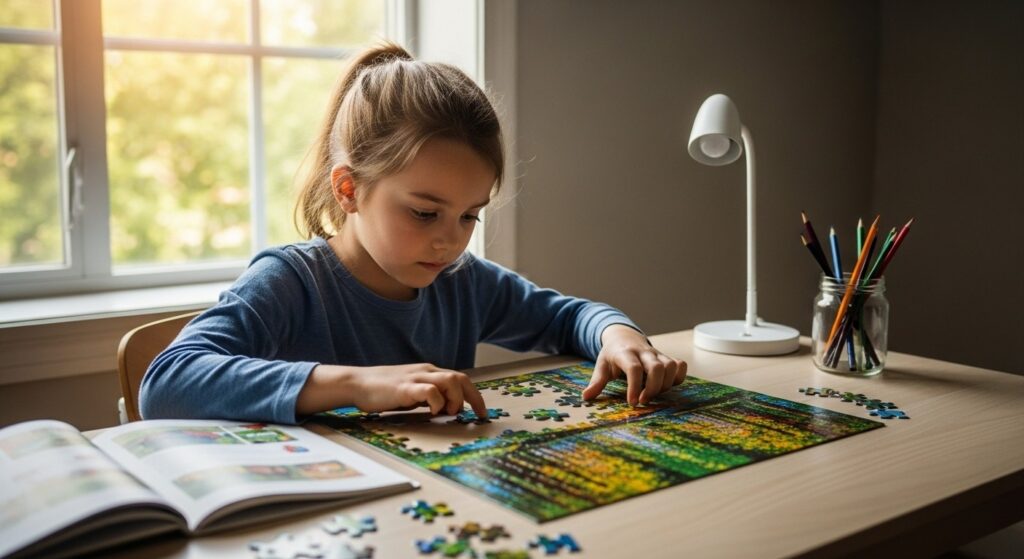
Puzzles require concentration, problem-solving, and persistence. Start with age-appropriate puzzles and gradually increase difficulty. The sense of accomplishment when completing a challenging puzzle motivates kids to sustain focus for longer periods. Keep a puzzle table set up where kids can work on one over several days.
Strategy board games like chess, checkers, or Connect Four teach kids to think ahead, plan moves, and stay focused on the game state. We have a regular family game night, and I’ve watched my kids’ ability to focus during games improve dramatically over time. Having a variety of board games for kids means you can match the game to your child’s current attention level and gradually increase complexity.
Building activities with LEGOs, blocks, or building sets require sustained attention and planning. Following complex building instructions is excellent concentration practice that kids actually enjoy. For additional focus-building options, kids’ craft supplies offer open-ended creative activities that naturally encourage sustained attention.
Cooking together is another underrated concentration activity. Following recipes requires reading, measuring, sequencing steps, and staying focused until the task is complete. Plus, there’s a delicious reward at the end. Try our easy baking recipes for kids that build concentration while teaching practical skills.

Feed Their Brains the Right Fuel
This tip to improve concentration in kids is about nutrition, and it made a bigger difference than I expected. What kids eat directly affects their ability to focus, especially during the mid-morning and mid-afternoon focus periods.
We shifted to meals and snacks that provide steady energy rather than quick spikes and crashes. Breakfast now includes protein and healthy fats—eggs, yogurt, nut butter, whole grain toast—instead of sugary cereal. Mid-morning snacks are things like cheese and crackers, apple slices with almond butter, or veggies with hummus.
I also increased foods known to support brain function: fatty fish (omega-3s), blueberries (antioxidants), nuts and seeds (vitamin E), and dark leafy greens (folate and vitamins). Making these swaps didn’t require a complete diet overhaul—just more intentional choices about what we keep in the house.
Hydration matters too. Dehydration impairs concentration, and kids often don’t recognize when they’re thirsty. We now start each study session with a full water bottle at the desk. If focus starts to wane, taking a water break often helps.
Limiting added sugars is important because they cause energy crashes that make concentration nearly impossible. This doesn’t mean never having treats—it means being strategic about when. Save sugary snacks for after focus work is complete, rather than right before.
Keeping healthy snack containers filled and easily accessible made it simple for my kids to grab brain-boosting snacks without needing to ask permission or interrupt what they’re doing. For more ideas on meals that support concentration and energy, check out our breakfast ideas for kids.
Model the Focus Behavior You Want to See
Here’s the tip to improve concentration in kids that made me face some uncomfortable truths: Kids learn by watching us, and I was modeling terrible focus habits. I’d sit with my son during homework while scrolling on my phone, checking emails, and half-listening to what he was saying. Then I’d get frustrated when he was distracted.
Now, when it’s focus time for my kids, it’s focus time for me too. I sit nearby with a book or my own work, demonstrating what sustained attention looks like. I don’t check my phone. I don’t jump up to start laundry. I model the behavior I’m asking them to demonstrate.
I also narrate my focus strategies: “I’m feeling distracted right now, so I’m going to take three deep breaths before continuing.” Or “This task is hard, but I’m going to stay with it for 10 more minutes before taking a break.” Hearing these thought processes helps kids develop their own internal focus strategies.
When I make a mistake or lose focus, I acknowledge it: “Oops, I got distracted by that noise. Let me refocus on what I was doing.” This normalizes that everyone struggles with concentration sometimes and shows that refocusing is a skill we can practice.
The most powerful modeling happens when kids see us persist through difficult tasks without giving up or getting frustrated. They learn that concentration isn’t about never getting distracted—it’s about noticing when you’re distracted and choosing to refocus. Understanding different parenting styles can help you find the approach that best supports building these skills in your family.

What Didn’t Work (And What I Wish I’d Known Sooner)
Before I found these tips to improve concentration in kids that actually worked, I tried plenty of strategies that didn’t. Here’s what failed in our house so you can skip the frustration.
Rewards and punishment systems created more problems than they solved. Bribing my son to focus with screen time rewards just made him resent homework and watch the clock instead of engaging with the work. And punishments for not focusing didn’t address the underlying issues—they just added stress that made concentration even harder.
Expecting longer focus periods than his brain could handle was setting us both up for failure. Once I accepted that age-appropriate attention spans are shorter than I thought, everything got easier.
Doing homework at different times every day meant his brain never knew when to expect focus mode. The inconsistency required more mental energy to shift into concentration mode each time.
Letting him skip physical activity when we were short on time always backfired. Those 15 minutes of movement saved more time in focused work than they cost.
Not addressing sleep issues was the biggest mistake. Once we prioritized consistent bedtimes and adequate sleep, every other strategy worked better.
What I wish I’d known sooner: Concentration is a skill that develops gradually with practice, not something kids either have or don’t have. Every child can improve their focus with the right support and environment. The frustration I felt came from expecting too much too soon and not creating the conditions where concentration was actually possible.
Frequently Asked Questions About Improving Concentration in Kids
What is the normal attention span for kids by age?
A general rule is that children can typically focus for about 2-5 minutes per year of their age. So a 4-year-old might sustain attention for 8-20 minutes, while an 8-year-old might focus for 16-40 minutes. These are rough guidelines—every child is different. Expecting focus periods beyond what’s developmentally appropriate sets everyone up for frustration. Using timers to create age-appropriate work sessions followed by short breaks works much better than expecting sustained focus for long periods.
How can I tell if my child’s focus problems are normal or something more?
Most kids struggle with concentration sometimes, especially when tired, hungry, or doing activities that don’t interest them. Concerns arise when focus problems significantly impact daily functioning—struggling to complete age-appropriate tasks despite adequate time and support, extreme difficulty following multi-step directions, frequently losing belongings, or dangerous impulsivity. If concentration problems persist despite implementing these strategies, or if they’re significantly worse than peers the same age, talk to your pediatrician. Conditions like ADHD are real and treatable, and early intervention makes a big difference.
Do concentration games and brain training apps really work?
Research on brain training apps is mixed. While some studies show improvements in specific trained tasks, those skills don’t always transfer to other areas. Traditional games like memory matching, puzzles, chess, and building activities are more effective because they’re hands-on and engage multiple senses. That said, limiting overall screen time (including educational apps) improves concentration more than any specific brain training program. Focus on real-world activities that naturally build attention skills rather than relying on apps.
How long does it take to see improvement in a child’s concentration?
Some strategies show immediate effects—using timers, reducing distractions, and getting physical activity before focus tasks often work the first day. Other changes, like establishing consistent routines or limiting screen time, take 2-4 weeks before you notice significant improvement. Your child’s brain needs time to adapt to new patterns. Be patient and consistent. Most parents report noticeable improvements within a month of implementing multiple strategies together. The key is consistency—doing these things occasionally won’t produce lasting change.
What should I do when my child gets frustrated and wants to quit during focus activities?
Frustration is a normal part of learning to concentrate, especially when tasks are challenging. First, validate their feelings: “I see you’re frustrated. This is hard.” Then help them break the task into smaller pieces: “Let’s just do three problems, then take a break.” Sometimes, taking a quick movement break (jumping jacks, running around the house once) helps reset their brain. If frustration is frequent, the task might be too difficult or the expected focus period too long for their current ability. Adjust expectations and gradually build up. Teaching kids to recognize when they need a break and ask for it is valuable. For more strategies on supporting kids through difficult emotions, explore our guide on setting boundaries for kids.
Improving concentration in kids isn’t about finding one magic solution—it’s about creating an environment and routine where focus can naturally develop. The 9 tips to improve concentration in kids that I’ve shared worked in our house because they address the real reasons kids struggle to focus: inconsistent routines, overstimulation, excess energy, poor sleep, and lack of practice with age-appropriate focus activities.
Start with just one or two strategies that feel most doable for your family. Master those, then add more. Be patient with your child and with yourself—building concentration skills takes time. But the payoff is huge: Less homework frustration, more independence, better academic performance, and life skills that will serve them well into adulthood.
The afternoon homework battles in our house have transformed into manageable work sessions that usually end with my son feeling accomplished rather than defeated. And honestly? That makes every bit of effort worthwhile.