
I’ll never forget the afternoon I realized I was completely failing at connecting with my daughter.
She was sitting at the kitchen table, excitedly telling me about something that happened at school—something about a friend, a game at recess, I honestly can’t remember. I was nodding along, loading the dishwasher, mentally planning dinner, and scrolling through my phone to check if I’d missed an important email.
She stopped mid-sentence and said, “Mommy, you’re not even listening.”
Ouch.
That moment gutted me. Here I was, thinking I was doing a decent job at this whole parenting thing, and I couldn’t even give my kid five minutes of my actual attention. That’s when I knew something had to change. I started researching, talking to other moms, and honestly just paying attention to what actually worked in building real, deep connections with my kids.
Here’s what I’ve learned: building strong relationships with your kids doesn’t require grand gestures or Pinterest-perfect moments. It happens in the everyday, messy, imperfect interactions where you show up, tune in, and let them know they matter more than anything else on your to-do list.

Get Down on Their Level—Literally and Figuratively
One of the simplest ways to connect with your kids is to physically get on their level. I mean, actually sit on the floor, kneel down, or climb onto their bed when they want to talk.
There’s something powerful that happens when you meet your child eye-to-eye. It signals that what they’re saying matters, that you’re not too busy or too important to enter their world. I started doing this consistently about a year ago, and I’ve noticed my kids open up so much more when I’m sitting next to them on the rug rather than standing over them while folding laundry.
Show genuine interest in what they’re showing you. When your toddler brings you the same toy car for the fifteenth time, pause and really look at it. Ask questions. Be curious. These micro-moments of connection add up to a relationship built on trust and attention.
If you’re looking for ways to engage during these floor-time moments, I love keeping kids’ activity books and workbooks within easy reach. They’re perfect for sitting down together and working through puzzles or coloring while chatting about their day.
Let Them Be the Teacher
Here’s something I learned from a teacher friend that completely changed how I interact with my kids: let them teach you about their interests.
My son is obsessed with Minecraft. Honestly, I had no idea what was happening in that pixelated world for the longest time. But one afternoon, instead of dismissing it as “just a game,” I asked him to show me how it works. He lit up. For thirty minutes, he explained crafting, building, survival mode, and all these concepts I still barely understand. But you know what? It didn’t matter that I was clueless.
What mattered was that he got to be the expert. He got to teach me something he loves. And that role reversal—where the kid becomes the teacher—is incredibly empowering for them.
Whether it’s a video game, a sport, a TV show, or a hobby, lean in and let them guide you. Ask follow-up questions. Show enthusiasm. Learn their language.
For hands-on kids, grabbing some kids’ craft supplies and letting them teach you their latest art technique can be a game-changer for connection. My daughter recently taught me how to make friendship bracelets, and now we have matching ones.
Create Sacred One-on-One Time
This one’s hard, especially if you have multiple kids, but it’s so worth it: carve out dedicated one-on-one time with each child.
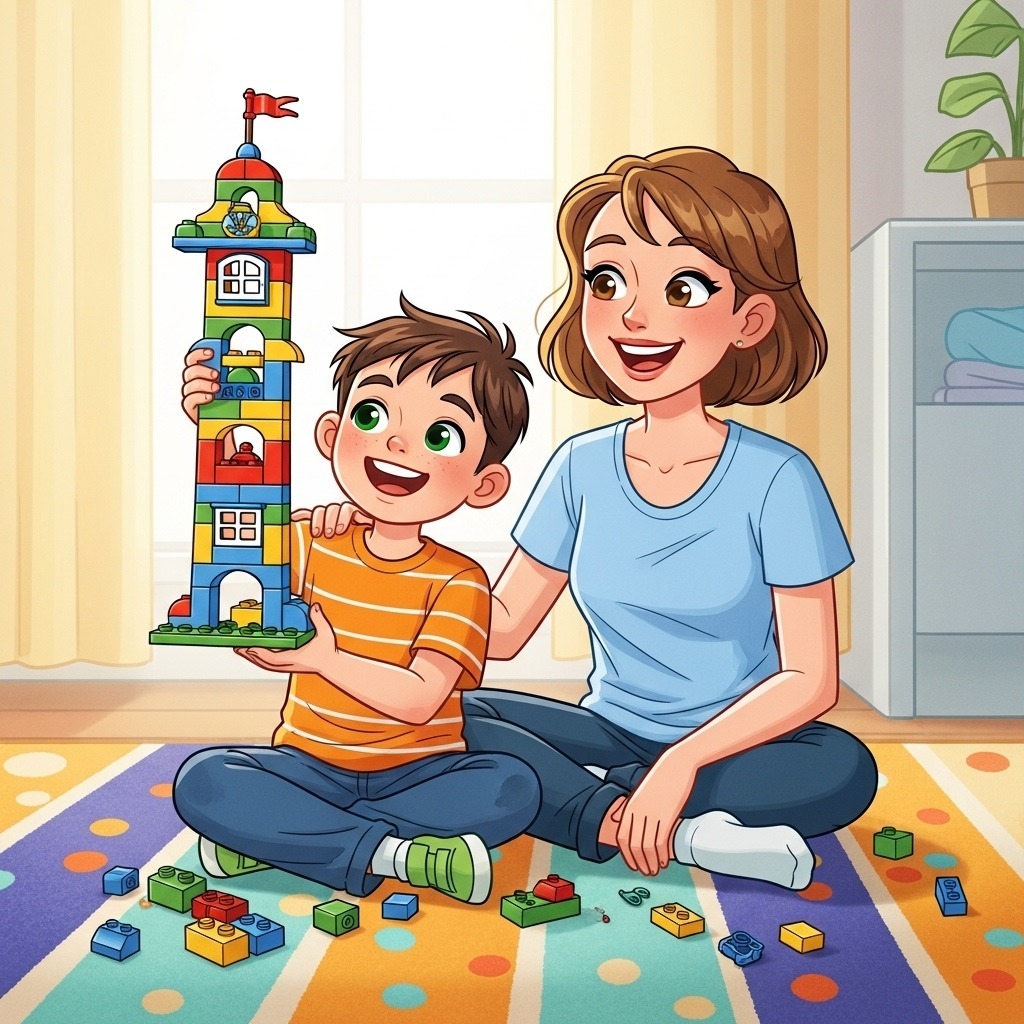
Even just 15 minutes a day can make a massive difference. I started calling it “special time” with my kids, and now they remind me if we haven’t had ours yet that day.
Here’s the key: let them choose what you do during that time (at least some of the time). It might be playing pretend, reading books, shooting hoops, or just talking. The activity itself doesn’t matter as much as the fact that they have your full, undivided attention.
On my “turn” days, I like to do something that gets us laughing together. We’ll play a quick game, do silly dances, or challenge each other to see who can balance on one foot the longest.
If you’re stuck for ideas, board games for kids are perfect for one-on-one connection time. We rotate through classics and new games, and I’ve found they naturally spark conversations that wouldn’t happen otherwise. The Monopoly Junior Bluey Edition has been on repeat in our house lately—anything Bluey-related is an instant win.
Sometimes the best connection happens during simple activities to do with kids that don’t require any special supplies—just your presence.
Share Your Own Stories (The Real, Messy Ones)
I used to think I needed to have it all together in front of my kids. Like if they saw me struggle or make mistakes, I’d somehow lose their respect.
Turns out, the opposite is true.
When you share age-appropriate stories from your own life—including the embarrassing, funny, and vulnerable moments—your kids see you as a real person. It humanizes you. It also teaches them that everyone struggles, everyone makes mistakes, and that’s okay.
I’ve told my kids about the time I forgot my lines in the school play and just made something up. About how I was terrified on my first day of middle school. About the time I accidentally locked myself out of the house in my pajamas.
These stories do two things: they make your kids laugh, and they make them feel less alone in their own struggles. They realize that everyone—even Mom—has awkward, hard, confusing moments.
You can also share inspirational stories about overcoming challenges or reaching goals. These help kids see that dreams are achievable with effort and persistence.
If you’re looking for guidance on this kind of open, honest communication with your kids, I’ve found parenting books to be incredibly helpful in navigating these conversations. Having expert frameworks has given me so much confidence in sharing appropriately with my kids.
Ditch the Devices During Connection Time
This is the one I struggle with most, if I’m being honest.
My phone is always nearby. There’s always one more email, one more text, one more scroll through social media calling my name. But here’s the hard truth: our kids notice. They notice when we’re physically present but mentally checked out.
We implemented some simple rules in our house: no phones at the dinner table, devices stay in the kitchen during family game night, and when a kid asks to talk, phones go face down. It’s not perfect—I still slip up—but it’s made a noticeable difference.
I’ve also noticed that when I put my phone away during one-on-one time, my kids share more. They open up about things bothering them, they tell me about their dreams and fears, and they just seem lighter.
Try this: for just one week, put your phone in another room during dinner. See what happens. See what conversations unfold when you’re not half-distracted by notifications.
If your kids are used to screens for entertainment, transitioning to device-free activities can feel challenging at first. Check out these fun outdoor activities for kids for tech-free alternatives that get everyone moving and connecting.

Physical Affection Is Non-Negotiable
Hugs. Kisses. High-fives. Hair ruffles. Hand squeezes.
Physical touch is one of the most powerful ways to communicate love and security to your kids. Some experts even recommend aiming for 12 physical connections every day.
I know that sounds like a lot, but it’s easier than you think. A hug when they wake up, a squeeze on the shoulder while they’re doing homework, holding hands in the parking lot, a kiss goodnight. These small touches add up.
One thing I’ve learned: don’t stop physical affection as your kids get older. Yes, they might roll their eyes or act too cool for hugs in front of their friends, but they still need that physical connection. My friend’s teenage son once told her that even though he acts annoyed by her hugs, he’d be devastated if she stopped.
Physical affection releases oxytocin—the bonding hormone—in both you and your child. It literally strengthens your connection at a biological level.
For active kids who might not sit still for cuddles, try connection through active play. Inflatable dome rocker bouncers or an up & down roller coaster toy can facilitate playful physical interaction that still builds that tactile connection. Roughhousing and active play count as physical affection, too!
Really Listen (Not Just Wait to Talk)
Okay, this is where I had to really check myself.
I realized I was doing a lot of “waiting to talk” instead of actual listening. My kid would start telling me something, and I was already formulating my response, my advice, my solution before they even finished.
True listening—what experts call active listening—means being fully present with what your child is saying. It means not interrupting, not dismissing their feelings, and not immediately jumping into fix-it mode.
Here’s a tip I learned that’s been really helpful: for girls, connect face-to-face; for boys, try side-by-side conversations. My son opens up most when we’re in the car or taking a walk together. My daughter prefers to sit across from each other at the kitchen table.
When your child shares something with you, acknowledge their feelings first. “That sounds really frustrating,” or “I can see why that would make you upset,” goes so much further than “Well, here’s what you should do…”
Creating this safe space where kids feel heard without judgment is foundational to a strong relationship. It builds trust and shows them that their thoughts and feelings matter.
This approach aligns beautifully with soft parenting principles, where we prioritize emotional connection and understanding over traditional authoritarian approaches.

Make Meals Matter
I’m not going to lie—family dinners are hard to pull off consistently.
Between sports schedules, work commitments, and just general exhaustion, sitting down together feels impossible some weeks. But here’s what I’ve learned: it doesn’t have to be dinner, and it doesn’t have to be fancy.
The goal is simply to gather around food together regularly. Maybe it’s breakfast on Saturday mornings. Maybe it’s pizza night every Friday. Maybe it’s afternoon snacks after school.
Research shows that families who eat together experience less stress, and kids have fewer behavioral issues. Regular family meals also improve communication and strengthen bonds. There’s something about breaking bread together that naturally facilitates conversation and connection.
Start small. If you’re not currently eating together at all, aim for once or twice a week. Put phones away. Turn off the TV. And actually talk to each other.
For easy meal solutions that get everyone involved, I love using kids’ baking and cooking sets to let my children help prepare the food. It adds an extra layer of connection when they’ve participated in making the meal. We also keep these reusable snack containers for kids stocked for our afternoon family snack time ritual.
Looking for simple recipes to make together? Check out these easy recipes for kids that actually work for busy families.
Build Traditions They’ll Remember Forever
Some of my most vivid childhood memories are of family traditions.
Making Christmas cookies with my mom. Sunday morning pancakes with my dad. The way we always went to the same pumpkin patch every October.
These traditions gave me a sense of identity and belonging. They made me feel like I was part of something special, something that was just ours.
You don’t need elaborate or expensive traditions. Simple, repeated rituals are what kids remember. In our house, we have Friday movie night with homemade popcorn. We always go to the same local diner for birthday breakfasts. Every summer, we spend one full day at the beach with no agenda except playing in the waves.
Think about weekly, monthly, and yearly traditions you can establish. Game nights, ice cream runs, holiday crafts, special birthday rituals.
These traditions create touchstones in your kids’ lives—moments they can count on, memories they’ll carry into adulthood, and eventually traditions they might pass on to their own children.
For holiday connection, holiday activity sets have become part of our seasonal traditions. We particularly love the Butterfly EduFields Santa’s Craft Shop Christmas Activity Kit for creating together during December. You can also find great ideas for summer activities for kids that can become annual traditions your family looks forward to.

Apologize When You Mess Up
This might be the most important one on the list.
We all mess up as parents. We lose our patience. We say things we don’t mean. We make mistakes. The question isn’t if you’ll mess up—it’s what you do afterward.
I used to think apologizing to my kids would undermine my authority. Like admitting I was wrong would somehow make them respect me less.
The exact opposite is true.
When you genuinely apologize—without excuses or justifications—you teach your kids about accountability, humility, and repair. You show them that everyone makes mistakes and that relationships can be mended.
Last week, I completely lost my temper over something minor. I yelled. My daughter’s face crumpled. I immediately felt terrible.
After I calmed down, I sat with her and said, “I’m really sorry I yelled at you. That wasn’t okay. You didn’t deserve that, and I’m going to work on managing my frustration better.” She hugged me and whispered, “It’s okay, Mommy. I still love you.”
That moment of repair probably strengthened our relationship more than a dozen “perfect” parenting moments.
Modeling this kind of emotional intelligence teaches your kids how to navigate their own relationships with grace and maturity. For more on navigating challenging parenting moments, these resources on how to discipline without yelling have been life-changing for me.
The Bottom Line
Building strong relationships with your kids doesn’t require perfection.
It doesn’t require hours of uninterrupted time or grand gestures or being the “fun parent” all the time.
It requires presence. Attention. Consistency. And a willingness to show up—imperfectly—over and over again.
The strategies I’ve shared here are simple, but they’re powerful. They’ve transformed my relationship with my kids from surface-level to soul-deep. And I genuinely believe they can do the same for you.
Start with just one. Pick the one that resonates most and try it for a week. See what shifts. See how your kids respond. Then add another.
Before you know it, these small, intentional actions will have built something beautiful: a relationship with your kids that’s built on trust, communication, laughter, and unconditional love. The kind of relationship where they come to you with their problems, their dreams, and their hearts—not because they have to, but because they want to.
And isn’t that what we all want as parents?
Frequently Asked Questions
How do I build a strong relationship with my child when I work full-time?
Quality matters more than quantity. Focus on being fully present during the time you do have together—even if it’s just 15 minutes of one-on-one attention before bed. Put away your phone, make eye contact, and really listen. Working parents can build equally strong bonds by making the most of mornings, evenings, and weekends with intentional connection.
At what age should I start building a relationship with my kids?
From birth! Even babies benefit from eye contact, physical touch, responsive caregiving, and your full attention. The specific activities change as kids grow, but the core principles—presence, affection, listening, and connection—apply at every age. It’s never too early to start, and it’s never too late to improve your relationship.
What if my teenager pushes me away when I try to connect?
This is completely normal. Teenagers are developing independence, but they still need connection. Try side-by-side activities instead of face-to-face conversations (car rides, walking, cooking together). Respect their need for space while staying consistently available. Don’t take the pushback personally—keep showing up with love and they’ll come back around.
How can I repair a damaged relationship with my child?
Start with a genuine apology for your part in the disconnect. Then commit to small, consistent actions over time: daily check-ins, active listening without judgment, spending one-on-one time doing activities they enjoy, and being reliable. Rebuilding trust takes time, but relationships can absolutely be repaired with patience and effort.
What’s the difference between quality time and just being in the same room?
Quality time means giving your child your full, undivided attention. It’s putting away phones and distractions, making eye contact, engaging in what they’re saying or doing, and being emotionally present—not just physically present. You can be in the same room all day, but if you’re constantly distracted or multitasking, you’re not really connecting. Even 15 minutes of truly focused attention beats hours of distracted coexistence.
What strategies have helped you build stronger connections with your kids? I’d love to hear what’s working in your family!