
I still remember the exact moment the panic hit. My daughter was five and a half months old, and my sister-in-law’s baby—two weeks younger—was already babbling away like she was hosting her own talk show. Meanwhile, my little one was still making the same cooing sounds she’d been making since she was two months old. I spent that entire evening Googling “when do babies start babbling” and spiraling into a comparison trap that kept me up until 2 a.m.
Here’s what I wish someone had told me then: babies don’t read the parenting books. Some start babbling at four months, some at nine months, and both are completely normal. By the time I had my second baby, I’d learned to relax, pay attention to the actual signs, and stop obsessing over arbitrary timelines. And guess what? She babbled even later than her sister—and now, at age three, we can’t get her to stop talking.
Let me save you the 2 a.m. Google spiral and share everything I’ve learned about when babies really start babbling, what it sounds like, and what actually matters.
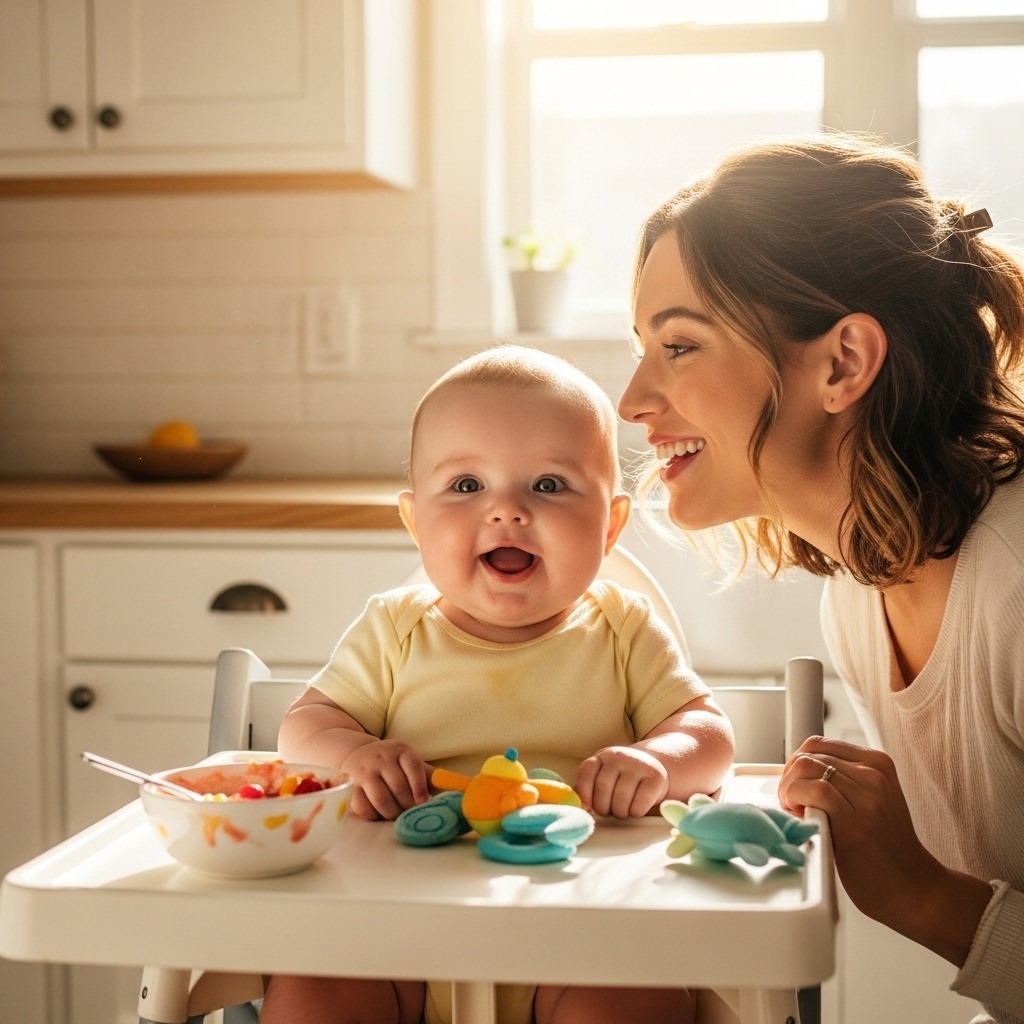
When Do Babies Actually Start Babbling?
The short answer? Most babies start true babbling somewhere between 4 and 6 months old. But here’s the thing that nobody tells you upfront: the range of “normal” stretches all the way from 4 months to 9 months.
According to the Centers for Disease Control and Prevention, babbling is officially listed as a milestone at 9 months, which means that about 75% of babies are babbling by that age. If your baby isn’t there yet at 6 months, you’re not behind schedule. Every baby develops at their own pace, influenced by everything from their personality to how much they hear people talking around them.
Before babies actually babble, they go through a cooing stage that typically starts between 1 and 4 months. These early sounds are mostly vowels—think “ooooh” and “aaaah” and lots of adorable gurgling. I remember thinking my first daughter’s coos were babbling, but true babbling is different. Real babbling includes consonant sounds combined with vowels, like “ba-ba-ba” or “da-da-da.”
What fascinated me most when I researched this? Even babies who are born deaf start babbling around the same time as hearing babies. That tells us that babbling is hardwired into human development, not just mimicry.
What Babbling Actually Sounds Like (And What It Doesn’t)
When my second baby started making raspberry sounds at 3 months, my mom insisted it was babbling. It wasn’t—but I didn’t have the heart to correct her because she was so excited. Here’s how the sound progression actually works, based on what I’ve learned and observed with both my girls:
Ages 2-4 months: The Cooing Stage
This is when you’ll hear long vowel sounds, gurgling, and cooing. My babies made sounds like “aaah,” “oooh,” and “ehhhh” during this phase. They also started squealing, growling, and making raspberry sounds (which is technically called a “bilabial trill” but let’s be honest, nobody calls it that).
Ages 4-6 months: Marginal Babbling
This is when consonants start showing up. You’ll hear your baby begin to experiment with combining a consonant and a vowel into single syllables. It might sound like “ba,” “ma,” or “pa.” These sounds are usually isolated at first—not the repetitive strings you’re waiting for.
Ages 6-10 months: Canonical Babbling (The Good Stuff)
This is what most of us picture when we think of babbling. Your baby starts stringing syllables together: “ba-ba-ba,” “da-da-da,” “ma-ma-ma.” My heart absolutely melted the first time I heard “ma-ma”—even though I knew she wasn’t actually calling me yet. This repetitive babbling is also called “reduplicated babbling.”
Ages 8-10 months: Variegated Babbling
Eventually, babies start mixing up different syllables. Instead of “da-da-da,” you might hear “ba-de” or “da-ga.” It sounds more complex and almost like they’re trying to tell you something important.
If you’re wondering whether your baby’s sounds count as babbling, listen for consonants. If it’s all vowels, it’s still cooing. Once you hear those “b,” “d,” “m,” or “g” sounds paired with vowels, you’re officially in babbling territory.
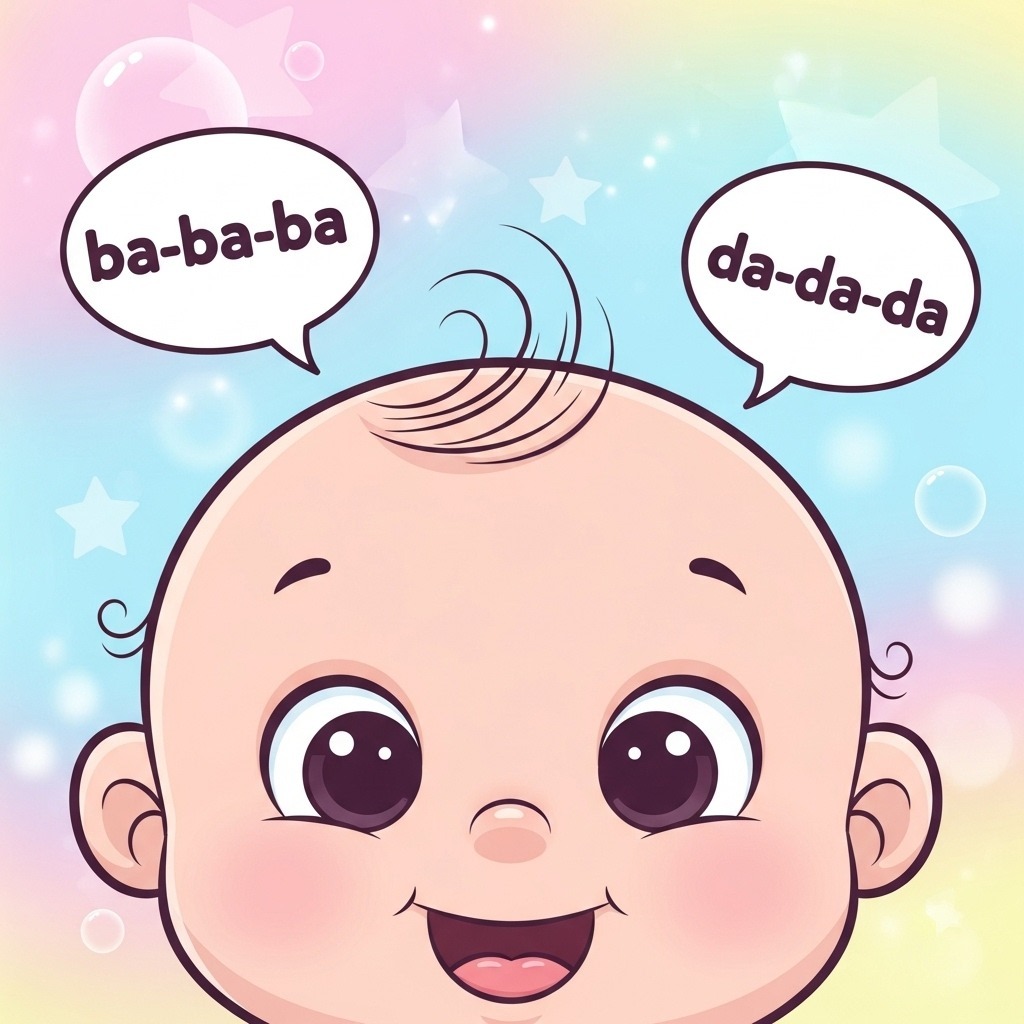
The Babbling Timeline I Wish Someone Had Shown Me
When I was desperately searching for answers at 2 a.m., what I really wanted was a simple month-by-month guide that told me what was normal. Here’s the timeline I eventually pieced together from pediatricians, research, and my own experience:
0-2 months: Your baby cries (a lot) and starts making early cooing sounds. These are mostly reflexive sounds, not intentional communication yet.
3-4 months: Simple vowel sounds become more frequent. You’ll hear “aaii,” “aahh,” and “ooo.” Your baby might also start squealing when excited.
5-6 months: Single consonant-vowel syllables appear. This is when “ba,” “ma,” and “pa” start showing up. Your baby begins responding to their name around 5 months. They’ll also start using their voice to express happiness or frustration.
6-7 months: Repetitive babbling kicks in. Those adorable “ma-ma” and “pa-pa” sounds that make your heart skip a beat start happening. Your baby babbles tunefully, almost like they’re singing. They start responding to “no” and can distinguish emotions in your tone of voice.
8-9 months: Variegated babbling develops. Your baby mixes different sounds together. They become more deliberate about using vocalizations to communicate. They’ll babble loudly and enjoy having “conversations” where you take turns making sounds.
10-11 months: Welcome to the jargon stage. Your baby’s babbling sounds like they’re speaking in full sentences, complete with inflection and rhythm—but it’s still nonsense. They’ll try to imitate the words and sounds you make.
12 months and beyond: First real words usually appear around 12 months. Some babies say their first word earlier, some later. The research shows that babies typically reach canonical babbling around 6 months and don’t say their first real words until about 14.5 months.
I kept this timeline on my phone with my second baby, and it saved my sanity more than once. Whenever I started to worry, I’d check it and remind myself that we were right on track.
Signs Your Baby Is Getting Ready to Babble
With my first baby, I didn’t know what to look for beyond the actual sounds. With my second, I learned to spot the pre-babbling signs that told me she was getting ready. Here’s what to watch for:
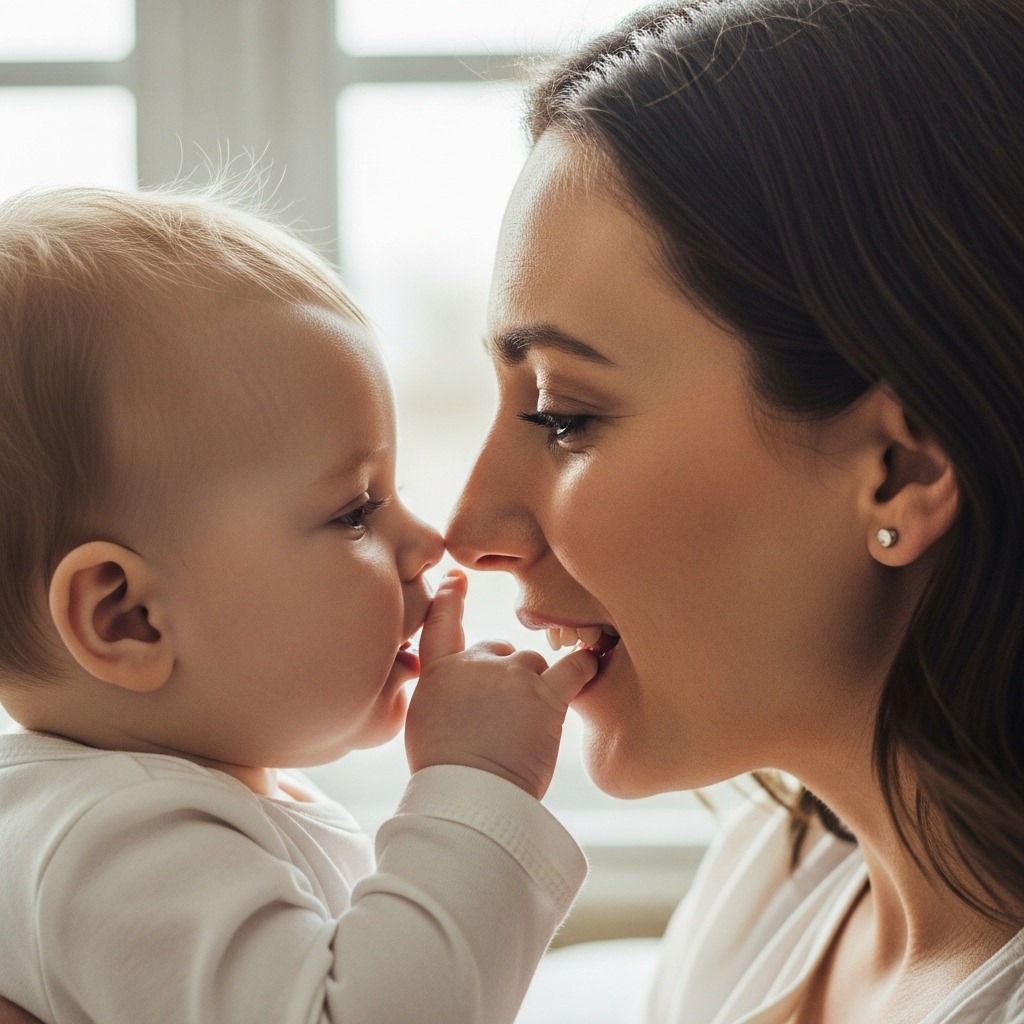
Your baby watches your mouth intently when you talk. I noticed my second daughter would stare at my lips like she was studying for a test. She was learning how sounds are made.
They’re making more varied sounds than before. Instead of just one or two coos, you’ll hear a whole repertoire of squeals, growls, and vowel sounds.
Your baby responds to your voice by making sounds back. This is the beginning of conversational turn-taking. When I’d say something to my daughter, she’d pause, then coo back at me.
They’re starting to express emotions vocally. You’ll hear different sounds for happiness (laughing, squealing) versus frustration (grunting, crying in different tones).
If your baby is doing these things, babbling is probably right around the corner. I found it helpful to engage in activities that encourage communication, even before the official babbling started.
The One Mistake I Made With My First Baby
I’m going to be honest about something that still makes me cringe a little. With my first daughter, I didn’t respond to her early sounds nearly enough. When she’d coo or make little noises, I’d smile at her, but I wouldn’t consistently engage in a back-and-forth conversation.
I thought babbling would just happen automatically when she was “ready.” What I didn’t realize is that babies learn language through interaction. The more you respond to their sounds, the more motivated they are to keep making sounds.
With my second baby, I completely changed my approach. Every single sound she made, I responded. She’d say “aaaah,” and I’d say “aaaah” right back. She’d make a raspberry sound, and I’d make one too. We’d go back and forth like we were having the most important conversation in the world.
The difference was remarkable. My second daughter started babbling a full month earlier than her sister, and I’m convinced it was because of all those “conversations” we had. I also made a point to narrate everything I was doing throughout the day. “Mommy’s making breakfast. Can you hear the eggs sizzling?” “Let’s change your diaper. Up we go!” It felt silly at first, but it exposed her to so much language.
One simple practice that made a huge difference: I’d read from developmental milestone books that explained what to expect and how to encourage each stage. Understanding the “why” behind babbling helped me show up more intentionally.
How to Encourage Your Baby to Babble (Without Going Overboard)
After my experience with both babies, here’s what actually works to encourage babbling—without turning into one of those parents who make their infant’s language development into a competitive sport:
Talk to your baby constantly. Narrate your day, describe what you’re doing, and point out objects around you. Yes, you’ll feel like you’re talking to yourself at first. Do it anyway. Research shows that this exposure to language is crucial.
Respond to every sound they make. When your baby coos, coo back. When they make a “ba” sound, celebrate it like they just delivered a TED talk. This back-and-forth teaches them that their sounds have meaning and power.
Make eye contact during conversations. Babies learn so much from watching your face. Get down on their level, look them in the eye, and have “conversations” where you take turns making sounds.
Read books together every day. Even before babies understand words, they benefit from hearing the rhythm and patterns of language. I loved using simple board books during tummy time. For more interactive fun, we also used kids’ activity books designed for babies, which had high-contrast images and textures to explore.
Sing songs and nursery rhymes. The repetition and rhythm help babies learn sound patterns. “Itsy Bitsy Spider” and “Twinkle Twinkle Little Star” were on constant repeat in our house.
Play simple games like peek-a-boo. Games that involve turn-taking teach the rhythm of conversation. Plus, they’re just fun.
Limit screen time. Babies learn language from interactive, responsive humans—not from screens. The American Academy of Pediatrics recommends avoiding digital media (except video chatting) for babies under 18 months.
One thing I absolutely loved doing with both my girls: mimicking their sounds. If my baby made a sound I’d never heard before, I’d repeat it back to her. Her face would light up with this expression of pure delight, like “Mom gets it! Mom speaks my language!” Those moments were magic.
Don’t stress about creating elaborate activities or buying expensive toys. Your face, your voice, and your attention are the most powerful tools you have. I wish someone had told me that from the beginning.
When to Worry (And When Not To)
This is the section I needed most when I was in my 2 a.m. panic spiral. Let me give you the reassurance I desperately wanted back then:
It’s completely normal if your baby isn’t babbling yet at 4, 5, or even 6 months. The milestone range is wide for a reason. Some babies are early talkers, some are late bloomers. It doesn’t predict intelligence or future language skills.
It’s also normal if babbling seems to disappear for a while. Babies often focus intensely on one developmental skill at a time. When my daughter was learning to crawl, her babbling decreased noticeably for about two weeks. Once crawling clicked, the babbling came back stronger than ever.
Here’s something fascinating that helped calm my nerves: even babies who are born completely deaf start babbling around the same age as hearing babies. This proves that babbling is a built-in developmental milestone, not something that depends entirely on hearing speech.
That said, there are some signs that warrant a conversation with your pediatrician. Trust your gut, and reach out if:
Your baby isn’t making any sounds at all by 6 months. This includes cooing, gurgling, or any vocal play.
Your baby isn’t responding to sounds or voices by 6 months. They should turn their head toward sounds or react to their name.
Your baby isn’t babbling at all by 9-10 months. Since 75% of babies are babbling by 9 months, this is worth checking on.
Your baby was babbling, but then completely stopped and hasn’t resumed for several months. A brief pause is normal; a long regression can sometimes indicate an issue.
Your baby isn’t making eye contact or showing interest in social interaction. Babbling is about communication, so engagement matters.
I called our pediatrician twice during my first daughter’s first year because I was worried about her development. Both times, the doctor reassured me that she was fine—just developing at her own pace. I’m glad I called. It gave me peace of mind, and that’s worth everything.
If you’re concerned about your baby’s development, you can also explore gentle parenting books that offer insights into supporting your child’s growth with patience and understanding.
What Comes After Babbling
Once your baby is babbling consistently, you might wonder what’s next. Here’s what I observed with both my girls:
The Jargon Stage (Around 10-12 Months)
This is hands-down the cutest phase. Your baby will babble in long strings that sound exactly like sentences, complete with inflection, rhythm, and conversational tone. They’ll “tell” you elaborate stories that make zero sense, but they sound so convincing. My daughter would babble at me with such intensity, gesturing wildly, and I’d nod along like I understood every word.
First Real Words (Around 12-15 Months)
Most babies say their first recognizable word somewhere between 12 and 15 months. For many babies, it’s “mama” or “dada”—though my first daughter’s first word was “dog” because we had two very enthusiastic golden retrievers. Research shows that babies typically hit this milestone about 8 months after they start canonical babbling.
The Vocabulary Explosion (15-24 Months)
After those first few words, there’s usually a period where your baby adds new words slowly. Then, suddenly, the vocabulary explodes. My second daughter went from saying 10 words at 15 months to over 50 words by 18 months. It felt like she woke up one day and decided she had a lot to say.
Here’s something incredible I learned from research: not a single baby in a study of 42 infants said their first five words before they started canonical babbling. The gap between starting to babble and saying real words was at least 4 months for every single baby. This shows that babbling isn’t just cute noise—it’s essential practice for actual speech.
If you’re curious about other developmental milestones and when kids start talking in more complex ways, you’re not alone in wondering about the timeline.
The Bottom Line (What I’d Tell My Past Self)
If I could go back to that night when I was spiraling with worry about my five-and-a-half-month-old, here’s what I’d say:
Your baby will babble when she’s ready. It might be at 4 months, it might be at 9 months, and both are completely normal. The arbitrary timelines in parenting books and baby apps are just averages—they’re not report cards.
What matters more than when she babbles is how you respond when she does. Make eye contact, respond to her sounds, talk to her constantly, and celebrate every noise she makes. That engagement matters infinitely more than hitting some arbitrary milestone date.
Stop comparing your baby to other babies. Your sister-in-law’s baby, who’s babbling at 4 months? Great for her. Your baby, who started walking at 9 months but didn’t babble until 7 months? Also great. They’re different humans.
Trust your instincts. If something feels off, call your pediatrician. But if your baby is engaged, responsive, making sounds (even if they’re not official “babbles” yet), and hitting other milestones, take a deep breath. You’re doing great, and so is your baby.
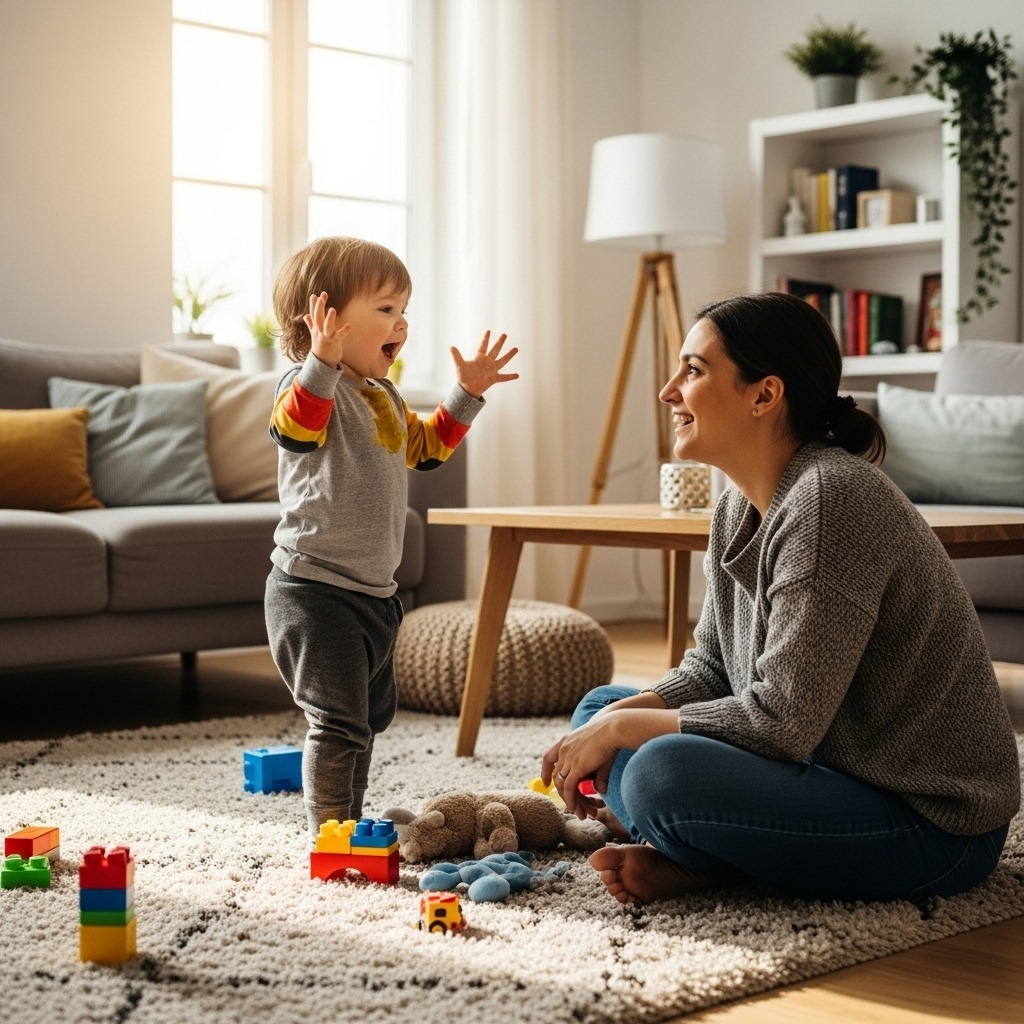
And finally, these early months when babies are learning to communicate are so incredibly precious. Try not to spend them worrying. Instead, get down on the floor, make silly sounds with your baby, and enjoy the adorable nonsense stage. Before you know it, they’ll be talking nonstop, and you’ll find yourself nostalgic for the babbling days.
Both my daughters are talking up a storm now. The one who babbled “early” and the one who babbled “late” are equally verbal, equally smart, equally amazing. The timing of their first babbles? It doesn’t matter at all now.
So take a deep breath, put down your phone, and go have a “conversation” with your baby. They might not be saying real words yet, but trust me—they have a lot to tell you.
For more evidence-based information on infant language development, check out this helpful resource from Pathways.org on baby babbling milestones.
Frequently Asked Questions
Is it normal if my baby isn’t babbling at 6 months?
Yes, completely normal. The typical range for babbling is 4-9 months, and some babies start even later. As long as your baby is making some sounds, responding to voices, and engaging with you, there’s usually nothing to worry about. The CDC lists babbling as a 9-month milestone, which means many babies aren’t babbling yet at 6 months.
What’s the difference between cooing and babbling?
Cooing is mostly vowel sounds (“oooh,” “aaah”) that babies make starting around 2-4 months. Babbling includes consonant sounds combined with vowels, like “ba-ba” or “da-da,” and typically starts between 4-6 months. Think of cooing as the warm-up and babbling as the main event.
How can I encourage my baby to babble more?
Talk to your baby constantly throughout the day, respond to every sound they make, make eye contact during interactions, read books together, and sing songs. The key is creating a back-and-forth exchange where your baby learns that their sounds get a response. Babies learn language through engaged, responsive interaction—not from screens or passive listening.
Should I be worried if my baby babbles and then stops?
A brief pause in babbling is usually normal, especially when your baby is focusing on another developmental skill like crawling or standing. However, if your baby completely stops babbling for several months with no other vocalizations, mention it to your pediatrician. Sometimes babies will also seem to “lose” a skill temporarily, then come back to it stronger.
What comes after the babbling stage?
After babbling, babies enter a “jargon” stage around 10-12 months, where they babble in patterns that sound like sentences but aren’t real words yet. Then come the first words, typically around 12-15 months. After the first few words, vocabulary gradually expands until the “word explosion” happens, usually between 18-24 months. Research shows babies usually have a gap of at least 4-8 months between starting to babble and saying their first real words.
Looking for more ways to support your baby’s development? Check out these developmental milestone books that helped me understand what to expect at each stage, or grab some kids’ activity books perfect for encouraging early learning through play. And if you want to understand different approaches to raising your little one, explore these parenting books that cover everything from gentle parenting to setting healthy boundaries.