
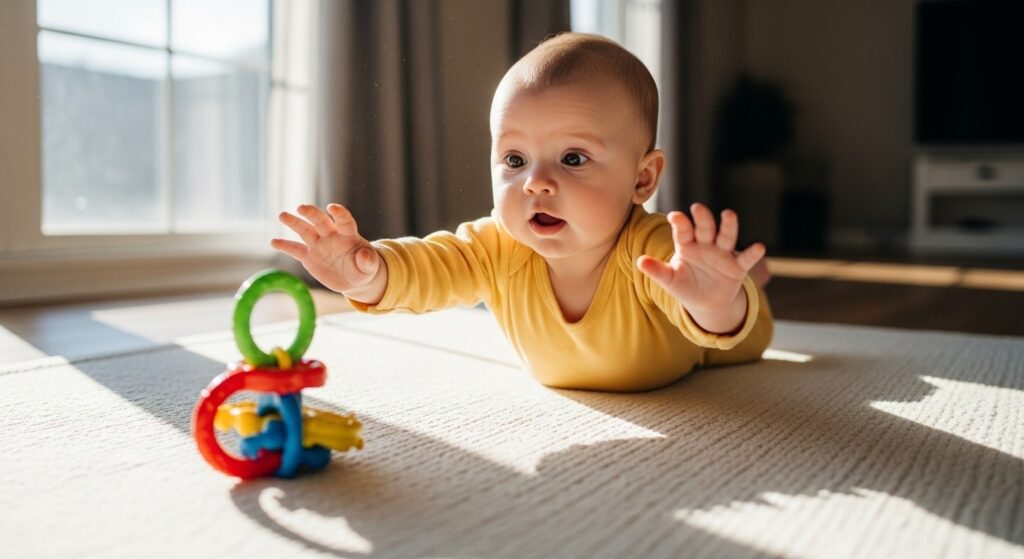
I’ll never forget the afternoon I sat on my living room floor, watching my friend’s 7-month-old zoom across the carpet like a tiny speed racer. Meanwhile, my 9-month-old daughter just sat there, perfectly content, playing with the same toy she’d had for twenty minutes. I smiled on the outside, but inside? I was spiraling. Why isn’t she crawling yet? Is something wrong? Should I call the pediatrician?
If you’re reading this at 2 a.m. with a sleeping baby on your chest and Google searches like “when do babies start crawling” lighting up your phone screen, I see you. I’ve been exactly where you are, and I’m here to tell you what I wish someone had told me sooner: your baby’s crawling timeline is uniquely theirs, and comparison is the thief of joy (even though we all do it anyway).
When Do Babies Actually Start Crawling?
Here’s the short answer: most babies start crawling somewhere between 6 and 12 months old, with the sweet spot being around 7 to 10 months. But here’s what really surprised me when I started digging into the research: the CDC actually removed crawling as an official developmental milestone in 2022 because there wasn’t solid evidence for when 75% of babies should reach it.
Let me say that again for the moms in the back having a panic attack: crawling is no longer considered a standard milestone by the CDC.
That doesn’t mean crawling isn’t important or that you shouldn’t pay attention to your baby’s movement development. It just means there’s a much wider range of “normal” than most of us realize. Some babies are crawling at 6 months, others don’t start until closer to their first birthday, and some skip it entirely and go straight to pulling up and walking.
When I learned this, I literally felt a weight lift off my shoulders. My daughter eventually crawled at 9.5 months, and guess what? She’s now a perfectly healthy toddler who won’t stop moving. The American Academy of Pediatrics confirms that baby development happens on a spectrum, and comparing your little one to others is a recipe for unnecessary stress.
If your baby was born prematurely, pediatricians use their adjusted age (counting from their due date rather than birth date) when tracking developmental milestones. This was crucial information for my cousin, whose twins arrived six weeks early.
The 7 Stages Before Your Baby Actually Crawls
Looking back, I realize my daughter was working toward crawling for months before she actually did it. I just didn’t know what to look for. Here are the stages that happen before your baby becomes a crawling machine:
1. Tummy Time (0-3 Months)
This is where it all begins. The American Academy of Pediatrics recommends 30 minutes of tummy time spread throughout the day, starting as soon as you bring baby home from the hospital. I know, I know—some babies hate tummy time. Mine screamed like I’d personally offended her. But those short 3-5 minute sessions build the neck, shoulder, and arm strength they’ll need later.
If your baby resists tummy time, try these tricks from developmental milestone books that seriously saved us: get down on the floor with them, place a small rolled towel under their chest for support, or do it right after a diaper change when they’re already on their back.
2. Rolling Over (3-5 Months)
When your baby starts rolling from back to tummy and vice versa, that’s the first sign that mobility is coming. This usually happens around 3 to 5 months and strengthens their core muscles.
3. Pushing Up on Hands (4-6 Months)
You’ll start seeing your baby push their upper body off the floor during tummy time, bearing weight on their arms. This is huge for building upper-body strength. Place toys or mirrors just out of reach to encourage them to push up and look around.
4. Pivoting in Circles (5-7 Months)
This was my favorite stage! My daughter would spin around on her belly like a tiny helicopter, and I’d find her facing completely different directions than when I’d put her down. This pivoting motion is often a baby’s first taste of locomotion.
5. Rocking on Hands and Knees (6-8 Months)
Once your baby can balance on all fours, you’ll see them rock back and forth. This rocking mimics the movement pattern needed for actual crawling. My daughter did this for what felt like forever, and I kept thinking, “Just GO already!” But she was building the coordination she needed.
6. Army/Commando Crawling (6-9 Months)
Many babies start by dragging themselves forward on their bellies using their arms, with legs trailing behind. Some pediatric experts call this the “combat crawl,” and it’s completely normal. Your baby might even push backward at first, which can be frustrating for them (and hilarious to watch).
7. Classic Hands-and-Knees Crawling (7-10 Months)
This is the crawling style most of us picture: moving forward on hands and knees with alternating opposite arms and legs. But remember, not every baby will do this classic crawl, and that’s totally okay.
Signs Your Baby Is About to Crawl
Once I knew what to look for, I could actually see my daughter gearing up to crawl. Here are the telltale signs:
- They can get themselves from their stomach into a sitting position independently
- Their head and neck control is strong in the prone (tummy) position.
- They’re rocking back and forth on their hands and knees.
- They reach for toys that are out of their immediate grasp.
- They might start doing mini push-ups or planks during tummy time.
- Increased leg kicking and play.
The key thing I learned? Your baby’s curiosity about the world around them is what really drives them to move. If they’re interested in exploring, they’ll find a way to get from point A to point B, whether that’s crawling, scooting, or rolling.
Different Crawling Styles (And They’re All Normal!)
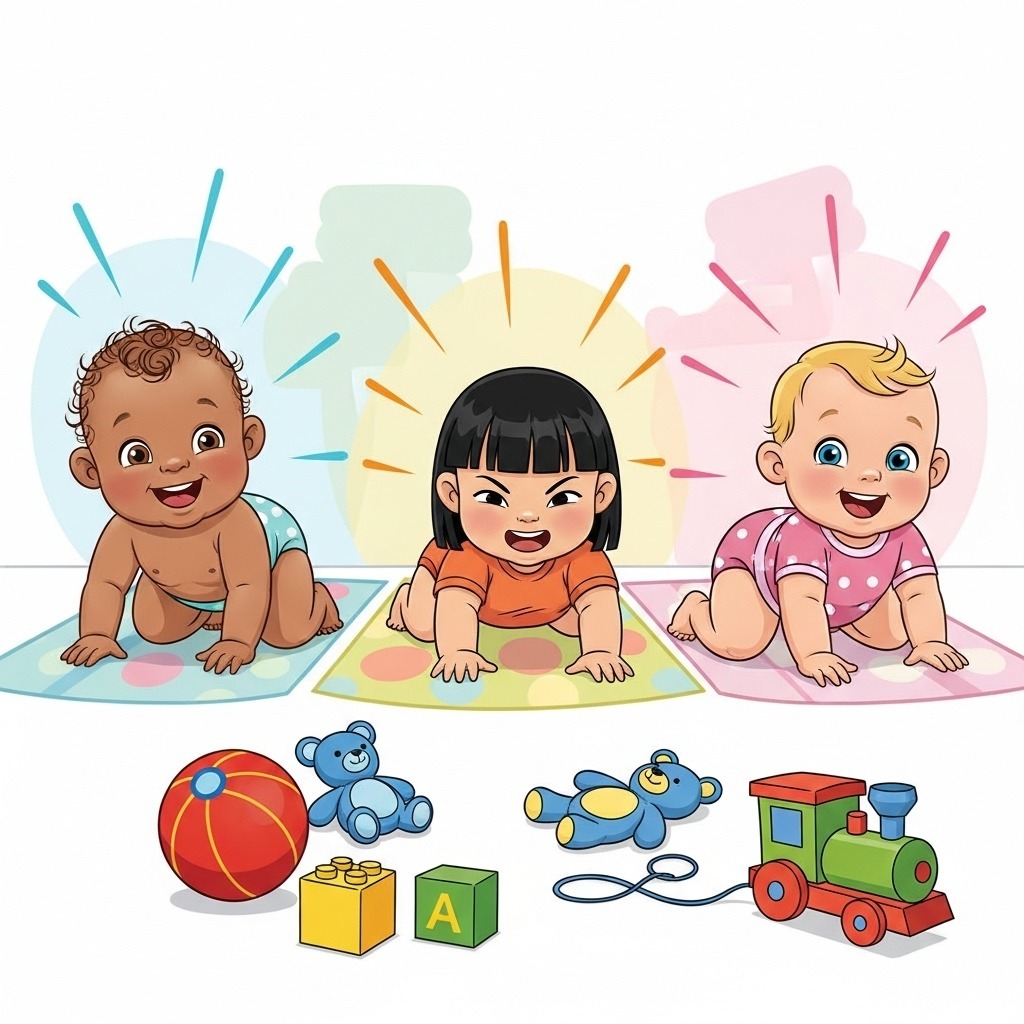
This is where things get really interesting. I thought there was only one way to crawl until I saw the variety show happening at my mom’s group. Here are the different crawling styles you might see:
Classic Crawl: Moving forward on hands and knees with opposite arm and leg moving together. This is what you see in baby books.
Army/Commando Crawl: Pulling forward on the belly with arms while legs drag behind. My daughter did this first, and I worried it was “wrong” (it wasn’t).
Bear Crawl: Moving on hands and feet with legs straight (like a little bear). This often shows up as babies get closer to walking.
Bottom Scoot: Sitting upright and scooting forward on their bottoms using their arms and legs. My nephew did this exclusively and never crawled traditionally at all.
Crab Crawl: Propelling forward using one knee and one foot with both arms. Less common but totally normal.
Rolling: Some babies just roll from place to place. It gets the job done!
The bottom line? All of these methods are legitimate ways for your baby to explore their world. There’s no “right” way to crawl.
6 Ways to Encourage Your Baby to Crawl
Once I stopped stressing about when my daughter would crawl and started focusing on creating opportunities, things shifted. Here’s what actually worked:
1. Maximize Tummy Time
I know we covered this, but it bears repeating: tummy time is THE foundation for crawling. Make it part of your daily routine. I did it after every diaper change and before every feeding when my daughter was alert and happy.
2. Create a Safe Exploration Space
Clear out an area in your home and let your baby have supervised floor time to experiment. The more time babies spend free to move (not strapped in swings, bouncers, or strollers), the more they’ll develop the skills they need. I basically turned our living room into a giant baby gym, and having these activity toys within reach made it way more engaging.
3. Place Toys Just Out of Reach
Put your baby’s favorite toy a few feet away and see if they try to get to it. This was my daughter’s biggest motivation. I’d place her favorite rattle just beyond her grasp, and she’d work so hard to reach it. Research actually shows that babies who retrieve objects across the room by 11 months are more likely to be walking by 13 months.
4. Get Down on the Floor With Them
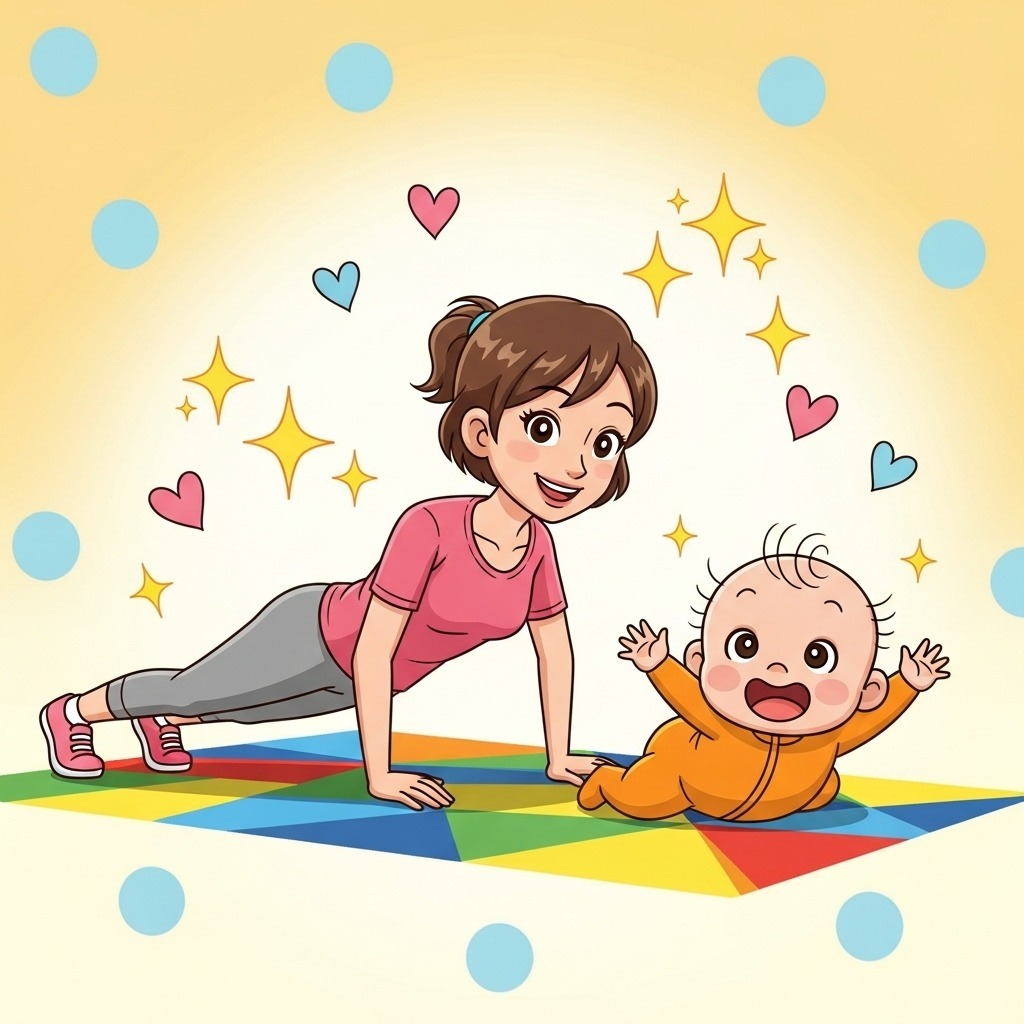
Do push-ups together. Crawl to toys. Show them how it’s done. I felt ridiculous at first, but my daughter thought it was hilarious, and she started mimicking me. Make it fun by playing music and rocking on hands and knees together.
5. Dress for Success
Avoid slippery clothing like pants with silky linings, tights, or socks when your baby is learning to crawl on hard surfaces. Bare knees and toes give them better traction. I learned this after watching my daughter slide backward repeatedly in her cute footed pajamas.
6. Offer Strategic Support
Place your hand or a rolled towel under your baby’s chest during tummy time for extra support. You can also position them over your outstretched leg while sitting on the floor. This gives them the boost they need to practice without frustration.
What If Your Baby Skips Crawling Altogether?
Here’s something that blew my mind: some babies never crawl at all, and they turn out perfectly fine. They go straight from sitting to pulling up on furniture to cruising to walking.
In some cultures, parents carry their babies constantly to avoid having them on the ground (for hygiene or safety reasons), and studies show these babies don’t suffer any developmental consequences from skipping crawling. As long as your baby is moving and showing interest in exploring their environment, they’re developing just fine.
My friend’s daughter was one of these babies. She scooted on her bottom until about 10 months, then pulled herself up and started walking at 11 months without ever doing a traditional crawl. She’s now a thriving kindergartener with zero issues.
The best parenting books I’ve read all emphasize the same thing: there’s no evidence that skipping milestones like crawling leads to any developmental problems later. What matters is that your baby is moving, exploring, and progressing in some form of mobility.
When to Call the Doctor
Okay, so we’ve established that there’s a huge range of normal. But when should you actually be concerned? Here’s what pediatricians say to watch for:
- Your baby isn’t attempting any form of movement by 12 months
- Your baby isn’t using both sides of their body equally.
- Your baby seems to drag one side of their body.
- Your baby shows no interest in exploring their environment or reaching for objects.
- You notice any other developmental delays alongside a lack of mobility.
If any of these apply, don’t panic, but do reach out to your pediatrician. You can also contact your local early intervention services—in the United States, these evaluations are free, don’t require a doctor’s referral, and therapists come right to your home.
Trust your gut. You know your baby better than anyone else. If something feels off, it’s always okay to check in with your child’s doctor. When I had concerns about my daughter’s development, our pediatrician was so reassuring and helped me understand what was normal variation versus what needed attention.
The Mayo Clinic also provides excellent resources about infant development milestones that can help you track your baby’s progress in a healthy, non-obsessive way.

Baby-Proofing for the Crawling Stage
The moment my daughter started crawling, I realized our house was basically a death trap. Here’s what you need to do before your baby becomes mobile:
Install Safety Gates: Put them at the top and bottom of stairs. This is non-negotiable. The U.S. Consumer Product Safety Commission says this is essential.
Secure Cabinets and Drawers: Especially those containing cleaning products, medicines, or anything else hazardous. I thought I could get away with just the lower cabinets, but babies are shockingly resourceful climbers.
Cover Electrical Outlets: Buy a big pack of outlet covers and use every single one.
Secure Heavy Furniture and TVs: Install anchors to prevent tipping. This includes bookshelves, dressers, and flat-screen TVs.
Protect Sharp Corners: Those rubber corner guards for coffee tables and fireplace hearths are worth every penny.
Get Down to Baby Level: Literally get on your hands and knees and crawl around your house to see what your baby will see. You’ll spot hazards you never noticed from adult height.
Remove Window Blind Cords: These are strangulation hazards.
Having the right gear helps, too. We got this inflatable bouncer for safe indoor play, and it gave me peace of mind knowing she was contained but still active. For older siblings, keeping them entertained with board games while I baby-proofed was a lifesaver.
My Biggest Takeaway About Baby Crawling
If I could go back and tell my anxious, comparison-obsessed first-time mom self anything, it would be this: your baby will crawl when they’re ready, or they won’t, and either way is okay.
The crawling stage isn’t a race. It’s not a competition. It’s just one of many ways your baby is learning about their body and their world. Some babies are early crawlers, some are late bloomers, and some skip it entirely in favor of other forms of mobility.
What matters more than when your baby crawls is that you’re giving them safe opportunities to develop strength, exploring the world with them, and paying attention to their unique development timeline. Just like when kids start walking or when kids start talking, crawling happens on its own schedule.
Every baby I know—the early crawlers, the late crawlers, the bottom scooters, and the crawl-skippers—all learned to walk eventually. And now? You can’t tell who crawled at 6 months versus 10 months. They’re all just wild toddlers destroying living rooms with equal enthusiasm.
So take a deep breath, put your baby on the floor with some engaging toys (these activity books were lifesavers for us), and trust that your little one is exactly where they need to be. If you’re looking for more ways to support your baby’s development beyond crawling, check out our guide on activities to do with kids for ideas that grow with them.

Frequently Asked Questions About Baby Crawling
Q: What is the earliest age a baby can start crawling?
Some babies start showing crawling behaviors as early as 5 to 6 months, but this is earlier than average. Most babies begin crawling between 7 and 10 months, though the full normal range is 6 to 12 months. If your baby is an early crawler, just make sure your home is baby-proofed sooner than you planned!
Q: Is it normal for a 10-month-old not to be crawling yet?
Yes, absolutely. The normal range for crawling extends all the way to 12 months. Some babies don’t crawl until closer to their first birthday, and others skip crawling entirely. As long as your baby is showing interest in their environment and attempting some form of movement, they’re likely developing just fine. If you’re concerned, check in with your pediatrician.
Q: Can too much time in a baby gear delay crawling?
Yes, it can. Babies need plenty of supervised floor time to develop the strength and coordination needed for crawling. Too much time strapped into strollers, bouncers, swings, or exersaucers can limit their opportunities to practice the movements that lead to crawling. Aim to give your baby as much free floor time as safely possible throughout the day.
Q: Should I be worried if my baby never crawls?
Not necessarily. Some babies skip crawling altogether and go straight to pulling up, cruising, and walking. Research shows that skipping crawling doesn’t lead to developmental problems later. What’s important is that your baby is moving and exploring in some way. However, if your baby isn’t showing any interest in movement or isn’t using both sides of their body equally by 12 months, that’s worth discussing with your pediatrician.
Q: Does army crawling count as a real crawling milestone?
Absolutely! Army crawling (also called commando crawling or belly crawling) is a completely legitimate form of crawling. Many babies army crawl before they figure out hands-and-knees crawling, while others stick with army crawling as their preferred method of getting around. Both styles help your baby develop the strength and coordination they need for future milestones like standing and walking.
Remember, mama: you’re doing an amazing job. Your baby’s development is uniquely theirs, and comparing them to others only steals your joy. Celebrate every little win—whether it’s a scoot, a rock, or a full-blown crawl—because these moments go by faster than you think.