
“Mom, do babies even have knees?”
My six-year-old asked me this completely out of nowhere while we were watching his baby cousin crawl across the living room floor. I laughed and said, “Of course they do,” but then he asked the follow-up that stumped me: “But when do they get the hard part? The kneecap?”
I opened my mouth to answer and realized I had absolutely no idea. Do babies have kneecaps? When do they develop? I’d never even thought about it before, and suddenly I was spiraling down a fascinating rabbit hole about child development that completely changed how I understood my kids’ bodies.
When do kids get kneecaps isn’t just random trivia. Understanding how your child’s skeleton develops helps you recognize what’s normal, what’s not, and why those chubby baby knees are actually perfectly designed for exactly what babies need to do.
The Surprising Truth About Baby Kneecaps
Here’s the mind-blowing answer: babies ARE born with kneecaps, but they’re made of soft, flexible cartilage instead of hard bone. So technically yes, they have kneecaps, but not the bony kind that adults have.
When my son was born, I remember the pediatrician checking his hips and legs during those early wellness visits. I assumed she was just making sure everything was there. Turns out, she was checking that the cartilage structures were developing properly and positioned correctly. Those soft, squishy kneecaps were doing exactly what they were supposed to be doing.
The cartilage kneecaps serves an incredibly important purpose. First, they make childbirth safer. Can you imagine trying to give birth to a baby with hard, rigid kneecaps? The risk of injury to both mom and baby would be significantly higher. Soft cartilage can compress and flex during birth in ways that hard bone cannot.
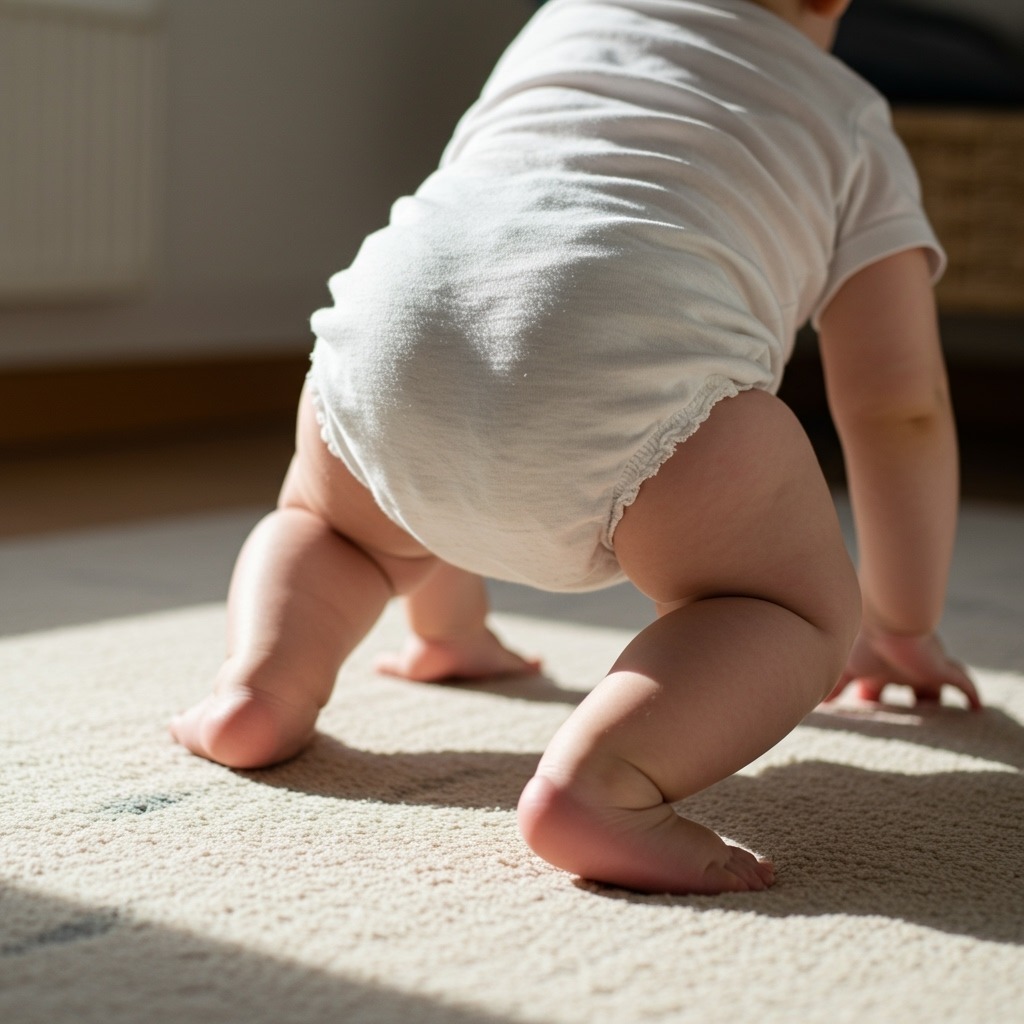
Second, cartilage kneecaps protects babies as they learn to move. When babies are learning to crawl, they’re constantly putting pressure on their knees. They fall, they bump into things, they’re basically tiny wrecking balls figuring out how their bodies work. Cartilage is much more forgiving than bone. It can handle the constant impact without breaking or fracturing. Healthline’s comprehensive guide explains exactly how this cartilage structure works and why it’s so important for infant development.
Understanding these early developmental stages is part of how to be a good mother — knowing what’s normal for your child’s growth helps you feel more confident about their health.
The Timeline: When Cartilage Becomes Bone
So when do those soft cartilage kneecaps actually turn into hard bone? The answer is: it’s a long, gradual process that takes years.
According to medical experts, most children’s kneecaps begin the ossification process (turning from cartilage into bone) somewhere between ages 2 and 6. This isn’t something that happens overnight. It’s not like your child wakes up on their third birthday with suddenly bony kneecaps.
The process starts from the center of the kneecap and works its way outward. Small centers of bone formation begin within the cartilage structure. Sometimes multiple bone centers start forming at once, eventually fusing together as the child grows. This gradual transformation continues throughout early childhood.
By the ages of 10 to 12, most children have fully developed bony kneecaps similar to what adults have. A small portion of the original cartilage remains (because joints need some cartilage for cushioning), and another small portion becomes fatty tissue called a fat pad that helps with knee function.
Every child develops at their own pace, though. Some kids might start ossification closer to age 2, while others might not begin until age 5 or 6. Both are completely normal. Just like some kids walk early and some walk later, bone development follows individual timelines. If you’re curious about the exact mechanics of how X-rays show (or don’t show) baby kneecaps, HowStuffWorks has a fascinating explanation of what you’d see if you could peek inside a baby’s knee.
Why This Design Is Actually Brilliant
Once I understood the science behind cartilage kneecaps, I realized how incredibly smart this developmental process really is.
Babies grow FAST. In the first year of life, they’re constantly changing size, learning new movements, and putting their bodies through rapid development. Having flexible cartilage instead of rigid bone allows their skeleton to adapt and grow without constantly breaking or getting injured.
Think about everything babies do with their knees: They scoot on their bellies, dragging their knees behind them. They learn to crawl, spending months with their knees constantly hitting the floor. They pull themselves up on furniture, putting all their body weight on bent knees. They fall dozens of times a day, learning to walk. All of this would be incredibly risky with hard, brittle bones.
The cartilage design allows babies to handle falls and impacts that would fracture an adult’s kneecap. When my daughter was learning to walk, she fell constantly. I mean CONSTANTLY. Multiple times every single day for months. Her knees took the brunt of so many falls, but she never once had a knee injury because that cartilage was doing its job protecting her.
The gradual ossification timeline also makes sense developmentally. By ages 2-6, when bone formation begins, most kids have already mastered walking and are more stable on their feet. The risk of constant falling has decreased significantly. By ages 10-12, when ossification is complete, kids have the motor control and balance to protect their now-bony kneecaps from serious injury.
For more insights into children’s developmental stages, explore what kids learn in kindergarten, which covers other important milestones around this age.
Can You Feel the Difference?
This is the question I had after learning all this: Can you actually tell the difference between cartilage kneecaps and bone kneecaps by touch?
The answer is yes, kind of. If you gently feel a baby’s knee versus an older child’s knee, you’ll notice the baby’s knee feels softer and less defined. There’s definitely structure there, but it doesn’t feel like a hard bone. An older child’s kneecap feels more solid, more like the distinct bony bump you’d expect.
I tested this with my kids after researching. My toddler nephew’s knees felt much softer and squishier than my eight-year-old’s knees. My eight-year-old’s kneecaps were clearly defined hard structures that you could feel moving when he bent his leg. My nephew’s knees were there, but they felt more like thick, flexible tissue than bone.
This isn’t something to obsess over or constantly check. I’m just sharing this because it’s fascinating and helps you understand what’s normal. You don’t need to feel your baby’s knees regularly to assess their development. Your pediatrician checks this during wellness visits.

What Can Go Wrong (And What’s Completely Normal)
Like with any developmental process, there are some things that can occasionally go wrong with kneecap formation, but they’re relatively rare.
About 5 percent of the time, some of the bone centers that form within the cartilage don’t fully fuse together. This is called a bipartite patella, meaning a two-part kneecap. Most of the time, this doesn’t cause any problems or pain. It’s just a variation in how the bone developed.
Occasionally, kids with bipartite patella can develop pain at the site where the bones didn’t fuse. This might happen after an injury or just during growth spurts. If your child complains of persistent knee pain, especially if they’re in that 10-12 age range when ossification is completing, it’s worth having a doctor check it out. Rady Children’s Hospital explains bipartite patella in detail and discusses when it’s actually a concern versus when it’s just a normal variation.
Other normal things that worry parents but are actually fine:
Knock knees or bow legs. Most toddlers have some degree of knock-kneed or bowed legs as their skeleton develops. This usually corrects itself by age 7 or 8. It’s related to overall leg bone development, not specifically the kneecap.
Clicking or popping sounds. Sometimes, as cartilage transitions to bone, you might hear clicking or popping when your child bends their knee. As long as there’s no pain, this is usually normal.
One knee looks different than the other. Slight asymmetry is common. Unless there’s a significant difference or your child is having pain or mobility issues, minor differences are typically fine.
When should you actually worry? If your child has persistent knee pain that doesn’t go away, significant swelling, inability to bear weight on one leg, or major asymmetry between knees. Those warrant a pediatrician visit. But general development variations are usually just that — variations.
Teaching kids to pay attention to their bodies without catastrophizing is part of developing social skills that kids need for overall well-being.
The Connection to Motor Development
Understanding kneecap development helped me understand my kids’ motor skill progression so much better.
Babies with cartilage kneecaps are perfectly equipped for crawling. The soft, flexible structure lets them put weight on their knees over and over without injury. If babies had hard bone kneecaps, crawling would be much more painful and risky.
As cartilage starts transitioning to bone around ages 2-6, kids are usually past the constant-crawling stage and working on running, jumping, and more complex movements. The gradually hardening kneecap provides increasing stability for these activities.
By ages 10-12, when the kneecap is fully ossified, kids are typically involved in organized sports or more intense physical activities that require the structural support of a fully developed bony kneecap. The timeline is perfectly matched to what kids need at each stage.
This is why you don’t see babies in organized sports (beyond the obvious reasons). Their skeletal structure literally isn’t ready for that kind of repetitive impact. Their bodies are designed for exploration and learning basic movements, not competitive athletics.
I stopped worrying so much about my toddler’s “weak” knees after learning this. She wasn’t weak — she was exactly as she should be. Those cartilage kneecaps were doing their job perfectly. For more on understanding developmental timelines, check out When Do Kids Start Walking for related milestones.

How to Support Healthy Kneecap Development
The good news is that kneecap development happens automatically. You don’t need to do anything special to make your child’s cartilage turn into bone. It’s a natural process that happens on its own timeline.
But there are things you can do to support overall bone and joint health:
Let them move freely. Babies need floor time to crawl and explore. Don’t keep them in containers or bouncers all day. Movement is what stimulates healthy bone development.
Provide proper nutrition. Calcium and vitamin D are crucial for bone development. Make sure your child is getting enough through diet or supplements as recommended by your pediatrician.
Avoid early impact sports. While exercise is great, very young children don’t need to be doing high-impact activities like jumping on trampolines or playing contact sports. Their skeletal structure isn’t ready for that kind of stress.
Don’t worry about minor bumps and falls. Those cartilage kneecaps are designed to handle the normal tumbles of childhood. You don’t need to prevent every fall — they’re part of how kids learn.
Get regular checkups. Your pediatrician checks skeletal development at wellness visits. Keep those appointments so any potential issues can be caught early.
Watch for pain, not for perfection. Some clicking, some asymmetry, some awkward running — all normal. Persistent pain that doesn’t go away is the red flag to watch for.
Most importantly, relax. Kneecap development is one of those things that usually just happens without any intervention. Your job is to feed your kid, let them play, and watch for genuine problems, not micromanage their skeletal development.
Fun Facts to Share With Your Kids
When I explained kneecap development to my kids, they thought it was the coolest thing ever. Here are some fun facts they loved:
Babies are born with about 300 bones, but adults only have 206. That’s because many baby bones are actually separate pieces that fuse together as you grow. The kneecap is just one example of this process.
Cartilage is the same stuff that makes up your nose and ears. That’s why babies’ noses and ears are so bendy and flexible.
The scientific name for your kneecap is the patella. It’s the largest sesamoid bone in your body (sesamoid means it’s embedded within a tendon).
Your kneecaps don’t actually connect to any other bones. They just sit in front of your knee joint, held in place by tendons and muscles.
Without kneecaps, you couldn’t extend your leg properly or kick a ball. The kneecap increases the leverage of your thigh muscles.
Kids love learning about how their bodies work, and this is a fascinating topic that’s easy to understand. My son told everyone at school about baby kneecaps for like two weeks straight. It became his fun fact party trick.
FAQ: When Do Kids Get Kneecaps?
Do babies really have kneecaps?
Yes, babies are born with kneecaps, but they’re made of soft, flexible cartilage instead of hard bone. This cartilage serves the same protective function as bony kneecaps but is much more flexible and forgiving for the rapid growth and constant movement of infancy. The cartilage gradually turns into bone over several years.
At what age do children’s kneecaps turn into bone?
The ossification process (cartilage turning to bone) typically begins between ages 2 and 6, though the exact timing varies for each child. The process continues gradually over several years, with most children having fully developed bony kneecaps by ages 10 to 12. Some children start earlier and some later, and both are completely normal.
Why are babies born with cartilage kneecaps instead of bone?
Cartilage kneecaps makes childbirth safer for both mother and baby because cartilage is flexible and can compress during delivery, unlike rigid bone. Additionally, cartilage is much better suited for the constant falling and impact that babies experience while learning to crawl and walk. A hard bone would be more likely to break or fracture during these early developmental stages.
Can you feel the difference between cartilage and bone kneecaps?
Yes, if you gently feel a baby’s knee versus an older child’s knee, you’ll notice the baby’s kneecap feels softer and less defined. An older child’s kneecap feels like a distinct, hard bony structure. However, you don’t need to regularly check this — it’s just an interesting observation. Pediatricians check skeletal development during wellness visits.
What happens if my child’s kneecap doesn’t develop properly?
Problems with kneecap development are relatively rare. About 5 percent of children develop what’s called a bipartite patella, where the bone centers don’t fully fuse together. Most of the time, this doesn’t cause problems. If your child has persistent knee pain, swelling, or mobility issues, consult your pediatrician. But minor variations in development are usually completely normal.
Do cartilage kneecaps protect babies better than bone would?
Yes, actually. Cartilage is flexible and can absorb impact much better than rigid bone in babies and toddlers. Given how frequently babies and young children fall while learning to crawl and walk, cartilage kneecaps protect them from injuries that would fracture a bony kneecap. The design is perfectly suited to early childhood needs.
Is there anything I should do to help my child’s kneecaps develop properly?
Kneecap development happens automatically without special intervention. The best things you can do are provide good nutrition (calcium and vitamin D for bone health), allow plenty of movement and floor time for babies, avoid high-impact activities until kids are older, and attend regular pediatric checkups. Watch for persistent pain, but don’t worry about normal developmental variations.
My toddler’s knees look different from my older child’s. Is this normal?
Yes, completely normal. Toddlers have softer, less defined knees because they’re still mostly cartilage. Older children have more prominent, defined kneecaps because ossification is further along. As long as your child isn’t in pain and is developing motor skills appropriately, differences in knee appearance between age groups are expected.
Can kneecap development be delayed?
While development timelines vary naturally among children, significant delays in ossification can occasionally occur due to nutritional deficiencies, certain medical conditions, or genetic factors. If you’re concerned about your child’s skeletal development, discuss it with your pediatrician. They can assess whether your child is within the normal range or if further evaluation is needed.
When can kids start playing sports that put stress on their knees?
Because kneecaps are still developing until ages 10-12, it’s generally better to wait until elementary school age before involving kids in high-impact sports like soccer, basketball, or gymnastics. Toddlers and preschoolers should stick to free play and low-impact activities. By ages 7-8, most kids’ skeletal structures are developed enough to handle more organized athletic activities safely.
The Wonder of Child Development
You know what I love most about learning this stuff? It makes me appreciate how brilliantly designed children’s bodies really are. Every single developmental stage has a purpose. Nothing is random.
Those soft, squishy baby knees that I used to kiss a million times a day were perfectly engineered for exactly what my babies needed. The gradual hardening process matched perfectly with their increasing activity levels and movement complexity. By the time they needed strong, stable kneecaps for running and jumping, and climbing, their bodies had naturally provided them.
When do kids get kneecaps? The answer is they’ve always had them — just not in the form we think of. And watching that transformation from cartilage to bone over the years is just one more reminder of the incredible journey from baby to child to teen that we get to witness as parents.
Next time someone asks you a random kid development question, you’ll be ready with the coolest answer at the playdate. You’re welcome.