
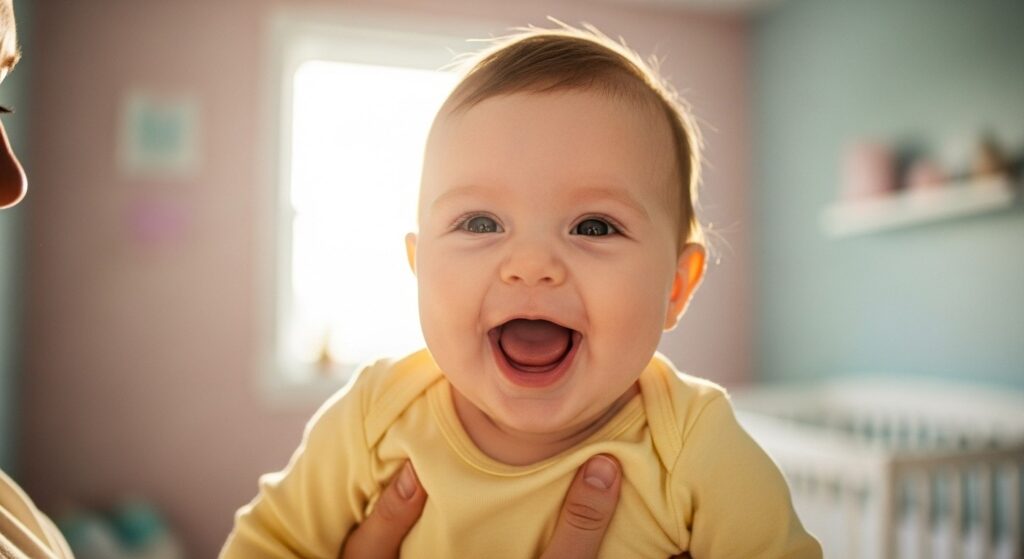
I was changing my daughter’s diaper at 3:47 AM when it happened. She was exactly 14 weeks old, and I was running on two hours of sleep and pure caffeine. I made some ridiculous raspberry sound—honestly, I don’t even remember why—and she let out this tiny, squeaky giggle.
I froze. Did that just happen? Was that a real laugh?
If you’re here googling “when do babies start laughing” at some ungodly hour (been there), you’re probably wondering the same thing I was: Is this normal? Am I missing something? And most importantly, how do I make it happen again?
Here’s everything I learned about when babies start laughing, what triggers those first magical giggles, and how to become your baby’s favorite comedian.
The Timeline: What to Actually Expect
Let’s start with the answer you came here for: most babies start laughing somewhere between 3 and 4 months old. But like everything baby-related, there’s a whole progression leading up to that moment.
First Real Smiles (6-8 Weeks)
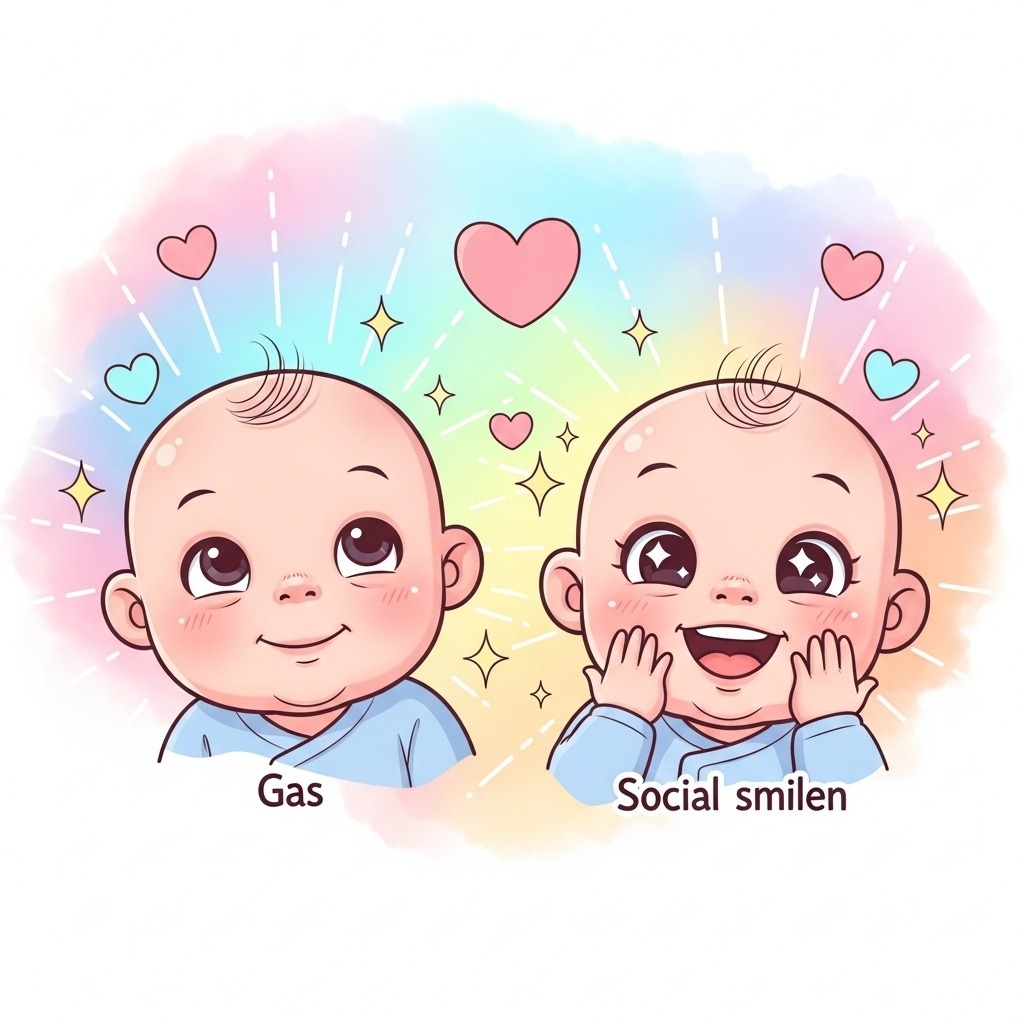
Before babies start laughing, they smile. And I’m not talking about those newborn “gas smiles” (though let’s be honest, those are cute too). Around 6 to 8 weeks, you’ll see your baby’s first real, social smile—the kind that lights up their whole face and makes your heart explode.
These smiles are your baby’s way of saying, “I see you, I recognize you, and you make me happy.” It’s a huge milestone according to the American Academy of Pediatrics, marking the beginning of social and emotional development.
First Giggles and Chuckles (3-4 Months)
This is when the magic really starts. Around 3 to 4 months old, you’ll hear your baby’s first actual laugh. It might sound like a small chuckle, a breathy giggle, or a surprised squeak. Early laughter is often reflexive—meaning your baby isn’t necessarily trying to be funny, they’re just responding to something unexpected or delightful.
My son’s first laugh came when our dog sneezed. Totally random, totally perfect.
Full Belly Laughs (5-6 Months)
By 5 or 6 months, those little giggles transform into full, deep belly laughs. You know the kind—the ones that make their whole body shake and leave them breathless. This is also when laughter becomes more intentional. Your baby is starting to understand what’s funny and actively engaging with humor.
Hysterical Laughter (5-6 Months and Beyond)
Around the same time as belly laughs, you might catch your baby laughing hysterically at something that doesn’t seem particularly funny to you. A ceiling fan. A crinkly piece of paper. Their own feet. This signals that your baby is developing their unique sense of humor and exploring what brings them joy.
For ideas on keeping older babies and toddlers entertained as they grow, check out these activities to do with kids that build on early playfulness.
Why Some Babies Laugh Earlier (or Later)
Here’s the thing nobody tells you: the whole “3-4 months” thing is just an average. Some babies laugh at 12 weeks. Others don’t giggle until 6 or even 7 months. Both are totally normal.
Every baby develops at their own pace. Some are naturally more smiley and vocal from the start. Others take their time observing before they’re ready to participate. Neither approach is better or worse—they’re just different.
If your baby is hitting other milestones (smiling, making eye contact, cooing, tracking objects with their eyes), then a slightly later first laugh is nothing to stress about. Babies who are more serious observers sometimes just need a bit more time to warm up to the comedy show.
However, if your baby isn’t showing any signs of social engagement by 4 months—no smiles, no eye contact, no response to voices—mention it to your pediatrician. They can assess whether it’s just temperament or something worth monitoring.
The Science Behind Baby Laughter
Want to know what’s actually happening in your baby’s brain when they laugh? It’s pretty fascinating.
Around 3 to 4 months, the amygdala—the part of the brain responsible for processing emotions like joy and surprise—becomes more active. This is why your baby suddenly starts reacting to funny faces, unexpected sounds, and playful interactions.
At the same time, your baby is gaining physical control over the muscles needed for laughter: the diaphragm, vocal cords, and facial muscles. Think of it like learning any new skill—your baby has been practicing those sounds and movements, and around 3-4 months, it all comes together.
Research shows that babies also start connecting laughter with social bonding around this time. They’re learning that laughing is a way to engage with the people they love, making it both a developmental milestone and a social skill.
What Makes Babies Laugh at Different Ages
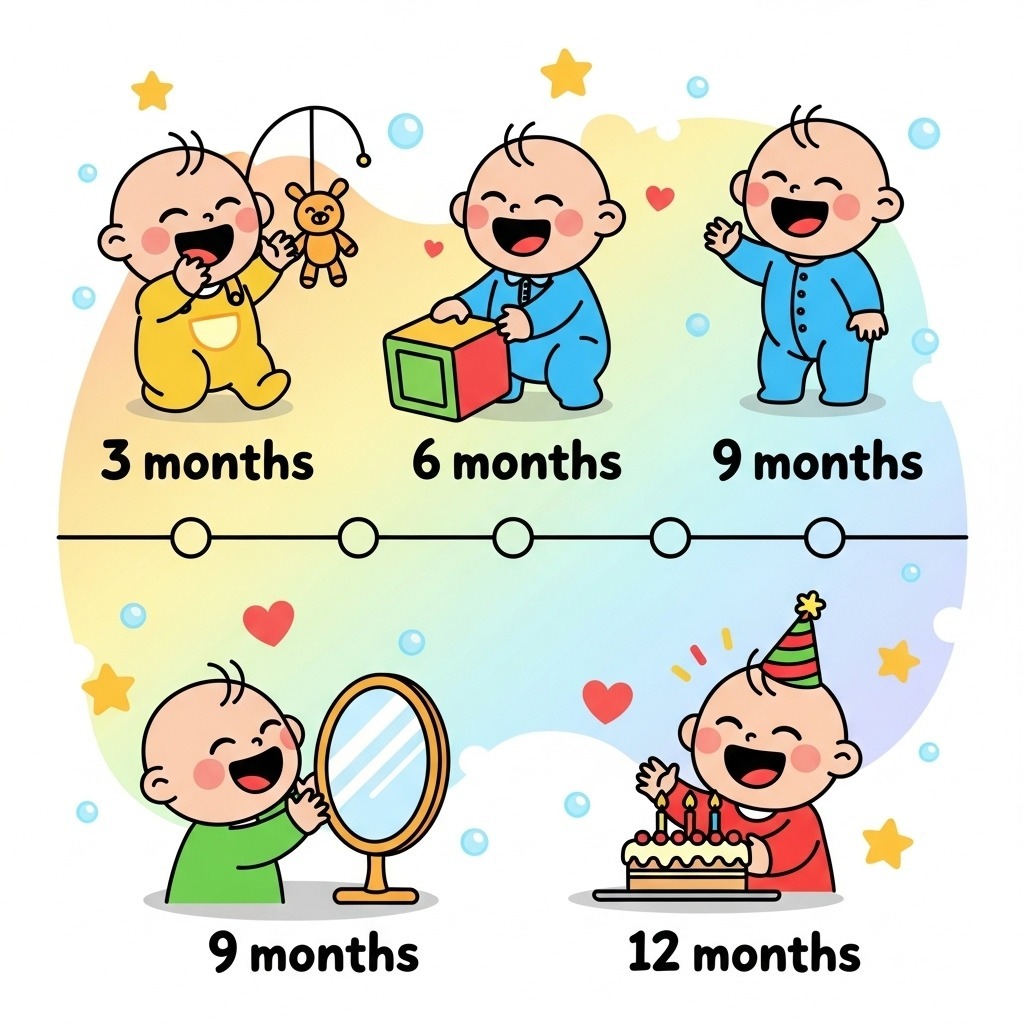
What cracks up a 3-month-old won’t necessarily work on a 9-month-old. Here’s what tends to work at different stages:
3-4 Months: Physical Comedy and Sounds
At this age, babies laugh at sensory experiences. Funny noises, raspberries on their belly, exaggerated facial expressions, or sudden (gentle) movements. They’re also starting to find their own sounds hilarious—you might catch them making a noise, laughing at it, then making it again.
5-6 Months: Anticipation and Surprise
Once your baby understands cause and effect, anticipation becomes comedy gold. “I’m gonna get your belly… I’m gonna get it…” and then tickling them. The build-up is as funny as the payoff.
8-9 Months: Peek-a-Boo and Social Games
By this age, babies start understanding object permanence (things exist even when you can’t see them), which makes peek-a-boo absolutely hilarious. They also laugh at silly dances, animal sounds, and watching siblings do goofy things.
If you’re looking for more ways to engage babies and toddlers, these developmental milestone books offer age-appropriate activity ideas that support laughter and learning.
12+ Months: Real Humor and Silliness
Older babies find genuine humor in situations. Putting a bowl on your head. Making silly mistakes on purpose. Pretending to eat their toy food. They’re developing a real sense of what’s funny and what’s not.
10 Ways to Make Your Baby Laugh
Ready to become your baby’s favorite person? Here are the techniques that work:
1. Make Ridiculous Faces
Stick out your tongue. Cross your eyes. Make an exaggerated surprised face. Babies find facial expressions fascinating, and the more dramatic you are, the funnier it gets.
2. Raspberry Sounds on Their Belly
This is a classic for a reason. The combination of the funny sound and the ticklish sensation usually gets at least a giggle. Bonus: it works on thighs, arms, and cheeks too.
3. Gentle Tickling
Light tickles on the ribs, under the chin, or on the feet often trigger laughter. Keep it gentle—babies have sensitive skin and you want giggles, not overstimulation.
4. Peek-a-Boo Variations
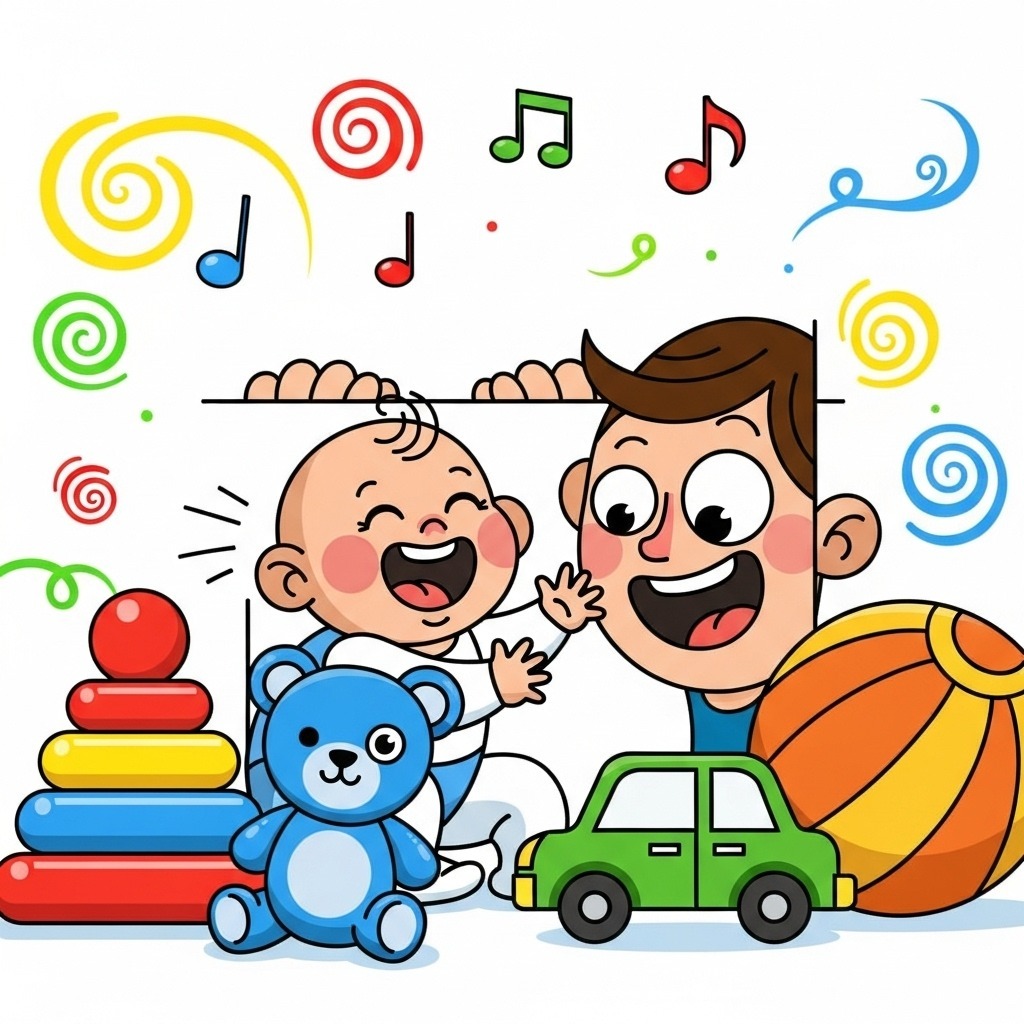
Hide your face behind your hands, a blanket, or around a corner, then pop out with a big smile and “Peek-a-boo!” Mix it up by hiding their face instead, or hiding toys.
5. Silly Voices and Sounds
High-pitched squeaks, deep monster voices, animal sounds, or exaggerated kissing noises. The weirder you sound, the better. Don’t worry about looking ridiculous—your baby thinks you’re hilarious.
6. Dance Party
Hold your baby and dance around the room, or let them watch you bust out your worst moves. Add music for extra effect. Bonus: it’s a great exercise for you.
7. Surprise Pop-Ups
Slowly lift the baby up high (supporting their neck and back), then bring them down quickly with a “Wheee!” or gentle toss in the air and catch them. Always make sure movements are safe and controlled.
8. Blow Bubbles
Babies find bubbles mesmerizing and hilarious. The floating, the popping, the chasing—it’s sensory comedy at its finest.
For more ways to keep babies engaged and entertained, these kids’ activity books & workbooks include ideas for sensory play and early learning activities that often result in giggles.
9. Let Siblings Take the Lead
If you have older kids, they’re often the best comedians. Babies think their siblings are the funniest people alive. Encourage gentle silliness and watch the magic happen.
10. Play “I’m Gonna Get You”
Crawl toward your baby slowly with an exaggerated creeping motion, saying “I’m gonna get you…” then gently tickle or kiss them when you “catch” them. The anticipation builds the laughter.
The Progression: From Smiles to Full Belly Laughs
Understanding the build-up to when babies start laughing helps you appreciate each stage:
Newborn (0-6 Weeks): Reflexive smiles, usually during sleep. Not social yet, but still adorable.
6-8 Weeks: First real social smiles. Your baby recognizes your face and smiles to connect with you.
2-3 Months: Cooing begins. Your baby starts making vowel sounds like “ooh” and “aah.” This vocal practice is preparing them for laughter.
3-4 Months: First giggles appear! Small chuckles or breathy laughs in response to stimuli.
5-6 Months: Deep belly laughs emerge. Laughter becomes more intentional and social.
If your baby’s laughter development seems different from this timeline, don’t panic. As long as they’re showing other signs of healthy development and engaging with you in their own way, they’re likely just fine. Every baby is unique, and that includes their sense of humor and when it emerges.
For understanding other developmental milestones alongside laughter, check out when kids start talking to see how language and laughter develop together.
Why Baby Laughter Matters More Than You Think
When babies start laughing, it’s about way more than just cute sounds. Here’s why those giggles are actually a big deal:
It’s Early Communication
Before babies can talk, laughter is one of their primary ways to communicate joy, contentment, and connection. When your baby laughs at your silly face, they’re essentially saying, “I love this! Do it again!”
It Builds Social Skills
Laughter teaches babies about social interaction. They learn that actions can get reactions, that shared joy strengthens relationships, and that engaging with others feels good. These are foundational skills for all future relationships.
It Strengthens Your Bond
Every time you make your baby laugh, you’re building trust and attachment. Those moments of shared joy create secure connections that last a lifetime. Your baby is learning that you’re a source of happiness and safety.
It Supports Emotional Development
Laughing helps babies process emotions and understand that life includes moments of pure happiness. It’s their first experience with humor, surprise, and delight—all important emotional experiences.
To nurture this emotional development further, keeping babies engaged with appropriate toys and activities helps. These kids’ water toys are perfect for bath time giggles once your baby is sitting independently.
When to Talk to Your Pediatrician
While most variations in when babies start laughing are totally normal, here are some signs that might warrant a conversation with your doctor:
- Your baby is 4 months old and hasn’t shown any social smiles
- Your baby doesn’t make eye contact or respond to your voice by 4 months.
- Your baby isn’t making any sounds (cooing, babbling) by 4 months.
- Your baby seems uninterested in faces or social interaction.
- You notice regression—your baby was laughing and smiling, but has stopped.
These don’t automatically mean something is wrong. But they’re worth mentioning so your pediatrician can assess your baby’s overall development and provide guidance or reassurance.
Remember: you know your baby best. If something feels off, trust your gut and ask questions.
Capturing Those First Laughs
Here’s a pro tip I learned the hard way: keep your phone nearby. Those first laughs are impossible to predict, and you’ll want to capture at least one on video.
But also—and this is important—don’t get so caught up in filming that you miss the actual moment. Some of my favorite memories of my kids’ first laughs exist only in my mind, not on my camera roll. And honestly? Those might be the most precious ones.
When your baby does let out that first giggle, your natural reaction (laughing back, smiling big, engaging more) is exactly what they need. Your response teaches them that laughter is good, that connection feels wonderful, and that they have the power to bring joy to others.
FAQ: Everything About When Babies Start Laughing
Can babies laugh at 2 months old?
It’s uncommon but not impossible. Most babies don’t have the physical or developmental capacity for real laughter at 2 months, though you might see lots of smiling and cooing at this age. If your 2-month-old makes a sound that seems like a laugh, it’s more likely a happy vocalization or reflexive response. True intentional laughter typically emerges around 3-4 months as the brain and muscles develop further.
What’s the difference between a gas smile and a real smile?
Gas smiles (or reflexive smiles) usually happen during sleep or randomly, without your baby making eye contact or responding to you. Real social smiles happen when your baby is awake, looking at you, and clearly reacting to your presence or actions. Social smiles also involve more of the face—the eyes crinkle, the whole expression softens—whereas gas smiles tend to be just the mouth. By 6-8 weeks, most babies transition to primarily social smiling.
How can I encourage my baby to laugh more?
Be playful, silly, and consistent. Babies laugh at things that surprise them in a safe way, so try funny sounds, exaggerated expressions, gentle physical play, and interactive games. The most important thing is to be engaged and responsive—laugh with your baby, smile big, and show enthusiasm when they make any happy sounds. This positive reinforcement encourages more laughter. Also, don’t force it. Some babies are naturally more serious, and that’s perfectly fine.
Do all babies laugh at peek-a-boo?
Not at the same age. Younger babies (3-4 months) might smile at peek-a-boo, but won’t necessarily laugh because they haven’t developed object permanence yet (understanding that things exist even when you can’t see them). By 8-9 months, when object permanence clicks, peek-a-boo becomes hilarious because your baby understands you’re hiding and then reappearing. If your baby doesn’t find peek-a-boo funny right away, just wait a few weeks and try again.
Is it normal for my baby to laugh at weird things?
Absolutely! Babies often find things hilarious that make zero sense to adults. Ceiling fans, crinkling paper, someone sneezing, their own reflection—baby humor is wonderfully bizarre. This is completely normal and shows that your baby is exploring the world and developing their unique sense of what’s interesting, surprising, or enjoyable. Embrace the weirdness and laugh along with them, even if you don’t get the joke.
The Bottom Line
When do babies start laughing? Most begin between 3 and 4 months old, but some take a bit longer, and that’s completely normal. What matters most isn’t the exact timing—it’s that you’re there to witness it, celebrate it, and keep creating those moments of joy.
Those first giggles might be small and breathy. They might come at 3 AM during a diaper change or while you’re making a complete fool of yourself with ridiculous faces. But whenever and however they arrive, they’re pure magic.
Your baby’s laughter is proof that they’re happy, connected, and developing beautifully. And honestly? It’s also one of the best sounds you’ll ever hear.
So keep being silly. Keep making those ridiculous faces. Keep dancing like nobody’s watching (except your baby, who thinks you’re hilarious). Because when babies start laughing, they’re not just making noise—they’re telling you that you’re doing something right.
And if you haven’t heard that first laugh yet? Don’t worry. It’s coming. And when it does, it’ll be absolutely perfect.