

The truth is, I thought my daughter would never walk. I watched babies at playdates take their first steps at 10 months, gliding across the room like tiny Olympians. Meanwhile, mine was content to crawl, cruise, and collect every dust bunny under the sofa. At 14 months, I started panicking. At 15, I asked the pediatrician, “Is something wrong?” When she finally stood on her own and toddled across the kitchen at 16 months, I nearly cried with relief.
If you’re counting months, feeling anxious, or fielding “so… is she walking yet?” from everyone who visits—take heart. Let’s talk honestly about when babies start walking, what’s normal, what’s not, and how you can encourage your little one (without losing your mind).
When Do Babies Start Walking?
The “textbook” answer is that most babies begin walking somewhere between 9 and 18 months. The average age for first steps is about 12 months, but the real “normal” range is much broader—anywhere from 8.5 months up to 20 months is considered just fine for healthy children.
It comes down to personality, genes, body type, and even birth order. Some babies skip crawling entirely and go straight to walking. Others are content to cruise forever, and some take those cautious steps much later.
Unless your pediatrician is concerned and your child is meeting other developmental milestones, timing is rarely a true problem.
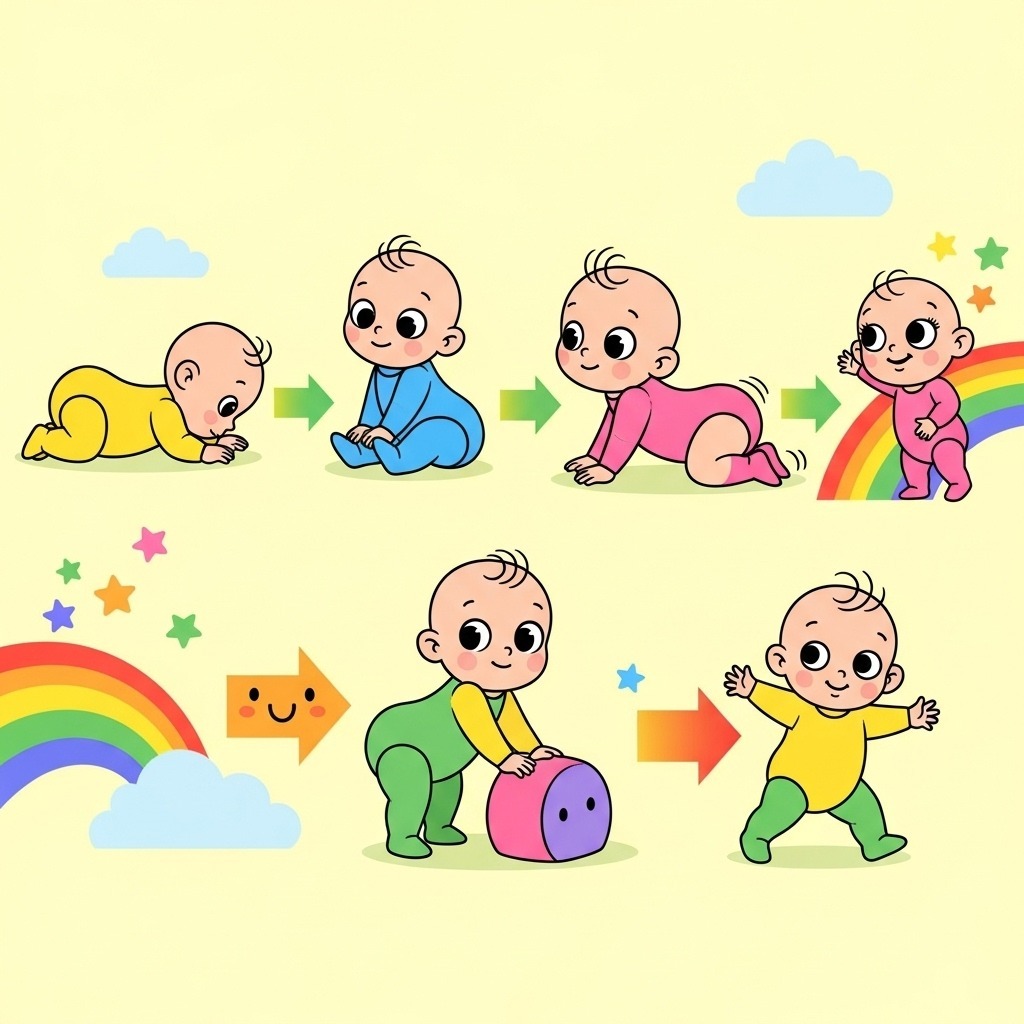
Stages on the Road to Walking
Walking isn’t an isolated milestone—it’s the end of a whole journey:
- Rolling Over (4–7 months): Builds core strength.
- Sitting Up (6–8 months): Teaches balance.
- Crawling/Bum Shuffling (7–12 months): Not all babies crawl! Some scoot or go straight to pulling up.
- Pulling Up to Stand (9–12 months): A huge sign of walking is coming.
- Cruising (10–12 months): Moving along furniture for support.
- Standing Alone (10–14 months): Wobbly, arms often up for balance.
- First Solo Steps (9–18 months): Sometimes just one before a plop-down.
Not every child follows every step. Your child’s timeline is unique.
Early Walkers vs. Late Walkers
Every family has a story: “My niece walked at 9 months!” “My son was 18 months old!” Early or late, each milestone has joys and challenges.
Early walkers (before 12 months):
- Often more physically adventurous.
- May be genetically wired for movement.
Late walkers (after 15 months):
- Just as healthy within the normal range.
- May talk earlier or be more focused on other skills.
- Sometimes observers or “thinkers” are content to watch before trying.
- Late walking doesn’t predict issues; many late walkers thrive.
If your child isn’t walking by 18 months and not progressing in other motor areas, check with your doctor.

How to Encourage Walking Safely
You can’t “teach” walking, but you can make the path safer and encouraging.
- Tummy Time: Builds strength from birth.
- Floor Play: Let them move on safe, soft surfaces.
- Barefoot: Helps develop balance and coordination.
- Safe Cruising Stations: Use furniture and safe objects to support early walking attempts.
- Praise and Encouragement: Cheer wobbly stand-ups and steps.
- Avoid Walkers/Jumpers: They can delay walking or be unsafe.
Provide safe, nonslip floors and gated areas.

When to Worry (And When Not To)
Most late walkers are fine, but watch for:
- No pulling to stand by 12–14 months.
- No steps by 18 months.
- Skill regression.
- No cruising by 15–16 months.
- Delayed other milestones.
If concerned, consult your pediatrician; otherwise, be patient.

What I Wish I’d Known About Walking Milestones
I wish I’d worried less, filmed more, and embraced every stage. Every baby walks on their own schedule, and comparison only steals joy.
Celebrate every little step.
FAQs
Q: Can a baby walk before 12 months?
Yes, some start as early as 9–10 months. Most walk between 11–15 months.
Q: What if my baby isn’t walking by 15 months?
Many walk at 15–18 months. If progressing with other milestones, keep watching.
Q: Is skipping crawling bad?
No—some babies skip crawling. As long as they build balance and coordination, it’s fine.
Q: Do baby walkers help?
No, they can delay walking and be unsafe.
Q: Could late walking mean a problem?
Rarely, especially if other skills are on track. If walking is not achieved by 18 months or regression occurs, check with a doctor.