
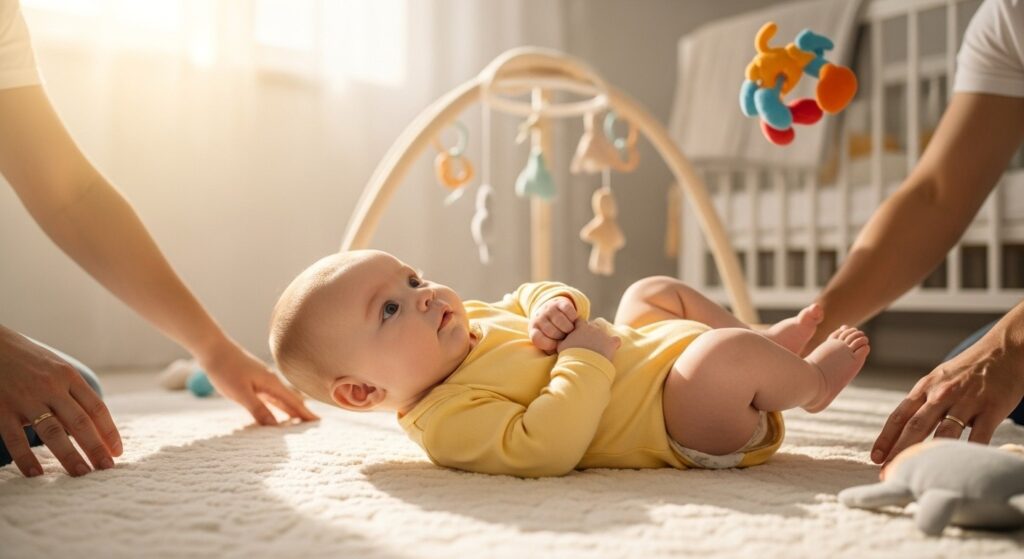
I was folding laundry when I heard a thud. Not a loud thud—more like a soft bump—but enough to make me whip my head around. There was my 4-month-old daughter, flat on her back instead of on her belly, where I’d left her exactly 30 seconds ago. She looked as surprised as I felt.
Wait. Did she just… roll over?
If you’re frantically googling “when do babies roll over” (probably at 2 AM, because that’s apparently when all baby questions strike), you’re in the right place. Maybe your baby just rolled for the first time. Maybe you’re wondering why they haven’t rolled yet. Or maybe you’re trying to figure out if that weird wiggling movement counts as “almost rolling.”
Here’s everything I learned about when babies roll over, what it actually looks like, and how to handle it without completely losing your mind.
The Real Timeline: When Do Babies Roll Over?
Let’s start with the answer everyone wants: most babies start rolling over between 4 and 6 months old. But like every baby milestone, there’s a whole progression that happens before and after that moment.
By 7 months old, most babies have mastered rolling in both directions. But the journey there isn’t straightforward, and it definitely doesn’t happen overnight.
First Movements and Rocking (2-3 Months)
Before babies actually roll over, they practice. Around 2 to 3 months, you might notice your baby rocking side to side when they’re on their back or tummy. This isn’t actual rolling yet, but it’s the foundation. They’re building the core strength and figuring out how their body moves.
Some babies might even accidentally flop over during this stage. But here’s the thing: if your 2-month-old randomly flips once and then doesn’t do it again for weeks, that was probably an accident, not a true developmental milestone.
Tummy to Back Rolling (4-5 Months)
This is usually the first “real” role. Most babies figure out how to roll from tummy to back around 4 to 5 months old. Why this direction first? Because it’s actually easier. When your baby is on their tummy, they can use their arms to push themselves up and sideways, and gravity helps them the rest of the way.
My son’s first intentional roll happened at 4 months and 2 weeks. He was on his play mat, got frustrated trying to reach a toy, pushed up with his arms, and suddenly—flop—he was on his back staring at the ceiling with this shocked expression.
Back to Tummy Rolling (5-7 Months)
Rolling from back to tummy is harder. It requires more core strength, better coordination, and a bit more determination. Most babies master this between 5 and 7 months old.
This direction is trickier because babies have to lift their legs, shift their weight, and twist their whole body against gravity. But once they get it? They’re rolling machines.
Mastering Both Directions (By 7 Months)
By around 7 months, most babies can roll confidently in both directions. Some even use rolling as their primary mode of transportation before they learn to crawl. I’ve seen babies roll clear across a room to get to something they want.
For tracking all these exciting milestones and understanding what comes next, these developmental milestone books are incredibly helpful for first-time parents.
Signs Your Baby Is Getting Ready to Roll
Before, when babies roll over for real, they show you they’re working on it. Here are the signs I learned to watch for:
Stronger Neck Control
If your baby can hold their head steady when you hold them upright and turn their head easily during tummy time, they’re building the foundation for rolling.
Lifting Head and Shoulders During Tummy Time
When your baby starts lifting their chest off the floor during tummy time—like a little baby push-up—they’re strengthening the exact muscles they need for rolling.
Rolling Onto the Shoulders or the Side
This is the “almost there” stage. Your baby gets onto their side but can’t quite make it all the way over. They might stay there for a few seconds before flopping back.
Leg Kicking and Scooting
If your baby is kicking their legs like crazy when lying on their back and managing to scoot themselves in a circle, they’re figuring out how to move their body through space. Rolling is coming soon.
The “Accidental” Roll
Sometimes babies surprise themselves. They’ll be wiggling around, twist a certain way, and suddenly they’re in a completely different position. The shocked look on their face tells you they didn’t exactly plan that.
If you notice your baby showing these signs, it’s time to be extra vigilant about safety. Never leave them unattended on elevated surfaces, even for a second.
Why Rolling Over Actually Matters
When babies roll over, it’s about way more than just a cute trick to show off to grandparents. This milestone is a huge deal for your baby’s development.
It’s Their First Independent Movement
Rolling is the first time your baby can move their entire body on their own. Before this, they relied on you to move them from place to place. Now? They can change positions independently. That’s powerful.
It Builds Core Strength
The muscles your baby develops while learning to roll—core, neck, back, arms—are the same ones they’ll need for sitting, crawling, and eventually walking. Rolling is strength training disguised as play.
It’s the Foundation for Future Milestones
Once babies can roll, sitting usually follows within a couple of months. Then crawling. Then standing. Each milestone builds on the previous one, and rolling is a critical stepping stone.
To learn more about the next milestone in your baby’s journey, check out When do Kids start walking to see how rolling connects to those first steps.
It Sparks Cognitive Development
When babies can roll, they suddenly have access to objects and views they couldn’t reach before. This encourages curiosity, problem-solving, and spatial awareness. They’re learning that their actions have consequences and that they have some control over their environment.
How to Encourage Rolling (Without Pushing)
Here’s something important I learned: you can’t force a baby to roll before they’re ready. But you can create an environment that encourages them to practice.
Make Tummy Time Actually Happen
I know, I know. Most babies hate tummy time at first. But it’s non-negotiable for rolling development. Start small—even 3 to 5 minutes a few times a day makes a difference.
If your baby fusses during tummy time, try these tricks:
- Lie down at their eye level so they can see your face
- Place a rolled towel under their chest for support.
- Do tummy time on your chest instead of the floor
- Use a mirror so they can look at themselves.
Strategic Toy Placement
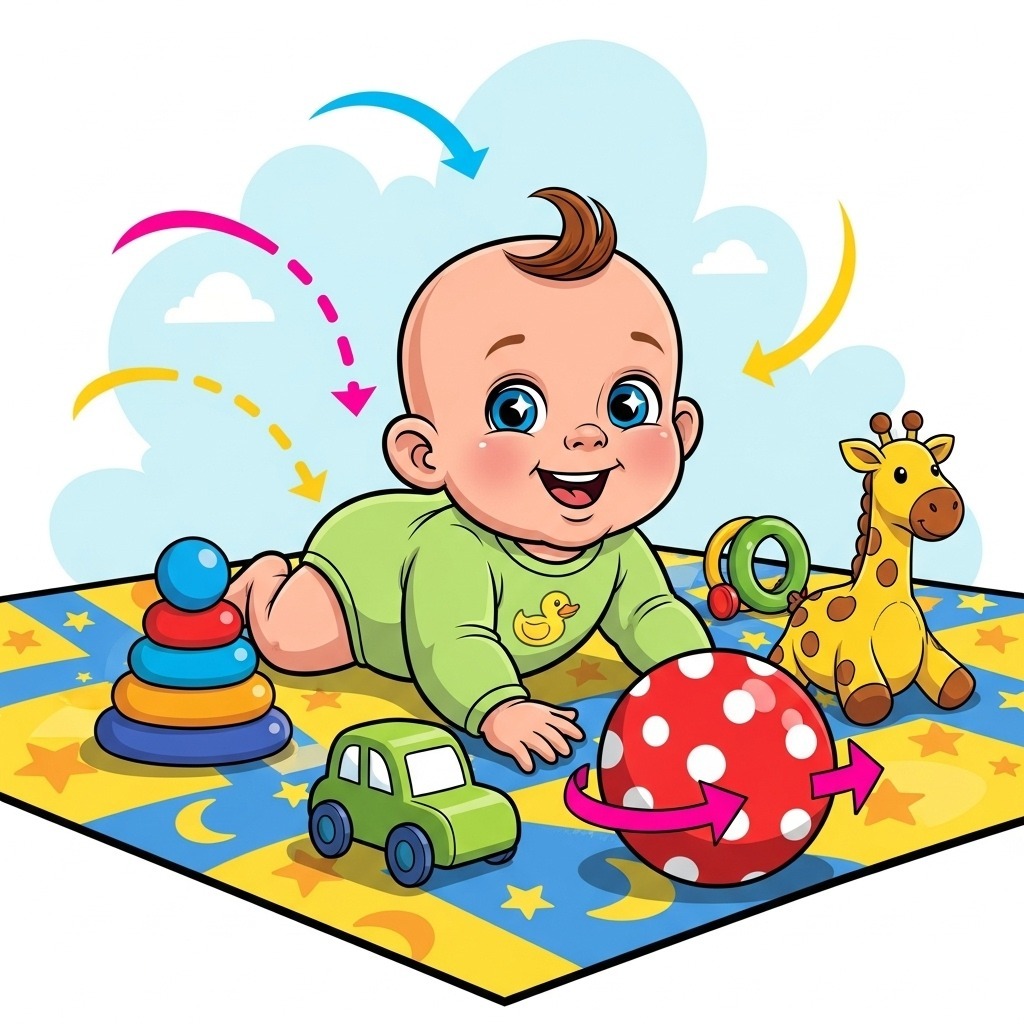
Place toys slightly to one side during tummy time or floor play. When your baby reaches for the toy, they’ll naturally start the twisting motion that leads to rolling. Don’t make it too far—just far enough to encourage the stretch.
Give Them Floor Time
Babies need space to move. Put them on a safe, clean surface (a play mat on the floor is perfect) and let them wiggle around. Bouncy seats, swings, and carriers are great for short periods, but they don’t give babies the freedom to practice rolling.
For safe and engaging floor time, play mats paired with these kids’ activity books & workbooks can keep babies entertained while building motor skills.
Try the Chest Position
If your baby really hates traditional tummy time, lie them on your chest while you’re reclined. This gives them a similar workout without the floor frustration. Plus, they get to see your face, which makes the whole experience more pleasant.
What NOT to Do
Don’t physically roll your baby over repeatedly to “teach” them. They need to figure out the movement pattern on their own. You can demonstrate by gently moving their leg across their body to show the motion, but let them do the actual work.
Also, don’t panic if your baby isn’t rolling on the exact timeline you read about online. There’s a wide range of normal, and pushing them won’t help.
Safety Once Baby Starts Rolling
The day your baby rolls over for the first time is exciting. It’s also terrifying because suddenly, that immobile little potato can MOVE.
Sleep Safety Changes
This is the big one. Once your baby can roll, you might find them on their stomach during sleep even though you put them down on their back. This is okay as long as you continue to place them on their back at the start of sleep. If they roll onto their tummy on their own, you don’t need to keep flipping them back.
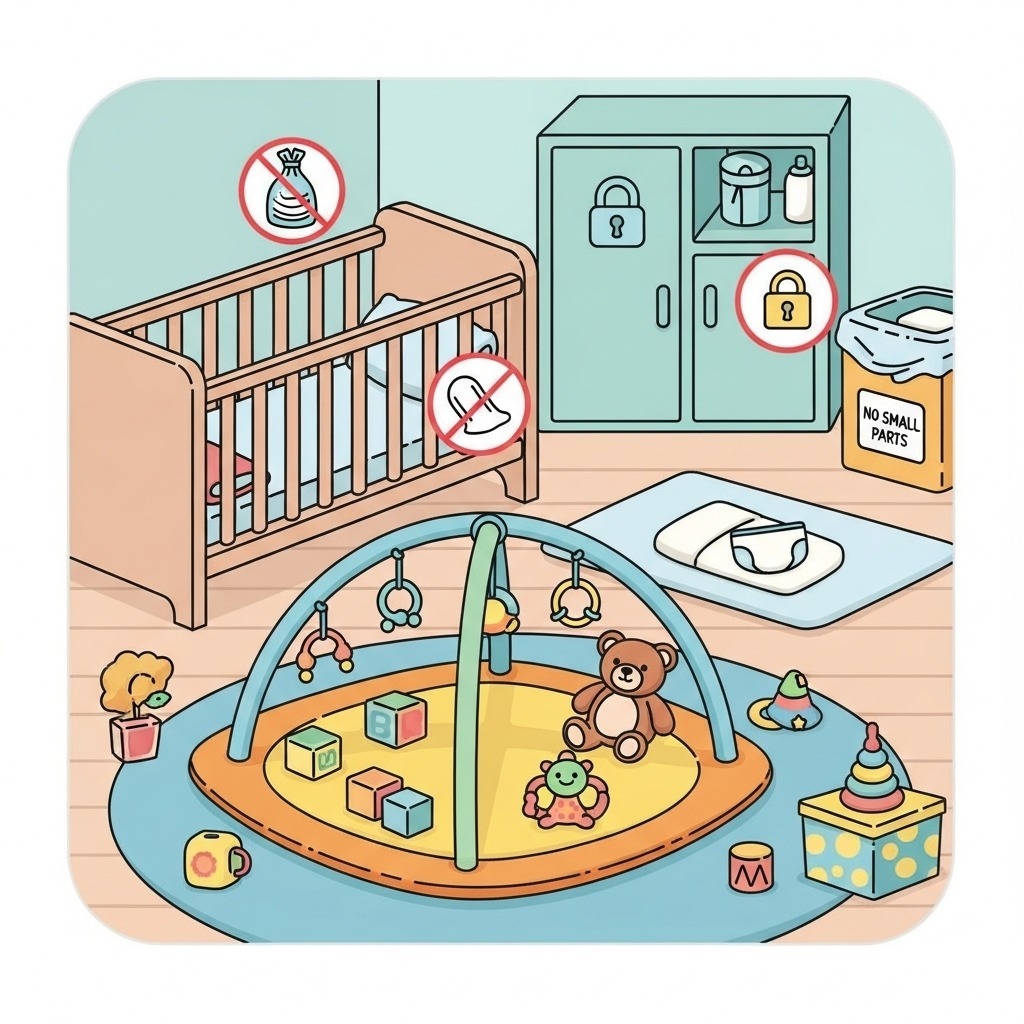
However, keep the crib completely clear—no blankets, pillows, bumpers, or toys.
Never Leave Them Alone on Elevated Surfaces
I cannot stress this enough: once your baby can roll, they can fall. Never—not even for a second—leave them unattended on a changing table, bed, or couch. It takes less time than you think for a baby to roll right off the edge.
I started changing my daughter on the floor after she rolled. It felt paranoid at first, but after hearing about a friend whose baby rolled off the changing table, the floor seemed like the smartest option.
Create Safe Floor Spaces
Make sure your floors are safe for rolling practice. Remove small objects, make sure the area is clean, and supervise playtime. Babies sometimes bonk their heads when learning to roll, so having a soft surface helps.
When to Actually Be Concerned
Most variations in rolling timelines are completely normal. But there are a few situations where it’s worth talking to your pediatrician.
Very Early Rolling (Before 3 Months)
If your baby is consistently rolling over before 3 months and their muscles seem very stiff or their movements seem jerky or uncontrolled, mention it to your doctor. In rare cases, very early rolling can be a sign of neurological issues.
Not Rolling by 7 Months
If your baby hasn’t rolled in either direction by 7 months, bring it up at your next appointment. Your pediatrician can assess whether it’s just a slower timeline or if there might be a muscle tone or developmental concern.
Only Rolling to One Side
Some babies develop a side preference, which is usually fine. But if your baby only ever rolls to one side and resists rolling the other way, it could indicate an issue with muscle tightness or torticollis (tight neck muscles).
Missing Other Milestones Too
If rolling isn’t happening and your baby is also behind on other milestones—like not making eye contact, not babbling, or not showing interest in toys—definitely talk to your doctor. They can refer you to early intervention services if needed.
Remember: you know your baby best. If something feels off, trust your gut and ask questions.
What Comes After Rolling?
Once babies master rolling, the motor skill milestones start coming fast. Here’s what typically happens next:
Sitting (6-8 Months)
The core strength babies build from rolling helps them sit independently. Most babies can sit without support by 8 months old.
Crawling (8-10 Months)
Some babies go straight from rolling to crawling. Others skip crawling entirely and move to standing. Both are normal. The timeline varies wildly here.
Standing and Cruising (9-12 Months)
After crawling (or instead of it), babies start pulling themselves up to stand and “cruising” along furniture. This eventually leads to those first independent steps.
Each milestone builds on the previous one. The strength, coordination, and confidence your baby gains from rolling carry through to every future physical achievement.
For more on developmental progressions, understanding when kids start talking shows how physical and language milestones often develop side by side.
My Honest Take on Rolling Milestones
Here’s what I wish someone had told me when I was obsessing over when my babies would roll over: the exact timing doesn’t matter nearly as much as you think it does.
My first baby rolled at 4 months exactly. My second didn’t roll until almost 6 months. Both are perfectly healthy, active kids now. One wasn’t “better” or “more advanced” because he hit the milestone earlier.
What mattered more was creating opportunities for practice, staying consistent with tummy time (even when it was a struggle), and not comparing my babies to every other baby on Instagram.
Some babies are early movers. Some take their time. As long as your pediatrician isn’t concerned and your baby is showing progress in their own way, try not to stress about the calendar.
That said, if you’re worried—even a little—talk to your doctor. That’s what they’re there for. I called our pediatrician so many times during the first year that they probably knew my voice instantly. No regrets.
Creating the Right Environment
Beyond specific rolling exercises, creating a movement-friendly environment helps babies thrive:
- Use a good-quality play mat that’s comfortable and safe
- Keep favorite toys within sight but just out of reach.
- Join them on the floor—babies are more motivated when you’re engaged.
- Celebrate every attempt, even the unsuccessful ones.
- Stay patient when progress feels slow.
Having the right tools makes a difference. These parenting books offer expert guidance on supporting your baby’s developmental journey with research-backed strategies.
FAQ: Everything About When Babies Roll Over
Can babies roll over at 2 months?
It’s very rare but possible for a baby to roll at 2 months, though it’s usually accidental rather than intentional. If your 2-month-old randomly flips once, it’s likely they got frustrated during tummy time and flopped over without meaning to. Consistent, controlled rolling before 3 months can sometimes signal a neurological concern, so if your baby is rolling regularly that early, mention it to your pediatrician just to be safe.
What if my baby hates tummy time and won’t practice rolling?
Many babies resist tummy time initially, but there are ways to make it more tolerable. Try doing tummy time on your chest instead of the floor, use a small rolled towel under their arms for support, or place them in front of a mirror. Keep sessions short—even 1-2 minutes counts. Consistency matters more than duration. Some parents find that doing tummy time right after diaper changes, when babies are already on their backs, makes the transition easier.
Should I stop swaddling once my baby can roll?
Yes, absolutely. Once your baby shows any signs of rolling—even attempting it—you need to stop swaddling immediately. A swaddled baby who rolls onto their stomach can’t use their arms to push up or reposition, which creates a suffocation risk. Transition to a sleep sack or wearable blanket instead. Most babies start showing rolling attempts around 3-4 months, which is when experts recommend ending swaddling anyway.
Is it normal for my baby to roll back to tummy but not tummy to back?
While most babies roll from tummy to back first, some do it in reverse order. This is less common but not abnormal. Rolling from back to tummy requires different muscle coordination—babies who master this first often have particularly strong core muscles. As long as your baby is showing overall developmental progress and your pediatrician isn’t concerned, the order doesn’t matter much.
My baby rolled once and hasn’t done it again in two weeks. Is that normal?
Completely normal! Babies often surprise themselves with early rolls and then don’t repeat the movement for days or weeks. They’re still building the strength and coordination to roll consistently. Think of that first roll as a preview—the regular feature presentation comes later. Keep providing tummy time and floor play opportunities, and eventually, rolling will become a regular skill. If your baby hasn’t rolled again by 7 months, that’s when you’d want to check in with your doctor.
The Bottom Line
When do babies roll over? Most start between 4 and 6 months, with tummy-to-back rolling happening first and back-to-tummy following a few weeks later. By 7 months, most babies have mastered rolling in both directions.
But here’s what really matters: your baby will roll when they’re ready. Your job isn’t to force the milestone or compare them to every other baby. It’s to provide safe opportunities to practice, celebrate their progress, and trust their timeline.
That first roll will happen—maybe when you’re watching intently, maybe when you’ve turned away for two seconds to grab a burp cloth. Either way, it’s exciting, terrifying, and absolutely worth celebrating.
And once they start rolling? Enjoy it while it lasts, because sitting, crawling, and walking are right around the corner. Then you’ll find yourself wishing for the days when babies stayed in one place.
So take a breath. Put your baby on their tummy. Get down on the floor with them. Make it fun. And when that first roll happens—intentional or accidental—grab your phone, record it, and text it to everyone you know.
Because these moments? They’re fleeting and perfect, no matter when they arrive.