

Last Tuesday, I watched my toddler attempt to drink bath water while my 6-year-old screamed about turning off the TV, and somewhere in the chaos, my partner was trying to stop the baby from yanking the cat’s tail. I stood there thinking, “How did I lose control of everything?”
Here’s the thing: I hadn’t lost control. I’d never actually taken it. I was so terrified of being “too strict” or “mean” or becoming one of those parents who just say no to everything, that I’d basically stopped setting any boundaries at all. Every time I tried to enforce a rule, the guilt crept in. Am I crushing their spirit? Will they resent me? What if I’m damaging them by saying no?
Then I learned something that changed everything: setting boundaries with kids isn’t about control or punishment. It’s about love, safety, and teaching them how the world actually works. And once I understood how to set boundaries properly—with firmness and warmth, not anger and guilt—our whole family dynamic shifted.
If you’re drowning in chaos because you’re afraid to be “the bad guy,” this one’s for you.
Why Setting Boundaries Isn’t Mean—It’s Essential
The biggest lie we tell ourselves as parents? That gentle parenting means never saying no. That boundaries somehow damage our kids or make us harsh, authoritarian parents.
Here’s what actually happens when you set clear, consistent boundaries: your kids feel safer. I know that sounds backward. Shouldn’t freedom make them feel safe? But here’s the science that blew my mind.
Your child’s brain is still developing the ability to think logically, control impulses, and understand consequences. The prefrontal cortex—the part that handles all that important stuff—doesn’t fully mature until around age 25. That means when your 4-year-old wants to eat cookies for dinner or your 8-year-old wants to stay up until midnight, their brain literally can’t process why that’s a problem.
When you set boundaries, you’re acting as your child’s “external prefrontal cortex.” You’re the framework that helps them make sense of a world they can’t quite understand yet. You’re not being mean—you’re being their guide.
Research consistently shows that kids with clear, consistent boundaries actually thrive. They have higher self-esteem, better emotional regulation, and stronger problem-solving skills. They’re not stressed by endless choices they’re not equipped to make. They feel secure because they know what to expect.
Think of boundaries like the edges of a sandbox. They’re not there to trap your child—they’re there to create a safe space where your child can play, explore, and learn without danger. Without those edges, the sand goes everywhere, and suddenly your child is playing on concrete.
For more on different parenting approaches and finding what works for your family, check out this comparison of authoritative vs authoritarian parenting styles.

What Boundaries Actually Are (And Aren’t)
Before I figured out how to set boundaries with kids, I thought boundaries and punishment were the same thing. They’re not even close.
Boundaries are: Clear, consistent limits set with love and respect. “We don’t hit people. I won’t let you hit your brother.”
Punishment is: A negative consequence designed to make a child feel bad. “You hit your brother, so you’re a bad kid and you’re going to a time-out to think about what you did.”
See the difference? Boundaries guide behavior. Punishment tries to shame it away.
Here’s another crucial distinction I wish I’d understood sooner: you limit behavior, not emotions. Your child is allowed to feel angry, frustrated, disappointed, or furious. Those feelings are valid and okay. What’s not okay is hitting, throwing, destroying property, or hurting others.
“I can see you’re really angry right now. Anger is okay. Hitting is not okay. I won’t let you hit.” That’s a boundary that honors emotion while limiting behavior.
I used to try to talk my kids out of their feelings. “Don’t be sad about leaving the park!” or “There’s no reason to be upset!” Guess what? That never worked. Kids don’t need us to fix their feelings. They need us to set safe limits while they experience those feelings.
According to child development experts at Hand in Hand Parenting, boundaries set with connection and warmth help children feel safe enough to release the emotions they’re holding, which actually leads to better behavior long-term.
The 5 Keys to Setting Boundaries That Stick
After reading everything I could find and testing it with my own kids, I’ve found five non-negotiables for boundaries that actually work.
1. Stay Calm (Even When They’re Not)
The number one game-changer? Setting boundaries from a place of calm leadership, not reactive anger. When I’m yelling, “GET OFF THAT TABLE RIGHT NOW!” I’m not setting a boundary—I’m having my own tantrum.
Now, I take a breath, walk over calmly, and say firmly: “I won’t let you stand on the table. That’s not safe. Let’s find a safe place to climb.” Same boundary, completely different energy. And you know what? My kids actually listen now because I’m the stable, calm adult, not another out-of-control person.
2. Use Firm But Loving Language
Instead of: “Turn off that TV right now or I’m taking it away forever!”
Try: “It’s time to turn off the TV. I know this is hard, and you want to keep watching. It’s tough to stop something fun.”
The first one is a threat. The second is a boundary with empathy. It acknowledges their feelings while clearly stating what needs to happen. Kids are way more likely to cooperate when they feel understood, even if they don’t get what they want.
3. Offer a “Creative Yes”
This technique changed my life. Instead of just saying no, redirect to what they can do.
Instead of: “No, don’t pull the cat’s fur!”
Try: “Let’s practice touching the cat with soft hands. Like this—gentle, gentle.”
Instead of: “No, you can’t have a cookie before dinner!”
Try: “Yes, you can have a cookie—right after dinner! Let’s pick which cookie you want so you have something to look forward to.”
You’re still setting the boundary (no pulling, no pre-dinner cookies), but you’ve given them something positive to do instead. Kids respond so much better to “do this” than “don’t do that.”
These parenting books dive deeper into positive discipline techniques that really work without yelling or punishment.
4. Be Consistent
This is the hardest one, but it’s also the most important. If hitting isn’t okay on Monday, it can’t be okay on Thursday just because you’re exhausted. If bedtime is 8 pm, it needs to be 8 pm—not 8 pm sometimes and 9:30 pm when you’re too tired to fight it.
Inconsistency confuses kids and makes boundaries meaningless. They need to know what to expect. Yes, this means following through even when you’re tired, stressed, or just want to give in for five minutes of peace. But here’s the payoff: the more consistent you are now, the less fighting you’ll have later. My kids barely test boundaries anymore because they know I mean what I say.
5. Follow Through (Without Anger)
If you say, “If you throw that toy again, I’m putting it away,” and then your child throws it again, you have to calmly put it away. No lectures, no anger, no “I warned you!”
Just: “I said I’d put the toy away if you threw it again. I meant it. We can try again tomorrow.”
Follow-through teaches kids that boundaries are real, not negotiable. When you don’t follow through, you’re teaching them that boundaries are suggestions they can ignore if they push hard enough.

Real-Life Boundary Examples by Age
Not every boundary works at every age. Here’s what’s worked in our house based on developmental stages.
Toddlers (Ages 2-3)
Keep it simple and physical. Their brains can’t handle complex explanations.
- “I won’t let you throw food. Food stays on the table.” (Then physically move the food if needed)
- “Gentle touches only. Like this.” (Model soft touching)
- “We hold hands in the parking lot. No running.” (Hold their hand, every time)
- “No hitting. Hitting hurts. I’ll help you use words.”
Preschoolers (Ages 4-5)
They can understand simple cause-and-effect, but keep consequences immediate.
- “If you hit your sister, playtime is over and you’ll sit with me.” (Then follow through)
- “We use inside voices inside. Outside voices are for outside.”
- “Clean-up happens before new toys come out.”
- “In 5 minutes, it’s time to turn off the TV. I’ll set a timer so you know when.”
Elementary Kids (Ages 6-10)
They can handle more complex boundaries and natural consequences.
- “Screen time happens after homework and chores. That’s our family rule.”
- “If you choose not to wear your coat, you might be cold. You can decide.”
- “We speak respectfully in this house. If you can’t talk nicely, we’ll try again later.”
- “Bedtime is 8 pm on school nights. That helps your body and brain rest.”
Looking for ways to keep kids this age engaged without screens? These kids’ activity books offer hours of screen-free entertainment that supports the boundaries you’re setting.
Tweens/Teens (Ages 11+)
Involve them in creating boundaries, but parents still have final say.
- “Phones charge in the kitchen at 9 pm. Sleep is important for your developing brain.”
- “You can go to the party if an adult is home and you check in at 10 pm.”
- “We expect respectful communication. Yelling at me isn’t acceptable.”
- “You want more freedom? Show us you can handle current responsibilities consistently.”
Common Mistakes (That I Definitely Made)
Let me save you from my failures.
Being inconsistent. I already mentioned this, but it deserves another call-out because it was my biggest problem. Some days I enforced bedtime. Other days, I was too exhausted and let my kids stay up. They quickly learned that boundaries were negotiable if they pushed hard enough. Don’t be me.
Not following through. I’d make threats I didn’t actually intend to follow through on. “If you don’t clean your room, we’re canceling your birthday party!” Obviously, I wasn’t canceling their birthday party. My kids knew it. My boundaries became meaningless. Only set consequences you’re actually willing to enforce.
Explaining too much. I used to think I needed to explain the reasoning behind every boundary in detail. “You need to brush your teeth because bacteria cause cavities, which cause tooth decay, which requires fillings, which hurt and cost money…” My 5-year-old’s eyes would glaze over. Now I keep it simple: “Teeth brushing keeps your teeth healthy and strong. It’s not negotiable.”
Setting boundaries when I’m angry. Boundaries set in anger are usually too harsh, inconsistent with past boundaries, or driven by my emotions rather than what’s actually best for my kid. Now, if I’m too angry to be calm, I separate us both and revisit the boundary when I’ve cooled down.
Giving in to avoid tantrums. My kids learned that if they cried hard enough or tantrumed long enough, I’d cave. This taught them that boundaries were flexible and tantrums worked. Now I hold the boundary and let them be upset about it. They’re allowed to be sad or mad. The boundary still stands.
For more on how to handle discipline situations without losing your cool, these positive discipline techniques for toddlers offer practical alternatives to yelling.
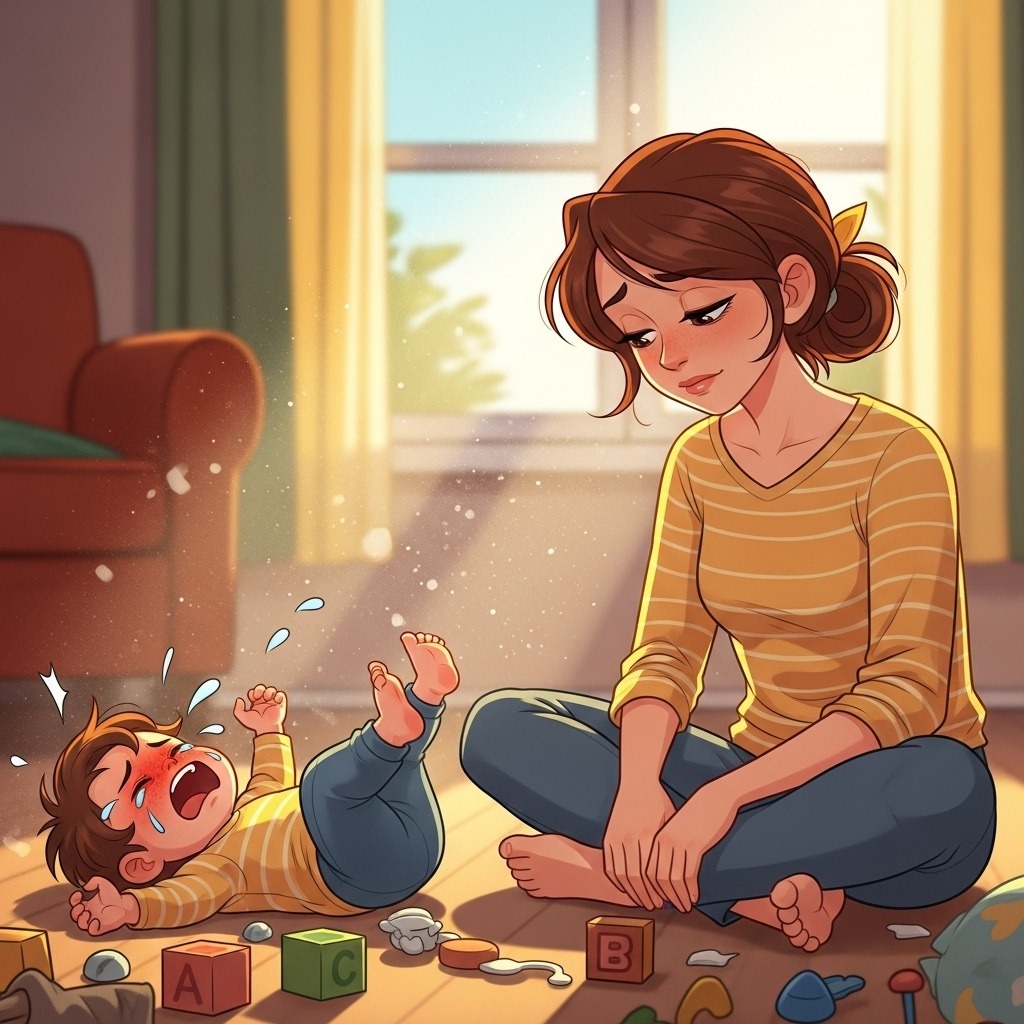
What to Say Instead of “No” (The Creative Yes)
The “Creative Yes” has been a total game-changer in our house. You’re not actually saying yes to everything—you’re redirecting to something acceptable while holding your boundary.
Instead of: “No, you can’t have candy!”
Try: “Yes, you can have candy—after dinner! Let’s pick which candy you want now so you have something to look forward to.”
Instead of: “No climbing on the furniture!”
Try: “Furniture is for sitting. Yes, you can climb—let’s find a safe place to climb. How about your climbing toy outside?”
Instead of: “Stop running!”
Try: “Walking feet inside. Running feet are for outside. Want to race me to the backyard?”
Instead of: “Don’t yell at me!”
Try: “I want to hear what you’re saying, but yelling hurts my ears. Can you tell me in a calmer voice? Take a breath first.”
Instead of: “No, you can’t play on my phone!”
Try: “Phones are for adults. Yes, you can play with your toys! Which toy sounds fun right now?”
See the pattern? You’re acknowledging what they want, stating the boundary clearly, and offering an acceptable alternative. It removes the power struggle because you’re not fighting against them—you’re guiding them toward something they can do.
These board games for kids are perfect redirects when kids are asking for screen time—offer something equally fun that you can actually say yes to.
When Kids Push Back (And They Will)
Here’s what nobody tells you about boundaries: when you first start setting them consistently, your kids will test them harder. This doesn’t mean you’re doing it wrong—it means they’re trying to figure out if you really mean it this time.
My daughter’s tantrums actually got worse before they got better. She was used to me giving in eventually, so she’d escalate until I caved. When I stopped caving, she escalated even more, confused about why her usual strategy wasn’t working.
I almost quit. I thought, “This isn’t working—she’s more upset than ever!” But then I learned: resistance is normal. It’s actually a sign that the boundary matters and that your child needs to release feelings about it.
Here’s what to do when they push back:
Stay close. Don’t send them away to “think about what they did.” Stay nearby and let them know you’re there, even though they’re upset.
Acknowledge their feelings. “I know you’re so mad at me right now. You really wanted to keep watching TV. That’s disappointing.”
Hold the boundary anyway. “And the answer is still no. TV time is over.”
Don’t take it personally. When my son screams, “I hate you!” because I won’t let him have a third popsicle, he doesn’t actually hate me. He hates the boundary. That’s okay. I can handle his anger. He needs to know I’ll stay steady even when he’s not.
Let them be upset. You don’t have to fix their feelings or make them stop crying. Sometimes the most loving thing you can do is hold the boundary while they process their disappointment. It teaches them that they can survive not getting what they want—a crucial life skill.
After a few weeks of consistency, the pushback decreased dramatically. My kids learned that tantrums don’t change boundaries, so they stopped wasting energy on them. Now, when I set a boundary, there might be some disappointment, but not the epic meltdowns we used to have.
How to Get Your Partner on Board
This was a huge issue for us. I’d set a boundary, my partner would undermine it, and suddenly our kids learned to play us against each other.
Here’s how we fixed it:
Have a family meeting. We sat down (without the kids) and agreed on our non-negotiable boundaries. Bedtime, screen time limits, respectful language, hitting, and basic safety stuff. We wrote them down so we could reference them later.
Present a united front. Even if I disagree with how my partner enforced a boundary, I support it in the moment. Later, in private, we discuss it and get on the same page for next time. Kids need to see that parents back each other up.
Use “Let me check with Mom/Dad.” If one parent isn’t sure about a boundary decision, say “Let me check with Mom/Dad first” instead of giving an answer you might have to take back. This buys time to get aligned.
Stay consistent between homes (if divorced/separated). This is harder, but so important. When possible, keep major boundaries consistent between both parents’ houses. Kids do better when expectations are similar everywhere.
Address the undermining. When my partner said yes after I said no, I had to address it privately. “When you override my boundaries, the kids learn they can get different answers from each of us. We need to be a team.”
Getting aligned on boundaries is one of the best things you can do for your relationship and your kids’ security. It takes work, but it’s worth it.
For more strategies on building a strong co-parenting dynamic, these best parenting books offer research-backed approaches that both parents can get behind.

The Freedom That Comes from Clear Boundaries
Here’s what surprised me most about learning how to set boundaries with kids: once I stopped feeling guilty about it and started being consistent, everything got easier.
My kids aren’t constantly testing me anymore because they know the boundaries are real. We have fewer tantrums because they know what to expect. I’m less exhausted because I’m not negotiating every single decision.
And here’s the really beautiful part: my kids are more confident. They know they can count on me to keep them safe, even from their own poor impulses. They’re not stressed by having unlimited options; they’re not ready to navigate. They play more freely within the safe boundaries I’ve set.
The guilt is gone, too. I’m not wondering if I’m crushing their spirit or being too harsh. I know I’m guiding them with love while teaching them how to function in the world. That doesn’t mean—that’s the most loving thing I can do.
You’re not being a bad parent when you set boundaries. You’re being exactly the parent your child needs.
FAQ
How do I set boundaries without yelling?
The key is setting boundaries before you’re angry. When you’re calm, decide what your non-negotiable boundaries are and what the consequences will be. Then, when your child tests that boundary, you’re not figuring it out in the heat of the moment—you’re just calmly enforcing what was already decided. Use a firm but quiet voice and say things like “I won’t let you hit. Hitting hurts.” Then follow through with the predetermined consequence without anger or lectures.
What’s the difference between boundaries and punishment?
Boundaries are limits you set to guide behavior and keep kids safe, like “We don’t hit” or “Bedtime is 8 pm.” Punishment is a negative consequence designed to make a child feel bad about their behavior. Boundaries focus on what behavior is acceptable and guide kids toward better choices. When a boundary is crossed, the consequence should be logical and related (like removing a toy that’s being thrown), not arbitrary punishment (like taking away TV for something unrelated).
How long does it take for boundaries to work?
Expect it to get harder before it gets easier. When you first start setting consistent boundaries, kids will test them more because they’re used to boundaries being flexible. This testing phase usually lasts 2-4 weeks if you stay absolutely consistent. After that, kids realize the boundaries are real and stop fighting them as much. The key is not giving up during that difficult initial phase—that’s when most parents cave.
What if my child has a meltdown every time I set a boundary?
Meltdowns are normal, especially when boundaries are new or when you’re starting to be more consistent. Your child isn’t trying to manipulate you—they’re genuinely upset about not getting what they want, and their developing brain can’t regulate that disappointment yet. Stay calm, acknowledge their feelings (“I know you’re really upset”), hold the boundary anyway (“and the answer is still no”), and stay nearby while they process their emotions. The meltdowns will decrease as they learn that boundaries are consistent.
Should boundaries be the same for all kids in the family?
Age-appropriate boundaries will differ, but family rules should apply to everyone when relevant. For example, “We speak respectfully” applies to all ages, even though how that looks will vary by development level. A 3-year-old learning not to hit and a 10-year-old learning not to call names are both working on the same core value at different levels. But boundaries around things like screen time, bedtime, and independence should definitely adjust based on age and maturity.
Three months ago, I was drowning in guilt every time I told my kids no. I thought setting boundaries made me the bad guy. I couldn’t have been more wrong.
Boundaries aren’t about control or being mean. They’re about love, guidance, and giving your kids the framework they need to feel safe while they grow. They’re about teaching them how the world works in age-appropriate ways so they’re not blindsided later.
The guilt you feel about setting boundaries? That’s not your intuition telling you you’re wrong. That’s the misconception that gentle parenting means never saying no. But truly gentle parenting means guiding your child with firmness and warmth—setting clear limits while honoring their feelings.
Your kids don’t need you to be their best friend or to always say yes. They need you to be the steady, calm adult who keeps them safe and teaches them how to navigate the world. That’s exactly what boundaries do.
So the next time you need to set a boundary—whether it’s about bedtime, screen time, hitting, or drinking bath water—do it confidently. Do it calmly. Do it consistently. And know that you’re giving your child one of the greatest gifts: the security of knowing someone loves them enough to guide them.
You’ve got this. And your kids are lucky to have a parent who cares enough to set boundaries, even when it feels hard.