

Last Tuesday, my eight-year-old daughter walked through the door after school, dropped her backpack, and immediately burst into tears. Not the dramatic “I’m tired” tears. Real, heartbreaking sobs.
My first instinct was panic. What happened? Was she hurt? Bullied?
But here’s what struck me: she came straight to me. Before trying to hide it, before retreating to her room, before putting on a brave face—she sought me out. In that moment, through my worry, I felt something else entirely: gratitude. Because I realized that broken-hearted or not, my daughter trusted me enough to show me her pain.
If you’re wondering whether your child truly trusts you, you’re not alone. We all question ourselves. Am I doing this right? Does my child feel safe with me? Will they come to me when they really need help?
Here’s the truth: trust isn’t about perfect parenting. It’s not about never making mistakes or always having the right answers. Trust is built in the small, everyday moments when your child knows—deep in their bones—that you’re their safe place.
Let me show you the signs your child trusts you deeply, so you can stop second-guessing and start recognizing what you’re already doing right.
Understanding What Trust Really Means
Before we dive into the signs, let’s talk about what we actually mean by trust.
Parent-child trust isn’t the same as obedience. A child who obeys out of fear might follow rules, but they won’t feel emotionally safe. Real trust means your child believes:
- You’ll listen without judgment
- You’ll help them when they’re struggling.
- You’ll keep them safe, physically and emotionally.
- You’ll love them even when they mess up.
- You’ll be there, consistently and predictably.
Securely attached children—those who deeply trust their caregivers—grow up more confident, emotionally regulated, and socially competent. That trust you’re building now? It’s setting your child up for a lifetime of healthy relationships.
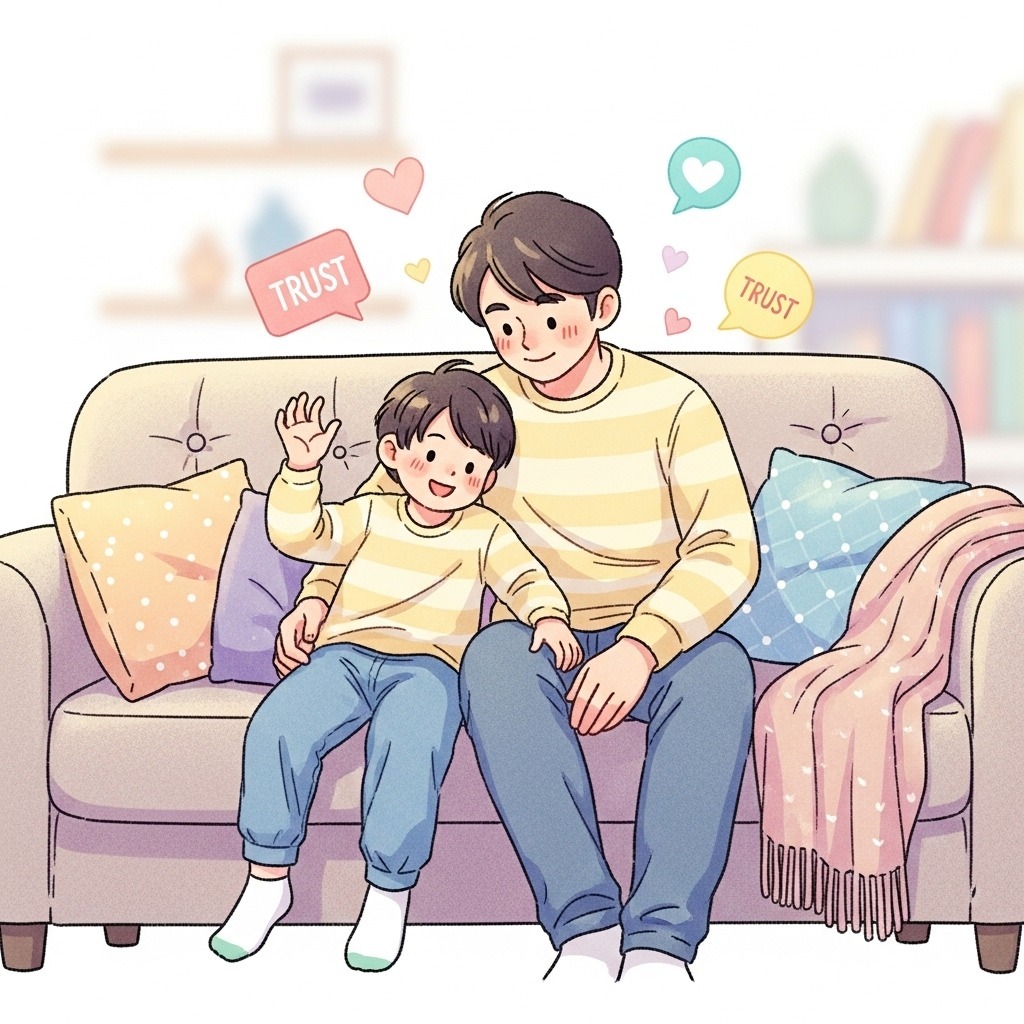
10 Clear Signs Your Child Trusts You Deeply
1. They Come to You First When Something Goes Wrong
This is the gold standard. When your child gets hurt—physically or emotionally—and their first instinct is to find you, that’s trust.
They don’t try to handle it alone. They don’t hide in their room. They don’t wait to be asked. They seek you out because they know you’ll make it better, or at least make it bearable.
My son used to fall and look around for me before deciding whether to cry. That moment of eye contact? That was him checking: Is my safe person here?
2. They Share Their Feelings Openly—Even the “Bad” Ones
Kids who trust their parents don’t just share the highlights. They talk about feeling angry, jealous, scared, or embarrassed. They confess when they’re worried about something “silly.” They tell you when they’re frustrated with you.
This openness means they trust you won’t shame them for their emotions or tell them they’re being ridiculous. They know all their feelings are acceptable, even if not all their behaviors are.
3. They Seek Physical Comfort from You
The way children seek comfort speaks volumes. If your child still wants hugs when they’re upset, reaches for your hand in scary situations, or climbs into your lap when they’re overwhelmed, they trust you to soothe them.
This changes with age—teenagers might not want hugs in public—but the principle stays the same. They come to you, somehow, when they need to feel safe.
4. They Ask for Your Advice and Opinions
“Mom, what should I do?” “Dad, what do you think?”
When your child actively seeks your input on decisions—from which friend to invite to their birthday to what classes to take—they value your judgment. They trust that your advice comes from love and experience, not control.
Even if they don’t always follow it, the fact that they ask shows they respect your perspective.
For ideas on building these meaningful connections through quality time, check out these activities to do with kids that naturally create opportunities for conversation.
5. They’re Comfortable Being Vulnerable
Vulnerability is scary. Admitting you’re not good at something, showing you’re afraid, acknowledging you need help—these all require tremendous trust.
If your child lets you see them struggle, cry, or admit defeat without trying to hide or minimize it, that’s a sign they trust you won’t judge them for being imperfect.
6. They Greet You Warmly After Separations
Pay attention to reunions. When you pick them up from school, come home from work, or return from a trip, how does your child react?
A child who trusts you will generally be happy to see you. They might run to greet you, excitedly tell you about their day, or simply look visibly relieved that you’re back.
This doesn’t mean they never play it cool (especially as they get older), but overall, your return is a positive event.

7. They Explore Confidently When You’re Nearby
This might seem counterintuitive, but independence is actually a sign of trust.
Children who feel secure with their parents are more willing to try new things, explore new environments, and take appropriate risks—because they trust you’re there as their safety net.
Watch your child at the playground or in a new situation. If they venture out but periodically check back to make sure you’re still there, that’s secure attachment in action.
8. They Don’t Hide Their Mistakes from You
This is huge. When your child breaks something, does poorly on a test, or makes a bad choice, do they try to cover it up? Or do they come clean?
If they voluntarily tell you about their mistakes, they trust that you’ll help them fix things rather than just punish them. They know you care more about their growth than about perfection.
My daughter once accidentally broke a neighbor’s window. She was terrified, but she told us immediately. That trust—that we’d handle it together—meant everything.
9. They Respect the Boundaries You Set
Children who trust their parents understand that rules and boundaries come from love, not arbitrary power.
This doesn’t mean they never test limits (that’s developmentally normal!), but overall, they respect that you’re setting boundaries for their well-being. They might not like the rules, but they don’t see them as unfair attacks.
If you’re working on setting healthy boundaries, these soft parenting strategies help maintain connection while staying firm.
10. They Show You Their “Real” Self
The ultimate sign of trust? Your child doesn’t feel like they have to perform for you.
They’re silly, loud, quiet, grumpy, goofy—whatever they’re genuinely feeling. They don’t hide parts of themselves to gain your approval or avoid your disappointment.
They know you love them for exactly who they are, not who they think you want them to be.
What If I’m Not Seeing These Signs?
First, take a breath. If you’re not seeing all these signs yet, that doesn’t make you a bad parent.
Trust develops over time and can be strengthened at any age. Maybe you’re recovering from a rough patch. Maybe you’re a new parent still building your bond. Maybe your child has experienced trauma that makes trust harder.
Here’s what you can do:
Show Up Consistently
Be predictable. Do what you say you’ll do. Be there when you promise to be there. Consistency is the foundation of trust.
Listen Without Fixing
When your child shares something, resist the urge to immediately problem-solve or lecture. Sometimes they just need to be heard. Try saying “That sounds really hard” before jumping to solutions.
Validate All Feelings
Make it safe for your child to feel everything. “You’re allowed to be angry” is powerful. “All feelings are okay; not all actions are okay” helps them understand the difference.
Repair When You Mess Up
You will lose your temper. You will be inconsistent sometimes. You will make mistakes. The key is repairing those ruptures: “I’m sorry I yelled. That wasn’t fair. You didn’t deserve that.”
Create Connection Rituals
Build in daily moments of connection. These conversation starters for kids help open up meaningful dialogue during dinner or bedtime.
Building trust takes time, and these parenting books offer research-backed strategies for deepening your connection with your child at every age.
How to Keep Nurturing Trust Every Day
Once you’ve built trust, you need to maintain it. Here are daily practices that reinforce your child’s sense of security:
Honor Your Commitments
If you say you’ll be at the soccer game, be there. If you promise to read a story, read it. Small broken promises erode trust faster than you’d think.
Stay Calm During Storms
Your child will test you. They’ll have meltdowns, make mistakes, and push boundaries. Your calm, consistent response teaches them they’re safe even when things feel chaotic.
Protect Their Vulnerabilities
When your child shares something sensitive, keep it private. Don’t joke about their fears with relatives or share their struggles with neighbors. Show them their trust is sacred.
Be Curious, Not Judgmental
Instead of “Why would you do that?!” try “Help me understand what happened.” Curiosity opens conversation; judgment shuts it down.
Make Time for Connection
In busy family life, intentional connection often gets pushed aside. Built in moments: family game nights with these board games for kids, creative afternoons with kids’ craft supplies, or active play time outside.
Quality time doesn’t need to be elaborate. Even 15 minutes of undivided attention daily makes a massive difference. Put away your phone, make eye contact, and be fully present.
Stay Involved as They Grow
Trust needs renewal as children develop. The strategies that worked with your toddler won’t work with your teenager. Keep adapting, keep showing up, keep being worthy of their trust.

When to Seek Additional Support
Sometimes trust issues signal something deeper that requires professional help:
- Your child shows signs of anxiety or depression
- They’ve experienced trauma or significant loss.
- Your family is going through major transitions (divorce, relocation, new siblings)
- You’re struggling with your own mental health.
- Previous attachment wounds (yours or theirs) are interfering.
Family therapists and child psychologists specialize in helping rebuild trust and secure attachment. Seeking help isn’t admitting failure—it’s demonstrating to your child that their wellbeing matters enough to get expert support.
Remember This
Your child’s trust in you is one of the most precious gifts you’ll ever receive. It’s built slowly, through thousands of small moments—the scraped knee you kissed, the nightmare you soothed, the mistake you forgave, the secret you kept.
You don’t need to be perfect. You just need to be present, consistent, and safe.
If you’re seeing even a few of these signs, you’re doing something incredibly right. That child who comes to you first, who shares their fears, who trusts you with their vulnerable heart—they see you as their safe place in a big, scary world.
And honestly? There’s no greater privilege than that.
FAQ: Signs Your Child Trusts You Deeply
How can I tell if my toddler trusts me?
Toddler trust looks different from older child trust. Watch for these behaviors: seeking you when hurt or scared, being easily comforted by your presence, exploring confidently when you’re nearby, showing preference for you over strangers, and separating from you without complete meltdowns (though some protest is normal). Toddlers who trust their parents also typically follow simple requests most of the time and show excitement when you return after being away.
What if my child only opens up to one parent?
This is actually quite common and doesn’t necessarily indicate a trust problem. Children often develop different relationships with each parent and may find it easier to talk to one about certain topics. The “less preferred” parent can build trust by spending one-on-one time, finding shared interests, staying consistent, and not taking the preference personally. As children grow, these preferences often shift and balance out.
Can you rebuild trust after breaking it?
Yes, absolutely. Trust can be repaired at any age through consistent, genuine effort. Start by acknowledging what happened: “I know I haven’t been there like I should have.” Then show up consistently going forward. Follow through on promises, validate feelings, stay calm during conflicts, and be patient—rebuilding takes longer than building initially. Your child may test you repeatedly to see if the change is real. Stay steady.
Is it normal for trust to change during different developmental stages?
Completely normal. Young children typically show trust very openly through physical affection and constant proximity-seeking. School-age children might share detailed daily accounts and seek your opinion frequently. Teenagers often pull away as part of healthy individuation, which can feel like lost trust but is actually developmental. The signs just look different: they might not tell you everything, but they still come to you for big decisions or real crises.
What’s the difference between trust and dependency?
Healthy trust creates secure independence—your child feels confident exploring because they know you’re their safety net. Unhealthy dependency means your child can’t function without you, showing anxiety at normal separations and struggling with age-appropriate independence. If your child trusts you deeply, they should become MORE capable and confident over time, not less. They explore, take risks, and grow—but come back to you when they truly need support.