
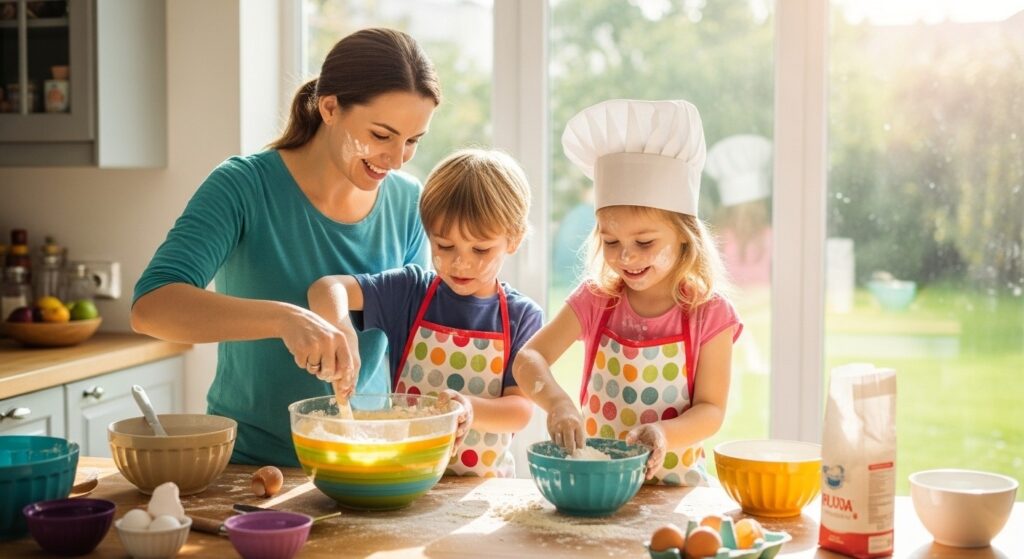
Last Tuesday, my daughter asked if we could make a “fancy cake” for her teddy bear’s birthday. I looked at the clock—4:47 p.m.—and thought about the Pinterest-perfect layer cakes I’d attempted before. The ones that took three hours, seventeen ingredients, and left my kitchen looking like a flour bomb exploded.
“Sure, honey,” I heard myself say. And then I panicked.
But here’s what I’ve learned after years of baking with kids: the best easy cake recipes for kids aren’t the ones that look magazine-perfect. They’re the ones that actually get made, that don’t require a culinary degree, and that your kids can help with without you losing your mind.
So whether you’re facing a last-minute birthday party, a rainy afternoon, or a teddy bear celebration, I’m sharing the easy cake recipes for kids that have saved me countless times—recipes so simple that even my kindergartener can take the lead.
Why Baking Cakes With Kids Is Actually Worth the Mess
Before we dive into the recipes, let me be real with you. Yes, baking with kids is messy. Yes, there will be eggshells in the batter and flour on the ceiling. But it’s also one of the best activities you can do together.
Baking teaches kids math (measuring ingredients), science (watching things rise and transform), following directions, patience, and fine motor skills. Plus, the pride on their face when they serve “their” cake to the family? Priceless.
The key is choosing recipes that set everyone up for success. That means minimal ingredients, straightforward steps, and results that actually taste good even if they don’t look perfect.

The 7 Easiest Cake Recipes for Kids to Make
1. No-Bake Chocolate Cornflake Cakes
This is my go-to when I need something fast that feels like a real accomplishment. No oven required, which means even toddlers can safely participate in almost every step.
What You’ll Need:
- 50g butter
- 100g chocolate (milk or dark)
- 3 tablespoons golden syrup or honey
- 100g cornflakes
- Cupcake liners
- Optional: sprinkles, mini chocolate chips
How To Make It:
Melt the butter, chocolate, and syrup together (adults only for this step). Let it cool for a few minutes so little hands won’t get burned. Then let your kids pour in the cornflakes and gently stir until everything’s coated. Spoon the mixture into cupcake liners and pop them in the fridge for an hour. Done!
My kids love decorating these with sprinkles while the chocolate is still slightly warm. They firm up in the fridge and taste like crispy, chocolatey heaven. These are perfect for getting young kids excited about “baking” because they see results so quickly.
2. Classic Fairy Cakes (Cupcakes)
These are the easy cake recipes for kids that never fail. The basic vanilla cupcake is incredibly forgiving—even if measurements aren’t exact, they usually turn out great.
What You’ll Need:
- 100g caster sugar
- 100g soft butter
- 100g self-raising flour
- 2 eggs
- 1 teaspoon vanilla extract
- Cupcake liners
- Icing sugar and sprinkles for decorating
How To Make It:
Preheat oven to 180°C (350°F). Let your child measure and pour ingredients into a bowl—this is where the real learning happens. Mix everything together until smooth. Spoon into cupcake liners in a muffin tin and bake for 18-20 minutes.
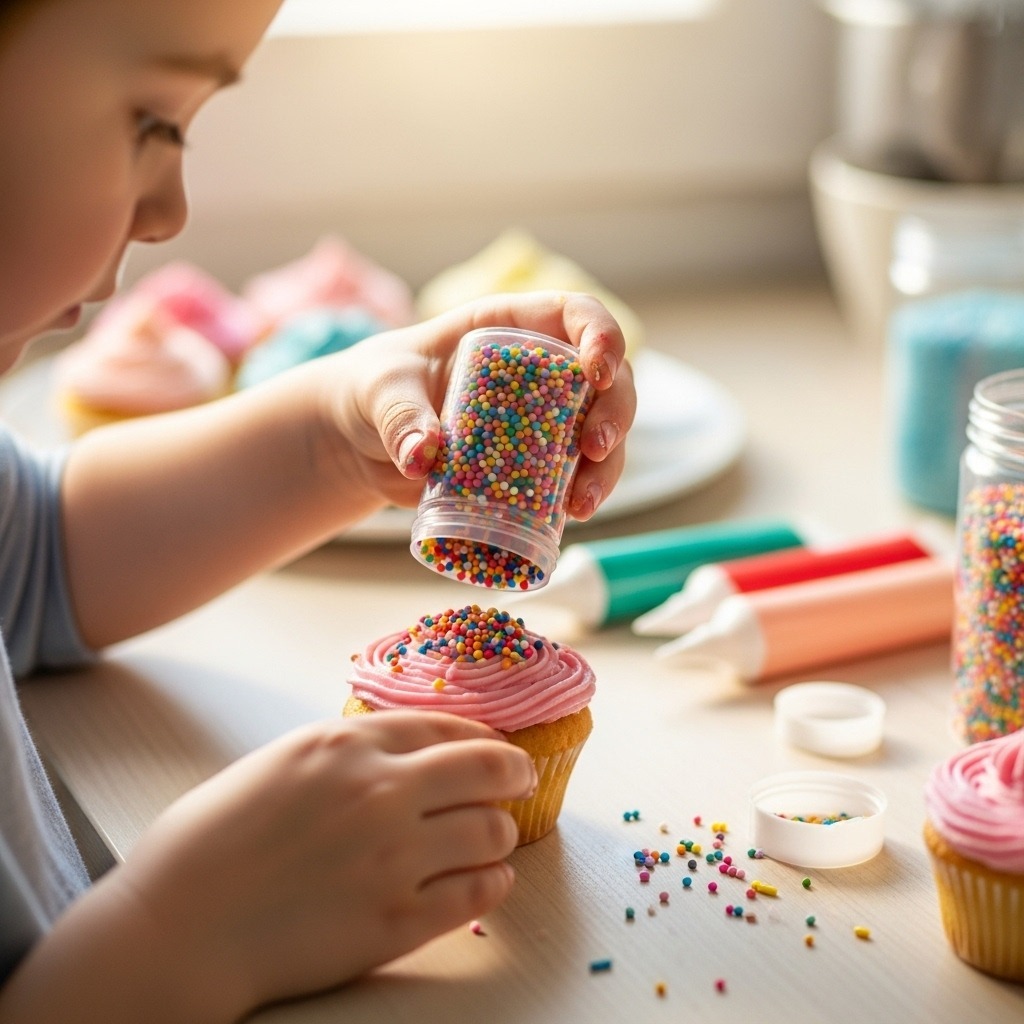
The magic happens when the cakes cool and kids get to decorate them. Mix icing sugar with a little water for a simple glaze, and let kids go wild with sprinkles. Having a proper kids’ baking set makes this so much more fun—my kids love having their own mini whisks and measuring spoons.
3. Mug Cake (The Ultimate Quick Fix)
This single-serving cake cooks in the microwave in 90 seconds. It’s perfect for when one kid wants cake and you don’t want to commit to a whole baking project.
What You’ll Need (Per Mug):
- 4 tablespoons flour
- 4 tablespoons sugar
- 2 tablespoons cocoa powder
- 1 egg
- 3 tablespoons milk
- 3 tablespoons oil
- Small splash of vanilla
- A microwave-safe mug
How To Make It:
Mix everything right in the mug. Microwave for 90 seconds (times vary, so watch it). Let it cool for a minute, then eat straight from the mug with a spoon. Kids can customize with chocolate chips, sprinkles, or a dollop of whipped cream on top.
This is the recipe my kids make themselves after school sometimes. It’s that easy. And yes, it actually tastes good—like a warm, fluffy brownie.
4. Sheet Cake (The Party Saver)
When you need to feed a crowd and want kids involved without the stress of layer cakes, sheet cakes are your answer.
What You’ll Need:
- 2 cups flour
- 2 cups sugar
- 1 cup butter
- 1 cup water
- 2 eggs
- ½ cup sour cream or yogurt
- 1 teaspoon baking soda
- 1 teaspoon vanilla
- Optional: 3 tablespoons of cocoa powder for the chocolate version
How To Make It:
Preheat oven to 350°F. Mix dry ingredients in one bowl, wet in another—perfect for dividing tasks among multiple kids. Combine everything, pour into a greased 9×13 pan, and bake for 25-30 minutes.
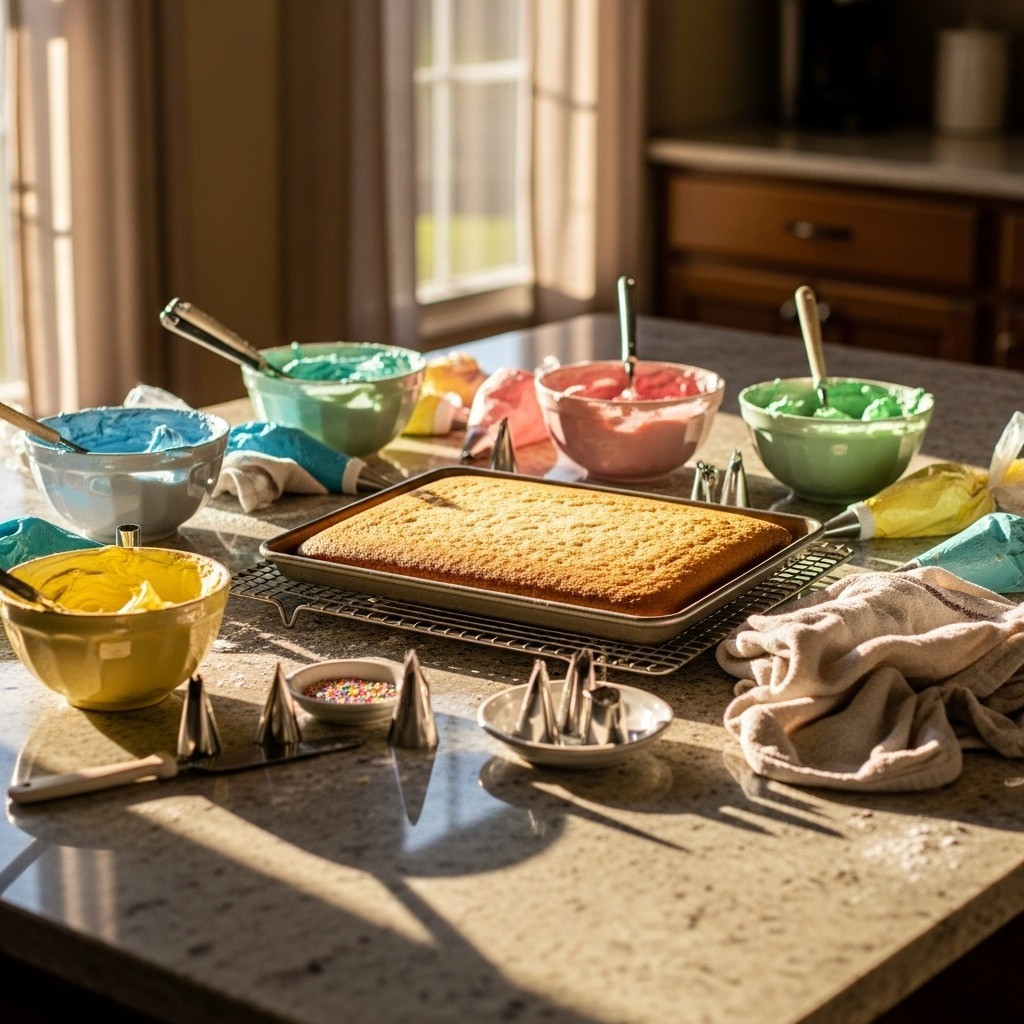
The beauty of sheet cakes is the giant surface area for decorating. My kids have turned these into everything from soccer fields to rainbow masterpieces using simple buttercream frosting and food coloring.
5. Banana Bread Cake
Technically bread, but sweet enough to qualify as cake in my house. Plus, it uses up those brown bananas sitting on your counter.
What You’ll Need:
- 3 ripe bananas, mashed
- ⅓ cup melted butter
- ¾ cup sugar
- 1 egg, beaten
- 1 teaspoon vanilla
- 1 teaspoon baking soda
- Pinch of salt
- 1½ cups flour
How To Make It:
Let kids mash the bananas (great for toddlers!). Mix in butter, then sugar, egg, and vanilla. Sprinkle baking soda and salt over the mixture and stir. Add flour last. Pour into a greased loaf pan and bake at 350°F for about an hour.
This is one of those recipes where imperfect mixing actually makes it better—overmixing makes it tough, so kid-stirring is ideal. Serve it warm with butter and call it breakfast cake. I won’t tell.
6. Box Mix Upgrade
Look, I’m not above box mixes. Sometimes they’re exactly what you need. But here’s how to make them feel special and teach kids baking basics at the same time.
The Upgrades:
- Replace water with milk for a richer flavor
- Add an extra egg for a fluffier texture.
- Use melted butter instead of oil.
- Throw in chocolate chips, sprinkles, or fruit.
- Let kids choose and add mix-ins.
The beauty of starting with a box mix is that it’s nearly foolproof. Kids can practice measuring liquids, cracking eggs, and mixing without the pressure of getting ratios perfect. Then decorating becomes the main event.
7. No-Bake Oreo Cake
This one feels fancy but requires zero baking skills. It’s more assembly than baking, which makes it perfect for younger kids.
What You’ll Need:
- 2 packages of Oreo cookies
- 8 oz cream cheese, softened
- ¼ cup sugar
- 8 oz whipped topping (like Cool Whip)
- Optional: pudding mix for extra flavor
How To Make It:
Crush most of the Oreos (save some for topping). Mix cream cheese and sugar until smooth, and fold in whipped topping. Layer crushed cookies and cream mixture in a dish, alternating. Top with more crushed cookies. Refrigerate for at least 4 hours.
Kids love smashing the cookies in a bag with a rolling pin. It’s like legitimate destruction with a delicious purpose. The “cake” slices beautifully and tastes like cookies and cream ice cream in cake form.
Tips for Actually Successful Baking With Kids
After hundreds of baking sessions with my three kids, here’s what actually makes the difference between fun memories and me hiding in the pantry questioning my life choices:
Start with the right tools. Invest in a sturdy kids’ baking and cooking set with measuring cups, mixing bowls, and utensils sized for little hands. When kids have their own tools, they’re more invested and capable.
Prep before you start. Measure everything out into small bowls before announcing it’s baking time. This “mise en place” (fancy cooking term for “get your stuff ready”) makes the process smoother and reduces the chance of forgetting ingredients.
Assign age-appropriate tasks. Toddlers can pour pre-measured ingredients and stir. Preschoolers can crack eggs (with supervision), measure, and help read the recipe. School-age kids can handle most steps with oversight.
Embrace imperfection. Lopsided cakes taste just as good. Sprinkles outside the lines are fine. The goal is spending time together and building confidence, not Instagram perfection.
Clean as you go (sort of). I don’t mean make kids pause to wash dishes mid-recipe. But wiping up major spills and putting ingredients away after use makes cleanup less overwhelming.
Make it about more than cake. Talk about what you’re doing. “Why do you think we need to crack the eggs?” “What happens when we add heat?” These conversations build critical thinking alongside cooking skills.
For more ideas on spending quality time together, check out these fun activities for kids that create lasting memories.
When Baking Goes Wrong (And How To Fix It)
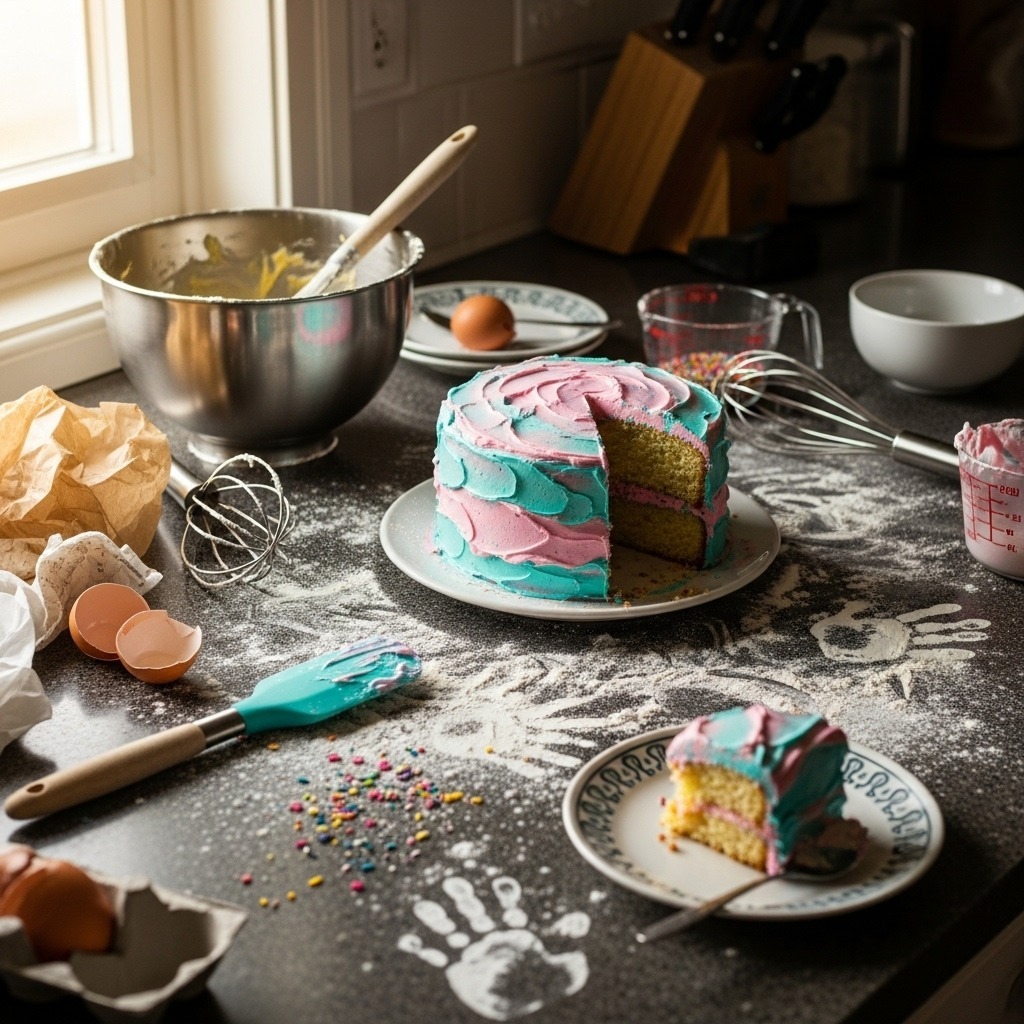
Let me share some common disasters and solutions:
Forgot to add baking powder? The cake will be dense. Call it a “fudge cake” and serve it with ice cream. No one will know.
Burned the bottom? Slice off the burned part, flip it over, and frost it. Frosting hides a multitude of sins.
Too much salt? Unfortunately, this one’s tough to fix. But it’s a great learning moment about measuring carefully. Order pizza and try again tomorrow.
Sunken middle? Underbaked. Put it back in the oven for 5-10 more minutes if it’s still gooey. If it’s already cooled, fill the crater with extra frosting or fresh fruit and call it a “volcano cake.”
Won’t come out of the pan? Next time, grease and flour (or use parchment paper) more generously. For now, serve it as “rustic cake pieces” in bowls with whipped cream.
Most kid-baking disasters still taste pretty good.
Making It Fun Without Losing Your Mind
Baking with kids should be enjoyable, not stressful. Here’s how I keep my sanity:
Choose your timing wisely. Don’t bake when kids are tired, hungry, or you’re rushing to get somewhere. Weekend mornings or after-school, when everyone’s in a good mood, work best.
Lower your standards. This is probably the most important tip. The kitchen will get messy. The cake might look wonky. Your 4-year-old will eat half the sprinkles. All of this is fine and normal.
Have these supplies ready: Aprons or old t-shirts, a stool or chair for reaching the counter, a damp cloth for quick cleanups, and patience. So much patience.
Build in breaks. While the cake bakes or cools, clean up together. Make it a game: “Can we get all the spoons into the dishwasher before the timer beeps?” Keep kids engaged with fun conversation starters while you wait.
Celebrate the effort, not just the result. “You measured those ingredients so carefully!” “I love how you stirred gently so it didn’t splatter!” Specific praise builds confidence for next time.
Beyond Basic: Level-Up Ideas
Once your kids master simple cakes, try these variations to keep things interesting:
Theme cakes: Use cookie cutters to cut cooled cake into shapes. Much easier than fancy pans.
Naked cakes: Skip perfect frosting. Just stack layers with fruit and cream between them, leaving the sides exposed. Very foraging-chic and way easier.
Cake pops: Crumble any cake, mix with frosting, roll into balls, stick on lollipop sticks, and dip in melted chocolate. Kids think these are the coolest things ever.
Rainbow layers: Divide white batter into bowls, tint each with food coloring, and layer in a pan. It looks impressive with zero extra effort.
Personal mini cakes: Use a muffin tin to make individual cakes. Kids love having “their own” cake. These activity books can keep siblings busy while one child decorates their masterpiece.
Want to expand beyond cakes? Try our easy cookie recipes for kids for more baking fun.
The Real Benefits Nobody Talks About
Yes, baking teaches math and following directions. But here’s what I didn’t expect:
It builds patience. Waiting for the cake to bake, then cool, then be decorated—kids learn delayed gratification.
It creates conversation. Some of my best talks with my kids have happened while stirring batter. There’s something about side-by-side activities that gets them opening up.
It boosts independence. My 8-year-old can now make mug cakes completely on her own. That confidence transfers to other areas of life.
It’s a generational connection. I bake my grandmother’s recipes with my kids. Someday they’ll bake them with theirs. That’s pretty special.
It gives them life skills. Cooking is essential. Starting with fun recipes means they’re learning without realizing it’s a valuable life skill.
Frequently Asked Questions About Easy Cake Recipes for Kids
Q: What’s the easiest cake for a child to make completely by themselves?
A mug cake is the easiest for kids to make independently, especially for ages 8 and up. It has few ingredients, requires no oven (just microwave), and creates a single serving so there’s less pressure for perfection. No-bake options like chocolate cornflake cakes also work great for younger kids since there’s no hot oven involved. Just make sure they understand microwave safety or have adult supervision for the melting chocolate step.
Q: Can I make these recipes without eggs?
Yes! For most cake recipes, you can substitute each egg with one of these options: ¼ cup applesauce, ¼ cup mashed banana, 3 tablespoons aquafaba (chickpea liquid), or 1 tablespoon ground flaxseed mixed with 3 tablespoons water (let it sit for 5 minutes first). The texture might be slightly different, but these egg-free versions still taste delicious. Box mixes also usually have egg-free instructions on the package.
Q: How do I keep my kid from eating all the batter?
Here’s the truth: a little raw batter probably won’t hurt them (though technically it’s not recommended because of raw eggs and flour). But if you want to avoid it, try making an “eating bowl” separate from the baking bowl—set aside a small amount of batter without eggs for them to sample. Or use egg-free recipes when you know your kid is a batter-licker. Keeping them busy with tasks also helps—kids stirring are less likely to sneak tastes than kids watching and waiting.
Q: What’s the best way to store homemade cakes?
Most cakes stay fresh for 2-3 days at room temperature if covered well. Put them in an airtight container or cover with plastic wrap. Cakes with cream cheese frosting or fresh fruit should go in the refrigerator. You can also freeze most unfrosted cakes for up to 3 months—wrap tightly in plastic wrap, then aluminum foil. Thaw at room temperature before frosting. Pro tip: frozen cake is actually easier to frost because it doesn’t crumble!
Q: My child wants to help but makes a huge mess. How do I manage this?
Embrace the mess to some extent—it’s part of the learning. But you can minimize chaos: put a large mat or old towel under the mixing area, use a tray with sides to contain spills, fill bowls only halfway, use a big mixing bowl (bigger than you think you need), and demonstrate techniques slowly before letting them try. Also, pick recipes that match their skill level. A 3-year-old stirring fairy cake batter will make less mess than trying to roll out cookie dough. Start simple and work up to more complex recipes as their coordination improves.
Listen, baking with kids isn’t always Pinterest-perfect. Sometimes it’s chaotic, messy, and you’ll find sprinkles in weird places for weeks. But the memories you’re creating? Those are the things your kids will remember forever.
My daughter still talks about the “fancy cake” we made for her teddy bear’s birthday. It was lopsided, the frosting was lumpy, and we used way too many sprinkles. But in her memory, it was perfect. Because we made it together.
So pick one of these easy cake recipes for kids, take a deep breath, and jump in. The dishes will wash. The flour will sweep up. But the memory of baking together? That lasts forever.
Now, if you’ll excuse me, I apparently have a goldfish birthday party to bake for this weekend. At least I have recipes I can count on.