
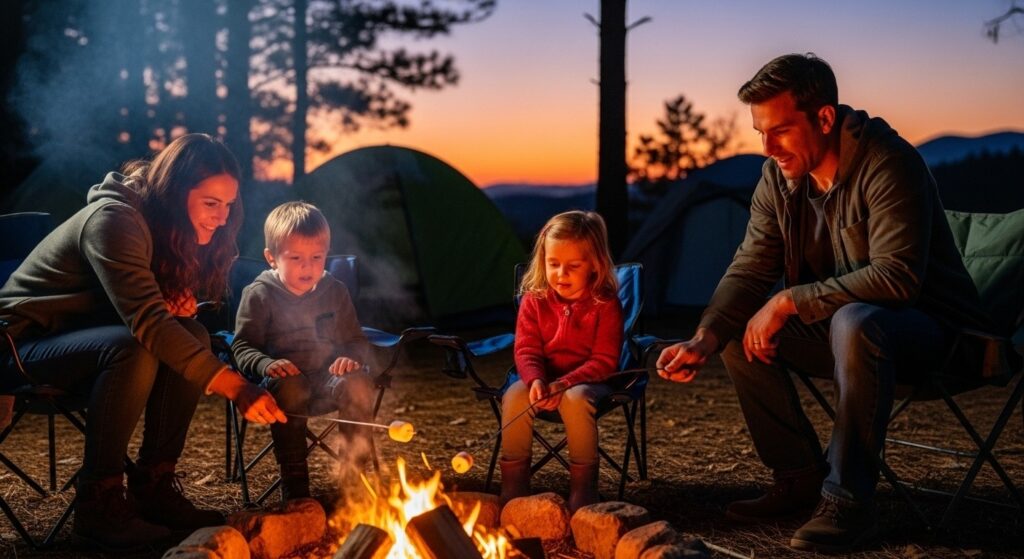
Our first family camping trip almost became our last. I’d packed all the essentials—tent, sleeping bags, food, bug spray—but forgot the one thing that actually mattered: camping activities for kids.
By hour three, my kids were bored out of their minds. “There’s nothing to do!” they whined, while my husband and I exchanged panicked looks. We’d driven two hours to get here, and they wanted to go home already.
That’s when I learned the hard truth about camping with kids: nature alone isn’t enough entertainment. You need actual activities. Games. Things to do. Structure mixed with adventure.
After that disaster, I created a camping activity toolkit that’s saved every trip since. These aren’t complicated or expensive ideas—they’re simple camping activities for kids that actually keep them engaged, happy, and begging to go camping again.
Why Kids Need Structured Activities While Camping
Here’s what I didn’t understand before that first trip: kids don’t naturally know how to “enjoy nature.” They need to be taught how to interact with it, explore it, and find it interesting.
Adults can sit by a fire for hours, watching the flames and feeling peaceful. Kids? They last about seven minutes before they ask when we’re leaving.
Structured activities during camping trips help kids develop problem-solving skills, physical coordination, and a genuine appreciation for the outdoors. But more importantly (for parents), activities keep kids from fighting, whining, or trying to climb into the car to watch iPads.
The key is balance. You want some structured games and activities, but also plenty of free time for them to explore, play, and just be kids in nature.
Think of activities as the framework that makes unstructured outdoor time possible. When kids have things to look forward to—a scavenger hunt after lunch, campfire games after dinner—they’re more patient during the in-between times.
The Best Camping Activities for Kids by Category
I organize our camping activities into categories so I don’t forget anything. Here’s what actually works:
Nature-Based Activities
These are the activities that help kids actually engage with nature instead of just existing near it.
Nature Scavenger Hunt
Create a list of things to find: a pinecone, something smooth, something red, a Y-shaped stick, animal tracks, and three different types of leaves. Give each kid a bag to collect items (except living things—we practice leave no trace).
This activity can last for hours if you make the list challenging enough. My kids still talk about the time they found deer tracks and spent an hour following them through the woods.
For more ideas, check out our nature scavenger hunt for kids guide with printable lists for different age groups.
Bug Observation Station
Bring a few mason jars with holes poked in the lids. Kids can safely catch bugs, observe them for a few minutes, and then release them. Add a magnifying glass and a nature journal for drawing what they find.
My daughter spent an entire afternoon watching a grasshopper and ended up learning more about insects than any textbook could teach.
Rock Painting
Collect smooth, flat rocks during a hike. Bring acrylic paint and paintbrushes. Let kids paint them with nature designs—ladybugs, bees, trees, campfires, smiley faces.
We leave some of our painted rocks along trails for others to find. It’s become a camping tradition my kids love.
Leaf Art
Collect interesting leaves and create art. Make leaf rubbings by placing leaves under paper and rubbing crayons over them. Or create leaf buntings by poking holes in leaves and threading them onto a string to d
ecorate your campsite.Active Outdoor Games
Kids have energy. Camping is the perfect place to let them burn it off with games that actually tire them out.
Glow Stick Ring Toss
Crack glow sticks and form them into rings using the connectors. Set up bottles or sticks as targets. Play as dusk falls for a magical twilight game.
This has become our go-to pre-bedtime activity because it’s active enough to wear kids out but calm enough to transition toward sleep.
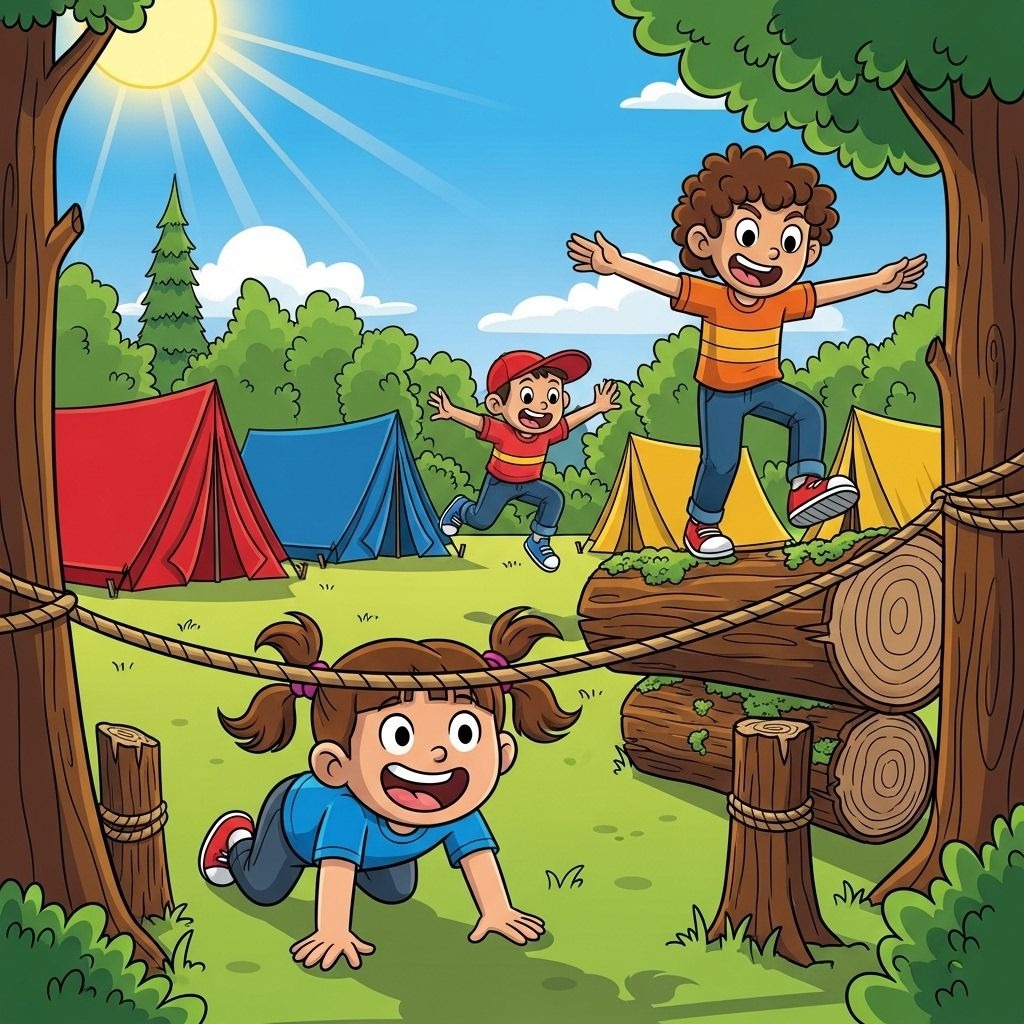
Obstacle Course
Use what you have: weave around trees, crawl under picnic tables, hop over logs, balance on a fallen tree trunk, and army crawl under a rope tied between trees.
Time each person and see who’s fastest, or just let the kids run it over and over. Our kids created their own obstacle course last trip and played on it for three days straight.
Tug of War
All you need is a long rope and a bandana to mark the center. Divide into teams and pull. Simple, exhausting, and endlessly entertaining.
Flashlight Tag
Wait until dark. One person is “it” and has to tag others by shining their flashlight on them. When you’re tagged, you’re it. This game is magic at a campsite—kids love the freedom of running around in the dark.
For families who want to bring along fun outdoor toys, this bean bag toss game has been perfect for camping trips—it’s portable, easy to set up, and keeps kids entertained for hours.
Campfire Activities
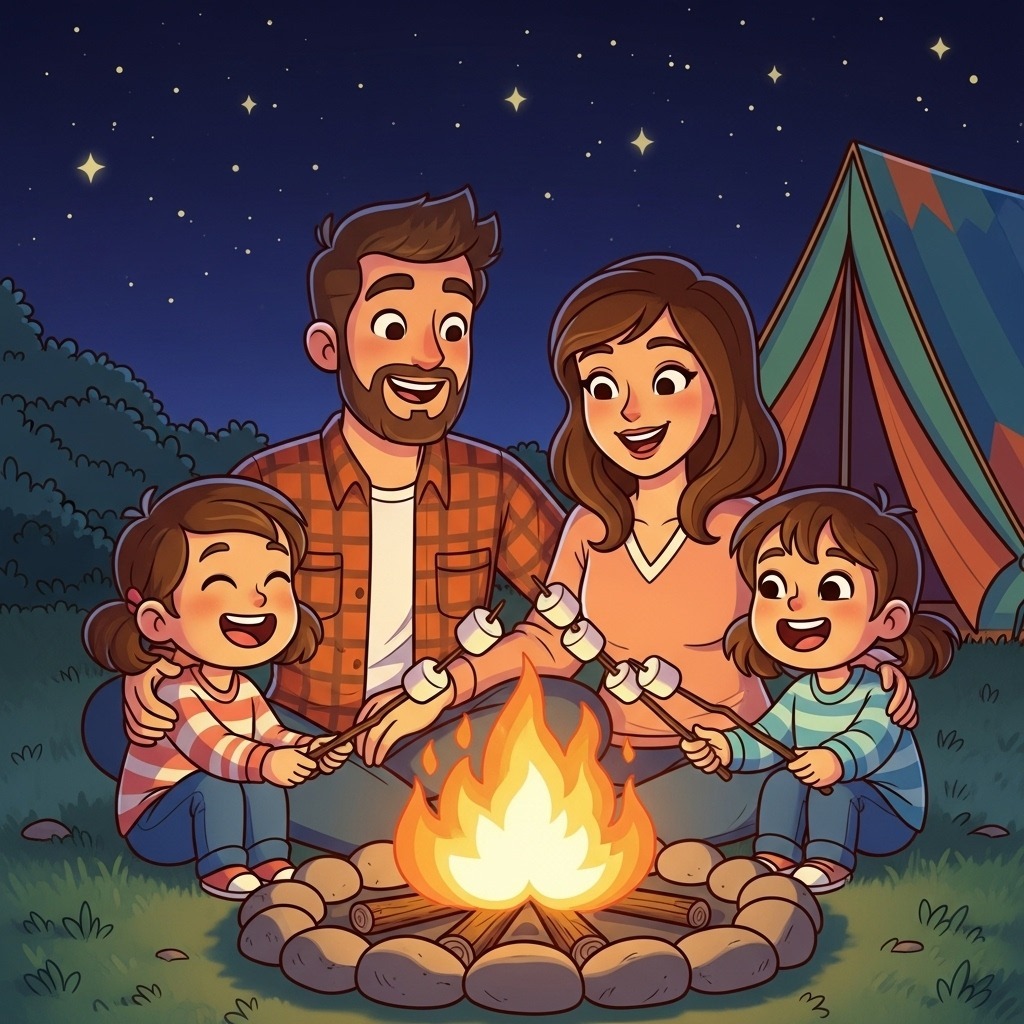
Campfire time is prime for activities that bring everyone together. These work best after dinner when it’s getting dark.
Campfire Stories
Everyone takes turns adding one sentence to an ongoing story. It gets hilarious fast, especially with kids involved.
Or do the classic scary story thing. Keep it age-appropriate, but a little spooky. My kids request the same ghost story every single camping trip now.
Campfire Songs
You don’t need to know traditional camp songs (though those are fun too). Sing favorite songs from the car, make up silly songs, or just have a family karaoke session around the fire.
Shadow Puppets
Use flashlights to create shadow puppets on the tent or a hanging sheet. Kids can put on shows for each other. This activity emerged organically on one trip and has become a tradition.
S’mores Bar
Turn s’mores into an activity by setting out options: regular marshmallows, flavored marshmallows, different chocolates, peanut butter cups, cookies instead of graham crackers.
Let kids create their own combinations and taste-test each other’s creations.
Stargazing
Lay out blankets away from the fire. Download a stargazing app on your phone that identifies constellations. See who can spot the most shooting stars.
Teaching kids to identify constellations creates lasting memories and fosters an appreciation for nature that stays with them into adulthood.
Quiet Time Activities
Sometimes kids need downtime that’s still engaging but not crazy active. These are perfect for mid-afternoon heat or before bedtime.
Nature Journaling
Bring notebooks and art supplies. Kids can draw what they see, press leaves between pages, write about their adventures, or create maps of their campsite.
My kids aren’t naturally into journaling at home, but something about camping makes them want to document everything.
Camping Bingo
Create bingo cards with camping items: tent, squirrel, pinecone, camper van, campfire, bird, someone fishing, etc. The first person to get five in a row wins.
You can find printable camping bingo cards online or make your own before the trip.
Read-Aloud Time
Bring a few books appropriate for camping—adventure stories, nature guides, or even camping-themed picture books for younger kids.
Reading together in a tent when it’s raining or right before bedtime creates such cozy memories.
Card Games
Pack a deck of cards and teach kids simple games like Go Fish, Crazy Eights, or War. For older kids, Uno is perfect.
These board games for kids are also great for camping—choose compact travel versions that don’t have too many small pieces to lose.
Rainy Day Camping Activities
Rain happens. Here’s what to do when you’re stuck in the tent or under a shelter.
Indoor Tent Games
Play “I Spy” focusing on items in and around your tent. Do simple riddles or Twenty Questions. Tell jokes—our kids love telling and re-telling the same camping jokes. Check out these jokes for kids if you need material.
Charades
Write camping-related actions on slips of paper: pitching a tent, roasting marshmallows, seeing a bear, paddling a canoe. Act them out and guess.
Cup Stacking
If you have disposable cups, stack them into towers. Give each person time to see who can build the tallest tower fastest, then knock them down and repeat.
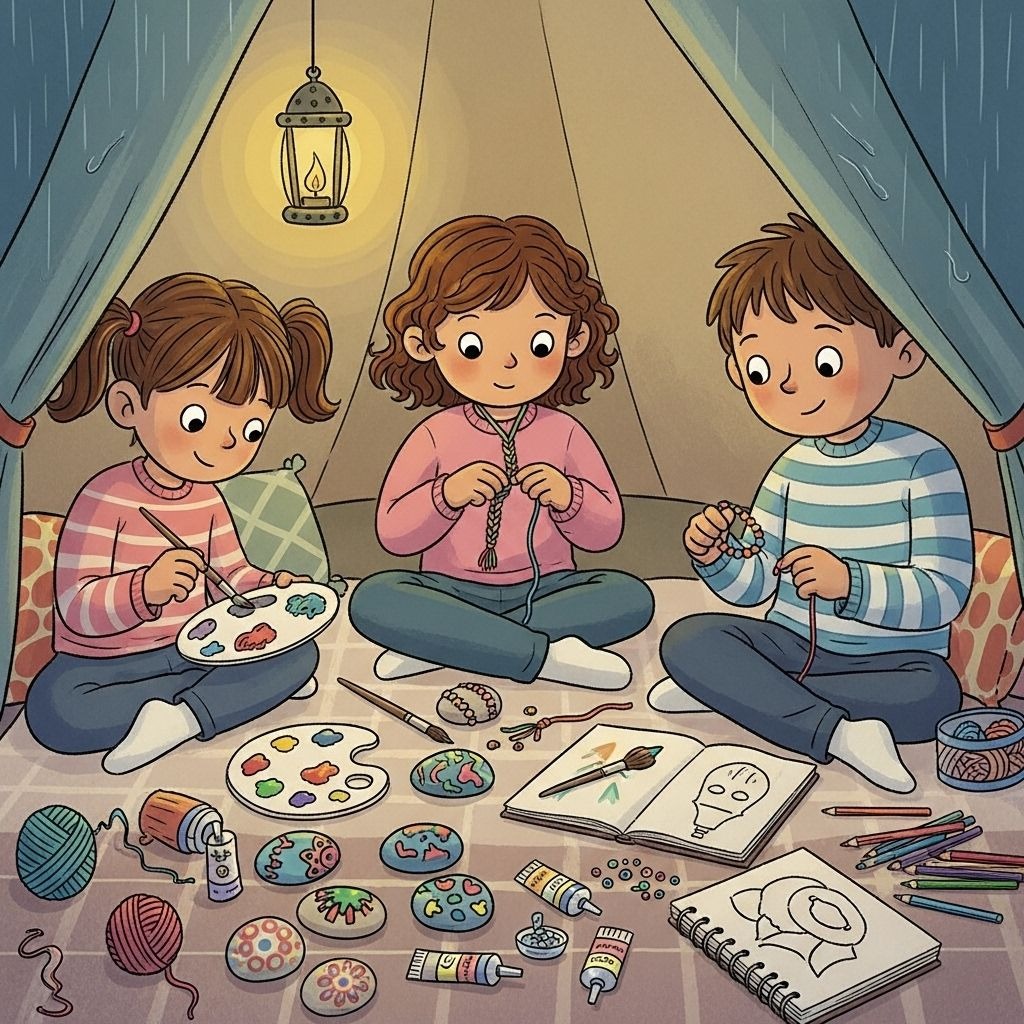
Arts and Crafts
Bring these kids craft supplies specifically for rainy days—coloring books, simple craft kits, friendship bracelet materials. Things that are contained and don’t make huge messes in small spaces.
Activities by Age Group
What works for a 3-year-old doesn’t work for a 10-year-old. Here’s how I adapt activities based on age:
Toddlers (Ages 2-4)
Keep it simple. They’re happy with buckets and shovels for digging, collecting sticks and rocks, playing in dirt, and splashing in water if available.
Bring a few favorite small toys from home for comfort. Let them help with simple camping tasks like gathering kindling (sticks) for the fire.
Preschool and Early Elementary (Ages 4-7)
This age loves scavenger hunts, nature crafts, easy outdoor games, and helping with camp tasks.
They can roast their own marshmallows with supervision, help set up the tent, and enjoy simple hikes with lots of stops to explore.
Older Elementary (Ages 8-12)
These kids can handle longer hikes, more complex games, and bigger responsibilities.
They love challenges: who can build the best fort, who can identify the most birds, who can start a fire fastest (with supervision).
Give them jobs: setting up camp, cooking over the fire, and navigating with a map.
Teens
Teens need a mix of independence and family time. Let them bring a friend if possible. Give them their own tent if you have extra.
Involve them in planning activities. They might enjoy photography, more challenging hikes, or being in charge of campfire cooking.
Don’t force constant togetherness, but create opportunities for connection—card games, campfire conversations, sunrise hikes.
What to Pack for Camping Activities
You don’t need to bring everything, but here’s what I always pack:
Activity Basics:
- Deck of cards
- Small ball or frisbee
- Flashlights (one per kid)
- Rope for tug-of-war and obstacle courses
- Magnifying glass
- Nature guide or identification book
Art Supplies:
- Notebooks
- Crayons or markers
- Small watercolor set
- Colored pencils
Game Supplies:
- Glow sticks
- Chalk
- Bubbles
- Small toys for younger kids
Organization:
I pack activities in labeled gallon bags or small bins so I can grab what I need without digging through everything. Rainy day activities get their own waterproof bag.
These reusable snack containers are also perfect for organizing small activity supplies—tiny toys, crayons, game pieces—so nothing gets lost in your camping gear.
Tips for Making Activities Actually Happen
Having great activity ideas doesn’t help if you never actually do them. Here’s what I’ve learned:
Plan but stay flexible. Have a loose schedule: morning hike, afternoon quiet time, pre-dinner games, campfire activities. But don’t force it if kids are happily playing on their own.
Let kids be bored sometimes. Boredom sparks creativity. Some of our best camping memories came from times when kids had nothing structured to do and invented their own games.
Involve kids in planning. Before the trip, ask what activities they want to try. They’re more likely to engage if they have input.
Keep it simple. The activities that require the least setup and fewest supplies are the ones we actually do. Don’t overthink it.
Take breaks. You don’t need non-stop activities. Build in downtime for rest, exploration, and just sitting by the fire.
Go with the flow. If an activity flops, move on. If something unexpected happens (kids find a creek and want to play in it for two hours), let the schedule go.
For more family activity ideas that work both indoors and out, our guide on fun outdoor activities for kids has tons of options.
Common Camping Activity Challenges (And Solutions)
Challenge: Kids lose interest quickly.
Solution: Have several short activities planned instead of one long one. Rotate through them to keep things fresh.
Challenge: Siblings fight over activities.
Solution: Some activities are individual (nature journals, rock collecting), some are cooperative (building a fort together), and some are competitive but fair (obstacle course races). Mix it up.
Challenge: The Weather ruins plans.
Solution: Always have a backup indoor activity ready. Rainy days can actually be cozy and memorable if you’re prepared.
Challenge: You forget to do the activities.
Solution: Set alarms on your phone as reminders for planned activities, or assign each kid an activity to remind you about.
Challenge: Activities create too much mess.
Solution: Crafts and messy play happen outside, not in the tent. Clean up becomes part of the activity.
FAQ: Camping Activities for Kids
What are good camping activities for toddlers?
Toddlers love simple sensory activities: digging in dirt with shovels, collecting sticks and rocks, playing with water in buckets, exploring with flashlights, and helping with easy tasks like gathering kindling. Keep activities short (10-15 minutes) and let them repeat favorites. Bring a few comfort toys from home and don’t over-schedule—toddlers need lots of free play time to explore at their own pace.
How do you keep kids entertained while camping without screens?
Focus on hands-on activities they can’t do at home: nature scavenger hunts, campfire games, outdoor obstacle courses, and night activities like flashlight tag or stargazing. Give kids responsibilities (setting up camp, cooking over fire) so they feel important. The key is having 3-4 planned activities per day mixed with plenty of free exploration time. Kids adapt quickly when screens aren’t an option if you provide engaging alternatives.
What camping activities work for mixed age groups?
Activities that can be adapted work best: scavenger hunts (make easier or harder lists), obstacle courses (adjust difficulty), campfire stories (everyone contributes), nature crafts (each kid works at their level), and team games like tug-of-war or capture the flag. Pair older kids with younger ones for activities, giving the older children leadership roles. Avoid activities where age differences create unfair advantages.
What are the best rainy-day camping activities?
Card games, charades with camping themes, cup stacking challenges, storytelling, indoor tent games like I Spy or Twenty Questions, simple crafts that don’t require much space, and reading together all work well in bad weather. Bring specific rainy-day supplies in a waterproof bag. If you have a covered pavilion or shelter, you can still do some outdoor activities. Sometimes rainy days become the most memorable because everyone’s cozy in the tent together.
How many activities should you plan for a camping trip?
Plan 2-3 structured activities per day (one morning, one afternoon, one evening) plus have backup options for bad weather or unexpected downtime. Don’t over-schedule—kids need free time to explore, play, and just be kids. A three-day camping trip might have 6-9 planned activities total, but half of those might never happen because kids are happily entertaining themselves. It’s better to over-prepare and not use everything than to run out of ideas.
The magic of camping isn’t just being in nature. It’s the memories you create through the activities you do together—the s’mores bar, the scavenger hunt that led to finding deer tracks, the flashlight tag game that had everyone laughing so hard they couldn’t run, the rainy afternoon spent playing cards in the tent.
These camping activities for kids transformed our family trips from “let’s never do that again” to “when can we go camping next?” They work because they’re simple, adaptable, and focused on what kids actually enjoy: exploring, playing, and feeling like the outdoors is their giant playground.
Start with a few activities from this list. See what your kids love. Add your own ideas. Before you know it, you’ll have your own camping activity toolkit that makes every trip memorable for all the right reasons.
And remember: the best camping memories often come from the unplanned moments that happen between activities. The activities just create the framework that makes those magical moments possible.