

Last month, my eight-year-old tested every single boundary we had. Bedtime? Negotiable. Screen time limits? Suggestions. Cleaning his room? “Optional.”
I felt like I was running a democracy where I had zero votes.
The breaking point came when he flat-out refused to do his homework, looked me dead in the eye, and said, “What are you gonna do about it?”
Honestly? I had no idea. I’d been so focused on being the “cool mom” and avoiding conflict that I’d never actually established clear rules or consequences. My threats were empty, my follow-through was inconsistent, and my kid knew it.
That night, after he finally went to bed (an hour past bedtime, naturally), I realized I needed to get serious about setting rules and consequences for kids. Not because I wanted to be strict or controlling, but because my son actually needed structure—and I needed to stop feeling like I was losing my mind every single day.
Once I learned how to set clear, reasonable rules with logical consequences, everything changed. We went from daily battles to a home where everyone (mostly) knew what was expected. The peace that came from having structure was life-changing for all of us. If you’re also working on understanding different parenting approaches, exploring positive parenting for moms can give you a solid foundation before diving into rules and boundaries.
If you’re exhausted from power struggles, inconsistent discipline, and kids who seem to run the show, here’s exactly how to create rules and consequences that actually work.
Why Most Family Rules Fail (And How to Fix It)
Before we dive into setting rules and consequences for kids, let’s talk about why so many parents struggle with this.
Most family rules fail for one of these reasons:
They’re too vague. “Be good” or “behave yourself” don’t give kids concrete actions to follow. What does “good” even mean to a five-year-old?
They’re too numerous. When you have 15 rules posted on the fridge, kids can’t remember or follow any of them.
They’re not age-appropriate. A three-year-old can’t remember complex multi-step rules.
Consequences are threatened but not enforced. “If you do that one more time…” followed by nothing teaches kids that rules don’t actually matter.
Parents aren’t consistent. Rules that apply on Monday but not on Saturday create confusion and testing.
The good news? Once you understand how to create effective rules and match them with appropriate consequences, parenting gets so much easier.

The Foundation: How to Create Rules That Actually Work
Effective setting rules and consequences for kids starts with creating the right rules in the first place.
Keep It Short and Simple
Young kids can realistically remember and follow 3-5 rules maximum. That’s it.
Instead of a massive list, focus on umbrella rules that cover multiple situations:
- “We use kind words and gentle hands”
- “We clean up our messes.”
- “We listen the first time”
These broad rules can apply to dozens of specific situations without overwhelming young minds.
For older kids (8+), you can add a few more, but keep the core family rules simple and memorable.
Make Them Specific and Actionable
Vague rules create conflict because everyone interprets them differently.
Instead of: “Be respectful”
Try: “We speak to each other the way we want to be spoken to”
Instead of: “Clean your room”
Try: “Before dinner, put dirty clothes in the hamper and toys in bins.”
The more specific you are, the less room there is for “I didn’t know” or “That’s not what you said.”
Involve Kids in Creating Rules
When kids help make the rules, they’re way more likely to follow them.
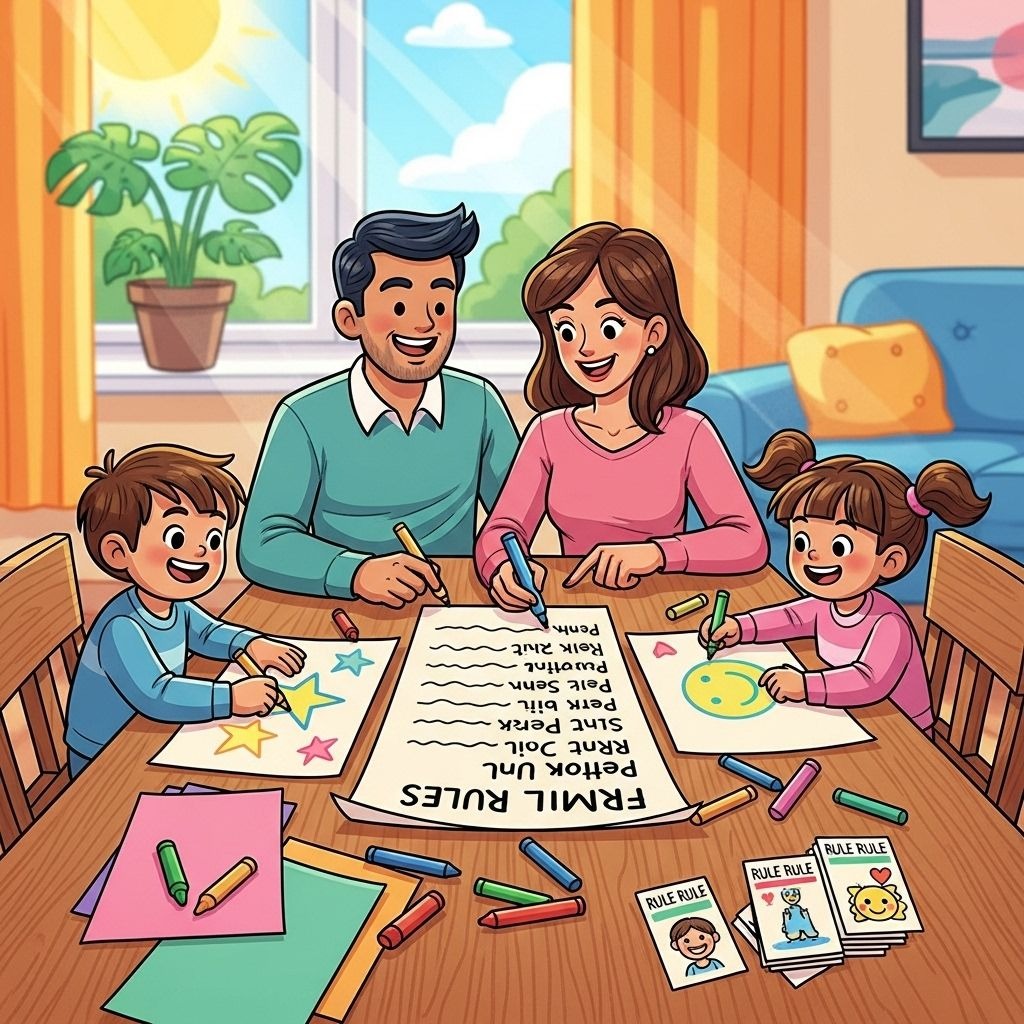
We hold family meetings where everyone (including the kids) gets a voice. We ask:
- “What rules do we need to make our house run smoothly?”
- “What should happen if someone breaks a rule?”
- “Are any of our current rules not working?”
My kids have actually suggested rules I wouldn’t have thought of, and because they helped create them, they enforce them on themselves.
For more on creating family structure, explore effective strategies in house rules for kids that work for different family dynamics.
Write Them Down and Display Them
Seriously, write them down. Post them where everyone can see them—fridge, playroom wall, bathroom mirror.
Visual reminders help kids remember expectations without you having to nag. Plus, when rules are posted, you can point to them: “What does our rule say about screen time?” instead of having the same argument daily.
We keep kids’ activity books and workbooks near our rule chart, so when kids need a break or quiet time, they have appropriate options ready that also follow our “no screens before homework” rule.
The Types of Consequences That Actually Work
Not all consequences are created equal. Here’s what actually changes behavior:
Natural Consequences
These happen automatically without parent intervention.
- Refuses to wear a jacket? They get cold (within reason—obviously use judgment here).
- Won’t eat dinner? They get hungry before breakfast.
- Forgets homework at home? They face the teacher’s consequences at school.
Natural consequences are powerful teachers because kids learn cause and effect directly. Your job is to step back and let the lesson happen (when safe).
Logical Consequences
These are directly related to the misbehavior and make sense.
- Writes on the wall? They clean it off.
- Breaks someone’s toy on purpose? They give up one of their own or buy a replacement with allowance.
- Makes a mess? They clean it up.
Logical consequences teach responsibility and accountability. They’re not punitive—they’re just natural outcomes of choices.
Loss of Privilege
When misbehavior continues, removing a related privilege works well.
- Can’t stop fighting over the video game? Console goes away for the day.
- Keeps using the bike recklessly? The bike is put away for the weekend.
- Won’t clean up toys? Toys get temporarily removed.
The key is that the privilege removed should relate to the behavior. Taking away dessert because they won’t clean their room doesn’t make sense. Taking away the mess-making toys until they show they can clean up does.
Time-Out or Time-In
For younger kids (under 8), a brief time away from the situation helps them reset.
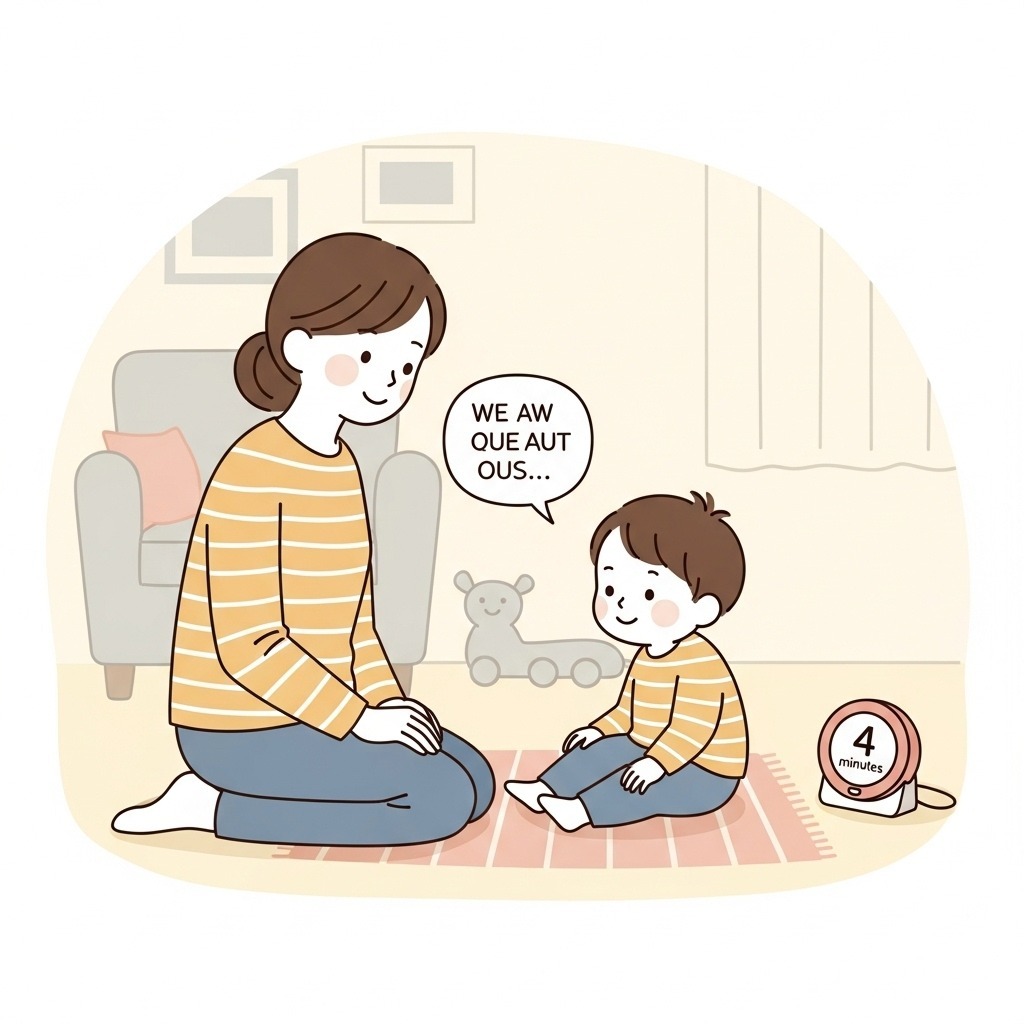
I’m not talking about harsh isolation. I mean a few minutes in a calm space to collect themselves. Some kids do better with “time-in” where a parent sits with them quietly until they’re ready to make a better choice.
Keep it short—one minute per year of age is the general rule. So a four-year-old gets four minutes.
Extra Chores or Tasks
For older kids, adding an extra responsibility can be effective.
- Rude to sibling? They have to do sibling’s chore for the day.
- Didn’t do their regular chore? They do two extra chores.
- Left a mess that someone else cleaned? They take over that person’s cleanup duties for a week.
This teaches that their choices create extra work, and sometimes they’re the ones who have to do it.

The Formula: If-Then Consequences
The clearest way to communicate expectations and consequences is using “if-then” statements.
This gives kids a choice and puts the control in their hands:
“If you finish your homework, then you can have screen time.”
“If you keep throwing toys, then I’ll need to put them away for today.”
“If you’re ready for bed by 8pm, then we’ll have time for an extra story.”
This structure removes emotion and power struggles. You’re not the bad guy—you’re just enforcing the agreement. They’re making the choice of which outcome they want.
I use this constantly now:
- “If you speak kindly, then I’ll listen. If you whine or yell, then I’ll wait until you’re ready to use a calm voice.”
- “If your room is clean by dinner, then friends can come over this weekend.”
- “If you keep hitting, then you’ll play separately from your brother.”
Kids learn that their choices determine their outcomes. That’s a life skill that matters way beyond childhood.
The Five C’s of Effective Rule Setting
1. Clarity
Be crystal clear what the rule is and why it matters.
“Our rule is we don’t hurt others. That means no hitting, kicking, or biting. We use words when we’re upset.”
2. Consistency
The rule applies every time, not just when you’re in the mood to enforce it.
This is the hardest part. On day one, you might confiscate the iPad 10 times. But by day five, kids realize you mean it and will test less.
3. Consequences
Every rule needs a clear consequence. Kids need to know what happens if they break it.
4. Communication
Talk about the rules often. Remind before situations where rules typically get tested.
“Remember, we’re going into the store. What’s our rule about staying close and using kind words?”
5. Calmness
Enforce consequences without anger, yelling, or lecture. State the rule, state the consequence, follow through. Done.
The calmer you are, the more kids focus on their choice rather than your reaction.
For more on staying calm during discipline moments, read about approaches in how to discipline without yelling.
Age-Appropriate Rules and Consequences
What works for a three-year-old won’t work for a twelve-year-old. Here’s how to adjust:
Toddlers and Preschoolers (Ages 2-5)
Keep rules simple: “Gentle hands,” “Use walking feet,” “Listen to grown-ups”
Best consequences:
- Redirection to acceptable behavior
- Natural consequences (within safety limits)
- Very brief time-outs (2-5 minutes max)
- Removal of toy causing the problem
At this age, kids are just learning self-control. Consequences should be immediate and directly related to the behavior.
Early Elementary (Ages 5-8)
Rules can be more detailed: “Finish homework before screens,” “Clean up toys before bed,” “Tell the truth even when it’s hard”
Best consequences:
- Loss of privilege for a set time
- Natural and logical consequences
- Extra chores related to misbehavior
- Earlier bedtime if cooperation isn’t happening
These kids understand cause and effect better and can connect behavior to later consequences.
Older Elementary and Tweens (Ages 9-12)
Rules about responsibility and respect: “Devices charge outside bedrooms at night,” “Treat family members with respect,” “Complete assigned chores without reminders”
Best consequences:
- Extended loss of privileges (days instead of hours)
- Earning back privileges through good behavior
- Extra responsibilities that teach the skill they’re lacking
- Written reflection on choices
Older kids can handle longer-term consequences and benefit from being part of the solution. For this age group, having engaging alternatives to screen time like board games for kids makes consequences easier to enforce.
Common Mistakes When Setting Rules and Consequences
Even with good intentions, parents mess this up. I know because I made all these mistakes:
Too Many Warnings
“I’m going to count to three… okay, five… okay, when I finish this email…”
Every warning without action teaches kids you don’t mean it. Give one clear warning, then follow through. Every. Single. Time.
Consequences That Punish You Too
Taking away the iPad for a week sounds great until you realize that was your only way to get 20 minutes of peace to make dinner.
Think through whether you can actually enforce the consequence before announcing it.
Being Inconsistent
Rules that apply when you’re stressed but not when you’re relaxed create confusion and more testing.
The hardest part of setting rules and consequences for kids isn’t creating them—it’s sticking to them even when you’re tired.
Making Consequences Too Harsh
Taking away everything a kid loves for a month over a small infraction doesn’t teach—it just creates resentment and rebellion.
Consequences should be proportional. Small infractions = small consequences. Big infractions = bigger consequences.
Not Following Through
If you say screen time ends after 30 minutes and then let them have “just five more minutes,” you’ve taught them that negotiating works.
Mean what you say. Say what you mean. Follow through every time.

When Rules Need to Change
Rules aren’t set in stone. As kids grow, rules should evolve.
We reassess our family rules every few months. Some get retired (“Don’t run with scissors” stops being necessary), new ones get added (“Clean out your sports bag weekly” becomes essential).
Family meetings are perfect for this. Ask:
- “Are our current rules still working?”
- “Do we need to add any new rules?”
- “Are consequences fair, or do they need adjusting?”
Getting kids involved in this process helps them understand that rules aren’t arbitrary—they’re tools to help the family function.
Making Consequences Actually Stick
Here’s what I learned about enforcement:
1. Follow through immediately. Don’t threaten. Just act. “I see you threw your toy. I’m putting it away for today.”
2. Stay calm. The more emotional you are, the more you become the focus instead of the consequence.
3. Don’t lecture. State the rule, state the consequence, move on. Done.
4. Offer do-overs. “That didn’t go well. Want to try again?” gives kids chances to make better choices without erasing consequences.
5. Praise good choices. When kids follow rules, notice it! “I saw you take a deep breath instead of hitting. That took self-control!”
6. Have backup plans. If losing screen time means they’ll bug you all evening, have alternatives ready like kids craft supplies for creative time.
For a comprehensive approach to positive reinforcement alongside rules, explore positive discipline techniques for toddlers that work for all ages.
What to Do When Kids Push Back
Pushback is normal, especially when you’re first setting rules and consequences for kids or changing existing ones.
My kids absolutely tested the new system. They argued, negotiated, threw fits, tried to wear me down.
Here’s what worked:
Stay consistent. The first week is the hardest. Kids are testing whether you really mean it. Don’t cave.
Acknowledge feelings. “I know you’re disappointed you can’t have the iPad right now. Our rule is homework first.”
Remind about choices. “You chose to keep yelling instead of using calm words. The consequence is time in your room until you’re ready.”
Don’t engage in arguments. “I understand you disagree. The rule stands.”
Reconnect after consequences. Once the consequence is over, move on. Hug it out. Start fresh.
For kids who need extra physical activity to manage their energy and follow rules better, having outlets like bean bag toss games or kids soccer goals for backyard provides healthy ways to burn energy and reduce rule-breaking behavior.

The Long-Term Benefits Nobody Talks About
Here’s what surprised me most about finally getting serious about rules and consequences:
My kids are happier. Truly. They’re not constantly testing or anxious about what’s allowed. They know the boundaries, and that gives them security.
Our home is calmer. Way less yelling, negotiating, and power struggles. When rules are clear and consistently enforced, there’s less to fight about.
My kids are developing self-discipline. They’re starting to make good choices even when I’m not watching because they understand consequences aren’t just external—choices have outcomes.
Our relationship is better. I’m not the nag constantly reminding and threatening. I’m the guide who set clear expectations and helped them learn to meet them.
That’s the real magic of setting rules and consequences for kids—it’s not about control. It’s about teaching them to control themselves.
FAQ: Setting Rules and Consequences for Kids
1. How many rules should I have for my kids?
For toddlers and preschoolers, stick to 3-5 simple rules they can remember. Elementary-age kids can handle 5-8 rules. Focus on broad umbrella rules that cover multiple situations rather than hyper-specific rules for every scenario. “We treat each other with respect” covers arguing, name-calling, and physical aggression. Post rules visibly and review them regularly so kids can internalize them.
2. What if my partner and I disagree about rules and consequences?
Get on the same page before presenting rules to kids. Kids will exploit inconsistency between parents instantly. Have private conversations about what rules matter most to each of you, compromise where needed, and present a united front. If you can’t agree on everything, focus on your top 3-5 non-negotiable rules you both commit to enforcing consistently. Inconsistency is more damaging than having fewer rules.
3. How do I enforce consequences without feeling like the bad guy?
Remember that enforcing consequences isn’t punishment—it’s teaching. Stay calm, emotionally neutral, and frame it as their choice: “You chose to keep throwing your toys after I warned you, so now they go away for today. Tomorrow you can show me you’re ready to play gently with them.” Use “if-then” statements so kids see the connection between their behavior and the outcome. When you’re consistent, kids learn consequences are natural results of choices, not you being mean.
4. What if my child doesn’t care about the consequence I give?
If a consequence doesn’t seem to matter, it’s not the right consequence for that child. Some kids don’t care about time-out but hate losing screen time. Others don’t care about screens but can’t stand missing playtime with friends. Pay attention to what your child values and make consequences related to those things. Also ensure consequences are immediate and clearly connected to the behavior. Delayed consequences (waiting until next week) rarely work for younger kids.
5. How long should consequences last?
Shorter is usually better, especially for younger kids. A toddler can learn from a 5-minute time-out; losing toys for a month is meaningless to them. Elementary kids can handle consequences that last hours to a couple days. Tweens and teens can understand longer-term consequences (a week or more). The goal is teaching, not punishment, so once they’ve served the consequence and show improved behavior, move on. Don’t hold grudges or extend consequences in anger.
Setting rules and consequences for kids has been one of the hardest and most rewarding parts of my parenting journey. It took consistency, self-discipline (on my part!), and some trial and error to figure out what worked for our family.
But now? Our house runs so much more smoothly. My kids know what’s expected. They’re learning self-control and responsibility. And I’m no longer the frazzled mom who feels like she’s losing control every day.
If you’re in the thick of power struggles right now, take heart. Clear rules and consistent consequences really do work. It just takes commitment to stick with them, especially during those first hard weeks when kids test every boundary.
Start small. Pick your top 3 rules. Decide on clear consequences. Write them down. And then commit to enforcing them consistently for at least two weeks.
Your future self (and your kids) will thank you.