
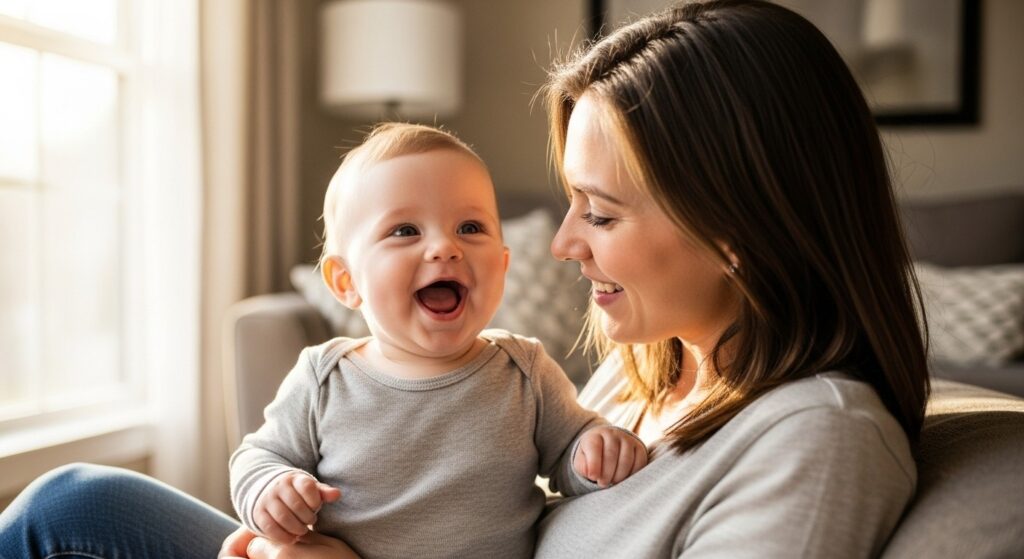
My daughter was 13 months old and hadn’t said a single word. Not “mama.” Not “dada.” Nothing that even remotely sounded like a real word.
Meanwhile, my friend’s baby—three weeks younger—was already saying “ball,” “dog,” and “more.” I smiled and congratulated her, but inside I was panicking. When do babies start talking? Was my daughter behind? Should I be worried? Was I doing something wrong?
Spoiler alert: she was completely fine. She just started talking on her own timeline. But those months of worry taught me so much about baby language development that I wish I’d known from the beginning.
Understanding when babies typically start talking (and the huge range of normal) saved my sanity with my second baby. These milestones aren’t rigid deadlines—they’re general guideposts. And knowing what’s actually happening in your baby’s brain during language development makes the whole process way less stressful.
The Real Answer About When Babies Start Talking
Here’s what you need to know: most babies say their first recognizable word somewhere between 10 and 14 months. But—and this is important—anywhere from 7 to 18 months is considered completely normal.
My daughter said her first word at 13 months. My son said his at 9 months. My friend’s baby didn’t say anything clearly until 17 months. All three kids are now perfectly verbal, chatty toddlers who won’t stop talking.
The range is wide because babies develop at different rates based on lots of factors: their temperament, how much they’re spoken to, whether they have older siblings to listen to, their physical development, and just their own individual timeline.
According to the American Academy of Pediatrics, first words usually refer to important people (mama, dada), common objects (ball, dog, cup), or frequent actions (more, no, bye-bye). These are the words babies hear most often in their daily lives.
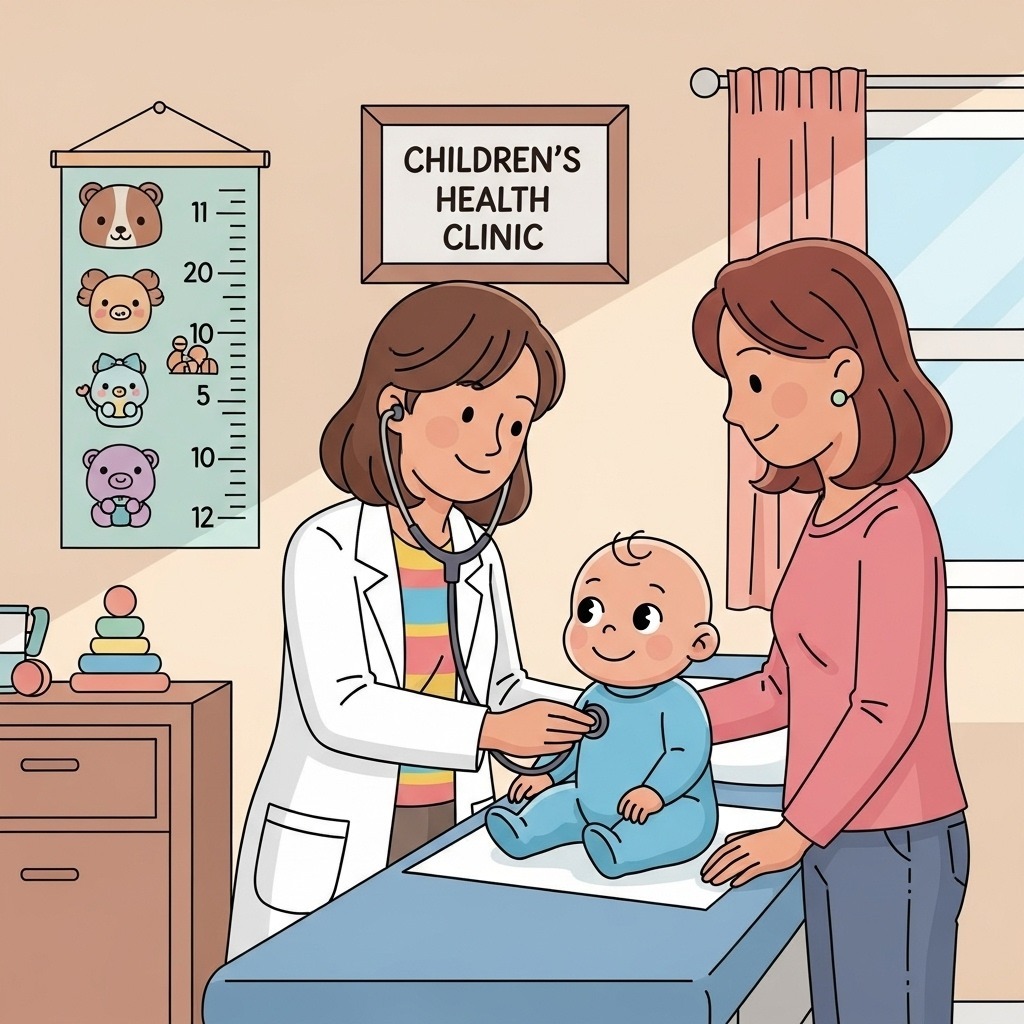
If your baby isn’t talking by their first birthday but is babbling, making eye contact, responding to their name, and generally engaged with the world, they’re probably fine. But if you’re worried, that’s what pediatrician well-checks are for. Trust your gut and ask.
What Happens Before the First Word
Here’s what nobody tells you: babies are working on language from day one. Long before they say their first word, they’re learning the foundations of communication.
Newborn to 3 Months
Your newborn is learning to recognize your voice. They’re figuring out that crying gets results. They’re starting to make cooing sounds—those adorable “ooh” and “aah” noises that make your heart melt.
This stage is about listening and absorbing. Your baby is taking in every sound, storing away language patterns, and learning that communication is two-way.
4 to 6 Months
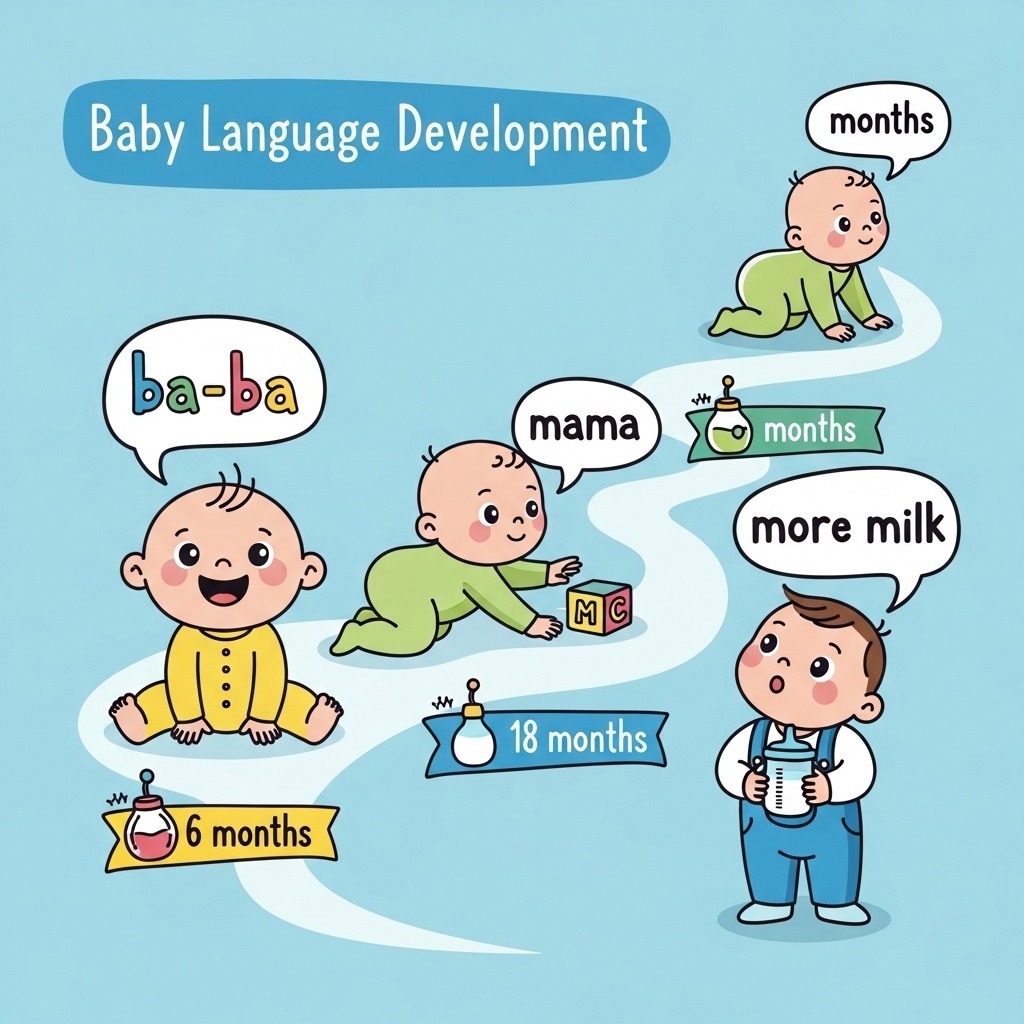
This is when babbling usually starts. Your baby experiments with sounds: “ba-ba-ba,” “ma-ma-ma,” “da-da-da.” They don’t know what these mean yet—they’re just playing with their voice and learning to control their mouth.
They’re also starting to respond to your tone. They know when you’re happy, upset, or excited based on how you sound, not what you’re saying.
My son would crack up laughing when I used an excited voice, even if I was just reading him a grocery list. He was responding to my tone and rhythm, which is how babies start to understand communication.
7 to 12 Months
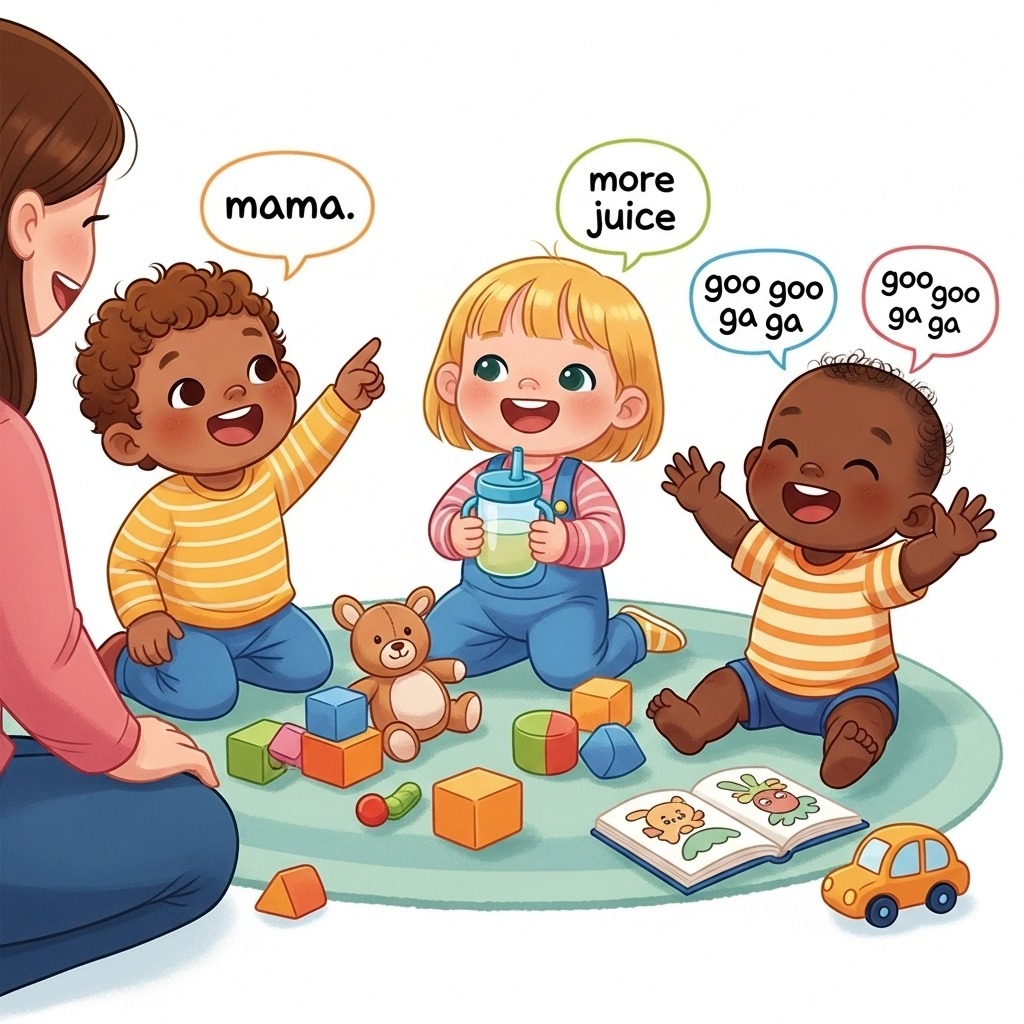
Babbling becomes more complex and speech-like. Your baby might sound like they’re having full conversations in a language you don’t understand. This is called “jargon,” and it’s adorable.
They start to understand simple words way before they can say them. “No.” “Bye-bye.” Their name. Common objects. By 9-10 months, many babies understand 50+ words even though they can’t say any of them yet.
They also start using gestures: pointing, waving, and reaching. This is communication, even without words.
And then, somewhere in this window, comes the first real word. The one where they actually know what they’re saying and use it intentionally. For my daughter, it was “cat” while pointing at our cat. I cried.
Signs Your Baby Is Getting Ready to Talk
Before my kids said their first words, they showed telltale signs that language was coming. Here’s what to watch for:
Lots of babbling. If your baby is babbling constantly, experimenting with different sounds, and having “conversations” with you in babble, words are probably close.
Responding to language. They turn when you say their name. They look at the dog when you say “dog.” They understand “no,” even if they don’t always obey it.
Using gestures intentionally. Pointing at things they want. Waving bye-bye. Shaking their head no. These are all forms of communication that often precede words.
Imitating sounds. If your baby is trying to copy sounds you make—even if the attempts aren’t perfect—they’re working on speech.
Showing interest in books. Babies who are close to talking often love being read to, pointing at pictures, and trying to “read” books themselves by babbling.
For encouraging language development through play, these kids’ activity books & workbooks designed for babies and toddlers include simple word games, picture identification, and activities that support early language skills.
How to Encourage Baby to Talk (Without Driving Yourself Crazy)
You can’t force your baby to talk on your timeline. But you can create an environment that supports language development. Here’s what actually helps:
Talk to Your Baby Constantly
Narrate your day. “Now we’re changing your diaper. Let’s put on this clean diaper. All clean!” “Look at the dog! The dog is running. Fast dog!”
It feels weird at first, like you’re talking to yourself. But you’re teaching your baby how language works: the rhythm, the patterns, the connection between words and objects.
Respond to Babbling Like It’s Conversation
When your baby babbles at you, respond. “Oh, really? Tell me more!” “Yes, I see! That’s very interesting!” Take turns, just like a real conversation.
This teaches your baby that communication is back-and-forth. It also makes them want to keep trying.
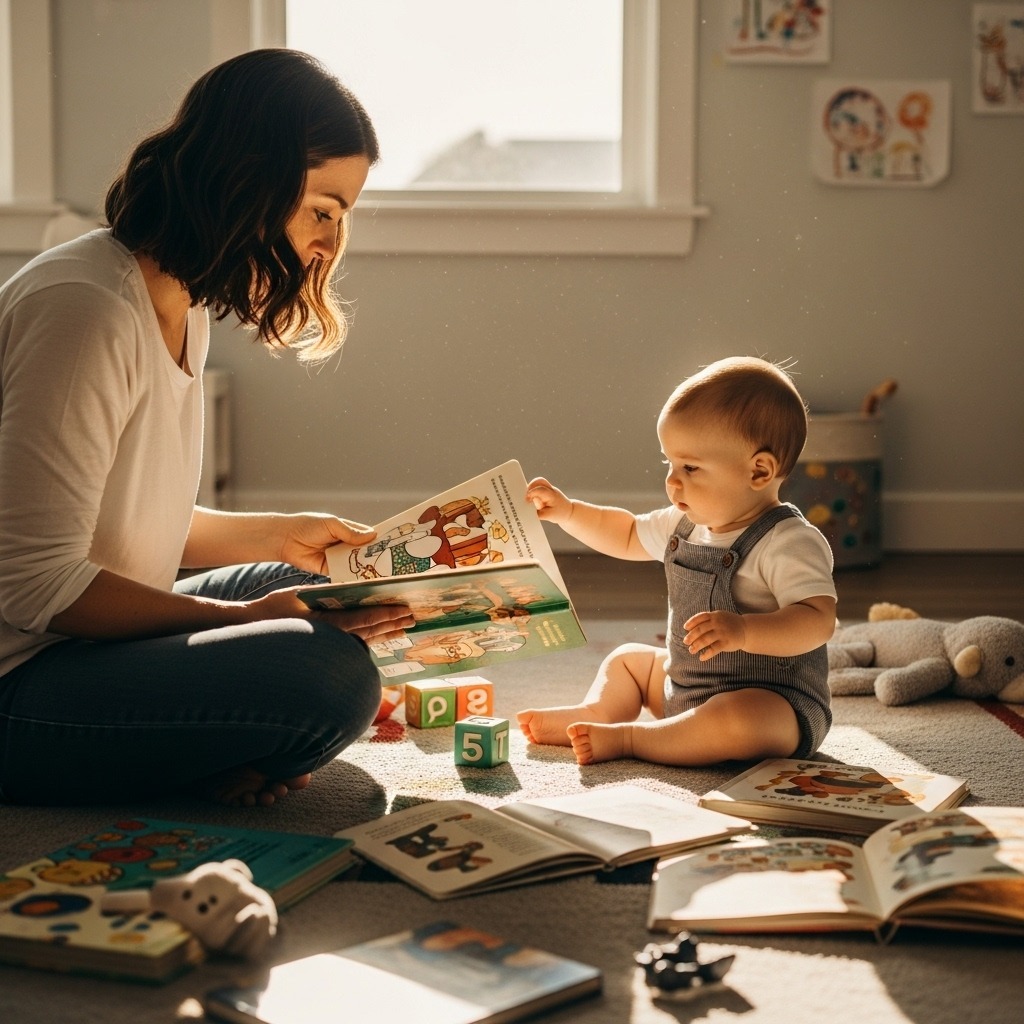
Read Together Every Single Day
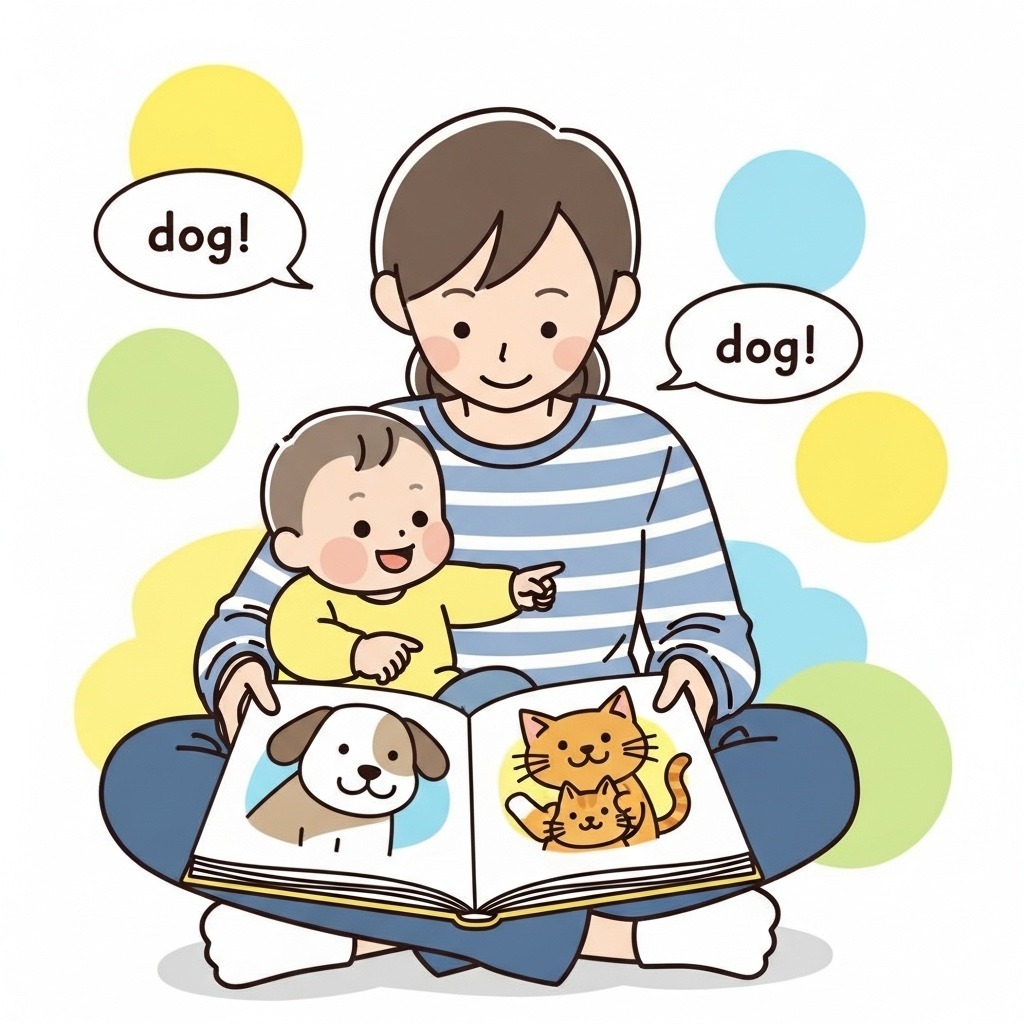
Even to tiny babies who can’t sit still or understand the story. Point to pictures and name them. Use exaggerated expressions and voices. Let your baby hold board books and explore them.
Reading builds vocabulary faster than almost anything else. And it creates a love of books that pays off for years.
Sing Songs and Do Finger Plays
“Itsy Bitsy Spider,” “Pat-a-Cake,” “The Wheels on the Bus”—these repetitive songs with actions teach language through rhythm and movement.
My kids learned so many words through songs. They’d do the actions before they could say the words, then suddenly one day they’d sing along.
Limit Screen Time
I know screens are tempting, especially when you need five minutes to make dinner. But babies under 18 months don’t learn language from screens the way they do from real people.
Face-to-face interaction is crucial for language development. Screens can’t replace actual conversation.
Don’t Use Baby Talk
You can use a sing-song voice if you want (babies love that), but use real words. Say “dog,” not “doggy.” “Bottle,” not “baba.”
Babies are capable of learning real language from the start. You don’t need to simplify it.
Give Them Time to Respond
Ask your baby questions and then pause. Wait for them to babble, make a sound, or gesture. Don’t rush in and answer for them.
This teaches them that they have a role in the conversation. It encourages them to try communicating.
For parents looking for expert guidance on language development and other milestones, these parenting books offer research-backed strategies and reassurance during those anxious months of waiting for first words.
For more developmental milestone information, check out our guide on when kids start walking, which typically happens around the same time as first words.
What Comes After the First Word
Once your baby says that first magical word, language development starts to accelerate. Here’s the typical progression:
12 to 15 Months
Your baby might add 3-5 new words. They’re still saying single words and using lots of gestures. Don’t expect full sentences yet.
They understand way more than they can say—probably 100+ words by 15 months, even if they’re only saying a handful.
15 to 18 Months
Language really starts to take off. Many toddlers go from 5 words to 20+ words in this window. They’re learning about one new word per week.
They might start combining gestures with words: saying “up” while reaching to be picked up, or “dog” while pointing.
18 to 24 Months
This is when things get really fun. Vocabulary explodes—some toddlers learn several new words per day. They start putting two words together: “more milk,” “all done,” “bye-bye Dada.”
By age 2, most toddlers have 50+ words and are starting to form simple sentences.
This is also a great age to introduce simple activities that build vocabulary naturally. We started using these kids’ baking & cooking sets around 18 months—simple tasks like stirring, pouring, and measuring are perfect for teaching action words and following directions.
After Age 2
Language becomes more complex. Three-word sentences. Questions. Conversations. By age 3, most kids can communicate pretty effectively, even if pronunciation isn’t perfect.
My daughter went from zero words at 13 months to full conversations by 26 months. The progression was slow at first, then suddenly rapid.
When to Worry (And When Not To)
Most language “delays” aren’t actually delays—they’re just variations in normal development. But here are some guidelines:
Don’t worry if:
- Your baby isn’t talking by 12 months, but is babbling, gesturing, and responding to language
- Your baby says fewer words than other babies the same age, but is adding new words steadily.
- Your baby’s pronunciation isn’t perfect (this is completely normal until age 3-4)
- Your baby seems to understand everything, but doesn’t say much yet.
Do talk to your pediatrician if:
- Your baby isn’t babbling at all by 9-10 months
- Your baby doesn’t respond to their name or turn toward sounds by 12 months.
- Your baby loses the language skills they previously had
- Your baby isn’t saying any words by 16-18 months.
- You have a gut feeling something isn’t right.
Early intervention makes a huge difference if there is actually a delay. Don’t wait to get help if you’re concerned.
For many toddlers who are late talkers, these developmental milestone books help parents track progress and understand what’s typical, which can ease anxiety while you’re waiting for language to emerge.
The Things That Made a Difference for Us
Looking back at both my kids’ language journeys, here’s what I think actually helped:
Reading constantly. We read at least three books before every nap and bedtime. Sometimes my kids just chewed on the books, but we still counted it as reading time.
Talking through everything. I narrated diaper changes, meal prep, car rides, and grocery shopping. Everything. It felt silly, but it worked.
Responding to every communication attempt. When my kids pointed, I named what they pointed at. When they babbled, I responded like it were a real conversation. When they gestured, I put words to the gesture.
Not comparing. This was the hardest one. I had to actively stop comparing my kids to other babies and trust that they were on their own timeline.
Limiting my own screen time. I realized my kids couldn’t learn language from me if I was constantly on my phone. Making eye contact and having real interactions mattered.
Being patient. With my first baby, I was so anxious about every milestone. With my second, I relaxed and just enjoyed the process. Guess which one I remember more fondly?
For ideas on engaging with your toddler during language development, our activities to do with kids guide includes simple games that naturally encourage communication and vocabulary building.
What About Bilingual Babies?
If you’re raising your baby in a bilingual household, you might worry that learning two languages will delay speech. It doesn’t.
Bilingual babies might say their first words slightly later (13-14 months instead of 11-12), but they usually catch up quickly and end up with the same vocabulary as monolingual babies—just split between two languages.
My friend’s daughter is being raised with English and Spanish. She said her first word at 14 months, and now, at age 2, she switches fluently between both languages. She’s not behind—she’s just learning two systems simultaneously.
Keep speaking both languages to your baby. The temporary slight delay is worth the incredible gift of bilingualism.
Common Worries About Baby Talk
“My baby only says ‘dada’ and not ‘mama.’ Does he love my partner more?”
No. “Dada” is often easier to say than “mama” because the mouth position is simpler. Most babies say “dada” first for this reason, not because they prefer Dad.
“My baby says words, but then stops using them. What happened?”
This is totally normal. Babies sometimes drop words as they learn new ones, or as they focus on a different skill (like walking). The words usually come back.
“Should I correct my baby’s mispronunciations?”
Not at this age. Just model the correct pronunciation when you respond. If they say “ba” for “ball,” you say “Yes! Ball! You want the ball!” They’ll figure it out eventually.
“My baby only says a few words but understands everything. Is that okay?”
Yes! Receptive language (understanding) develops before expressive language (speaking). This is completely normal and actually a good sign.
“Is it normal for boys to talk later than girls?”
There’s a slight tendency for boys to talk a bit later on average, but the overlap is huge. Plenty of boys are early talkers, and plenty of girls are late talkers. Gender isn’t destiny.
For more on supporting your child through various developmental stages, our article on when kids start preschool discusses other major milestones and transitions.
Products That Actually Helped
I’m not a big believer in “educational toys” that promise to make your baby smarter. But a few things genuinely supported language development in our house:
Board books with simple pictures. We went through dozens. The simple ones with one object per page were best for early language.
Toy phones or play microphones. My kids loved “talking” into these and practicing their babble.
Simple musical instruments. Shakers, drums, xylophones—anything that encouraged making noise and experimenting with sound.
Puppets or stuffed animals. Using these to “talk” to my baby made conversations more engaging and helped model back-and-forth dialogue.
Simple craft materials. Around 18 months, we introduced these kids’ craft supplies for activities like coloring and sticker play—perfect opportunities to practice words like “more,” “all done,” “red,” and “blue” while creating together.
These board games for kids include toddler versions with simple matching and picture identification that naturally build vocabulary while playing together.
The Emotional Side of Waiting for First Words
Can we talk about the feelings for a minute? Waiting for your baby to talk can be anxiety-inducing, especially if you’re a first-time mom or if your baby seems “behind” other babies you know.
I cried the night before my daughter’s 12-month appointment because I was convinced the pediatrician would tell me something was wrong. (She didn’t. She said to relax and check back at 15 months.)
I felt like a failure when my friend’s baby said “mama” at 10 months and mine hadn’t said it at 13 months.
I questioned everything I was doing. Was I talking to her enough? Too much? The wrong way?
Here’s what I wish someone had told me: your anxiety won’t make your baby talk faster. In fact, stress can actually make things harder because stressed moms are less present and engaging.
Your baby will talk when they’re ready. Your job is to provide a language-rich environment and trust the process. And also, to give yourself grace when you’re worried.
It’s okay to be anxious about milestones. It means you care. But try to balance that anxiety with trust in your baby’s unique timeline.
FAQ: When Do Babies Start Talking
Is it normal for a baby not to talk at 12 months?
Yes, completely normal. While many babies say their first word around 12 months, the normal range extends from about 10 to 18 months. If your baby is babbling, responding to their name, understanding simple words, and generally engaged with the world, they’re likely just on their own timeline. Talk to your pediatrician at your next well-check if you’re concerned, but most 12-month-olds who aren’t talking yet are perfectly fine.
What counts as a baby’s first word?
A first word is any sound that your baby uses consistently to refer to the same thing. It doesn’t have to be perfectly pronounced. “Ba” for ball counts. “Da” for dog counts. Even if it’s not a real word in adult language, if your baby uses the same sound repeatedly for the same object or person and clearly understands what they’re saying, it counts as a word.
How can I help my baby start talking?
Talk to your baby constantly throughout the day, narrating what you’re doing. Read books together daily. Respond to their babbles as if they’re having a conversation. Sing songs and do finger plays. Give them time to respond when you talk to them instead of rushing in. Limit screen time and prioritize face-to-face interaction. Most importantly, don’t stress—babies learn language naturally when they’re surrounded by it.
When should I worry if my baby isn’t talking?
Contact your pediatrician if your baby isn’t babbling at all by 9-10 months, doesn’t respond to their name by 12 months, hasn’t said any words by 16-18 months, or loses language skills they previously had. Also, trust your gut—if something feels off, it’s always okay to ask. Early intervention is very effective if there is actually a delay, so don’t hesitate to get help if you’re concerned.
Do bilingual babies talk later?
Bilingual babies might say their first words slightly later (by a month or two) compared to monolingual babies, but this is completely normal and not a delay. They’re learning two language systems simultaneously, which is actually cognitively beneficial. Bilingual babies typically catch up quickly and end up with vocabularies comparable to monolingual babies—just distributed across two languages. Continue speaking both languages to your baby.
The journey from that first coo to actual words is long, miraculous, and different for every baby. My daughter’s path looked nothing like my son’s path, and both were perfectly normal.
When do babies start talking? Most say their first word somewhere between 10 and 14 months, but the range of normal is wide. What matters more than the exact timing is that your baby is communicating, engaging, and progressing in their own way.
Create a language-rich environment. Talk to your baby constantly. Read together. Respond to their attempts at communication. And then trust that the words will come when your baby is ready.
That moment when they finally say “mama” or “dada” or “cat” or whatever their first word is? It’s magical. And all the waiting makes it even sweeter.
Take the videos. Save the voice memos of their babbling. Celebrate every new word. And enjoy this fleeting stage before they’re talking so much you sometimes wish for a few minutes of quiet. (Kidding. Mostly.)