
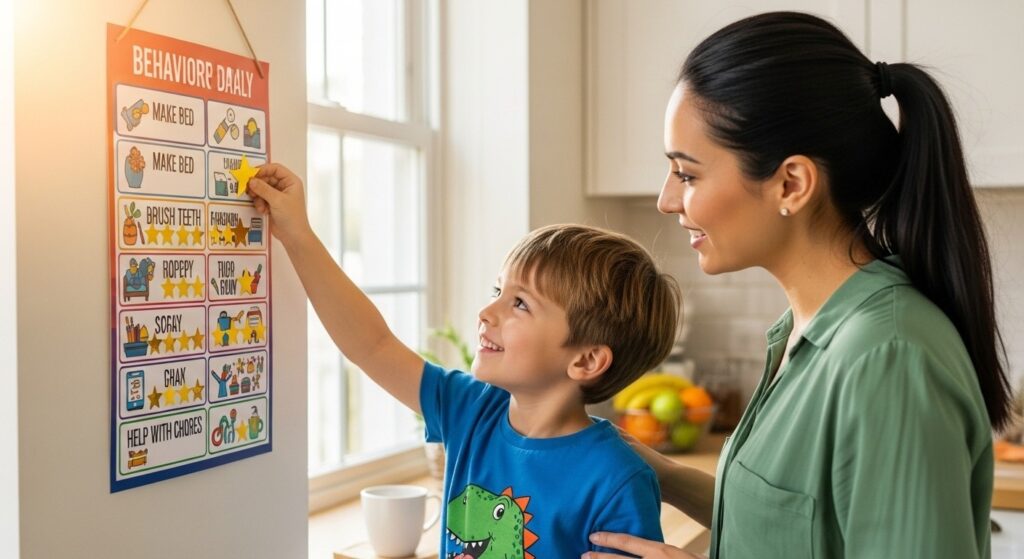
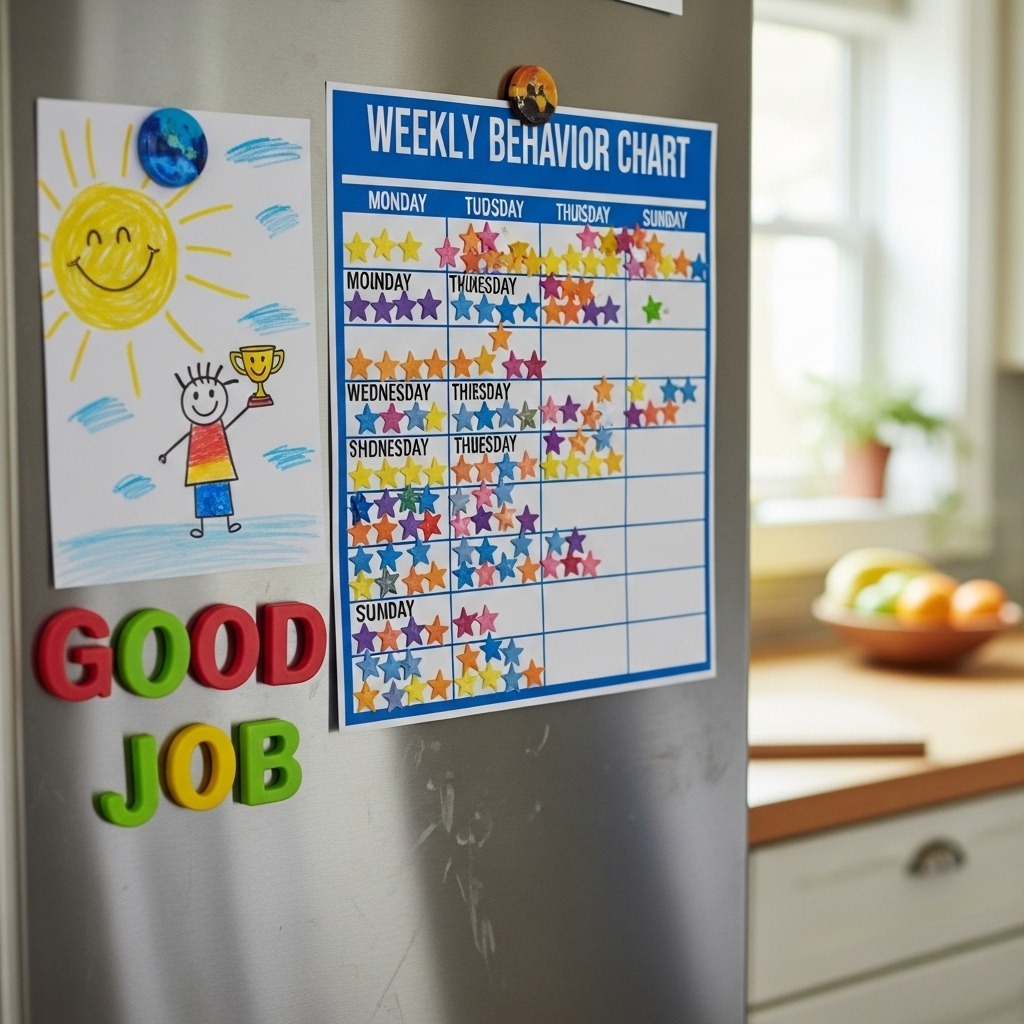
I printed out our first behavior chart for kids on a Tuesday morning, hung it on the fridge with high hopes, and by Thursday, it was buried under school papers and forgotten completely.
My daughter had earned exactly two stickers in three days. She didn’t care about the chart. I forgot to use it. And honestly, I felt like I’d failed at yet another parenting strategy that was supposed to make everything easier.
But here’s the thing: I was doing it all wrong. Behavior charts aren’t magic—they’re tools. And like any tool, they only work if you know how to use them properly.
After months of trial and error (and a lot of research), I finally figured out what makes a behavior chart for kids actually effective. These strategies transformed our mornings, improved my daughter’s cooperation, and gave us both a sense of accomplishment instead of constant frustration.
Why Behavior Charts Work (When Done Right)
Before I tell you what I was doing wrong, let me explain why behavior charts can be incredibly effective when you use them correctly.
Behavior charts create a visual representation of progress. Kids—especially young kids—don’t understand abstract concepts like “be good” or “listen better.” But they absolutely understand earning stickers or stars for specific actions.
According to the American Academy of Pediatrics, behavior charts work best for children ages 3-8 because this is when kids are developing self-regulation skills, but still respond well to external motivation.
The chart makes the invisible visible. Your child can see their progress. They can anticipate the reward. And they get immediate, tangible feedback when they do something right.
For me, the biggest benefit wasn’t even about my kids’ behavior—it was about my own focus. Instead of constantly nagging about what they were doing wrong, the chart forced me to watch for what they were doing right and reward it.
That shift in perspective changed everything. If you’re interested in understanding different parenting approaches that work alongside reward systems, our parenting styles chart breaks down various methods and how they impact child behavior.
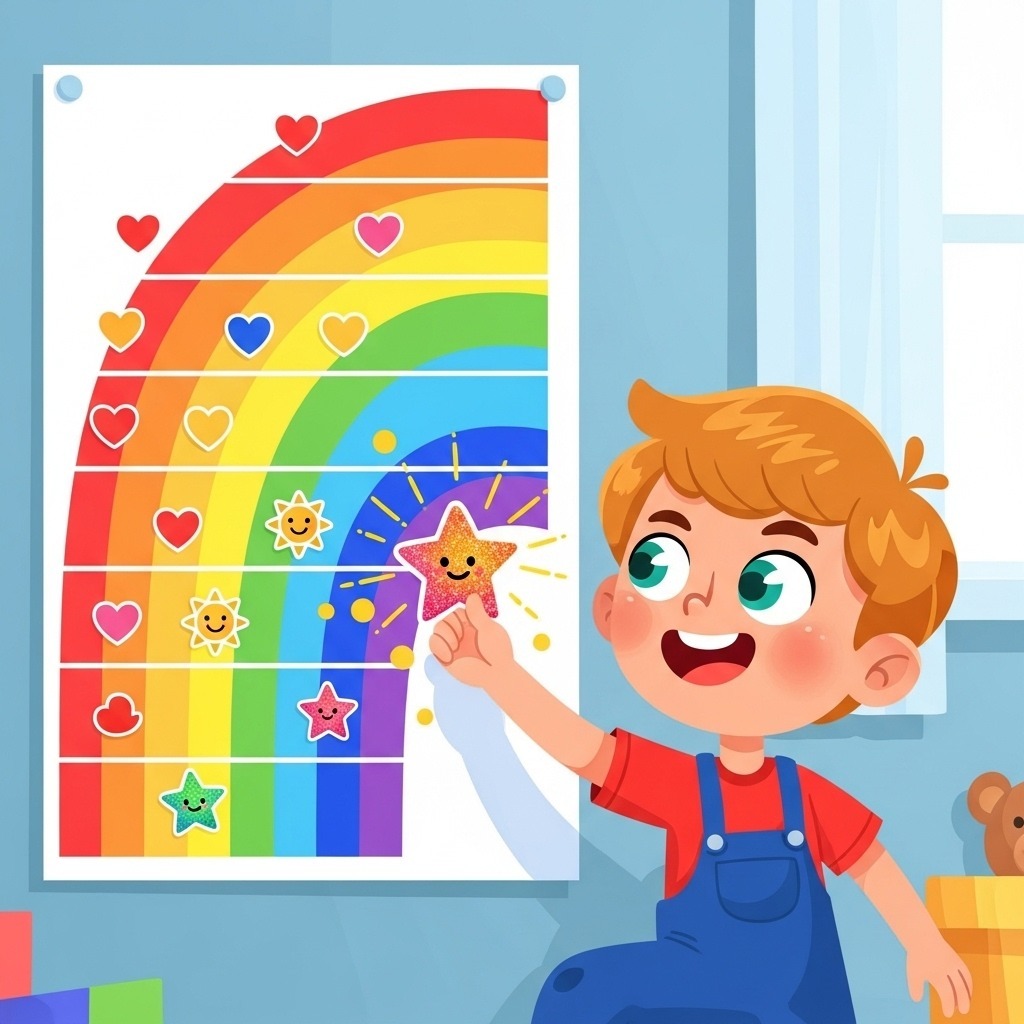
The Mistakes I Made With Our First Behavior Chart
Let me save you the trial and error I went through. Here’s everything I did wrong:
I targeted too many behaviors at once. Our first chart had eight different things: make your bed, brush your teeth, be nice to your sister, eat breakfast without complaining, get dressed, put on, pack your backpack, and get in the car without crying.
No wonder it didn’t work. That’s overwhelming for a 5-year-old.
The behaviors weren’t specific enough. “Be good” doesn’t mean anything to a young child. “Be nice to your sister” is too vague. What does “nice” look like? I didn’t define it, so my daughter had no idea what she was working toward.
I forgot about it constantly. Life got busy. I’d remember the chart at 8 PM when my kids were already in bed. They’d done great things that day, and I’d forgotten to acknowledge them or give stickers.
The reward was too far away. I told my daughter she could earn a new toy after she filled the entire weekly chart. For a 5-year-old, a week is forever. She lost interest by day two because the reward felt impossibly distant.
I took stickers away as punishment. When my daughter had a meltdown, I threatened to remove a sticker she’d already earned. This is a huge no-no that I didn’t realize at the time.
Once I understood these mistakes, I completely redesigned our approach. And that’s when behavior charts actually started working.
How to Create a Behavior Chart That Actually Works
Here’s the formula I’ve refined over two years of using behavior charts with both my kids:
Pick ONE Specific Behavior
Seriously. Just one. At least at first.
Not “be good.” Not “listen better.” One concrete, observable behavior that you can clearly identify when it happens.
Examples that worked for us:
- “Put dirty clothes in the hamper before breakfast.”
- “Brush teeth when asked without complaining.”
- “Use gentle hands with baby brother.”
- “Stay in bed all night.”
Notice how specific these are? There’s no room for interpretation. Either they did it or they didn’t.
Once your child masters one behavior and it becomes a habit (usually 2-4 weeks), you can add a second behavior to the chart or create a new chart for a different goal.
Choose the Right Chart Type for Your Child’s Age
Ages 3-5: Simple daily charts with 5-7 spaces work best. The timeline needs to be short—they should be able to earn the reward within a few days max.
Ages 6-8: Weekly charts can work well. They can handle slightly more delayed gratification and enjoy seeing a week’s worth of progress.
Ages 8+: Some older kids respond well to point systems or longer-term charts, but many find traditional sticker charts babyish. For older kids, consider a more discreet tracking method like a simple checklist or app.
For younger kids who need that tangible, visual element, these kids’ activity books & workbooks often include fun sticker reward pages that you can tear out and use as mini behavior charts—my kids loved the themed options.
Make the Chart Visible
Hang it somewhere your child will see it multiple times a day. The fridge, their bedroom door, the bathroom mirror—wherever makes sense for the behavior you’re tracking.
The chart needs to be at their eye level, not yours. They should be able to see their progress without you lifting them up.
Involve Your Child in the Setup
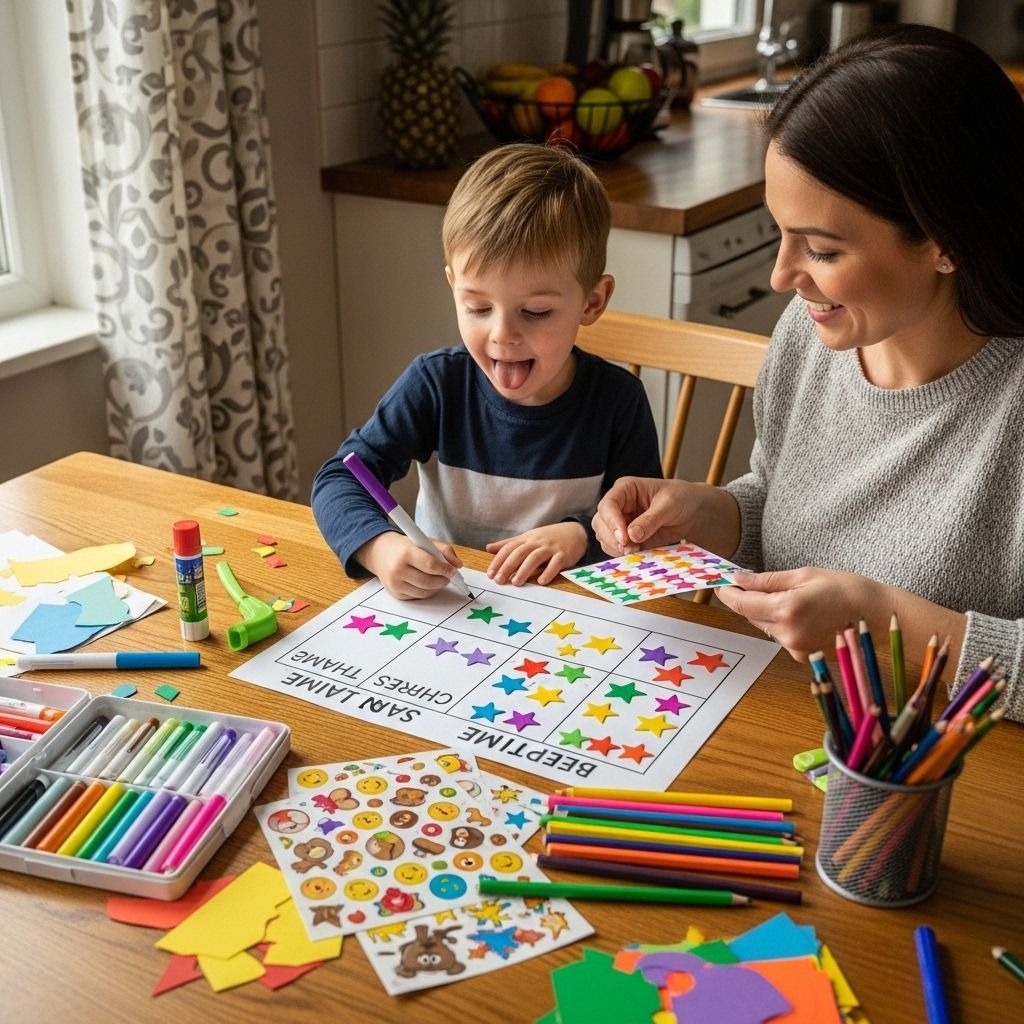
Let them help choose the chart design. Let them pick the stickers or markers you’ll use. Give them ownership of the process.
My daughter’s chart transformed from something I was forcing on her to something she was excited about once I let her choose unicorn stickers and a purple marker.
Pick Rewards Carefully
This is where most behavior charts fall apart. The reward has to be:
Meaningful to your child. Extra screen time might motivate one kid and mean nothing to another. A special one-on-one outing might thrill one child while another just wants a small toy.
Achievable quickly. Especially for younger kids, the reward needs to come soon. Three to five successful days is usually the sweet spot for kids under 6.
Not something they’d get anyway. If you always take your kids to the park on Saturdays, it’s not much of a special reward. Pick something outside the normal routine.
Rewards that worked really well for us:
- Extra bedtime story
- Special one-on-one time with mom or dad doing an activity of their choice
- Small toy from the dollar store
- Trip to the playground or ice cream shop
- Sleepover in mom and dad’s room
- Picking what’s for dinner
For kids who love games and activities, earning a new board game for kids after completing a behavior chart gives them something to work toward that the whole family can enjoy together.
The Daily Routine That Makes Behavior Charts Work
Having a chart is one thing. Actually using it consistently is another. Here’s the routine that made the difference for us:
Morning: Right after the behavior happens, give the sticker or mark immediately. Don’t wait until bedtime. If your child brushes their teeth without being asked, they get the sticker right then.
Midday check-in: Even just a quick “You’re doing great! You already have two stars today!” reinforces their progress.
Evening: Before bed, review the chart together. Celebrate what they earned. If they didn’t earn a sticker for something, keep it neutral: “Maybe tomorrow!” Not disappointed, not punishing. Just matter-of-fact and encouraging.
Reward time: When they hit the goal, deliver the reward as promised. Make a big deal out of it. Take a picture. Let them feel proud.
The key is consistency. If you use the chart for three days and forget about it for four days, it won’t work. The chart has to be part of your daily routine until the behavior becomes automatic.
What To Do When They Don’t Earn a Sticker
This was hard for me at first. When my daughter didn’t earn a sticker, I wanted to lecture her about why, explain what she should have done, basically make her feel bad about it.
Don’t do this.
Just acknowledge it neutrally and move on. “No sticker for that one today. Tomorrow’s a new chance!”
Never take away stickers they’ve already earned. That’s punishment, not positive reinforcement. The goal is to motivate them toward good behavior, not shame them for bad behavior.
If they’re consistently not earning stickers, the behavior might be too hard for their current developmental level, or the reward might not be motivating enough. Adjust accordingly.
For more strategies on positive discipline that complement behavior charts, check out our guide on positive discipline techniques for toddlers.
Common Behavior Chart Pitfalls (And How to Avoid Them)
Even when you know the basics, these issues can derail your progress:
Sibling jealousy. If you have multiple kids, give each one their own chart for their own behavior. Don’t compare them. Ever. “Look how many stickers your sister has!” is a surefire way to make charts create resentment instead of motivation.
Losing interest. If your child gets bored with the chart, change it up. New stickers, new rewards, new visual design. Keep it fresh.
Too rigid. Life happens. If you’re on vacation or someone’s sick, it’s okay to pause the chart. Don’t let it become a source of stress.
Using it for too long. Behavior charts are meant to be temporary tools to establish a new habit. Once the behavior is consistent (usually 3-4 weeks), phase out the chart. Otherwise, it loses effectiveness.
Forgetting the ultimate goal. The chart is training wheels. The goal is for your child to eventually do the behavior because it’s the right thing to do, not because they get a reward. Gradually reduce the frequency of rewards as the habit solidifies.
Different Types of Behavior Charts to Try
Not all behavior charts look the same. Here are the types that work for different situations:
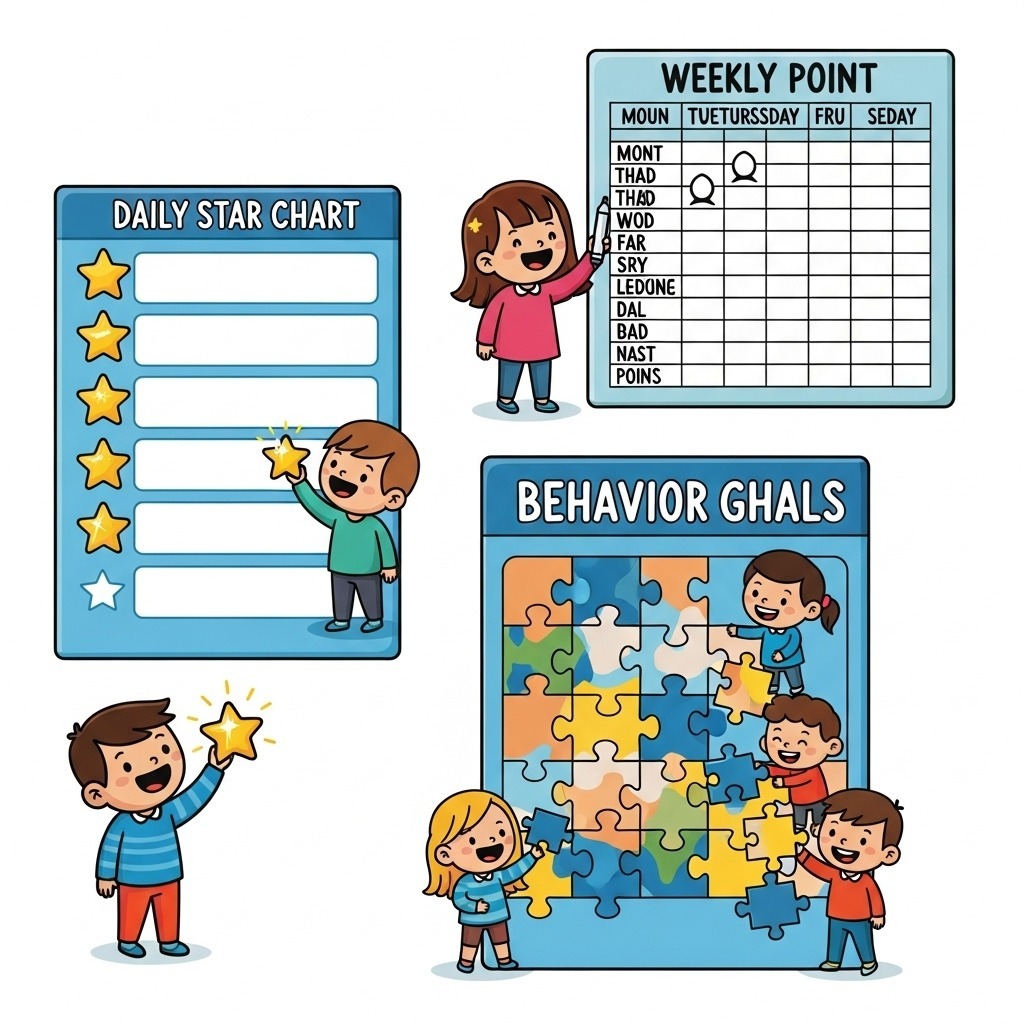
Sticker charts. The classic. Perfect for younger kids who love stickers. Simple, visual, tactile.
Token systems. Kids earn tokens (could be poker chips, pom poms, whatever) that they can “spend” on rewards from a reward menu. Good for slightly older kids.
Puzzle charts. Each time they do the behavior, they get one puzzle piece. When the puzzle is complete, they get the reward. Very visual and satisfying for kids who like building things.
Marble jars. Instead of a chart on the wall, drop a marble in a jar each time they do the behavior. When the jar is full, they earn the reward. Good for kids who find wall charts embarrassing.
Check-off charts. For older kids who don’t want babyish stickers. Just a simple checklist they can mark off. Still provides the visual feedback without feeling childish.
App-based charts. Lots of apps exist for this if you prefer digital. It can work well for older kids or for tracking behavior when you’re out and about.
For kids who love hands-on activities and rewards, earning craft supplies as their behavior chart reward gives them something creative to do that naturally extends the positive feelings and keeps them engaged.
Real-Life Behavior Chart Success Stories
Let me share some specific ways behavior charts solved real problems in our house:
Bedtime battles: We created a chart for “stay in bed all night.” Each morning she stayed in her bed, she got a sticker. After five stickers, she got to pick a new stuffed animal. Within three weeks, she stopped getting out of bed at night. We phased out the chart after a month.
Morning routine chaos: We made a simple chart with three behaviors: get dressed, eat breakfast, and brush teeth. Each task earned a sticker. Complete all three for five days in a row = special Saturday outing. Our mornings went from screaming matches to relatively smooth within two weeks.
Sibling fighting: This was the hardest one. We focused on “gentle hands with brother” for my daughter and “using words instead of hitting” for my son. Each got their own chart, their own rewards. It took longer—about six weeks—but the fighting decreased significantly.
Homework resistance: For my second-grader, we did a simple check-off chart: homework done without complaining. Five days = an extra 30 minutes of screen time on the weekend. Homework went from a nightly battle to mostly cooperative.
The key in all these scenarios was staying consistent, keeping the focus narrow, and delivering rewards promptly.
For more ideas on managing challenging behaviors with multiple kids, our article on how to discipline without yelling offers strategies that work hand-in-hand with behavior charts.
When Behavior Charts Don’t Work
Not every kid responds to behavior charts. And that’s okay.
Some kids are intrinsically motivated and don’t need external rewards. Others find charts stressful or anxiety-inducing. And some behaviors just won’t respond to a sticker chart.
Signs a behavior chart isn’t the right tool:
- Your child seems anxious or stressed about the chart
- The behavior you’re targeting is driven by emotion (like separation anxiety or fear)
- Your child is under 3 (they’re usually too young for this strategy to work)
- The behavior is related to a developmental issue or disability that needs a different intervention.
If behavior charts aren’t working after giving them a genuine try (at least 2-3 weeks of consistency), it’s okay to try a different approach.
The American Academy of Pediatrics offers great resources about positive discipline strategies that might work better for your specific child and situation.
Also worth noting: older kids (age 9+) often find behavior charts patronizing. For older children and teens, try systems that feel more grown-up, like allowance tied to responsibilities or privilege-based systems.
Making Your Own vs. Printable Charts
You don’t need to buy anything fancy. In fact, homemade charts often work better because your child helps create them.
Homemade charts:
- Piece of poster board
- Markers or crayons
- Stickers from the dollar store
- Your child’s artwork and decoration
- Totally customized to your kid’s interests.
Printable charts:
- Professional-looking
- Save time
- Lots of free options online
- Easy to print multiple copies
Honestly, both work. My kids have responded to both. The homemade charts felt more personal, but the printable ones were convenient when I needed to start a chart immediately.
Whichever you choose, let your child help personalize it. Even with a printable chart, they can color it, add stickers around the edges, and write their name in fancy letters.
These kids’ activity books sometimes include ready-made reward chart templates that kids can customize themselves, combining the convenience of printables with the personal touch of handmade.
Beyond the Chart: Building Lasting Habits
Remember, the behavior chart is temporary. It’s a bridge between “I’ll do this for a reward” and “I do this because it’s part of my routine.”
Here’s how to transition away from the chart once the behavior is established:
Gradually increase the interval. If they were getting a sticker daily, switch to every other day while still expecting daily performance.
Shift to verbal praise. “I noticed you brushed your teeth without me asking! Great job!” Praise becomes the reward instead of stickers.
Connect behavior to natural consequences. “Your room is so clean! Isn’t it nice to find your toys easily?” Help them see the benefits beyond the reward.
Celebrate the habit. “You’ve been getting dressed by yourself every morning for three weeks! You don’t even need the chart anymore. You’re so responsible!” Make it about their growth, not the chart.
Most habits take 3-4 weeks to solidify. Give the behavior time to become automatic before completely dropping the chart.
For more on building good habits and routines, our guide on house rules for kids helps establish family expectations that complement behavior chart goals.
FAQ: Behavior Chart for Kids
At what age should you start using a behavior chart?
Behavior charts work best for children ages 3-8. Kids younger than 3 usually don’t have the cognitive development to understand the connection between behavior and delayed rewards. By age 9, many kids find traditional sticker charts babyish, though older elementary kids might respond well to point systems or more grown-up tracking methods. The sweet spot is ages 4-7 when kids understand cause and effect but still find external rewards highly motivating.
How long should you use a behavior chart?
Use a behavior chart for 3-4 weeks for a specific behavior, then phase it out as the behavior becomes a habit. If you use charts for too long, they lose effectiveness, and kids can become dependent on rewards for every action. Once the behavior is consistent, gradually reduce the frequency of rewards and transition to verbal praise and natural consequences. Some families cycle through different charts for different behaviors throughout the year, which is fine as long as each chart has a clear endpoint.
What rewards work best for behavior charts?
The best rewards are meaningful to your specific child, achievable within a few days, and outside their normal routine. Extra one-on-one time with a parent, special outings like ice cream or playground trips, small toys, choosing dinner or a movie, extra bedtime stories, or staying up slightly later all work well. Avoid food rewards or anything too expensive. The reward should feel special but not create unrealistic expectations. Ask your child what they’d like to work toward—you might be surprised what motivates them.
Should you have one chart for multiple children?
No, each child should have their own individual chart for their own specific behavior. Comparing siblings creates resentment and competition instead of cooperation. Each child’s chart should target a behavior appropriate for their age and developmental level, with rewards tailored to their interests. Make sure you’re giving stickers fairly and not creating situations where one child always succeeds while another struggles. The goal is individual growth, not competition.
What if my child loses interest in the behavior chart?
If your child loses interest, first check if the reward is motivating enough—ask if they want to work toward something different. Switch up the chart’s visual design or the type of stickers used to make it feel fresh. Make sure the behavior isn’t too difficult and they’re experiencing regular success. Ensure you’re being consistent about giving stickers immediately after the behavior. If they’re still uninterested after troubleshooting, behavior charts might not be the right tool for your child, and that’s okay—try a different positive discipline approach.
That first failed behavior chart taught me an important lesson: these tools only work when you understand the why behind them. You can’t just slap a chart on the fridge and hope for the best.
A behavior chart for kids needs to be specific, consistent, age-appropriate, and focused on one behavior at a time. It needs immediate rewards and clear expectations. And it needs your full commitment to follow through, even on tired Tuesdays when you’d rather just tell your kids what to do instead of celebrating what they did right.
But when you get it right? Behavior charts can transform your daily battles into opportunities for connection and encouragement. They shift your focus from what your kids are doing wrong to what they’re doing right. And they give kids a concrete way to see their own progress and feel proud of their achievements.
Start small. Pick one behavior. Choose a simple chart. Select a meaningful reward. And commit to using it consistently for three weeks.
You might be surprised how quickly your child rises to the challenge when they can actually see their success.