
My son threw his tablet across the room last Tuesday. Again.
I stood there, tablet in pieces on the floor, trying not to lose it. My first instinct was to yell, take away everything he owned, and send him to his room for the rest of the week.
But I stopped myself. Because I’d been here before. The angry punishments, the power struggles, the resentment—none of it worked. Nothing stuck. He’d be right back to the same behavior within days.
That’s when I finally understood the difference between punishment and logical consequences for children. And it changed everything about how I handle discipline in our house.
Logical consequences aren’t about making your child suffer or “pay” for misbehavior. They’re about teaching real-world cause and effect in a way that actually helps kids learn from their mistakes. They’re connected, respectful, and reasonable—and they work way better than anything I’ve tried before.
Here’s everything I wish I’d known about using logical consequences from day one of parenting.

What Logical Consequences Actually Are (And Why They’re Not Punishment)
For years, I thought discipline meant punishment. Do something wrong, suffer the consequences. Simple, right?
Wrong.
Logical consequences for children are completely different from punishment. They’re not about making kids feel bad or suffer. They’re teaching tools that help children understand the direct connection between their choices and the outcomes.
Here’s the key difference: punishment is something you do to your child. Logical consequences are something that happens because of what your child did, and you’re simply enforcing the natural relationship between action and outcome.
For example:
Punishment: “You hit your sister, so no TV for a week!”
Logical consequence: “You hit your sister, so playtime together is over. You need to play separately until you can be gentle.”
See the difference? The punishment is arbitrary and disconnected. The logical consequence directly relates to the behavior and teaches the specific skill the child needs—in this case, gentle touch with others.
Logical consequences should always be:
- Related to the misbehavior
- Respectful to the child (not shaming or humiliating)
- Reasonable in severity and duration
When all three of these elements are present, you’ve got a logical consequence that teaches instead of punishes.
Natural vs. Logical Consequences (And When to Use Each)
Before I dive into how to use logical consequences, let’s clear up another confusion I had: the difference between natural and logical consequences.
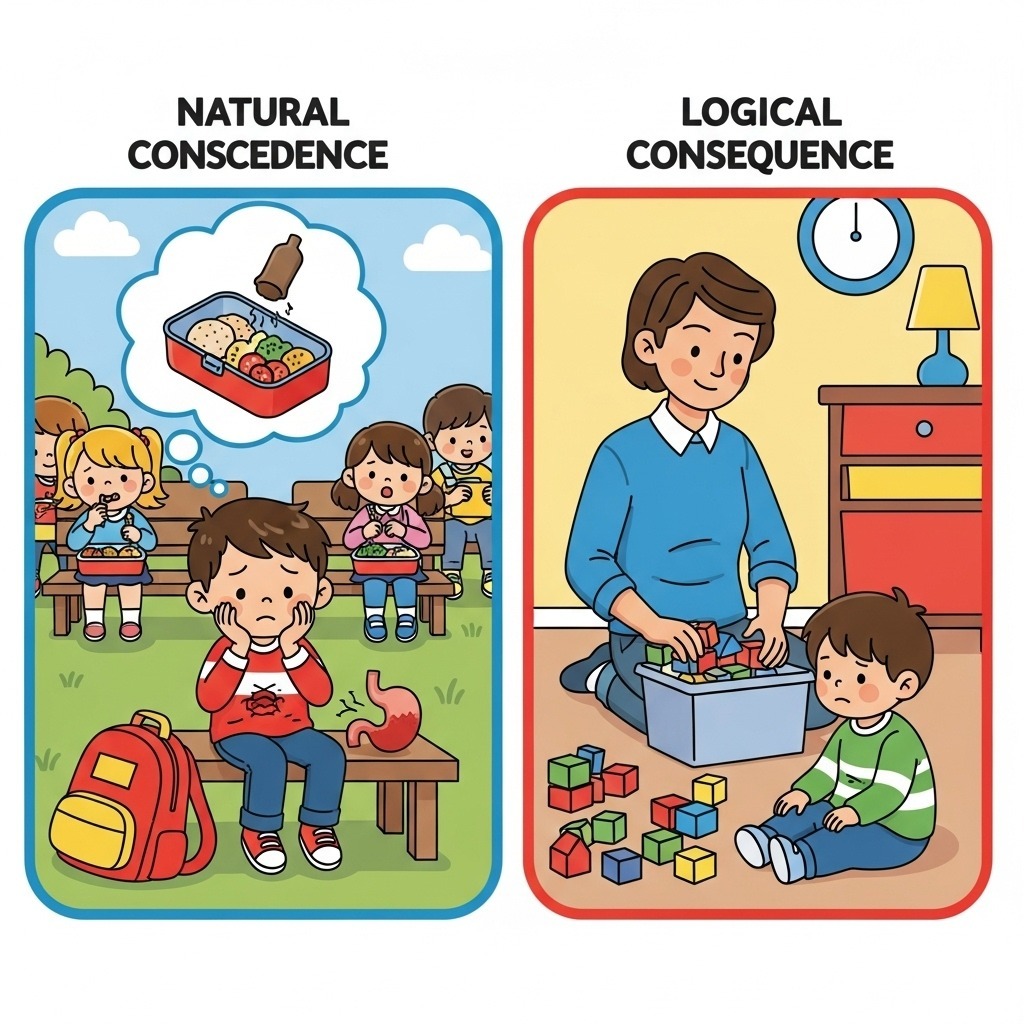
Natural consequences happen automatically as a result of a child’s choice, without any intervention from you.
Examples:
- Your child refuses to wear a coat. They get cold.
- Your child doesn’t eat dinner. They get hungry later.
- Your child leaves their toy outside. It gets rained on and ruined.
Logical consequences are imposed by you, but they’re directly connected to the behavior.
Examples:
- Your child refuses to clean up their toys. They lose access to those toys for the day.
- Your child won’t get ready for school on time. They go to school in their pajamas (or miss the fun morning activity).
- Your child breaks a house rule about screen time. They lose screen privileges for a set period.
I try to use natural consequences whenever it’s safe and practical. They’re powerful teachers because kids can’t argue that you’re being unfair—reality is just reality.
But sometimes natural consequences aren’t appropriate:
- When safety is at risk (I’m not letting my toddler touch a hot stove to learn it’s hot)
- When the consequence is too far in the future to be meaningful (not doing homework won’t affect college acceptance for years)
- When the consequence affects others more than your child (breaking someone else’s property)
That’s when logical consequences come in. You create a consequence that mimics what would happen in the real world, teaching the same lesson in a safer, more immediate way.
Real Examples of Logical Consequences That Work
When I first started using logical consequences for children, I struggled to come up with good ones in the moment. Now I have a mental library of go-to consequences that I can apply quickly. Here are the ones I use most:
For Aggressive or Unsafe Behavior
Problem: Hitting, pushing, or rough play with others
Logical consequence: Separation from the playmate or activity. “I can see you’re having trouble being gentle. You need to play separately until you’re ready to keep your hands to yourself.”
Problem: Throwing toys
Logical consequence: Loss of the toy. “Toys are for playing with, not throwing. You can have it back when you’re ready to use it safely.”
For Property Damage or Messiness
Problem: Spills or messes they created
Logical consequence: They clean it up. “You spilled your juice. Here’s a towel—let’s get this cleaned up.”
Problem: Breaking or damaging something
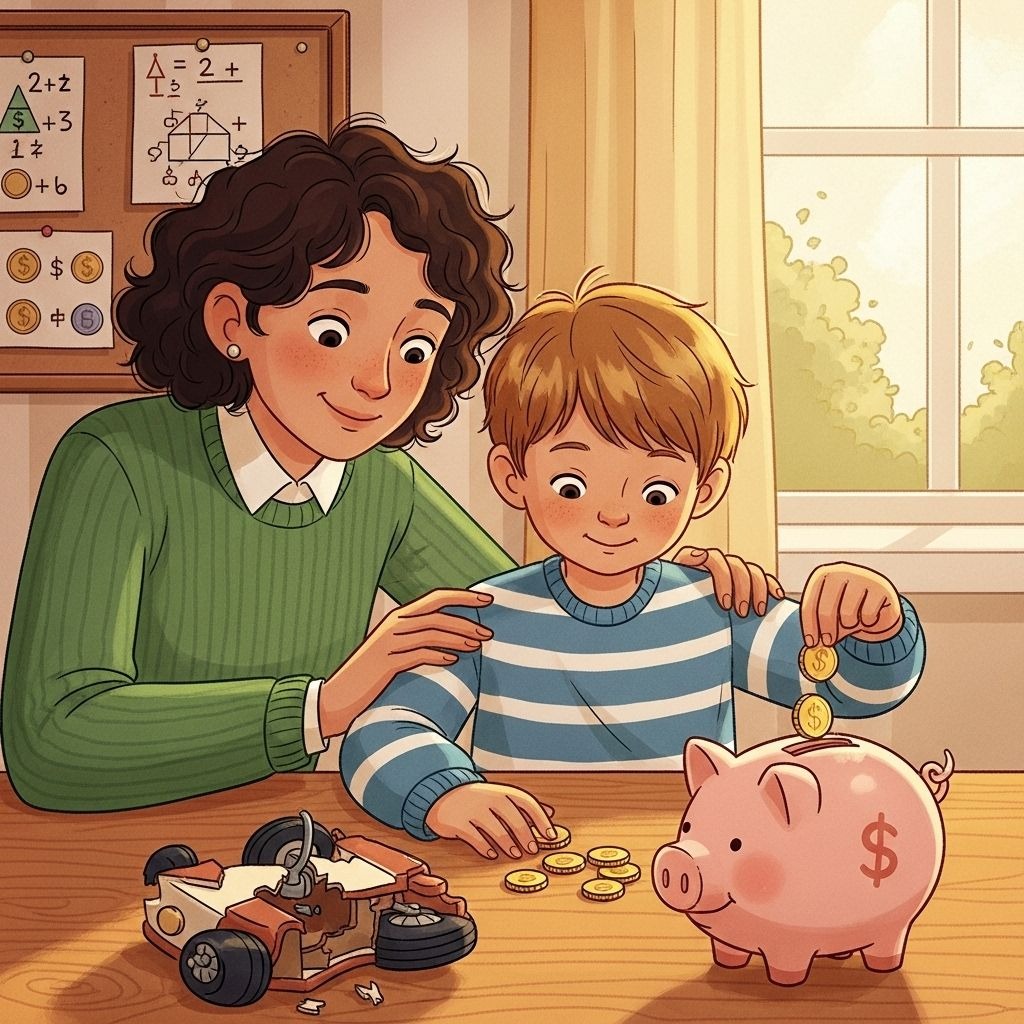
Logical consequence: They help fix it or use their allowance to replace it. “You broke your sister’s toy. You’ll need to use your allowance to buy her a new one.”
For Responsibilities and Chores
Problem: Refusing to do chores
Logical consequence: No privileges until chores are done. “You can go play with friends after your room is clean, not before.”
Problem: Not taking care of belongings
Logical consequence: Temporary loss of those belongings. “You didn’t put your bike away, so you won’t be able to ride it tomorrow.”
For Mealtime Issues
Problem: Refusing to eat the meal provided
Logical consequence: No alternative meal offered; they can eat at the next scheduled meal or snack time. “This is what we’re having for dinner. If you choose not to eat, you can try again at breakfast.”
Problem: Playing with food or making messes intentionally
Logical consequence: Meal ends. “It looks like you’re done eating since you’re playing with your food. We’ll clear your plate now.”
For more strategies on handling challenging behaviors respectfully, check out these positive discipline techniques for toddlers that work for older kids too. I also found this approach pairs beautifully with how to set boundaries for kids without limiting their emotions.
The Mistake I Made That Sabotaged Everything
Want to know the biggest mistake I made when I first tried logical consequences?
I thought “logical” meant “severe enough to make an impact.”
So when my daughter refused to clean her room, I took away all her toys for a month. When my son was rude at dinner, I banned desserts for two weeks. When they fought in the car, I canceled a planned trip to the zoo.
And you know what happened? It backfired spectacularly.
The consequences were so harsh that my kids just became resentful. They stopped learning from the consequences and started focusing on how unfair I was being. I was technically using “logical consequences,” but I was implementing them all wrong.
Here’s what I learned: logical consequences need to be reasonable in scope and duration. The goal is teaching, not revenge.
Instead of taking all toys for a month, I take the specific toys they won’t clean up for one day. Instead of banning desserts for weeks, they lose dessert for that night. Instead of canceling the zoo, I pull over and wait until they can calm down before we continue driving.
Shorter, more reasonable consequences are way more effective. Kids can actually learn from them instead of just stewing in resentment.

How to Present Logical Consequences (The Script That Works)
The way you present a logical consequence matters almost as much as the consequence itself.
I used to announce consequences like verdicts in a courtroom. “You did X, so now Y is happening. End of discussion.”
That approach just triggered power struggles and arguments.
Now I frame consequences as choices and use this script:
“You have a choice. You can [expected behavior], or [consequence will happen]. What do you choose?”
Examples:
- “You can put your tablet away gently, or you’ll lose tablet time tomorrow. What do you choose?”
- “You can speak to me respectfully, or you’ll need to go to your room until you’re ready to talk kindly. What do you choose?”
- “You can clean up your art supplies now, or I’ll put them away and you won’t be able to use them tomorrow. What do you choose?”
Framing it as a choice empowers kids. They’re in control of what happens next. When the consequence occurs, they chose it—you didn’t do it to them.
When the consequence does happen (because they made that choice), I stay calm and follow through:
“I see you chose [consequence]. That’s okay. You can try again tomorrow/later/next time.”
No lectures. No “I told you so.” No anger. Just calm, matter-of-fact enforcement.
This is probably the hardest part for me—staying calm. When I’m frustrated, I want to add on lectures and reminders about all the other times they’ve made this same choice. But that just dilutes the teaching power of the consequence itself.
For more guidance on staying calm during discipline moments, I found these parenting books incredibly helpful for changing my whole approach. They completely transformed how I think about discipline and connection.
Age-Appropriate Logical Consequences
Logical consequences look different depending on your child’s age and development level.
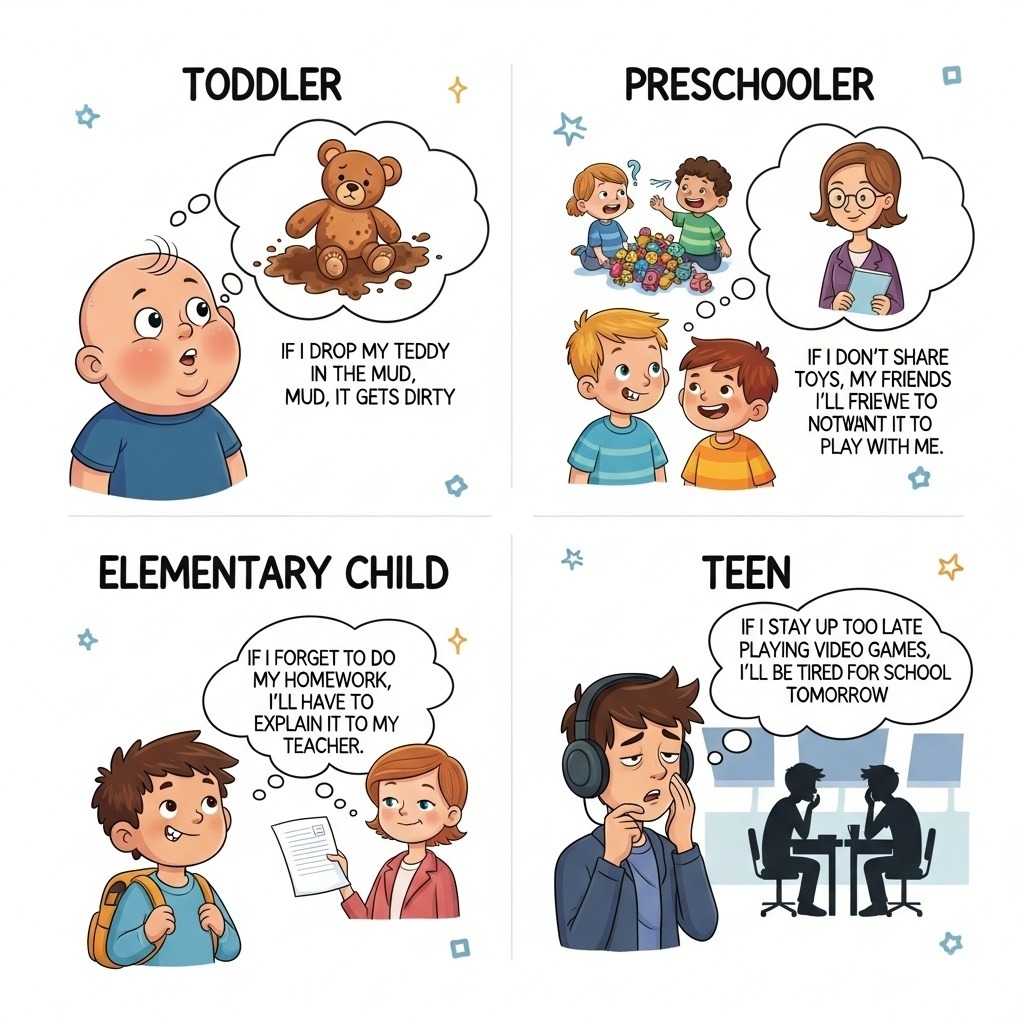
Toddlers (18 months – 3 years)
At this age, keep consequences immediate and simple. Toddlers have very limited impulse control and short memories.
Examples:
- Throwing food? Meal ends.
- Hitting? Removed from the situation immediately.
- Won’t hold your hand in a parking lot? They’re carried or put in the cart.
The consequence needs to happen within seconds for a toddler to make the connection.
Preschoolers (3-5 years)
Preschoolers can handle slightly more complex consequences and can wait a bit longer (a few hours), but still need things pretty immediately.
Examples:
- Won’t clean up toys? Toys are put away and unavailable for the rest of the day.
- Being too rough at the playground? Leave the playground.
- Won’t get dressed for school? Go to school in pajamas (or miss the fun morning activity).
Elementary Age (6-12 years)
School-age kids can understand more nuanced consequences and can handle waiting a day or even a couple of days.
Examples:
- Forgot homework? Experience the consequence at school (don’t bring it to them).
- Broke a sibling’s toy? Use allowance to replace it or do extra chores.
- Used screen time inappropriately? Lose screen privileges for 2-3 days.
Teens (13+)
Teens can handle much more complex logical consequences that may play out over weeks.
Examples:
- Missed curfew? Curfew moves earlier until they can demonstrate they’ll respect it.
- Didn’t do their laundry? They wear dirty clothes or do laundry themselves.
- Damaged the car? They pay for repairs and lose driving privileges until it’s fixed.
One thing that’s been helpful as my kids have gotten older: involving them in determining appropriate consequences. “You chose to break the rule about homework. What do you think is a fair consequence?” This teaches them accountability and reasoning.
When Logical Consequences Don’t Work (And What to Do Instead)
I’d love to tell you that logical consequences solve every behavior problem. But sometimes they don’t work. Here’s when I’ve hit roadblocks and what I do instead:
When the behavior is a cry for connection
Sometimes misbehavior isn’t about testing limits—it’s about needing attention. If your child is acting out because they’re feeling disconnected, a consequence won’t help. They need you.
What works better: One-on-one time, physical closeness, or addressing the underlying need? I keep special board games for kids on hand, specifically for reconnection time when I notice behavior is driven by needing more of me.
When the child is developmentally unable to comply
If you’re asking for something your child isn’t developmentally ready for, no consequence will make them able to do it.
What works better: Adjust your expectations, provide more support, or wait for developmental readiness? These developmental milestone books helped me understand what’s realistic to expect at each age.
When the behavior is driven by big emotions
When kids are in full meltdown mode, they literally cannot access the rational part of their brain that learns from consequences.
What works better: Help them calm down first (calm corner, breathing, time-in), then address the behavior later. For helpful phrases to use during emotional moments, check out these things to say to your child instead of “stop crying” that actually help them regulate.
When the same consequence isn’t working after multiple tries
If you’ve used the same logical consequence three or four times for the same behavior and nothing is changing, it’s not working. Don’t keep doing it.
What works better: Analyze why the behavior is happening, try a different consequence, or address the root cause instead of the symptom?
The Connection Between Logical Consequences and Real-World Skills
Here’s what made me fully commit to logical consequences for children: they prepare kids for the real world better than any other discipline method I’ve tried.
Think about it. As adults, we live in a world of natural and logical consequences:
- Spend all your money? You can’t afford what you want later.
- Don’t do your work? You get fired.
- Drive too fast? You get a ticket.
- Break something you borrowed? You have to replace it.
Nobody yells at us or sends us to our room. Nobody takes away unrelated privileges. The consequence is directly tied to the behavior, and we learn to make better choices to avoid those consequences.
That’s exactly what logical consequences teach our kids. When my son lost tablet privileges because he threw his tablet, he learned that screens are privileges that require responsible use. That’s a lesson he’ll carry into adulthood.
When my daughter had to use her allowance to replace her sister’s toy that she broke, she learned that damaging other people’s property has a cost. Also, a life skill.
This is real-life training, not just discipline. And it works so much better than arbitrary punishments that teach kids nothing except “Mom gets mad when I do this.”
For more insights into raising kids who are prepared for real life, these resources on how to prepare your kids for the world are fantastic. I also love the practical approach to discipline without yelling, which pairs perfectly with logical consequences.
Making Logical Consequences Part of Your Family Culture
The beauty of logical consequences is that once you establish them, they become automatic. Your kids start understanding cause and effect without you even having to enforce consequences all the time.
In our house, certain logical consequences are just understood:
- If you don’t put dirty clothes in the hamper, they don’t get washed
- If you don’t bring your dishes to the sink, you don’t get served at the next meal.
- If you’re not ready when it’s time to leave, you miss the activity, or you go in your pajamas.
- If you break house rules about kindness, you spend time apart until you can be kind.
I don’t have to announce these anymore. My kids know. They’ve experienced them enough times that they understand the relationship between their choices and what happens next.
That’s when you know logical consequences are working—when your kids start regulating their own behavior to avoid negative outcomes, not because they’re scared of you, but because they genuinely understand cause and effect.
For keeping kids engaged in positive ways that prevent a lot of behavior issues in the first place, I keep these kids’ activity books & workbooks readily available. When kids have productive challenges and engaging activities, misbehavior naturally decreases.
I also find that having appropriate outlets for energy helps tremendously. We use an inflatable dome rocker bouncer for indoor active play when the weather keeps us inside, which prevents a lot of the wild behavior that comes from pent-up energy.
Building a Toolbox of Positive Approaches
Logical consequences work best when they’re part of a larger positive parenting approach, not the only tool you use.
I combine logical consequences with:
- Clear, consistent house rules (check out these house rules for kids for ideas)
- Positive reinforcement for good behavior
- Connection time before correction
- Age-appropriate responsibilities
- Teaching emotional regulation skills
The goal isn’t perfect behavior—it’s raising kids who understand that their choices have outcomes and who can make good decisions independently because they understand cause and effect.
When you combine logical consequences with connection, clear expectations, and plenty of positive attention for good behavior, you create a home environment where discipline becomes teaching instead of punishment.
Frequently Asked Questions
What’s the difference between punishment and logical consequences?
Punishment is arbitrary and designed to make children suffer for misbehavior, often using shame, pain, or power to control behavior. Logical consequences are directly related to the misbehavior and are designed to teach cause and effect. For example, punishing a child who hits by taking away TV is arbitrary—the consequence has no connection to hitting. A logical consequence would be removing the child from the play situation until they can use gentle hands. The consequence directly addresses the behavior and teaches the skill they need.
How long should a logical consequence last?
Logical consequences should be as short as possible while still being effective—usually ranging from a few hours to a couple of days, depending on the child’s age. For toddlers, consequences should last minutes to hours. For preschoolers, hours to one day. For elementary age, one to three days. For teens, up to a week or two. If you find yourself implementing consequences that last weeks or months, they’ve become punishment, not teaching tools. The goal is teaching, not extended suffering.
What if my child doesn’t care about the consequences?
If your child genuinely doesn’t care about a consequence, it’s not effective, and you need to choose something different. The consequence should matter enough to motivate behavior change. For example, if you take away tablet time but your child prefers reading anyway, that’s not going to work. Find what matters to your specific child—maybe it’s playing with a friend, having special time with you, access to a favorite activity, or a preferred privilege. Also, make sure you’re not using consequences so frequently that your child becomes numb to them.
Can I use logical consequences with strong-willed or defiant children?
Yes, but it requires extra patience and consistency. Strong-willed children often push back harder and test boundaries more frequently, but logical consequences can actually work better for them than punishment because they remove the power struggle. Frame everything as their choice, stay calm and neutral when enforcing consequences, and follow through every single time. Strong-willed kids respect fair, consistent boundaries and will often respond better to being given choices rather than being controlled. Just expect it to take longer to see results—they’ll test whether you really mean it.
Should I warn my child before implementing a consequence?
For expected rules and repeated behaviors, give one calm warning as a choice: “You can [expected behavior] or [consequence]. What do you choose?” This gives them the opportunity to make a better choice. However, for established house rules they already know (like no hitting), you can implement the consequence immediately without warning. Also, some safety issues require immediate consequences with no warning—a child who runs into the street doesn’t get a warning before losing the privilege of walking independently. Use your judgment based on the situation and whether your child already knew the expectation.
What logical consequences have worked best in your family? Have you found ones that are particularly effective for specific behaviors? I’d love to hear what’s working for you in the comments!