
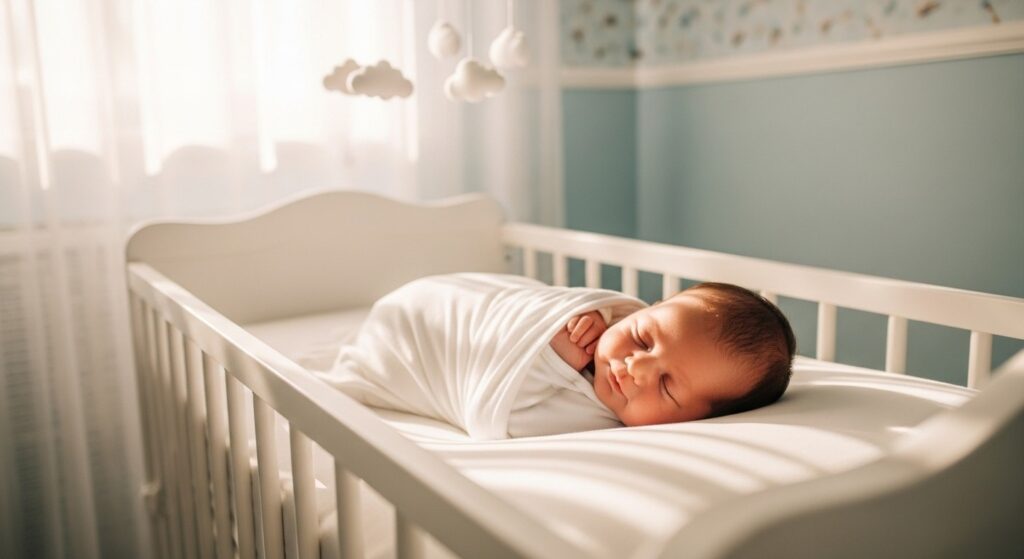
Last night, I was watching my three-month-old son sleep when his face suddenly broke into the most beautiful smile. His eyelids fluttered. His little fingers twitched. For a solid minute, he looked like he was experiencing pure joy.
My first thought? “Oh my gosh, he’s dreaming!”
My second thought? “Wait…can babies even dream?”
If you’ve ever watched your sleeping baby smile, twitch, or make adorable little noises and wondered when babies start dreaming, you’re definitely not alone. It’s one of those questions that seems simple but turns out to be surprisingly complex.
Here’s what I’ve learned: the answer depends on who you ask, what you mean by “dreaming,” and how old your baby is. Let me break it all down for you.
Do Babies Actually Dream?
Before we talk about when babies start dreaming, we need to address whether they dream at all. And honestly? Scientists disagree.
Team “Yes, Babies Dream” points to the fact that babies spend massive amounts of time in REM (Rapid Eye Movement) sleep—the stage where adults do most of their dreaming. Newborns spend about 50% of their sleep in REM, compared to just 20-25% for adults.
If REM equals dreaming, and babies are in REM half the time, logic suggests they’re dreaming a lot.
Team “Babies Don’t Really Dream” argues that dreaming requires certain cognitive abilities—memory, imagination, visual imagery—that babies’ brains haven’t developed yet. Any movements or expressions during sleep might just be the brain developing, not actual dreams.
The truth? We’ll probably never know for sure. Babies can’t tell us what’s happening in their minds while they sleep. But we can make some pretty educated guesses based on brain development and sleep patterns.
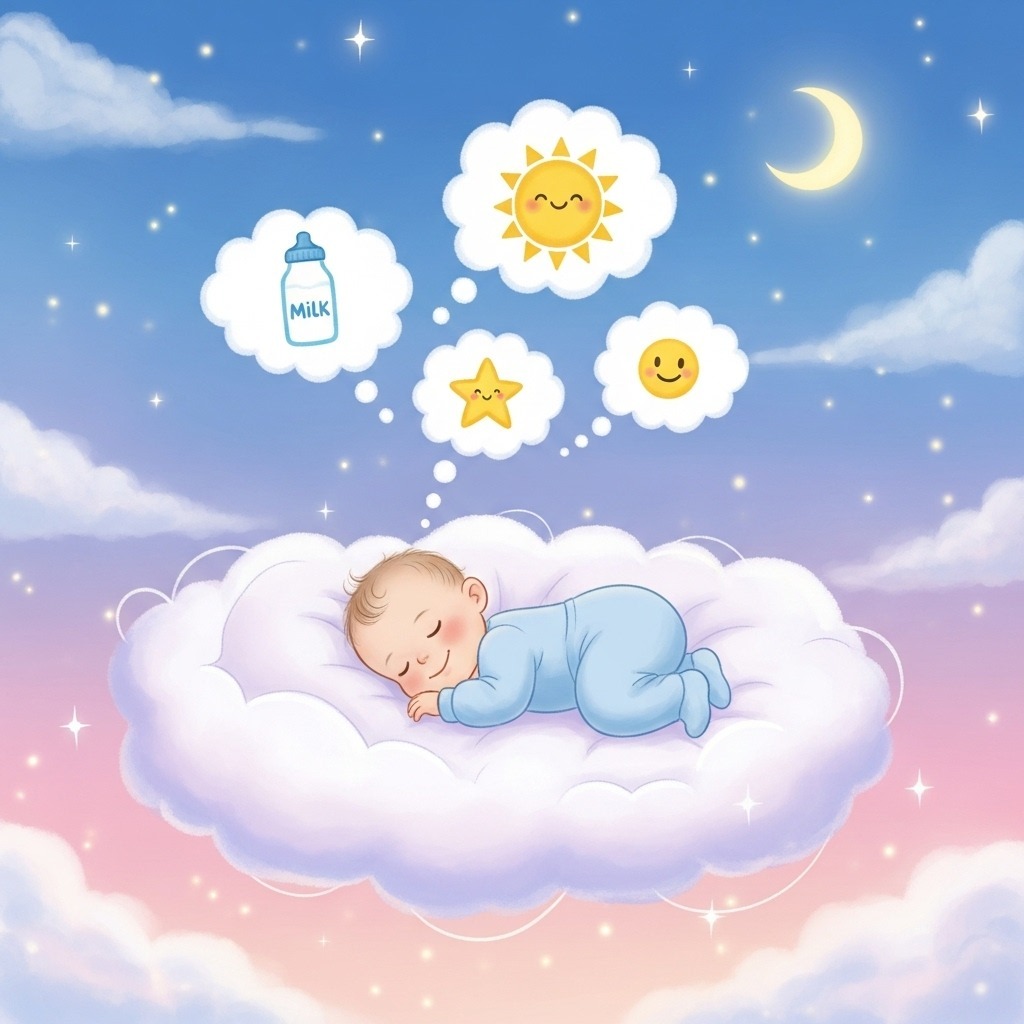
The Science of Baby Sleep and REM
Let’s talk about why babies sleep so much and what’s happening during all that shut-eye.
Newborns sleep 14-18 hours a day. That’s more than they’re awake! And roughly half of that sleep time is spent in REM.
REM sleep is incredibly important for development. During this stage:
- Neural connections form at lightning speed
- Memories get processed and stored.
- The brain organizes all the new information babies are absorbing.
- Growth hormones are released.
- Emotional regulation develops
Think of REM sleep as your baby’s brain doing overnight software updates. All day long, they’re taking in massive amounts of new information—faces, sounds, sensations, movements. At night, their brains sort through everything and make sense of it all.
This is why sleep is so crucial for babies. It’s not just rest—it’s active development time.
When Do Babies Start Dreaming? The Timeline
Here’s where it gets really interesting. The answer to when babies start dreaming changes depending on what kind of dreaming we’re talking about.
In the Womb (28-30 Weeks of Pregnancy)
Believe it or not, babies might start “dreaming” before they’re even born. Research shows that fetuses begin experiencing REM sleep around 28-30 weeks of gestation. Their brainwave patterns look similar to those of adults during REM sleep.
What could they possibly dream about? Researchers think it might be sensory experiences—the feeling of floating in amniotic fluid, the sound of mom’s heartbeat, the rhythm of her breathing, and voices from outside the womb.
Birth to 4 Months
Newborns continue spending about half their sleep in REM. If they’re dreaming, it’s probably sensory-based and simple:
- The feeling of being held or rocked
- The taste and comfort of feeding
- Familiar voices and sounds
- Warmth and touch sensations
These aren’t “dreams” the way we think of them—with storylines and characters. They’re more like replaying sensory memories or processing new experiences.
Around 4 months, sleep patterns start to change. REM sleep becomes less frequent and more interrupted. This coincides with the infamous 4-month sleep regression (hello, exhausted parents).
6 Months to 2 Years
By 6 months, some experts believe babies start having more dream-like experiences. They’re accumulating memories, recognizing faces, and understanding cause and effect. Their dreams might include:
- Familiar faces (mom, dad, siblings)
- Favorite toys or activities
- Daily routines like bath time
- Simple scenarios they’ve experienced
But these dreams are still probably pretty basic compared to what older kids and adults experience.
Age 2-3 and Beyond
This is when most experts agree “real” dreaming begins. By age 2 or 3, toddlers have developed:
- Language skills to describe dreams
- Imagination to create scenarios
- Memory to reference past experiences
- The ability to understand narratives
This is also when kids start telling you about their dreams—and when nightmares might begin.
For understanding other important developmental milestones that happen alongside dreaming, check out when kids start talking to see how language and sleep development connect.
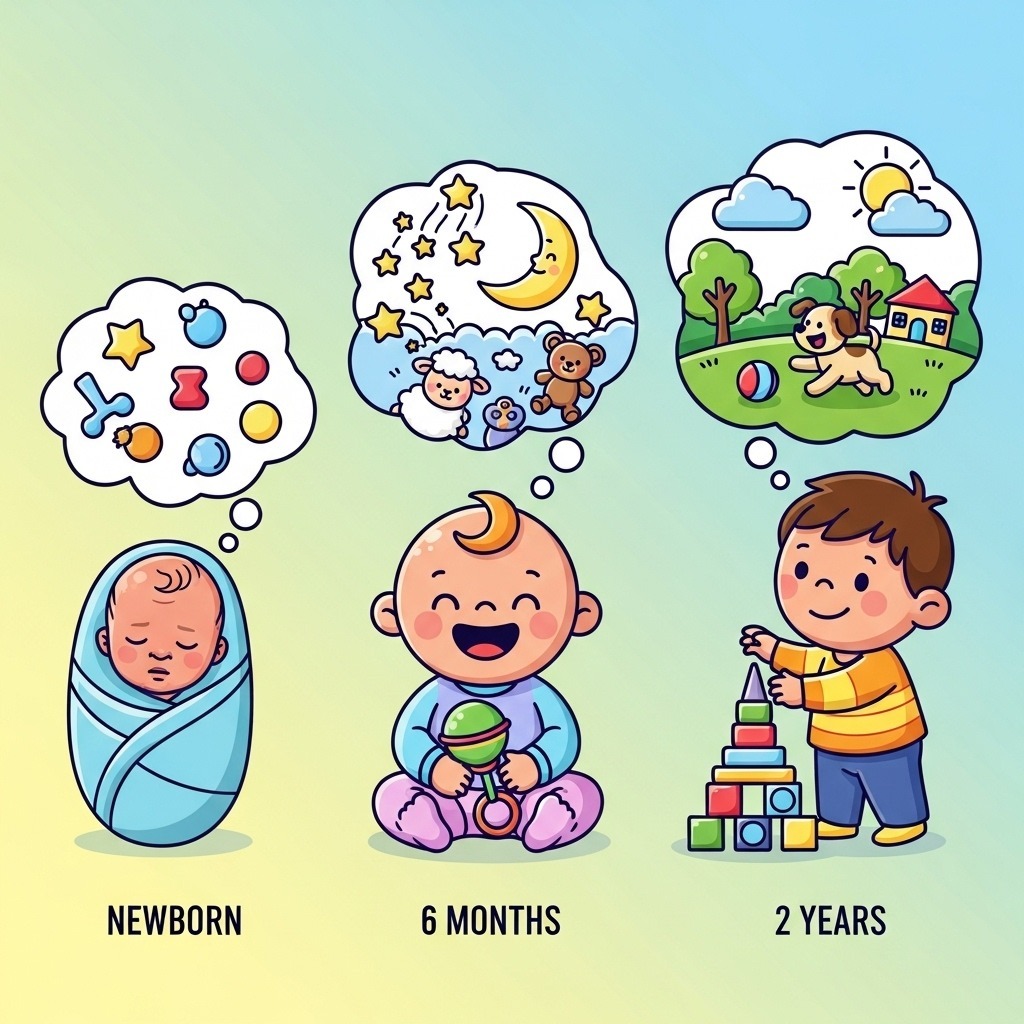
What Do Babies Dream About?
Since babies can’t tell us, we’re left guessing. But based on what we know about brain development and memory, here’s what babies might be dreaming about at different ages:
Newborns (0-3 Months):
- Sensations from the womb
- The rhythm of being rocked
- Sounds of familiar voices
- The comfort of feeding
- Warmth and touch
Older Babies (6-12 Months):
- Faces of family members
- Favorite toys or objects
- The activities they do daily
- Sounds they hear often
- Movement and spatial experiences
Toddlers (1-3 Years):
- More complex scenarios
- Interactions with people
- Places they’ve been
- Stories they’ve heard
- Things that excited or scared them
My daughter started telling me about her dreams around age 2.5. They were simple—”I dreamed about grandma” or “The dog was in my dream.” But it was fascinating to hear her little mind starting to process experiences through dreams.
Signs Your Baby Might Be Dreaming
Even though babies can’t tell us they’re dreaming, there are signs to watch for during sleep:
Smiling or Laughing
Those precious sleep smiles? They might indicate pleasant dream-like experiences. My son used to grin ear-to-ear in his sleep, and it melted my heart every time.
Facial Expressions
Watch for frowns, pouts, or looks of concentration. These expressions suggest the brain is processing something.
Rapid Eye Movements
During REM sleep, you might notice your baby’s eyelids fluttering or eyes moving beneath closed lids. This is the hallmark of REM sleep.
Twitching or Jerking
Small movements of arms, legs, or facial muscles are common during REM sleep. It’s the brain’s way of “practicing” movements.
Making Sounds
Cooing, whimpering, or making little noises during sleep might be part of dream activity.
Sucking Movements
Babies often make sucking motions in their sleep, possibly dreaming about feeding.
These activities that help with development during waking hours—like activities to do with kids—give babies more experiences to potentially process during sleep.
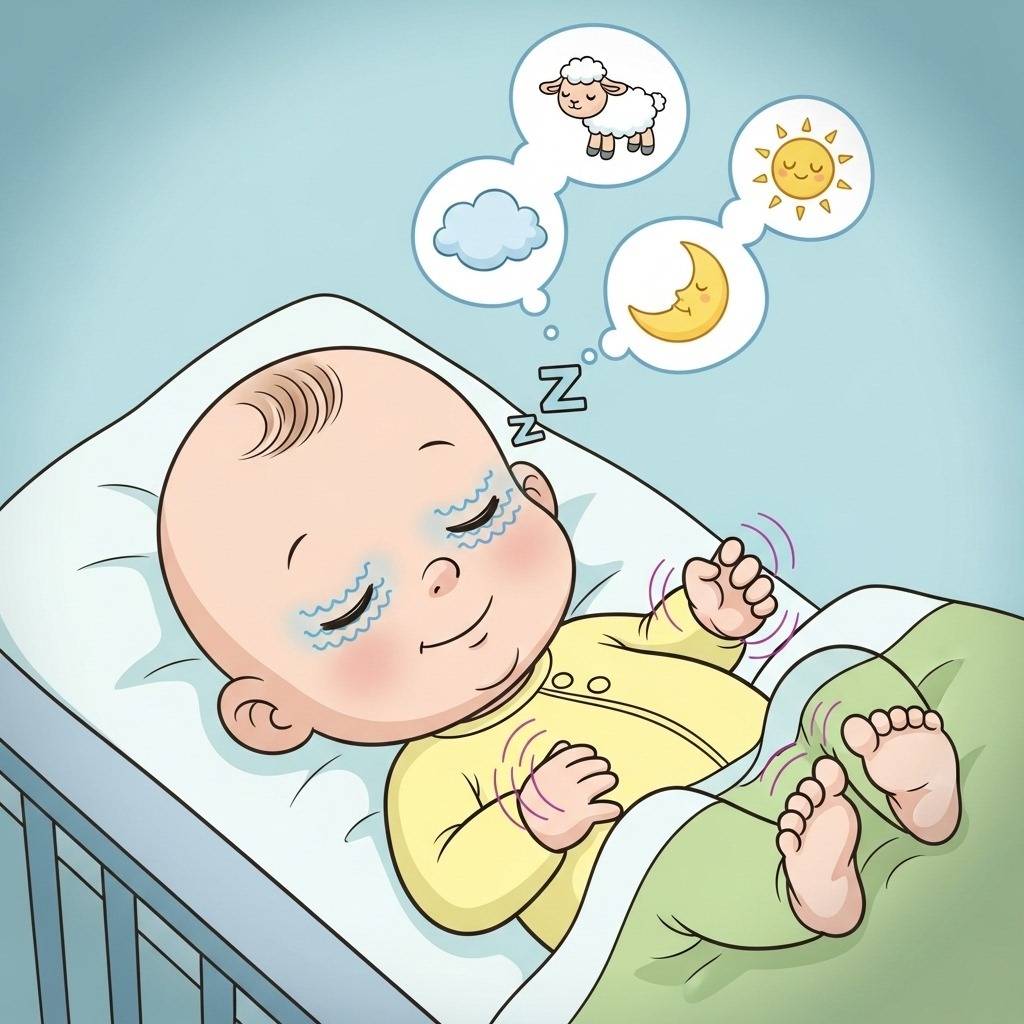
Why Baby Dreams (and Sleep) Matter So Much
Whether or not babies are having full-fledged dreams, the sleep they’re getting—especially REM sleep—is absolutely critical for development.
Brain Development
During REM sleep, the brain forms and strengthens neural pathways. This impacts everything from motor skills to language development to emotional regulation.
Memory Consolidation
Sleep helps babies process and store all the new information they’re learning every single day. Without adequate sleep, development can be affected.
Emotional Processing
Even if babies aren’t dreaming complex scenarios, REM sleep helps them process emotional experiences and develop coping mechanisms.
Physical Growth
Growth hormone is primarily released during deep sleep. This is literally when babies grow.
Learning and Adaptation
Sleep helps babies adapt to their environment and learn new skills. You might notice your baby suddenly mastering a new skill after a good night’s sleep—that’s not a coincidence.
This is why pediatricians emphasize safe sleep practices and sufficient sleep time. It’s not just about rest—it’s about giving your baby’s brain the time it needs to develop properly.
These developmental milestone books can help you track how sleep patterns connect to other areas of growth.
Do Babies Have Nightmares?
This is every parent’s worry when their baby cries during sleep or wakes up distressed.
The good news? True nightmares probably don’t happen until toddlerhood (usually after age 2). Nightmares require the cognitive ability to imagine scary scenarios, which young babies simply don’t have yet.
However, babies can experience:
Sleep Disruptions
Babies might cry or startle during sleep transitions. This isn’t necessarily a nightmare—it’s just part of their developing sleep cycles.
Discomfort
If your baby seems distressed during sleep, it’s more likely physical discomfort (hunger, gas, diaper, temperature) than a bad dream.
Night Terrors
These are different from nightmares and typically start between the ages of 3-12. During a night terror, a child appears awake but isn’t responsive. They usually don’t remember it the next day.
If your baby cries during sleep, check for basic needs first—diaper, hunger, temperature. Then offer comfort. Your presence is what they need most.
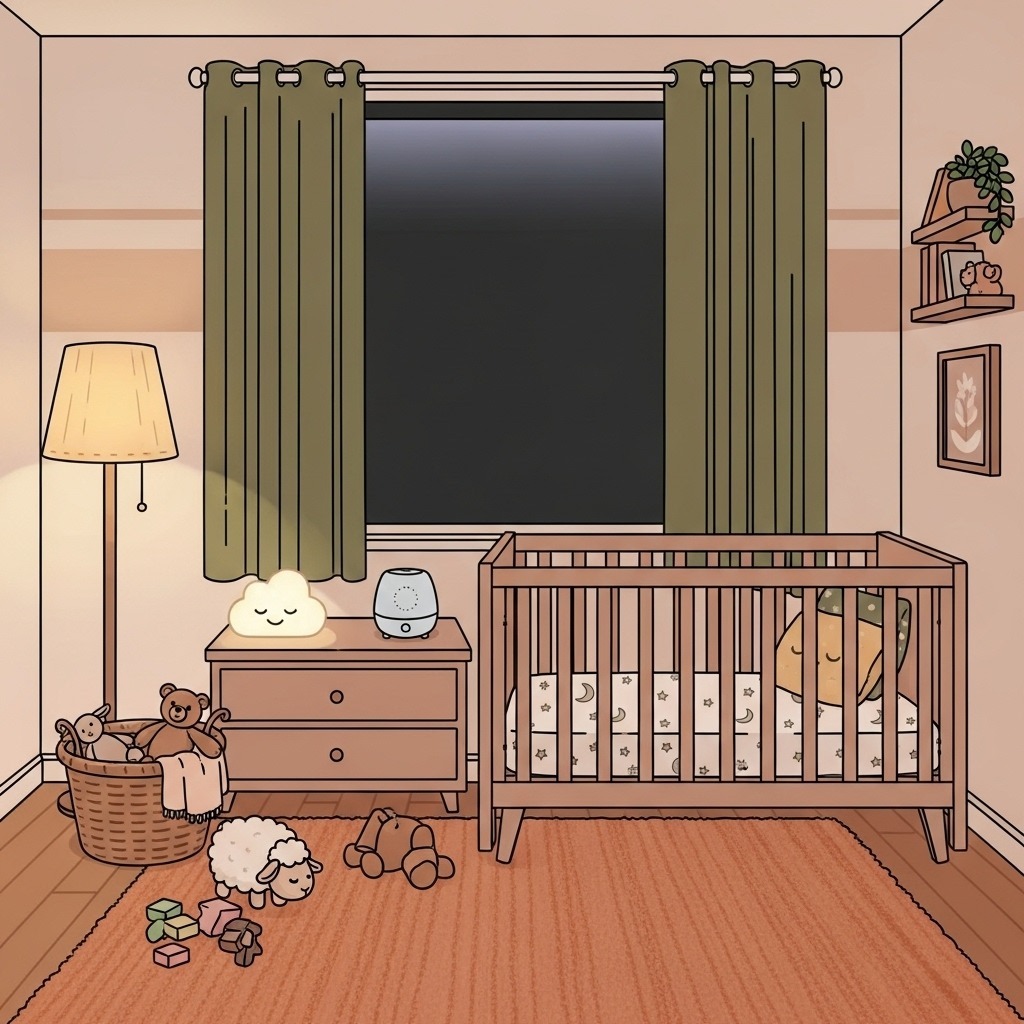
Creating the Perfect Sleep Environment for Sweet Dreams
While we can’t control what babies dream about, we can create conditions for the best possible sleep:
Safe Sleep Basics
- Always place the baby on their back to sleep
- Use a firm mattress with a fitted sheet.
- Keep the crib clear of blankets, pillows, and toys.
- Maintain a comfortable room temperature (68-72°F)
Optimal Sleep Conditions
- Darken the room (blackout curtains help)
- Use white noise to block disruptions.
- Keep it quiet and calm.
- Establish consistent bedtime routines.
Comfort Items
For safe and soothing sleep environments, consider:
- Quality parenting books for sleep training guidance
- Kids’ activity books for establishing calming bedtime routines with older babies
Daytime Activities That Promote Better Sleep
The more engaged and active your baby is during wake times, the better they’ll sleep. Age-appropriate play, tummy time, and interaction all contribute to quality sleep.
The Bottom Line on Baby Dreams
So, when do babies start dreaming? The honest answer is: we’re not entirely sure.
What we do know:
- Babies experience REM sleep from birth (possibly even before)
- REM sleep is when most dreaming occurs in adults
- If babies are dreaming, it starts simply and becomes more complex over time.
- Clear, narrative dreams probably don’t begin until around age 2-3
- Sleep (dream or no dream) is absolutely crucial for development.
The next time you watch your baby smile in their sleep, go ahead and imagine they’re dreaming about you. Maybe they are. Maybe they’re processing the memory of your face, your voice, the comfort of your arms.
Or maybe they’re just building neural connections that will help them recognize you even better tomorrow.
Either way, that peaceful sleeping baby is doing important work. And you’re giving them exactly what they need by providing a safe, loving environment for all that growing and developing.
Sweet dreams, little one.
FAQ: When Do Babies Start Dreaming
Can babies dream while still in the womb?
Research suggests yes—fetuses begin experiencing REM sleep patterns around 28-30 weeks of pregnancy. While we can’t know for sure if they’re “dreaming” in the way we understand it, their brainwave patterns during REM look similar to adults. Any dreams would likely be based on sensory experiences from the womb: the sound of mom’s heartbeat, the feeling of floating in amniotic fluid, voices from outside, and the rhythm of mom’s movements.
Why do newborns smile in their sleep?
Those adorable sleep smiles are often called “reflex smiles” and might not initially be connected to dreaming. However, they could indicate pleasant brain activity during REM sleep. Around 6-8 weeks, babies develop “social smiles” when awake. Sleep smiles after this point might be related to processing positive experiences or sensations. While we can’t know for certain, many parents (and some researchers) believe these smiles indicate some form of pleasant dream activity.
How much REM sleep is normal for babies?
Newborns spend approximately 50% of their total sleep time in REM sleep, which is much higher than adults (who spend 20-25% in REM). This percentage gradually decreases as babies grow. By 4-6 months, babies still spend more time in REM than adults, but it becomes less dominant. This high percentage of REM sleep supports rapid brain development and is completely normal—in fact, it’s essential for healthy growth.
What should I do if my baby cries during sleep?
First, wait a moment before intervening. Babies often make sounds and even cry briefly during sleep transitions without fully waking. If crying continues, check for basic needs: hunger, dirty diaper, too hot/cold, or discomfort. For young babies (under 2), distressed sleep is rarely about nightmares—it’s usually physical needs or difficulty transitioning between sleep cycles. Gentle soothing, a soft voice, or a light touch can help them settle back to sleep.
At what age can my child tell me about their dreams?
Most children begin describing their dreams around age 2-3, when language skills develop enough to express abstract thoughts. Early dream descriptions are usually simple: “I dreamed about the dog” or “Grandma was there.” By ages 3-5, children’s dream descriptions become more detailed with simple storylines. By ages 7-9, kids typically describe dreams with more complex narratives, multiple scenes, and emotional content similar to adult dreams. Every child develops at their own pace, so don’t worry if your child starts earlier or later.